
Luc Tuymans paintings arrive already mediated. The Belgian painter, born in 1958, works exclusively from pre-existing photographs, film stills, and news images — never from life. Each canvas, completed in a single day, enacts a theory: that the past cannot be retrieved, only re-represented. Tuymans paints not subjects but the distance between subjects and the images that replaced them.
Why does Tuymans paint from photographs when he could paint from life?
The answer is that the question misses the point. Tuymans made a decision early on (stated plainly in multiple interviews) that he would not make art from art. He would source from the world. But the world, by the time it reaches a painter working in Antwerp in the 1980s, arrives as television, as news photographs, as press images. “From very early on,” he has said, “my work was born out of an insane and very profound distrust of imagery.” The distrust is the subject. The photograph is not a reference. It is what the painting is about.
Tuymans was born on 14 June 1958 in Mortsel, near Antwerp. His father was Belgian Flemish; his mother was Dutch. The family history is not incidental biography. His mother’s family hid refugees during the Dutch Resistance. Members of his father’s family allegedly sympathized with Nazi ideology. Complicity and resistance occupied the same household. That split — history as something you inherit on both sides simultaneously — became the formative subject of his practice, even when the paintings appear to show nothing more troubling than a ceiling or a sleeve.
His education ran across several institutions: the Sint-Lukasinstituut in Brussels (1976), La Cambre (1979–1980), the Koninklijke Academie voor Schone Kunsten in Antwerp (1980–1982), and an art history degree from the Vrije Universiteit Brussel (1982–1986). Between 1980 and 1985 he stopped painting entirely and worked in film, including Feu d’artifice (Firework, 1987). Some of those film fragments later became source material for paintings. His return to painting was not a retreat from the question of images. It was a decision to work in a medium he distrusted, and to make that distrust the subject.
Pop’s interrogation of the mass-produced image had already established that painting could take consumer culture as its raw material. Tuymans is doing something more severe. Pop painters used commercial images to say something about consumer culture. Tuymans uses images (any images: official photographs, news stills, television frames) to ask a more fundamental question: what happens to experience on its way to becoming an image, and then on its way from that image to a painting?
His first solo show, in 1985, took place in an abandoned swimming pool at the Thermae Palace in Ostend. It was a site chosen deliberately for its connection to James Ensor and Léon Spilliaert, both Ostend painters and both stated influences. The show was already making an argument about decay, about surfaces that fail to preserve.
What happens when painting takes a photograph as its subject instead of its subject?
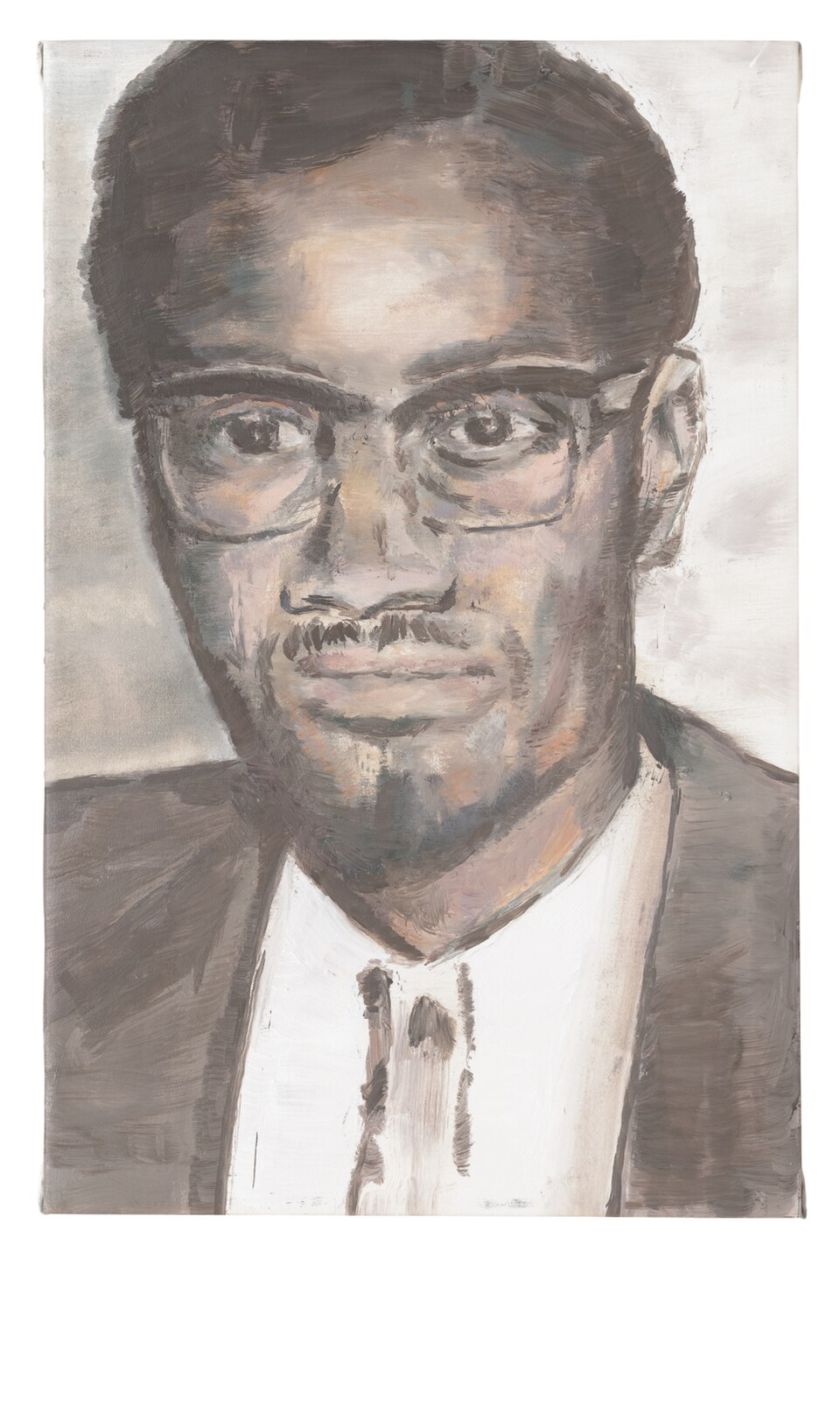
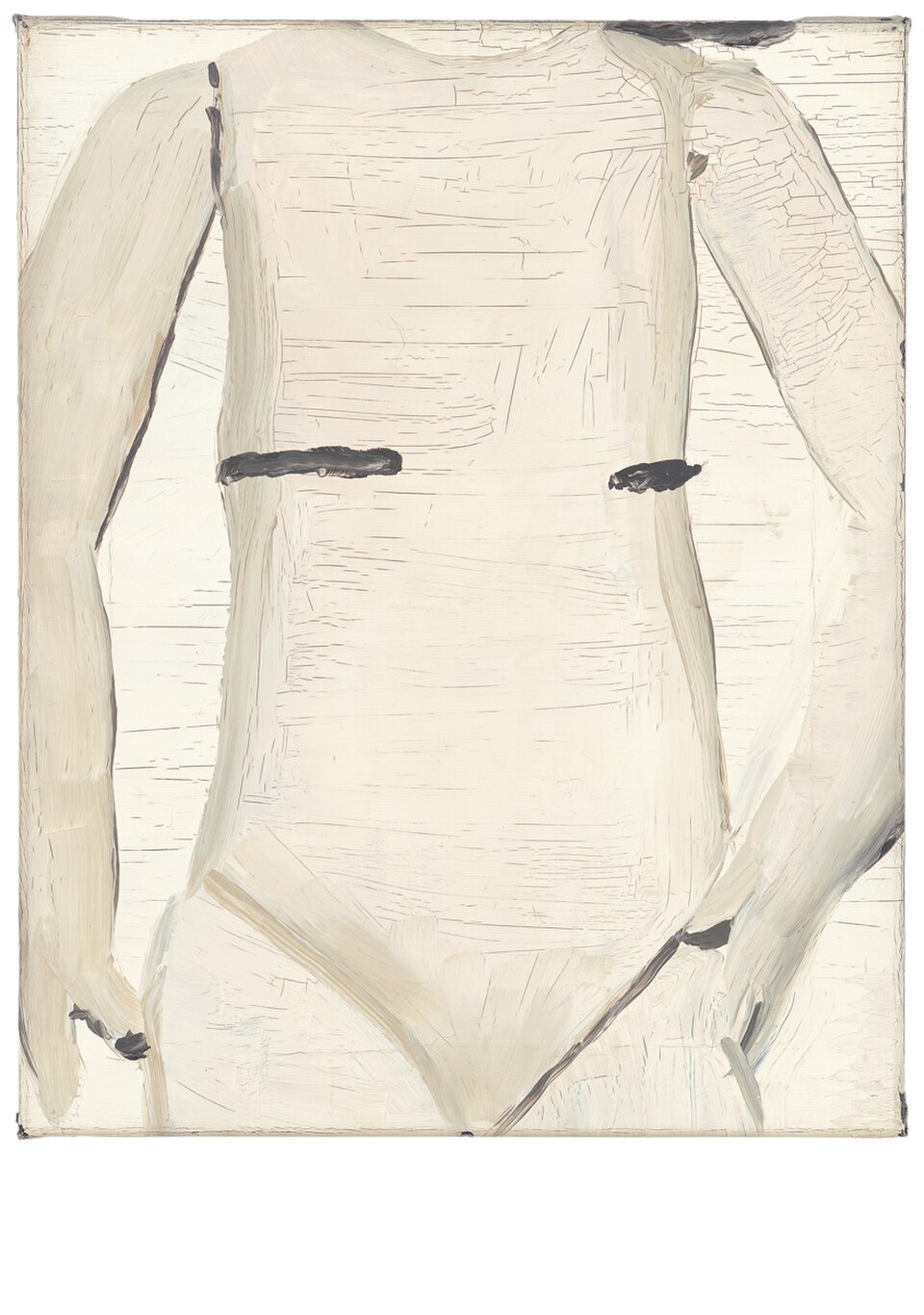
The technical process answers this. Tuymans photographs a source image. Then he re-photographs it. He continues until “much of the original detail and clarity is lost,” as documented at the Tate’s artist biography. The resulting painting mirrors that loss: cheap materials, distressed finishes, a palette so drained it can look like the canvas is underlit. This is not aesthetic preference. The washed-out surface is the painting’s admission that the photographic source is not the thing it records, and neither is the painting. The inadequacy is performed, not accidental.
Early in his career, Tuymans applied varnishes designed to cause cracking, making new paintings look old before they dried. This phase, documented at The Art Story as “authentic forgery,” was not nostalgia. It was an argument: that any image of the past already arrives carrying the patina of mediation. You cannot paint history fresh. The history you paint is already aged, already interpreted, already at several removes from whatever it originally was.
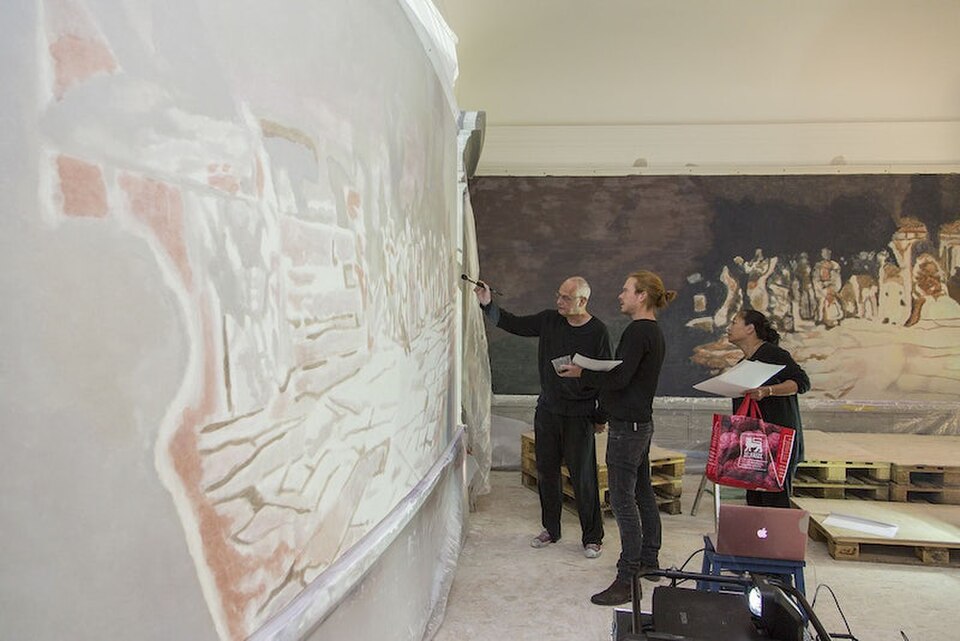
The single-day constraint is where this argument becomes technical discipline. Each final oil painting is completed in one day, after weeks of preparatory drawings, photocopies, and watercolors. The compressed time is not a performance of spontaneity. It produces an undercooked, barely-there surface that other painters would have worked over and corrected. Tuymans keeps the inadequacy. The painting looks like it is still trying to become itself, and he stops there.
The most direct European precedent for painting from photographs is Gerhard Richter, whose Fotobilder (photo-paintings) began in 1963. Richter’s photo-paintings are aesthetically seductive: large-format, exquisitely blurred, formally beautiful even when the subject (a murdered relative, a bombed city) is disturbing. Tuymans refuses that seduction. The deliberately unappealing surface, the refusal of beauty, the resistance to any pleasure Richter courts: this is not a stylistic difference but an epistemological and ethical argument. The painting should not console you.
He has said: “the work is about the loss of meaning, but also about the failure of representation.” That sentence locates the work in a tradition that includes the postwar abstraction that figurative painters were responding to: the decades when painting had supposedly resolved its relationship to representation by abandoning it, and then asks what happens when figuration returns, aware of that abandonment. Tuymans’s return to figuration is not naive. It knows what it costs. Among painters who worked through color alone, representation had come to feel like a category error. Tuymans takes that anxiety seriously and paints through it anyway. He paints it at the surface level; the paint looks afraid of what it is trying to show.
Secondary criticism has circulated the formulation that his work contains “something always true colliding with a consciousness forgetful of it,” which captures the structural tension accurately, though the original attribution remains unclear. What is clear is that this is the work Tuymans wanted: the image insists on showing; the painting insists on showing how much showing fails. “What I do is the imagery of distrust,” he has said, in a formulation simple enough to carry the whole argument.
Five Luc Tuymans paintings that show what he is actually arguing
Die Zeit (The Time), 1988. One of his earliest sustained engagements with the Holocaust, this cycle addresses historical atrocity through its refusal to show atrocity. The images are banal: interiors, objects, the aftermath of rooms. No bodies. The horror arrives through what is absent, through the gap between the image and what it is the aftermath of. This is the foundational strategy. If you show the thing directly, you risk aestheticizing it. If you show the thing it left behind, you implicate the act of looking.
Corsage, 1992 [date from secondary sources; verify against Catalogue Raisonné]. A fragment of fabric, a bodice stripped of its wearer. The partial view, the thing that stands in for what cannot be shown. Among his most cited works for demonstrating his method: paint a piece of clothing, not a person. The absence of the body is more insistent than a body would be.
Luzifer, 1990 [date from secondary sources; verify against Catalogue Raisonné]. A ceiling, rendered in flat gray. The image of a room seen from below: a domestic space, ordinary in every describable detail, and threatening in a way that defies description. This is his interest in the domestic as a site of historical anxiety made as direct as he ever makes it.
Gilles (Les Gilles de Binche), 2005. A series based on the traditional carnival figure from Binche, Belgium: a male figure in folkloric costume sourced from archival photographs. The costumes have been compared to KKK robes, a connection Tuymans acknowledged. The familiar, festive image becomes something else when you hold both possibilities simultaneously. Belgian folklore and American racial terror, in the same silhouette.
The Secretary of State, 2005. A portrait of Condoleezza Rice, sourced from a press photograph taken just after her appointment as U.S. Secretary of State. Blurred, slightly sickly in color, the figure barely resolved. The Museum of Modern Art holds this work in its permanent collection. Tuymans painted it at the height of the Iraq War. It is not political commentary in any direct sense. It is an interrogation of how power circulates through official imagery. The press photograph manufactures the appearance of legitimacy, and painting can make that manufacturing visible.
Among other painters who work through found and cultural images, Tuymans stands out for the severity of the argument: the refusal of any visual pleasure that might make the viewer comfortable with what they are looking at.
Shop the collection
There are two books worth owning if you want to engage Tuymans’s work directly rather than through the retrospective summaries. Both repay time with the actual images.
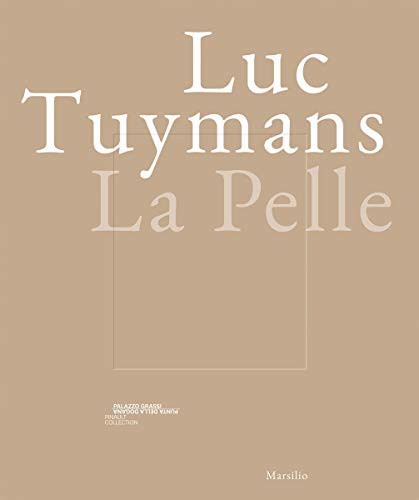
Luc Tuymans: La Pelle (Pinault Collection / Palazzo Grassi exhibition catalog): The most comprehensive documentation of his Venice exhibition, with essays by Caroline Bourgeois, Jarrett Earnest, and Patricia Falguères that engage directly with the mediated-image thesis this article has been describing. This is the book that shows the argument from inside the work.
Luc Tuymans (Phaidon Contemporary Artists Series, Ulrich Loock and Juan Vicente Aliaga): The standard critical monograph for a reader who wants Tuymans’s position in contemporary painting laid out with rigor: not the biography, but the critical apparatus that makes the work readable.
Further reading
The standard critical literature on postwar figurative painting tells the background story; these two volumes are the primary documents.
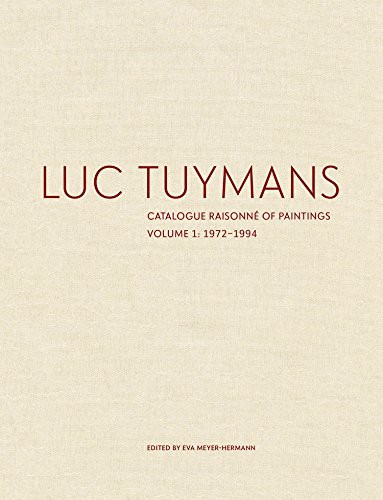
Eva Meyer-Hermann (ed.), Luc Tuymans: Catalogue Raisonné of Paintings, Volume 1: 1972–1994 (Yale University Press / David Zwirner Books): The first volume surveys nearly 200 works from the years when the photographic-source methodology and the single-day rule were taking shape. This is where the argument crystallizes, and it is the document the article you just read is drawing from.
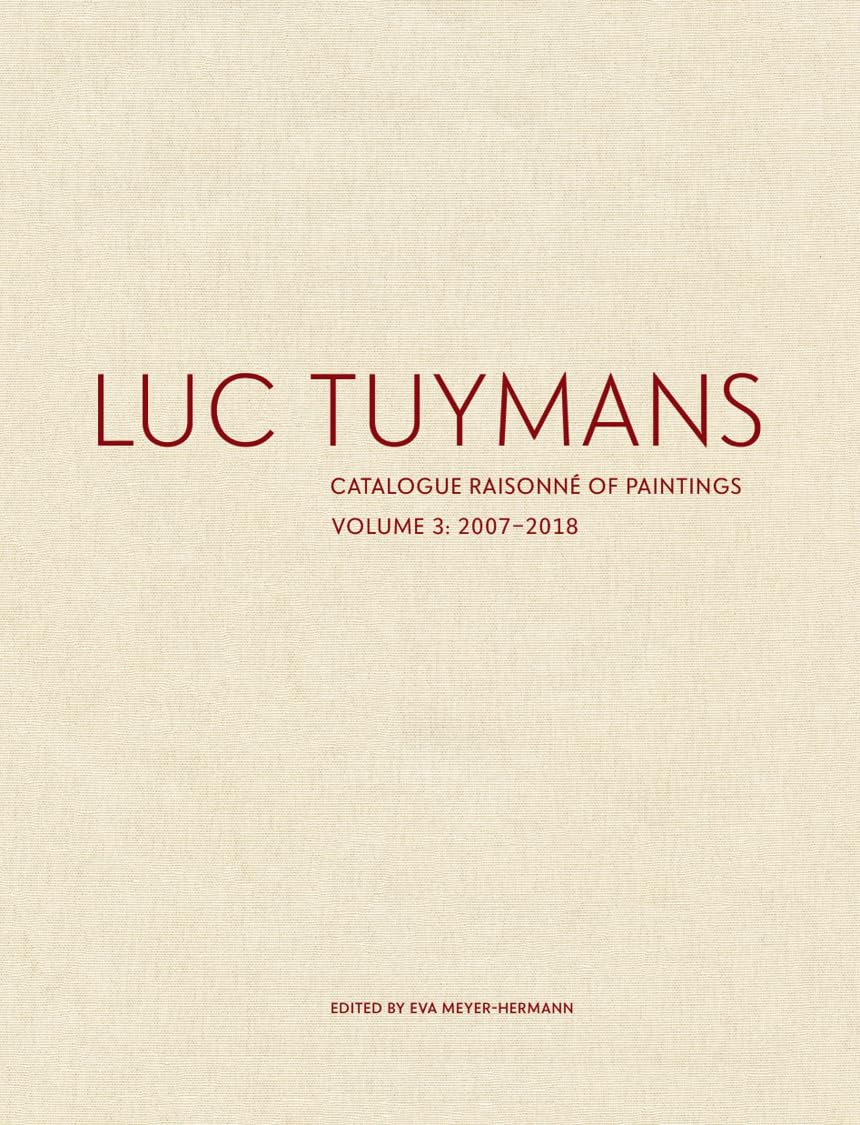
Eva Meyer-Hermann (ed.), Luc Tuymans: Catalogue Raisonné of Paintings, Volume 3: 2007–2018 (Yale University Press / David Zwirner Books): Shows Tuymans at his most explicitly political: religion, corporate culture, historical memory. This proves that the method is not limited to the early decades but is a structurally recurring logic. Volume 1 and Volume 3 together are the right pair; the thirty-year span makes the argument visible as argument, not just style.
Frequently asked questions
What is Luc Tuymans known for?
Tuymans is known for oil paintings that work from pre-existing photographs and media images rather than from life. His technique (re-photographing sources until detail is lost, then painting the degraded result in a single day) produces a muted, barely-there surface that addresses how images fail to transmit the past. The Museum of Modern Art, the Tate, and the Guggenheim hold his work.
Why does Luc Tuymans paint from photographs instead of from life?
The choice is philosophical, not practical. Tuymans has stated that his work comes from “an insane and very profound distrust of imagery”; by working from photographs rather than subjects, he makes the mediation the subject. The painting is about the photograph, which is about an event that the photograph already failed to capture. The layering of failures is what the work is about.
How does Luc Tuymans make his paintings?
Each final oil painting is completed in a single day. Before that day, Tuymans works through extensive preparatory material (drawings, photocopies, watercolors) and photographs his source images repeatedly until much of the detail is gone. The single-day rule is a formal constraint that produces the undercooked, unresolved surface his paintings are known for. The compression is deliberate: the painting is not allowed to become finished.
What is the meaning of The Secretary of State by Luc Tuymans?
The Secretary of State (2005), held in the permanent collection of the Museum of Modern Art, portrays Condoleezza Rice in a blurred, washed-out image sourced from an official press photograph. Rather than direct political commentary, the painting interrogates how official imagery constructs authority: how the press photograph of a public figure produces the appearance of power rather than documenting it. The painting makes that production visible by showing how far the image has already traveled from whatever it was supposed to represent.
Where can I see Luc Tuymans paintings in person?
Major institutional holdings are at the Museum of Modern Art in New York, the Tate in London, and the Solomon R. Guggenheim Museum in New York. Tuymans is represented by David Zwirner (New York, Los Angeles, London) and Zeno X Gallery in Antwerp. His most recent exhibition, ‘The Fruit Basket,’ ran at David Zwirner Los Angeles through April 4, 2026.
Is Luc Tuymans still painting?
Yes. Tuymans lives and works in Antwerp. He continues to exhibit internationally. His most recent show, ‘The Fruit Basket,’ was at David Zwirner Los Angeles (February 24–April 4, 2026), and ‘Luc Tuymans: The Past’ showed at the UCCA Center for Contemporary Art, Beijing, in 2025. His official studio site is luctuymans.be.
See also: Image, Memory, and Violence in Contemporary Painting, Art After Photography, Kehinde Wiley
For a sustained analysis of Tuymans’s formal commitment to unresolved surfaces — specifically the way refusal of visual clarity functions as argument rather than mannerism — see our companion piece, Why Luc Tuymans Refuses Clarity.

About Joe Post
Joe Post holds an MFA in Art from California Institute of the Arts (CalArts) and has done additional graduate work at the School of the Art Institute of Chicago. He founded Art Design Ideas to write about design as cultural argument — the decisions, contradictions, and assumptions built into the objects we live with.