
Luc Tuymans paintings are immediately recognizable: bleached palette, cropped compositions, figures suspended in a liminal space between visibility and erasure. These are not stylistic preferences but arguments. Tuymans refuses the visual clarity that would allow a viewer to receive an image as a statement, producing instead a structured, deliberate uncertainty.
What Tuymans was responding to when he picked up a brush in the 1980s
The argument Tuymans entered painting to make was not about painting. It was about images — what they can carry, what they distort, and what they are constitutionally incapable of representing. He arrived at this position through a specific set of pressures.
The first pressure was Flemish. Born in 1958 in Mortsel, near Antwerp, Tuymans trained at the Sint-Lukasinstituut in Brussels, then at the École Nationale Supérieure des Arts Visuels de la Cambre, then at the Royal Academy of Fine Arts in Antwerp, completing an art history degree at the Free University of Brussels in 1986, according to Wikipedia. That is an unusually complete formation.
The Flemish tradition saturating those institutions is unusually difficult to work inside. Tuymans has described the weight in direct terms: “Of course, as a Belgian painter I’m traumatized by the legacy of the Flemish primitives. His realism is so profound that it hurts. It’s a cold and ungenerous gaze on reality, with an enormous analytical backbone.” The quote is from an Artforum “1000 Words” piece, and it does something most artist statements don’t: it names the pressure as injury rather than influence.
The second pressure was historical. The Belgian painting tradition that formed him was not available as a model for engaging the specific difficulty of twentieth-century traumatic history — the Holocaust, colonialism, the structures of administered violence. The Flemish primitives could render the martyred body with excruciating precision; that precision was part of the problem. You cannot paint Dachau with the analytical backbone of van Eyck. The attempt to do so would produce something worse than silence.
The third pressure was institutional. By the early 1980s, painting was being declared spent — the postconceptualist consensus was that the medium was irredeemably complicit with commodity culture, with easel painting’s history as bourgeois decoration. Tuymans left painting for film and video in the early 1980s, returning to paint around 1985. The return was not sentimental. He had decided that painting’s limitations — its slowness, its incompleteness, its handmade delay, its inability to reproduce photographic detail — were not weaknesses but capacities. The medium’s difficulty was the right instrument for the subject.
The post-war tradition that elevated gestural authenticity and direct mark-making as ethical positions — the tradition Tuymans is explicitly working against — treated the painter’s hand as a guarantor of truth. Tuymans’s photographic sourcing was a direct refusal of this claim.
His first major museum presentations came in 1990, at the Provinciaal Museum voor Moderne Kunst in Ostend and the Vereniging voor het Museum van Hedendaagse Kunst in Ghent, according to David Zwirner. The international context followed: Documenta IX in 1992 brought him to the attention of European critics, and David Zwirner began representing him in 1994, among the gallery’s earliest artists.
Why the washed-out palette is an argument, not an aesthetic
Every formal decision in a Tuymans painting is a philosophical decision. This matters because the formal decisions are what most viewers see first: the pale, bleached color, the uncertain definition at edges, the sense that the image is receding even as you approach it. These qualities can be misread as mood, as melancholy, as a kind of Northern European atmospheric effect. They are none of these things.
The palette refuses emotional identification. When you stand in front of a Tuymans, Frieze has written, it is “as if we are seeing the world through a smudged window.” The smear is deliberate. It holds you at the edge of recognition rather than letting you into the image. This means it holds you at the edge of response. You cannot grieve what you cannot see clearly. You cannot be moved by an image that won’t declare what it is. The Brechtian term for this is distanciation — the deliberate interruption of identification to force analysis instead. Tuymans applies it structurally, through palette and edge, to every image he makes.
You cannot grieve what you cannot see clearly. You cannot be moved by an image that won’t declare what it is.
The source material is another philosophical decision. Tuymans paints exclusively from photographic and cinematic sources — magazine images, Polaroids, television footage, his own iPhone photographs, drawings. Never from life. This is not technical convenience. It is a position about perception: we do not encounter events directly; we encounter images of events, already mediated, already selected, already composed by someone else’s framing. The painting adds another layer of mediation to the stack. As the Brooklyn Rail described his practice in 2025, “His paintings are images of images of images, memories of memories, ghosts of ghosts.”
The relationship between Tuymans’s work and photography is examined in depth at Aperture, which noted that Tuymans “indexes a simultaneously rich and clouded present for the medium” by foregrounding the impossibility of adequate representation. That description of the formal problem is precise. The question is what problem requires this particular formal solution. The answer is: a subject matter in which adequate representation is impossible by definition — historical atrocity, complicity, the circulation of political power — and in which the pretense of adequate representation would be a moral failure.
In 2015, a Belgian court (the Rechtbank van eerste aanleg Antwerpen) found Tuymans liable for copyright infringement for A Belgian Politician (2011), a painting based on a photograph by Katrijn Van Giel taken without her permission. The court treated his use of the photograph as theft of intellectual property.
That ruling is not an embarrassment to the argument this article is making; it is a legal enactment of it. A court read Tuymans’s philosophical claim about mediation and the representation of representation as ordinary image theft, which is precisely the gap the work inhabits: between the artist’s position that he is painting images of images, and the law’s position that images are owned objects. The tension the paintings explore formally has real-world stakes he has had to answer for in court.
This is also why each painting is completed in a single day. Tuymans stated this practice plainly in the same Artforum piece: “All my works are executed in a single day. It’s the only way I can work. I’m too eager to see the image finished to let it develop over longer periods. It’s more like a take in filmmaking — I can always try one more time and start all over again, but I never return to a painting.” The one-day constraint is not about spontaneity or speed. It is about keeping the painting provisional. Returning to it would be improving it, and improvement would resolve what is supposed to remain unresolved.
The deeper problem of the image — what it means that a painting is always an image of another image, and whether that double remove from reality constitutes failure or accuracy — is the subject of the cornerstone essay on the problem of the image in Tuymans’s work.
How other painters have worked with pictorial ambiguity as a structural choice rather than a personal tendency is worth considering as a contrast. Kerry James Marshall‘s insistence on visibility as a political act — his refusal of under-illumination in painting Black figures — makes the sharpest possible argument against Tuymans’s approach. Both are structural decisions. They argue for opposite things.
Five Luc Tuymans paintings that show how the refusal works
Gaskamer (Gas Chamber), 1986
This is a small painting of the gas chamber at Dachau, based on a watercolor Tuymans made on site. The canvas is not rectangular — it is a slightly warped trapezoid. That distortion is not a compositional effect. It asserts the painting’s status as an object that registers its own inadequacy. This is not documentation; it is an image of the impossibility of documentation. According to David Zwirner, Gaskamer remains one of the defining works of his early career. The scale is important — the smallness of the painting against the enormity of what it points toward is itself the argument.
This is not documentation; it is an image of the impossibility of documentation.
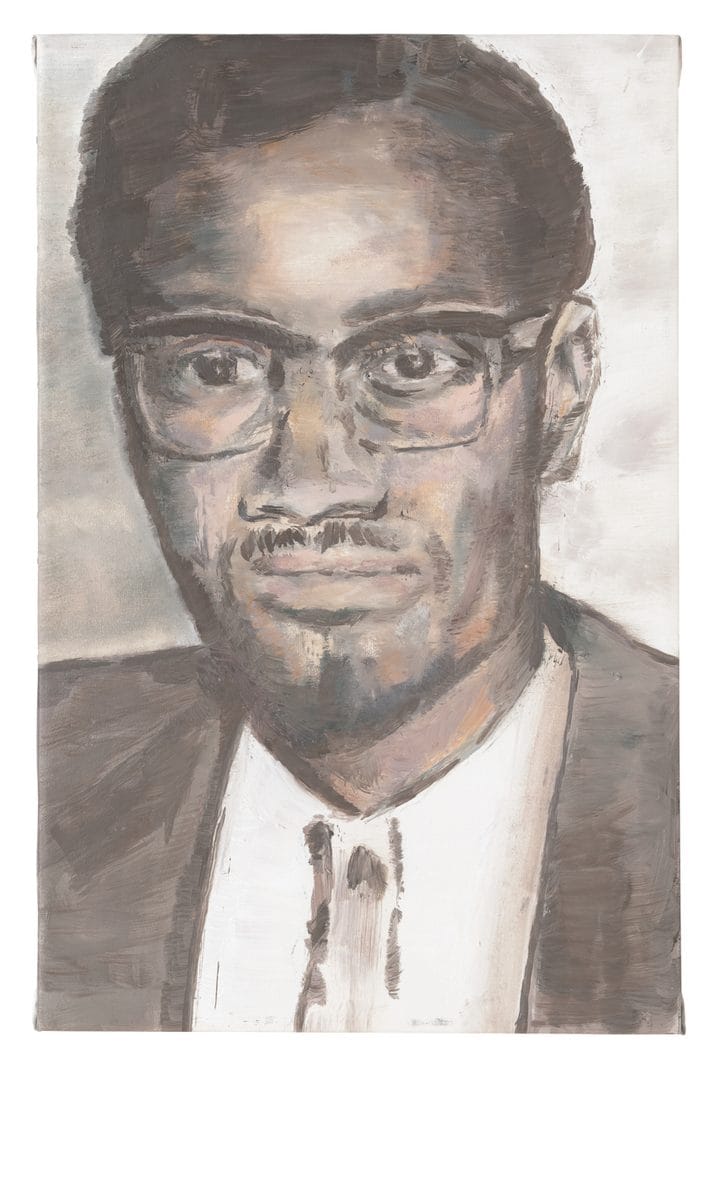
Die Zeit, 1988
Four panels combining a portrait of Nazi official Reinhard Heydrich with two images of spinach tablets and a cityscape. The juxtaposition refuses hierarchy — the monstrous and the banal are granted equal visual weight. What this does is refuse the viewer the comfort of locating evil in a face. Heydrich is not more visually significant than the spinach tablets. Die Zeit was shown at Documenta IX in 1992, establishing Tuymans’s international reputation in the exhibition record.
Der diagnostische Blick (The Diagnostic View), 1992
Ten paintings: portraits of the ailing human body, faces and bodies rendered as hollow shells rather than psychological studies. The title borrows medical language — the clinical gaze, the diagnostic view — and applies it to images that deliberately refuse clinical resolution. The series was made in the same year as Documenta IX. The bodies are identifiable as bodies and not much more; the clinical framing makes that incompleteness feel like a procedure rather than a failure of execution.
The Secretary of State, 2005
A portrait of Condoleezza Rice based on a television news image. The source image is legible, publicly circulated, recognizable. The painted result is sickly yellow-grey, the features uncertain, the face destabilized. This is a painting about how power circulates through mediated imagery — about what happens between the news camera and the viewer’s understanding of who Condoleezza Rice is. The painting does not make a statement about Rice. It makes a statement about the image of Rice, and about how little we understand of the difference.
Turtle, 2007
One of his most stripped images — a close-cropped view of a turtle, nearly abstract at the edges, the center barely resolved into recognizable form. The subject is neutral, or appears neutral. What the painting demonstrates is that the method operates on apparently innocent subjects to the same effect as historical ones. The refusal of resolution is not dependent on difficult content. The content is the occasion; the argument is structural.
Shop the collection
Three books constitute the serious working library on Tuymans. These three cover the full arc of the project, from its formation through its mature period, and include the primary-source conversation material that most criticism about him lacks.
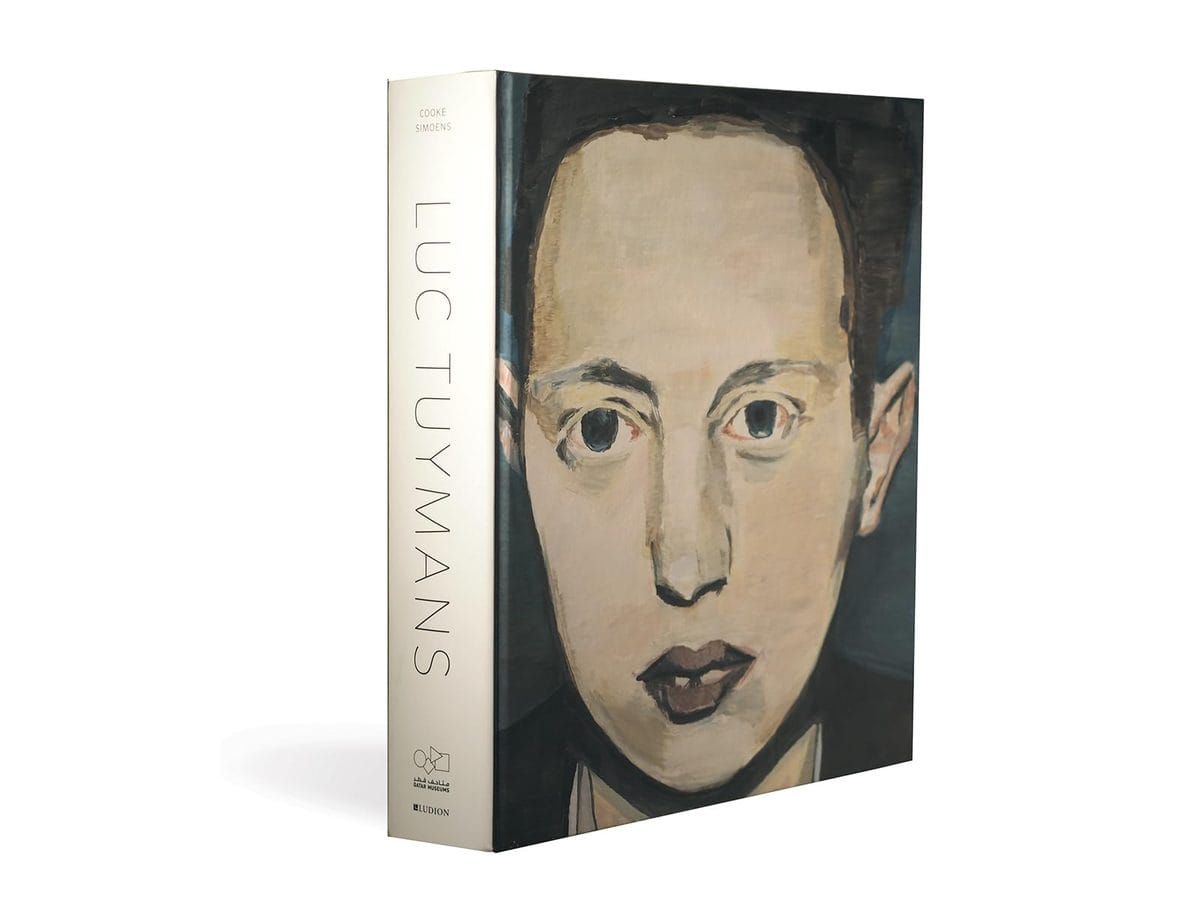
Luc Tuymans survey catalogue, Helen Molesworth ed. (Wexner Center / SFMOMA, 2009)
The authoritative critical account from his first full-scale American retrospective — the single most comprehensive survey of the historical-memory argument up to that date. Molesworth’s framing is direct and the critical essays are the best concentrated introduction to what the work is doing.
The Image Revisited: Luc Tuymans in Conversation with Hans De Wolf, T.J. Clark & Gottfried Böhm
Three conversations between Tuymans and major art historians — T.J. Clark is among the most rigorous writers on the relationship between painting and politics currently working. This is primary-source material, not secondary commentary. Tuymans on Baroque precedents and the problem of pictorial truth, in his own words.
Eva Meyer-Hermann, Luc Tuymans: Catalogue Raisonné of Paintings, Volume 1: 1972–1994 (Yale University Press)
The scholarly foundation — nearly 200 documented works from the years when the argument was being built. The period 1972–1994 includes Gaskamer, Die Zeit, Der diagnostische Blick, and Documenta IX. If you need to understand how the method was arrived at rather than just what it produces, this is where that history is recorded.
Further reading
The literature on contemporary figurative painting is where the larger argument about what Tuymans represents lives — see the literature on contemporary figurative painting for a broader orientation. Within Tuymans’s specific catalog, two volumes extend the library above into his later work.
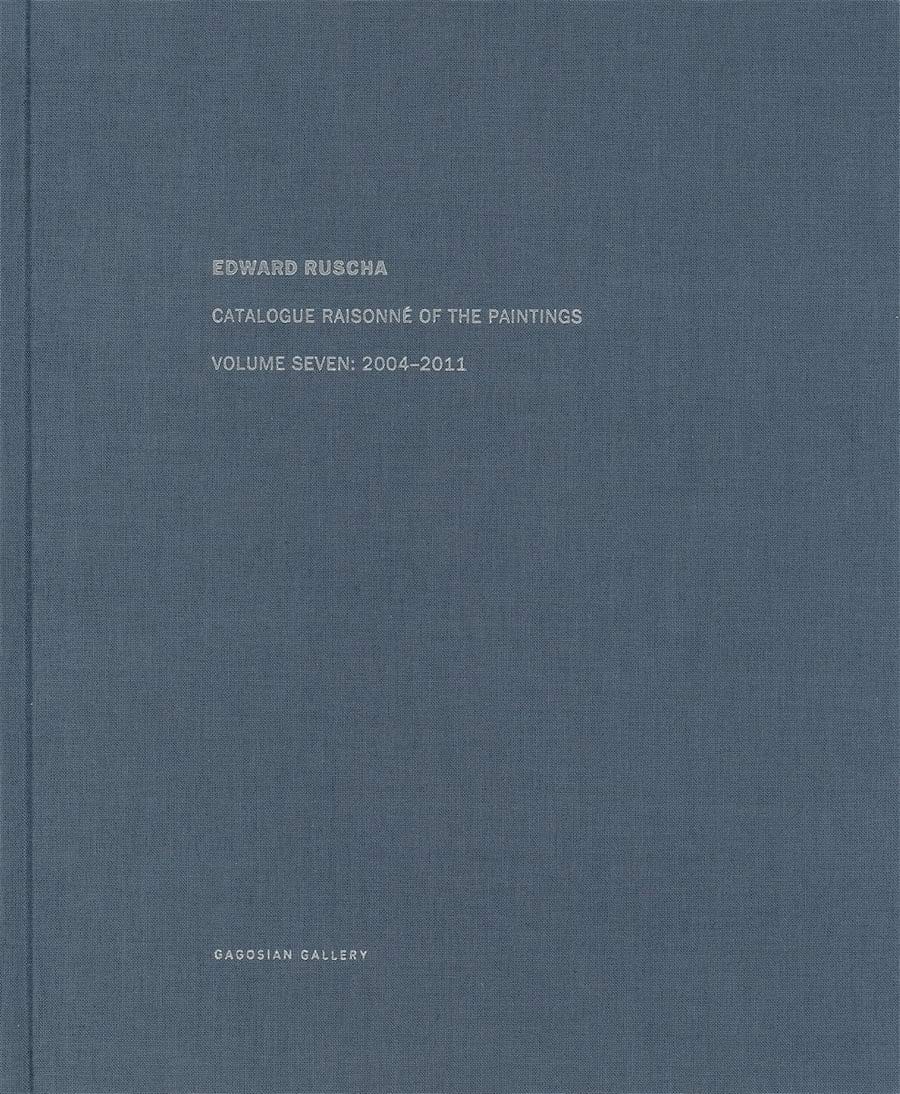
Eva Meyer-Hermann, Luc Tuymans: Catalogue Raisonné of Paintings, Volume 3: 2007–2018 (Yale University Press, 2021)
The most recent complete catalogue volume, covering the decade in which Tuymans addressed religion, corporatization, and cultural memory in his most formally confident work. Paired with Volume 1, it gives you the full arc — from the formation period through the mature argument.
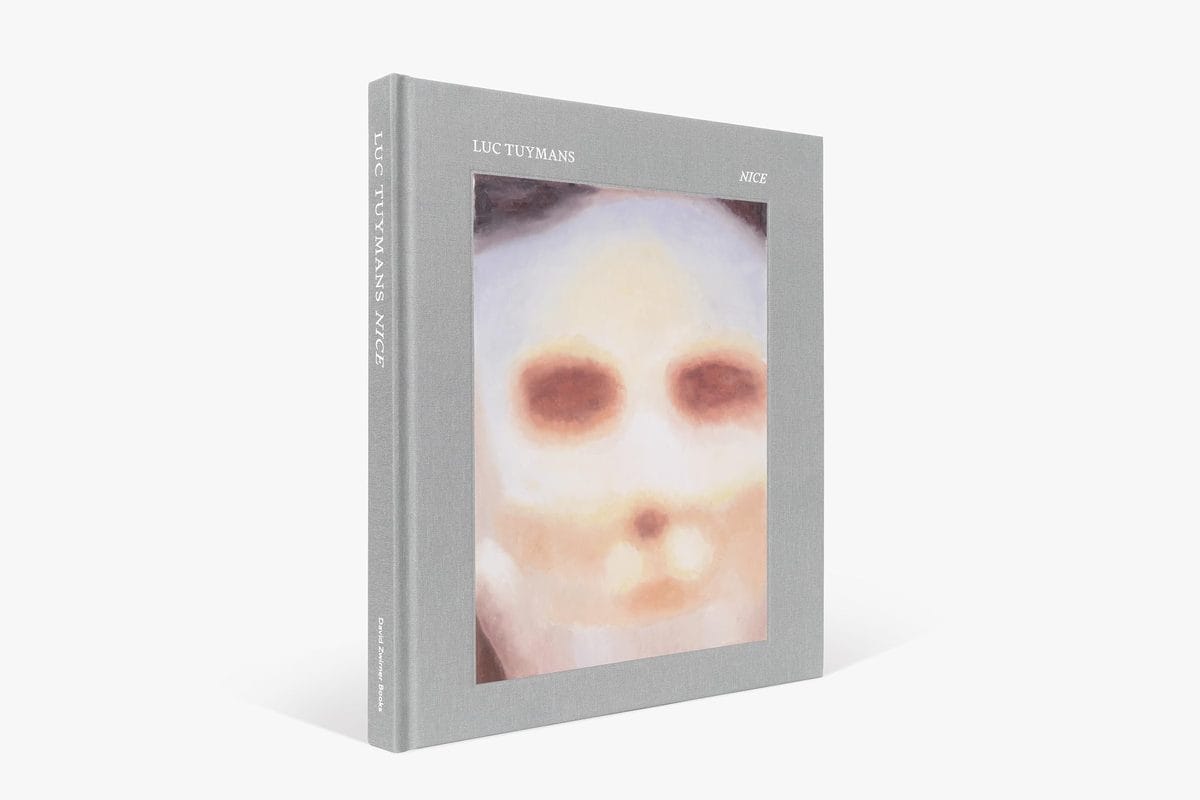
Luc Tuymans: Nice (David Zwirner Books, 2023)
Documents three exhibitions from 2020–2023. Joshua Cohen and Jonathan Crary provide the critical framing. Crary’s work on attention and perception is directly relevant to the question of what Tuymans is doing with the refusal of visual resolution. This is the volume to read if you want to know whether the argument has deepened or merely continued. The answer, for readers who want it before purchasing: it has deepened. If you want to build out the broader shelf beyond these Tuymans volumes, serious design and art history reading covers the essential library.
Frequently asked questions
Why does Luc Tuymans use such a pale, washed-out palette?
The bleached palette is a structural argument, not an atmospheric effect. By refusing saturated color and strong tonal contrast, Tuymans prevents viewers from emotionally identifying with his images. The technical term from Brecht is distanciation — the deliberate interruption of emotional immersion in favor of analytical attention. Tuymans applies it through paint: you are held at the edge of recognition rather than pulled into the image, which means you are forced to think about what you are seeing rather than feel about it.
What subjects does Luc Tuymans paint?
His subjects span historical atrocity (the Holocaust, colonialism), contemporary political imagery, the ordinary domestic object, and apparently neutral natural subjects. The range is wide. What is consistent is the method: all subjects are treated through the same formal refusal of clarity, which means the monstrous and the banal receive equal visual weight. His work is held in the collections of the Museum of Modern Art, the Centre Georges Pompidou, the Art Institute of Chicago, the National Gallery of Art, and the Tate, among others.
How long does it take Luc Tuymans to finish a painting?
Each painting is completed in a single day. Tuymans stated this directly in an Artforum interview: “All my works are executed in a single day. It’s the only way I can work. I’m too eager to see the image finished to let it develop over longer periods. It’s more like a take in filmmaking — I can always try one more time and start all over again, but I never return to a painting.” The constraint is not about spontaneity; it is about keeping the image provisional and incomplete, which is precisely what the work requires.
Is Luc Tuymans considered a figurative painter?
Yes, though the category barely holds. He works with recognizable subjects — faces, bodies, rooms, objects — but renders them with enough uncertainty that the figures are often more presence than image. TheArtStory has described him as having “reinvented history painting for the present day.” The figurative tradition he is most clearly working inside and against is the Flemish primitives, whose analytical precision he has explicitly named as a standard he refuses to compete with directly.
What is the relationship between Tuymans’s paintings and photography?
Tuymans paints exclusively from photographic and cinematic sources: magazine images, Polaroids, television footage, his own drawings, iPhone photographs. He never paints from life. This is a philosophical position about perception: events are not perceived directly but only through mediated copies. The painting adds another layer of mediation to an already-mediated source. His work has been described by Frieze as creating “flattened, indirect views in a muted, melancholic palette, as if we are seeing the world through a smudged window.” The smear is not technical limitation — it is the point.
How does Luc Tuymans approach historical subjects like the Holocaust?
With deliberate indirection. Gaskamer (1986), his painting of the Dachau gas chamber based on a watercolor made on site, is a small canvas on a warped trapezoid stretcher. The distortion asserts the painting’s inadequacy as documentation rather than hiding it. Die Zeit (1988) juxtaposes a portrait of Reinhard Heydrich with spinach tablets, granting both equal visual weight. The strategy in both is to refuse the visual rhetoric that would make atrocity legible as atrocity — because that legibility is a false resolution. The difficulty of the subject requires a form that remains difficult.

About Joe Post
Joe Post holds an MFA in Art from California Institute of the Arts (CalArts) and has done additional graduate work at the School of the Art Institute of Chicago. He founded Art Design Ideas to write about design as cultural argument — the decisions, contradictions, and assumptions built into the objects we live with.