
The best books on contemporary painting are not surveys — they are committed positions. This list gives you five titles that change how you look: a close reader who spent months with two Poussin landscapes, a Belgian painter whose catalogs argue through image sequencing, a critic who traced how photography learned from painting’s hardest lessons.
Our top picks
These five books share one quality that the survey genre lacks: each one forces you to take a position. Not whether contemporary painting is healthy or exhausted. Rather, you decide how to look at a specific object for long enough that it stops being familiar. Start here if you want to read about contemporary painting in a way that changes how you work or look, not just what you know.
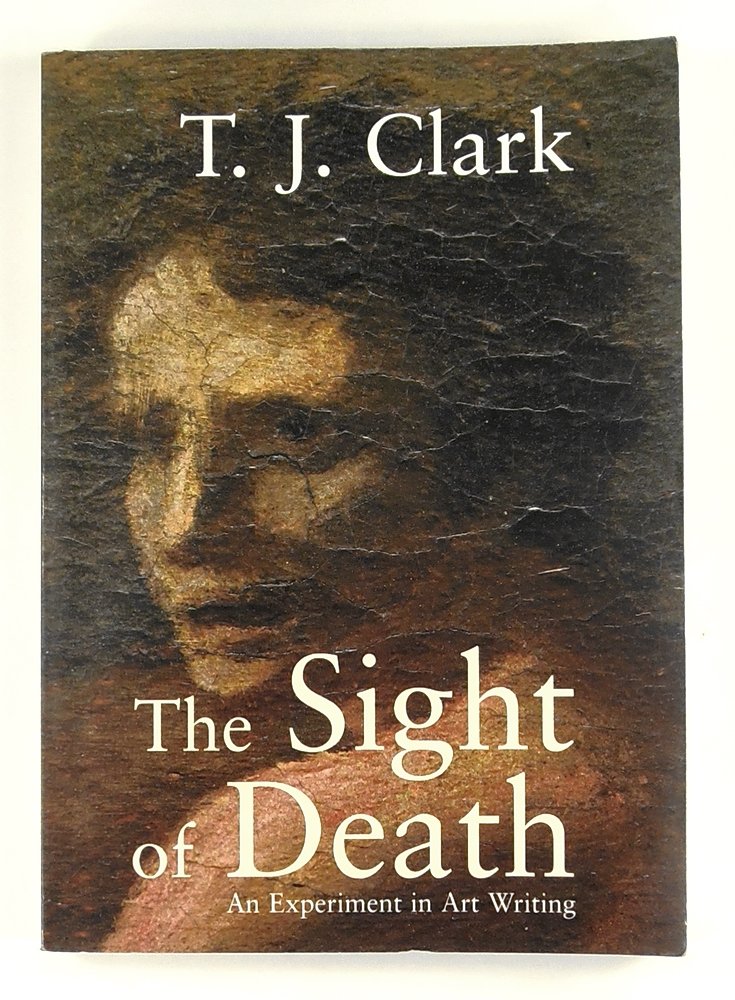
T.J. Clark, The Sight of Death: An Experiment in Art Writing (Yale UP, 2006)
Price range: Mid-Range
Clark kept a daily journal of his visits to two Poussin paintings, Landscape with a Man Killed by a Snake (National Gallery, London) and Landscape with a Calm (Getty Museum), during a residency at the Getty Research Institute in the early 2000s. The method was a formal choice: Clark had spent the previous three decades writing Marxist art history in the register he later called “the battle cry of the polemical,” and The Sight of Death was a deliberate departure from that. The result is the most demanding and useful model of slow looking available in print.
T.J. Clark, The Sight of Death (Yale UP, 2006)
Michael Fried, Why Photography Matters as Art as Never Before (Yale UP, 2008)
Price range: Mid-Range
Fried’s argument runs like this: large-format photography from the 1980s forward (Jeff Wall, Thomas Struth, Thomas Demand) absorbed and redirected the anti-theatrical pictorial tradition that runs from Diderot through 18th- and 19th-century French painting to Manet. If you have not read Fried’s earlier Absorption and Theatricality: Painting and Beholder in the Age of Diderot (1980), you will miss some of the architecture. But the core claim stands on its own: painting’s deepest problems became photography’s problems, not despite their difference but because of it. Robin Kelsey, reviewing the book for Artforum in January 2009, called it “an enormously ambitious and profoundly unresolved effort to enlarge the notions of theatricality and absorption.” He did not mean that as dismissal. Unresolved is what the argument earns.
Michael Fried, Why Photography Matters as Art as Never Before (Yale UP, 2008)
Luc Tuymans, La Pelle (Marsilio Editori, 2019)
Price range: Mid-Range
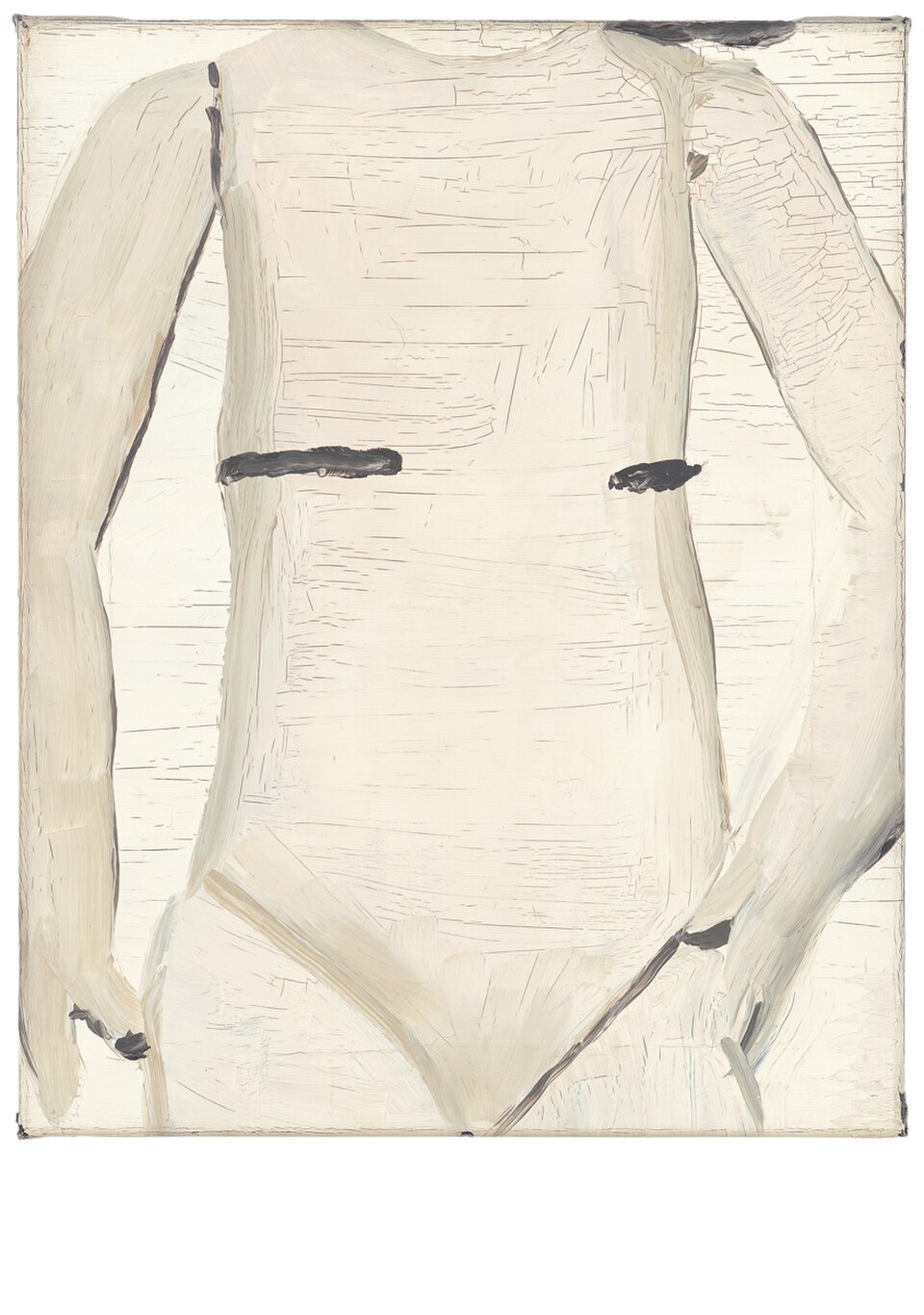
La Pelle (Italian for “the skin,” borrowed from Curzio Malaparte’s 1949 novel about WWII-occupied Naples) was produced for Tuymans’s first major retrospective in Italy, at the Palazzo Grassi in Venice (Pinault Collection), 2018–2019. The catalog’s contributors (Patricia Falguières, Jarrett Earnest, Marc Donnadieu, Caroline Bourgeois) do not agree with each other. That disagreement is not an editorial failure; it enacts Tuymans’s own central concern: the permanent ambiguity between fiction and reality, and whether any image can portray what actually happened. The sequencing of works carries arguments that neither essay nor image alone can make. This catalog belongs on this list as a primary document, not supplementary reading.
Luc Tuymans, La Pelle (Marsilio Editori, 2019)
Thomas McEvilley, Sculpture in the Age of Doubt (Allworth Press / School of Visual Arts, 1999)
Price range: Mid-Range
McEvilley (1939–2013) trained as a classicist in Greek literature and joined Artforum in 1981. This collection gathers his criticism from the late 1970s through the mid-1990s, covering the transition from Minimalism and Conceptualism through what he refused to call the triumph of pluralism. The title says sculpture, because Artforum’s priorities in that period tilted that way. But the arguments address the broader condition of postmodern art under pluralism (painting included), and they ask the question no survey bothers with: what did pluralism actually demand of practice, not just permit? McEvilley’s philosophical range, confirmed across 437 pages, forces an answer.
Thomas McEvilley, Sculpture in the Age of Doubt (Allworth Press, 1999)
Isabelle Graw, High Price: Art Between the Market and Celebrity Culture (Sternberg Press, 2010)
Price range: Mid-Range
Graw is Professor for Art Theory and Art History at the Städelschule in Frankfurt and co-founder of Texte zur Kunst. Her argument in High Price is not that the market corrupts art or that art transcends commerce. It is that art and the market have to escape each other precisely because they are so deeply entangled. Art is a commodity unlike any other because it has a use value that exchange value cannot fully absorb. Anyone trying to understand why contemporary painting prices behave as they do, and what that behavior means for the work itself, needs this book.
Isabelle Graw, High Price (Sternberg Press, 2010)
Quick decision guide
Best overall: T.J. Clark, The Sight of Death. For anyone who wants to learn what it means to stand in front of a painting and actually look rather than recognize.
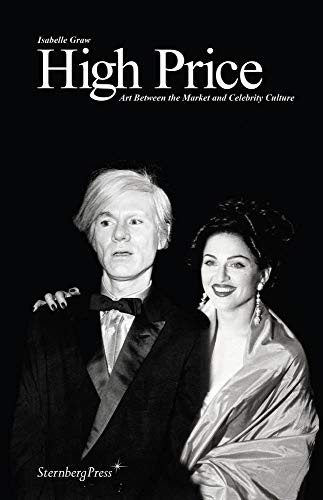
Best for understanding the market: Isabelle Graw, High Price. For collectors, students, and anyone trying to understand why prices detach from quality without collapsing into cynicism.
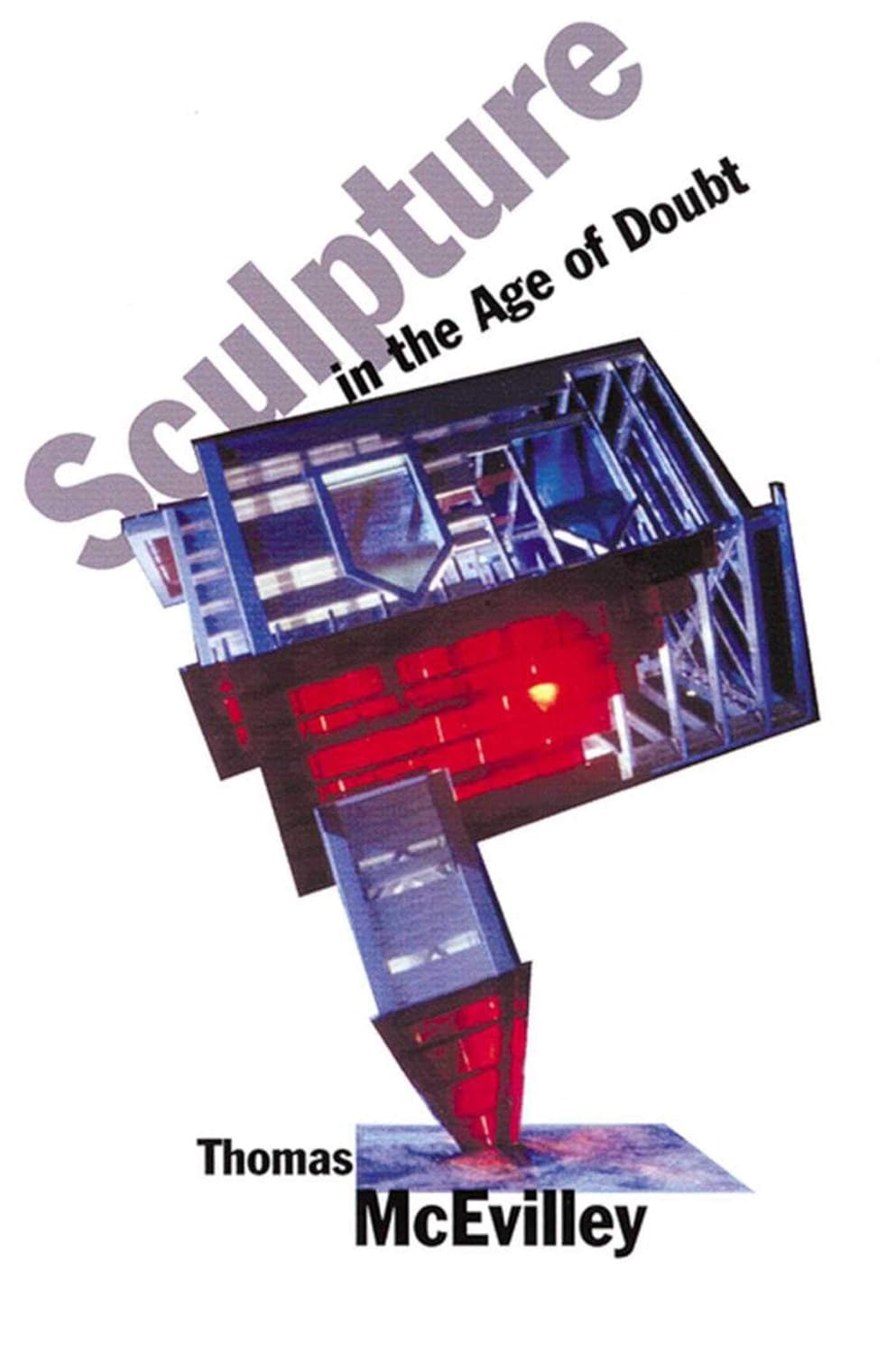
Best entry point into contemporary theory: Thomas McEvilley, Sculpture in the Age of Doubt. For readers coming from studio practice or philosophy who want criticism with intellectual spine rather than survey breadth.
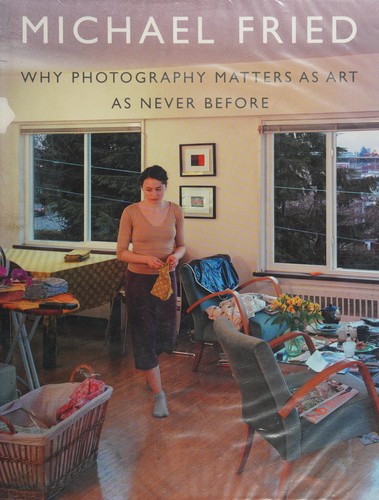
Best for understanding painting’s relationship to photography: Michael Fried, Why Photography Matters. For photographers, painters, and anyone working in image culture who wants to understand why certain photography ends up on museum walls.
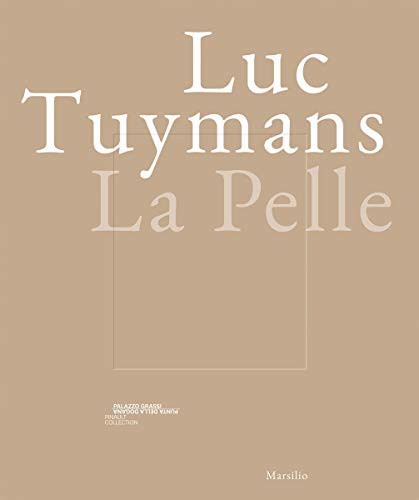
Best catalog as argument: Luc Tuymans, La Pelle. For those who want to see how image sequencing carries meaning that a text essay cannot, and for whom the work matters more than the institution.
For design reading more broadly, the wider design reading list covers related territory outside painting and criticism.
Full comparison
| Book | Author | Published | Focus | Best For | Link |
|---|---|---|---|---|---|
| The Sight of Death | T.J. Clark | 2006 | Ekphrastic slow looking | Learning to look | Buy |
| Why Photography Matters as Art as Never Before | Michael Fried | 2008 | Photography and painting theory | Image culture readers | Buy |
| La Pelle | Luc Tuymans | 2019 | Retrospective catalog as argument | Catalog-as-argument | Buy |
| Sculpture in the Age of Doubt | Thomas McEvilley | 1999 | Postmodern pluralism criticism | Studio practitioners | Buy |
| High Price | Isabelle Graw | 2010 | Art market and value theory | Market understanding | Buy |
Which book is right for you?
T.J. Clark, The Sight of Death
Pros:
- Methodologically original: the journal-as-criticism format is not a conceit but a careful formal choice that models genuine looking
- Slow-reading method transfers directly to any painting, not just Poussin or any single subject
- Clark’s turn away from his own earlier Marxist register is itself documented here; you get the self-critique along with the argument
- Spare and readable, not demanding in the way theoretical texts are demanding
Cons:
- Narrow in scope: two paintings, one artist, one Getty residency
- Yale UP paperback can be difficult to find new at list price; secondary market prices vary
Who it’s for: Painters, critics, and anyone (at any level) who wants a practical model of how to spend time with a single work.
Why it stands out: No other book in print shows the act of looking developing in real time across weeks and months rather than presenting its conclusions as settled.
Michael Fried, Why Photography Matters as Art as Never Before
Pros:
- Clarifies four decades of confusion about why certain large-format photography belongs in art museums rather than commercial galleries
- Makes a testable claim: you can hold Fried’s absorption/theatricality argument against specific works and see whether it holds
- 409 pages with color and black-and-white reproductions throughout
Cons:
- Presupposes familiarity with Fried’s earlier Absorption and Theatricality: Painting and Beholder in the Age of Diderot (1980); readers without that context will get less from the argument’s architecture
- Fried’s polemical certainty will not suit every reader; he argues, he does not survey
Who it’s for: Photographers, painters, and critics working in image culture who want to understand why the discipline boundary between painting and photography collapsed in the way it did.
Why it stands out: It is the only book that takes painting’s theoretical problems seriously as photography’s inheritance rather than treating the two media as competitors.
Luc Tuymans, La Pelle
Pros:
- Reproduction quality is exceptional: this is a Palazzo Grassi / Pinault Collection production, not a standard gallery catalog
- Multiple critical voices (Falguières, Earnest, Donnadieu, Bourgeois) in productive disagreement, not institutional consensus
- The catalog enacts Tuymans’s argument rather than merely describing it; the sequencing of works is itself a curatorial statement
Cons:
- This is a catalog, not a critical text; it does not offer a methodology you can apply elsewhere
- Tuymans-specific throughout: if you do not already care about his work, this is not where to start
- Limited print run means availability can be inconsistent
Who it’s for: Those who already have some engagement with Tuymans’s work and want to understand how his practice and the question of ambiguity between fiction and reality hold together across a career.
Why it stands out: It is a primary document of contemporary painting practice, not a secondary account of it. The difference matters.
Thomas McEvilley, Sculpture in the Age of Doubt
Pros:
- Breadth is genuine: collected Artforum criticism from the 1970s through the mid-1990s, spanning the transition from Minimalism through postmodern pluralism
- McEvilley’s classicist training gives his philosophical arguments a grounding that most art criticism lacks
- Asks the questions that pluralism’s advocates avoided, particularly about what that condition demanded of practice
Cons:
- The title’s sculpture focus is real; painting readers will find some chapters peripheral
- Published in 1999, so the 2000s and after are absent; the book does not address where the arguments landed
- The Artforum format means some pieces are stronger than others; this is a collected volume, not a unified argument
Who it’s for: Studio practitioners and readers with a philosophy or literature background who want criticism that treats postmodernism as a condition to be analyzed, not a period to be celebrated.
Why it stands out: McEvilley is one of the few critics of that period whose training allowed him to ask whether pluralism was coherent, not just whether it was liberating. The Bauhaus bibliography offers a useful parallel: theory books that shaped how a movement was understood, not just described — books that changed how a movement was understood work the same way McEvilley works here.
Isabelle Graw, High Price
Pros:
- Careful philosophical argument about art’s commodity status that does not collapse into either cynicism about the market or naive claims for art’s transcendence
- Graw’s position as co-founder of Texte zur Kunst and professor at the Städelschule gives the argument credibility from inside the field
- 248 pages: tight and arguable, not exhaustive
Cons:
- Published in 2010, so the NFT era and ultra-contemporary auction dynamics fall outside its scope
- Graw’s argument is philosophical before it is empirical; readers who want data and market analysis will find this unsatisfying
- Sternberg Press titles can be hard to source quickly at standard retail prices
Who it’s for: Anyone trying to think clearly about the relationship between artistic quality and market value: collectors, students, critics, and painters who want to understand the system they are working inside.
Why it stands out: It refuses both of the available positions — art as transcendent, market as corrupting — and builds a third argument. That discipline is rare.
Why positions matter more than surveys in contemporary painting
Most books about contemporary painting describe. They tell you what movements emerged, who the figures were, what the critical reception looked like. The five books on this list do something different: each one argues. Each one commits to a position that can be wrong, and stakes something on being right.
T.J. Clark’s ekphrasis and Fried’s theoretical framework share more than they appear to share. Both are committed to the specific object over the trend summary. Clark’s journal stays with two paintings for months because that is what care costs when you want to understand something rather than position it. Fried’s absorption/theatricality distinction takes a single critical concept and follows it without relaxing its demands, across Diderot, across Manet, into Jeff Wall and Thomas Struth.
Graw’s market critique is a form of looking, not just economics. When she argues that art has a use value that exchange value cannot fully absorb, she is making a claim about what paintings do, which means she belongs alongside Clark and Fried rather than in a separate category of market writing.
The Tuymans catalog is here because it is a primary document. The sequencing of works in La Pelle, across the full range of his practice, carries an argument about ambiguity and representation that you cannot get from reading about Tuymans. You get it from following the images in the order they were placed.
The survey problem is not that surveys are wrong. It is that they train a particular kind of attention (broad, comparative, periodizing) that is not the attention painting rewards. The broader design reading list includes surveys that earn their breadth. This list earns something different: a way of looking that you did not have before.
Frequently asked questions
What is the best book to start with if I know nothing about contemporary painting theory?
Start with T.J. Clark’s The Sight of Death. It requires no prior knowledge of art theory and no familiarity with the art-historical arguments Clark made elsewhere. The book is a journal of looking at two paintings over several months. What it asks of you is attention, not background.
How is T.J. Clark’s The Sight of Death different from a standard art history book?
A standard art history book builds an argument about context: who made something, when, under what conditions, in relation to what other work. The Sight of Death records Clark’s changing perceptions of two paintings across dozens of visits, including what he could not explain and what kept shifting. The form is the argument: slow, partial, empirical looking, documented in real time. Clark, writing in Word & Image (Vol. 34, No. 2), described this project as a departure from the polemical register of his earlier Marxist art history, not a rejection of that history but a deliberate change of register.
Why does Michael Fried think photography matters for understanding painting?
Fried’s argument in Why Photography Matters as Art as Never Before (Yale UP, 2008) is that large-format photography from the 1980s forward (Wall, Struth, Demand) absorbed and redirected the anti-theatrical pictorial tradition that runs from Diderot through Manet. Painting had worked for centuries to absorb the beholder, creating a world in which the viewer’s presence is not acknowledged, where figures are lost in action or contemplation. Fried argues that contemporary photography took that problem on directly. Understanding why requires knowing what the problem was, which is why the Diderot argument matters.
Is Isabelle Graw’s High Price useful if I’m not interested in the art market?
Yes, because the book is not primarily about the market. It is about what makes art different from other commodities. Graw, Professor for Art Theory and Art History at the Städelschule Frankfurt and co-founder of Texte zur Kunst, argues that art has a use value that cannot be fully absorbed by exchange value. That argument is relevant to anyone trying to understand what paintings do, not just what they sell for. The market is the lens; the subject is value.
What makes Luc Tuymans’s La Pelle catalog worth owning if you can see the images online?
The argument is in the sequencing, and sequencing does not survive digital display. The Palazzo Grassi retrospective (Tuymans’s first major retrospective in Italy, 2018–2019) was organized around Curzio Malaparte’s 1949 novel La Pelle, which treats the ambiguity between fiction and documented reality as its subject. The way the catalog moves through Tuymans’s work, which paintings follow which, where the breaks fall, enacts that same ambiguity in a way that a browser window and a set of JPEGs does not. The reproduction quality of a Pinault Collection production also exceeds what any screen renders.
Are these books accessible to readers without an art history background?
Clark’s The Sight of Death is accessible to anyone willing to look slowly. Graw’s High Price is philosophically demanding but does not require art-historical knowledge; it requires a willingness to follow an argument carefully. Fried’s Why Photography Matters benefits from knowing his earlier work on Diderot; without that context, some of the argument’s weight is lost. McEvilley’s collected criticism assumes familiarity with the artists he is writing about, though not with art-historical methodology. The Tuymans catalog assumes you already care about Tuymans’s work. For context on contemporary painting practice and what the work looks like in the studio, that profile is a useful companion to the theory here.
See also: Art After Photography, Image, Memory, and Violence in Contemporary Painting, The Best Books on Conceptual Art

About Joe Post
Joe Post holds an MFA in Art from California Institute of the Arts (CalArts) and has done additional graduate work at the School of the Art Institute of Chicago. He founded Art Design Ideas to write about design as cultural argument — the decisions, contradictions, and assumptions built into the objects we live with.