
Contemporary painting violence and memory describes a strand of post-1980 figurative work in which painters — Luc Tuymans, Kara Walker, Jean-Michel Basquiat, and Kerry James Marshall among them — use the canvas to work on the viewer’s relationship to historical atrocity rather than represent it. These paintings do not illustrate history. They argue against their own seductiveness.
What Made These Painters Return to History When Painting Was Supposed to Be Over
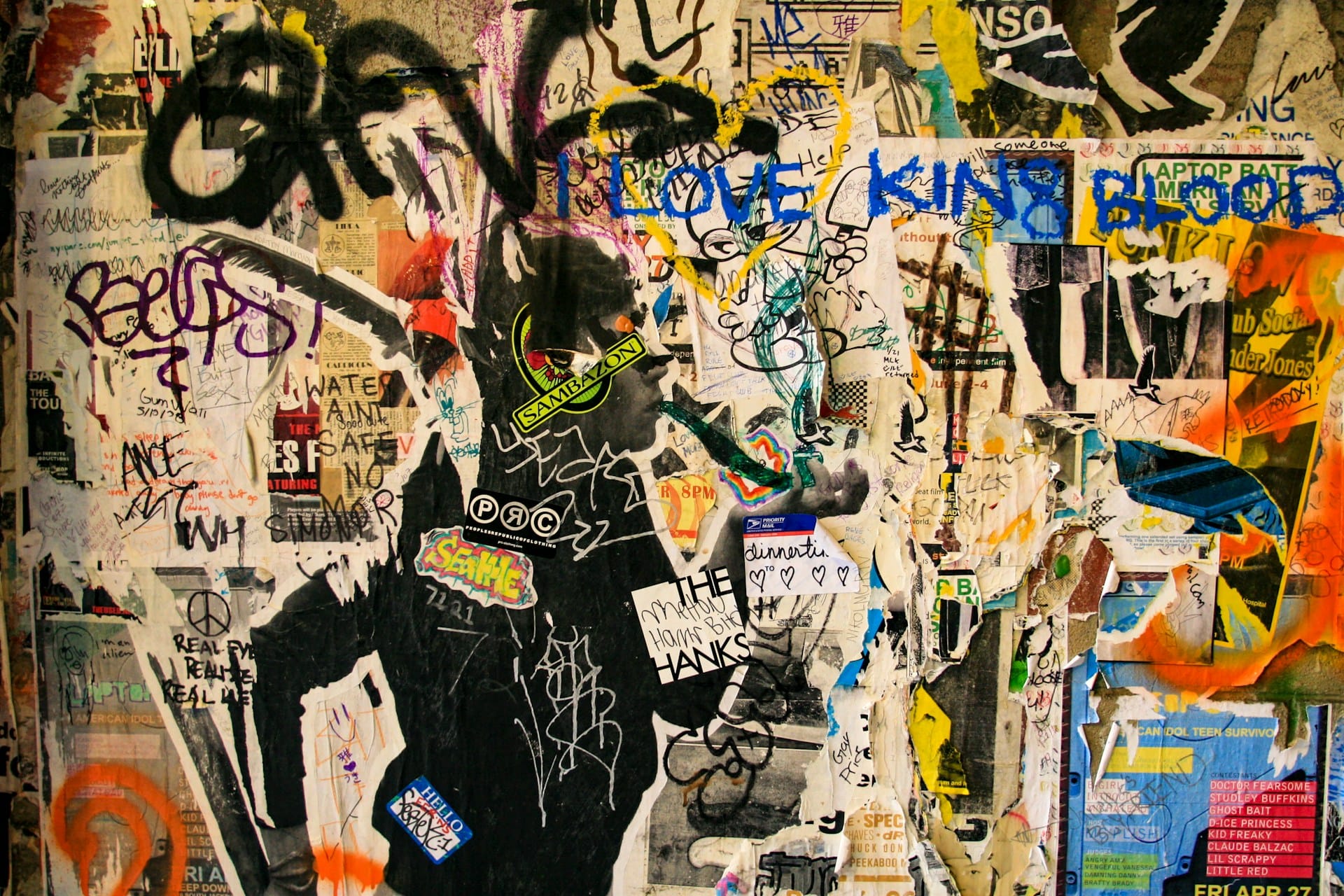
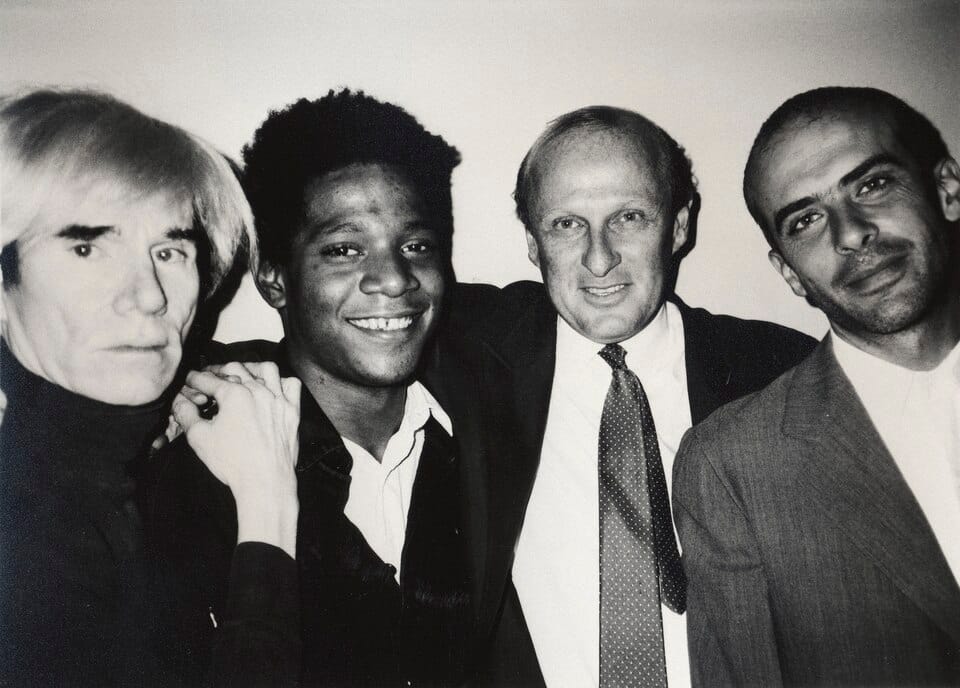
By the early 1980s, the critical discourse had largely declared painting finished. Not that painters stopped: Basquiat was tagging the D train and the walls of SoHo. October magazine’s theorists were simultaneously writing the medium’s obituary. Rosalind Krauss, Hal Foster, and the Pictures Generation critics had made a persuasive case that painting’s expressive claims were exhausted, that the medium could no longer assert presence without self-delusion. The debate was real, even if the premise was overstated. And into that specific cultural moment, a generation of figuration returned — not despite the exhaustion of the medium, but because of it. A washed-out, second-hand image is more honest about historical trauma than a vivid one. If the medium is failing, that failure can be the subject.
The four painters this post is concerned with came from distinct circumstances, but they share a formal logic: they use painting’s limitations against themselves. Luc Tuymans, born in 1958 in Mortsel, a suburb of Antwerp, grew up in a country that had not fully reckoned with its wartime collaboration. His paternal uncles were Hitler Youth members. His maternal family hid Jewish refugees. That domestic irresolution — living inside both sides of the same history — is not a theme in his work. It is the engine.
Kerry James Marshall, born in Birmingham, Alabama, in 1955, moved with his family to South Central Los Angeles and grew up in the neighborhood of Watts just before the 1965 uprising. He studied under Charles White at Otis Art Institute, finishing his BFA in 1978. White’s influence matters: African American social realism, figuration as a political act, the insistence on representing Black life in a medium that had systematically refused it. Marshall has described himself as a history painter working on what he calls “the lack in the image bank” — the structural absence of Black figures from the Western painting tradition. He was not filling a gap. He was naming one, then producing presence in its place.
Jean-Michel Basquiat entered the New York art world through SAMO, the graffiti tag he developed with Al Diaz and Shannon Dawson across SoHo’s Lower East Village and the D train beginning around 1978. By 1982, at age 21, he was the youngest artist to exhibit at Documenta — roughly sixty paintings. He was simultaneously celebrated and exoticized, and he knew it. The crown motif that appears across his canvases from the early 1980s onward is not decorative. It asserts Black people as royalty and as saints in a market that was rendering him spectacular at the same time it was rendering him other. He died of a drug overdose on August 12, 1988, at 27.
Kara Walker, born in Stockton, California, in 1969, completed her BFA at the Atlanta College of Art and her MFA at the Rhode Island School of Design. Her first major work came in 1994, the same year as Marshall’s Many Mansions: a 50-foot cut-paper silhouette installation titled Gone: An Historical Romance of a Civil War as It Occurred Between the Dusky Thighs of One Young Negress and Her Heart. She was 24. The MacArthur Fellowship followed in 1997, when she was 28 — one of the youngest recipients on record.
These four painters were working in the aftermath of the Abstract Expressionist painting that this generation was both inheriting and refusing. That inheritance is not incidental. AbEx had made the canvas a site of individual psychic truth — the painter’s gesture as self-disclosure. What this generation rejected was not figuration but the premise that the self was sufficient subject matter. The historical atrocity was the subject. The question was whether painting could be honest about its own inadequacy to that subject. For Tuymans and Marshall especially — artists who have known each other for over two decades, whose extended conversation was documented in BOMB Magazine in 2005 — the shared project was precisely “probing the failures of representation” in a medium whose history of those failures runs deep.
Why the Painting Refuses to Let You Feel Better

Each of these four painters made a formal decision that is also an intellectual position. The form is not the vehicle for the argument. The form is the argument.
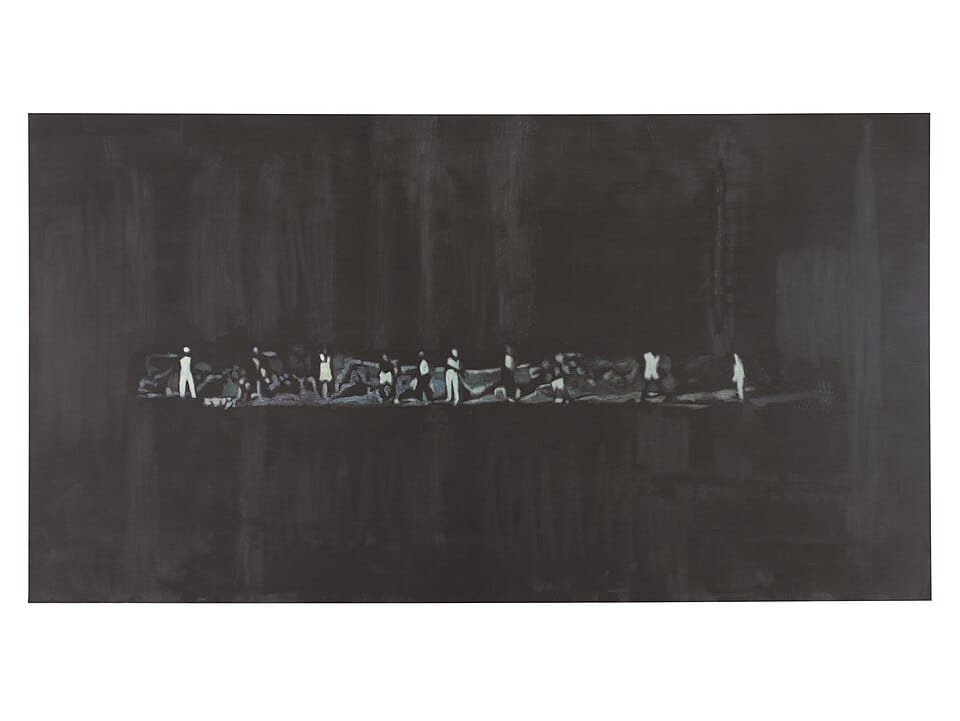
Tuymans executes every painting in a single day. Thin oil washes, desaturated palette, the image faded before it is fully legible. The single-session execution and the refusal of craftsmanship are not limitations. They are the point. The formal logic of his washed-out palette is documented in Ulrich Loock and Juan Vicente Aliaga’s Phaidon monograph on Tuymans. This formal logic is a position on what painting owes to its subject: a fully rendered Holocaust painting — lush, detailed, technically accomplished — would be obscene in its pleasure. The washed-out image admits, structurally, that it cannot do what it wants to do. The failure is built into the making.
Marshall’s counterposition is equally precise. His figures are painted, in his own words, “as black as the pigment will allow.” Dense, saturated, unapologetic black appears at a moment when Western figurative painting had produced centuries of white bodies as the default, neutral, universal. Marshall’s formal decision produces presence against the expectation of absence. The painting does not depict the structural exclusion of Black figures from art history. It makes that exclusion visible by refusing it — by putting Black figures in the center of the frame, painted with the same care and the same spatial ambition as any Renaissance portrait. The surrounding color field, the domestic settings, the formal clothing, all of it performs the dignity that the tradition had withheld. As Sarah Thornton observed in her account of Marshall’s 2016 Mastry retrospective at MCA Chicago — one of the decade’s most attended museum exhibitions — the work demands that the viewer recognize the scale of what has been absent, not merely acknowledge it.
Why painting after photography changed what representation could claim is a question that lands differently on each of these painters. Basquiat, specifically, was working in a media-saturated New York where images circulated faster than objects. His crown and anatomical diagrams function like interrupted transmissions, medical textbook pages and logo designs colliding on the same surface. The skull asserts mortality; the crown asserts sovereignty. Both appear in the same gesture: you are seen, and you will die, and this medium that celebrates you is also the medium that will outlast you. The exposed anatomy — rib cages, skulls, medical diagrams — is the violence underneath the recognition, the body rendered as specimen at the same time as it is rendered as royalty.
Walker’s formal strategy involves what AWARE Women Artists describes as the use of representation to create “room for viewers to reflect ethically and politically on violence.” Her silhouette format is a 19th-century parlor art — elegant, refined, high bourgeois, the appropriate decoration for a domestic interior. She fills it with the sexual and racial violence of antebellum slavery. The seductiveness is the argument. You cannot refuse the formal elegance, because the form has been made to seduce. And then you cannot unsee what the form contains.
This is what distinguishes these painters from artists who criticize violence from a position of exteriority. They do not stand outside the problem and point. They work on the medium itself, making painting’s pleasures — the sensuous surface, the accomplished image, the beautiful silhouette — structurally complicit in the question they are asking. The viewer’s discomfort is not incidental. It is the intended effect. As Andreas Huyssen argues in Memory Art in the Contemporary World: Confronting Violence in the Global South (Lund Humphries, 2016), this strand of painting emerged from a post-1990s global expansion of memorial culture driven by the political urgency of processing traumatic pasts — Holocaust, apartheid, colonialism, state terror — that official culture had consistently refused to sit with.
Five Paintings That Don’t Let History Rest
Luc Tuymans, Gas Chamber (1986). Oil on canvas, interior of a Nazi gas chamber — not with horror-movie staging but as an empty, mundane architectural space. A room. The banality is the violence. The painting offers the viewer nothing to feel in the conventional sense: no victims, no perpetrators, no narrative arc. Just a room where something happened, rendered as flatly as if Tuymans were documenting a storage closet. It is among the earliest works in his Die Zeit (Time) cycle on the Holocaust, and it remains the clearest demonstration of his core argument: the most honest image of atrocity is one that refuses to perform it.
Kerry James Marshall, Many Mansions (1994). Large-scale oil, figures in formal dress — one in a tuxedo — tending a garden in a public housing project. The scene is aspirational and domestic simultaneously. Marshall is forcing Western landscape painting conventions — the genre built for landed estates, for the aristocratic relationship to controlled nature — to accommodate Black life they were never constructed to represent. Marshall’s full project on this site traces the arc from Many Mansions through the Mastry retrospective. The painting’s insistence on formal dignity in a setting that American culture has consistently coded as degradation is the argument in visible form.
Jean-Michel Basquiat, Untitled (Skull) (1981). Skull with crown motif. The painting sold at Sotheby’s in May 2017 for $110.5 million to Japanese collector Yusaku Maezawa — at the time, the highest price ever paid at auction for an American artist’s work. The crown asserts sovereignty; the skull asserts mortality. What the painting holds together in a single gesture is the claim that Black people are royalty and the acknowledgment that the market celebrating them will also outlast them. The price is now part of the argument, whether Basquiat intended it or not.
Kara Walker, Gone: An Historical Romance of a Civil War as It Occurred Between the Dusky Thighs of One Young Negress and Her Heart (1994). Fifty-foot cut-paper silhouette mural, Walker’s first major installation at age 24. The parlor silhouette — the most genteel, domestic, well-mannered of 19th-century art forms — delivers scenes of antebellum sexual violence, enslavement, and racial brutality. The title alone performs the same operation: “An Historical Romance” is the language of period fiction, of Gone with the Wind aesthetics, applied to content that the romance tradition has always looked past. Walker’s full profile on this site traces the silhouette strategy through her later work, including Fons Americanus, her 2019 Tate Modern commission.
Kerry James Marshall, Mastry retrospective body of work (MCA Chicago, 2016; then Met Breuer; then MOCA LA). The retrospective demonstrated the full arc of the painting argument across three decades — from the 1994 housing project paintings through contemporary interior scenes, all of them insisting on Black presence and subjectivity within and against Western painting’s history. The title itself is a deliberate spelling: mastery as in command of the medium, but with the racial history of the word “master” held inside it. The Los Angeles Review of Books noted that history painters of this period “use the subject to criticize governments, contest authority, or reference forgotten narratives” and that “paintings are conveyances for collective memory.” Marshall’s retrospective is the most sustained demonstration of that claim in recent American art.
Living With the Work
All four artists in this strand are in copyright, and most canvas “prints” of their paintings sold online are unlicensed. ADI does not link to those. Basquiat’s crown, skull and SAMO fragments do translate to smaller scale, because the argument is carried by the image rather than the object’s material presence, so the Basquiat monograph under Further Reading is a better way to live with them than a poster. For wall prints, buy from a museum shop or the artist’s licensed partners, which name the license on the listing.
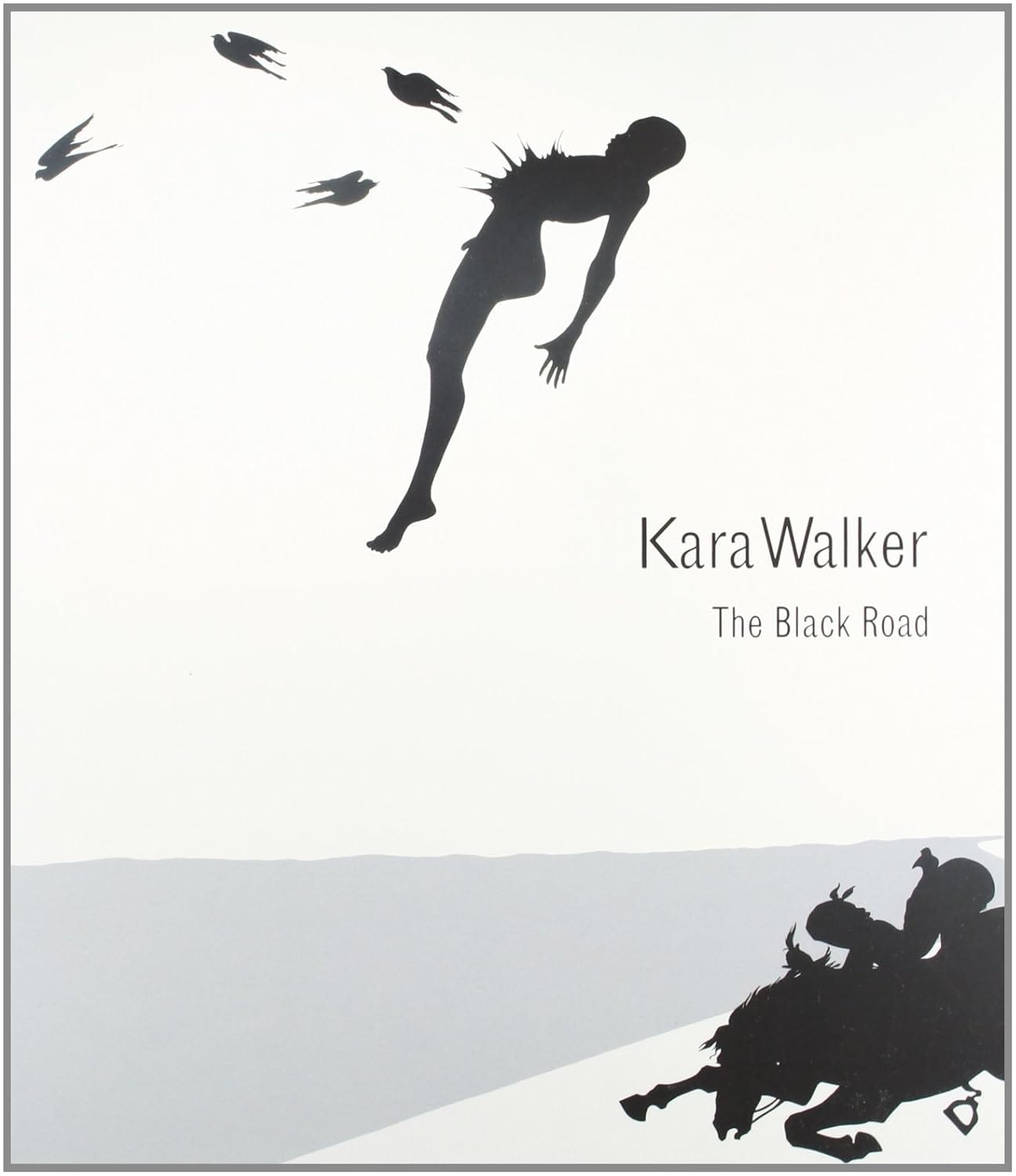
Kara Walker, The Black Road: A published book of Walker’s own graphic work. Her silhouette format is inherently graphic, and having it in a domestic interior is, arguably, part of the work’s argument: the parlor form back in the parlor, the seductiveness operating in real time.
Further Reading
Three books, each of which does something the others cannot. None of them is a general survey. They are the right books for this specific argument.
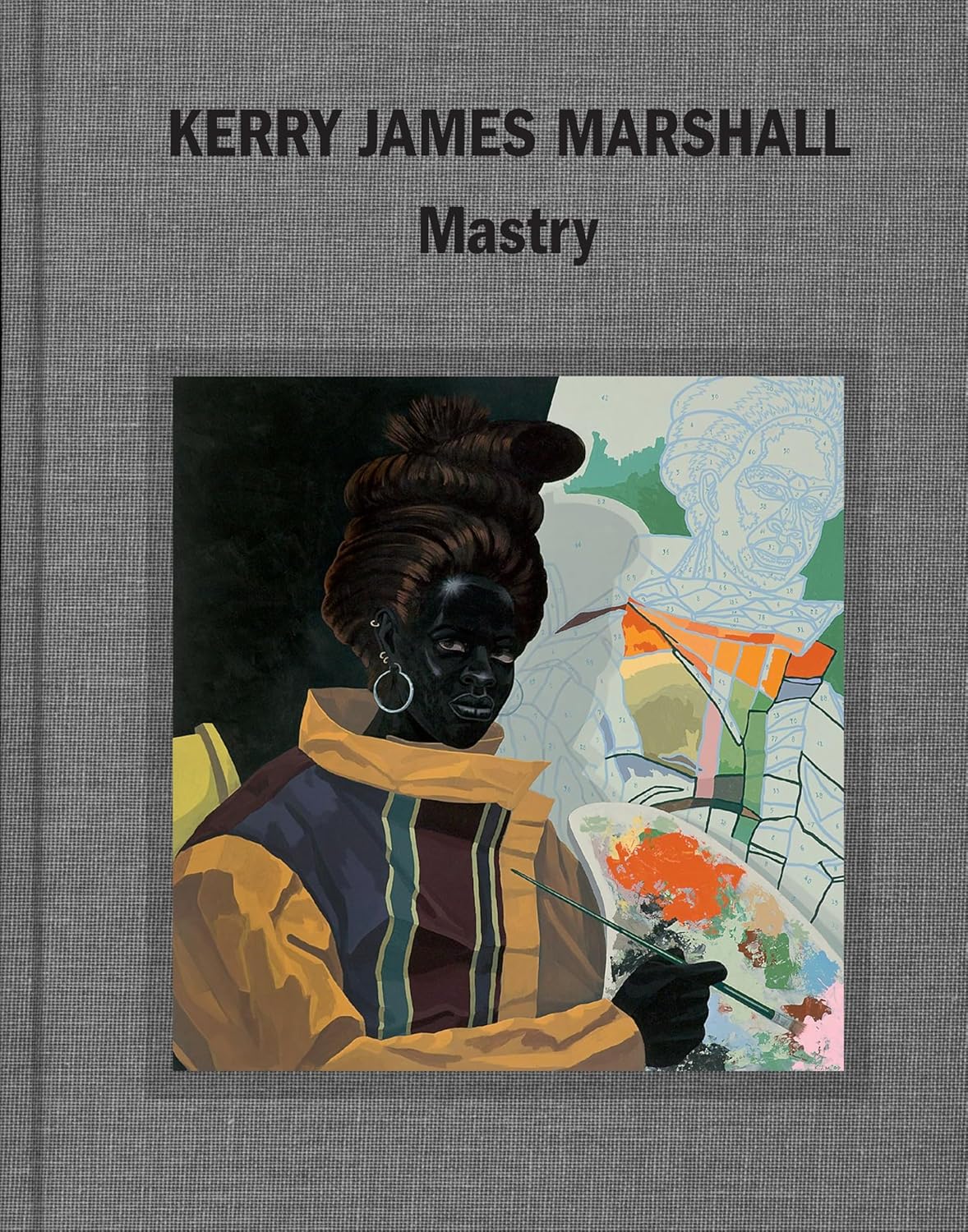
Ian Alteveer, Helen Molesworth, et al., Kerry James Marshall: Mastry (Skira Rizzoli, 2016): The definitive catalogue of Marshall’s retrospective — 288 pages of reproductions with essays by curators who have spent careers on this work. The only book that lets you see the full arc of the painting argument in sequence, from 1994 through the mid-2010s.
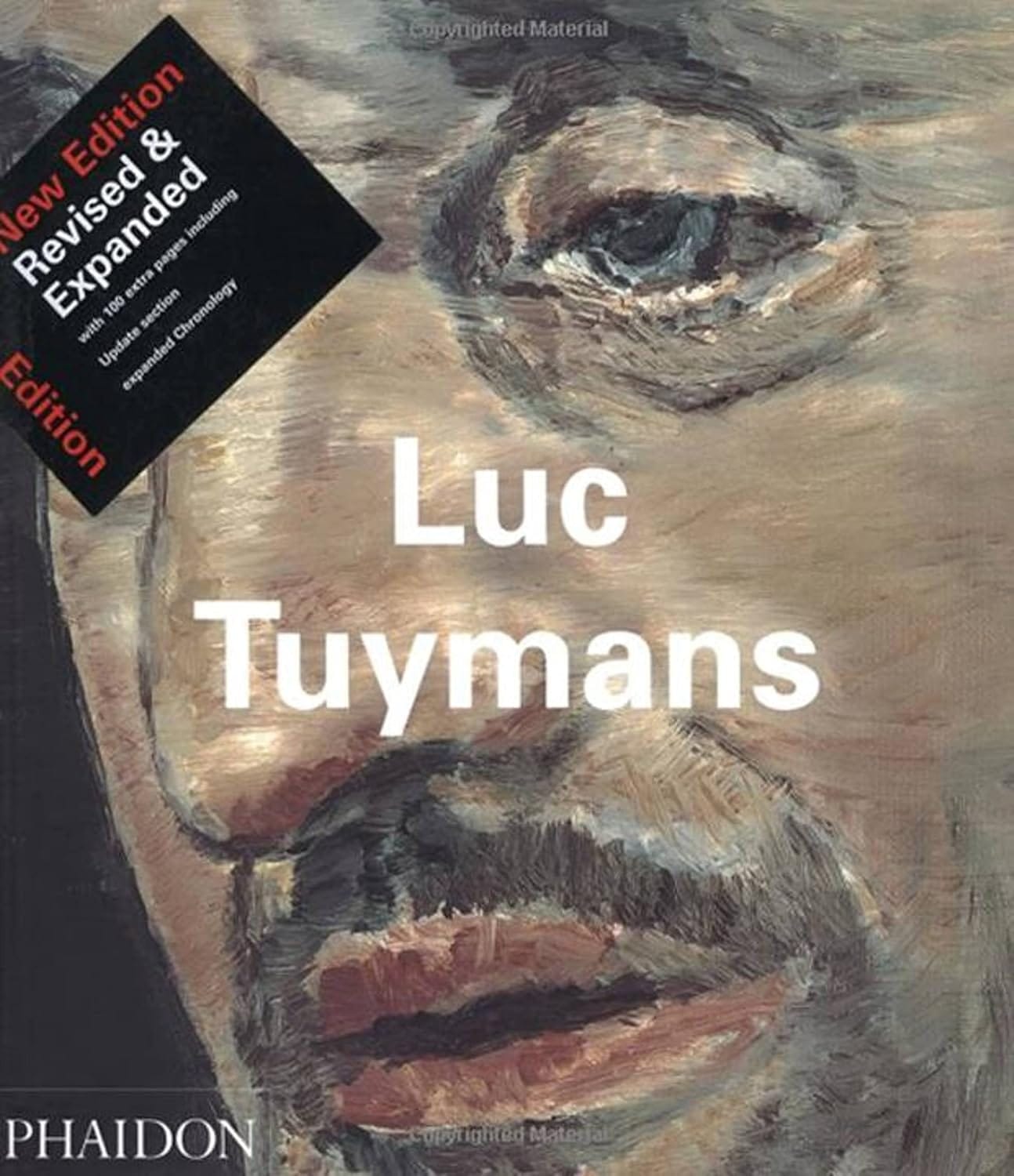
Ulrich Loock and Juan Vicente Aliaga, Luc Tuymans (Phaidon Contemporary Artists Series, 2003): The most accessible critical study of Tuymans in English. Loock and Aliaga situate the desaturated palette and single-session execution as formal positions — intellectual claims about what painting can and cannot do — rather than as stylistic signatures.
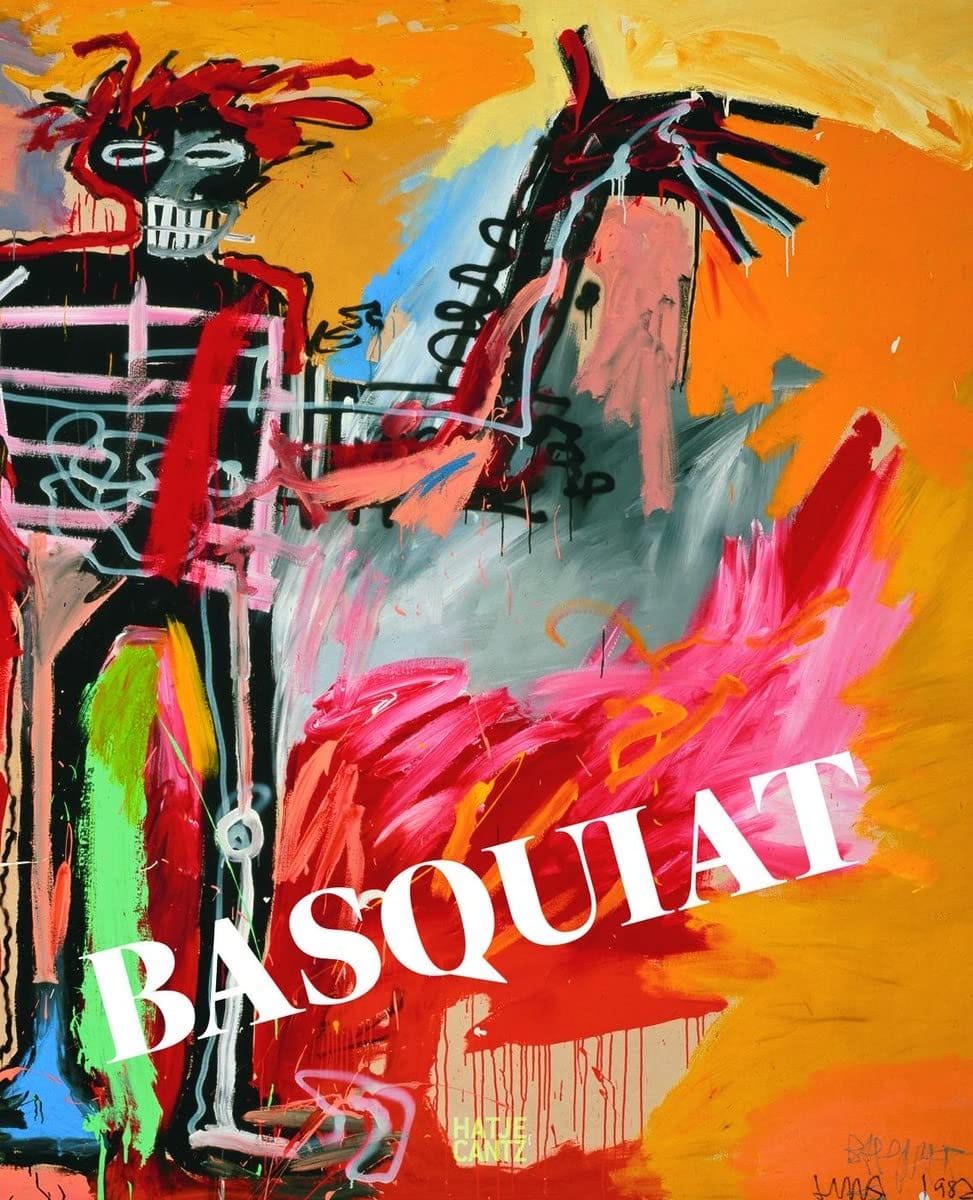
Dieter Buchhart, Glenn O’Brien, et al., Jean-Michel Basquiat (Hatje Cantz, 2010): 160 color reproductions with O’Brien’s critical text. O’Brien knew Basquiat in the downtown New York scene of the early 1980s and writes about the crown and skull motifs without collapsing them into the death narrative that has dominated posthumous reception. The context makes the argument legible in a way that later scholarly accounts tend to obscure.
Frequently Asked Questions
What do Luc Tuymans, Kara Walker, and Kerry James Marshall have in common as painters?
All three use the formal properties of their chosen technique — Tuymans’s thin oil washes, Walker’s cut-paper silhouettes, Marshall’s dense saturated black — as arguments about what painting owes to its subject matter. They share a conviction, documented in Tuymans and Marshall’s extended dialogue in BOMB Magazine (2005), that the medium’s historical failures of representation are themselves subject matter. They do not work around painting’s complicity in historical violence; they work on it.
Why does Luc Tuymans paint in such a washed-out, desaturated style?
Because the alternative is obscene. Tuymans’s position — most clearly stated in the context of his Die Zeit Holocaust cycle and documented in Loock and Aliaga’s Phaidon monograph — is that a fully accomplished, technically beautiful painting of historical atrocity would be an act of bad faith. The thin wash and the desaturated palette are formal admissions that the image cannot do what it wants to do. The failure is deliberate and structural, not a limitation.
How does Kara Walker use silhouettes to address the history of slavery?
Walker deploys the parlor silhouette — a refined, domestic, 19th-century bourgeois art form — to deliver content that the form was historically used to avoid: antebellum sexual violence, racial brutality, the details of enslavement. As AWARE Women Artists has documented, her method creates ‘room for viewers to reflect ethically and politically on violence’ by using the seductive elegance of the form against itself. You cannot refuse to look because the form has been made beautiful.
Is Jean-Michel Basquiat considered a history painter?
Not in the traditional sense. Basquiat is more accurately positioned within Neo-Expressionism, alongside Julian Schnabel, Kenny Scharf, and Francesco Clemente — figuration that uses expressive surface to carry argument rather than documentary illustration. However, his crown and anatomical diagrams operate as historical claims: the crown asserts Black sovereignty in a medium that had historically excluded Black subjects, while the medical diagrams reference the long history of the Black body as object of scientific and commercial inspection rather than as subject. The historical argument is present, but it works through symbolic compression rather than through narrative.
What is the difference between depicting violence in art and working on the viewer’s relationship to it?
Depicting violence shows what happened. Working on the viewer’s relationship to it changes what the viewer is capable of seeing. A painting that depicts a gas chamber with horrific realism asks you to feel horror. Tuymans’s Gas Chamber — an empty, mundane room rendered as flatly as a storage closet — asks you to confront the fact that the horror was also mundane, that it happened inside ordinary-looking spaces, and that you would not necessarily have recognized it at the time. The second operation is harder, less satisfying, and more honest.
Why do contemporary painters argue against their own seductiveness?
Because the pleasures of painting — the sensuous surface, the accomplished image, the well-composed frame — are themselves implicated in the histories these painters are working on. The tradition of Western figurative painting is inseparable from the history of who it chose to represent and how. A painting that is fully beautiful in conventional terms makes a claim, by that beauty, that the tradition it sits inside is trustworthy. These four painters refuse that claim structurally: the seductiveness is there, but it has been turned into a problem for the viewer to sit with rather than a satisfaction to receive.
See also: Kehinde Wiley, Jean-Michel Basquiat

About Joe Post
Joe Post holds an MFA in Art from California Institute of the Arts (CalArts) and has done additional graduate work at the School of the Art Institute of Chicago. He founded Art Design Ideas to write about design as cultural argument — the decisions, contradictions, and assumptions built into the objects we live with.