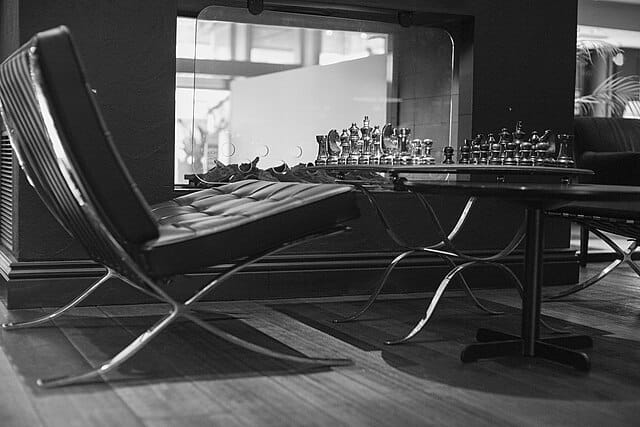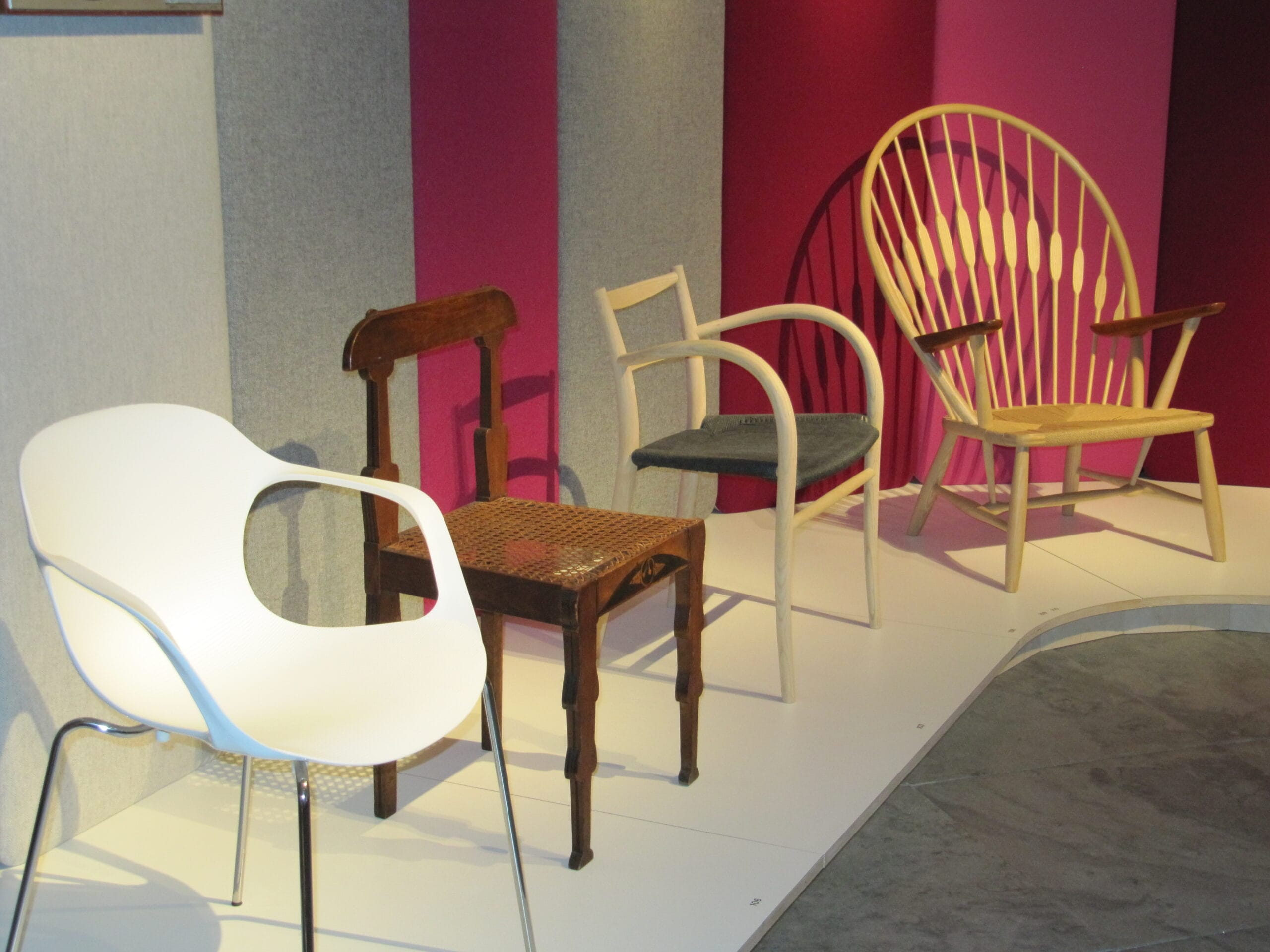


Minimalist furniture for small spaces works by doing less with more precision: low profiles, clean geometry, and no redundant parts. The best picks earn their square footage by doubling as storage, adapting to different rooms, or simply staying out of the way — pieces from Muji, HAY, and IKEA’s design-forward lines that a small apartment actually needs.
Our Top Picks
These four pieces were chosen for a single reason: each one makes a spatial argument that holds up. Nice-looking is not enough in a room where every piece competes for floor space, wall space, and visual quiet.
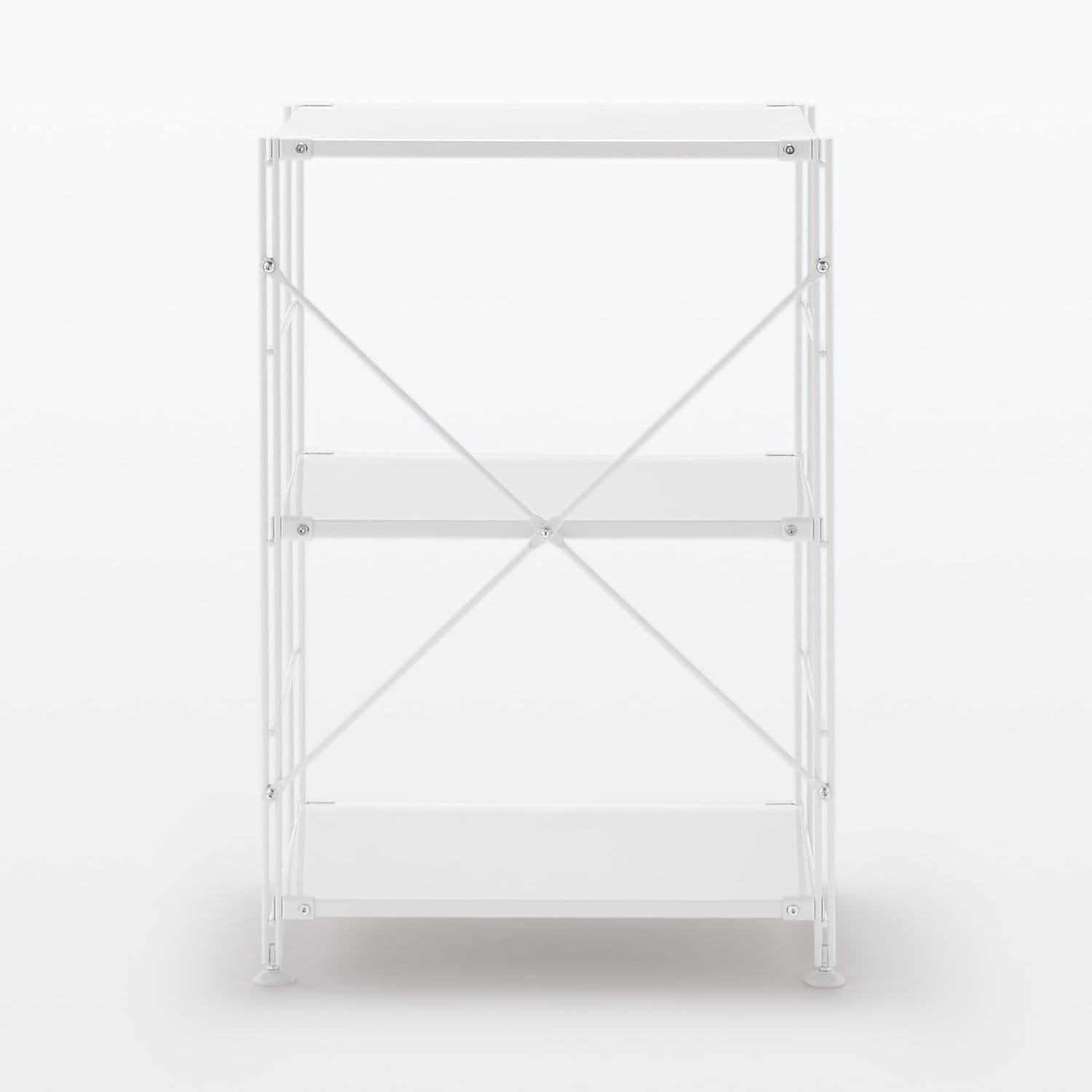
MUJI Steel Unit Shelf, Small
Mid-Range · Freestanding modular shelving
The most versatile small-space shelving system available. Freestanding, modular, and expandable without buying a new unit, which means the shelf you buy today can become a different configuration next year.
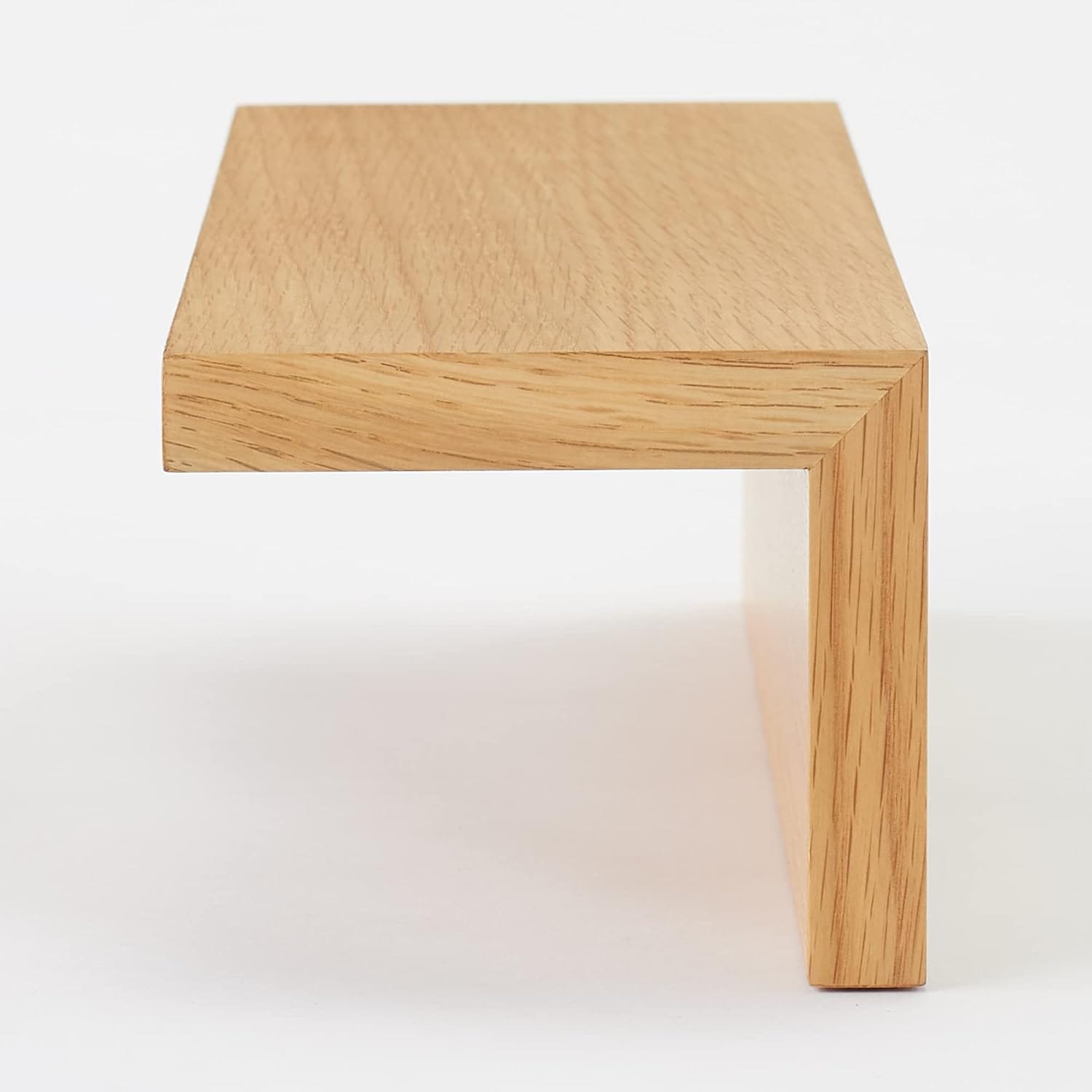
MUJI Wall Mounted Furniture Shelf, Oak Wood
Mid-Range · Wall-mounted, zero footprint
When the floor is the constraint, this is the correct answer. Wall-mounted at 17.3 inches wide, it holds what you need without claiming any square footage.
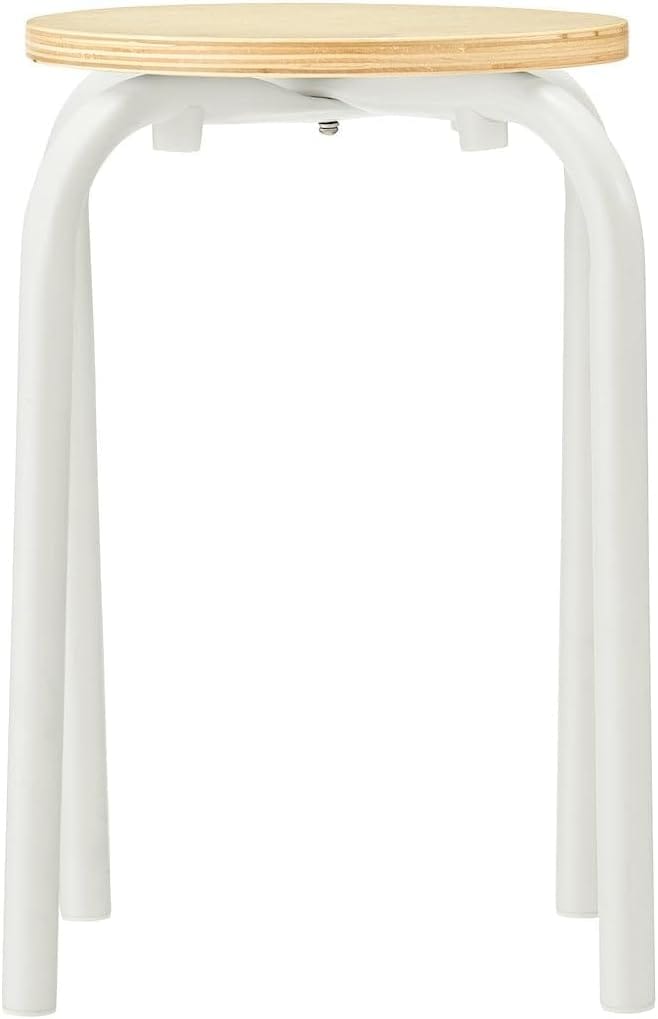
MUJI Stacking Chair (Off-White)
Mid-Range · Stackable side seating
Polypropylene stacking chair from MUJI — works at a desk, in a reading corner, or as a spare at a table. Stackable when not in use, no decoration, no wasted material.
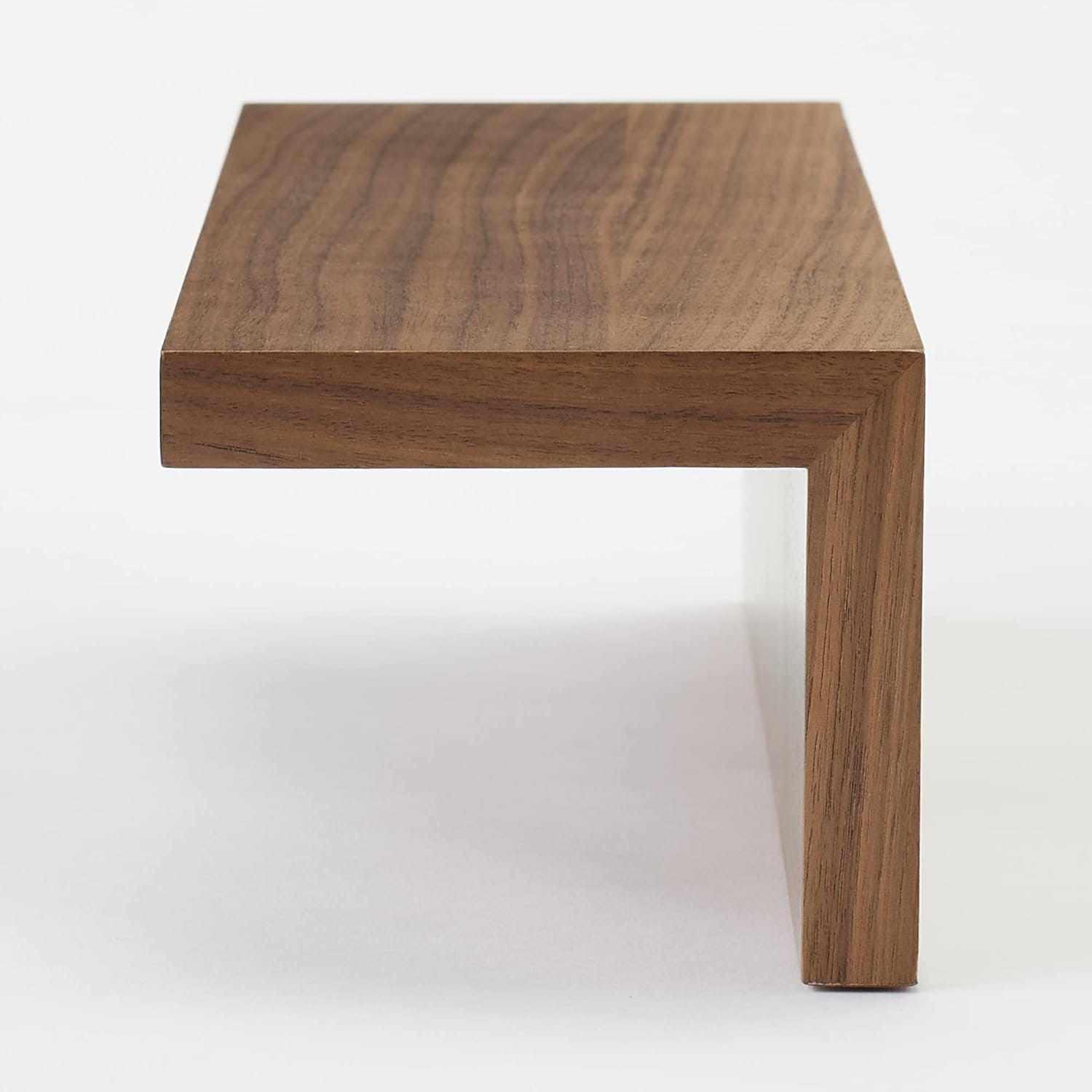
MUJI Wall Mounted Furniture Shelf, Walnut
Mid-Range · Wall-mounted, warm finish
The same spatial argument as the oak shelf, in a finish that reads as warm. The right choice when the room already has wood floors or mid-century tones.
Quick Decision Guide
- Best for studio apartments: MUJI Steel Unit Shelf. Combines shelving and display in one freestanding unit that can move with you.
- Best wall-mounted option: MUJI Wall Mounted Shelf, Oak. Eliminates floor footprint entirely when square footage is the binding constraint.
- Best accent seating: MUJI Stacking Chair. Works at a desk, in a reading corner, or as a spare dining seat — stackable when not in use.
- Best for warm-toned spaces: MUJI Wall Mounted Shelf, Walnut. The walnut finish makes it the correct choice when the room already has warm wood tones.
- Best modular path: MUJI Wall Mounted Shelf, Oak. Lowest per-unit cost, scales by adding shelves rather than replacing the system.
Full Comparison
| Product | Best For | Price Range | Key Feature | Link |
|---|---|---|---|---|
| MUJI Steel Unit Shelf | Studio apartment, living room | Mid-Range | Freestanding, modular, stackable | Buy on Amazon |
| MUJI Wall Mounted Shelf, Oak | Any room, zero floor footprint | Mid-Range | Wall-mounted, 17.3″ wide | Buy on Amazon |
| MUJI Wall Mounted Shelf, Walnut | Warm-toned interiors | Mid-Range | Walnut finish, wall-mounted | Buy on Amazon |
| MUJI Stacking Chair | Desk, reading nook, spare seating | Mid-Range | Stackable, polypropylene, off-white | Buy on Amazon |
What each piece actually does in a small room
MUJI Steel Unit Shelf: the case for a system over a single piece
Pros:
- Modular by design: additional shelves, side panels, and drawer units sold separately, so the configuration changes without replacing the whole thing
- Freestanding, so it moves when you move and requires no wall damage
- Dimensions (22.8 × 16.1 × 32.7 inches / 58 × 41 × 83 cm) are sized for small-room scale; it doesn’t read as oversized
Cons:
- Ships from Japan; lead times can run longer than domestic products, particularly for the add-on components
- The steel frame finish is fixed. You’re committing to that industrial register for the life of the piece.
A studio apartment dweller who needs shelving, display space, and some organizational capacity in a single unit will get the most out of this. It rewards anyone who plans to stay somewhere longer than a year.
It’s one of the few freestanding shelving systems at this price point that was designed as a system rather than a single item. Buying the base unit is the beginning, not the end.
MUJI Wall Mounted Shelf (Oak): when the floor has no room left to give
Pros:
- Zero floor footprint. The constraint it solves is categorical, not incremental.
- 17.3-inch width (44 cm) is sized for narrow spaces: above a desk, beside a bed, in a hallway
- Oak finish is neutral enough to read in warm or cool rooms
Cons:
- Requires wall mounting. Not renter-friendly without landlord permission or willingness to patch on move-out.
- At 4.7 inches deep (12 cm), it holds small objects and books. It is not a storage shelf for anything with volume.
A renter or owner who has genuinely run out of floor space and needs a surface for a plant, a few books, or a lamp will find this useful. It is not a bulk storage solution.
The depth constraint is also the design argument. It cannot become a dumping surface, which is what most shelves eventually become.
MUJI Wall Mounted Shelf (Walnut): the same argument in a warmer register
Pros:
- Identical spatial logic to the oak version: zero floor footprint, 17.3-inch width
- Walnut finish adds warmth without adding visual weight, making it the right choice when the room has wood floors or mid-century furniture
- The material choice signals intention; walnut reads as deliberate in a way that oak doesn’t always manage
Cons:
- Same installation requirement as the oak version: wall mounting only
- Same depth limitation: 4.7 inches, suitable for small objects rather than storage
Someone with warm wood tones already present in the room, such as wood floors, a mid-century sideboard, or a teak side table, will find this the more coherent choice over the oak version.
The finish does design work here. Walnut in a warm room reads as part of a considered scheme; in a cooler, grey-toned room it would conflict. This is a shelf that requires knowing your room.
Minimalist Swivel Accent Chair: the one seat a studio actually needs
Pros:
- 360° swivel means it serves a living-room corner, a desk corner, and a reading position without being moved. The room’s function changes; the chair doesn’t.
- 320 lb weight capacity is honest rather than nominal
- Berber fleece fabric reads as warm without being fussy. It doesn’t demand a style commitment from the room.
Cons:
- Dimensions (37″ deep × 35″ wide × 36.2″ high) require meaningful floor clearance. 37 inches of depth needs to be accounted for before buying.
- The swivel base means it cannot be pushed against a wall; it needs open floor space to function as designed
A studio apartment dweller or remote worker with a bedroom corner who needs a single seat that works for reading, calls, and occasional guests will get more from this than from any standard armchair at the same price.
The swivel is not a gimmick here; it’s the feature that makes one piece serve three positions. In a studio where seating is a spatial expense, that matters.
Why minimalist furniture earns its place in small rooms when maximalist pieces don’t
Dieter Rams’ tenth principle, “good design is as little design as possible,” is often quoted as an aesthetic position. In a small room, it’s a spatial one. Every redundant element competes for attention and floor area simultaneously. A piece with unnecessary visual weight doesn’t just look wrong; it makes the room smaller.
Muji was founded in 1980 in Japan as a Seiyu supermarket private label, under the name 無印良品, meaning “no-brand quality goods.” The founding idea was that the absence of branding is itself a design choice: standardized, unlabeled goods whose form follows function without remainder. That logic applied to furniture means shelves that look exactly as they need to look, and nothing more.
HAY, founded in 2002 by Rolf and Mette Hay in Denmark, arrived at the same conclusion from a different cultural direction. The Hays positioned their brand against premium Scandinavian labels (Fritz Hansen, Carl Hansen) not by undercutting them on price alone, but by arguing that design rigor shouldn’t require a premium price. The shared logic between Muji and HAY: decoration is a form of noise, and small rooms cannot afford noise.
IKEA’s RÅSKOG, LACK, and KALLAX lines prove the same principle at budget scale. The difference between these and the Muji pieces isn’t ideology; it’s material honesty. You’re paying, with Muji, for the absence of compromise in execution. Whether that difference matters depends on how long you’re staying.
Frequently Asked Questions
What is the best minimalist furniture brand for small apartments?
Muji is the most consistently reliable option for small apartments. The brand’s founding principle of “no-brand quality goods” (無印良品) translates directly into furniture that avoids decoration, excess, and visual noise. HAY offers comparable design discipline at slightly higher price points for those who want Scandinavian proportions. IKEA’s KALLAX and LACK lines are the budget-entry equivalent, trading material quality for accessibility.
How do I choose furniture for a small minimalist living room?
Start with the spatial argument rather than aesthetics: what does each piece need to do, and does it do only that? Pieces that serve a single function and occupy significant floor space are harder to justify than pieces that serve multiple functions or claim no floor space at all. Wall-mounted shelving, modular storage systems, and seating with a small footprint consistently outperform larger statement pieces in rooms under 400 square feet.
Is Muji furniture worth it for small spaces?
Yes, specifically because Muji’s furniture line was designed around the same principles as the rest of the brand: restraint, standardization, and the absence of decorative surplus. The modular Steel Unit Shelf system is particularly well-suited to small spaces because it scales. You buy what you need now and add to it rather than replacing it. The wall-mounted shelves are worth it if you’re genuinely out of floor space and need storage that doesn’t take any.
What multipurpose furniture works best in a studio apartment?
Furniture that eliminates a choice rather than adding an option. A swivel accent chair that works in three positions (desk, reading, conversation) eliminates the need for separate pieces for each function. A modular shelving system that combines storage and display eliminates the need for a bookcase and a separate storage unit. The test is whether the piece reduces the number of things in the room, not whether it claims to do multiple things.
Can minimalist furniture make a small room look bigger?
Yes, not through optical illusion, but through reduced visual noise. A room where every piece has a clear spatial purpose and nothing is surplus reads as larger because the eye isn’t stopped by unnecessary objects. Wall-mounted furniture removes floor-level clutter, which is where rooms most often read as crowded. Low-profile pieces with clean geometry, no turned legs, no ornamental hardware, let the floor and walls read as continuous rather than broken.
How many pieces of furniture should a minimalist small space have?
Fewer than you think you need, and more than the absolute minimum. A functional studio needs seating, a surface to work at, somewhere to sleep, and storage. That’s four categories, each of which might be served by one piece. The question is whether each additional piece earns its floor space. The best minimalist small spaces have exactly as much furniture as they need, and none of the rest.
For the historical tradition behind this approach, see the guide to Scandinavian design history. For the broader survey of key postwar objects, see the iconic furniture design hub.

About Joe Post
Joe Post holds an MFA in Art from California Institute of the Arts (CalArts) and has done additional graduate work at the School of the Art Institute of Chicago. He founded Art Design Ideas to write about design as cultural argument — the decisions, contradictions, and assumptions built into the objects we live with.