

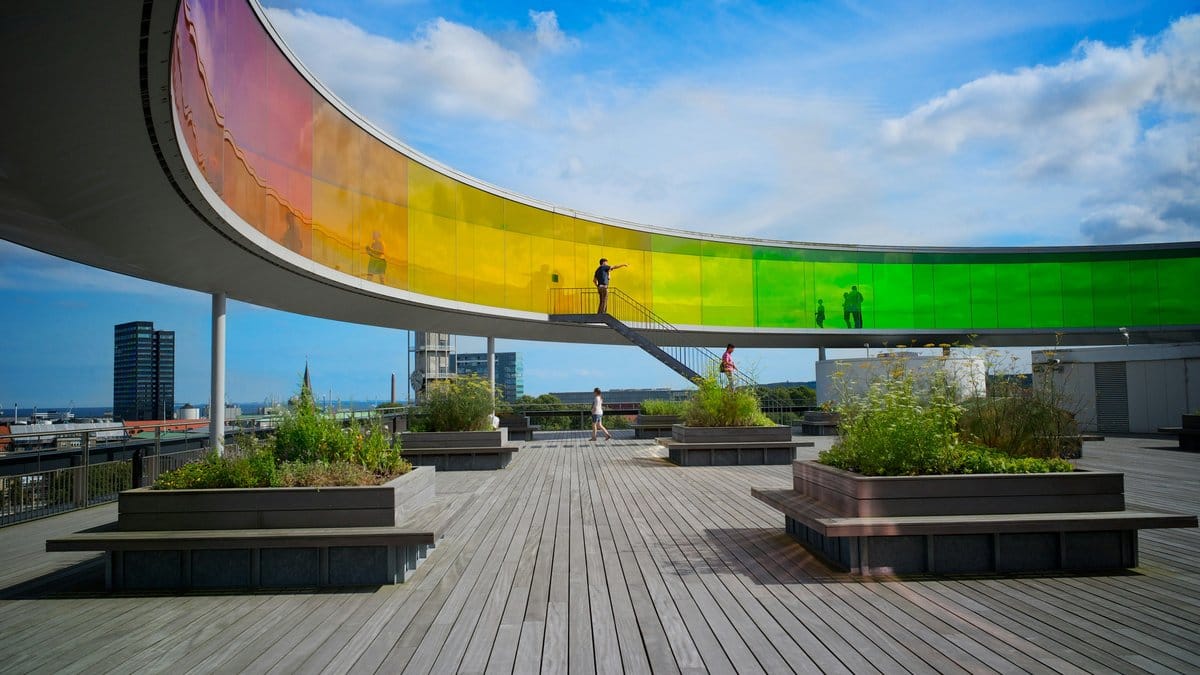
Scandinavian design is a design movement characterized by simplicity, functionality, and natural materials that emerged in the early 20th century and flourished in the 1950s across Denmark, Finland, Norway, Sweden, and Iceland. Its defining argument was democratic: that well-designed objects should be available to ordinary people, not only to those who could afford luxury.
A Brief History of Scandinavian Design
Scandinavian design developed across a century of deliberate public investment in craft and function. In the 1930s, Swedish architects and designers adopted Functionalism — not as a stylistic preference but as social policy: design was a tool for improving everyday life at scale. Denmark built cooperative furniture production alongside its welfare state. Finland sent Alvar Aalto to represent the nation at world exhibitions. By the 1950s, these parallel national projects became, in the eyes of the world, a single coherent movement. The 1954 “Design in Scandinavia” touring exhibition, which opened at the Brooklyn Museum, gave it a name. The 1950s and 1960s are its acknowledged golden age. Today, firms like HAY, Muuto, and Vitra carry the formal inheritance while the political argument that built the movement is largely absent from how it is marketed.
Why Scandinavian Minimalism Was a Political Position Before It Was an Aesthetic One
The clean lines came later. What came first was an argument about who design was for.
In Sweden, the 1930s saw the state explicitly link design reform to housing policy and public health. Functionalism — the Swedish version — meant that architects and designers had an obligation to solve problems for ordinary citizens, not to satisfy wealthy patrons. The Swedish term lagom (roughly, “just the right amount”) captures the governing sensibility: nothing excessive, nothing scarce. And demokratisk design — democratic design — became a term used by Nordic governments and design historians to describe the movement’s social intention.
Denmark pursued the same logic through cooperative economics. The FDB (Forbrugsforeningernes Detailhandel, the Danish furniture cooperative) hired Børge Mogensen as design director in 1945. His brief was explicit: design furniture that working-class families could own. FDB’s ethos was “of the people, for the people.” These were not commercial pieces dressed in progressive language. They were built at cooperative prices to cooperative standards.
The 1954 “Design in Scandinavia” exhibition at the Brooklyn Museum was the moment the movement became internationally legible as a distinct aesthetic. Before it, Scandinavian design was a social project with regional variations. After it, it was a style, and the export version did not always carry the democratic argument with it. That gap between original intention and received image is still open. When a mid-century-modern Scandinavian chair appears in a luxury hotel lobby, the form has survived but the argument has been inverted.
Why Are Scandinavians So Good at Design?
The short answer is that Scandinavian governments decided, early in the 20th century, that design quality was a public good worth funding. The longer answer involves three interconnected factors.
First, state commissions. Nordic governments routinely hired designers for public buildings, schools, hospitals, and transit infrastructure. Arne Jacobsen designed chairs for a canteen. Alvar Aalto designed furniture for a tuberculosis sanitorium. These were functional briefs, and the constraints were productive rather than limiting.
Second, craft education. Denmark, Finland, and Sweden built vocational design schools that trained makers — woodworkers, metalworkers, weavers — with a modernist design sensibility layered on top of traditional craft knowledge. Hans Wegner came out of a cabinet-making apprenticeship before he studied at the Copenhagen School of Arts and Crafts. The furniture he designed looks simple because it was made by people who understood joinery.
Third, democratic ethos. When the primary audience for your work is ordinary citizens rather than luxury buyers, the formal problems change. You solve for durability, cost, ease of production, and universal comfort, not for novelty or exclusivity. This shaped an entire generation’s design vocabulary.
A Timeline of Scandinavian Design
- 1930s: Swedish Functionalism adopted as social policy; Danish design cooperatives established
- 1935: Alvar Aalto and Aino Aalto co-found Artek to bring Finnish design furniture into wider production
- 1945: Børge Mogensen begins as design director at FDB; democratic furniture production at scale
- 1949: Hans Wegner designs the Wishbone Chair (CH24) and the Round Chair; both enter production
- 1952: Arne Jacobsen designs the Ant Chair for a Novo Nordisk canteen
- 1954: “Design in Scandinavia” exhibition opens at the Brooklyn Museum; Scandinavian Modern becomes an international category
- 1958: Jacobsen designs the Egg Chair and Swan Chair for the SAS Royal Hotel, Copenhagen
- 1950s–60s: Movement’s acknowledged golden age; Danish and Finnish design dominates international furniture markets
- Today: HAY, Muuto, and contemporary Scandinavian studios continue the formal vocabulary; the democratic argument persists more in IKEA’s self-description than in collector-market price points
What Alvar Aalto, Arne Jacobsen, and Hans Wegner Were Each Arguing For
The three figures most associated with Scandinavian design were not making the same argument. The formal similarities — clean line, natural material, evident structure — are real, but they come from different positions.
Alvar Aalto (Finnish, 1898–1976) began with a medical problem. The Paimio Chair (1931–32) was designed for tuberculosis patients at the Paimio Sanitorium in Finland. Steel was ruled out: cold against skin, too conductive, not suitable for people in beds for months. Aalto and Aino developed a bent birch plywood and laminated wood solution. The curve of the seat aids breathing. The material stays warm. In 1935, the Aaltos co-founded Artek specifically to bring this furniture into wider production. The Paimio Chair was not designed to become a classic. It was designed for sick people who could not afford to be uncomfortable.
Arne Jacobsen (Danish, 1902–1971) worked at the scale of total environments. When he received the commission for the SAS Royal Hotel in Copenhagen in 1958, he designed the building, the interiors, the textiles, the cutlery, and the chairs. The Egg Chair and Swan Chair (both 1958, both still produced by Fritz Hansen) were designed for the hotel lobby to give guests a sense of visual enclosure in an open space. The form solved a social problem: how do you create privacy in a public room? Jacobsen’s position was that architecture and furniture were continuous with each other, not separate disciplines.
In Denmark the pattern ran through the manufacturers as much as the designers, and Fritz Hansen is the clearest case of a company whose judgment shaped a national style.
Hans Wegner (Danish, 1914–2007) drew explicitly from outside the Nordic tradition. His Chinese Chair (1945) was modeled on 17th-century Chinese officers’ chairs he had studied in Copenhagen museum collections. The Wishbone Chair (1949) carries the same reference in its Y-shaped back splat. Wegner designed over 500 chairs in his career, with more than 100 in mass production at any given time. That volume, and the choice to reference Chinese furniture rather than invent a purely Nordic vocabulary, complicates the story of Scandinavian design as an expression of natural Nordic character. Wegner was a Danish craftsman who learned from everywhere. No designer did more to establish Denmark’s reputation than Wegner’s chairs, whose Wishbone Chair alone accounts for a quarter of Carl Hansen & Søn’s annual production in Japan.
A fourth figure belongs in this account. Eero Saarinen (Finnish-American, 1910–1961), son of Finnish architect Eliel Saarinen, worked primarily in the United States, but his Womb Chair (1948) and Tulip Chair (1956) — both produced by Knoll — extended the Scandinavian formal project into American mass production. His work demonstrates that the movement was not geographically bounded. It traveled with the designers who emigrated.
Jens Risom (Danish, 1916–2016) made a similar crossing: emigrating to the US in 1939, he brought Danish material sensibility to American production under conditions that made that sensibility unavoidable. With steel and leather rationed during the Second World War, Risom designed chairs using surplus parachute webbing — the restraint was not aesthetic preference, it was procurement reality. The result was furniture that was Scandinavian in spirit and American in origin, and the 654W chair remains the clearest evidence that the democratic argument travels.
Scandinavian design was not a style that emerged from landscape or temperament. It was a policy position that got good at making chairs.
The Key Elements of Scandinavian Design
Any direct answer to what makes a piece of furniture or an object “Scandinavian” in character involves the following:
- Simplicity — no ornament that does not serve a structural or functional purpose
- Functionality — form follows the human use case, not the reverse
- Natural materials — wood (birch, teak, oak), wool, linen, leather; industrial materials accepted when they solve the problem better
- Attention to light — Nordic winters are dark; Scandinavian lamps, windows, and surface finishes are designed around the behavior of light across long, dim months
- Craft tradition — visible joinery, evident construction quality as legible value
- Democratic access — objects intended for mass production and ordinary household budgets, not gallery editions
These characteristics are not arbitrary cultural traits. They follow from the political and economic context described above: when you are designing for welfare-state housing programs and cooperative furniture stores, the formal constraints are real.
For a comparison of Scandinavian design with the related but distinct category of minimalism, see Scandinavian design versus minimalist design: where they diverge.
Five Objects That Contain the Argument
Paimio Chair (Alvar Aalto, 1931–32). Bent birch plywood and laminated wood. Designed for tuberculosis patients at the Paimio Sanitorium, Finland. The curved seat supports the chest and aids breathing; the material stays warm against skin. This is design responding to a medical brief before it was exhibited as aesthetic achievement. Still produced by Artek.
Wishbone Chair / CH24 (Hans Wegner, 1949). Solid wood frame with a woven paper cord seat. The Y-shaped back references Chinese Ming dynasty chairs Wegner studied in Copenhagen museum collections. In continuous production by Carl Hansen & Son since 1950 — one of the longest uninterrupted production runs in modern furniture. The original is not sold on Amazon; Carl Hansen & Son sells through authorized dealers. Secondhand Carl Hansen chairs are the realistic route below list price.
Egg Chair (Arne Jacobsen, 1958). Fiberglass shell upholstered in fabric or leather, designed for the SAS Royal Hotel lobby. The enclosing shape gives the occupant a sense of privacy in a public room. Fritz Hansen has produced it without interruption since 1958. Original pieces are sold through Fritz Hansen’s authorized dealers.
PH Lamp (Poul Henningsen, c. 1925, multiple iterations). A multi-shade pendant designed to eliminate glare from any angle. Henningsen (Danish, 1894–1967) designed the PH series as a social argument: light quality in dark Nordic winters is a public welfare issue, not a design luxury. Still in production by Louis Poulsen.
Ant Chair (Arne Jacobsen, 1952). Pressed molded plywood seat on three or four steel legs. Designed for the canteen at pharmaceutical company Novo Nordisk. The first mass-produced molded plywood chair from Fritz Hansen. The commission came from a functional industrial context, not a design gallery — which is exactly what the democratic design argument predicts.
Shop the Collection
These three books cover the movement from its historical roots to the contemporary scene. All are available on Amazon.
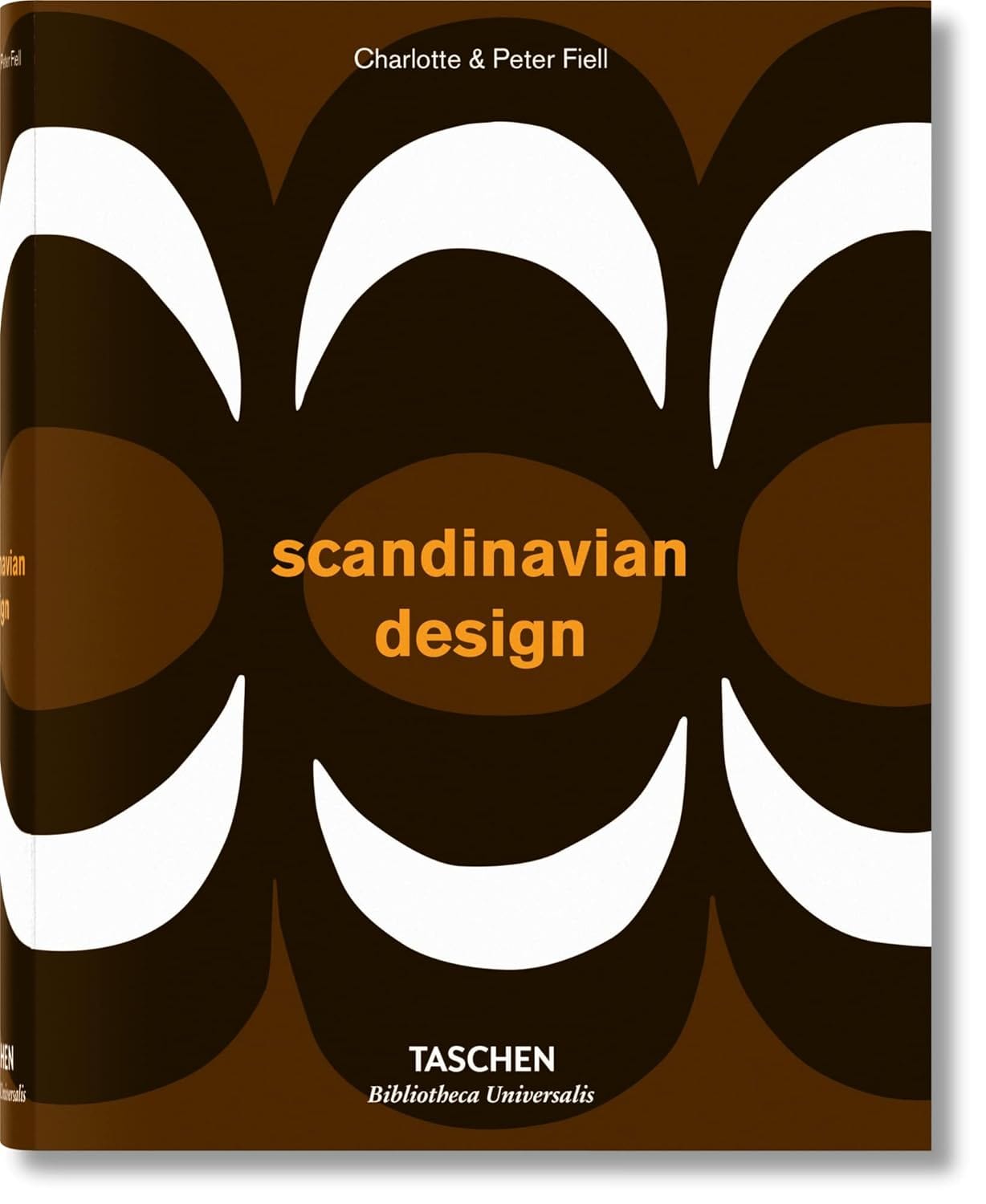
Scandinavian Design (Bibliotheca Universalis)
Charlotte and Peter Fiell’s compact Taschen survey. The Fiells have been the most reliable historians of modern design for three decades; this volume covers the full arc from early 20th-century functionalism to the present, with specific dates and object histories rather than aesthetic generalities.
Scandinavian Design, 45th Edition
Charlotte and Peter Fiell. The updated edition adds material on contemporary Scandinavian design and the post-Jacobsen/Wegner generation. Useful for readers who want both the golden era and what followed.
Modern Scandinavian Design
Charlotte Fiell, Peter Fiell, and Magnus Englund. Focused on the contemporary moment, covering HAY, Muuto, and second-wave brands. For readers interested in what the movement looks like now rather than only its 1950s peak. For a closer look at one of these contemporary studios, see the best HAY products available today.
Further Reading
Charlotte and Peter Fiell, Scandinavian Design (Taschen, Bibliotheca Universalis) — Amazon. The standard one-volume reference for the full arc of the movement, from early functionalism through the 1950s golden age to the present. The Fiells cite primary sources and give specific dates and object histories rather than generalities.
Louna Lahti, Aalto (Taschen Basic Architecture) — Amazon. Aalto is the Scandinavian designer most worth studying in depth — furniture, architecture, urban planning, and industrial design are all part of the same argument for him. This Taschen volume gives the full scope without requiring a specialist library.
Frequently Asked Questions
1. What are the main characteristics of Scandinavian design?
Scandinavian design is characterized by simplicity, functionality, and natural materials. Specific elements include visible craft construction, attention to the behavior of light, and an emphasis on democratic access: objects designed for mass production at household budgets. Ornament is removed when it does not serve a structural purpose. The formal qualities follow directly from the social and economic context in which the movement developed.
2. Who are the most important Scandinavian designers?
The central figures are Alvar Aalto (Finnish, furniture and architecture), Arne Jacobsen (Danish, chairs and total-environment design), and Hans Wegner (Danish, “King of Chairs,” 500+ designs). Poul Henningsen (Danish) is the primary figure in lighting design. Eero Saarinen, Finnish-born and American-based, extended the movement’s formal vocabulary into US mass production through Knoll. Børge Mogensen contributed democratic furniture through the Danish FDB cooperative from 1945.
3. What is the difference between Scandinavian design and minimalism?
Scandinavian design has a specific political history: it was developed for welfare-state housing and cooperative furniture programs, with democratic access as a design requirement. Minimalism is a broader aesthetic category that can be applied to luxury goods with no democratic intention. A Scandinavian design object is meant to be owned by ordinary people. A minimalist object can cost whatever its maker decides. For a detailed comparison, see Scandinavian design versus minimalist design.
4. When did Scandinavian design become popular internationally?
The 1954 “Design in Scandinavia” exhibition, which opened at the Brooklyn Museum and toured the United States and Canada through 1957, established Scandinavian Modern as a recognized international category. Before this exhibition, the movement was a set of parallel national design cultures with different emphases. After it, American consumers and furniture manufacturers had a name and a visual language for the work.
5. Is IKEA considered Scandinavian design?
IKEA explicitly uses the term “democratic design” to describe its model and places itself in the Scandinavian design tradition. Founded in Sweden in 1943, IKEA applies the formal vocabulary and the democratic access argument at a scale the 1950s golden-age designers never achieved. Whether IKEA’s production quality and aesthetic depth match those of Jacobsen, Wegner, or Aalto is a separate question. The argument — good design for everyone — is the same argument.
6. What countries does Scandinavian design include?
Most design historians and reference sources include Denmark, Finland, Norway, Sweden, and Iceland. The movement’s strongest contributions in the mid-20th century came from Denmark and Finland. Sweden contributed most significantly in the functionalist phase of the 1930s and in the democratic design tradition that IKEA later operationalized at scale. Whether Iceland is properly included or is a later addition to the category is a minor disputed point; most sources include all five Nordic countries.

About Joe Post
Joe Post holds an MFA in Art from California Institute of the Arts (CalArts) and has done additional graduate work at the School of the Art Institute of Chicago. He founded Art Design Ideas to write about design as cultural argument — the decisions, contradictions, and assumptions built into the objects we live with.