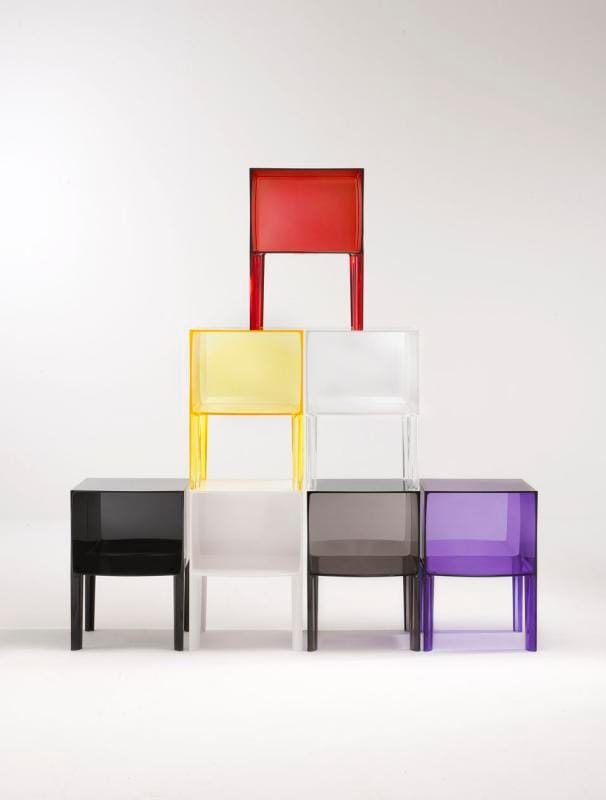


Quality industrial design is recognizable by material integrity, manufacturing precision, and proportional coherence — not price tags or brand names. Learning how to identify quality industrial design means reading an object the way a designer does: examining joints, finishes, weight distribution, and the honesty of a form’s relationship to its function.
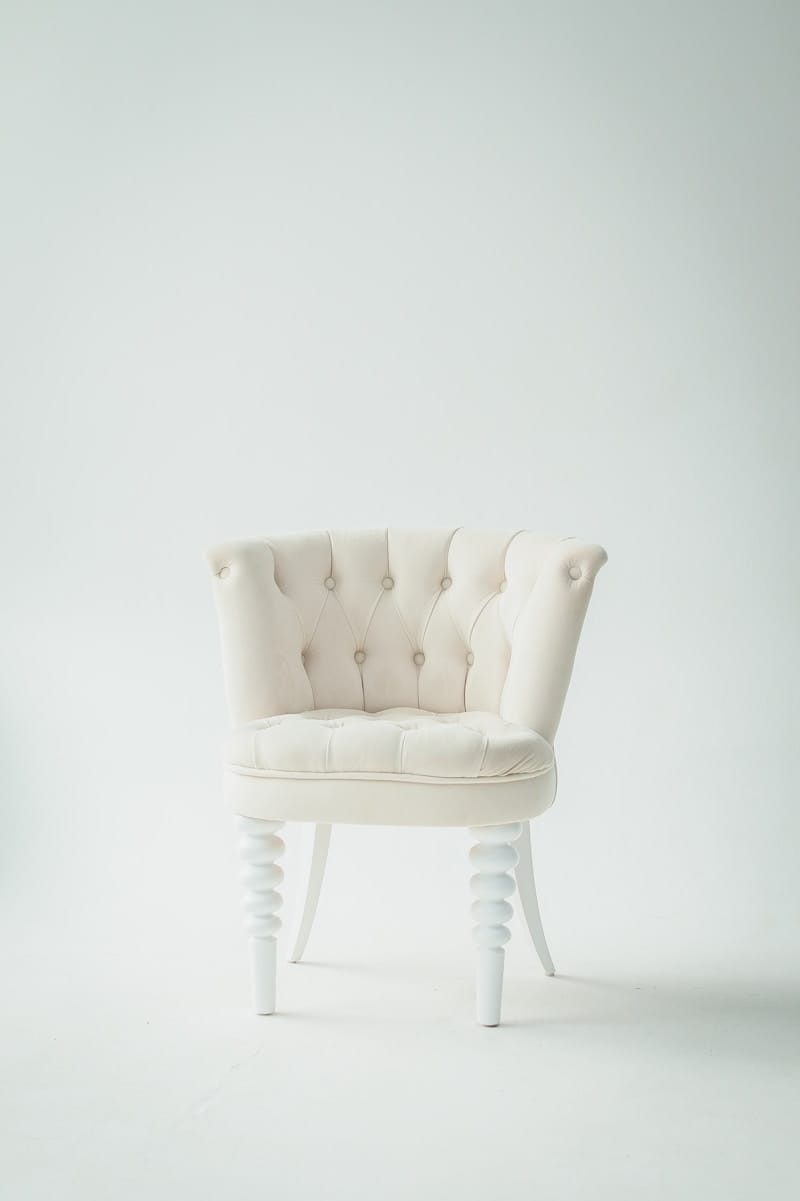
The object tells you what it is — if you know how to read it
Dieter Rams spent forty years as chief designer at Braun, overseeing more than five hundred products. His eighth principle is the relevant one here: “Good design is thorough down to the last detail — nothing must be arbitrary or left to chance.” That’s not a design aspiration. It’s an evaluative standard, one you can use from the buyer’s side.
The gap between a mass-market object and a well-designed one is not primarily visible. It’s physical. Hold a cheap plastic kettle and a Braun KF 400 coffee maker side by side. The shapes are superficially similar; both serve the same function. But the Braun has consistent wall thickness, buttons that click without lateral wobble, and a lid that closes without requiring you to press it down. Nothing is arbitrary. The cheap kettle has three or four decisions that didn’t go all the way.
Raymond Loewy called this the MAYA threshold: Most Advanced Yet Acceptable. Quality design sits at the edge of what the user can immediately absorb, not past it. Cheap unlicensed versions fail this in a specific way. They copy the silhouette of a good design but weren’t engineered to the same tolerances. They look almost right and feel wrong. Loewy described the principle in Never Leave Well Enough Alone (Johns Hopkins University Press, 1951), his account of decades of evaluating and revising commercial objects in real manufacturing contexts.
Don Norman added the theoretical frame in The Design of Everyday Things (Basic Books, revised 2013): affordances. An object’s physical properties should communicate exactly how it should be used. Quality design makes this communication honest and precise. Cheap design either lies or says nothing at all.
How to identify quality industrial design: five things a well-made object does that a cheap one cannot
Material weight and density tell you what you’re holding
Weight is information, not incidental. In solid hardwoods (cherry, maple, oak), weight comes from density, which comes from the material itself. In particleboard, the weight is partially structural filler; the surface veneer gives the visual signal, but the interior can’t hold a screw over time. The difference in how they feel when you lift them is the manufacturing history made tactile.
In furniture, weight signals material quality. So does surface texture consistency. High-quality lacquer has no orange-peel texture, no visible variation in coating thickness that catches the light at a rake angle. Pressed plywood at high manufacturing standards shows no visible press lines; cheaper versions sometimes have a slight corrugation in the face veneer where the press plates met unevenly.
The structural tells are even more obvious at the joints. Dovetail and mortise-and-tenon joints are the oldest quality markers in furniture. A dovetail joint is mechanical. It holds under tension because of its shape, not because of the glue. Pieces held together by staples and glue will hold under normal load for years, but they don’t recover from lateral stress the same way. This is why [quality wood furniture] built to traditional joinery standards commands a higher price and holds it (see ADI’s furniture guides for specific picks by price range).
Joinery and seam lines: where manufacturing quality becomes visible
Every joint is a test. At the point where two surfaces meet, manufacturing shortcuts become visible: gaps, misalignment, uneven reveals, filler used to hide poor fit.
The Barcelona Chair is the clearest teaching object for this principle. Knoll holds the licensed manufacturing rights to the design, granted by the Mies van der Rohe estate. Each authentic Knoll chair uses forty individual leather panels, hand-welted and hand-tufted from a single Spinneybeck hide. The frame is solid stainless steel. Mies’s signature is stamped into the base, along with an individual production number.
An unlicensed version uses one large piece of leather with piping glued on top. The seams are applied decoration. The frame is chrome-plated steel, not solid stainless. You can tell the difference with your thumbnail. Run it along the seam on an unlicensed version and the piping moves slightly; on a Knoll, the welt is structural and doesn’t flex. The Eames Lounge Chair (Herman Miller, licensed) is the same story: molded plywood shells in specific curves that unlicensed manufacturers almost always flatten out, and leather that is measurably different in grain and weight.
The practical test for any seamed object: run your fingernail along any seam and look for a consistent reveal (the visible gap between panels) of equal width along its entire length. Precision tooling produces this. Volume manufacturing at low tolerances does not.
Proportional systems: how good design feels right
There is a reason a well-designed object looks correct before you can explain why. It’s not taste, and it’s not familiarity. It’s proportional coherence, the application of a consistent mathematical relationship across all dimensions of the object.
The golden ratio (φ ≈ 1.618) has been documented in product design since at least the mid-twentieth century. The Braun T3 pocket radio, designed by Rams in 1958, adheres closely to it. So does the Apple iPod (2001). Jony Ive has acknowledged Rams’s influence directly, and the proportional parallel between the two objects is documented across multiple design histories of the period.
The practical consequence: hold a well-designed object next to a counterfeit of the same category. The counterfeit’s proportions will feel slightly off, slightly too tall, too thin, too symmetrical, because no proportional system governed the manufacturing decisions. Someone looked at the original, measured the overall dimensions, and reproduced them approximately. The ratios between parts weren’t maintained. This is why Rams’s third principle, “Good design is aesthetic — the aesthetic quality of a product is integral to its usefulness,” is not a statement about beauty as decoration. It’s a statement about proportional coherence as functional information. When proportions are wrong, the object communicates wrongly.
This same proportional discipline appears in well-designed desk accessories and small electronic objects. ADI’s guide to Braun-adjacent modern objects covers the category in detail.
Surface finish consistency: the invisible labor
Surface finish is where manufacturing shortcuts appear first. Orange-peel texture in lacquer, the slight dimpling visible at a shallow angle under direct light, indicates insufficient finishing passes or inadequate temperature control during curing. Parting lines from injection molds appear where the mold halves met; they’re unavoidable in the manufacturing process, but high-quality production finishes them out. At volume price points, they’re left visible.
For metal objects, look at the piece at a raking angle against a light source. Ripples, waves, or irregular reflections indicate cheap stamping or insufficient post-stamp finishing. A high-quality stamped piece will have a surface that moves light consistently. This is not a subjective judgment. You’re looking for physical consistency, which is either there or not.
The tolerance standard matters: high-quality injection-molded or stamped products hold tolerances of ±0.1mm or tighter. Mass-market production runs at ±1mm or more, visible as uneven gaps between components, buttons that sit at slightly different depths from the surface, or rattling in parts that should have zero play. You don’t need measuring instruments. You need to look at raking angles and press the buttons.
Rams put it exactly: “down to the last detail, nothing must be arbitrary.” Surface finish is where that principle either holds or fails.
The honesty of materials: is the object what it claims to be?
Don Norman’s concept of “honesty” in designed objects is the underlying framework for all of the above. A wooden-grain vinyl laminate is dishonest. Its visual signals claim a material property it doesn’t have. Solid oak is honest. A chrome-plated plastic knob that looks like metal is dishonest. A brushed aluminum knob is honest.
Rams formalized this in his sixth principle: “Good design is honest. It does not make a product more innovative, powerful, or valuable than it really is. It does not attempt to manipulate the consumer with promises that cannot be kept.”
The applied test is simple: tap, press, weigh. Does the object respond the way its visual signals suggest? A piece that looks like cast aluminum but feels hollow when tapped has failed this test. A piece of furniture that looks like it’s made from solid wood but flexes slightly when you press the surface has failed it. These aren’t failures of aesthetics. They’re failures of honesty, in the specific sense that the object’s form claims a material property it doesn’t have.
This is the frame for evaluating any purchase decision, across any category. Furniture, housewares, electronics: in each case, the quality question is whether the object is what it appears to be. The Alessi Juicy Salif (Philippe Starck, 1990) is aluminum die-cast. The form is entirely honest about this; you can see the casting geometry in the legs. It doesn’t pretend to be something it isn’t. That honesty is part of what makes it a design object rather than just a product. ADI’s guide to Alessi kitchen tools and housewares covers the Alessi range.
The four ways cheap design lies to you
- Weight theater: Some manufacturers pack objects with ballast (sand, heavy filler, dense plastic pellets) to simulate the weight of higher-quality materials without the structural benefit. A solid brass object weighs more because it is brass throughout. An object with a brass shell and a sand-filled core weighs the same but fails structurally at joints and over time. The test: look at the bottom. Cast or solid objects show their material at every edge; filled objects often have a visible seam where the base was attached to contain the filler.
- Finish as camouflage: Heavy lacquer, thick paint, and chrome plating are the most common ways to hide poor substrate quality. A thick lacquer coat will fill in inconsistencies in the underlying surface. Chrome plating on poor-quality steel looks identical to chrome on solid stainless at a distance. The test: look at edges. Plating and heavy coatings are applied after forming; they’re thinner at edges than at flat surfaces, and the substrate often shows through at corners and where pieces join.
- Proportional mimicry without a system: The most common failure in unlicensed designs. The manufacturer measured the original’s overall dimensions and reproduced them approximately, but the ratios between parts were never governed by a proportional system. The result is an object that looks almost right from across the room and feels wrong when you pick it up or sit in it. There’s no diagnostic for this beyond familiarity with the original and time spent with the copy.
- The licensed reproduction vs. Licensed-versus-unlicensed confusion: This distinction matters for buyers. A licensed reproduction is manufactured by a company authorized by the designer or estate to produce the object to original specifications. Knoll (Mies, Bertoia, Saarinen), Herman Miller (Eames, Nelson), Vitra (Eames European license, Panton, Prouvé), and Cassina (Le Corbusier, Rietveld, Mackintosh) are the four primary authorized channels for classic modern design. Any other seller of these designs is selling an unauthorized reproduction regardless of how they describe it. Buying from an authorized manufacturer means you’re getting the object built to the designer’s actual specifications. Buying an unlicensed version means you’re getting an approximation that no one with real authority over the design has approved.
Further Reading
Two books are worth owning for anyone serious about applying these criteria.
- Don Norman, The Design of Everyday Things (Basic Books, revised 2013): The foundational text for understanding affordances, signifiers, and why objects communicate the way they do. Norman’s framework is the theoretical basis for everything in this article; the “honesty of materials” test comes directly from his analysis. Read the 2013 revised edition. Norman updated it significantly to account for digital interfaces, which makes the original material on physical objects even sharper by contrast.
- Raymond Loewy, Never Leave Well Enough Alone (Johns Hopkins University Press, reprint): Loewy’s autobiography is the practical counterpart to Norman’s theory, a working designer’s account of evaluating and improving objects in real manufacturing contexts over forty years. MAYA appears here in Loewy’s own voice, with specific examples from the Studebaker Avanti, the Shell logo, and the Lucky Strike redesign. It reads faster than it should.
- Klaus Klemp & Keiko Ueki-Polet, Less and More: The Design Ethos of Dieter Rams (Gestalten, 2010): Not a principles book. A documented survey of Rams’s actual objects with manufacturing detail. If you want to apply the criteria in this article to specific objects, this is the reference. Every piece is photographed in a way that shows what the brief summaries above can only describe.
Frequently Asked Questions
How can I tell if a Barcelona Chair is an original or an unlicensed version?
An authentic Knoll Barcelona Chair has Mies van der Rohe’s signature stamped into the stainless steel base and an individual production number. The leather consists of forty individual panels, hand-welted from a single Spinneybeck hide; the seams are structural, not decorative. Unlicensed versions use chrome-plated steel frames (not solid stainless), one large piece of leather with piping glued on top, and no signature or production number. If the price is below $3,000, it’s an unlicensed version; Knoll authentic retail runs $5,400–$9,995 depending on configuration.
What is a licensed reproduction in furniture design?
A licensed reproduction is a piece of furniture manufactured by a company that has been granted rights by the original designer or their estate to produce the design to the original specifications. Knoll is licensed to produce Barcelona Chairs and other Mies designs; Herman Miller is licensed for Eames pieces; Vitra holds the European Eames license along with rights to Verner Panton and Jean Prouvé designs; Cassina is licensed for Le Corbusier. These manufacturers are accountable to the designer’s specifications and use materials and construction methods the designer approved. An unlicensed reproduction, regardless of how it’s described in marketing, is made to no such standard.
Why does quality industrial design cost more than a counterfeit?
The cost is in the precision. High-quality injection molding holds tolerances of ±0.1mm; mass-market production runs at ±1mm or more, which is faster and cheaper to achieve. Solid hardwoods and solid stainless steel cost more than particleboard and chrome-plated mild steel. Hand-welting forty leather panels from a single hide costs more than gluing one panel with applied piping. The price difference between a licensed Knoll Barcelona Chair and an unlicensed version isn’t markup. It’s the material and labor required to build the object that the design specifies. The unlicensed version is cheaper because it’s a different object.
Can I identify good industrial design without any design training?
Yes, but you need to shift from visual to physical evaluation. Most people assess objects visually, from a distance. Quality design reveals itself in contact: weight, surface texture, the movement of buttons and hinges, the consistency of reveals at seams. Run your fingernail along any seam; press any button; look at any surface at a raking angle against a light source. You’re looking for consistency and honesty, not for design vocabulary. The criteria in this article don’t require training. They require attention.
What brands produce authorized reproductions of classic modern designs?
The four primary authorized manufacturers for classic twentieth-century modern design are Knoll (Mies van der Rohe, Harry Bertoia, Eero Saarinen, Florence Knoll), Herman Miller (Charles and Ray Eames, George Nelson), Vitra (Eames European license, Verner Panton, Jean Prouvé), and Cassina (Le Corbusier, Gerrit Rietveld, Charles Rennie Mackintosh). Any other seller of these specific designs is selling an unauthorized reproduction. For contemporary design, the relevant question is whether the manufacturer is the brand that the designer worked with to develop the piece, not just whether they hold a license.
For the broader context of this work, see the Design Legends hub — profiles of the designers and movements that shaped modern design.
This post clusters under Dieter Rams’s design principles — the most complete framework for evaluating industrial design quality available in English. For how to apply those principles in practice, see how to apply Dieter Rams’s 10 principles and Braun design objects by Dieter Rams. The Vitra Design Museum’s documentation of the Eames and Prouvé object archives at vitra.com/magazine is the closest public resource to a manufacturing-level record of how authorized reproductions maintain the original specifications.

About Joe Post
Joe Post holds an MFA in Art from California Institute of the Arts (CalArts) and has done additional graduate work at the School of the Art Institute of Chicago. He founded Art Design Ideas to write about design as cultural argument — the decisions, contradictions, and assumptions built into the objects we live with.