Modern vs minimalist interior design: the two terms get used interchangeably, but they describe fundamentally different things. Modern is a period style rooted in early-to-mid twentieth-century movements — warm materials, restrained ornamentation. Minimalism is a discipline: nothing unnecessary, negative space as intention, shaped by Japanese aesthetics and Dieter Rams.
Two styles, two different arguments
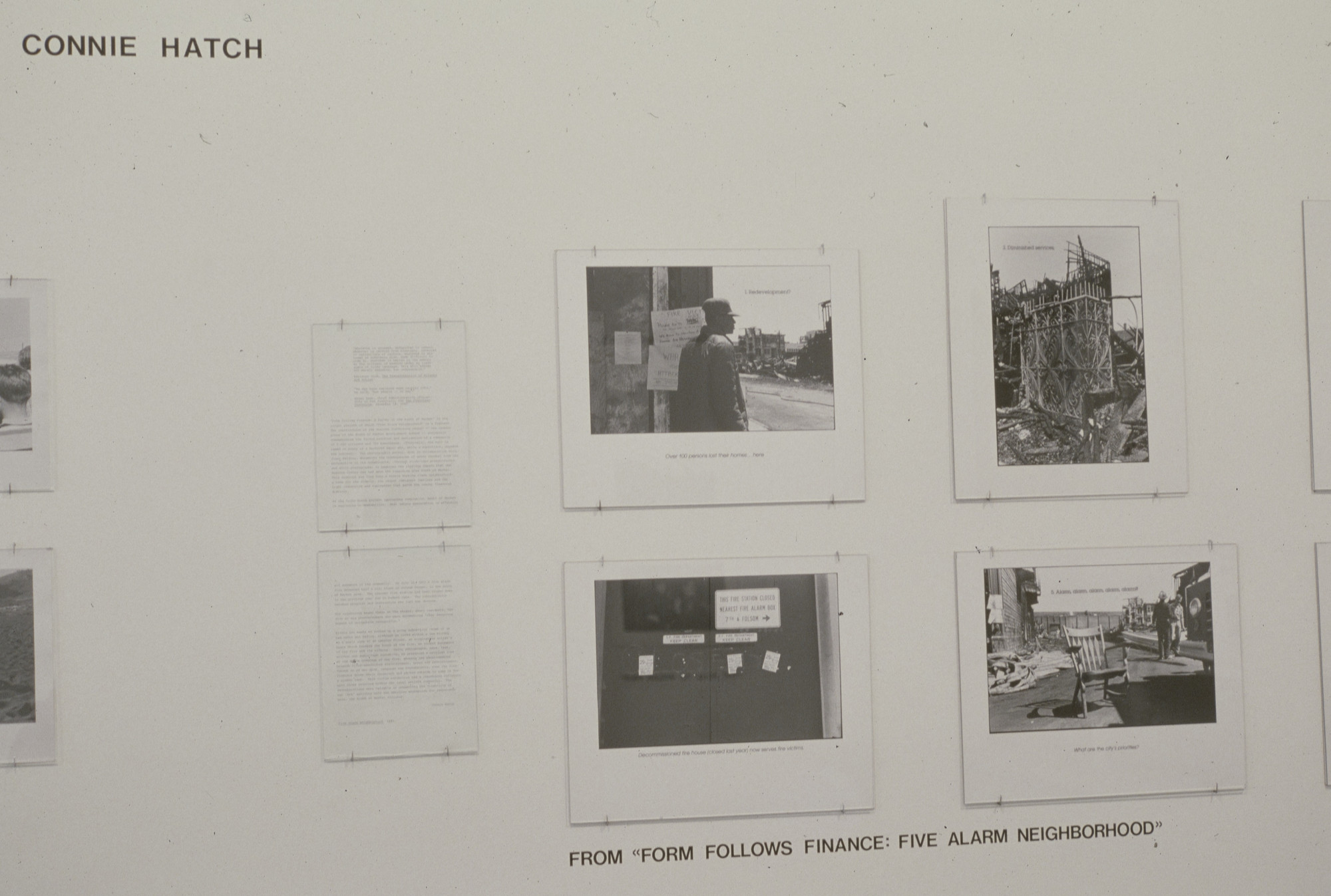
MoMA’s permanent collection documents this distinction precisely: modern design objects like the Eames Lounge Chair, the Barcelona Chair, and Saarinen’s Tulip Table are catalogued as mid-century modern, defined by period and material logic. Minimalist works — Donald Judd’s stack pieces, John Pawson’s spatial installations — are catalogued separately as a discipline concerned with space and reduction rather than object character. (MoMA Collection, Architecture and Design.)
Modern interior design is a period designation, not a philosophy. It runs roughly from the 1920s through the 1970s: from the Bauhaus (Walter Gropius, Weimar, 1919) through the International Style (Mies van der Rohe, Le Corbusier, the 1932 MoMA exhibition where historians Henry-Russell Hitchcock and Philip Johnson coined the term) to the mid-century American wave that put teak credenzas and molded plywood chairs into living rooms across the country. The Eames Lounge Chair (1956, Herman Miller, molded plywood shell, leather cushions) is the canonical object. Florence Knoll’s furniture system brought the same logic to corporate America in the 1950s and 60s. Eero Saarinen’s Tulip Chair (1956) and Womb Chair (1948), Hans Wegner’s Wishbone Chair (1949): these are pieces with warm materials, considered proportion, and selective ornamentation. The argument modern design was making: you can strip out Victorian excess without ending up cold.
Minimalism as an interior discipline arrived later and from a different direction. It draws from wabi-sabi, the Japanese aesthetic rooted in 16th-century tea ceremony culture. Sen no Rikyū (1522–1591) codified the wabi aesthetic in the chashitsu, the tea room: small, rough materials, nothing extraneous. It draws from Dieter Rams, whose Principle 10 — “Good design is as little design as possible” — reframed reduction as ethical obligation rather than stylistic preference. And it draws from the American Minimalist art movement of the 1960s: Donald Judd (1928–1994), whose “Specific Objects” essay (1965) argued that an object’s presence in space was the content, and whose permanent installations at the Chinati Foundation in Marfa, Texas (opened 1986) remain the most rigorous translation of that idea into lived space. John Pawson (b. 1949) brought this convergence into Western residential design. His Calvin Klein Madison Avenue store (1995–96), stone floors and white walls with no visible fixtures, is where commercial minimalism announced itself.
The confusion between these two styles is understandable. Both reject Victorian maximalism and favor neutral palettes with clean lines. The difference is in what each permits. Modern design allows accumulation within aesthetic rules: you can have a stack of art books on the coffee table, a throw over the arm of the sofa, a sculptural lamp on the side table, so long as each piece is well-chosen. Minimalism does not permit accumulation. The objects must justify their presence individually, not as a collection.
Where modern vs minimalist interior design actually diverges
Color
Walk into a well-executed modern room and you will see a neutral base: white walls, a gray rug, a warm wood floor, punctuated by one or two deliberate color decisions. The Eames-era palette is the reference: warm walnut against cobalt upholstery, or a mustard yellow chair against a white wall. The accents are bold, but they are earned by what surrounds them.
Walk into a minimalist room and the color is either absent or architectural. A single concrete wall. White on white with variation coming from material, not paint. If there is color it is because the material itself is colored (linen, stone, pale oak), not because something has been placed there to add interest. No accent throw pillows. No statement art above the sofa in a contrasting frame.
Neither approach wins this category outright; they serve different psychological goals. Modern design warms a space through color relationships. Minimalism uses the absence of color to make form and material the subject.
Materials and texture
Modern interiors mix textures deliberately. Smooth leather against rough natural fiber. Polished chrome against warm wood grain. The contrast is what creates visual interest; you get depth without pattern. A mid-century modern room can have a wool boucle sofa, a walnut coffee table, a chrome floor lamp, and a sisal rug, and every material in that list is doing something specific in relation to the others.
Minimalist interiors choose materials for restraint and continuity. Concrete, stone, whitewashed wood, linen: materials that have texture but do not compete with each other. The grain is there; the contrast is not. A minimalist room in John Pawson’s register uses one stone throughout a floor and a wall, letting the light change what you see, not the materials.
The distinction matters when you are making purchasing decisions. Modern design absorbs a good vintage find in an unexpected material. Minimalism does not. One wrong material choice in a minimal room is visible from across the room.
Objects and accessories
Modern interiors permit decorative objects, within limits. A sculptural ceramic on the windowsill, a few art books stacked on the coffee table, a single large-format photograph on the wall: these are consistent with a modern interior provided they are well-chosen. The rule is interest without excess.
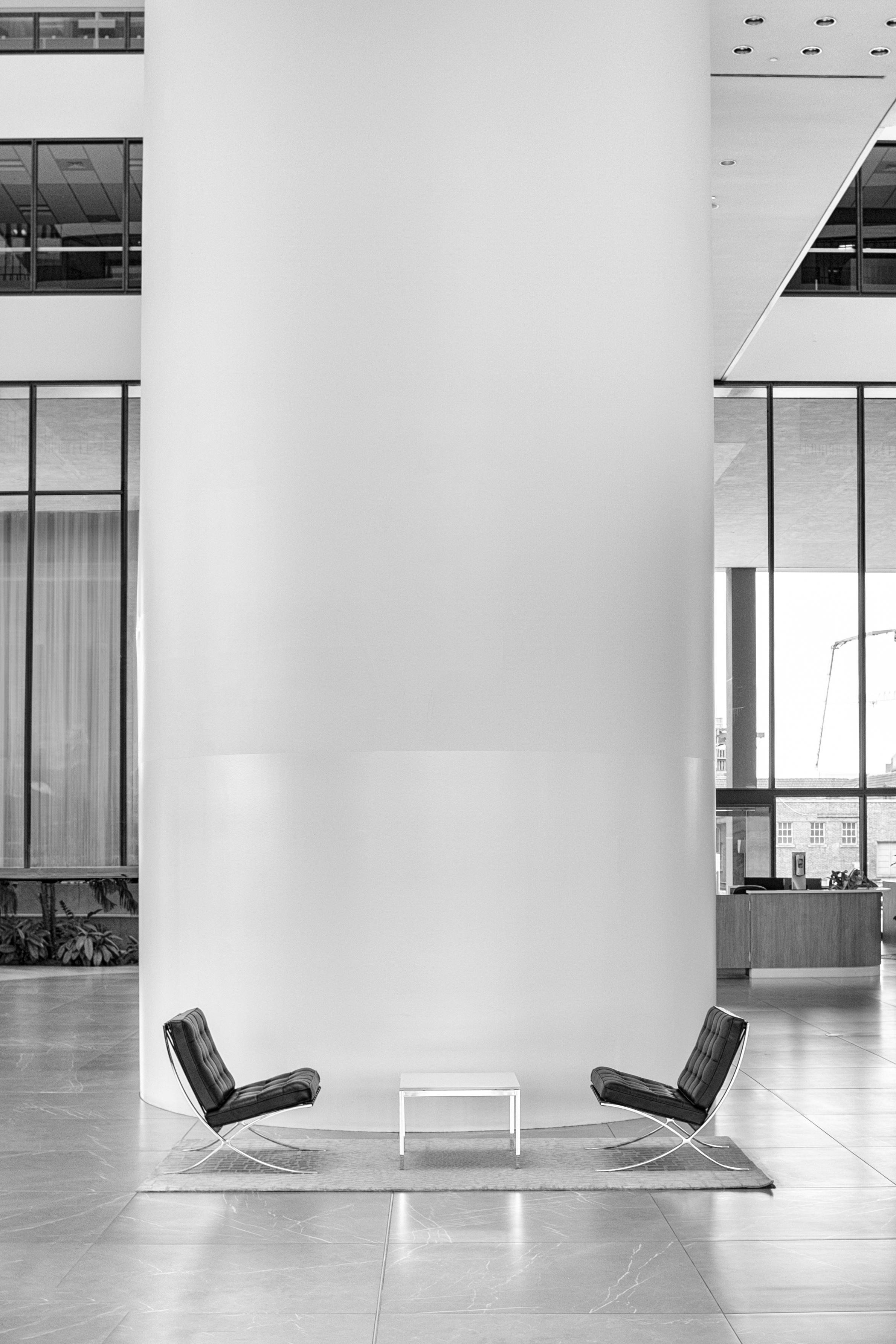
Minimalist interiors impose a stricter condition: every object must earn its presence. This is not the same as saying the room must be empty or cold. A minimalist room can contain beautiful things. The Knoll Barcelona Chair (1929, Mies van der Rohe and Lilly Reich, chromium-plated steel, leather, manufactured by Knoll since 1953) is a highly decorated object in formal terms. What minimalism excludes is the decorative object that exists purely to fill a surface. If the room would be better without it, it should not be there.
If you are the kind of person who accumulates: books, objects, small pieces that collect meaning over time, modern design is the framework that can absorb that without losing its coherence. Minimalism will require you to keep editing, and the editing never stops.
For accessible mid-century modern accent seating that references the construction logic of the period (molded plywood, walnut frame), the Rimdoc Mid-Century Modern Lounge Chair demonstrates what that material vocabulary looks like at a non-Knoll price point.
Furniture density
A modern living room contains furniture at standard residential density: sofa, two chairs, coffee table, side tables, a rug, probably a floor lamp. The room feels furnished. Every piece is chosen, but the room is not sparse. That density is part of what makes it livable. There are surfaces to set a glass on, places to sit that accommodate more than one posture.
A minimalist room reduces furniture to what is functionally necessary, and then questions whether some of that is necessary. A sofa without side tables. A bed frame without a headboard. The floor is allowed to be mostly empty. The wall is allowed to contain nothing.
This has a practical implication that does not appear often in minimalist interiors coverage: done well, minimalism means spending more per piece. When there are three objects in a room, each of those objects carries the full visual weight of the space. A cheap sofa in a modern room is hidden by what surrounds it; the same sofa in a minimalist room is the room.
Ornamentation
Modern design is restrained about ornamentation but not hostile to it. Architectural details: moldings, hardware, threshold transitions, all treated as design elements. The Barcelona Chair’s X-frame leg structure is formally ornamental. It is functional in supporting the seat, but it was designed to be looked at, not only to work. Mies and Lilly Reich designed it for a room that had almost no other furniture, which means the chair was architecture.
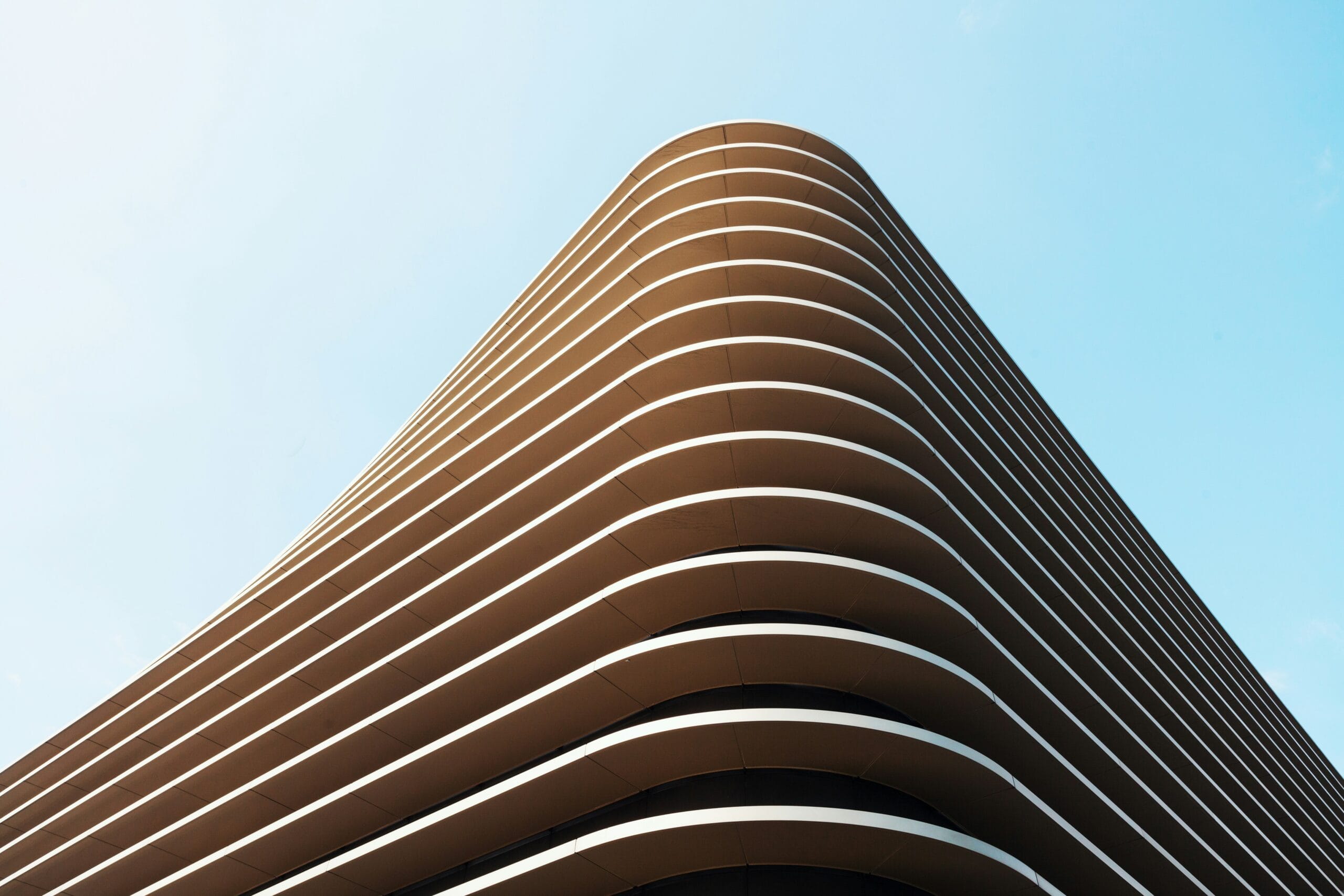
Minimalist design removes ornamentation unless it is structural. Pawson’s interiors have no visible baseboards, no exposed hardware, no threshold strips between rooms. The reduction is total. If a detail does not serve a structural or functional purpose, it is not there.
What each approach costs you (and what it gives you back)
Modern: Pros
- More livable for most households. The framework accommodates accumulation: books, objects, art, without demanding that you keep editing.
- Warmer emotional register. Mixed materials and selective color create a sense of a room that is inhabited, not staged.
- Easier to furnish across a budget range. Modern design absorbs vintage finds alongside new pieces; the aesthetic tolerates variation in price point.
- Historically grounded. Referencing a real design lineage (mid-century Scandinavian, Eames, International Style) gives a room coherence even when individual pieces vary in source and cost.
Modern: Cons
- The “modern” label covers almost anything built after 1950, which means it is easy to assemble a room that looks vaguely modern without having a clear point of view. The word is so broad it has become almost meaningless in retail.
- Without discipline, modern interiors drift toward “nice things in a room”: comfortable, considered in individual pieces, but without an argument.
- Bold color accents date faster than neutral schemes. A mustard yellow that read as sharp in 2015 reads as dated in 2026.
Minimalist: Pros
- Visual clarity. A well-executed minimalist room has a single, legible intention. You can read what it is doing from across the room.
- Every piece matters. The constraint forces better individual decisions; you cannot hide a poor choice behind surrounding objects.
- Ages better than trend-driven styles. A minimal palette is less vulnerable to the cycle of interior design trends because it has fewer surfaces for trends to attach to.
Minimalist: Cons
- Requires ongoing editing. The discipline is not a one-time decision; the room erodes every time something accumulates on a surface. Minimalism lived in by real people requires maintenance.
- Expensive to do well. Cheap minimalist furniture reads as empty rather than restrained. The difference between a minimal room that reads as considered and one that reads as under-furnished is almost entirely determined by material quality and proportion.
- Can feel cold or inhospitable when the material choices are wrong. Concrete without warmth, white without texture, furniture without presence: these are the failure modes. The Japandi hybrid (Japanese minimalism combined with Scandinavian design, popularized commercially in the 2010s) emerged precisely to resolve this, introducing natural materials like white oak, linen, and rattan at low object count.
- Difficult to maintain in shared households, particularly with children or in homes where people have different relationships with objects.
Which Should You Choose?
Choose modern if you are furnishing a home you actually live in rather than designing for photography. Modern design is the right framework when the room needs to feel warm and inhabited: when you collect things (art, books, objects) and want an aesthetic that can absorb that over time, when you are referencing mid-century pieces like an Eames chair or a Saarinen Tulip Table and want the room to have historical coherence. It is also the right choice when budget is a real constraint. Modern aesthetics accommodate a range of price points in a way minimalism does not. You can pair a well-chosen vintage find with a new piece and the aesthetic holds. Minimalism punishes compromise; modern design does not.
Choose minimalist if you are starting from a clear brief: one material register, one color temperature, a single spatial intention. Minimalism works when you have the budget to select each piece with care, when you are prepared to maintain the discipline over time, and when you want the room to make a visible position rather than simply look good. If you are drawn to the Japanese spatial tradition (the chashitsu, the idea that empty space is active rather than absent), minimalism is the framework that takes that seriously rather than just borrowing its aesthetics.
For furniture that works in a minimalist approach to small spaces, see the guide to best minimalist furniture for small spaces. If you want elements of both: the warmth of modern materials with the restraint of minimalist object count, the guide to styling a minimalist-modern interior works through how that hybrid actually functions in practice.
If you want to understand what minimalist restraint looks like applied to real residential spaces, Paco Asensio’s Minimalist Interiors (Harper Collins, 2002) is a photo-led survey of what the discipline looks like when it is executed well rather than just described. For the Japanese side of that lineage, Robyn Griggs Lawrence’s The Wabi-Sabi House (Clarkson Potter, 2004) is the most useful English-language treatment of wabi-sabi as a spatial practice: not philosophy, but rooms. And if you are arriving at Japandi as the resolution between minimalism and modern warmth, Studio Lux’s Japandi — The Interior Design Bible (2022) makes the case for why that synthesis holds up materially, not just aesthetically.
Frequently Asked Questions
What is the difference between modern and minimalist interior design?
Modern interior design refers to a period style rooted in early-to-mid twentieth-century design movements, particularly the Bauhaus, the International Style, and mid-century American furniture design. It uses warm materials, mixed textures, and selective ornamentation within a neutral palette. Minimalism is a design discipline, not a period, that emerged from Japanese wabi-sabi aesthetics, Dieter Rams’ design principles, and the Minimalist art movement of the 1960s. It treats negative space as active, reduces objects to what is functionally necessary, and treats material consistency as a form of rigor. The practical distinction: modern design permits considered accumulation; minimalism does not.
Can you mix modern and minimalist design in the same room?
Yes, and it is common. A room with mid-century modern furniture (clean-lined pieces in warm wood and leather) can operate at a minimalist object count simply by reducing the number of accessories and decorative items. What is harder to combine is modern color use (bold accents, deliberate contrast) with strict minimalist material discipline (one material, one color register). The hybrid approach that resolves this most consistently is Japandi: Japanese minimalism combined with Scandinavian design’s warmth, using natural materials like white oak and linen at low density. The guide to styling a minimalist-modern interior covers how to make this work without the room losing its coherence.
Is minimalist interior design more expensive than modern?
In practice, yes — done well. A minimalist room reduces the number of objects, which means each remaining object carries more visual weight. A sofa that would be unremarkable in a furnished modern room is the subject of the room in a minimalist space. That forces a higher standard for individual pieces, which generally means higher cost. Modern design is more forgiving at different price points: a well-chosen vintage find can sit alongside a new piece and the aesthetic absorbs the variation. Minimalism punishes compromise; the wrong material or proportion is visible immediately because there is nothing else in the room to distract from it.
What colors are used in modern vs minimalist design?
Modern design uses a neutral base (white, gray, beige, taupe, black) punctuated by deliberate accent colors. The mid-century American palette is the clearest reference: warm walnut or teak against cobalt, mustard, rust, or forest green upholstery. The accents are bold but selective. Minimalist design restricts color to what the material itself contributes: concrete gray, stone white, pale linen, natural oak. If there is a color decision in a minimalist room, it is architectural (one wall, one material) rather than decorative. No throw pillows in a contrasting color, no statement art in a colored frame.
Is Scandinavian design modern or minimalist?
It sits between both, which is why it works as a bridge. Scandinavian design (Danish modern in particular, with figures like Hans Wegner and his Wishbone Chair from 1949, and Arne Jacobsen) shares modern design’s period origins and its use of warm natural materials: teak, oak, wool. Scandinavian design also leans toward the restraint and low object count associated with minimalism, shaped by its own cultural relationship with simplicity and natural light. The Japandi hybrid, which emerged commercially in the 2010s, pairs Scandinavian design’s warmth with Japanese minimalism’s spatial discipline. It is where many readers who want minimalist but livable end up.
How do I know which style is right for my space?
The most direct question is: how do you actually live? If you collect things (books, objects, art) and want the room to absorb that over time without requiring constant editing, modern design is the framework that accommodates that. If you want the room to make a clear spatial statement and are prepared to maintain the discipline of keeping it edited, minimalism is worth pursuing seriously. Budget is also a real factor: modern design works across a range of price points; minimalism requires investing in individual pieces because there is nowhere to hide a compromise. If you are drawn to natural materials and a quiet palette but find strict minimalism austere, the minimalist furniture guide covers what actually works in practice.
For the broader historical context, see Scandinavian design history — the movement that sits between modern and minimalist and explains why the Japandi hybrid holds together so well. For furniture that works in either approach, see best Scandinavian design products. For a direct comparison of the two disciplines, see Scandinavian vs minimalist design.

About Zoe Post
Zoe Post holds a BFA and a Master of Architecture from the School of the Art Institute of Chicago. She now works as a product marketing leader at an architectural product design firm, bringing hands-on industry perspective to everything she writes. At ADI she covers contemporary artists, textile and pattern design, and the design objects that sit at the boundary of art and function.