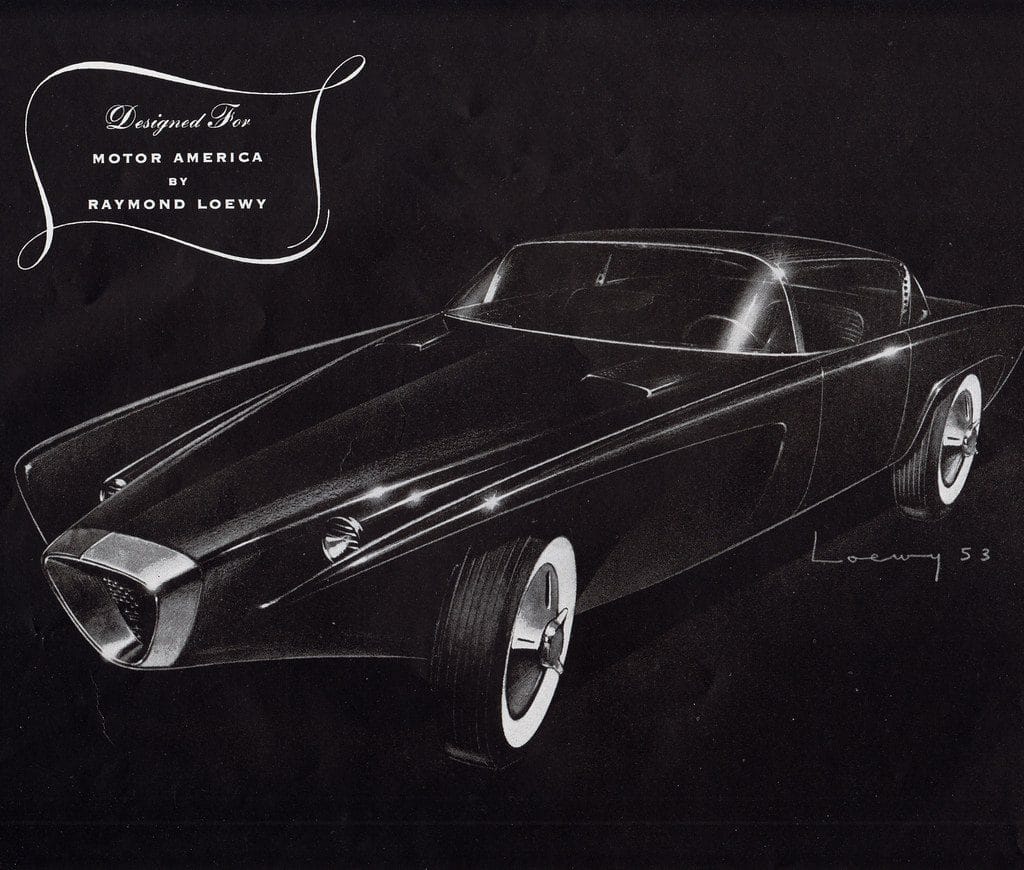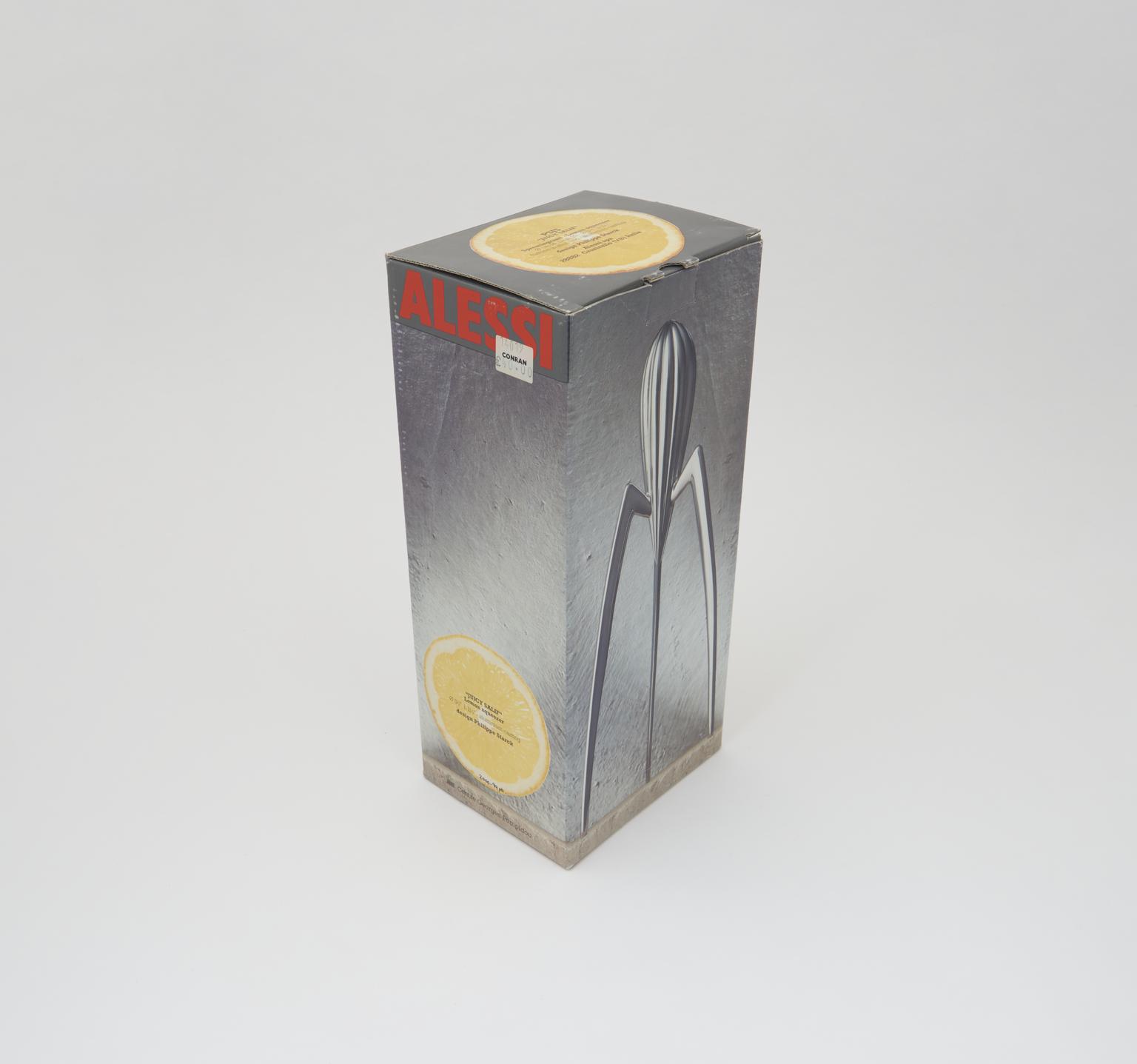
Scandinavian design products come from a tradition spanning Denmark, Finland, Norway, Sweden, and Iceland, built on the premise that well-made products should be available to everyone. Emerging in the early 20th century and reaching global recognition in the 1950s, this tradition prizes natural materials, restrained form, and the conviction that beauty and daily function are inseparable.

Our Top Picks
These four products represent the best Scandinavian design products available on Amazon today, not because they are the most expensive, but because each one delivers on the movement’s actual argument: that a well-designed object earns its place in an ordinary household.
- HAY Colour Crate M (Navy) (Mid-Range): A stackable polypropylene storage crate made from 100% recycled post-consumer plastic. The case for Scandinavian color theory applied to a utility object.
- Marimekko Oiva Unikko Mug (Mid-Range): The most accessible entry into Marimekko’s sixty-year design archive. A pattern with a genuinely good origin story on a mug that holds up to daily use.
- Marimekko Pieni Unikko Throw Pillow (Red) (Mid-Range): The small-scale Unikko repeat, translated from apparel into domestic textiles without losing the graphic conviction that made the original work.
- MUJI Polypropylene 2-Drawer Storage Box (Budget): The benchmark of what Muji does. A storage system that has been in continuous production since the 1980s because it refuses to do anything it doesn’t need to do.
Quick Decision Guide
- Best for color committed households: HAY Colour Crate M (Navy): stackable, foldable, 20+ colors; buy multiples
- Best single introduction to Scandinavian design: Marimekko Oiva Unikko Mug: thirty dollars, sixty years of pattern history, daily use
- Best for textile interiors: Marimekko Pieni Unikko Throw Pillow (Red): the graphic without the apparel price point
- Best budget option: MUJI Polypropylene 2-Drawer Storage Box: functional, unbranded, modular; it works because it doesn’t try to be anything else
Full Comparison
| Product | Best For | Price Range | Key Feature | Link |
|---|---|---|---|---|
| HAY Colour Crate M (Navy) | Color-forward storage | Mid-Range | 100% recycled polypropylene, 20+ colors, stackable | View on Amazon |
| Marimekko Oiva Unikko Mug | Daily design entry point | Mid-Range | Stoneware, Unikko print, Oiva series (2013) | View on Amazon |
| Marimekko Pieni Unikko Throw Pillow (Red) | Textile interiors | Mid-Range | Cotton, small-scale Unikko repeat | View on Amazon |
| MUJI Polypropylene 2-Drawer Storage Box | Minimal, modular storage | Budget | Continuous production since 1980s, no-brand ethos | View on Amazon |
What makes the best Scandinavian design products worth buying
HAY Colour Crate M (Navy)
HAY Colour Crate M (Navy)
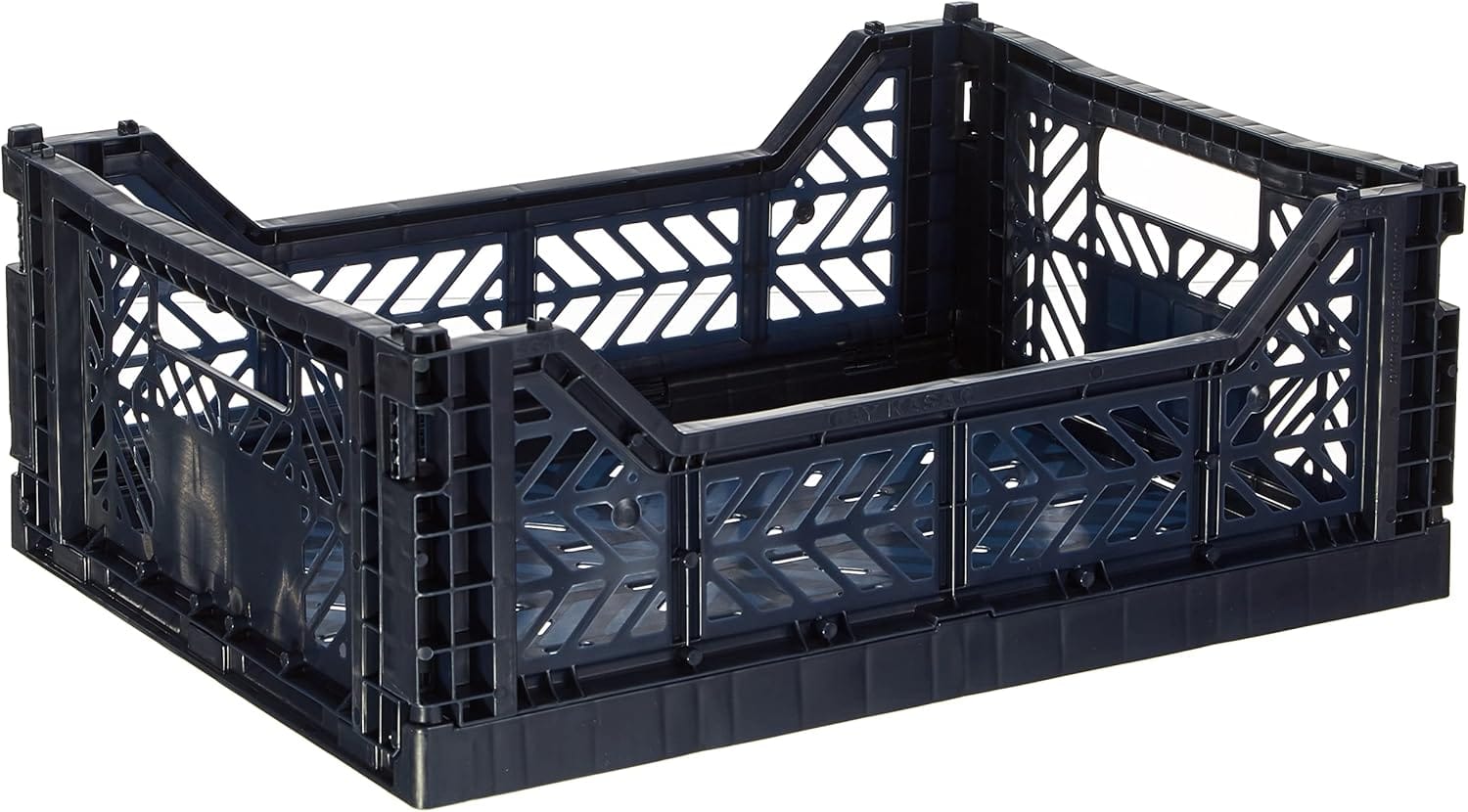
A stackable storage crate made from 100% recycled post-consumer polypropylene. It refuses to be invisible without refusing to be useful — 20+ colors, foldable, mid-range price point.
HAY was founded in 2002 by Rolf and Mette Hay with a stated mission to make durable objects that are well-built and good-looking. The Colour Crate is the product that argument is easiest to test. It’s a storage crate made from 100% recycled post-consumer polypropylene. It stacks. It folds. It comes in more than twenty colors. The navy is the restraint option; there are versions in yellow, green, and several reds for the less restrained.
The case for the Crate is that it refuses to be invisible without refusing to be useful. It’s a utility object that happens to have thought behind its color choices, which is exactly what the Scandinavian democratic design argument was about. Alvar Aalto and Arne Jacobsen were making the same point with different materials in the 1950s. HAY is making it with recycled plastic in 2002. The argument holds.
HAY is making the same argument Aalto made in the 1950s — it just switched from bent birch to recycled polypropylene.
Pros:
- 100% recycled post-consumer polypropylene: the sustainability claim is material, not marketing
- Foldable and stackable: genuinely useful in small spaces
- 20+ color options: commits to the idea that a utility object can have a palette
- Mid-range price point means you can actually buy multiples without guilt
Cons:
- Polypropylene reads as plastic regardless of its recycled origins. This will bother some buyers.
- The color commitment is a real commitment: navy is navy, not an accent
- Foldability means the structure is slightly less rigid than a solid crate
Who it’s for: Someone who needs storage and wants it to have a point of view. A studio, a kitchen counter, a shelf that needs to organize without becoming neutral.
Why it stands out: Because it applies genuine color intelligence to an industrial object without inflating the price to make the case.
Marimekko Oiva Unikko Mug
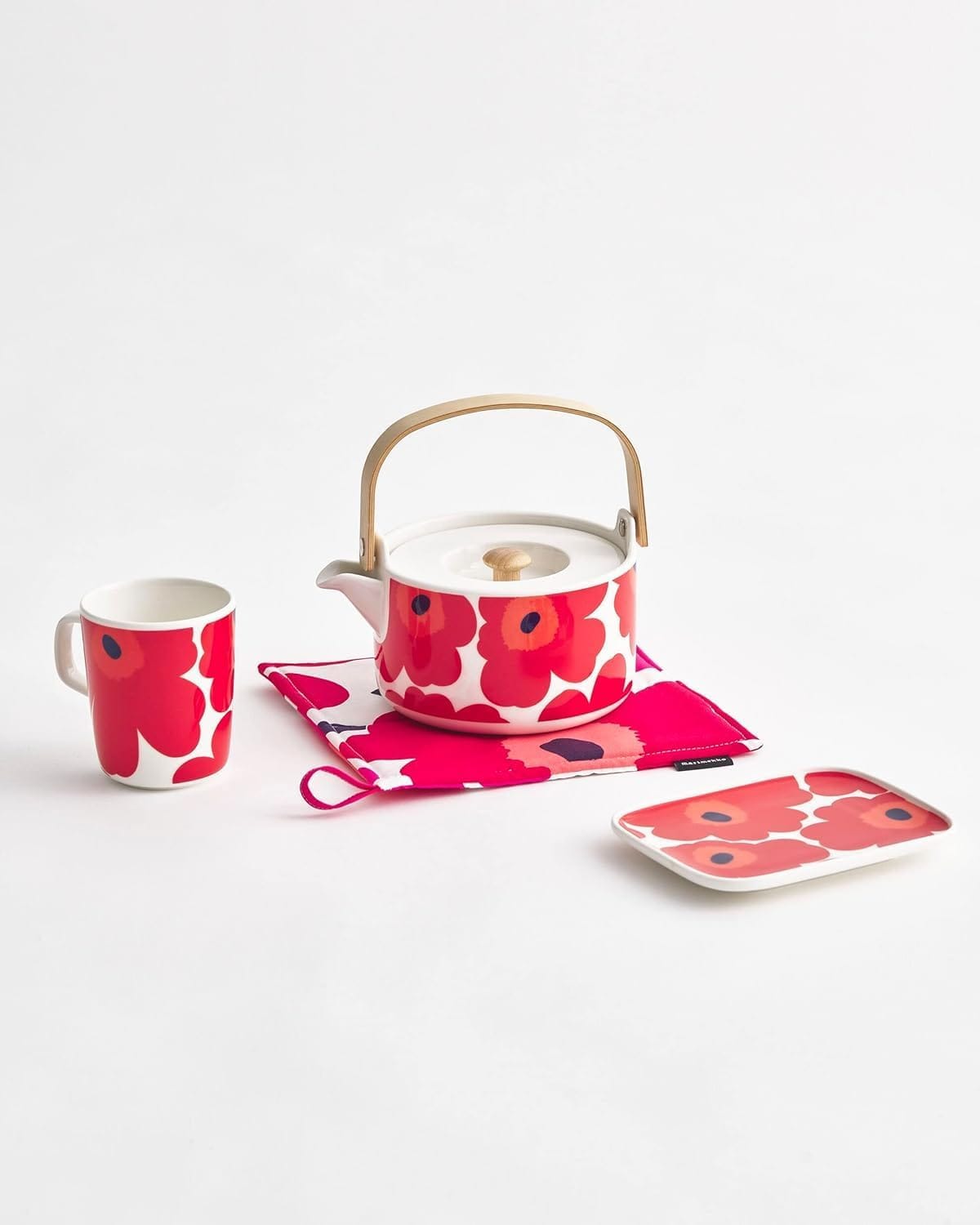
Marimekko Oiva Unikko Mug
Stoneware mug carrying the Unikko poppy print — a 60-year-old pattern created in deliberate defiance of the brand’s founder. The most accessible Marimekko entry point at a mid-range price.
Marimekko was founded in Helsinki in 1951 by Armi and Viljo Ratia. The Unikko poppy pattern was created in 1964 by Maija Isola, and created specifically in defiance of Armi Ratia’s explicit directive against flower patterns. Ratia had announced that Marimekko would not print flowers. Isola painted a collection of them anyway. Ratia included eight of them in that season’s collection. The pattern that defined the brand was the one the founder said the brand wouldn’t make.
The Oiva series was designed by Sami Ruotsalainen; the name means “splendid” in Finnish. Introduced in 2013 as the stoneware range carrying Marimekko’s classic textile prints into tableware, the Unikko mug is the most accessible object in that series. Stoneware, the Unikko print, a price point that puts sixty years of Finnish design history into a daily object without demanding a premium for the origin story.
Pros:
- Stoneware construction: holds temperature well, dishwasher safe
- Carries the full Unikko pattern history, the best-known print in Finnish design
- Price point that makes the pattern accessible rather than aspirational
- Oiva series (2013) is the official Marimekko tableware range: this is not a licensed knock-off
Cons:
- Stoneware is heavy: not ideal if you travel with your mug
- One pattern, limited colorways: you’re buying Unikko, not a range of Marimekko options
- The story matters to the price; if you don’t care about the pattern history, a cheaper mug does the same job
Who it’s for: Someone who wants Marimekko’s design language in a daily object. Someone who knows the Unikko origin story and wants to own a version of it for thirty dollars.
Why it stands out: Because it puts a genuinely significant design decision, a designer who defied a founder and was right, into an object you use every morning.
Marimekko Pieni Unikko Throw Pillow (Red)
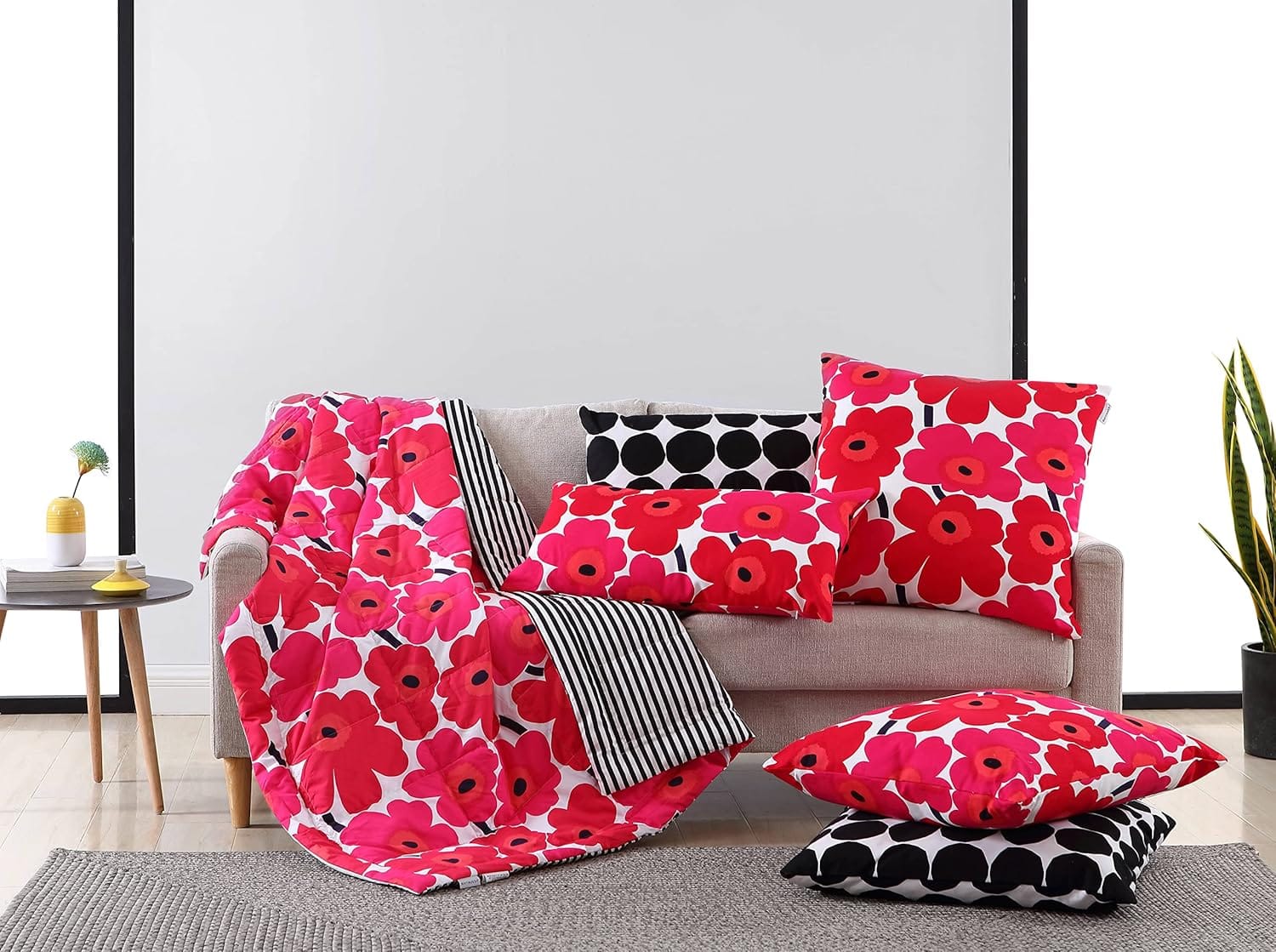
Marimekko Pieni Unikko Throw Pillow (Red)
The small-scale Unikko repeat on cotton — the graphic logic of Marimekko’s signature print scaled for domestic textiles, in the canonical Unikko red.
The “Pieni” in Pieni Unikko means “small” in Finnish. This is the small-scale version of the Unikko repeat: the same poppy design, scaled down so the pattern reads as a repeat rather than as an individual motif. On a throw pillow, this is the right call. A full-scale Unikko on a standard 18-inch pillow would be one flower. The Pieni repeat gives you the graphic logic of the pattern without asking the object to be a frame for a single image.
The pillow is cotton, in the Unikko red that has become the reference color for the pattern. This is Marimekko’s textile design language extended into interiors, not a separate product line, but the same archive applied to a different surface. Jacqueline Kennedy’s purchase of Marimekko dresses brought the brand to US attention, accelerating a recognition that the pattern had already earned on its own terms.
The Pieni repeat gives you the graphic logic of Marimekko without asking a throw pillow to be a painting.
Pros:
- Small-scale repeat works at pillow dimensions in a way the full-scale pattern doesn’t
- Cotton construction: washable, durable, honest about what it is
- The red is the reference Unikko color: this is the canonical version
- Extends the Marimekko graphic language into soft furnishings without diluting it
Cons:
- Mid-range price for a cotton pillow cover: you’re paying partly for the pattern rights
- Red is a commitment; the pattern doesn’t disappear into a room
- Limited styling flexibility: Marimekko’s graphic language reads as Marimekko
Who it’s for: Someone who wants a designed textile object in a room that can hold a strong graphic. Someone who already owns the mug and wants the pattern to extend into the space.
Why it stands out: Because it demonstrates that Marimekko’s textile design intelligence translates from apparel into interiors without needing to change the argument.
MUJI Polypropylene 2-Drawer Storage Box
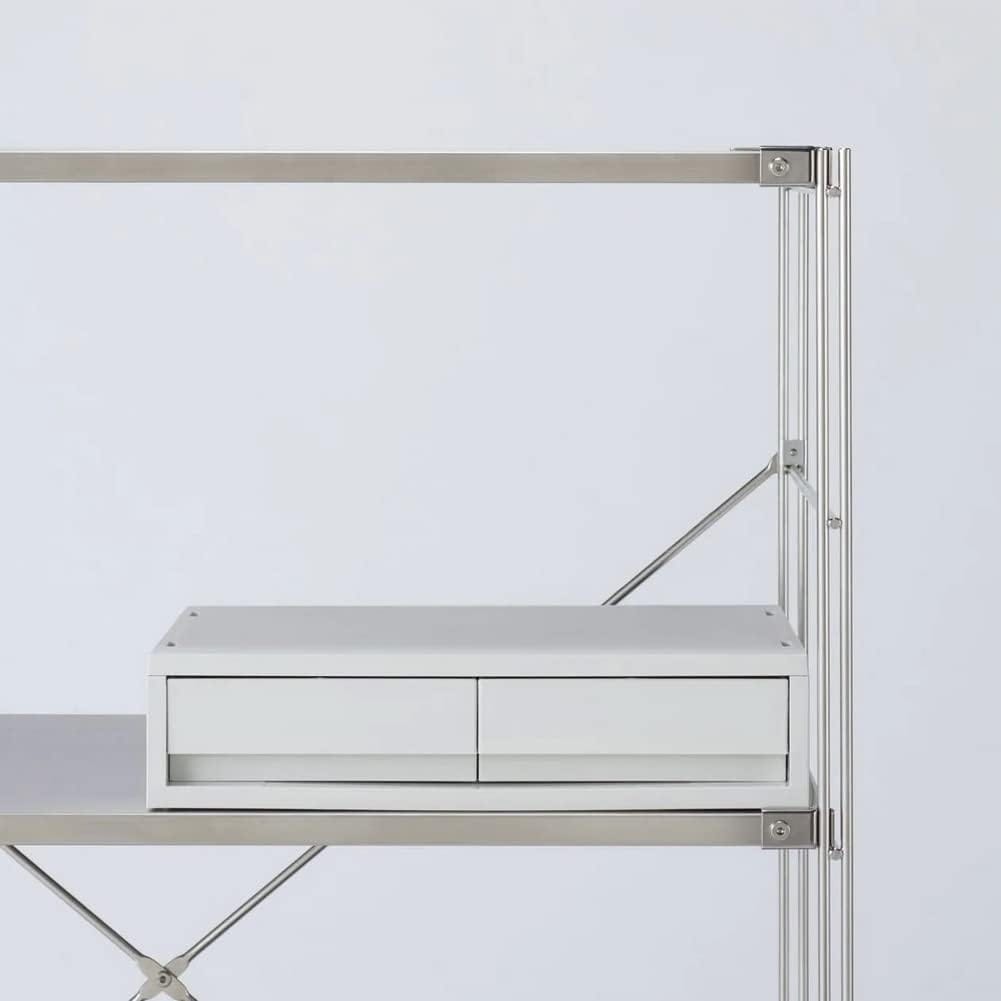
MUJI Polypropylene 2-Drawer Storage Box
Continuous production since the early 1980s with minimal changes. The benchmark of Muji’s no-brand philosophy: translucent polypropylene, modular, stackable, budget price point.
Muji was founded in 1980 under the name Mujirushi Ryōhin, which translates directly as “no-brand quality goods.” The founding logic was rejection: of cosmetic packaging, of markup for branding, of the premium that Japanese retailers were charging for the performance of luxury rather than the thing itself. The original product range used unbleached paper packaging. The storage boxes used natural, undyed polypropylene. Both choices were deliberate acts of refusal.
The Polypropylene Storage system has been in continuous production since the early 1980s with minimal changes. That’s the first thing worth saying about it. A storage system that survives forty-plus years of production without requiring a redesign isn’t a design accident. It’s right. The design isn’t trying to make an impression. It’s trying to work. And it does, which is why MUJI has never needed to update it.
Muji’s own positioning explicitly frames their design philosophy as a Japanese-Scandinavian convergence. MUJI USA’s Japandi page on muji.us describes their design as Japanese-Scandinavian convergence, and the overlap is real: both traditions start from the premise that the object should serve the function without asserting itself, that material quality matters more than decorative surface, and that the user’s life is what the object fits into, not the other way around.
Pros:
- Continuous production since the 1980s: a de facto proof that the design works
- Modular and stackable: the system grows with what you need
- No branding: the object doesn’t advertise itself in the space
- Budget price point: genuinely accessible, not strategically positioned as accessible
Cons:
- Translucent polypropylene shows what’s inside: tidy contents are part of the aesthetic
- No color: if you want palette, look at HAY
- The no-brand argument is still a brand argument: Muji is recognizable as Muji
Who it’s for: Someone who needs a storage system that disappears into the room. Someone who finds HAY’s color commitment too much and wants the functional argument without the personality.
Why it stands out: Because it has survived long enough that its continued production is its own recommendation.
What Scandinavian design actually argues for
The movement’s argument was political as much as aesthetic: that well-designed objects belong in ordinary households, not just in wealthy ones. Alvar Aalto in Finland, Arne Jacobsen and Hans Wegner in Denmark, and the generation that followed them were all working from this premise.
Long, dark Nordic winters drove a design language built on interior warmth, pale woods, wool, and linen. The color palette of whites, greys, and warm neutrals was a functional response to the environment. Charlotte Fiell and Peter Fiell’s Scandinavian Design (TASCHEN, 2024) traces this connection across 125 designers and five countries over more than a century.
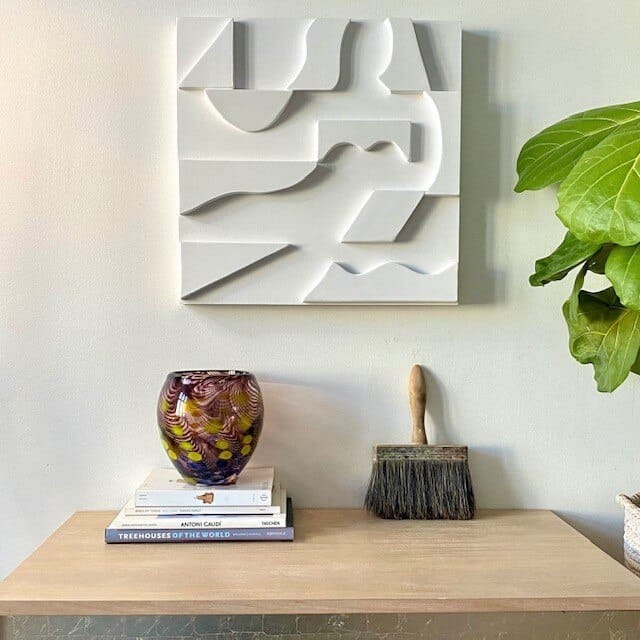
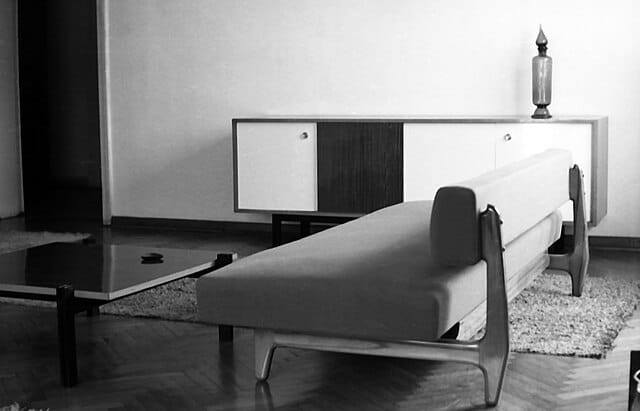
HAY, Marimekko, and Muji each carry a different part of this argument. HAY applies Nordic color intelligence to contemporary production. Marimekko carries a graphic conviction from textiles into every domestic surface it touches. Muji demonstrates, through the Japandi convergence, that the Scandinavian insistence on function-without-decoration holds across manufacturing traditions.
The products on this list deliver this argument without inflating the price to make the case.
Frequently Asked Questions
What are the key principles of Scandinavian design?
Scandinavian design is built on function, natural materials, and the democratic conviction that well-made objects should be affordable to ordinary people, not reserved for wealthy households. The movement prizes restraint over decoration, honest use of materials like wood, wool, and linen, and the idea that beauty and daily utility are not in conflict. These principles emerged in the early twentieth century and were most fully articulated during the 1950s and 1960s.
What is the difference between Scandinavian and Japanese minimalism?
Both traditions value restraint and functional honesty, but they come from different arguments. Scandinavian minimalism emerged from a democratic political position (design for everyone) and from climatic conditions that rewarded interior warmth and natural material. Japanese minimalism has roots in Zen aesthetics and the concept of ‘ma’, which treats negative space as an active element. That is a more philosophical position than the Nordic one. Muji represents the overlap between the two traditions, applying Japanese no-brand logic to a Scandinavian functional framework. MUJI USA’s Japandi page on muji.us explicitly frames their design as a Japanese-Scandinavian convergence.
How do HAY, Marimekko, and Muji represent Scandinavian design today?
Each brand carries a different part of the tradition. HAY, founded in 2002 by Rolf and Mette Hay, applies Nordic color intelligence to contemporary manufacturing. Its objects are functional and have a point of view about color. Marimekko, founded in 1951 by Armi Ratia, carries a graphic textile tradition that has survived sixty years of production without losing its conviction. Muji, founded in 1980 in Japan, extends the Nordic functional argument through a Japanese manufacturing economy that shares the same anti-decoration premise.
What materials are most common in Scandinavian design?
The traditional material palette is wood (particularly birch and pine), along with wool, linen, and leather. Contemporary Scandinavian design has extended this to include recycled polypropylene (HAY), translucent plastics (Muji), and printed cotton at scale (Marimekko). The through-line is honesty about the material: Scandinavian design does not typically apply decorative finishes that obscure how an object is made or what it is made from.
Is Scandinavian design the same as Nordic design?
‘Scandinavian’ and ‘Nordic’ are often used interchangeably in design contexts, but they refer to slightly different geographies. Scandinavia is Denmark, Sweden, and Norway. The Nordic countries add Finland and Iceland to that list. The design tradition that is commercially recognized as ‘Scandinavian design’ actually includes Finnish designers: Alvar Aalto, Maija Isola, and Tapio Wirkkala. So ‘Nordic design’ is the more accurate term for the full tradition. In practice, the market uses both terms for the same aesthetic.
Why is Scandinavian design so popular in interior design?
Because its constraints are useful. A color palette built around whites, greys, and warm neutrals works in most interior contexts. A preference for natural materials means the objects age without looking dated. The democratic price positioning means the best pieces from brands like HAY and Muji are within reach of a wide range of buyers. And the functional argument (that an object should do its job without asserting itself) makes Scandinavian pieces easy to mix with other design traditions. None of this is accidental. The movement was designed, from the beginning, to be livable.
For the historical argument behind these products, see the full guide to Scandinavian design history. HAY’s current product line is covered in our best HAY products guide. For a direct comparison of Scandinavian design against minimalism, see Scandinavian vs minimalist design.
Further Reading
Two books worth owning if you want the full argument, not just the products.
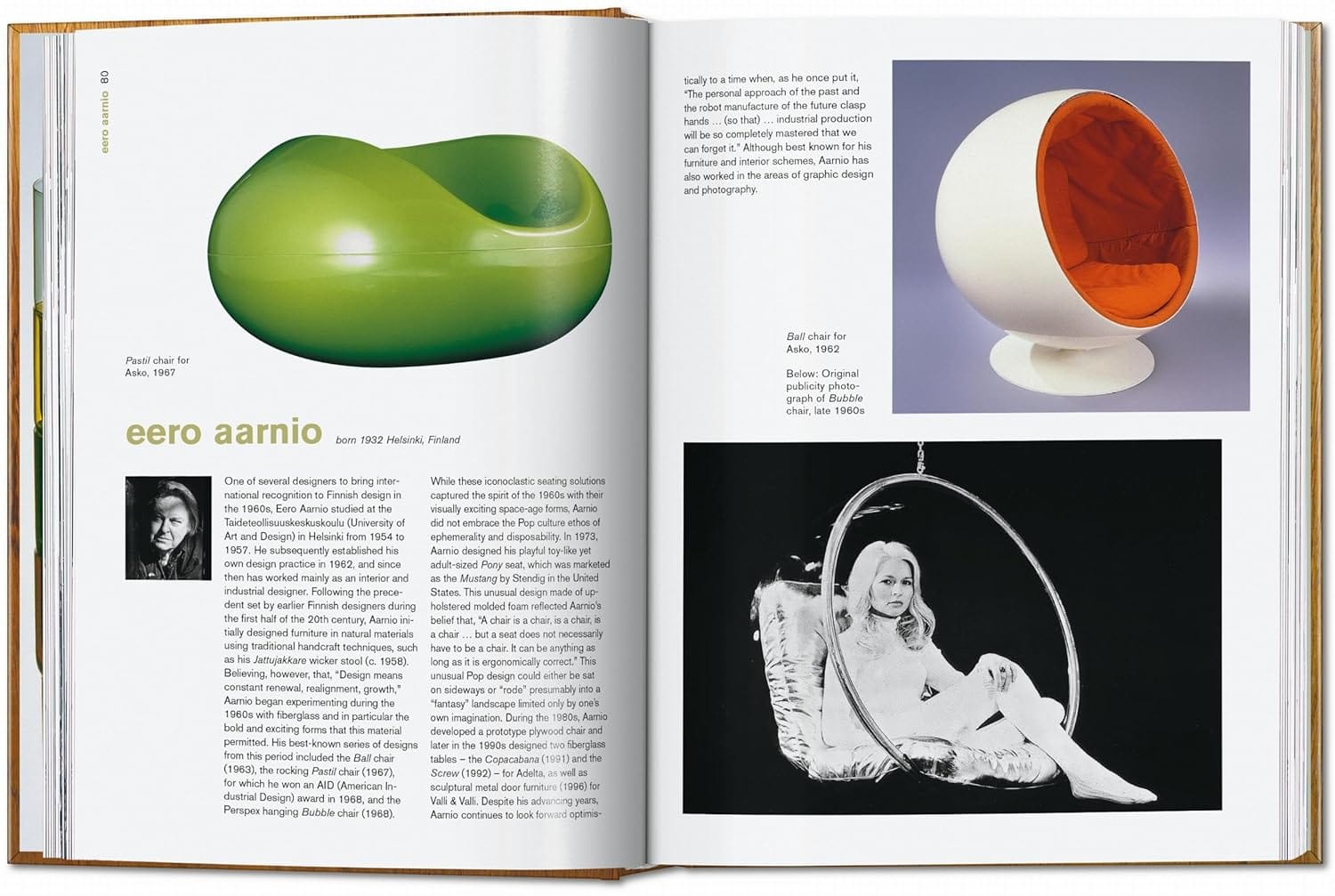
Scandinavian Design — Charlotte Fiell & Peter Fiell (TASCHEN, 2024)
The most comprehensive single-volume reference on the movement: 512 pages, 125 designers, the full historical arc from 1900 to the present. Worth owning if you want to understand where HAY and Marimekko sit in the longer story.
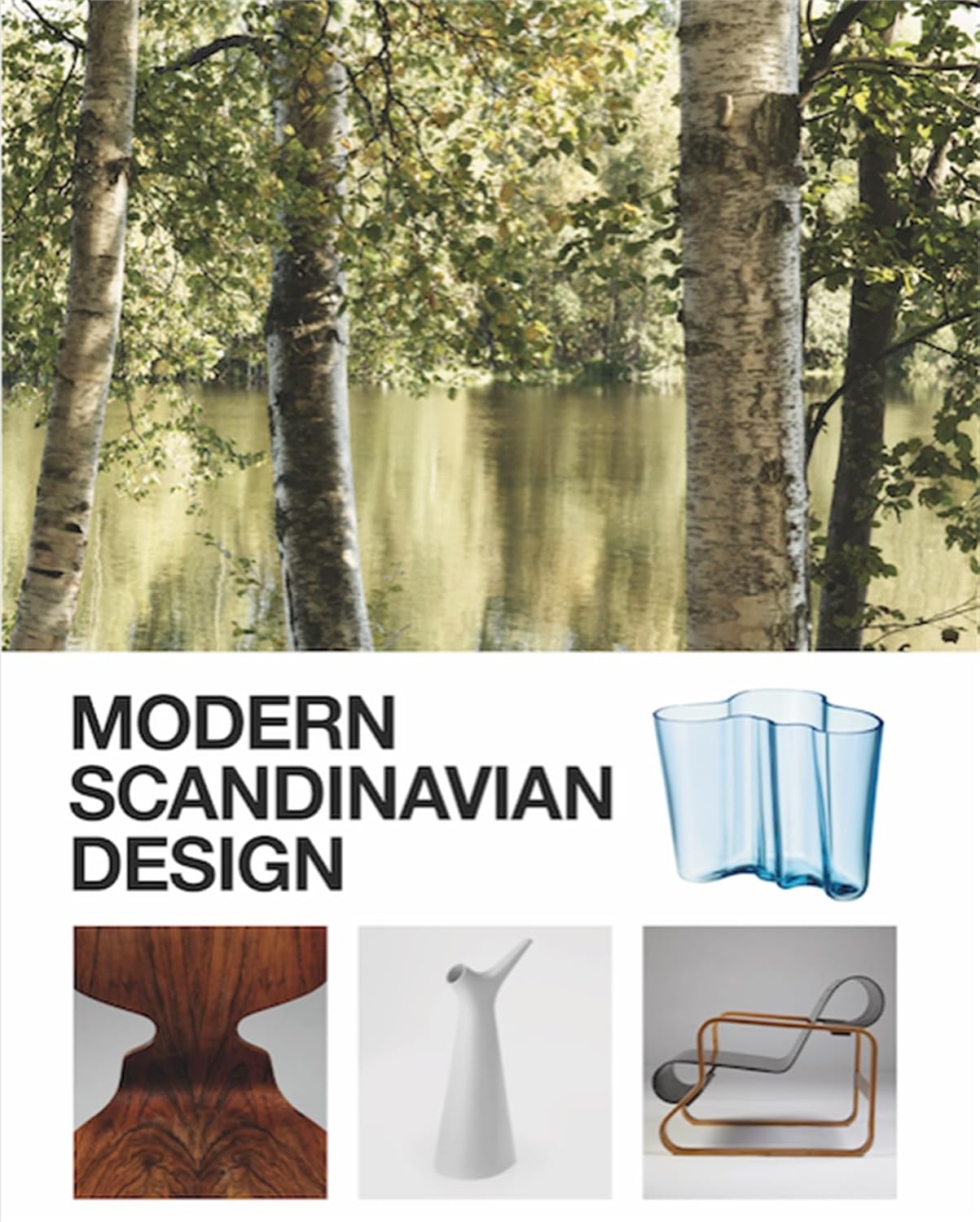
Modern Scandinavian Design — Charlotte Fiell, Peter Fiell & Magnus Englund (Laurence King, 2017)
Englund co-founded Skandium, London’s foremost Scandinavian design retailer. His practical knowledge of what is actually made and sold today gives this book an authority that purely historical surveys lack. 592 pages, covering architecture through textiles.

About Zoe Post
Zoe Post holds a BFA and a Master of Architecture from the School of the Art Institute of Chicago. She now works as a product marketing leader at an architectural product design firm, bringing hands-on industry perspective to everything she writes. At ADI she covers contemporary artists, textile and pattern design, and the design objects that sit at the boundary of art and function.