Art Deco furniture is a style of interior furnishing originating in 1920s Paris, defined by geometric forms, materials chosen for surface contrast and expense — ebony, lacquer, chrome, velvet — and streamlined silhouettes. It emerged from the 1925 Exposition Internationale des Arts Décoratifs and dominated interiors across Europe and North America through the 1930s.
What Art Deco was arguing against — and why that still matters
Art Deco didn’t arrive as a decorating trend. It arrived as a position. The movement emerged in Paris in the 1910s, before the First World War, as a calculated rejection of two things simultaneously: the organic, plant-derived ornament of Art Nouveau and the studied austerity of early Modernism. The Modernists were arguing that decoration was dishonest. Art Nouveau was drowning in decoration that had stopped meaning anything. Art Deco said both were wrong.
The post-WWI cultural context matters here. Designers working in the early 1920s were not neutral. They were making choices about what pleasure meant after a catastrophic war. Decolish.com’s survey of the period notes that designers “embraced notions of pleasure, glamour, luxury and escapism,” drawing explicitly on African, East Asian, and Egyptian motifs. Those sources signaled the reach of French cultural influence even as they were being stripped of their original context. That appropriation is part of the record; pretending it isn’t distorts what Art Deco was doing.
The movement’s defining public moment was the 1925 Exposition Internationale des Arts Décoratifs et Industriels Modernes in Paris, the event that gave the movement its retrospective name. France banned industrial goods from the Exposition to emphasize craft and artistry. That curatorial decision is a direct statement of what the organizers thought they were protecting.
France banned industrial goods from the 1925 Expo to emphasize craft and artistry — the event that gave the movement its name.
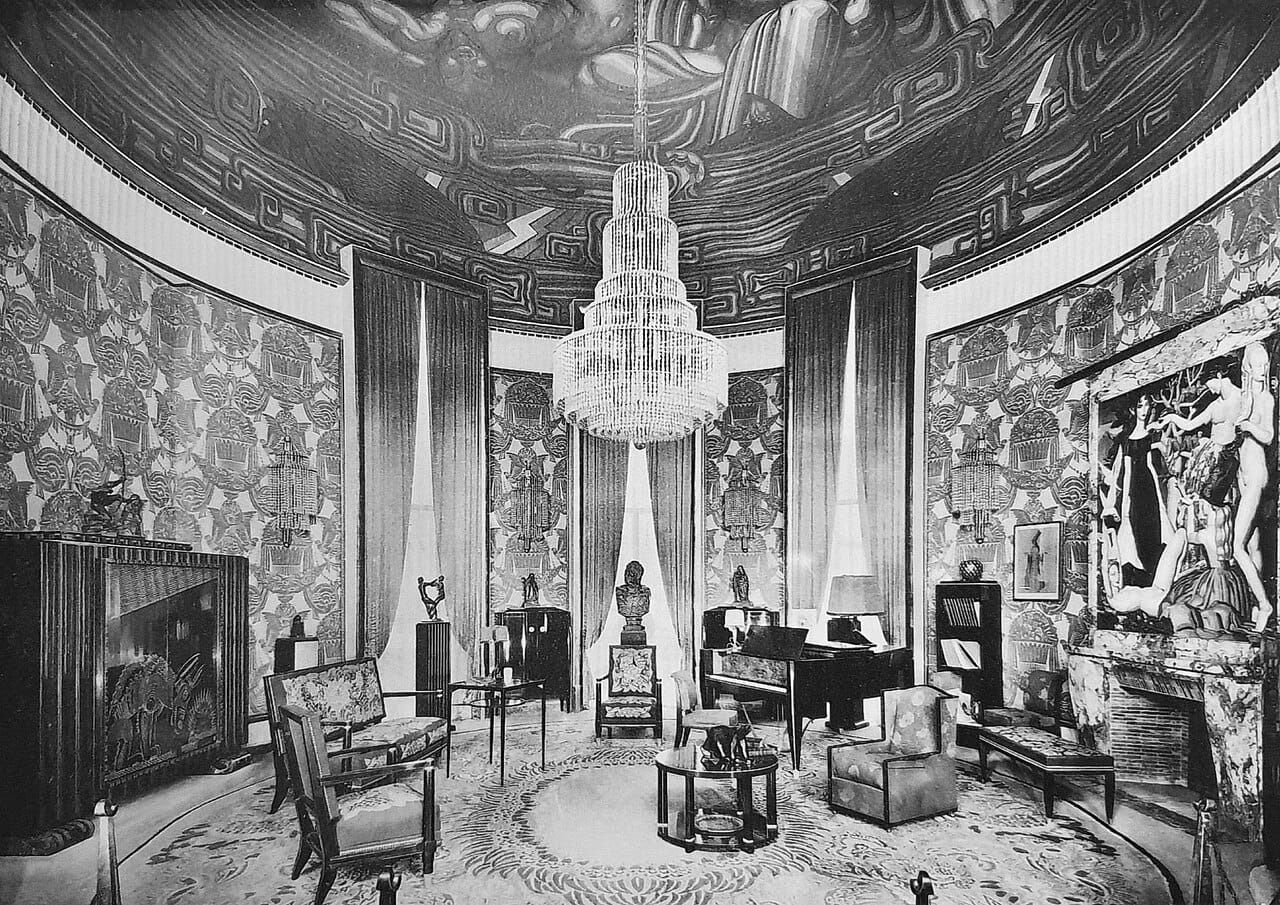
The central figure at the Expo was Émile-Jacques Ruhlmann (1879–1933). His Hôtel du Collectionneur pavilion was the star attraction of the fair, according to Dezeen’s 2025 retrospective on his work. Ruhlmann worked entirely in handmade pieces: ebony, rosewood, sharkskin (galuchat), ivory inlays, tapered legs, fluted surfaces. The price point made his furniture inaccessible to almost everyone alive. That exclusivity wasn’t incidental. It was the argument. The pieces were not attempting democratic reach. They were establishing a standard.
Both arguments were on display at the 1925 Exposition itself — Le Corbusier’s Pavillon de l’Esprit Nouveau, explicitly anti-decorative, occupied the same fairground as Ruhlmann’s Hôtel du Collectionneur. The tension between them defines what Art Deco was defending.
The movement’s decline was equally instructive. Art Deco fell out of fashion at the start of the Second World War, felt, as Decolish.com puts it, “too garish and extravagant in the face of that conflict.” It has since had a documented revival, particularly in the 1980s, and continues to influence luxury hotel and boutique hospitality interiors (Carrocel.com). The style is good at glamour. It has always known this about itself.
Why Art Deco furniture looks the way it does
The formal vocabulary of Art Deco furniture (geometric silhouettes, stepped forms, sunburst and chevron motifs, tapered legs) was not arbitrary. It came from specific sources: Cubism, ancient Egyptian forms, African visual culture, and the hard-edged geometry of the Vienna Secession. Josef Hoffmann’s Stoclet Palace in Brussels (1905–1911), commissioned by Belgian industrialist Adolphe Stoclet and executed by the Wiener Werkstätte, had established what proto-Art Deco architecture could look like in built form more than a decade before the Exposition (Wikipedia, “Art Deco”). The furniture followed the architecture’s logic.
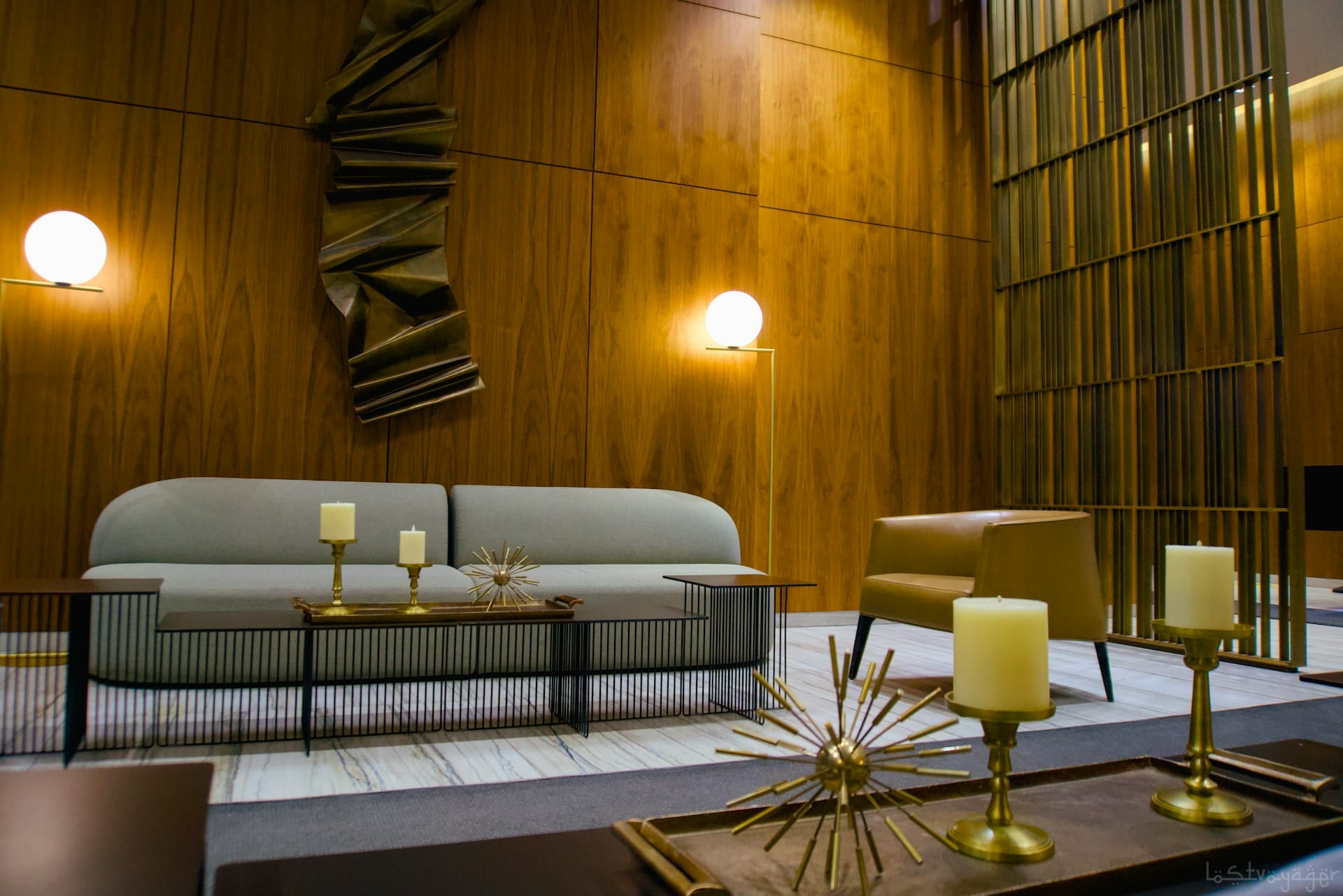
Materials were how the hierarchy got communicated. Ruhlmann used ebony, rosewood, sharkskin, and ivory. The wider movement worked with burl walnut, ash, maple, mahogany, violet wood, zebrawood, amboyna, lacquer, chrome, brass, velvet, and tortoiseshell (The Inside; Invaluable.com). Each material positioned a piece within the status order. Heavy lacquer, used in “a newfound abundance,” gave furniture a “seamlessly shiny, reflective look” (The Hoarde). Chrome and glass brought industrial precision into interiors that were otherwise about craft.
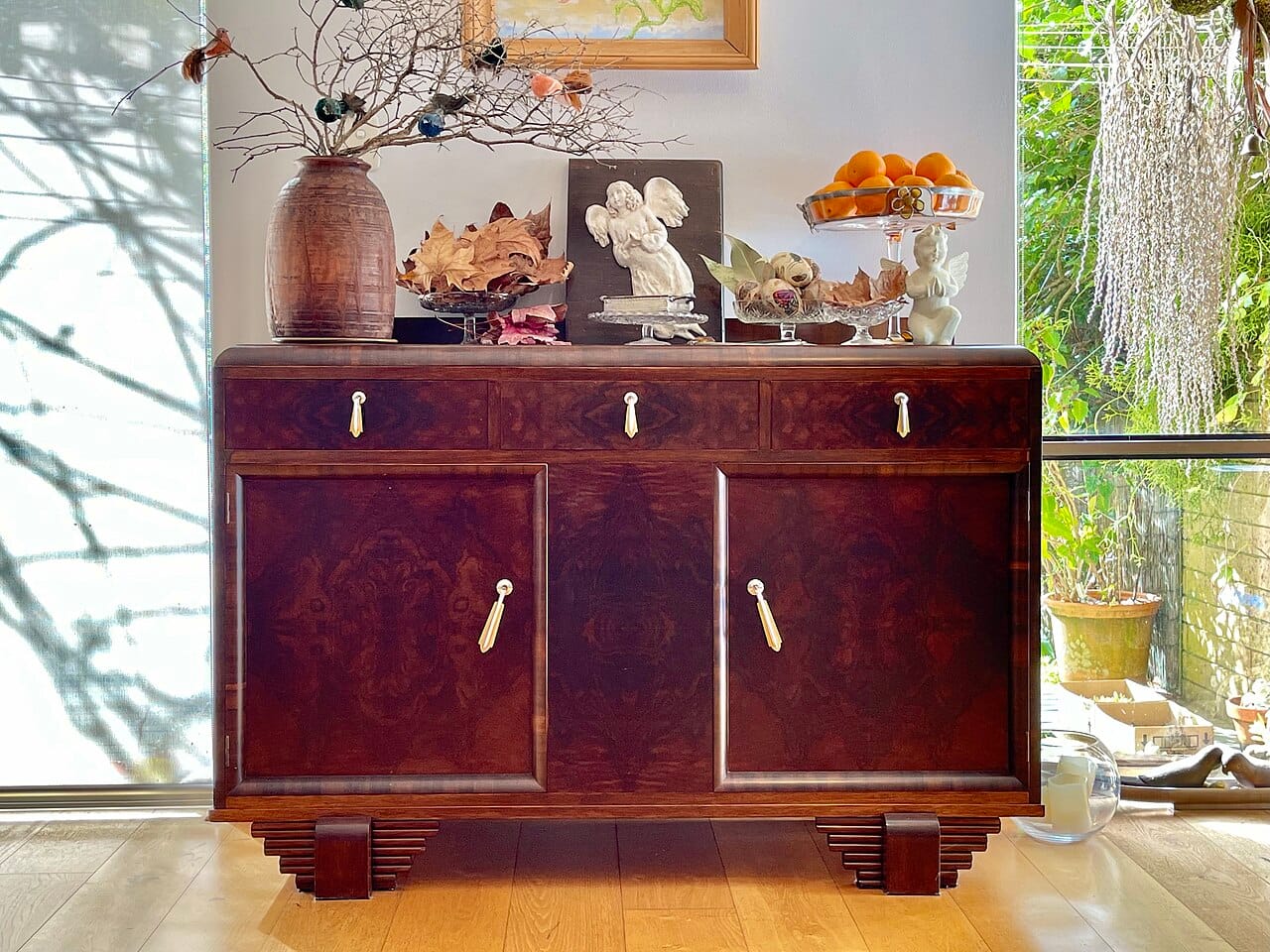
The distinction that the historical narrative tends to collapse is between high Art Deco and its mass-market adaptation. Waterfall furniture, the 1930s–1940s bedroom suites with rounded “waterfall” front edges in blonde wood or lacquered veneer, was the form that actually reached middle-class American homes (Wikipedia, “Waterfall furniture”). It was Art Deco stripped of the sharkskin and the ivory, translated into a shape language that department stores could produce at scale. Wikipedia describes it as “the most prevalent variation on Art Deco furniture” of the period. That prevalence is the story. The Ruhlmann pavilion was the argument; waterfall bedroom suites were what the argument became when it met the supply chain.
This matters when reading contemporary Art Deco-influenced products. Most of what gets sold today sits in the waterfall tradition: geometric form, accessible material, the visual cues of the style without the handmade atelier economics. There is nothing wrong with this, but it’s useful to know which tradition you’re buying into.
Five pieces that define what Art Deco furniture actually is
Art Deco’s range is wider than its reputation for glamour suggests. These five pieces span the movement from its Parisian atelier origins to its American mass-market form.
Ruhlmann, Meuble au Char Sideboard (1919)
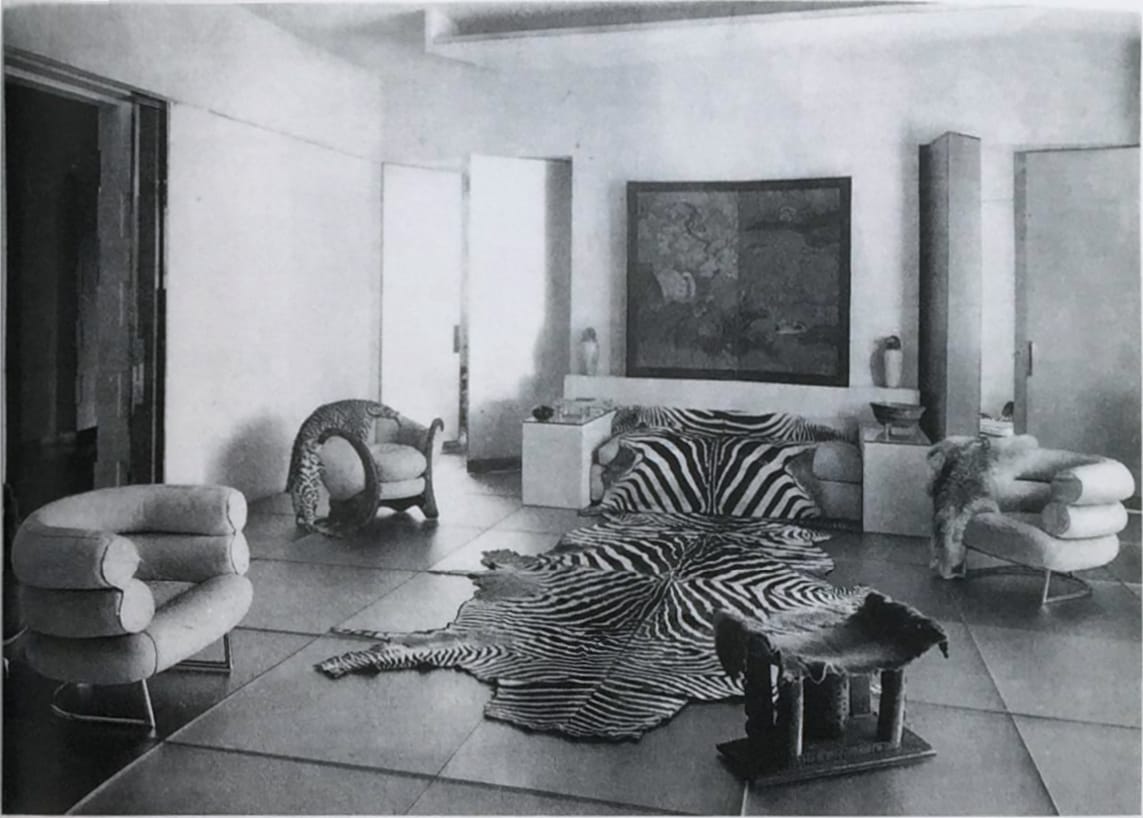
Ruhlmann’s Meuble au Char Sideboard is widely regarded as his masterpiece. The piece is ebony and ivory veneer with a chariot scene inlaid from a drawing by Maurice Pico, unveiled in 1919, six years before the Exposition that would make Ruhlmann famous (Dezeen, 2025). What it demonstrates is how Art Deco absorbed classical narrative motifs without becoming historicist. The chariot scene is not revival decoration. It is a formal device, as compositionally controlled as the geometric veneer surrounding it.
Ruhlmann, État d’Angle Corner Cabinet (designed 1916)
The État d’Angle predates the Exposition by nearly a decade, which makes it the foundation document for Ruhlmann’s mature language. Contrasting ivory and ebony marquetry in a vase-and-flowers motif, handled with the same dry precision he applied to everything, established the vocabulary he would develop through the 1920s. The piece is held in the Metropolitan Museum of Art collection in New York.
Eileen Gray, E-1027 Table (c. 1927)
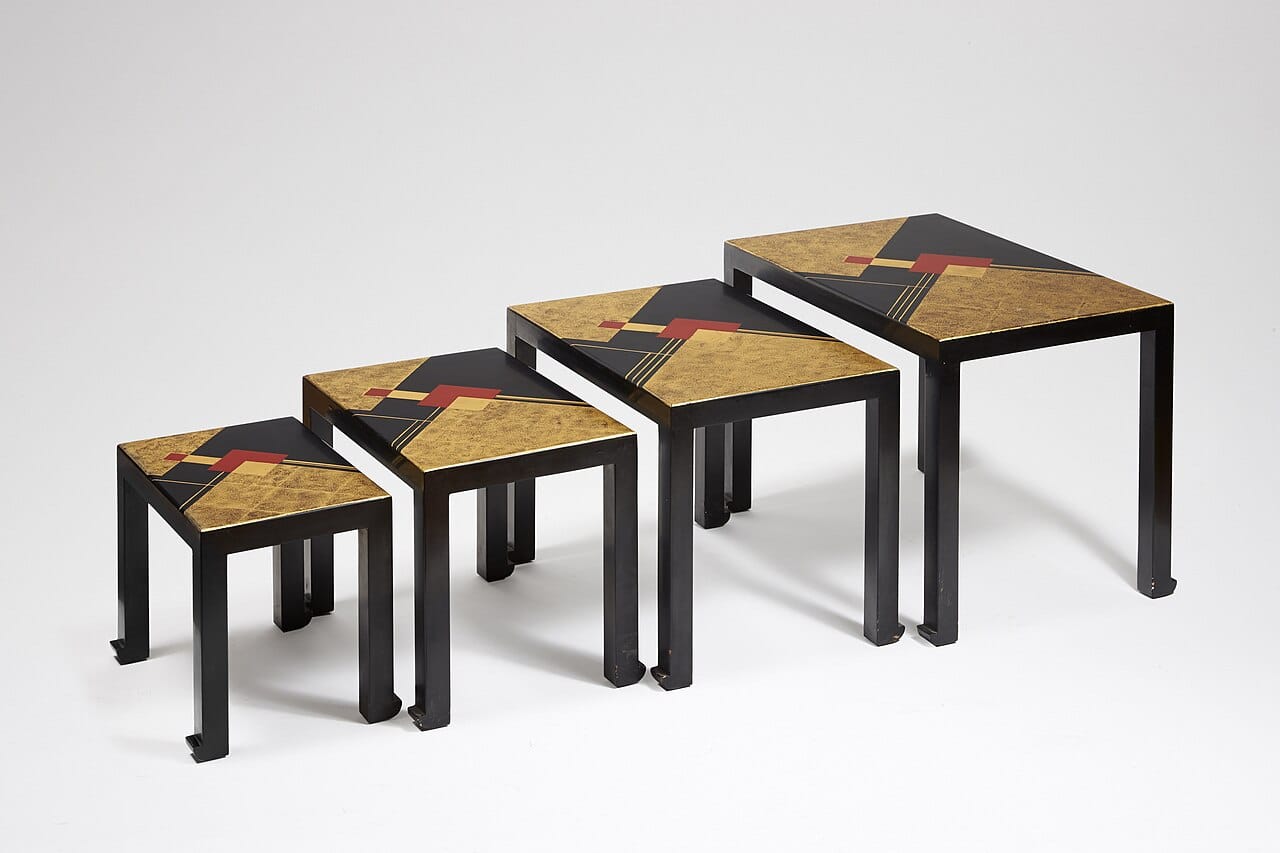
Gray’s E-1027 adjustable side table is tubular chrome, designed c. 1927 for the Villa E-1027 on the French Riviera. It marks the moment when Art Deco geometric thinking merged with Modernist materials. Gray was working in the same formal idiom as Ruhlmann (precision, geometry, deliberate material choice) but with a completely different set of materials and a different argument about what good furniture should do. The E-1027 table adjusts. It serves a body in a specific position. It is not monumental. That functional directness separates it from most of what the 1925 Expo produced.
Sue et Mare, Salon de Réception (1921)
The design partnership of Louis Süe and André Mare produced a lacquered cabinet and seating ensemble in gilded wood with Cubist-inflected floral marquetry, shown at the Salon d’Automne in the early 1920s. Sue et Mare represented the collaborationist side of French Art Deco: the version that worked with manufacturers, retail clients, and institutions, rather than Ruhlmann’s model of the single artist controlling every element of production. Their work is less singular and more finished, in the sense that finish was the point.
Waterfall Bedroom Suite (c. 1935, various manufacturers)
Blonde wood or lacquered veneer with rounded waterfall edges at the front of drawer fronts and case tops: this is the form Art Deco took when it traveled from Paris to American department stores. There was no single designer. The style was a category, manufactured by dozens of companies for the mass market. As a historical object, a surviving waterfall suite is interesting precisely because it is the opposite of Ruhlmann: reproducible, affordable, anonymous, and at one point in every middle-class American bedroom. It did what Ruhlmann’s work couldn’t: it got into the culture.
Shop the Collection
The pieces in this section sit in the waterfall tradition: geometric form and the visual language of Art Deco at a price point that doesn’t require a museum acquisition budget. That’s what they are, and they do it well.
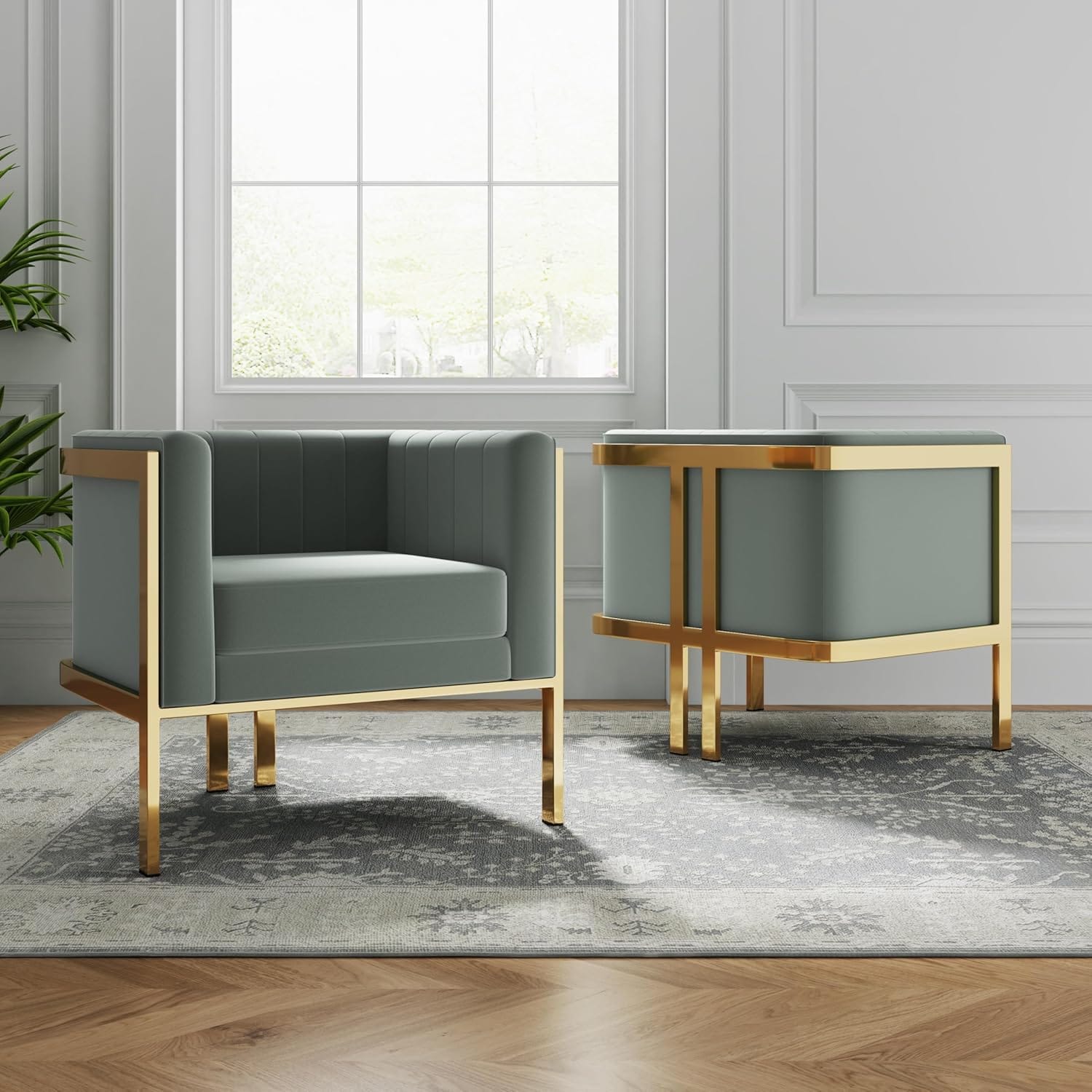
Manhattan Comfort Paramount Velvet Accent Armchair (Set of 2)
The Paramount gets the structural logic right. Polished brass frame with geometric joinery, plush velvet seat. This is the material hierarchy Art Deco used: warm metal structure, soft textile surface. The chair comes fully assembled, which matters because the frame is the design, and you need to see it whole. The set of two means you’re making a room decision, not a single-piece accent purchase. That’s the right scale for this kind of furniture.
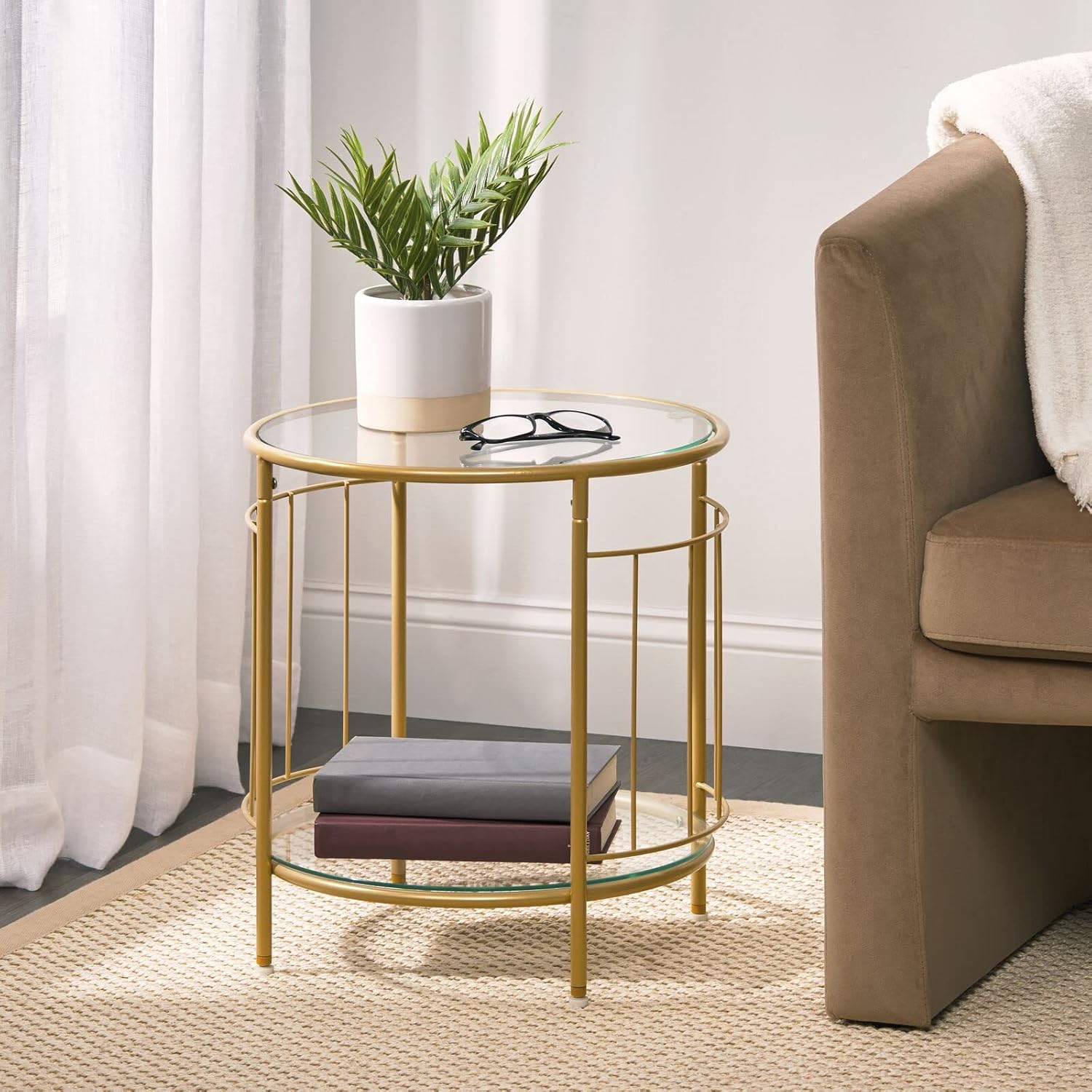
mDesign Glass Top Art Deco Round Geometric Side Table in Soft Brass
Glass over brass in a geometric base. This is the material conversation Art Deco was having in the 1920s and 1930s: industrial precision on top, warm metal below. The round form prevents it from reading as pastiche (rectangular glass tables tend to look like general modernism; round ones anchor the period reference more specifically). At this price point, it works as an entry piece for a room that isn’t fully committed to the aesthetic yet.
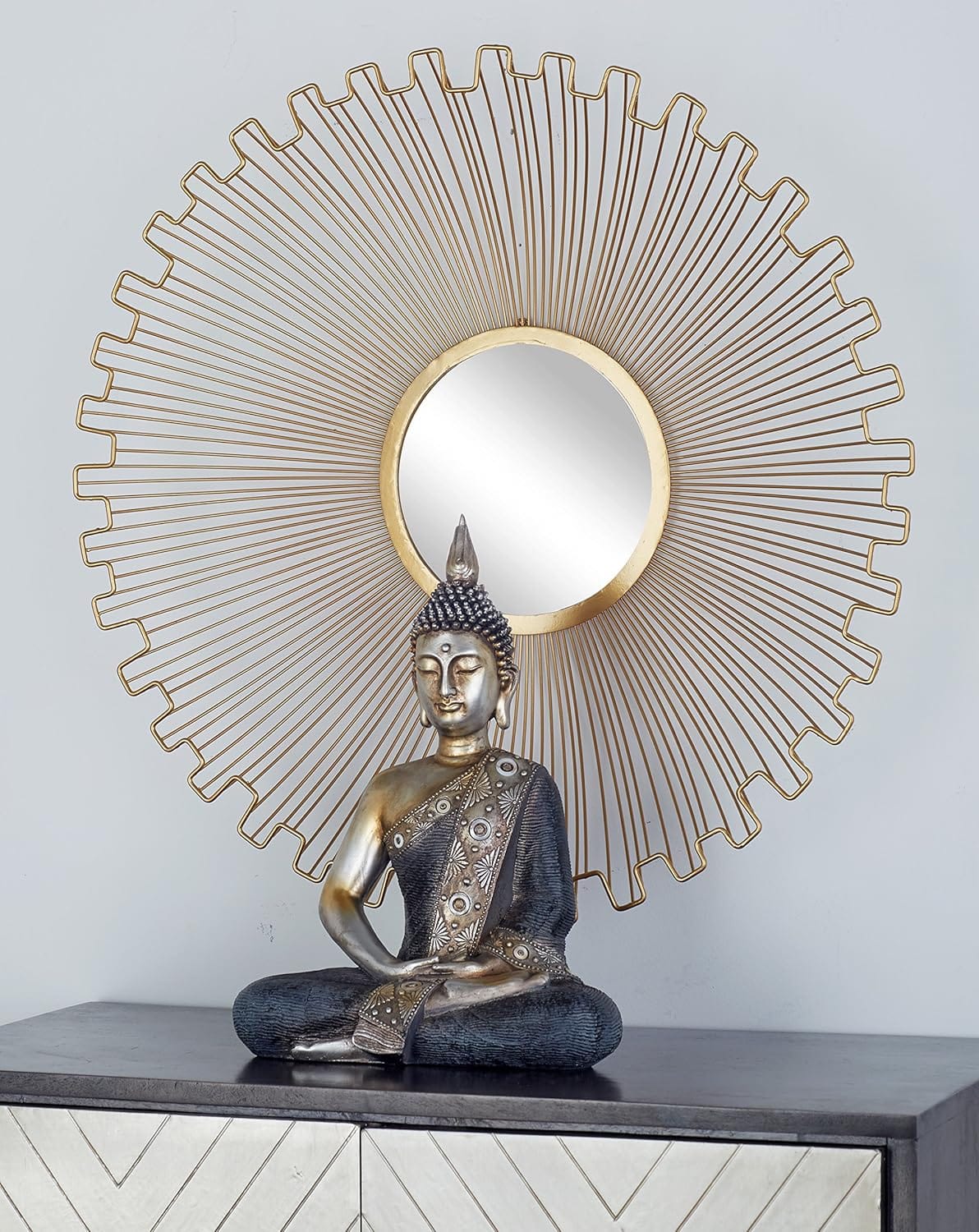
Deco 79 Metal Sunburst Wall Decor with Mirror Accent (Set of 3)
The sunburst is one of Art Deco’s most legible motifs. It appears in everything from Chrysler Building spandrels to radio cabinet grilles. This wall set is the most honest entry point in this collection: it’s wall decor, not furniture, and it doesn’t pretend otherwise. If you want to understand whether the Art Deco formal vocabulary works in your space before committing to a brass side table or velvet armchair, this is how you find out. The mirror accent is practical. The set of three gives you enough surface to read the pattern, not just a single element.
Further Reading
Both books below are the reference texts for the period, not popular histories or design-magazine retrospectives.
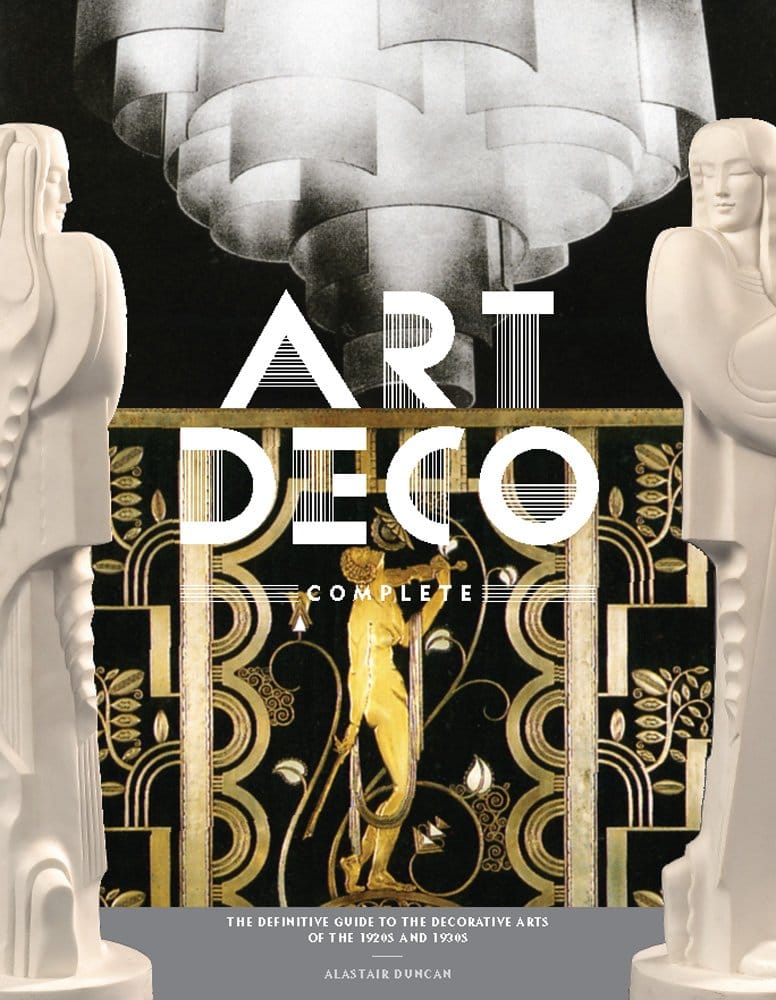
Alastair Duncan, Art Deco Complete (Harry N. Abrams, 2009)
Duncan spent thirteen years as Christie’s New York consultant for early twentieth-century decorative arts before producing this 544-page, 1,000-image survey. It covers furniture alongside glass, ceramics, metalwork, and jewelry. The comprehensive scope is the point: Art Deco was a position about what all designed objects should be doing simultaneously, and you can’t understand the furniture without the context.
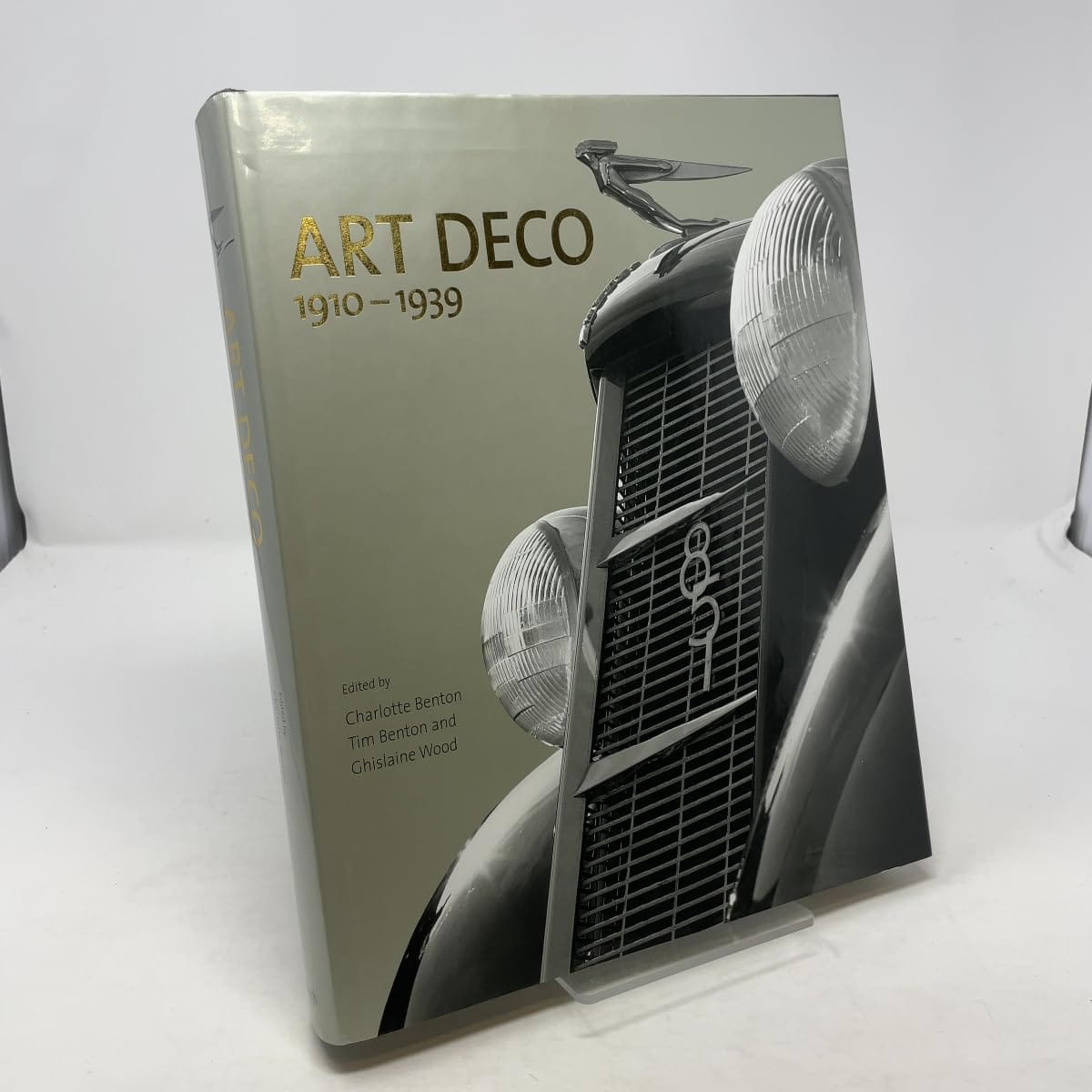
Charlotte Benton, Tim Benton, and Ghislaine Wood (eds.), Art Deco 1910–1939 (V&A Publications / Bulfinch, 2003)
The catalogue from the Victoria and Albert Museum’s 2003 retrospective, written by forty specialist contributors. This is the academic standard: the text you cite when you need to verify a date, a designer attribution, or a geographic spread claim. It covers the full range of the movement, from Paris to New York to Buenos Aires, and doesn’t treat Art Deco as a single coherent style so much as a set of national responses to the same historical conditions. That’s closer to what it actually was.
Frequently Asked Questions
What is Art Deco furniture?
Art Deco furniture is a category of interior furnishing that emerged in Paris in the 1910s and reached international prominence through the 1920s and 1930s. It is defined by geometric forms, stepped silhouettes, and a deliberate use of expensive or visually striking materials: ebony, chrome, lacquer, velvet, sharkskin. The style positioned itself against both the organic ornament of Art Nouveau and the austere functionalism of early Modernism. The movement takes its name from the 1925 Exposition Internationale des Arts Décoratifs et Industriels Modernes in Paris.
What materials are used in Art Deco furniture?
High Art Deco used ebony, rosewood, burl walnut, zebrawood, amboyna, sharkskin (galuchat), ivory, and heavy lacquer for case pieces and surfaces. Chrome and brass appeared in hardware and tubular structural elements. Upholstery materials included velvet and leather. The mass-market Art Deco furniture of the 1930s and 1940s (waterfall furniture) substituted blonde wood veneer and lacquered surfaces for the rarer exotic materials, while keeping the geometric silhouette.
How do I identify Art Deco furniture?
The clearest markers are geometric silhouettes (stepped forms, angular profiles), tapered or fluted legs, sunburst and chevron surface motifs, and the use of contrasting materials: light wood against dark, chrome against velvet. The “waterfall” edge (a rounded, flowing curve at the front of drawer fronts and case tops) is the identifying feature of 1930s–1940s American mass-market Art Deco. High-period French pieces tend to be more rectilinear, more expensive, and more likely to show exotic veneer work or marquetry.
Who were the most important Art Deco furniture designers?
Émile-Jacques Ruhlmann is the central figure, whose Hôtel du Collectionneur pavilion at the 1925 Paris Exposition was the defining showcase of the style. Other key French designers include Paul Follot, Maurice Dufrêne, the Sue et Mare partnership, André Groult, and Jules Leleu (V&A; LivingEtc; Carrocel). Eileen Gray occupies a different position: her work bridges Art Deco formalism and Modernist function. In America, the style was diffused through manufacturers rather than individual designers, with the waterfall furniture category representing its democratic reach.
Why did Art Deco furniture fall out of fashion?
The Second World War effectively ended Art Deco’s cultural moment. Decolish.com characterizes the shift directly: the style felt “too garish and extravagant in the face of that conflict.” Post-war design moved toward the functionalist Modernism that Art Deco had been arguing against. The style was revived in the 1980s and has continued to influence luxury interiors and hospitality design since, though it has not returned to broad mainstream prevalence.
Is Art Deco furniture still being made today?
Yes, in two forms. There is a market for reproduction and revival pieces: furniture that uses Art Deco’s geometric vocabulary and material cues as a current design position. There is also an active antiques and auction market for period pieces, with significant Ruhlmann and other high-period French work appearing at Christie’s and Sotheby’s. Contemporary interior design, particularly in luxury hotels and boutique hospitality, draws heavily on Art Deco formal language. The style’s relationship to glamour and material quality makes it a practical fit for high-end commercial contexts.
For Art Deco accessories and soft furnishings, see our guide to best Art Deco home decor. For period-appropriate lighting, see best Art Deco lamps.

About Zoe Post
Zoe Post holds a BFA and a Master of Architecture from the School of the Art Institute of Chicago. She now works as a product marketing leader at an architectural product design firm, bringing hands-on industry perspective to everything she writes. At ADI she covers contemporary artists, textile and pattern design, and the design objects that sit at the boundary of art and function.