Art Deco home decor brings 1920s Paris into modern interiors through geometric forms, gold and black color palettes, and materials like velvet and chrome. The style peaked at the 1925 Exposition internationale des arts décoratifs in Paris and remains one of the most legible design languages in retail — from sunburst mirrors to brass candlestick holders.
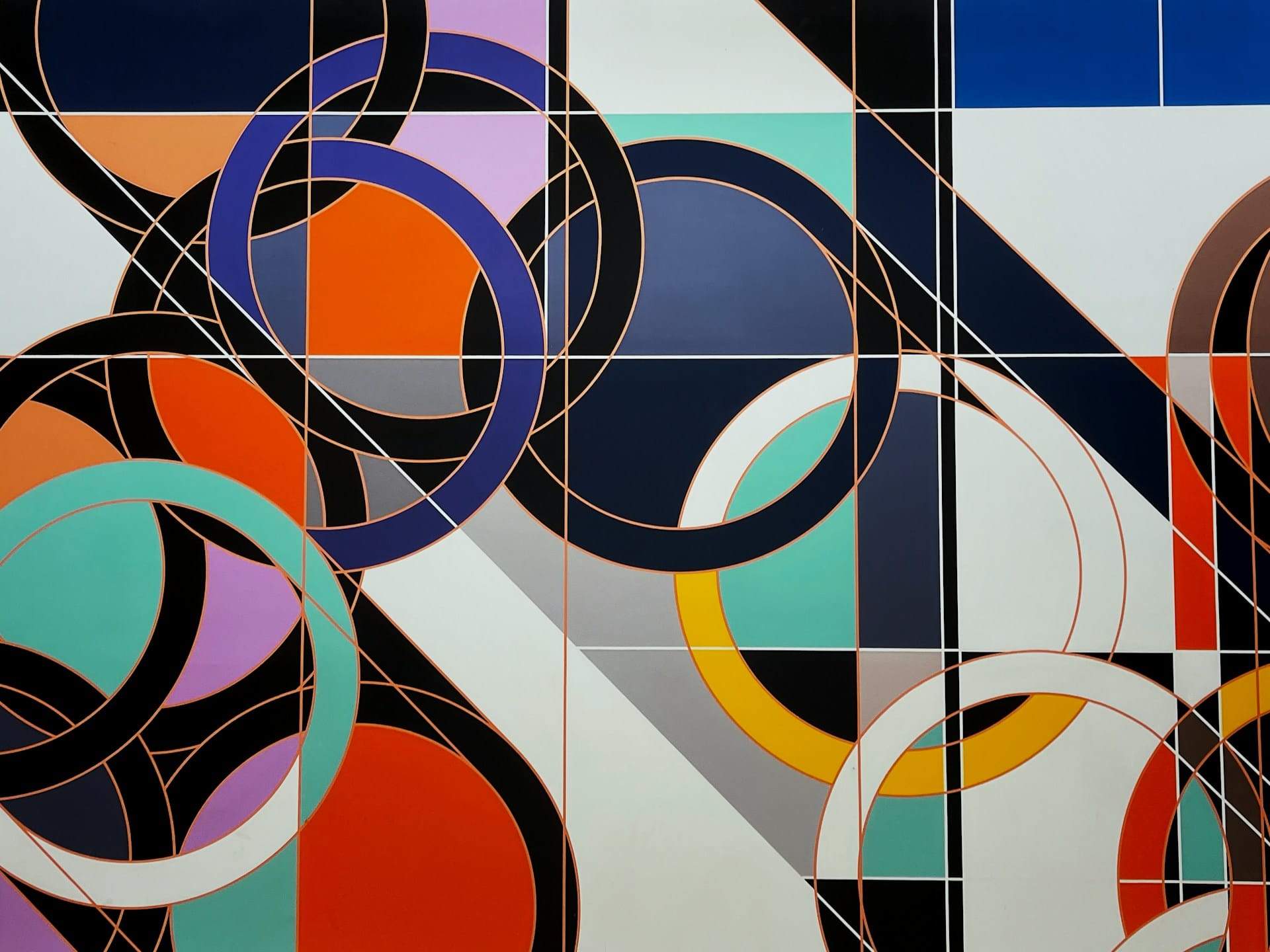
Our Top Picks
Four objects. Each earns its place because it does something specific that a generic “Art Deco” label on Amazon usually doesn’t.
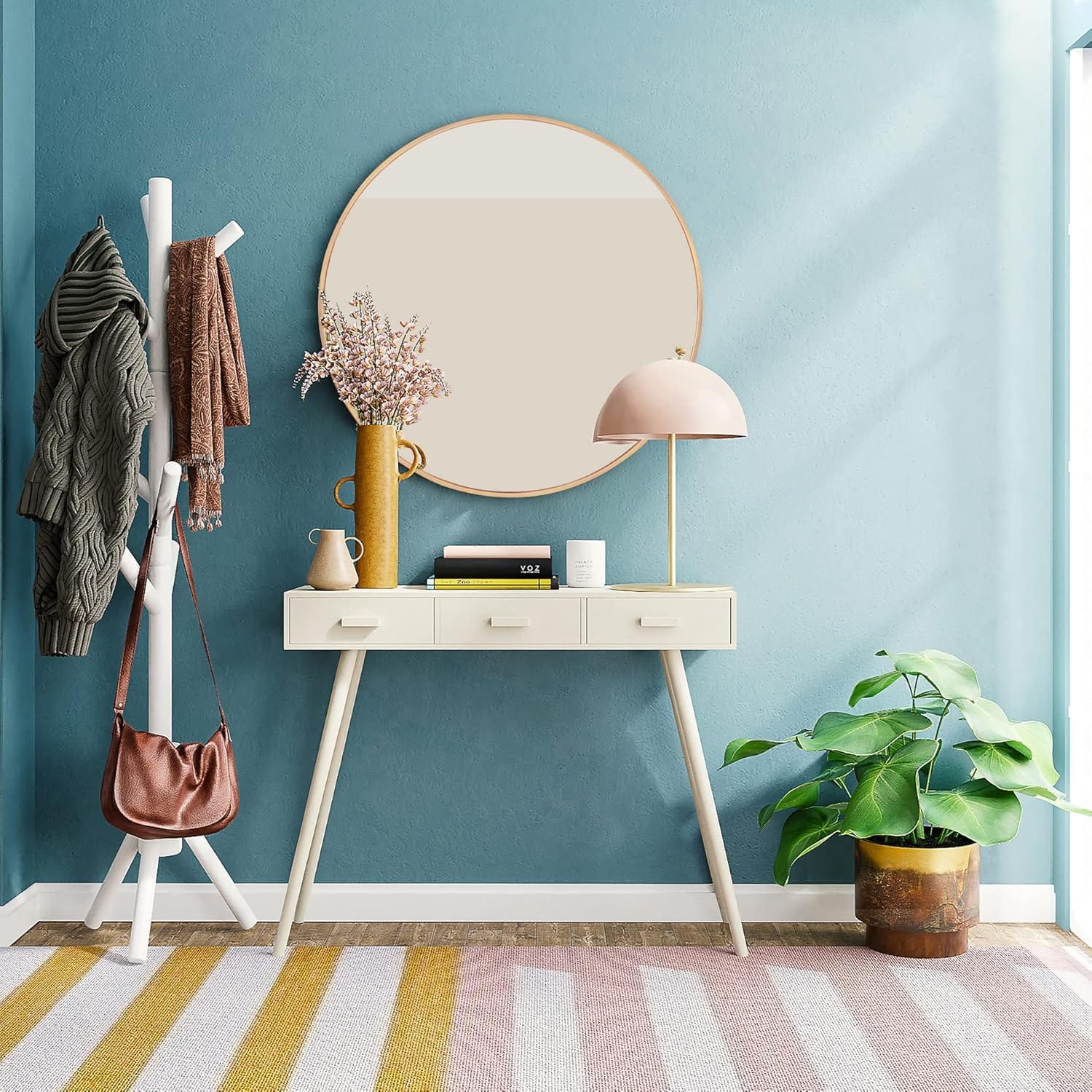
Space Art Deco 24” Round Gold Mirror — Best Overall
Price range: Mid-Range ($40–$80)
A round gold mirror is the single item most likely to read as Art Deco in a room without any supporting context. The circular form in a thin metal frame appears in documented 1920s Paris interiors, in the lobbies of 1930s American hotels, and in the rooms of every Art Deco revival from the 1960s forward. The Space Art Deco 24” version does this at a price point that doesn’t ask you to commit to the whole aesthetic before you know it works in your space.
What the frame does: it’s thin enough that the circle reads clearly without the mirror turning into a statement about the frame itself. Art Deco at its best keeps ornament subordinate to form. A chunky frame turns this into a decoration piece. A thin frame keeps it spatial.
A round gold mirror is the single item most likely to read as Art Deco in a room without any supporting context.
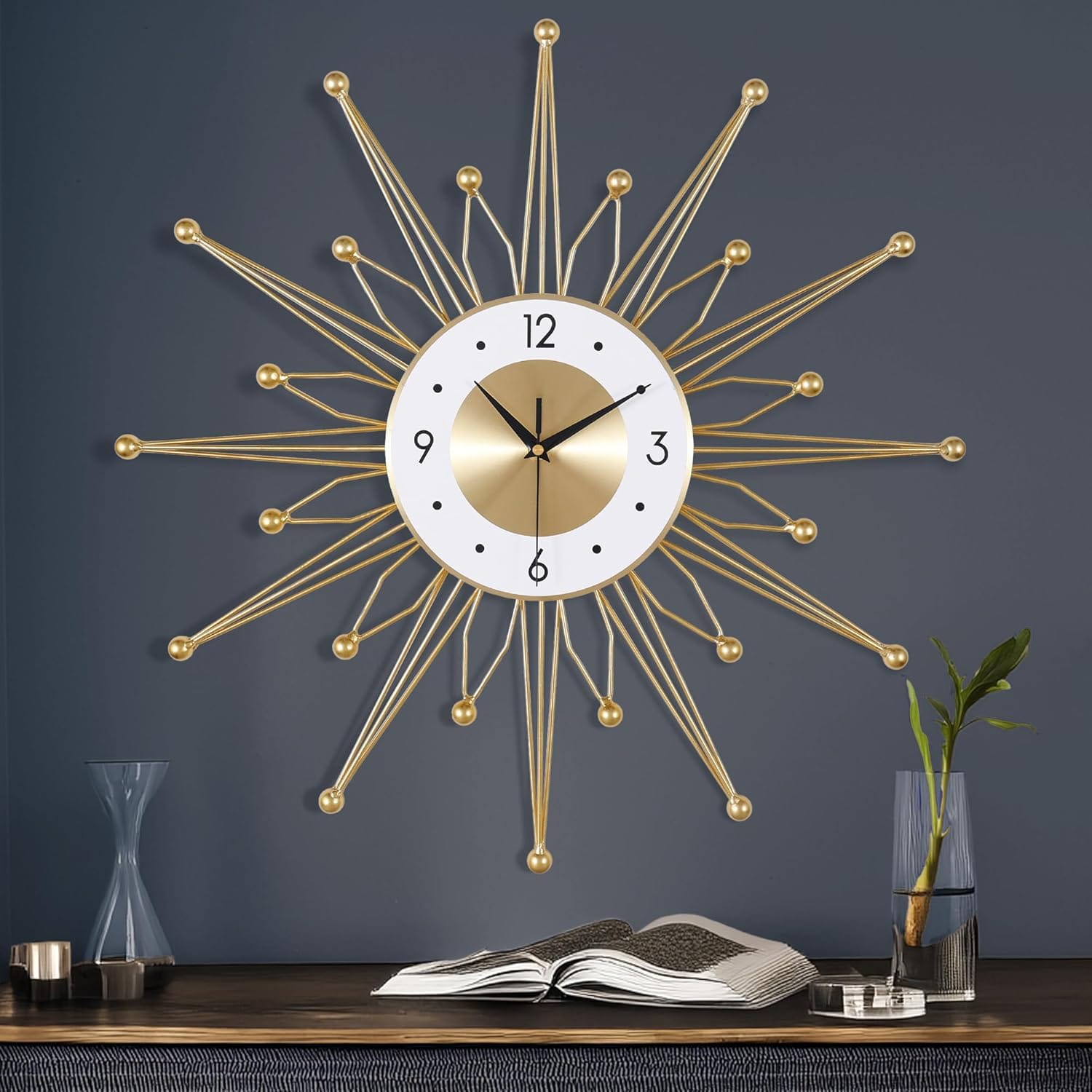
Lafocuse 23” Sunburst Wall Clock — Best for Walls That Need Work
Price range: Mid-Range ($30–$60)
The sunburst is one of the three primary Art Deco graphic motifs, alongside the chevron and the stepped pyramid form. Lafocuse builds this clock in cast iron rather than stamped sheet metal, which means the rays have actual weight and the welds are visible up close without looking cheap. Silent quartz movement. Battery operated. This is a vertical intervention that doesn’t require furniture rearrangement or a significant budget commitment.
The argument for a wall clock in 2026 is partly functional and partly period. Clocks were status objects in 1920s living rooms. They were prominent, made of serious materials, and they signaled something about the household’s relationship to time and industry. A sunburst clock does all of that without requiring you to explain the reference.
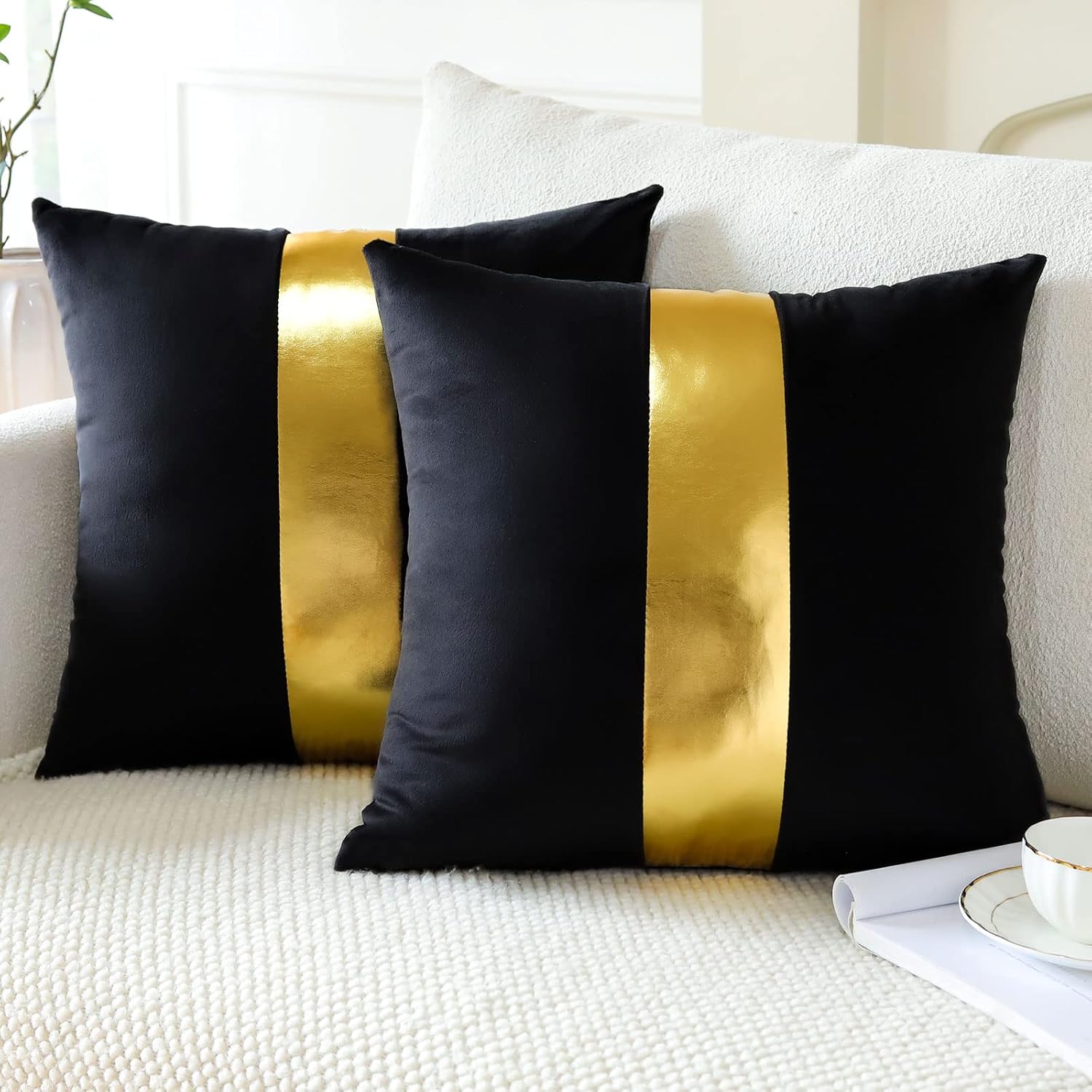
Artscope Black Velvet Throw Pillow Covers with Gold Stitching — Best Budget Entry
Price range: Budget (under $30)
Black and gold is the Art Deco palette at its most reduced. Velvet was the dominant upholstery textile in 1920s French interiors. It holds light differently from woven fabric and reads as material weight even in a photograph. These Artscope covers (18×18 inches, set of 2) use velvet with gold leather stitching rather than a printed pattern, which means the surface does the design work rather than an applied graphic. Insert not included.
This is the right entry point if you’re testing the aesthetic. Two pillows change a sofa. If they work, you add the clock. If they don’t, you’re out less than thirty dollars.
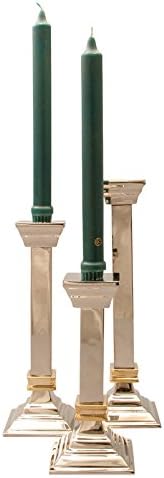
GAC Art Deco Nickel Silver Candlestick Holders — Best Premium Pick
Price range: Mid-Range ($30–$60)
These are constructed on solid brass with a nickel silver plating. Not hollow pot metal, not a chrome finish over plastic. The column form appears in documented Art Deco interiors from the 1920s and 1930s, particularly in the French tradition where candlestick proportions were taken seriously as objects in their own right. The 10-inch height works on a mantel, a console table, or a dining sideboard without dominating the surface.
Nickel silver reads differently than gold in a room: cooler, harder, less obviously decorative. If the mirror and clock are the statement pieces, the candlesticks are what makes the arrangement look intentional rather than collected.
Quick Decision Guide
Best overall: The round gold mirror. It’s the piece that does the most work in the fewest square inches of wall space. Start here.
Best budget option: The Artscope velvet pillow covers. Under thirty dollars for a pair, and they change a sofa immediately. If you’re not sure Art Deco is what you want, this is how you find out without much financial commitment.
Best premium option: The GAC nickel silver candlestick holders. The construction is honest: solid brass base, proper plating. The column form has more historical specificity than the other picks. They’ll hold up.
Best for small spaces: The Lafocuse sunburst clock. It works vertically, takes up no floor or surface space, and reads at a distance. Good for apartments where the mirror might be too large a commitment.
Best for layering: The mirror and clock together, with the pillow covers on a sofa beneath. That’s three of the four primary Art Deco object categories (mirrors, metalwork, textiles) covered at under $150 combined. The candlesticks complete it.
Full Comparison
| Product | Category | Price Range | Key Feature | Buy |
|---|---|---|---|---|
| Space Art Deco 24” Round Gold Mirror | Mirror | Mid-Range ($40–$80) | Thin metal frame, circular form | Amazon |
| Lafocuse 23” Sunburst Wall Clock | Wall Decor | Mid-Range ($30–$60) | Cast iron construction, silent movement | Amazon |
| Artscope Black Gold Velvet Pillow Covers (Set of 2) | Textiles | Budget (under $30) | Velvet with gold leather stitching | Amazon |
| GAC Art Deco Nickel Silver Candlestick Holders | Metalwork | Mid-Range ($30–$60) | Solid brass base, nickel silver plating | Amazon |
What each pick gets right — and where it falls short
Space Art Deco 24” Round Gold Mirror
Pros:
- The circular form in a thin metal frame is historically accurate. This is what Art Deco mirrors actually looked like
- 24 inches reads well in most rooms without dominating a wall
- Wall mount hardware included
- Gold finish works with both warm and cool color schemes
Cons:
- Requires actual wall space. Not suitable for apartments where every inch counts
- The frame is thin by design, which some buyers interpret as “cheap” when it’s actually the correct design decision
- Gold finish varies in warmth by unit. Read recent reviews for the current batch
Who it’s for: Someone who wants one strong Art Deco piece without committing to a full room renovation. Works as a focal point in an entryway, above a console table, or as a bathroom mirror in a larger bath.
Why it stands out: Most round gold mirrors on Amazon have ornate frames that undercut the geometry. This one doesn’t.
Lafocuse 23” Sunburst Wall Clock
Pros:
- Cast iron construction rather than stamped sheet metal. The rays have weight
- Silent quartz movement (significant if the room is quiet)
- Battery operated, no wiring required
- The sunburst motif is one of three primary Art Deco graphic forms
Cons:
- Heavier than buyers expect for a wall clock. Verify your wall anchor situation before ordering
- 23 inches is substantial; measure the wall space first
- Battery compartment access requires removing the clock from the wall
Who it’s for: Someone with a living room, bedroom, or entryway wall that needs a large-scale vertical element without adding furniture.
Why it stands out: The cast iron construction keeps it from looking like a prop. Most Amazon sunburst clocks are stamped metal and look exactly like that up close.
Artscope Black Velvet Throw Pillow Covers with Gold Stitching
Pros:
- Velvet is the correct textile for Art Deco. It holds light and signals material weight
- Black and gold is the most historically legible Art Deco colorway
- Gold leather stitching does design work without relying on a printed pattern
- Under $30 for a set of 2 makes this a low-commitment test
Cons:
- Insert not included. Budget separately for 18×18 pillow inserts
- Velvet shows wear at seams faster than woven textiles under daily use
- Some buyers report the 18×18 cover runs slightly small. Size up your insert if in doubt
Who it’s for: Anyone starting to explore the aesthetic without committing to furniture or architectural changes.
Why it stands out: The surface construction (velvet body, leather-type stitching) replicates Art Deco’s material logic at a low price: luxurious textile, metallic accent.
GAC Art Deco Nickel Silver Candlestick Holders
Pros:
- Solid brass construction with nickel silver plating. Honest materials, not hollow casting
- Column form has documented precedent in 1920s–30s French Art Deco interiors
- 10-inch height is versatile. Works on mantel, console, or dining sideboard
- Pair composition allows symmetrical arrangement, which is central to Art Deco’s formal logic
Cons:
- Nickel silver finish requires occasional polishing to prevent tarnish. Factor in maintenance
- Not as visually prominent as the mirror or clock; plays a supporting role rather than a lead one
- Some buyers find 10 inches shorter than expected from product photographs
Who it’s for: Someone assembling a full arrangement rather than a single statement piece. These finish a grouping.
Why it stands out: The construction is what you’re paying for. Most decorative candlestick holders at this price are hollow pot metal with chrome spray. These are not.
Most decorative candlestick holders at this price are hollow pot metal with chrome spray. These are not.
What Art Deco is actually doing in a room
Art Deco is often described as a glamour aesthetic, which is accurate but incomplete. The style emerged in Paris in the years before World War I as a deliberate formal argument against Art Nouveau — against organic curves, against floral ornament, against the idea that decoration should look like it grew somewhere. The sunburst, the chevron, the stepped pyramid: these are geometry asserting itself over nature.
The 1925 Exposition internationale des arts décoratifs et industriels modernes in Paris was the movement’s official presentation to the world and the source of the name. Émile-Jacques Ruhlmann showed luxury furniture there. René Lalique showed glass. The message was that luxury and modernity were compatible, that the machine age didn’t have to mean ugly things.
Chrome and aluminum appeared in interior design as decorative materials for the first time through Art Deco. Before the movement, both metals served structural or industrial functions rather than surface ones. That logic is what makes the four picks here coherent as a group. The mirror brings reflective geometry; the clock and candlestick holders handle the metalwork vocabulary at different scales. The pillow covers carry the textile and color argument.
By the mid-1930s, Streamline Moderne had absorbed Art Deco into mass production and reduced the geometry to applied decoration. What survives as legible Art Deco in 2026 retail is mostly the graphic vocabulary (the motifs) without the material specificity that made the original work. The picks here are the ones where that specificity is at least partially intact.
Frequently Asked Questions
What colors are used in Art Deco home decor?
The primary Art Deco palette combines black and gold as the core contrast, with jewel tones — emerald green, sapphire blue, ruby red — used as accent colors. Ivory and cream appear as neutrals. Metallic finishes in gold, silver, and chrome run throughout. The palette reads as luxurious without relying on pastels or earth tones.
How do I style Art Deco decor without overdoing it?
Start with one object that establishes the reference clearly — a round gold mirror or a sunburst wall clock. Add textiles in the right colorway (black, gold, deep jewel tones) as a second layer. Add metal accent objects (candlestick holders, geometric vases) as a third. The style scales well if each layer is doing a specific job rather than simply repeating the geometric motif. Overdoing it usually means adding too many pattern sources at once.
What is the difference between Art Deco and Art Nouveau?
Art Nouveau (roughly 1890–1910) drew from organic forms — vines, flowers, flowing curves modeled on nature. Art Deco (emerging around 1910, peaking in the 1920s–30s) was a formal rejection of that approach: hard geometry, symmetry, angular motifs. Art Deco came directly after Art Nouveau and partly defined itself by what Art Nouveau was not. The two styles are sometimes confused because both were associated with European luxury goods markets, but they look nothing alike in a room.
Is Art Deco home decor expensive?
The historical originals — Ruhlmann furniture, Lalique glass, documented 1920s metalwork — are auction pieces. The contemporary retail market covers everything from budget pillow covers under $30 to mirror and clock pieces in the $40–$80 range to solid metalwork in the mid-range. A complete arrangement with all four recommended items runs under $200 total.
What rooms work best with Art Deco style?
Living rooms, entryways, and dining rooms are the most natural fit — these were the rooms Art Deco dressed in its original context. Bathrooms with good wall space work well for a mirror. The style is harder to make work in bedrooms because the geometry and palette can feel cold if the room also needs to feel restful. Art Deco works best where the room is for presentation or social use rather than purely private retreat.
Further Reading
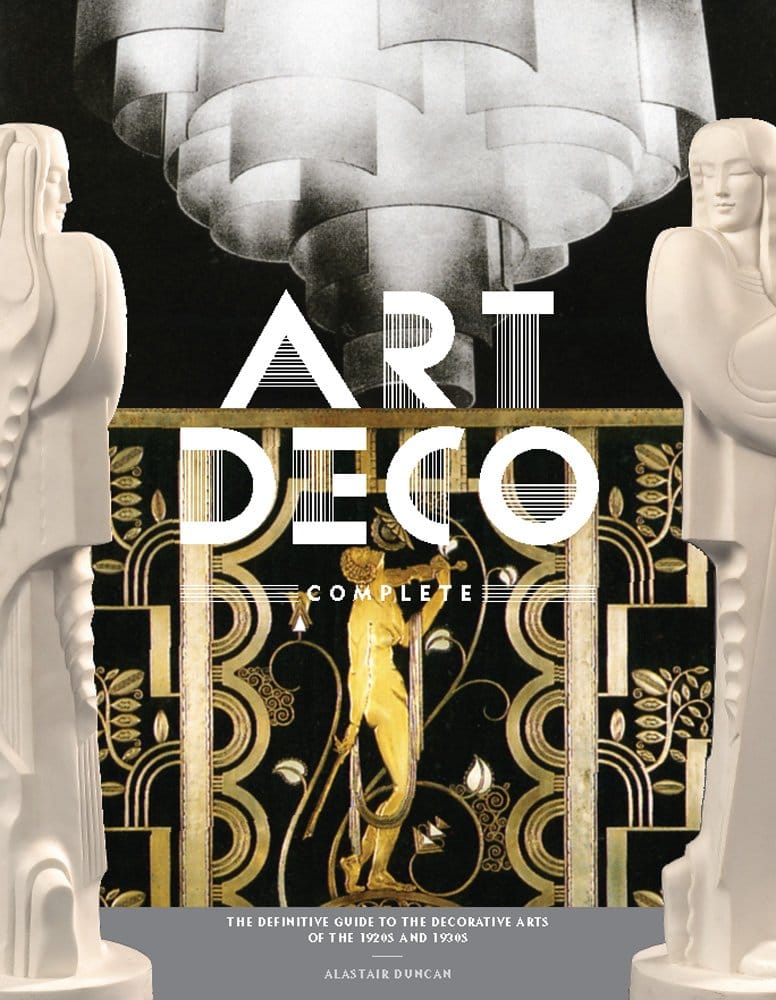
Art Deco Complete — Alastair Duncan
Duncan spent 13 years as Christie’s New York officer specializing in Art Deco before becoming the leading academic authority on the movement. This is the reference book, not the introduction: 1,000+ color images, 544 pages, covering furniture, glass, metalwork, and ceramics.
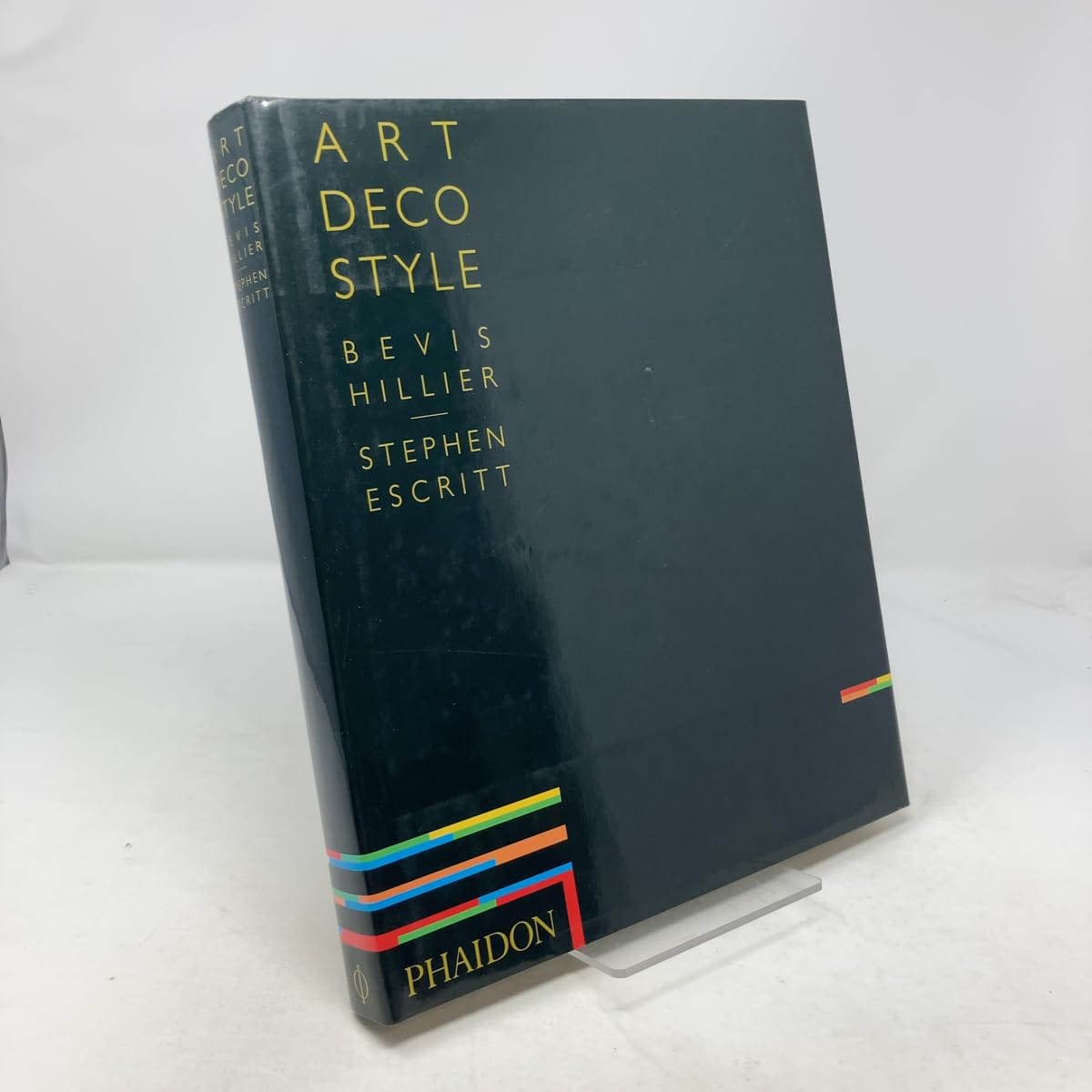
Art Deco Style — Bevis Hillier & Stephen Escritt
Hillier coined the term “Art Deco” in his 1968 book and co-organized the Minneapolis exhibition that brought the movement back into scholarly view. This 1997 Phaidon edition is the most accessible version of his argument — readable, well-illustrated, historically grounded.
For lighting in the Art Deco style, see our guide to best Art Deco lamps. For period furniture pieces, see best Art Deco furniture.

About Zoe Post
Zoe Post holds a BFA and a Master of Architecture from the School of the Art Institute of Chicago. She now works as a product marketing leader at an architectural product design firm, bringing hands-on industry perspective to everything she writes. At ADI she covers contemporary artists, textile and pattern design, and the design objects that sit at the boundary of art and function.