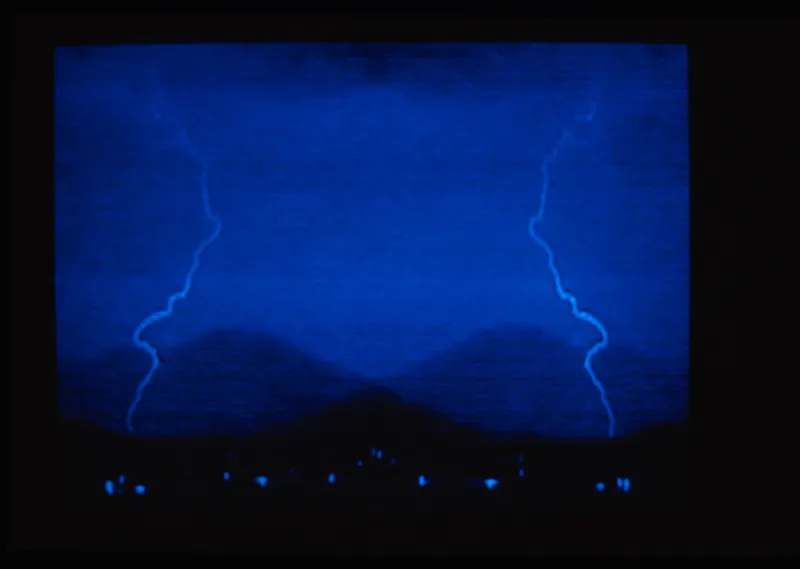
The best Art Deco lamps share a formal vocabulary: geometric silhouettes, frosted or colored glass shades, and metalwork in chrome and brass. The style emerged in 1920s Paris, peaked at the 1925 Exposition, and remains one of the most legible lighting aesthetics at retail. These picks are selected for design authenticity, not just label.
Our Top Picks
These four picks each make a structural argument for Art Deco, through silhouette, material, or construction method. Not all four are equally pure in their reference. The breakdown section explains where each one earns the label and where it stretches it.
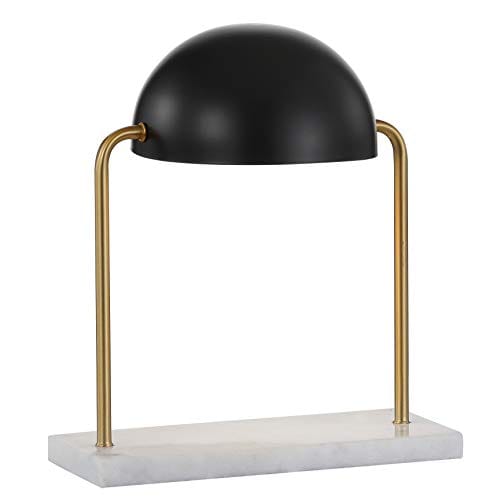
JONATHAN Y Art Deco Dome Table Lamp (Mid-Range)
The black hemispherical dome on slim brass supports is the single most legible Art Deco lamp form, grounded here on a white marble base. The silhouette runs throughout documented 1920s French interiors and reads the period without requiring context.
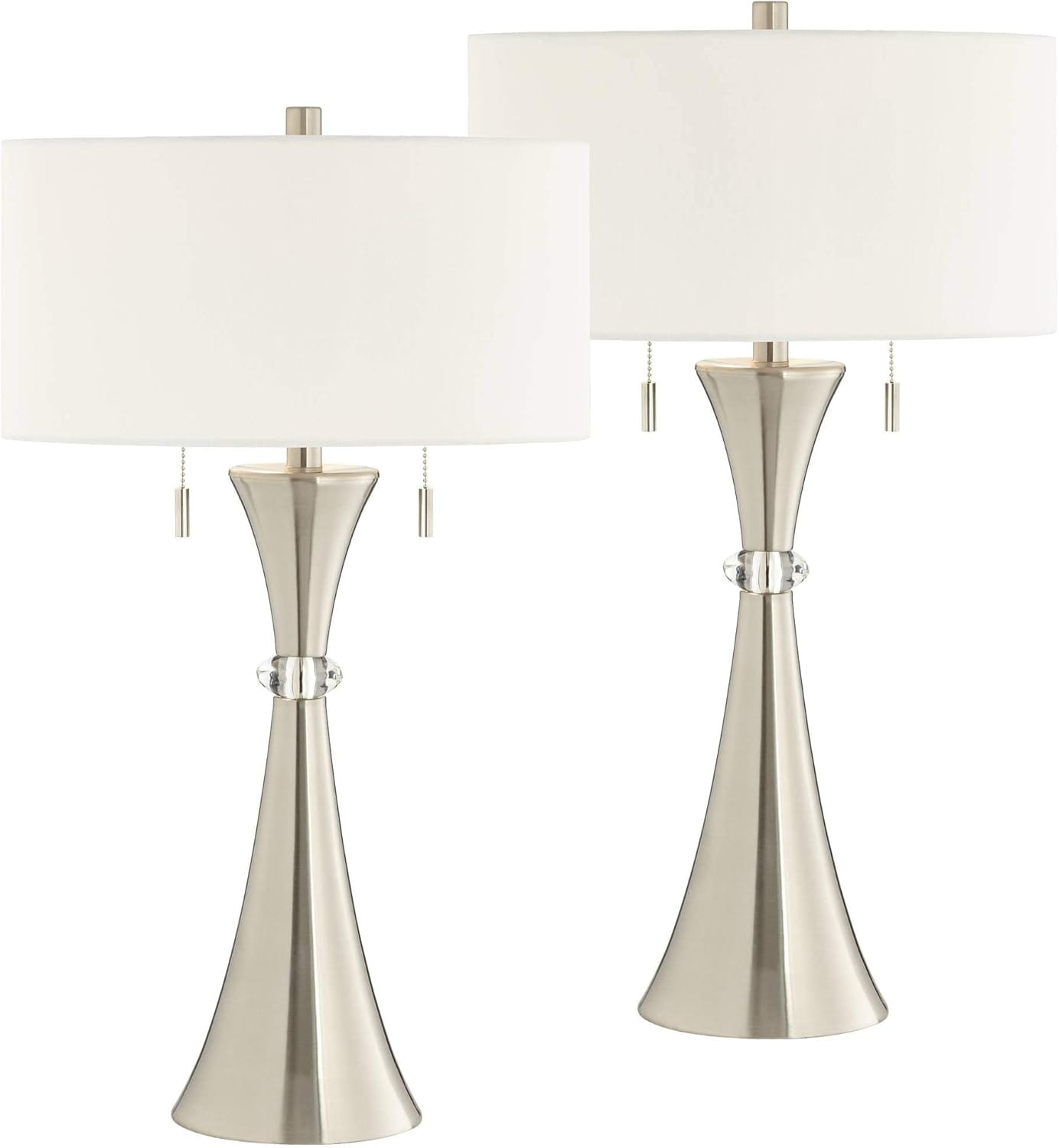
360 Lighting Rachel Hourglass Table Lamps, Set of 2 (Mid-Range: $80–$130)
The column/hourglass silhouette references the torchière and column-form lamps that defined Art Deco lighting, and being sold as a pair matters. Art Deco composition is symmetrical by principle, not by preference.
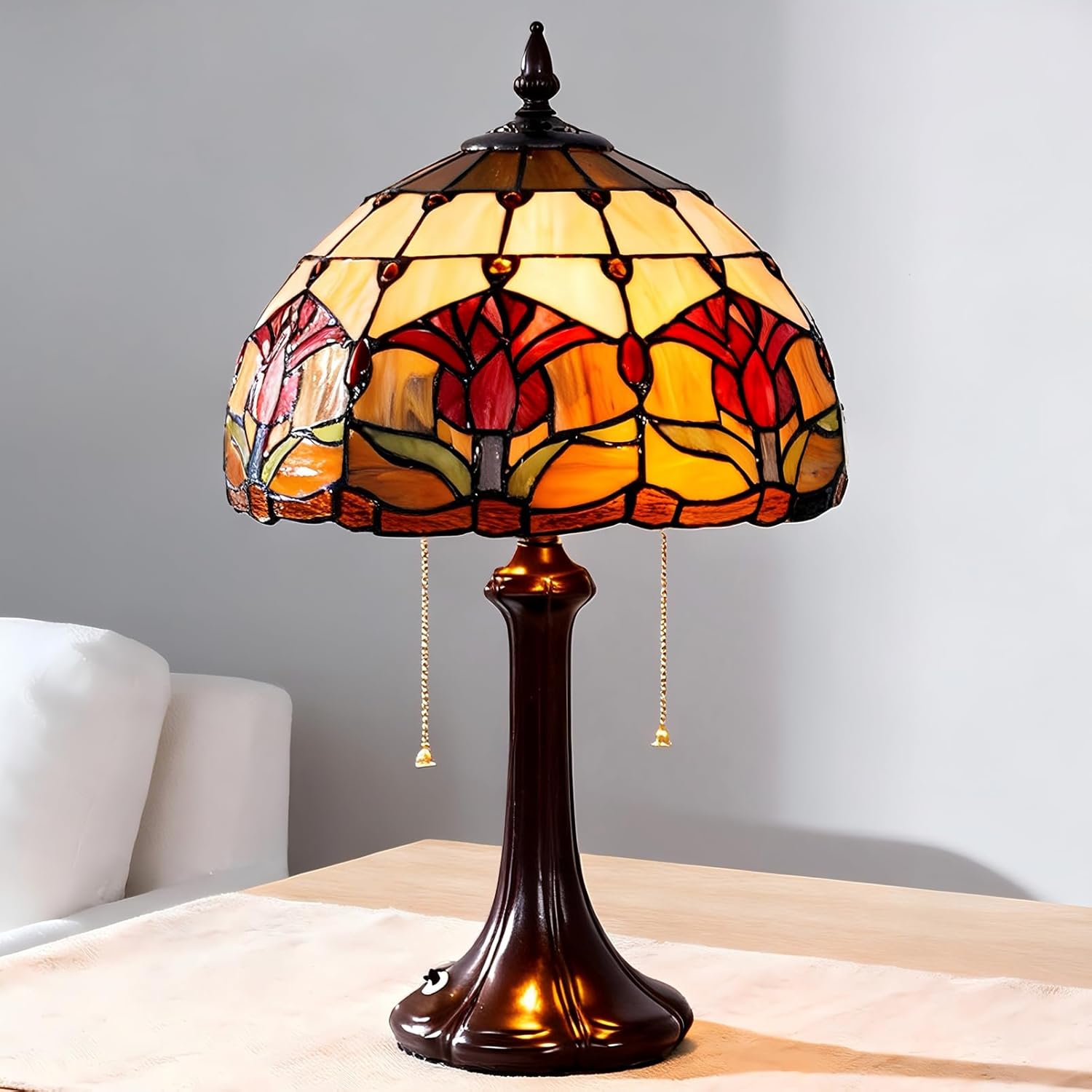
mfanchan Handmade Stained Glass Table Lamp (Mid-Range: $45–$90)
Individually spliced and high-temperature welded geometric glass panels, handmade construction rather than screen-printed decoration, puts this in the legitimate lineage of Art Deco glass lampshade work.
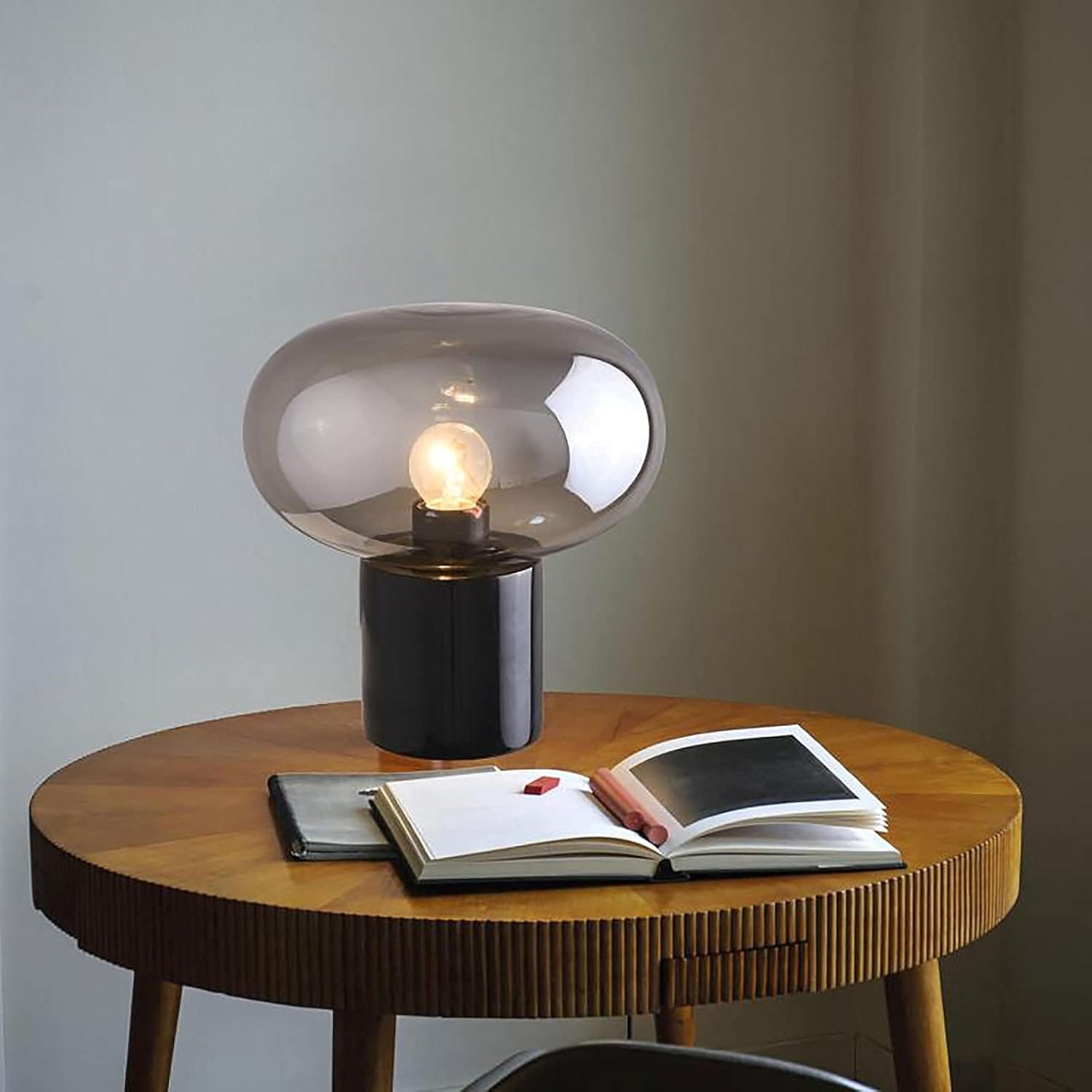
Poiaeusant Smoky Gray Glass Table Lamp with Marble Base (Budget: $35–$65)
Hand-blown smoky glass on a marble base; the material combination (glass plus stone) appears in Art Deco interior design, though the globe form reads as mid-century modern as readily as Art Deco. The breakdown section addresses this directly.
Quick Decision Guide
- Best overall: JONATHAN Y Art Deco Dome Lamp. The dome silhouette does the formal work on its own; no supporting context required in the room.
- Best budget option: Poiaeusant Smoky Gray Glass Lamp: lowest price point while still using genuine material language, glass and marble.
- Best premium option: mfanchan Handmade Stained Glass Lamp: handcrafted construction with individually welded glass pieces; the material investment is real, not implied.
- Best for small spaces: JONATHAN Y Art Deco Dome Lamp: table scale, low footprint, strong formal signal without requiring a large surface.
- Best pair/set: 360 Lighting Rachel Hourglass Lamps, Set of 2: sold as two, which is the period-correct application. Matching lamps flanking a sofa or bed is how Art Deco composition actually works.
Art Deco’s central formal principle is symmetry. A single statement lamp reads as an accent. Matching lamps read as the room’s argument.
A single statement lamp reads as an accent. Matching lamps read as the room’s argument.
Full Comparison
| Product | Best For | Price Range | Key Feature | Link |
|---|---|---|---|---|
| JONATHAN Y Art Deco Dome Lamp | Best Overall / Small Spaces | Mid-Range | Matte black dome, brass supports, marble base | Buy |
| 360 Lighting Rachel Hourglass Set of 2 | Living Room / Bedroom Pair | Mid-Range ($80–$130) | Column silhouette, sold as 2 for symmetrical placement | Buy |
| mfanchan Handmade Stained Glass Lamp | Handmade / Desk / Statement | Mid-Range ($45–$90) | Individually spliced geometric glass, high-temp welded | Buy |
| Poiaeusant Smoky Glass Globe Lamp | Budget Glass Pick | Budget ($35–$65) | Hand-blown glass, marble base, 9.44" height | Buy |
What each lamp gets right, and where it falls short
JONATHAN Y Art Deco Dome Table Lamp
Pros:
- The hemispherical dome is the defining Art Deco lamp form. René Lalique used this geometry, Jacques-Émile Ruhlmann used it, and the form appeared throughout French residential interiors of the 1920s. Here it reads as a matte black dome carried on brass arms.
- Table scale means it works on nightstands, side tables, or console surfaces without dominating.
- Brass-finish supports on a genuine white marble base, heavier and more material than most lamps at this silhouette.
Cons:
- The "Art Deco" label rests on the silhouette more than on period-exact detailing. The form carries the argument; the marble-and-brass build supports it without claiming to be a restoration.
- The black-and-brass palette skews more contemporary than strictly period, reading Deco-adjacent rather than reproduction-accurate.
Who it’s for: Someone who wants a clear Art Deco visual signal at a considered, mid-range price and is choosing an accent lamp rather than a room statement.
Why it stands out: The dome silhouette does the argumentative work without needing the room around it to confirm it.
360 Lighting Rachel Hourglass Table Lamps, Set of 2
Pros:
- The hourglass/column form references the torchière and column lamps that defined Art Deco lighting from Paris to New York showrooms. Donald Deskey sold column-form table lamps through US department stores from the late 1920s.
- 28 inches tall; substantial enough for a living room floor arrangement or a pair on tall credenzas.
- Sold as two: the period-correct purchase. Art Deco rooms were composed around symmetry, not single accent pieces.
Cons:
- The white drum shade is the weak point. It reads as contemporary/generic rather than period-appropriate. A black, amber, or dark-toned shade would strengthen the Art Deco argument considerably.
- Silver metal base rather than gold or brass limits how warm the overall effect reads.
Who it’s for: Someone furnishing a living room or bedroom who wants to apply Art Deco as a compositional principle, with symmetrical placement on either side of a sofa, bed, or entry console.
Why it stands out: The set-of-two structure turns a purchasing decision into a room-design decision.
mfanchan Handmade Stained Glass Table Lamp
Pros:
- Handmade construction: individually spliced glass pieces, high-temperature welded seams. This is fabrication method, not applied decoration.
- Geometric patterning qualifies as Art Deco rather than Art Nouveau. The distinction is in the form language. Angular, non-organic patterns reference Art Deco; flowing naturalistic forms reference Art Nouveau. These are geometric.
- 12-inch shade; desk-lamp scale.
The distinction is in the form language: angular, non-organic patterns reference Art Deco; flowing naturalistic forms reference Art Nouveau.
Cons:
- Limited product photography on Amazon makes scale assessment difficult before purchase. Verify the 12-inch dimension against your intended surface before buying.
- The construction method is real, but the specific pattern language varies by unit. Stained glass handcraft involves variation.
Who it’s for: Someone looking for a desk lamp, reading lamp, or smaller room statement where handmade construction quality matters more than large-scale visual impact.
Why it stands out: Of the four picks, this one’s Art Deco credentials rest on craft construction rather than silhouette alone, which is a stronger argument for the style.
Poiaeusant Smoky Gray Glass Table Lamp with Marble Base
Pros:
- Hand-blown glass on a marble base; both materials appear in Art Deco interior design vocabulary.
- 9.44-inch height; works on side tables, shelves, and compact surfaces.
- E26 socket, standard compatibility.
Cons:
- The globe form reads as mid-century modern as readily as Art Deco. The absence of geometric surface treatment means it doesn’t carry a strong period signal on its own. It is broadly modernist, not specifically Art Deco.
- "Smoky glass on marble" is a combination the MCM revival has claimed just as firmly as Art Deco. Context, meaning other furniture and room palette, will determine which reading it takes on.
Who it’s for: Someone who wants a sculptural, material-forward lamp and is comfortable with a design reference that spans Art Deco through mid-century rather than centering on one.
Why it stands out: The hand-blown glass and marble are genuine. This isn’t a painted resin piece, which makes the material argument honest even if the period argument is approximate.
What Art Deco lighting was actually doing
The style had a specific argument to make, and lighting was part of it.
Art Deco rejected industrial utilitarianism, the position that a lamp should simply illuminate, and simultaneously rejected Art Nouveau’s organic excess. As summarized in Universal Lighting UK’s "Art Deco Lighting History," the movement "rejected pure Modernism’s mass-consumption ethic in favor of exquisite craftsmanship, expensive materials fashioned by hand, and glamorous exclusivity." The lamp was not a fixture; it was a statement object placed within a composed room.
The 1925 Exposition in Paris formalized this publicly. Ruhlmann’s cascading glass bead lamp in the Hôtel d’un Collectionneur pavilion demonstrated what the style was willing to invest in a single object. René Lalique produced over 20 distinct lamp designs in milky frosted glass; Edgar Brandt worked in wrought iron and glass. The torchière became a signature Art Deco form precisely because it was not utilitarian: it lit the ceiling, not the page.
The mass adoption of electric lighting in the 1920s drove the shift from fabric to glass shades. Frosted and colored glass could do things woven fabric couldn’t, and Art Deco used the new capability to extend its material vocabulary.
Further Reading
Two books cover Art Deco lighting and interiors seriously. If you are buying lamps for a room rather than collecting period pieces, the interiors book is more immediately useful. It shows how lamps were placed in actual rooms, not just photographed in isolation.
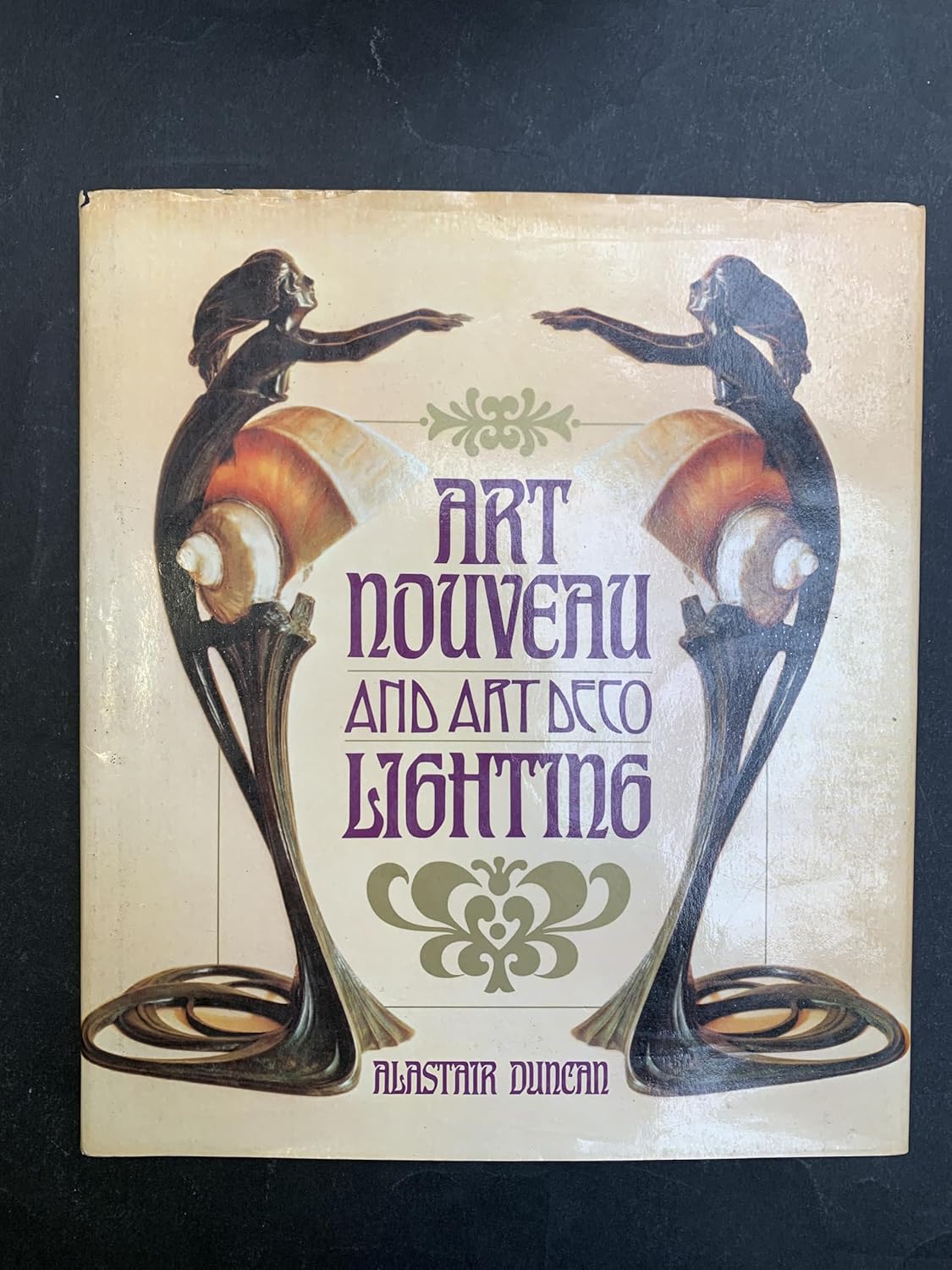
Alastair Duncan, Art Nouveau and Art Deco Lighting (Thames & Hudson, 1978)
The only book-length critical study dedicated entirely to Art Deco lighting; Duncan organizes French, Austrian, German, Belgian, and American makers by nationality, making it the reference for understanding period lamp design by maker and material.
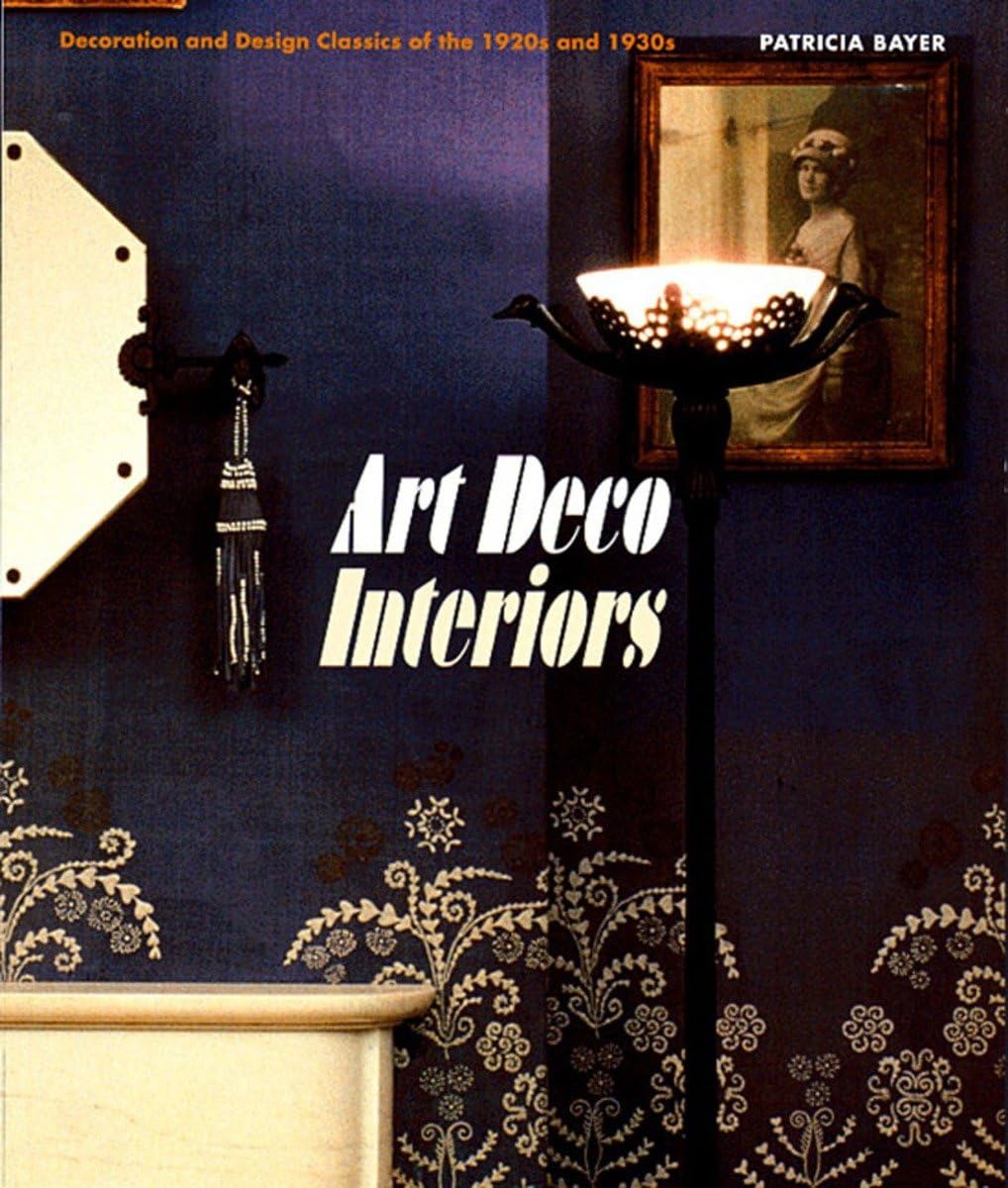
Patricia Bayer, Art Deco Interiors: Decoration and Design Classics of the 1920s and 1930s (Thames & Hudson, 1990)
Documents actual Art Deco interior installations across Europe and America. Seeing how lamps were positioned in period rooms tells you more about placement decisions than any product specification.
Frequently Asked Questions
How do I identify an authentic Art Deco lamp?
Authentic Art Deco lamps carry specific formal markers: geometric motifs (sunburst, chevron, stepped pyramid), strong bilateral symmetry, chrome or nickel metalwork, frosted or colored glass shades with geometric etching, and, in the luxury tier, figural bronze or chrome sculptures. As documented on Werfactory.com and 1stDibs, lamps attributed to specific designers (Lalique, Brandt, Deskey) carry maker’s marks or provenance documentation. Amazon sells reproductions and Art Deco-inspired contemporary designs, not authenticated period pieces. Authentic period lamps appear at 1stDibs, Chairish, and specialist auction houses.
What materials are used in Art Deco lamps?
The material vocabulary shifted across the period. The early 1920s favored hand-crafted luxury: shagreen, exotic woods, glass beads, and enameled metalwork. By the late 1920s and 1930s, the Machine Age inflection brought chrome, nickel, Bakelite, and smoked glass into the vocabulary. Frosted milky glass (Lalique’s specialty) and boldly colored glass (Daum Frères, Muller Frères, Charles Schneider) defined the shade work throughout the period. Bronze, wrought iron, and brass appeared in bases and armatures.
What is the difference between Art Deco and Art Nouveau lamps?
Art Nouveau preceded Art Deco and used curvaceous, organic, naturalistic forms, flowing lines derived from plants, vines, and natural growth patterns. Art Deco rejected this in favor of geometric, angular, and symmetrical forms influenced by machine production and classical proportion. The practical test: if the shade or base uses flowing naturalistic decoration, it’s Art Nouveau. If the decorative language is stepped, angular, sunburst, or chevron, it’s Art Deco.
Are Art Deco lamps expensive?
It depends on whether you are buying period pieces or reproductions. Authentic lamps attributed to designers like Lalique, Brandt, or Deskey are now expensive and sought after. Decolish.com notes this directly. Reproductions and Art Deco-inspired contemporary designs are widely available at retail price points, including several under $100. The picks in this guide are all in the reproduction and inspired-design category, ranging from $35 to $130.
What rooms are Art Deco lamps best suited for?
Art Deco was a total interior design proposition, not an accent approach. It worked through composed symmetry across an entire room. That said, a single strong Art Deco lamp, particularly the dome or column form, works as a focal point in living rooms, entryways, and bedrooms alongside neutral or minimal surrounding furniture. The period-correct application for column or torchière lamps is flanking placement: a matched pair on either side of a sofa, bed, or entry table.
For other Art Deco interior accessories, see our guide to best Art Deco home decor. For period furniture in the same style, see best Art Deco furniture.

About Zoe Post
Zoe Post holds a BFA and a Master of Architecture from the School of the Art Institute of Chicago. She now works as a product marketing leader at an architectural product design firm, bringing hands-on industry perspective to everything she writes. At ADI she covers contemporary artists, textile and pattern design, and the design objects that sit at the boundary of art and function.