
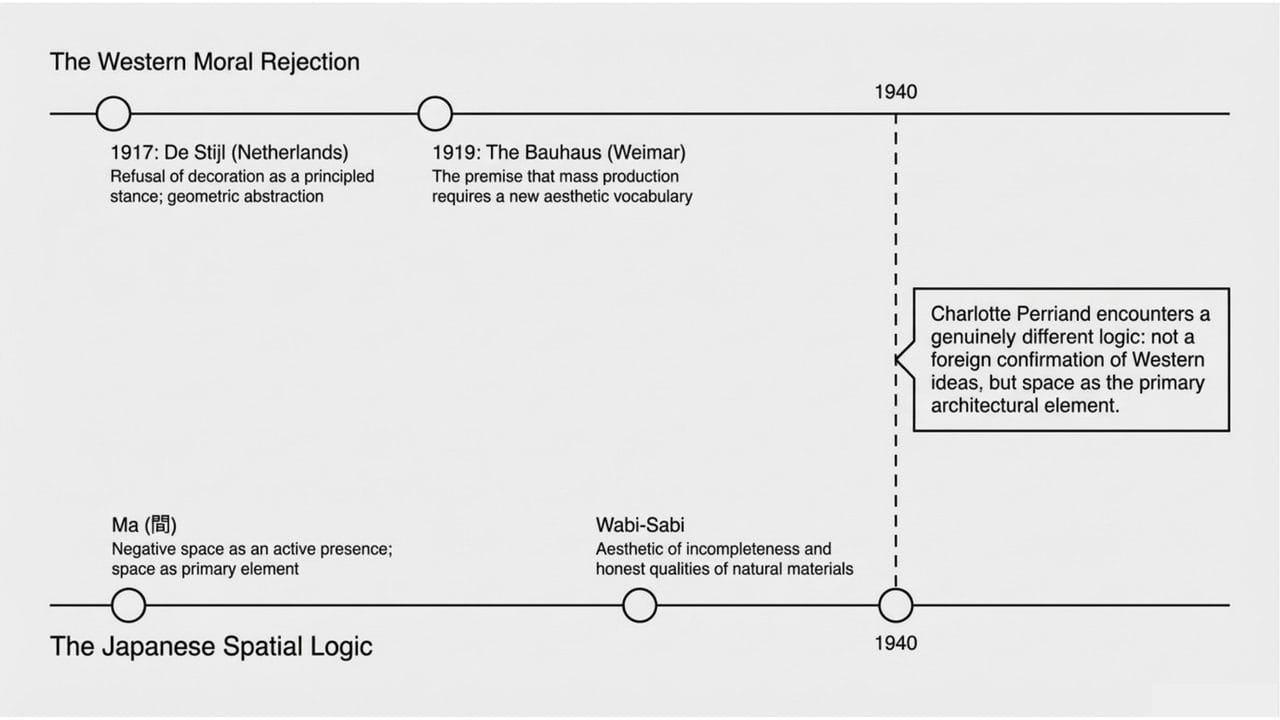
Philippe Starck designs span furniture, hotels, household objects, and architecture across five decades. Born in Paris in 1949, Starck became France’s most internationally recognized designer by treating mass-produced objects as cultural provocations. His work includes the Juicy Salif (1988), the Louis Ghost Chair (2002), and hotel interiors that changed the hospitality industry.
What Philippe Starck designs from the 1980s were taken to mean, and why that framing matters
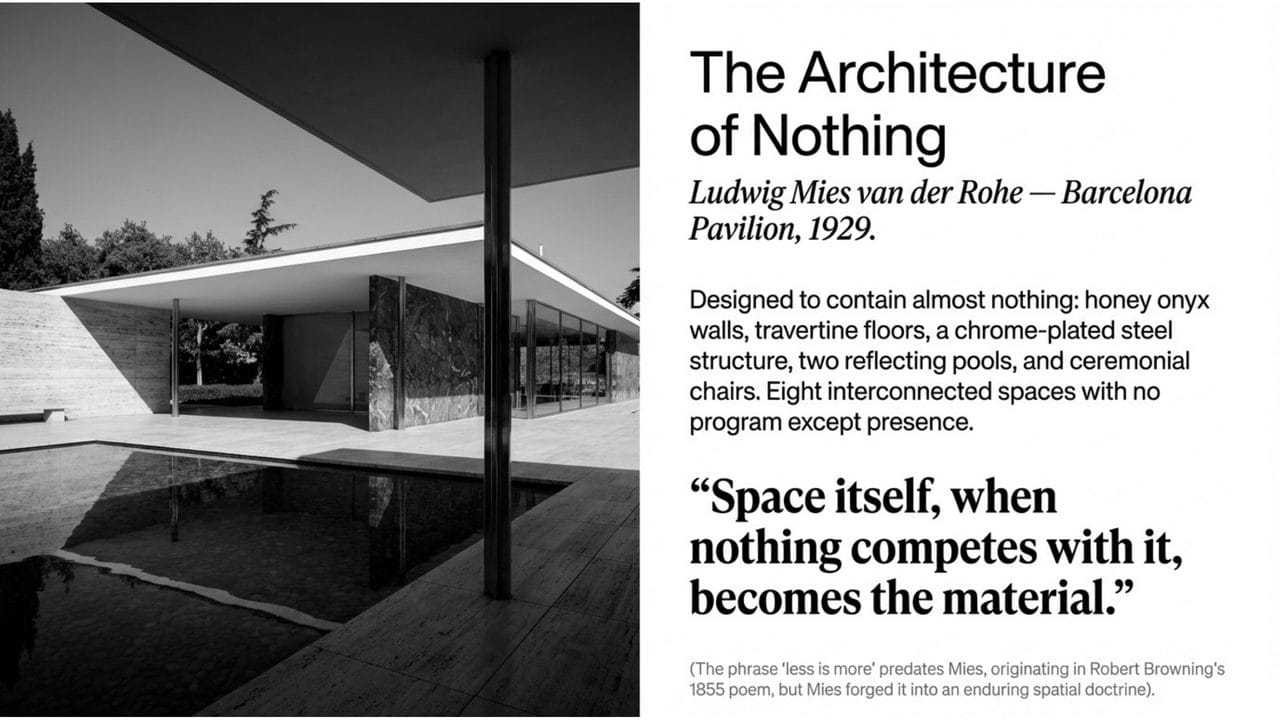
The 1983 commission tells you something. After François Mitterrand’s 1981 election victory, one of his government’s cultural gestures was commissioning Starck to refurbish the private apartments at the Élysée Palace. Starck was thirty-three. He had designed some nightclub interiors and a handful of furniture pieces. The state chose him anyway, and that choice helped make him internationally legible. Not because the work was universally admired, but because it announced that design was now a domain of cultural politics, not just taste.
The following year came the Café Costes in Paris (1984), a restaurant interior built around a chair Starck had actually designed two years earlier. The Costes Chair (1982, Driade) predates the café it was made for. Starck designed it in 1982, and the Café Costes opened in 1984 using that chair throughout. It went on to circulate in design culture independently of the cafe itself. One of the first signs that Starck understood objects as arguments, not just furnishings.
Then came New York. In 1988, working with hotelier Ian Schrager, Starck redesigned the Royalton Hotel on West 44th Street. The lobby was a long theatrical corridor — dark, sculptural, furniture placed like set pieces in a drama no one had written yet. The 1990 Paramount Hotel followed, also with Schrager, and this one was more accessible by design: rooms at roughly $100 a night in a space that looked like nothing else available at that price. This was where his “democratic design” claim had its clearest early demonstration. The best design should not cost what only a few people can pay. Mass production was not the compromise — it was the point.
Mass production was not the compromise — it was the point.
The claim has a real tension in it, and dismissing it quickly would be a mistake. Starck has also designed a 143-meter sailing superyacht for Russian billionaire Andrey Melnichenko, a series of helicopters, private residences for the ultra-wealthy. He is, simultaneously, the designer who put a polycarbonate Ghost Chair in mass-market showrooms around the world and the designer who charges what billionaires charge. Alice Rawsthorn, in Hello World: Where Design Meets Life (Penguin, 2013), situates designers like Starck within a design celebrity culture that sometimes uses democratic rhetoric while operating at the luxury end of the market.
The question worth asking is whether the democratic design claim was a philosophy, a brand position, or both. The strongest objection is sharper than simply pointing at the yachts: a room at the Paramount for $100 is still a boutique hotel room in Manhattan, not a neighborhood bar. A Ghost Chair at Kartell pricing is still a designer object sold to people who self-identify as design buyers. A Target collaboration is still a marketing exercise for a retailer selling aspiration. On this reading, Starck did not democratize design so much as he expanded who could perform the aspiration of owning it. That is a meaningful distinction.
The counter to that objection is concrete. Kartell reports over 1.5 million Ghost Chairs sold across forty countries. The Target collaboration appears to have introduced Starck’s name to American consumers who had little prior engagement with European design culture. The Axor Starck faucet line made it possible to buy a Starck-designed object while remodeling a bathroom rather than furnishing a gallery. These are not the same markets as the superyacht commissions, and the volume difference is real. The scale of mass-market distribution is what separates Starck’s democratic rhetoric from the usual designer’s aspiration claim: it is not just rhetoric, there is a body of objects that ended up in ordinary spaces.
Whether that counts as democratization or as mainstreaming aspirational taste is a judgment call, not a fact.
Whether that counts as democratization or as mainstreaming aspirational taste is a judgment call, not a fact. The tension does not resolve. It is what makes his position worth examining rather than simply admiring.
Why some Philippe Starck designs matter despite their contradictions
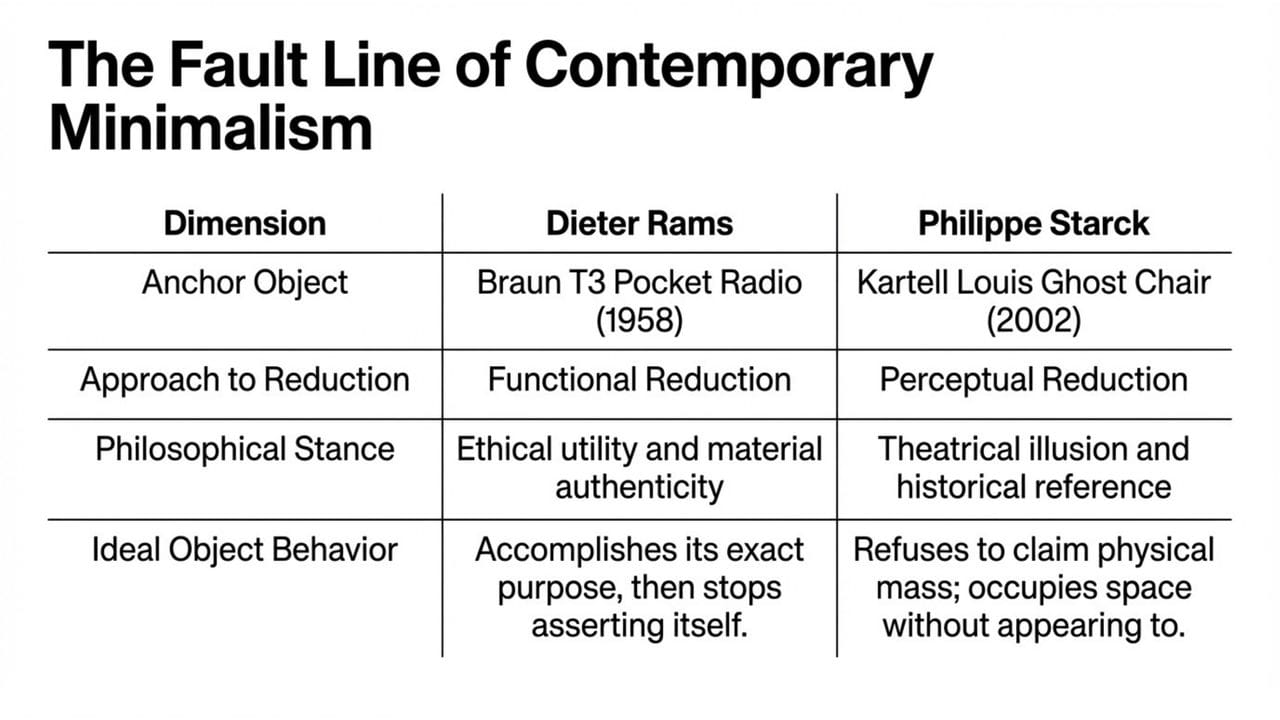
In 1988, Starck was sitting at a restaurant on Capraia, a small Tuscan island, eating squid, and he began sketching on the place mat. The sketches became the Juicy Salif, a lemon squeezer for the Italian housewares company Alessi. It stands on three tapered legs, rises to a point, and does not squeeze lemons particularly well. The juice runs down the legs. There is no cup or bowl integrated into the form. Alberto Alessi, in a 2014 interview with Dezeen, described receiving “a napkin from Starck, on it among some incomprehensible marks (tomato sauce, in all likelihood) there were some sketches.” The squeezer went into production and eventually into the permanent collections of MoMA and the Metropolitan Museum of Art.
The dates are disputed: MoMA dates the design to 1988; Alessi’s own catalog and other sources place the production date at 1990. The object itself is consistent. What changed between 1988 and 1990 was the journey from sketch to cast aluminum to shop floor.
Why does a dysfunctional juicer belong in MoMA? The institutional answer is that it raises a question about what an object is for. Starck said it was not designed to squeeze lemons; Alberto Alessi has described it as a “conversation starter.” One reading is that the Juicy Salif’s cultural function — provoking that question, posed in polished aluminum on a kitchen counter — is more useful than a competently functioning citrus press. A skeptic would contest that reading: a kitchen object that fails at its task is an expensive conversation piece, not a philosophical statement. Both positions are available; which one you take depends on what you think design is for.
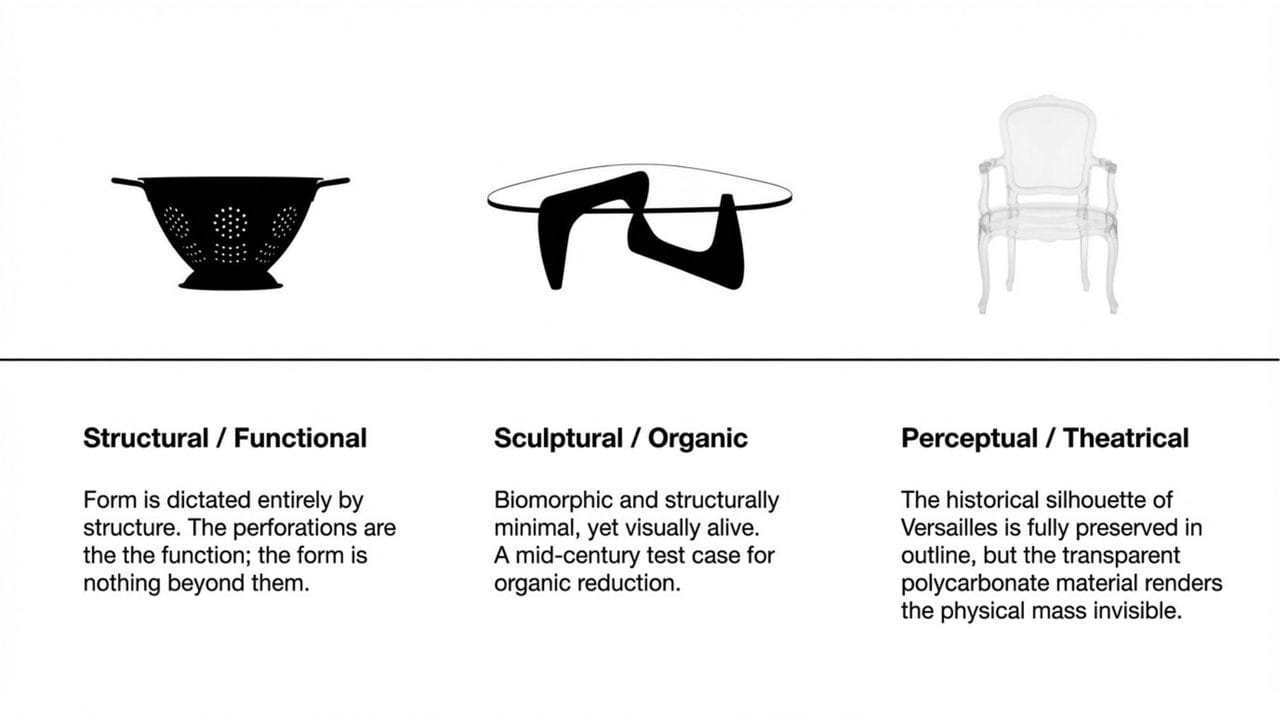
The Louis Ghost Chair (2002, Kartell) makes a different move. It is a Louis XVI armchair translated into a single piece of injection-molded polycarbonate. The historical form is legible (the curved back, the armrests, the proportions) but the material — transparency, no wood grain, no fabric, no court upholstery — strips out most of the associations that made the original form a signal of rank. One reading is that this makes the historical reference available without its original politics. Another is that it makes a luxury design object out of a material that signals industrial modernity rather than aristocratic heritage, which is a different kind of status signal, not the absence of one. The commercial scale is documented: Kartell and Britannica report over 1.5 million units sold, making it one of the highest-volume designer chairs ever produced. That scale is relevant to the article’s argument. A Ghost Chair that sold only to design collectors would mean something different than one present in hotel lobbies, apartments, and restaurants across forty countries.
His 1994 collaboration with Hansgrohe (the Axor Starck faucet line) brought the same biomorphic sensibility to bathroom fixtures, objects people actually use daily without treating them as design objects at all. This is where “democratic design” generates the least controversy: a faucet with considered proportions that costs roughly what other well-made faucets cost. The same argument applies to his kitchen objects for Alessi beyond the Juicy Salif. The Max le Chinois colander, for instance, is a perforated stainless steel bowl that makes no concession to ergonomic convention. It works.
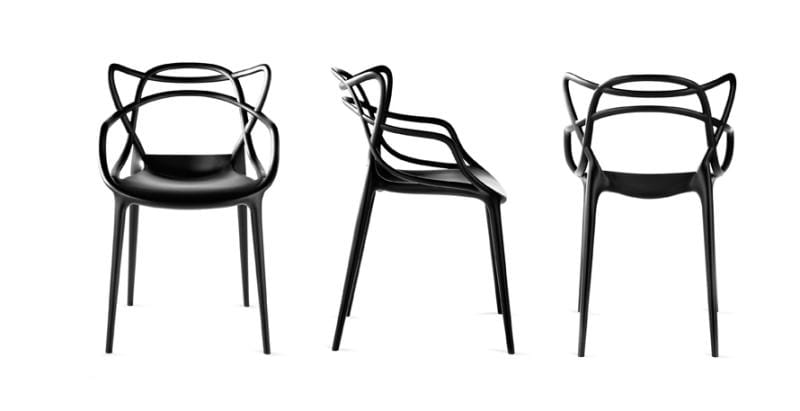
The Masters Chair (2010, Kartell, co-designed with Eugeni Quitllet) goes a step further in self-referentiality: its back incorporates the silhouettes of three mid-century classics — the Eames shell, the Saarinen tulip, the Jacobsen Series 7. It is design commentary in production furniture. Whether that is sophisticated or self-congratulatory depends on what you think design criticism is for.
The most famous Philippe Starck designs, and what each one actually does
Juicy Salif (designed 1988, produced 1990, Alessi)
Cast polished aluminum, three splayed legs. The form derives from a sketch made while eating squid, documented by Alberto Alessi himself. Sits in the permanent collections of MoMA (which dates the design to 1988) and the Metropolitan Museum of Art. Does not squeeze lemons reliably. MoMA and the Metropolitan Museum of Art have treated it as an object that tests what a kitchen tool can be, in part because Alessi and Starck have both framed it that way. Whether that framing constitutes a valid museum argument or a sophisticated product story depends on your view of design criticism.
Louis Ghost Chair (2002, Kartell)
Single-piece injection-molded polycarbonate. The Louis XVI silhouette rendered transparent. Kartell and Britannica report over 1.5 million sold, with some sources citing figures approaching two million. One common reading is that the transparency lets the chair borrow a courtly silhouette without inheriting its aristocratic associations, though the chair is still a designed object at designer prices, so the politics of the form shift rather than disappear. In practice, it is also a surprisingly comfortable chair.
Costes Chair (1982, Driade)
Designed in 1982 for the Café Costes, which opened in Paris in 1984. The chair predates the space it was made for by two years. Three-legged, which is not an oversight: a three-legged chair cannot wobble, regardless of floor surface. Rounded leather-upholstered back, tubular steel frame. One of his first objects to travel beyond the space it was made for.
Royalton Hotel Lobby (1988, New York)
With Ian Schrager. Long corridor entrance, theatrical lighting, furniture placed like props. The Royalton established what the boutique hotel became: a space where the design program, not the amenity list, was the product. The Paramount Hotel (1990, also with Schrager) followed the same logic at a lower price point.
W.W. Stool (1990, Vitra)
Designed for film director Wim Wenders. Three organic legs, a saddle seat, the whole form looking grown rather than manufactured. Shows the biomorphic register in Starck that runs alongside his more conceptual work. Now in the Vitra permanent collection.
Hot Bertaa Kettle (designed 1987, produced 1990, Alessi)
A single cone of aluminum with one tube that does double duty as handle and spout. MoMA dates the design to 1987; Alessi put it into production around 1990. It is remembered mostly for not working. The handle conducts heat, the balance is awkward when full, and Alessi eventually withdrew it. The kettle became collectible precisely because it was a beautiful object that performed badly, which is the part of Starck’s record his admirers tend to skip past.
La Marie Chair (1998, Kartell)
The first chair molded as a single piece of transparent polycarbonate, four years before the Louis Ghost. MoMA dates it to 1998. Where the Ghost borrows a historical silhouette, La Marie has none. It is the material experiment by itself, the proof that an entire chair could come out of one clear injection mold. The Ghost is what that experiment became once Starck gave the form a reference to carry.
Dr. Skud Flyswatter (1998, Alessi)
A thermoplastic flyswatter with a human face embossed into the swatting surface, so the thing you hit the fly with is looking back at you. It sits in MoMA’s permanent collection. This is the small end of Starck’s range, where the provocation costs a few dollars instead of appearing in a hotel lobby. The face is the whole argument: it turns a disposable tool into an object you hesitate to throw away.
Bubble Club Sofa (2000, Kartell)
A baroque club sofa rotation-molded in polyethylene, the plastic used for road barriers and kayaks. It won the Compasso d’Oro in 2001. The form quotes the overstuffed leather club chair while the material refuses everything that form implies about weight and cost. Usable indoors or out, it is one of the clearest cases of Starck dropping an aristocratic shape into industrial plastic and letting the mismatch do the talking.
Guns Collection (2005, Flos)
Three gold-finished lamps cast in the shape of a Beretta, an AK-47, and an M16, each topped with a black shade carrying a small gold cross on the inside. Flos produces them, and twenty percent of the proceeds go to a charity working against poverty. This is the most openly polemical object Starck has put into production. It also divides people most sharply on whether a luxury object can carry a political argument or only ends up absorbing it.
Masters Chair (2010, Kartell, with Eugeni Quitllet)
A stacking chair whose back fuses the silhouettes of three mid-century classics: Jacobsen’s Series 7, Saarinen’s Tulip, and the Eames molded shell. Made in recycled thermoplastic. It is design about design, a production object whose subject is the history of the objects around it. Whether that reads as homage or as a designer quoting his predecessors to borrow their authority is left for you to decide.
Shop the collection
Three objects: one that makes the article’s central argument (the Juicy Salif), one that demonstrates mass-market design at scale (the Ghost Chair), and one where Starck’s formal provocation and actual utility align without conflict (the Max le Chinois colander). Each is from the original manufacturer.
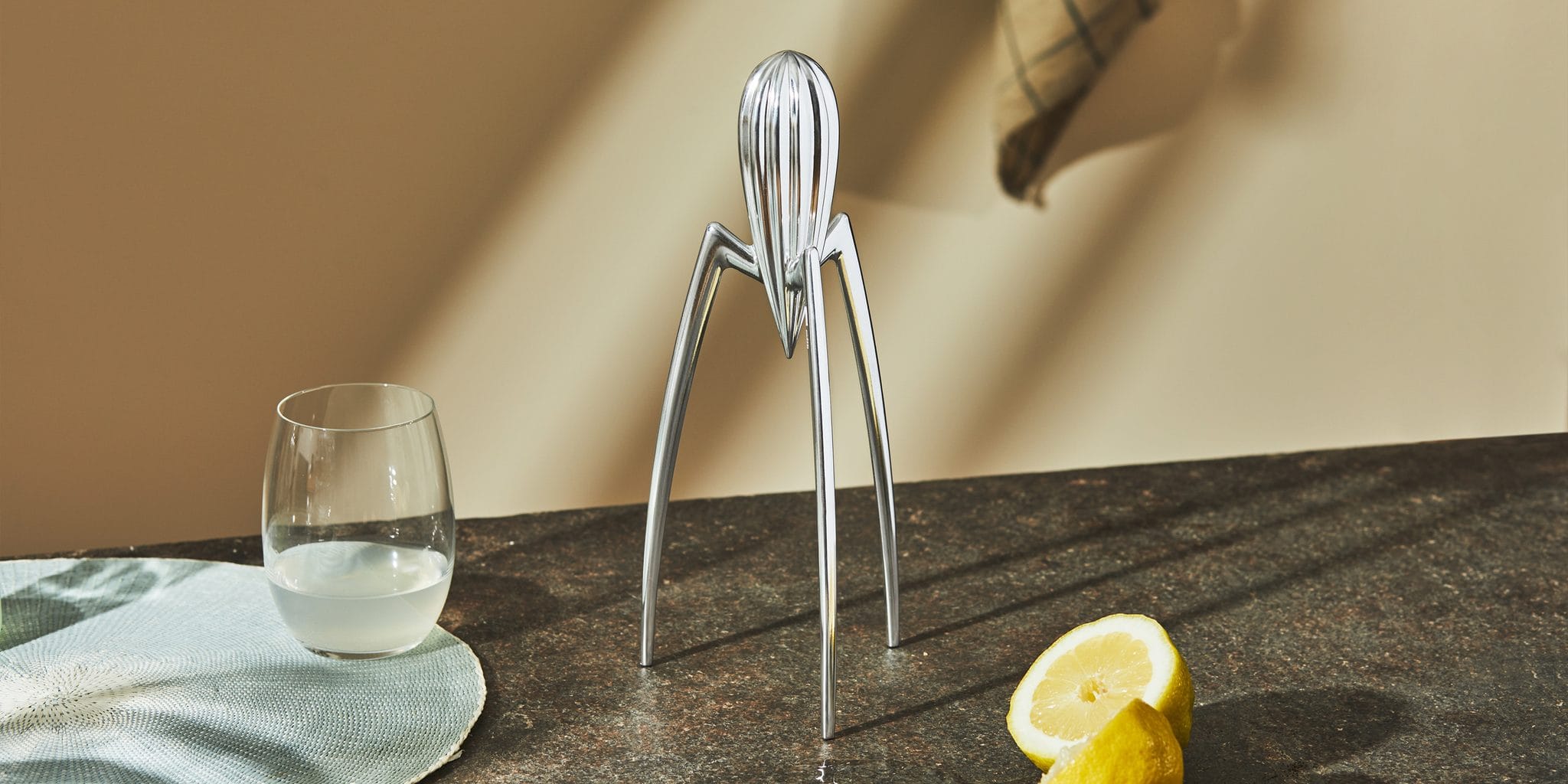
Alessi Juicy Salif
The mirror-polished aluminum version in MoMA’s permanent collection. The canonical version that condenses the article’s central argument about design’s cultural function versus task performance.
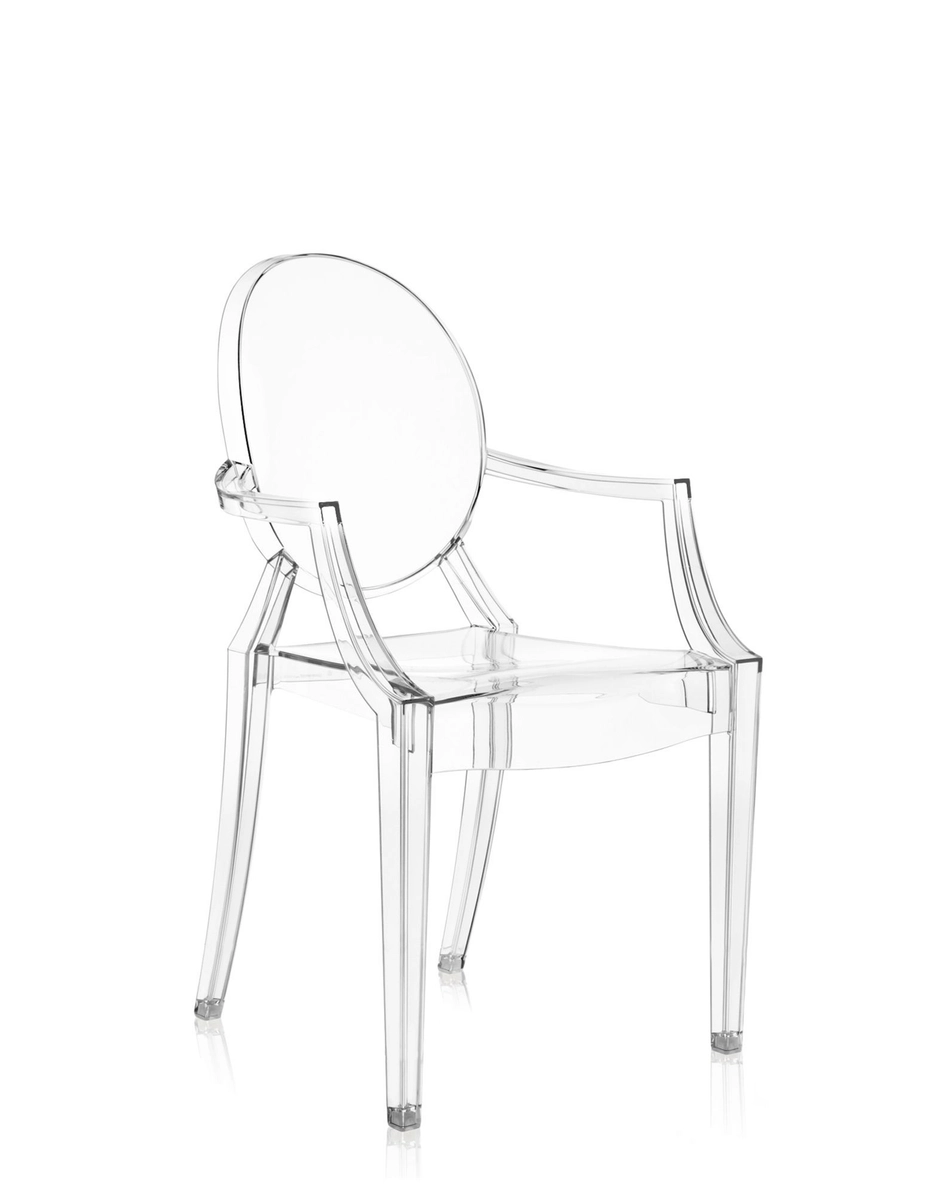
Kartell Louis Ghost Chair
The authentic Kartell polycarbonate version. Reproductions of this chair are everywhere, but the material quality of the Kartell injection-molding process is what makes the transparency work at the proportions Starck specified.
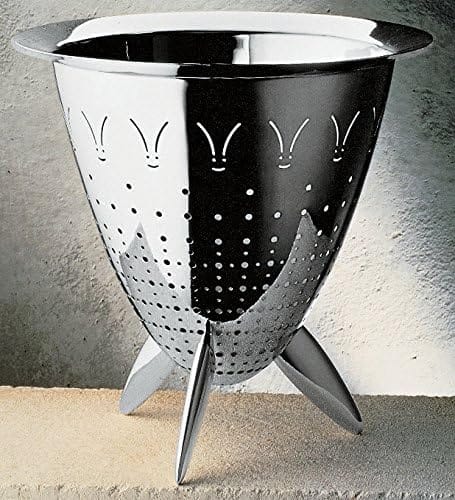
Alessi Max le Chinois Colander
Perforated stainless steel with a handle that makes no ergonomic concession. It works as a colander.
Further reading
Two books, not three. The Taschen monograph covers everything; the Carmel-Arthur gives you the argument in a fraction of the pages.
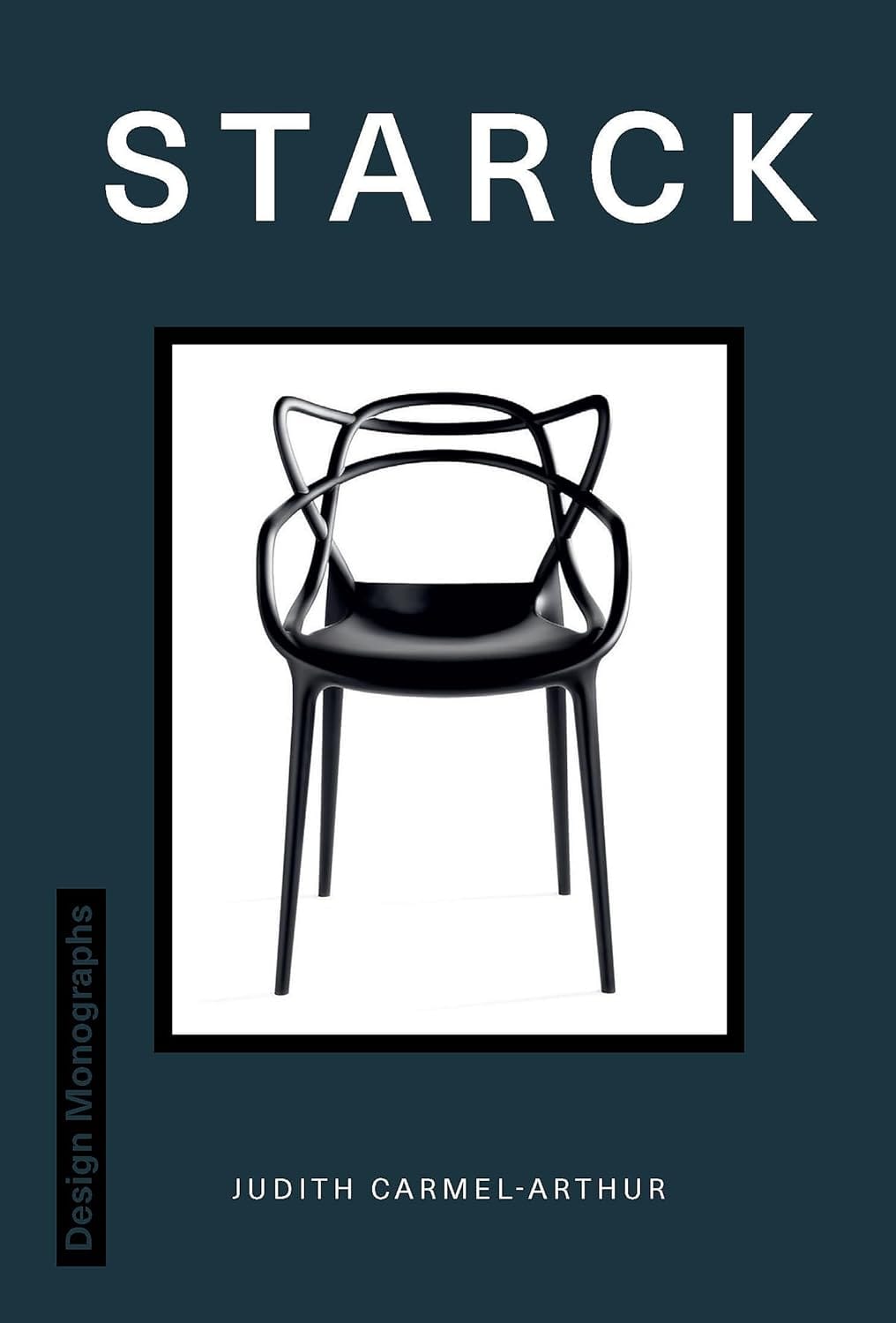
Judith Carmel-Arthur, Design Monograph: Starck (Phaidon)
Compact and opinionated, a critical introduction that takes positions. Better for readers coming to Starck for the first time who want analysis without the coffee table format.
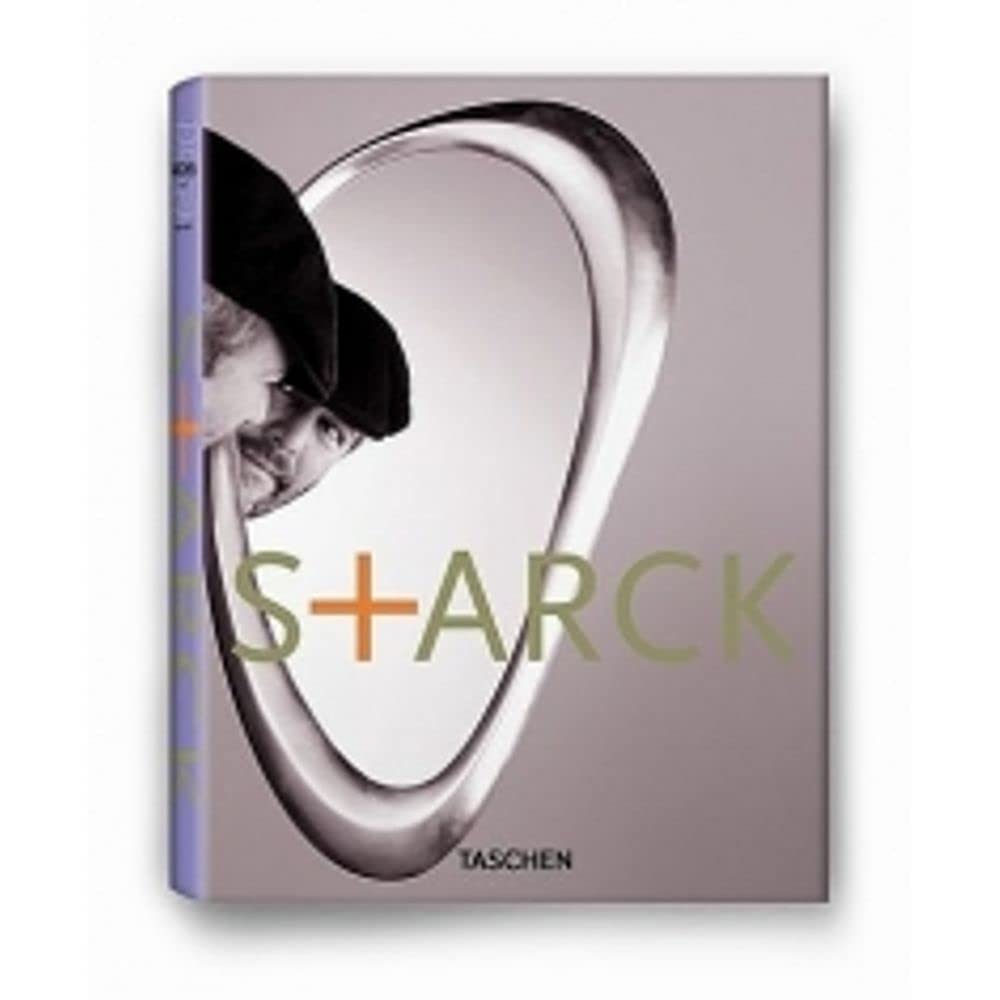
Ed Mae Cooper & Pierre Doze, Starck (Taschen)
The definitive monograph, full range of work and extended essays. The one to own if you want to understand what Starck was doing across five decades.
Frequently asked questions
What is Philippe Starck most famous for designing?
Starck is most associated with the Juicy Salif lemon squeezer (Alessi, 1988/1990) and the Louis Ghost Chair (Kartell, 2002). He also designed the interiors of the Royalton (1988) and Paramount (1990) hotels in New York with Ian Schrager, which reshaped the hospitality industry’s relationship to design. His work spans household objects, furniture, hotels, yachts, and architecture.
What makes the Juicy Salif so significant if it doesn’t work well as a juicer?
Alberto Alessi has described it as a “conversation starter” rather than a functional kitchen tool, and curators at MoMA and the Metropolitan Museum of Art have treated it as an object that raises a question about what kitchen tools are for. One reading, endorsed by both Starck and Alessi, is that the cultural function outweighs the task performance. A skeptic would say it is an expensive piece that asks a question no kitchen requires answering. The institutional presence suggests the first reading has been more influential, though not universally accepted.
How many Philippe Starck designs have been produced?
Starck’s studio has cited over 10,000 designs across five decades, spanning furniture, household objects, hotels, restaurants, boats, motorcycles, watches, and architecture. The volume is unusual for a designer of his cultural standing. Most designers of comparable reputation produce far fewer objects.
Who manufactures Philippe Starck furniture?
Starck has worked with a range of manufacturers. Kartell produces the Ghost Chair series and the Masters Chair. Driade manufactured the Costes Chair. Vitra produced the W.W. Stool. Alessi manufactures the Juicy Salif and other kitchen objects. He has also designed for Target, Emeco, Boffi, and Cassina, among others.
Is the Louis Ghost Chair worth buying?
The authentic Kartell version is a comfortable chair in addition to being a design object, and at its price point it is competitive with other well-made polycarbonate seating. Reproductions are widely available; they miss the material quality Kartell achieves in the injection-molding process, which affects how the transparency reads at the chair’s proportions. Readers who care about the design history will want the Kartell original; readers for whom the silhouette alone is the appeal will find lower-cost alternatives.
For the full profile of Starck’s career and design philosophy, see who is Philippe Starck. For curated product picks, see guides to best Philippe Starck furniture and best Philippe Starck objects under $100.

About Joe Post
Joe Post holds an MFA in Art from California Institute of the Arts (CalArts) and has done additional graduate work at the School of the Art Institute of Chicago. He founded Art Design Ideas to write about design as cultural argument — the decisions, contradictions, and assumptions built into the objects we live with.