
Arne Jacobsen (1902–1971) was a Danish architect and designer whose concept of total design shaped the built environment from the building’s shell to its door handles. He is best remembered for the Arne Jacobsen chairs — the Egg and Swan, designed in 1958 for the SAS Royal Hotel in Copenhagen, and the Series 7, among the most reproduced chairs in history.
Why Jacobsen thought furniture was architecture’s unfinished business
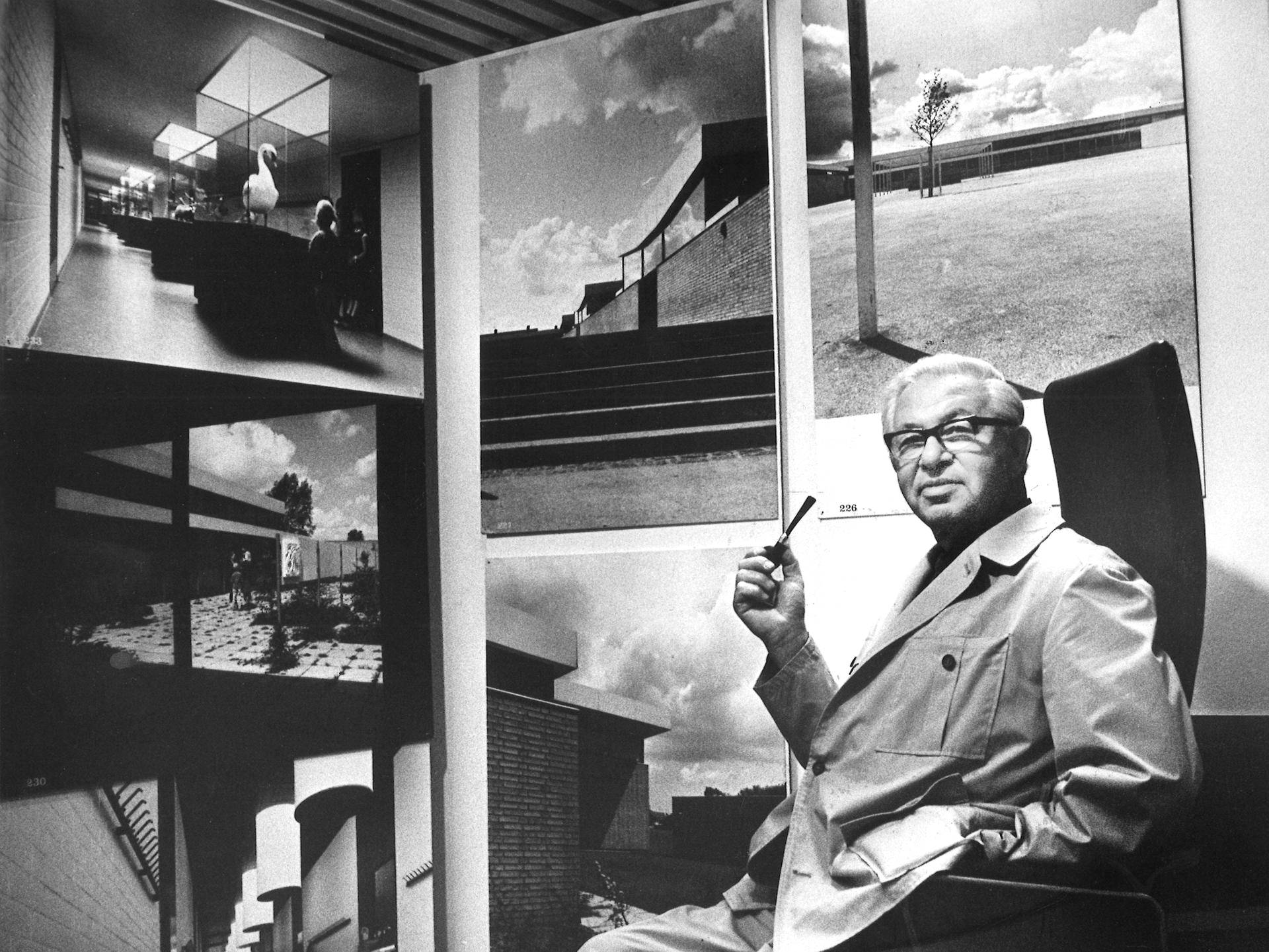
Jacobsen trained as an architect at the Royal Danish Academy of Fine Arts under Kay Fisker and Kaj Gottlob between 1924 and 1927. The distinction between building and object did not interest him the way it interested most designers of his generation. For Jacobsen, a chair that interrupted the logic of a room was a structural failure, as much an error as a column in the wrong place.
He was part of the broader tradition of designers who understood themselves as total practitioners, but his version of that tradition was Danish, and therefore quieter, more committed to process than to polemic. The 1929 “House of the Future,” won in competition with Flemming Lassen, announced this early: a spiral, flat-roofed glass-and-concrete structure with a helicopter pad, built full scale at the Copenhagen Forum exhibition. The idea was not futurism for its own sake. It was a demonstration that a building and everything in it could be conceived as one argument.
Jacobsen worked alongside Hans Wegner on the Aarhus City Hall project in 1938, a collaboration that placed both designers at the center of what Danish Modern was becoming.
The 1943 rupture is essential to understanding what followed. When the Nazi deportation of Danish Jews began, Jacobsen fled to Sweden with his family, aided by the Danish resistance. He spent two years in exile. His practice stopped; his thinking did not. The plywood experiments he developed during that period became the Ant chair on his return. Exile gave him time to strip the problem down: what is a chair if you start from material logic rather than formal convention? The answer was three legs and a single sheet of moulded plywood, with no separate back and no upholstery as an afterthought.
This is worth dwelling on because it complicates the clean design-history narrative. Jacobsen is often placed inside the Scandinavian functionalist movement, and he belongs there. But the Ant chair was not a movement exercise. It was a solution to a specific brief: seating for a Novo Nordisk cafeteria in 1952. The formal elegance came from the constraint, not despite it. That distinction matters when evaluating what the later hotel chairs were actually doing.
The formal elegance came from the constraint, not despite it.
What the SAS Royal Hotel was actually designing
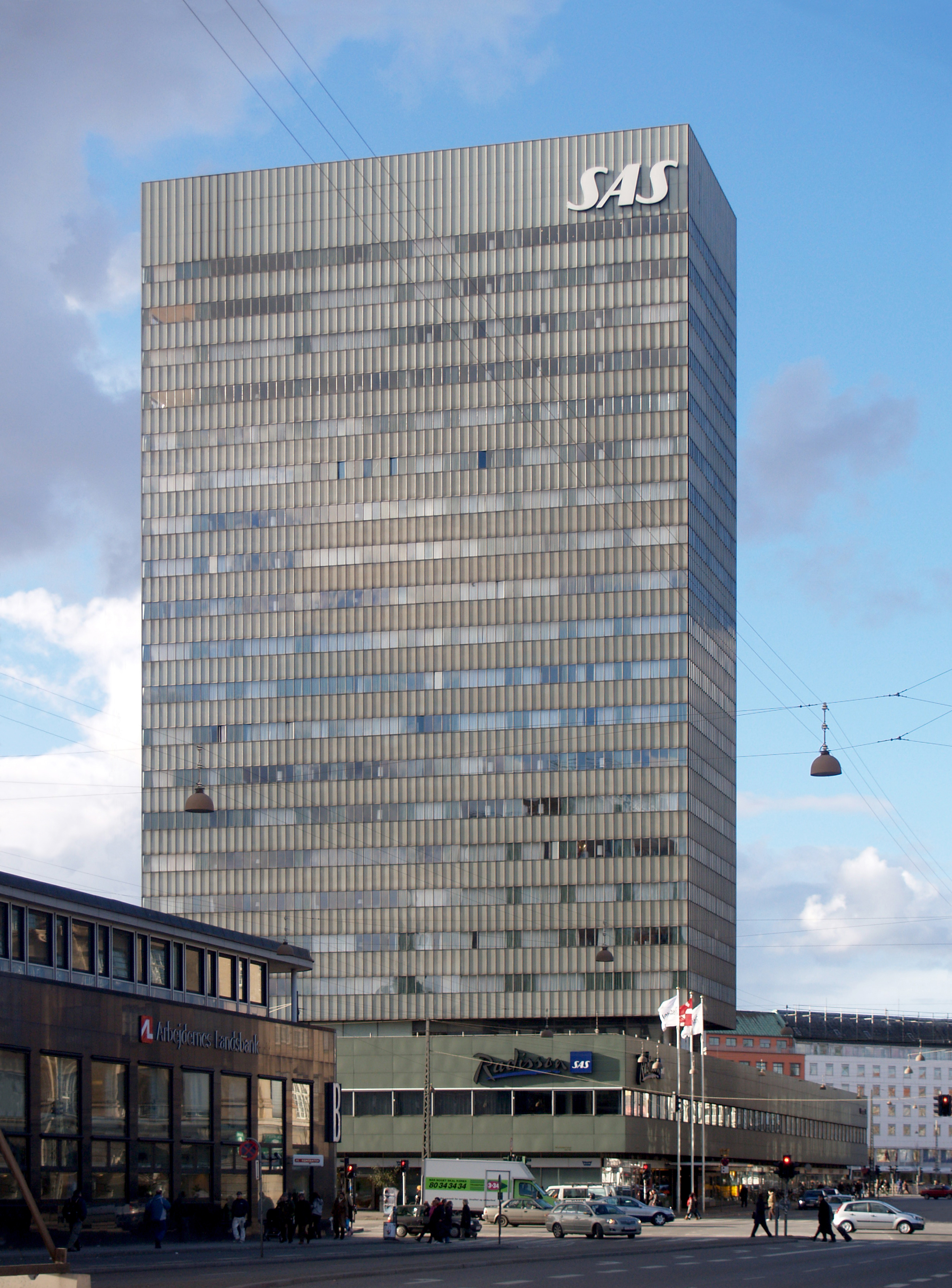
In 1958, Scandinavian Airlines commissioned Jacobsen to design a hotel in Copenhagen. The SAS Royal Hotel (now the Radisson Collection Royal Hotel) was described at the time as the world’s first design hotel, which is a marketing claim with a real foundation. Jacobsen designed the building, all furniture, the lighting, cutlery, textiles, and staff uniforms. His collaboration with Fritz Hansen had begun in 1934; by 1958 it was the natural vehicle for translating the building’s argument into its seating.
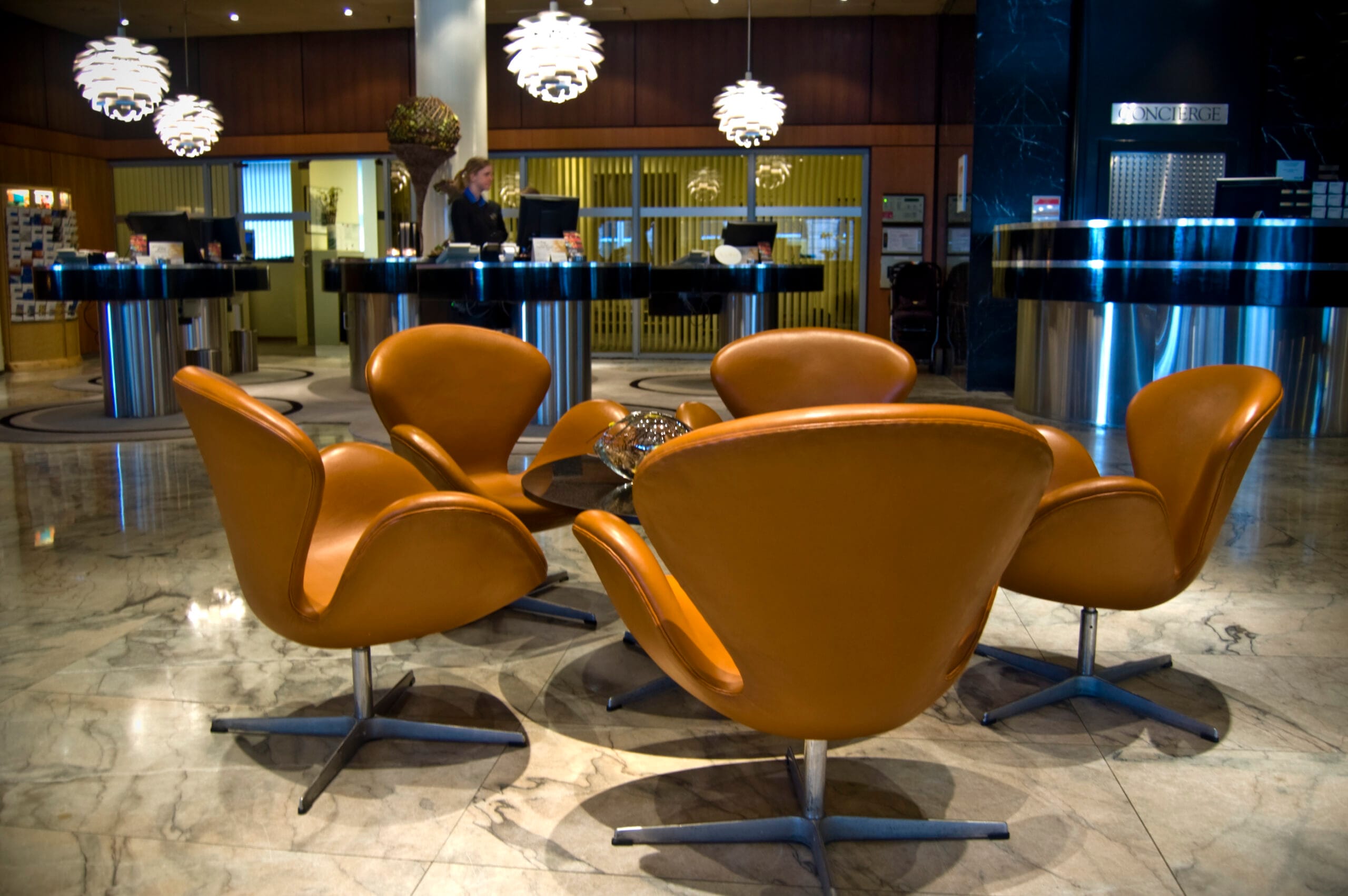
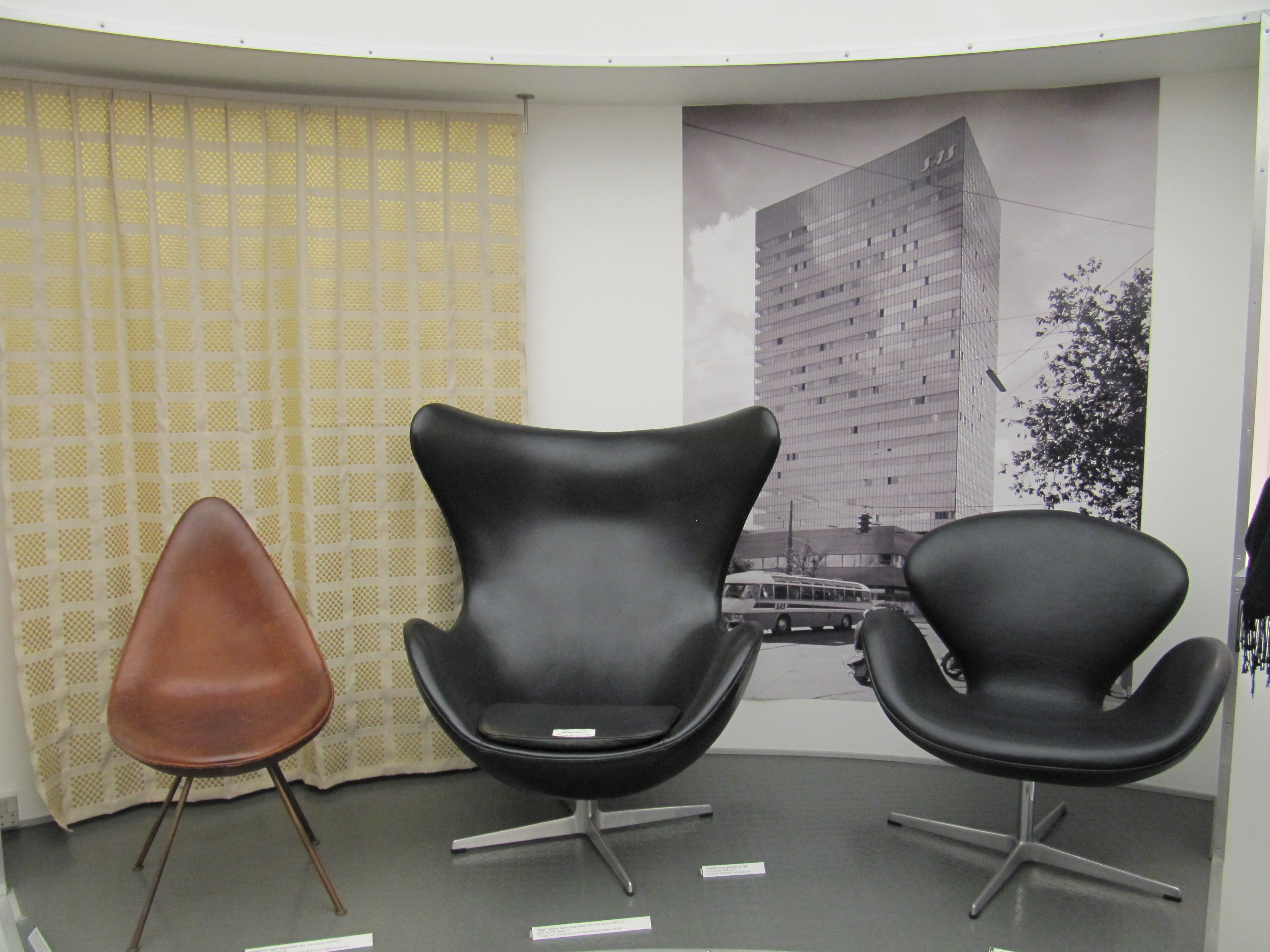
The chairs that came out of the SAS commission — the Egg, the Swan, the Drop, the Pot, the Series 3300 — were designed as room components, not as autonomous objects. Their job was to complete the lobby and reception areas the way a column or a window completes a façade. The Egg in particular creates a private space inside a public room: its shell form envelops the sitter, cutting off peripheral vision and holding the body in a specific posture. Jacobsen understood this as architecture operating at the scale of furniture.
Jacobsen designed the chairs, but the manufacturer that made all of them turned them into products that could be ordered, stacked, and shipped.
That is why the furniture’s subsequent celebrity as standalone products is the irony worth sitting with. The chairs became anchors of the mid-century seating canon, reproduced by dozens of manufacturers and sold globally as design objects divorced entirely from the hotel context. Jacobsen found this furniture fame irritating. He considered architecture his primary identity. The reproduction market confirmed something he had not set out to make: objects so formally correct that they work in any context, not just the one they were designed for.
The reproduction market confirmed something he had not set out to make: objects so formally correct that they work in any context.
Room 606, the last surviving original interior of the SAS Royal Hotel, is now preserved as a museum room, documented in the Hatje Cantz monograph Arne Jacobsen. Room 606. It is the only place where the full argument can still be heard: the curtain-wall exterior, the AJ Floor Lamp and AJ Table Lamp produced by Louis Poulsen, the upholstered surfaces, and the Egg and Swan chairs occupying exactly the positions Jacobsen designed them for. Everything else is reproduction and inference.
What the Arne Jacobsen chairs reveal about how he worked
Ant Chair (Model 3100), 1952
Three legs. One sheet of moulded plywood, bent to form both seat and back without a joint between them. The Ant was designed for a Novo Nordisk cafeteria, a stacking chair for an institutional space, and the engineering problem it solved so cleanly became a template for virtually every molded-plywood chair that followed. Fritz Hansen has been producing it continuously since 1952; MoMA holds Jacobsen’s work in its permanent collection.
Series 7 Chair (Model 3107), 1955
The Ant refined: four legs instead of three, a wider waist, more stable and more broadly proportioned. The Series 7 became one of the best-selling chairs in history and is widely reproduced. That reproduction reach is how it ended up in Lewis Morley’s 1963 studio in London, where Christine Keeler famously straddled a copy for the photograph that defined one of Britain’s most sensational political scandals. That the chair in the photograph was a reproduction rather than an original is itself a story about how successfully Jacobsen had designed for mass production.
Egg Chair, 1958
The Egg’s shell — a fibreglass inner structure with foam upholstery — creates an acoustic and visual enclosure. In the SAS Royal Hotel lobby, it was room architecture at 1:1 scale: a private space inside a public one, with the shell cutting off lateral distraction and the high back creating what amounts to a small room within the room. Fritz Hansen still manufactures the original; all other versions in the market are reproductions, varying in fidelity to the shell geometry. To see where the Egg lands against the Eames Lounge and the Barcelona Chair, see the ranked guide to the best designer lounge chairs.
Swan Chair, 1958
Designed for the same commission as the Egg but for a different function: the conversation areas of the SAS Royal Hotel rather than its reception lobby. The Swan has no traditional armrests; the seat and back flow from a single organic form into two wing-like surfaces. It is smaller and more active than the Egg, a chair you lean into rather than one that holds you. For the same reason, it works in spaces where the Egg would overwhelm the scale.
SAS Royal Hotel (Radisson Collection Royal Hotel), Copenhagen, 1958–1960
The building that is also furniture. Jacobsen’s curtain-wall tower was the container; the Egg, Swan, Drop, and Pot chairs were the argument the container was making. The Barcelona Chair occupies the same cultural moment. Mies van der Rohe also designed it for a specific architectural commission, but Jacobsen’s chairs were production objects from the start, designed to be manufactured in quantity rather than handmade in small numbers. That distinction is why the chairs could be made by the tens of thousands, and why so many unlicensed versions followed. Among those who worked briefly in Jacobsen’s office before leaving to pursue a radically different idiom was Verner Panton, whose the Panton Chair became the most emphatic departure from Jacobsen’s restrained organicism.
Where to Buy the Originals
Fritz Hansen has made Jacobsen’s chairs since the 1950s and still holds the rights. ADI links only to Fritz Hansen and its authorized dealers. Prices below were checked at Design Within Reach in September 2026.
- Ant Chair, $479. The three-legged original that started the family, and the least expensive way into it.
- Series 7 Chair, $669. The chair Jacobsen designed for mass production, in a wide range of lacquers and veneers. Upholstered versions cost more.
- Swan Chair, from $5,799 in fabric. Smaller and more active than the Egg; the one to choose for a conversation area.
- Egg Chair, from $10,499 in fabric and $14,499 in leather. The room within the room.
The Series 7 and the Ant were produced in enormous numbers, so the secondhand market is the realistic route for most buyers. A genuine Fritz Hansen chair carries the maker’s stamp or label under the seat. ADI does not recommend chairs sold on Jacobsen’s name by other manufacturers.
Further Reading
There are two books worth owning on Jacobsen. Not three. The literature on Danish modernism is extensive, but most of it treats the furniture as a sidebar to the architecture. These two go the other direction.
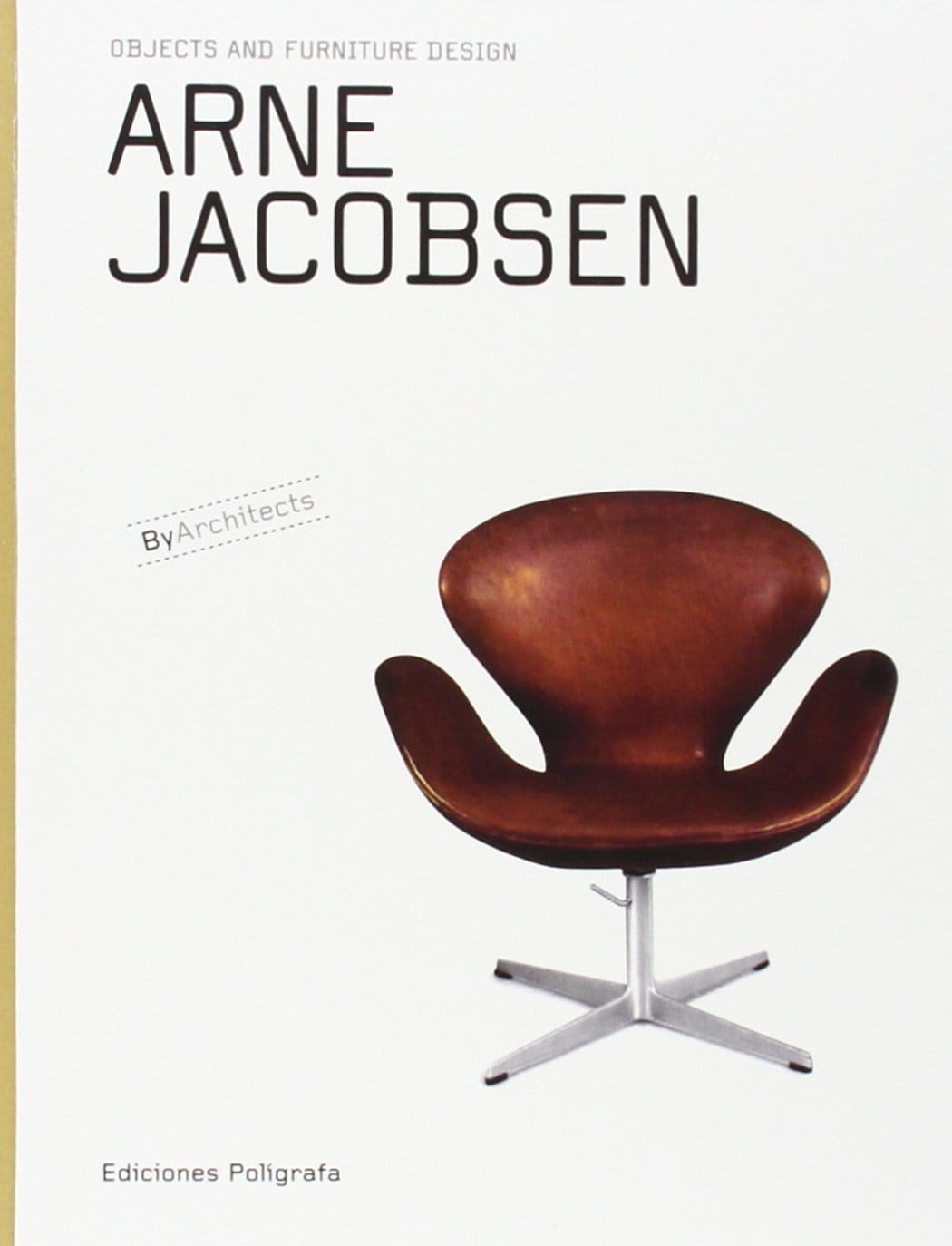
Arne Jacobsen: Objects and Furniture Design
Dachs, de Muga, and Hintze (Ediciones Polígrafa, 2010). Compact at 128 pages, but precise. This book focuses entirely on the furniture and objects, with technical drawings alongside photographs. If you want to understand the formal logic of the chairs without the architectural biography framing everything, this is the one to start with.
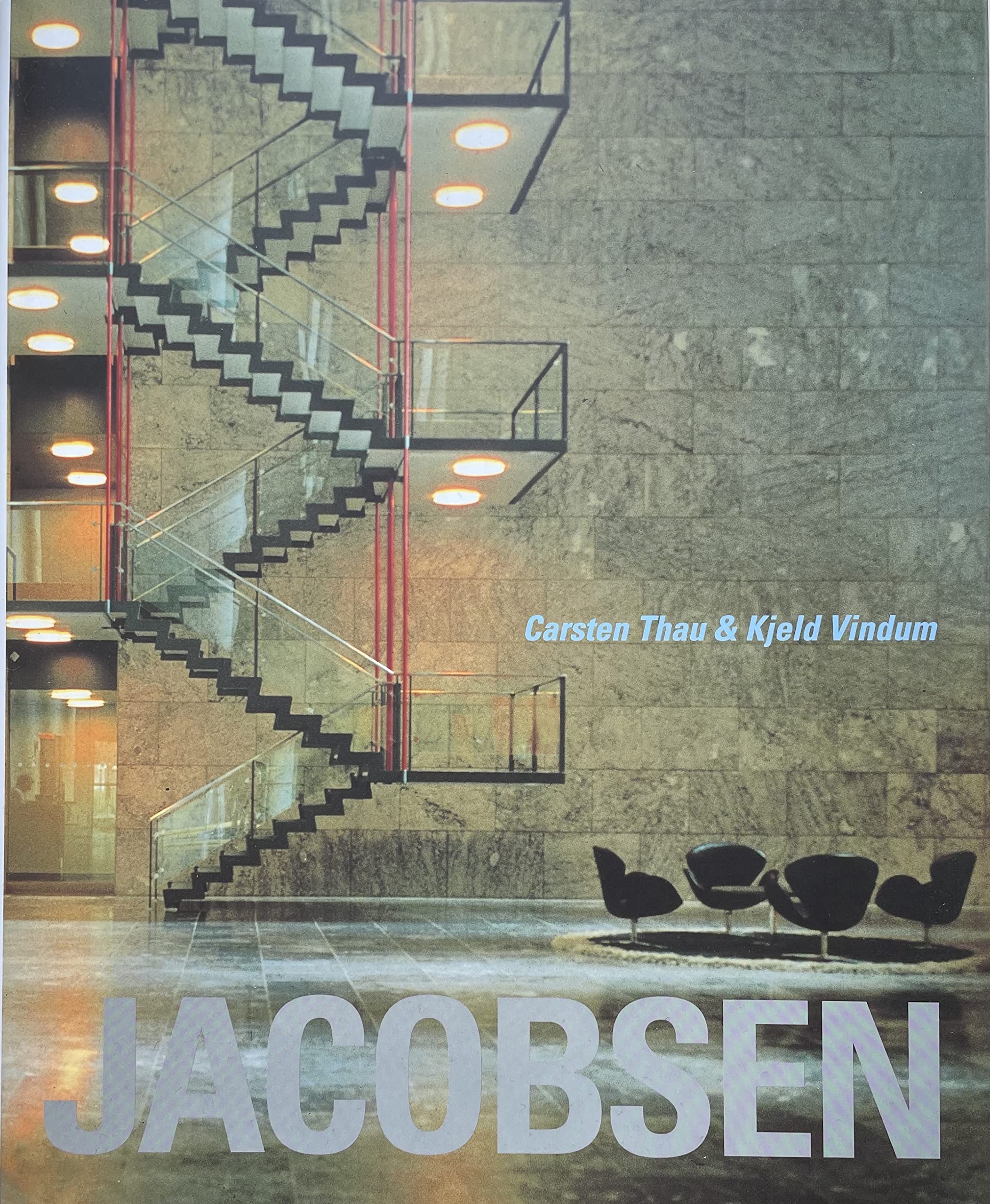
Arne Jacobsen
Thau and Vindum (Danish Architectural Press, 2023 revised edition, 559 pp). The definitive English-language monograph, a decade in the making. It covers the full arc from Jacobsen’s early neoclassical work to the late modern monuments, and treats the furniture in its architectural context, which is how Jacobsen understood it. The revised edition includes material not in the original publication.
Frequently Asked Questions
What chairs did Arne Jacobsen design?
Jacobsen designed several chairs that entered the canon of twentieth-century furniture: the Ant Chair (Model 3100, 1952), the Series 7 Chair (Model 3107, 1955), the Egg Chair (1958), the Swan Chair (1958), the Drop Chair (1958), and the Pot Chair (1959). The Ant, Series 7, Egg, and Swan are the most widely reproduced. All were designed in close collaboration with Fritz Hansen, which still manufactures the authenticated versions.
What is the Arne Jacobsen Egg Chair made of?
The original Egg Chair has a fibreglass inner shell as its structural form, covered with foam upholstery and an outer fabric or leather layer. The shell geometry is what gives the Egg its enclosing quality. It is not a conventional frame with cushions attached. Fritz Hansen produces the chair in fabric, leather, and premium leather options. The fibreglass shell is also what unlicensed versions most often skimp on: a plastic inner structure changes the chair’s acoustic and tactile qualities.
Why is Arne Jacobsen famous in design history?
Jacobsen is significant for two connected reasons. First, his total design philosophy, the idea that a building and all its contents should be conceived as a unified argument, produced the SAS Royal Hotel, which remains the most complete statement of that position in twentieth-century Scandinavian design. Second, the chairs that came out of that commission, particularly the Egg and Series 7, solved formal problems in plywood and fibreglass so precisely that they have remained in continuous production for more than sixty years. The formal correctness is the reason for the fame, not the other way around.
How much does an original Arne Jacobsen chair cost?
Fritz Hansen manufactures the licensed versions of all major Jacobsen chairs. At Design Within Reach in September 2026, the Ant Chair listed at $479, the Series 7 at $669, the Swan Chair from $5,799 and the Egg Chair from $10,499 in fabric. Upholstery and finish change the price. Chairs sold under Jacobsen’s name by other manufacturers are not authorized products.
What is the difference between the Egg Chair and the Swan Chair?
Both chairs were designed for the SAS Royal Hotel in 1958, but for different spaces. The Egg was designed for the lobby and reception, a chair that creates a private enclosure within a public room, holding the sitter in a still, enveloped posture. The Swan was designed for conversation areas: smaller, more open in its form, without the high shell back, conceived for two people sitting across from each other rather than one person sitting alone. The Egg is wider and heavier; the Swan is more active and suited to smaller spaces.
Is the Series 7 chair the same as the Ant chair?
No. The Ant (Model 3100, 1952) has three legs and a narrower, more compact profile. It was designed as a lightweight stacking chair for an institutional cafeteria. The Series 7 (Model 3107, 1955) is a four-legged refinement of the same plywood-bending principle: wider, more stable, and proportioned for domestic and commercial use rather than institutional stacking. Jacobsen developed the Series 7 by solving the structural limitations of the Ant’s three-legged base. Both chairs use the same single-sheet moulded plywood technique but produce substantially different sitting experiences.

About Joe Post
Joe Post holds an MFA in Art from California Institute of the Arts (CalArts) and has done additional graduate work at the School of the Art Institute of Chicago. He founded Art Design Ideas to write about design as cultural argument — the decisions, contradictions, and assumptions built into the objects we live with.