

Is Alessi a good brand? Yes. Alessi is an Italian design company founded in Omegna in 1921, known for commissioning architects and designers such as Richard Sapper, Michael Graves, Alessandro Mendini and Philippe Starck. It is a premium design brand rather than a luxury house: most pieces cost $50 to $300, the stainless steel classics are still made at its own factory in Italy, and its best-known objects, the Juicy Salif citrus squeezer and the 9093 kettle, sit in museum design collections.
So is Alessi a luxury brand? Not in the way that Hermès is. It is not mass-market either. What Alessi sells is the argument that a kitchen tool can make a cultural statement.
What kind of brand sells a $100 citrus squeezer that doesn’t squeeze citrus well?
Alessi is not selling you a citrus squeezer. It is selling you a citrus squeezer and an argument simultaneously. That distinction has driven the company since Alberto Alessi took over in the early 1970s and reframed it from a metalware factory into what he called “a factory of Italian design” (Smithsonian Magazine).
Alessi is not selling you a citrus squeezer. It is selling you a citrus squeezer and an argument simultaneously.
Giovanni Alessi founded the company in Omegna, Piedmont, in 1921 (Wikipedia). The 1983 Tea & Coffee Piazza project, commissioning eleven architects to design service objects, created what the New York Times called “a brand-new market for designer kitchenware.” The premium was cultural, not functional.
This is the tension at the center of Alessi’s design philosophy: artist collaborations below true luxury pricing. A Hermès tray runs over a thousand dollars. A Starck tray for Alessi runs $80 to $120. Different cultural registers entirely.
Is Alessi a luxury brand? The questions buyers actually ask before buying
Is Alessi considered a luxury brand?
No — not in the structural sense. Luxury brands gate access through price and the deliberate scarcity of desirability. Hermès constrains supply, Christofle requires in-store purchase, Baccarat runs its crystal in small numbered editions. Alessi does none of this. The A di Alessi line, the company’s entry-level and most playful range, starts around $30. Most standard Alessi objects run $80 to $200. Only the Officina Alessi line, which operates in small batches or limited editions with architects, reaches $300 to $600.
Alberto Alessi’s own vocabulary for what the company does is “democratic design.” The best design at prices below true luxury. In a 2023 interview with WWD, Alberto Alessi described the company’s project as refreshing a “brand myth” rather than chasing a luxury positioning. The myth is that good design should be accessible to people who care about it, not reserved for people who can afford not to care about anything.
The practical answer for buyers: Alessi is premium-priced mid-market design. You are paying more than you would for a kitchen object from a mass-market source, but significantly less than you would pay for comparable French silver service or Swedish crystal. What you are paying for is the design commission, the brand’s editorial curation over a hundred years, and the production quality that Italian metalware manufacturing still provides.
Where are Alessi products made?
Primarily in Italy. Cold-pressed stainless steel products form the heart of the Alessi catalog, and they are still manufactured at the company’s factory in Crusinallo, Omegna, the same location where Giovanni Alessi started the business in 1921. Products made in wood are also Italian-manufactured.
The picture becomes more complicated for plastic and newer product lines. As Fast Company reported, CEO Alberto Alessi described at least one tray collection as “designed in China, made in Italy” — a collaboration with Chinese designers that the Italian factory then produced. Some newer product lines manufactured in plastic are produced in China. Alessi’s website confirms operations in China, France, Germany, Italy, the United Kingdom, and the United States.
For buyers to whom Italian manufacturing specifically matters: the standard stainless steel objects, the colanders, the kettles, the classic trays, are Italian-made. Check the individual product page when country of origin is a buying criterion.
Why does Alessi cost more than ordinary kitchenware?
Three reasons, in order of weight.
First, the design commission. Alessi pays designer fees and royalties to every collaborator. Richard Sapper, Philippe Starck, Michael Graves, Alessandro Mendini, Ettore Sottsass: these are not staff designers working for a salary. They are commissioned professionals whose fee is built into the unit price. The cost of commissioning work from architects and artists at this level over a hundred years, across over 900 designers and 1,400 objects as catalogued by the company, is not trivial.
Second, production quality. Stainless steel products in the Alessi catalog use 18/10 grade steel, the same specification used in professional kitchen equipment. The tolerances are held to manufacturer standards designed for objects expected to last for decades. The Juicy Salif that Philippe Starck designed in 1990 is still in production, still sold at essentially the same quality standard.
Third, the cultural premium. The Museum of Modern Art in New York holds Alessi objects in its permanent design collection, as do the Metropolitan Museum of Art, the Victoria and Albert Museum, and the Pompidou Centre. When an object is in MoMA’s collection, the market prices that in. Collectors, interior designers, and design-educated buyers attach value to cultural recognition. Alessi has spent a hundred years earning it, and that history is part of what you pay for.
Is Alessi worth the price?
Depends on which object and what you want from it.
The Alessi Juicy Salif by Philippe Starck is not primarily a citrus squeezer, and buying it expecting it to function as a citrus squeezer is missing the point. Starck himself described it as a design object meant to start conversations, not as kitchen equipment. The squeezer drips; seeds get through. If your goal is to make juice efficiently, a $20 press does the job better. If your goal is to own the object through which Starck most clearly made his argument about what kitchenware could be, a sculptural provocation on a kitchen counter, then $100 is the right price.
The same logic does not apply uniformly across the catalog. The Alessi Max le Chinois colander, also by Starck, is genuinely superior kitchen equipment. The punched stainless steel has a formal discipline that cheaper alternatives lack, and it is also the most useful of the Starck–Alessi collaborations. The design premium here is real in functional terms, not just cultural ones.
The Juicy Salif drips. Seeds get through. Starck knew this. He said it was a design object, not a kitchen tool.
The 9091 kettle by Richard Sapper has a melodic brass whistle made of 18/10 stainless steel. Sapper designed it in 1983 with two small tuned vents that reproduce the notes mi and si. It boils water and makes music. It is also a well-made kettle at $150. The design fee is baked in, but so is the quality. That is the best case for Alessi: the objects in which the cultural and functional arguments converge.
How does Alessi compare to other design brands?
The comparison to design brands like Muji and HAY reveals something structural about what Alessi is doing.
Muji, priced from $30 to $60 for most kitchen objects, operates on a “no-brand” philosophy that is itself a brand position. The unbleached packaging, the absent logo, the stripped-down form: these are design decisions made by someone. Muji erases the individual designer to foreground the object’s use. Alessi makes the designer’s name part of the product. These are opposite propositions.
HAY, the Danish design company, priced roughly $30 to $200, employs a mix of in-house and commissioned designers, and its aesthetic is more geometric and color-focused than Alessi’s. HAY sits comfortably in the mid-range. Alessi sits above HAY on price, roughly $50 to $600 depending on line, and above it in cultural aspiration.
What distinguishes Alessi from both is the authorship model. You are not buying an anonymous functional object from Muji or a staff-designed contemporary object from HAY. You are buying a named designer’s response to a brief from a company that has been commissioning such responses for fifty years. That authorship is the product, alongside the object itself. Whether that authorship premium makes sense to you depends on how much the argument behind an object matters in your kitchen. For the best of Alessi’s catalog, the objects where the best Alessi products live up to the argument, it does.
What buyers get wrong about Alessi
- Buying counterfeits: The Juicy Salif, Anna G corkscrew, Michael Graves bird kettle, and 9091 are the most counterfeited design objects in this category after the Eames lounge chair. Counterfeits skip the designer royalty and substitute inferior steel. The formal shape may be approximately similar; the material and the cultural object are not. An Alessi counterfeit is not a budget-friendly version of the same thing. It is a different thing that happens to look similar.
- Treating Alessi as purely decorative: The objects are functional. The Juicy Salif does squeeze lemons, imperfectly but actually. The 9091 boils water. The Anna G corkscrew by Alessandro Mendini, designed in 1994, is a smiling figurine in chrome and resin that has been a best-seller since its first production. It opens wine bottles. Buying Alessi as shelf sculpture and never using the objects is a misreading of the brand’s own argument. Alberto Alessi designed for the kitchen, not the vitrine.
- Gifting confusion: Alessi has become a standard gift category, which creates a regular problem: the wrong object for the recipient. Gifting someone a $100 citrus squeezer who wants a practical kitchen is a gift for the person giving it, not the person receiving it. The A di Alessi line, with its lower price point and more cartoonish forms, is the better gifting tier for recipients whose design investment is uncertain. The Officina Alessi objects are for buyers who already know what they are looking for.
- Conflating Alessi with Italian luxury: Alessi is Italian design, not Italian luxury. Gucci, Bulgari, and Alessi are all Italian companies operating in premium segments, but the comparison ends there. Luxury brands sell access and exclusivity; Alessi sells the argument that design intelligence should not require access and exclusivity to obtain. These are opposite positions, and buyers who treat Alessi as a status good in the luxury register are misreading what the company says it is.
Shop the Collection
The objects in this section represent different positions within the Alessi catalog: the pure design argument, the functional premium, and the playful mid-range. All of them are valid choices. They are different answers to the question of what you want from an Alessi object.
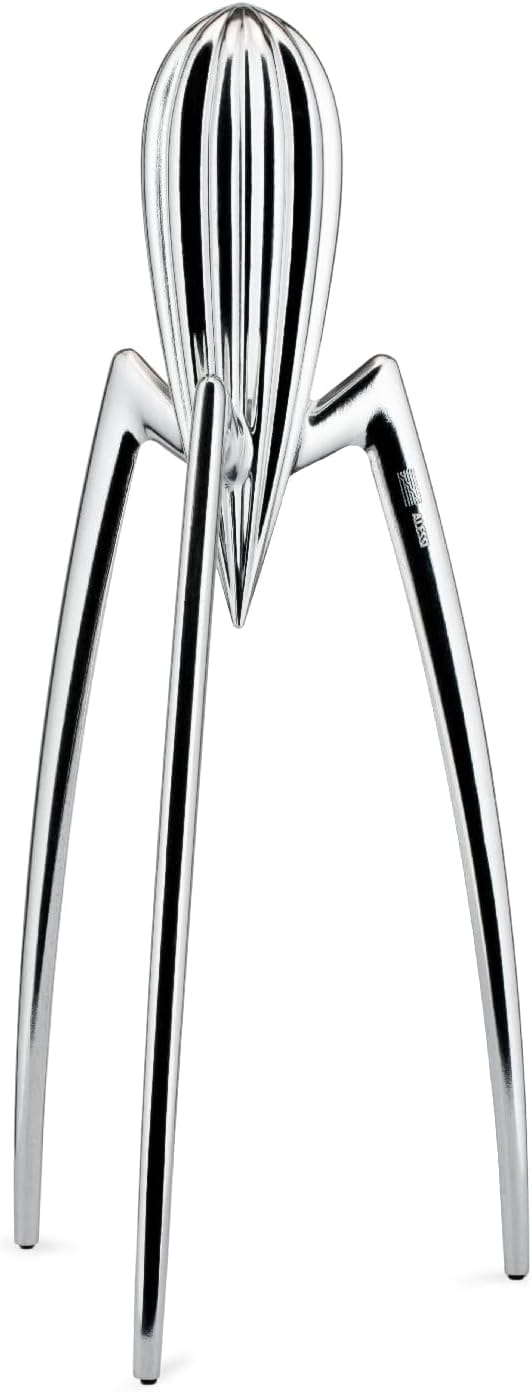
Alessi Juicy Salif
The object that best states what Alessi is. A functional tool that makes a cultural argument. Buy it knowing it does both, imperfectly and deliberately.
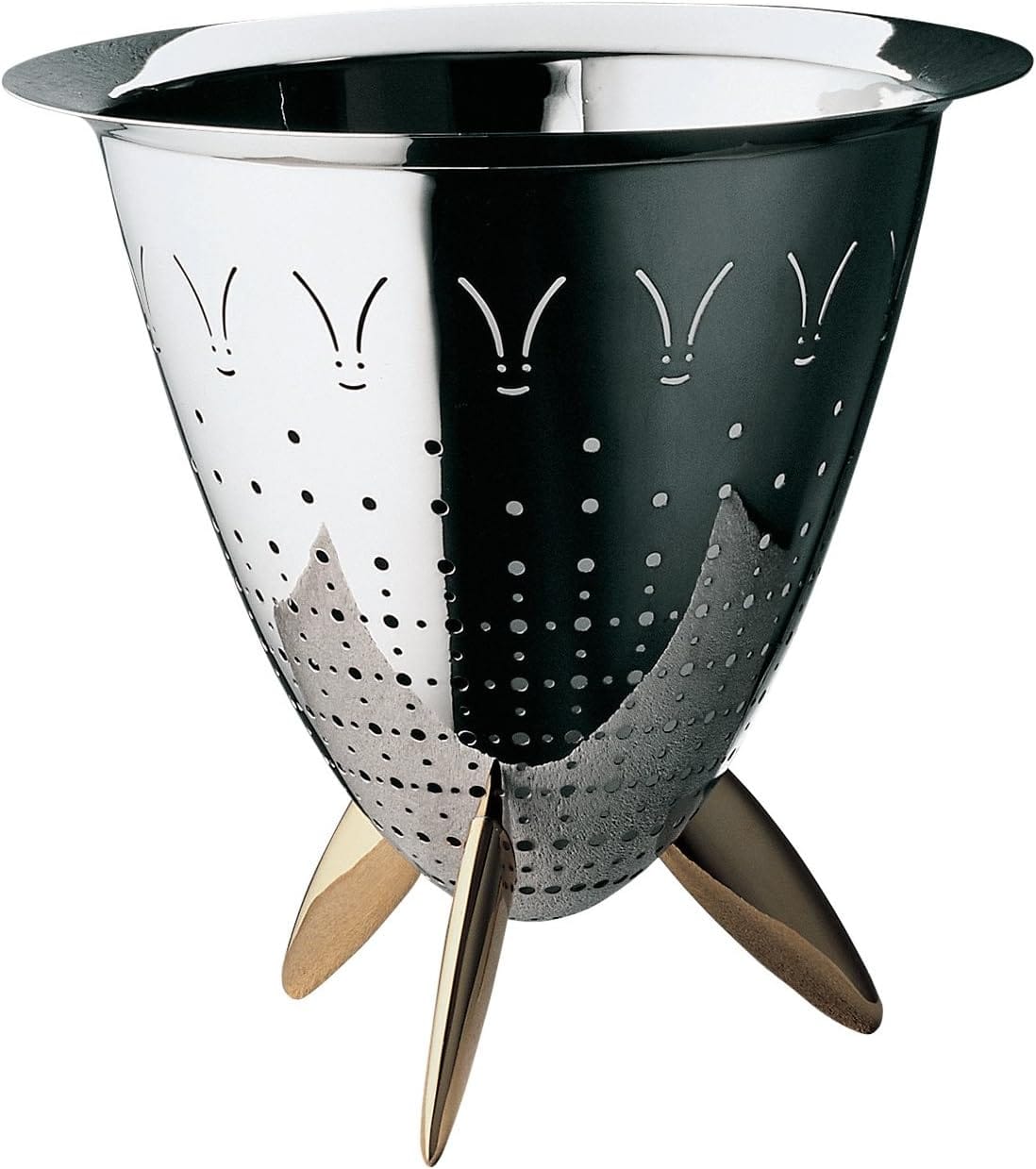
Alessi Max le Chinois Colander
The most useful of the Starck–Alessi objects. Punched stainless steel with formal discipline that cheaper alternatives miss entirely.
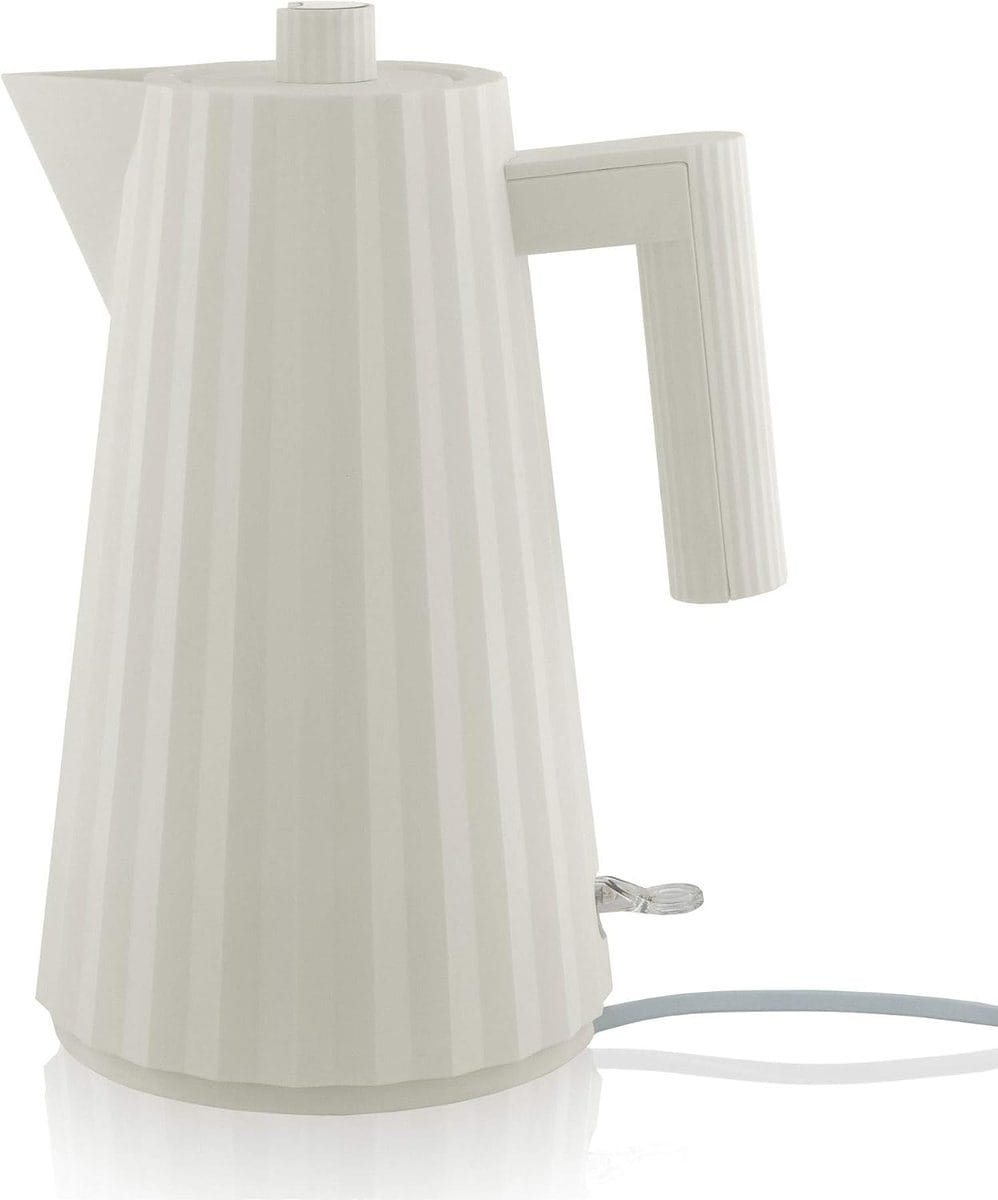
Alessi Plissé Electric Kettle
Michele De Lucchi’s pleated kettle is the practical end of the range: a 1500W US-plug appliance that still reads as an Alessi object on the counter, at a price well under the sculptural pieces.
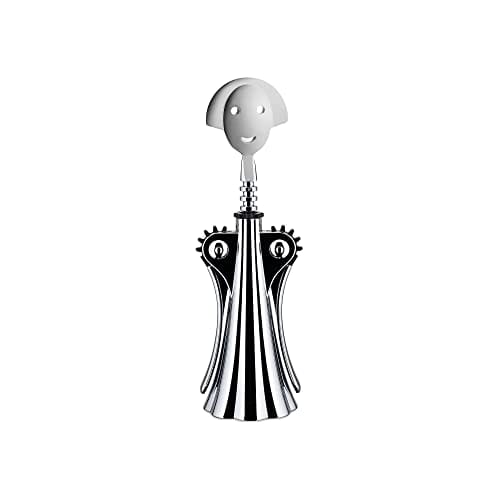
Alessi Anna G Corkscrew
Mendini’s 1994 corkscrew is the brand’s clearest example of Italian design irony. A smiling figurine that also opens wine, in continuous production for over thirty years.
Further Reading
Alberto Alessi wrote the most useful account of what the company is doing and why, and the book also serves as a history of Italian design’s postwar reinvention.
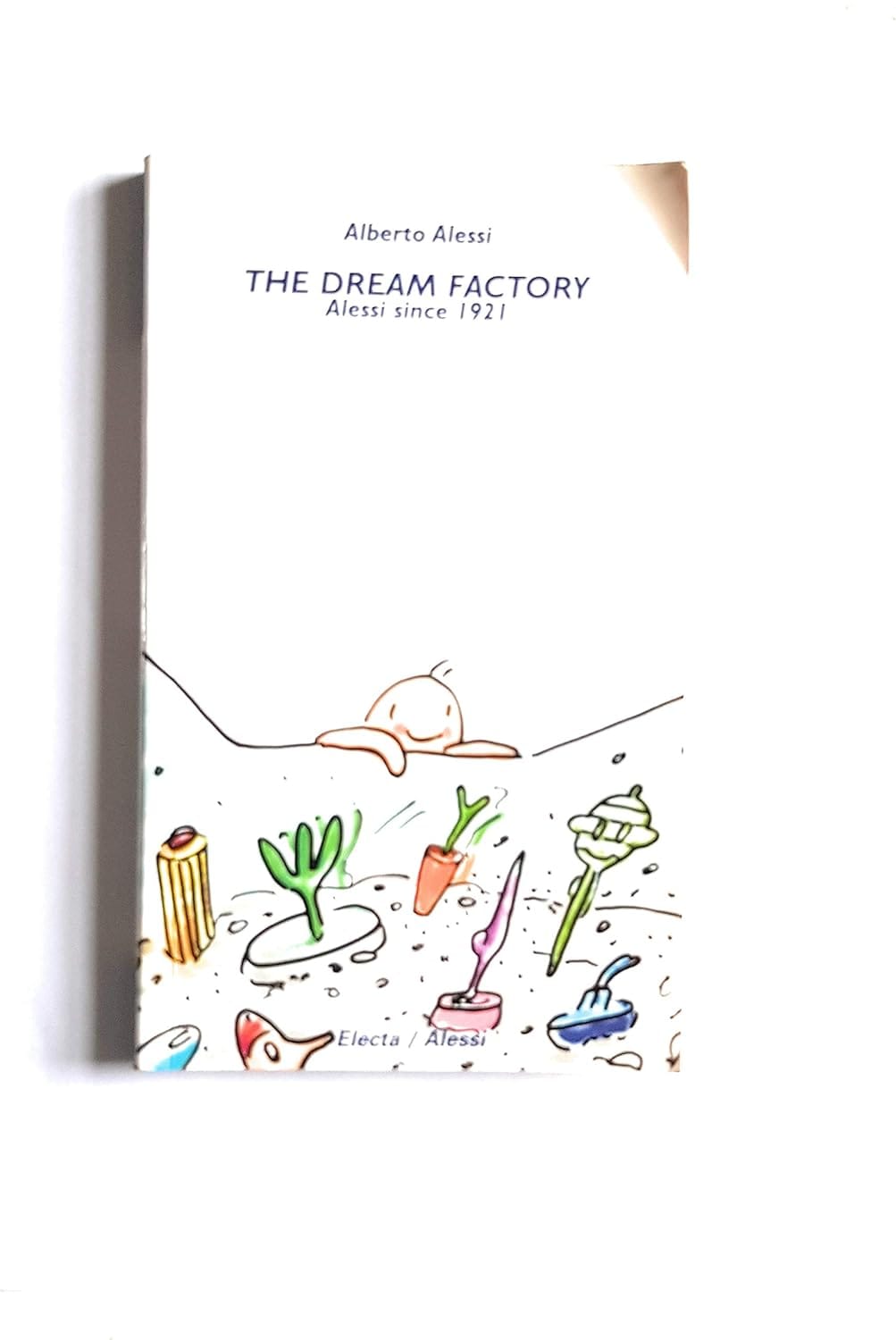
The Dream Factory: Alessi Since 1921
Alberto Alessi’s own account of the company’s design research philosophy. This is the primary source for understanding why the brand charges what it charges and commissions what it commissions. For anyone who wants to understand the logic behind the catalog rather than just the objects in it, this is where to start.
Frequently Asked Questions
Is Alessi a luxury brand?
No. Alessi is premium-priced design, not luxury in the structural sense. Luxury brands gate access through price and deliberate scarcity; Alessi’s A di Alessi line starts around $30. What Alessi sells is the cultural premium of design authorship: named designers commissioned to make everyday objects at prices below true luxury. The Officina Alessi line, in small batches or limited editions, reaches $300 to $600, which approaches luxury pricing, but the main catalog does not.
Is Alessi a good brand?
Yes, by the measures that matter at this price. The stainless steel classics come out of Alessi’s own factory in Crusinallo, Italy, in 18/10 steel, and the catalog carries fifty years of named design commissions. The best pieces, the 9091 kettle or the Max le Chinois colander, hold up in daily use. One caveat: some objects put the design argument ahead of function, so know which kind you are buying.
Are Alessi products made in China?
Some are, some are not. The core Alessi catalog, cold-pressed stainless steel products, is manufactured at the company’s factory in Crusinallo, Omegna, Italy. Wooden products are also Italian-made. Some newer product lines in plastic and some design collaborations with Chinese designers are manufactured in China. The company operates in multiple countries. For buyers to whom Italian manufacturing specifically matters, check the product page; the stainless steel classics are Italian-made.
Why is Alessi so expensive?
Three reasons: the design commission (Alessi pays fees and royalties to every collaborating designer, and has for fifty years), production quality (18/10 stainless steel and manufacturer tolerances designed for longevity), and cultural premium (objects in MoMA’s collection carry market recognition). You are also paying for a hundred years of the company’s editorial curation, which determines which designers get commissioned and which objects reach production.
What is the most expensive Alessi product?
The most expensive Alessi products are its limited-edition sterling-silver pieces, not anything in the everyday catalog. The “Tea & Coffee Piazza” (1983), a project with eleven architects including Michael Graves, Aldo Rossi, and Richard Meier, was issued in 99 numbered silver sets priced originally from roughly $12,000 to $60,000; individual sets still trade at auction around $18,000 to $20,000. The 2003 follow-up, “Tea & Coffee Towers,” with architects such as Zaha Hadid and Thom Mayne, reached about $50,000 a set. Inside the regular catalog the high end is far lower: Officina Alessi limited editions and large silver-plated trays run from the low hundreds into the low thousands.
Is Alessi worth the price?
For the objects where the design argument and the functional quality converge, the Max le Chinois colander, the 9091 kettle, the Anna G corkscrew, yes. For objects that are primarily cultural arguments, the Juicy Salif, rather than superior kitchen tools, worth the price depends on whether the argument matters to you. Alessi produces both kinds of object, and buyers should know which they are getting.
How does Alessi compare to other design brands?
Alessi sits above Muji and HAY on price and cultural aspiration. Muji erases the individual designer; Alessi makes the designer’s name the product. HAY occupies the mid-range with contemporary Danish-influenced design. Alessi’s distinctive position is the authorship model: you are buying a named designer’s response to a commission, alongside the object itself. For the best of the catalog, that authorship is real. It produced objects now held in museum collections that function well in actual kitchens.
Is Alessi a designer brand?
Yes, in the most literal sense. Almost every Alessi object is credited to a named designer, and the company has worked with hundreds of them, from Richard Sapper and Achille Castiglioni to Michael Graves, Aldo Rossi, Alessandro Mendini, Philippe Starck and Zaha Hadid. The designer’s name is part of what you buy.
What is Alessi most famous for?
Three objects: Philippe Starck’s Juicy Salif citrus squeezer (1990), Michael Graves’s 9093 kettle with its bird-shaped whistle (1985), and Richard Sapper’s 9090 espresso maker (1979), which won the Compasso d’Oro. More broadly, Alessi is famous for turning kitchenware into a field for architects and designers, starting with the Tea & Coffee Piazza project of 1983.
Alessi or Bialetti: which is better?
They answer different questions. Bialetti’s Moka Express, designed by Alfonso Bialetti in 1933, is the everyday Italian stovetop coffee maker and costs a fraction of Alessi’s. Alessi’s 9090 by Richard Sapper is a heavier, more carefully engineered object sold as design as much as equipment. For coffee on a budget, Bialetti. For an object you keep for decades and look at every morning, the Alessi.

About Joe Post
Joe Post holds an MFA in Art from California Institute of the Arts (CalArts) and has done additional graduate work at the School of the Art Institute of Chicago. He founded Art Design Ideas to write about design as cultural argument — the decisions, contradictions, and assumptions built into the objects we live with.