
Alessi makes kitchenware and table objects designed by over 300 architects and industrial designers since 1921. The best Alessi products span kettles, corkscrews, juicers, and fruit bowls — objects that perform a function while making a deliberate formal argument. Price range: under $30 to over $200.
Our Top Picks
These five objects cover the range of what Alessi actually does: serious design argument, Post-Modern wit, sculptural provocation, accessible character objects, and practical daily-use pieces. Each one earns its place for a different reason.
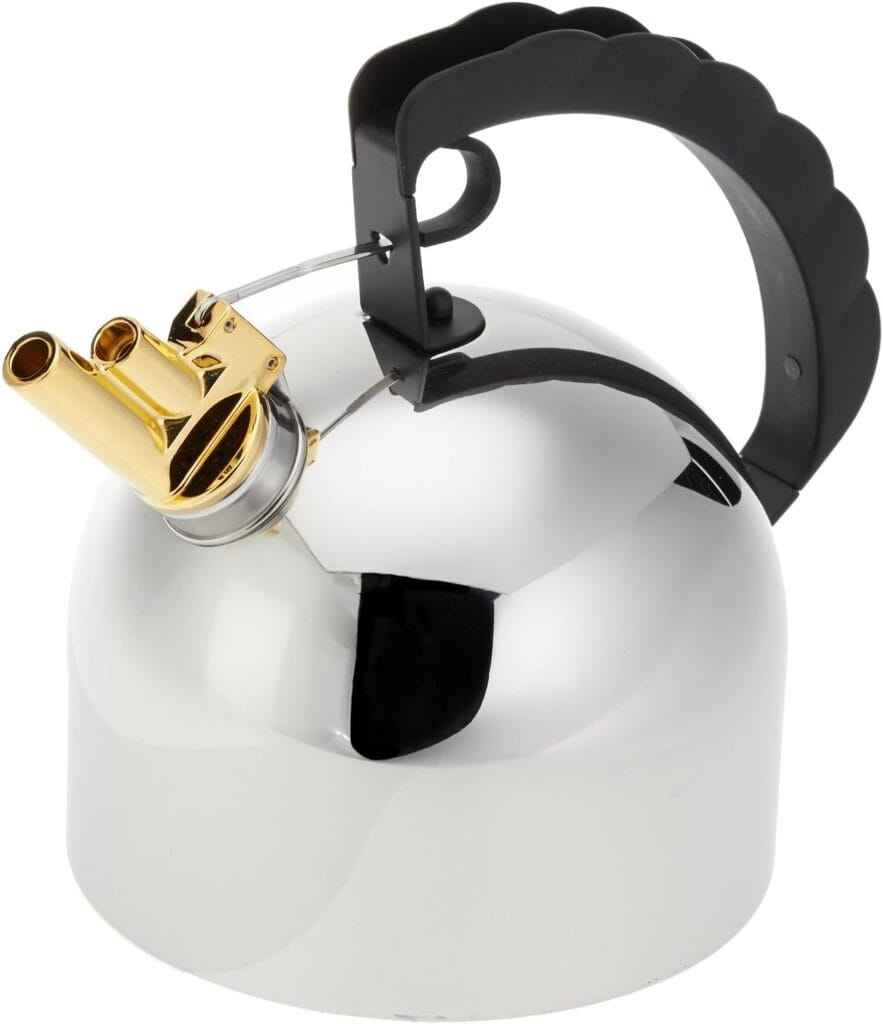
Alessi 9091 Kettle by Richard Sapper
Price range: Premium ($180–220)
The 1983 kettle that established Alessi as a design-serious company. Sapper had a Black Forest tuning-pipe maker produce a two-note brass whistle (mi and si) instead of a standard screech. The design decision that earns the premium price.
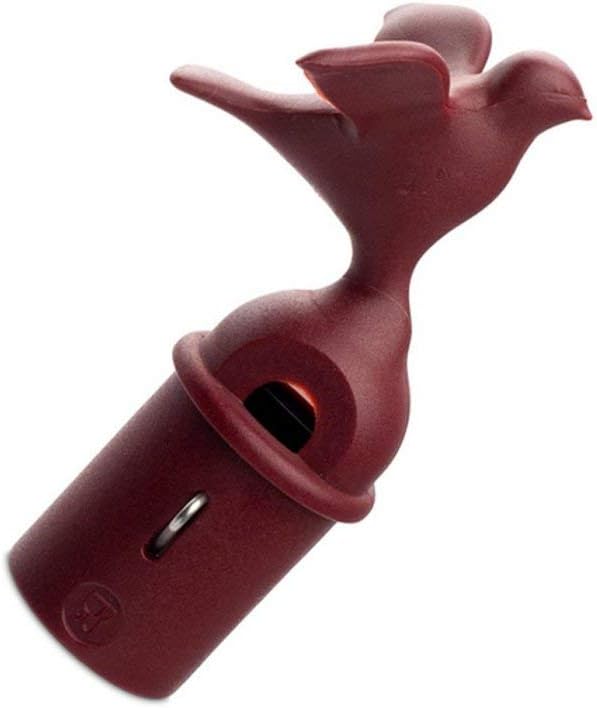
Alessi 9093 Bird Kettle by Michael Graves
Price range: Mid-Range ($110–140)
Alessi’s all-time best-selling object, designed in 1985. The plastic bird on the spout is Graves’ deliberate Post-Modern statement about design as cultural reference rather than pure utility.
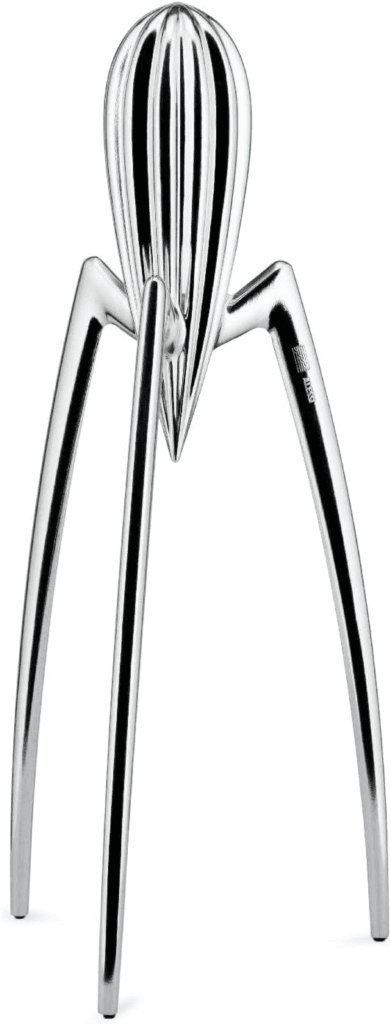
Alessi Juicy Salif Citrus Squeezer by Philippe Starck
Price range: Mid-Range ($95–110)
Cast polished aluminum, 29cm high, three-legged, in MoMA’s permanent collection. It drips every time you use it, which Starck considers irrelevant to the point. Sketched on a napkin while eating calamari at an Italian pizzeria.
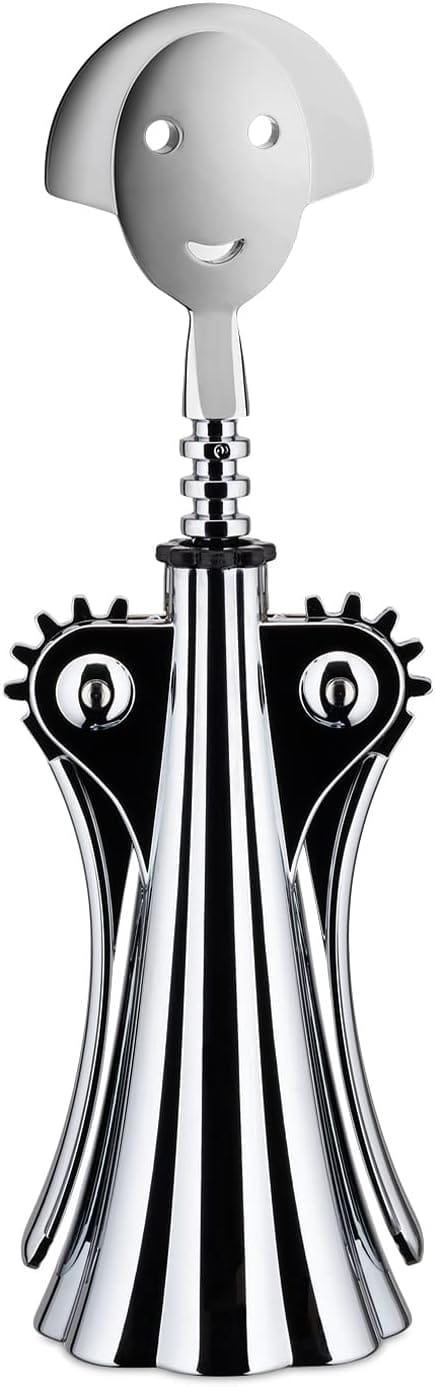
Alessi Anna G Corkscrew by Alessandro Mendini
Price range: Budget ($25–35)
Mendini drew a ballerina. Arms rise and fall with the corkscrew mechanism. Over 1.5 million sold. At under $80, the most accessible entry point into the Alessi design vocabulary.
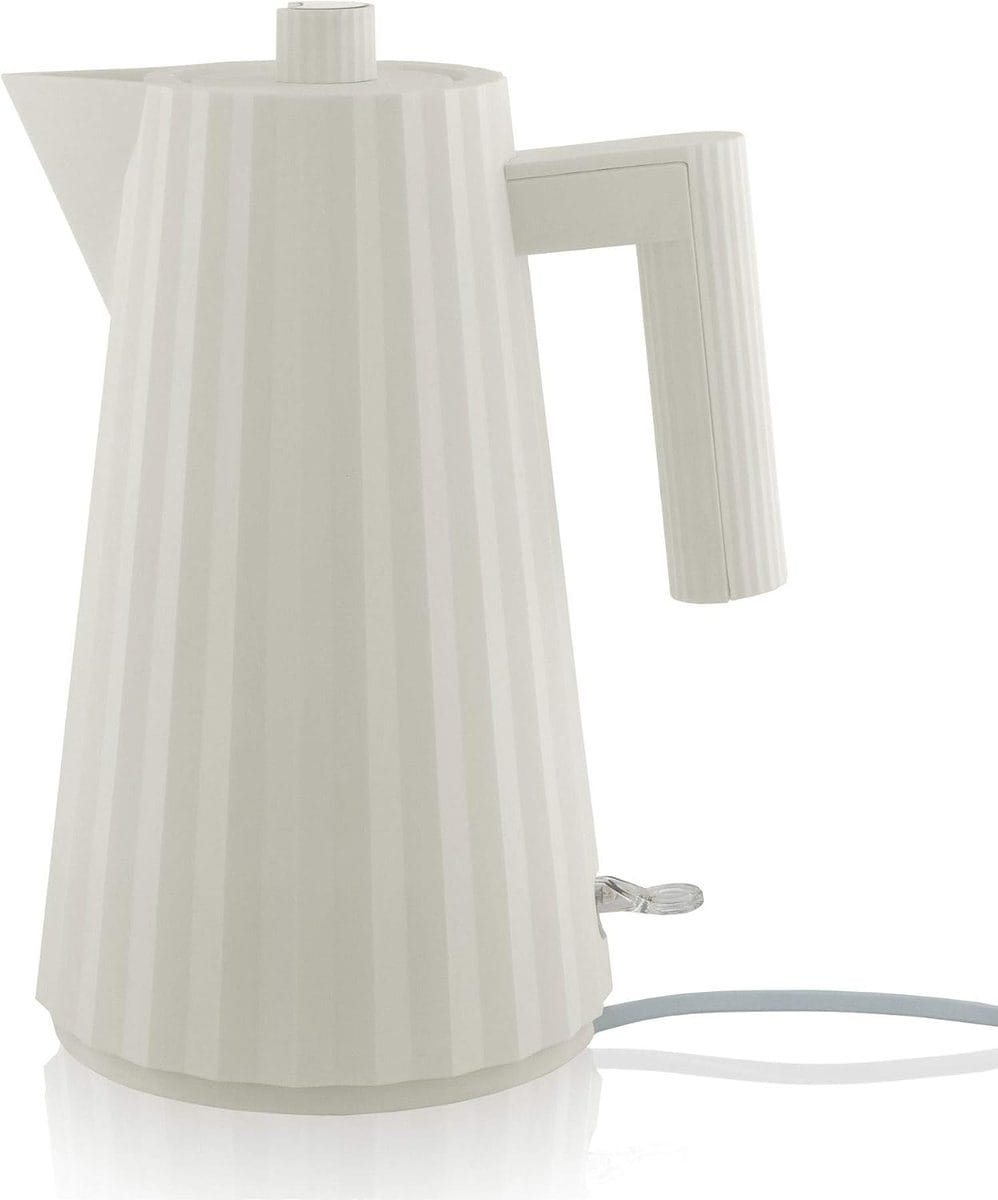
Alessi Plissé Electric Kettle by Michele De Lucchi
Price range: Mid-Range ($50–75)
De Lucchi’s folded-paper surface pattern brings the Alessi sensibility to a fully functional electric kettle. US plug, 1500W. The most practical point of entry for someone new to the brand.
Quick Decision Guide
- Best overall: Alessi 9091 Kettle by Richard Sapper: for someone who wants the single most significant object Alessi ever made, the one that changed how the company was perceived internationally.
- Best budget entry: Alessi Anna G Corkscrew by Alessandro Mendini: under $35, instantly recognizable, available in many colorways, and the clearest example of the “Family Follows Fiction” design ethos at an approachable price.
- Best premium statement piece: Alessi Juicy Salif by Philippe Starck: the one non-collectors know by name. It lives on a shelf more than on a countertop, which is the correct relationship to have with it.
- Best for daily use: Alessi Plissé Electric Kettle by Michele De Lucchi: the most practical object in the lineup. US plug, 1500W, and the surface detail means it doesn’t disappear into generic appliance territory.
- Best for espresso drinkers: Alessi 9090 Stovetop Espresso Maker by Richard Sapper: Compasso d’Oro winner in 1979 and in MoMA’s permanent collection. It still performs as well as a Bialetti, but the object itself carries more design history per square inch than almost anything else Alessi has made.
Full Comparison
| Product | Designer | Year | Best For | Price Range | Link |
|---|---|---|---|---|---|
| 9091 Kettle | Richard Sapper | 1983 | Stovetop kettle, best overall | Premium ($180–$220) | Buy on Amazon |
| 9093 Bird Kettle | Michael Graves | 1985 | Stovetop kettle with character | Mid-Range ($110–$140) | Buy on Amazon |
| Juicy Salif | Philippe Starck | 1990 | Citrus squeezer / sculpture | Premium ($95–$110) | Buy on Amazon |
| Anna G Corkscrew | Alessandro Mendini | 1994 | Budget entry point | Budget ($25–$35) | Buy on Amazon |
| Plissé Electric Kettle | Michele De Lucchi | — | Daily-use electric kettle | Mid-Range ($50–$75) | Buy on Amazon |
| 9090 Espresso Maker | Richard Sapper | 1979 | Stovetop espresso | Mid-Range ($100–$160) | Buy on Amazon |
| Girotondo Fruit Bowl | Giovannoni & Venturini | 1989 | Decorative serving piece | Budget ($35–$50) | Buy on Amazon |
What the best Alessi products get right and where each falls short
Alessi 9091 Kettle by Richard Sapper
Pros:
- The melodic two-note brass whistle (tuned to mi and si) is one of the most debated design decisions in 20th-century product design. Not decoration, but an argument about what a kettle could say.
- 18/10 stainless steel, mirror polished. Durable and as good-looking after twenty years as the day it came out of the box.
- The object that repositioned Alessi from Italian metalwork manufacturer to international design laboratory; owning one means owning that history.
- Still in production, still available new. Not a collectible that requires a secondary market.
Cons:
- At $180–$220, it is a kettle that costs more than some people’s entire kitchen appliance budget.
- Stovetop only, no electric version; requires a gas or compatible induction range.
- The polished steel surface shows fingerprints immediately and needs regular maintenance to keep the mirror finish.
Who it’s for: Someone who wants the most historically significant object in Alessi’s catalog and is willing to pay for what it represents, not just what it does.
Why it stands out: No other kettle in the world has a whistle tuned to two musical notes. That is not a specification. It is a position.
Alessi 9093 Bird Kettle by Michael Graves
Pros:
- Alessi’s best-selling object of all time: the proportions work at any scale, and the bird whistle does what it was designed to do — it makes you smile when the water boils.
- Stainless steel body with a polyamide handle. The handle stays cool and the body is durable; the material combination is better than it sounds.
- Available in multiple colorways. The light blue version has become the canonical one, but the red and yellow read as equally deliberate Post-Modern choices.
- More accessible price point than the 9091 without sacrificing the design pedigree.
Cons:
- The Post-Modern bird has become so recognizable that it is now something of a cliché. You will see it in every design-conscious kitchen, which diminishes the wit slightly.
- The plastic bird whistle component can wear over time with heavy daily use.
- Graves designed it as a cultural statement, not an ergonomic tool. The handle angle is fine, but this is not an object optimized for comfort.
Who it’s for: Someone who wants a genuine Alessi object at a mid-range price, and who understands that the bird is a joke worth getting.
Why it stands out: Graves described it as mixing European art, American pop, and pre-Columbian cultural references. Whether or not you believe that, the result is the most cheerful stovetop kettle ever made.
Alessi Juicy Salif Citrus Squeezer by Philippe Starck
Pros:
- Cast aluminum, mirror polished. The material and finish make it look like something between a marine creature and a spacecraft, which is entirely intentional.
- MoMA permanent collection; the Met holds one; the V&A holds one. This is not a kitchen tool that happens to be in museums. It is a museum object that happens to be sold as a kitchen tool.
- The most famous Alessi object by name recognition among non-design-literate buyers, which gives it a conversation-starting function that no squeezer can match.
- At around $100, relatively accessible for a piece of design history.
Cons:
- It is a poor juicer: citric acid corrodes the uncoated aluminum, and the three-legged stance channels juice onto the counter rather than into a glass.
- Starck is said to have designed it on a napkin at a restaurant in Camogli. The story is charming, but the functional shortcomings are real and not charming in daily use.
- The polished aluminum scratches and oxidizes with citrus contact. If you actually use it to squeeze lemons, it degrades quickly.
Who it’s for: Someone who wants the Alessi object that most people recognize by sight and is honest with themselves that it will live on a shelf, not on a cutting board.
Why it stands out: Alessi sold a juicer that doesn’t juice well because the argument about form was more important than the function. The market responded by buying hundreds of thousands of them.
Alessi Anna G Corkscrew by Alessandro Mendini
Pros:
- At $25–$35, the most affordable way to own a piece of canonical Alessi design from a named designer.
- The figural form (a woman in a dress, with a face) launched the entire Anna family of related objects (Anna bottle stopper, Anna pepper mill, etc.) and the broader “Family Follows Fiction” product ethos.
- Available in over a dozen colorways. The different versions read as distinct characters, not just color variants.
- Zamak chrome body with thermoplastic resin dress. Durable for daily use in a way that some more expensive Alessi objects are not.
Cons:
- The corkscrew mechanism itself is functional but not exceptional. There are better corkscrews at this price point if function is the only criterion.
- The figural design reads as whimsy; if your kitchen aesthetic runs toward the austere, Anna G will look out of place.
- Small enough that it gets lost in a drawer. The visual impact is best when it is displayed, not stored.
Who it’s for: Someone who wants their first Alessi object and wants to spend under $35 on something that has a real design story behind it.
Why it stands out: Mendini treated the corkscrew as a character rather than a tool, which is the “Family Follows Fiction” thesis in its simplest form.
Alessi Plissé Electric Kettle by Michele De Lucchi
Pros:
- Fully functional electric kettle with 1500W and a US-compatible plug. Unlike the stovetop kettles, this one works with any kitchen setup.
- De Lucchi’s folded thermoplastic surface brings the Alessi aesthetic to a price point under $75, making it the most accessible Alessi object that is a daily appliance.
- Available in multiple colors (white, grey, light blue). The surface texture means the color reads as a deliberate design choice rather than appliance default.
- The most practical entry point for someone who wants to own an Alessi object that gets used every morning.
Cons:
- Not a historical landmark. De Lucchi’s Plissé does not have the design history of the Sapper kettles or the Starck squeezer; this is a contemporary product that works well but does not carry the same weight.
- The thermoplastic body is less premium in feel than stainless steel Alessi objects.
- The folded-surface aesthetic is distinctive but will not appeal to buyers who want the cleaner geometry of the stovetop line.
Who it’s for: Someone who needs an electric kettle and wants it to be an Alessi object, prioritizing daily function without abandoning the design sensibility entirely.
Why it stands out: The most usable Alessi object in this guide. The surface detail is the only reason it does not disappear into the category of generic electric kettles.
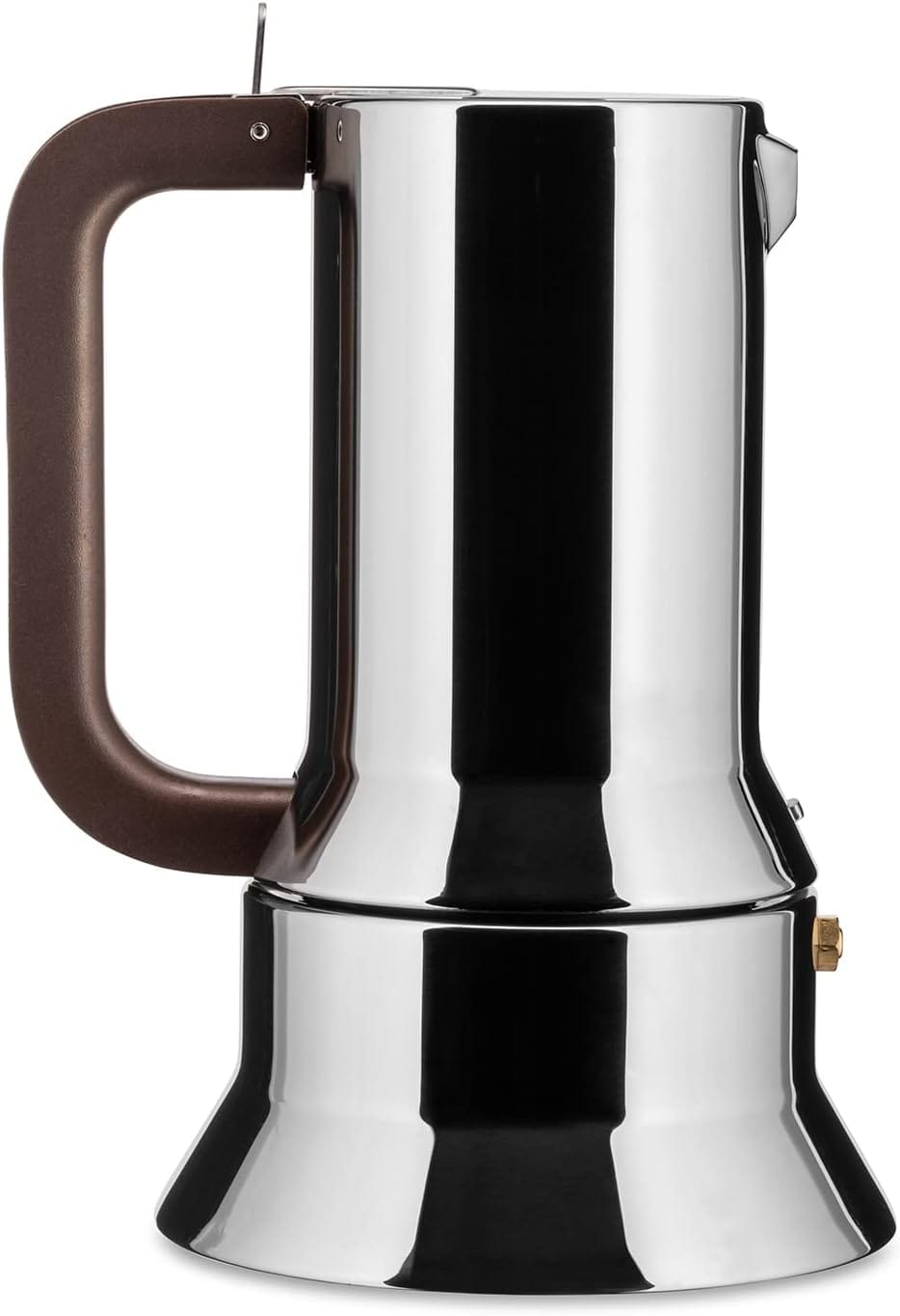
Alessi 9090 Stovetop Espresso Maker by Richard Sapper
Price range: Mid-Range ($100–160)
Compasso d’Oro winner in 1979 and in MoMA’s permanent collection. Performs as well as a Bialetti, but the object carries more design history per square inch than almost anything else Alessi has made.
Alessi 9090 Stovetop Espresso Maker by Richard Sapper
Pros:
- Compasso d’Oro winner in 1979, the most prestigious design award in Italy. The 9090 was the first stovetop espresso maker in Alessi’s history to receive it.
- MoMA permanent collection. The anti-drip spout and lever lock closure were design innovations in 1979 that have since become standard features elsewhere.
- Performs as well as a Bialetti Moka Express for the actual task of making espresso. The form advantage is significant, but the function is not compromised.
- Available in a 6-cup size that suits both single drinkers and small households.
Cons:
- At $100–$160, it costs roughly two to three times a comparable Bialetti. The premium is entirely for design history, not additional function.
- Stovetop only; requires gas or compatible induction.
- The stainless steel body shows heat discoloration over time with high-flame use.
Who it’s for: An espresso drinker who wants the most award-recognized kitchen object Alessi has ever made and is fine paying for that distinction.
Why it stands out: The 9090 is what Alessi was before the Post-Modern collaborations with Graves and Starck. Sapper’s engineering-as-argument approach, before the company discovered wit.
Alessi Girotondo Fruit Bowl by Stefano Giovannoni and Guido Venturini
Pros:
- The hand-in-hand figure silhouettes punched from stainless steel along the rim are Alessi’s most widely recognized decorative motif. The Girotondo line (bowls, trays, breadstick holders) applies the same motif across practical objects.
- At $35–$50, the fruit bowl is the most useful form the Girotondo motif takes. It works daily without requiring care beyond normal stainless handling.
- The perforated figures are a design statement that does not require explanation. Even buyers who cannot name Giovannoni or Venturini recognize the form immediately.
Cons:
- The Girotondo motif has been widely copied. Cheaper imitations are common enough that the original reads as less distinctive than it once did.
- The decorative character means it works in kitchens with some tolerance for personality. It will look wrong in an aggressively minimalist space.
- A di Alessi sub-line branding (not the main Alessi line) may matter to collectors who want the primary brand.
Who it’s for: Someone who wants an Alessi object that serves a daily household function at an accessible price, and who appreciates the figurative motif as a design choice rather than kitsch.
Why it stands out: Giovannoni and Venturini launched the “Family Follows Fiction” design direction at Alessi with this motif in 1989. The Girotondo fruit bowl is the most practical form that founding idea has taken.
Why Alessi objects look like nothing else in your kitchen
Alberto Alessi has described the company as “a research laboratory in the applied arts” — not a manufacturer producing objects for markets, but a collaborator commissioning formal arguments from designers and sending the results into homes. That framing matters when you are deciding which Alessi object to buy, because you are not choosing between kitchen tools. You are choosing which argument to live with.
The company was founded in 1921 in Omegna, Piedmont. Giovanni Alessi and his brother, Fratelli Alessi Omegna (FAO), started in brass and nickel silver. The design-collaboration model emerged under Alberto Alessi’s leadership, beginning with Achille Castiglioni and Richard Sapper in the 1970s, then expanding through the 1980s to Michael Graves, Aldo Rossi, and Philippe Starck. By the 1990s, Stefano Giovannoni and Alessandro Mendini were driving the “Family Follows Fiction” thematic direction, producing objects designed to provoke emotional response rather than functional satisfaction.
The result is in permanent collections at MoMA, the Metropolitan Museum, the V&A, and the Centre Pompidou. For a fuller account of how Alessi became design’s most prolific collaborator, see Alessi’s full design history.
Frequently Asked Questions
What are the most famous Alessi products?
The most famous Alessi products are the 9093 Bird Kettle (Michael Graves, 1985), the 9091 Kettle (Richard Sapper, 1983), the Juicy Salif citrus squeezer (Philippe Starck, 1990), the Anna G corkscrew (Alessandro Mendini, 1994), the 9090 stovetop espresso maker (Richard Sapper, 1979, the first Alessi object acquired by MoMA), and the Girotondo bowl and tray line (Stefano Giovannoni and Guido Venturini, 1989). The Bird Kettle is the best-seller by volume; the Juicy Salif is the most recognizable as a design icon.
What is the most popular Alessi product?
The 9093 Bird Kettle by Michael Graves is Alessi’s all-time best-selling object. Designed in 1985, the stainless steel kettle with the plastic bird whistle on the spout has sold in the millions and is the object most people picture when they hear the Alessi name. The 9091 Kettle by Richard Sapper is arguably more significant in design history, but the Bird Kettle outsells it.
Why is the Juicy Salif so famous if it barely works as a juicer?
Because Starck designed it as a sculptural provocation rather than a kitchen tool, and Alessi sold it on those terms. The Juicy Salif (1990) has three aluminum legs that conduct citrus juice onto the counter rather than into a glass, and the uncoated aluminum corrodes with prolonged citrus contact. Starck is said to have sketched it on a napkin at a restaurant in Camogli. The object’s fame is inseparable from its dysfunction: it forces the question of whether function is the only thing that matters in a designed object. MoMA, the Met, and the V&A thought the answer was no.
What are the best Alessi products for someone on a budget?
The Anna G Corkscrew by Alessandro Mendini ($25–$35) is the most affordable entry point into canonical Alessi design from a named designer. The Girotondo Fruit Bowl ($35–$50) is the most useful budget option, a daily-use object with the brand’s most recognizable decorative motif. Both are in the A di Alessi sub-line, which uses the same design ethos at slightly more accessible price points.
Are Alessi products worth the price?
Depends entirely on what you are paying for. If you are buying the 9091 Kettle to boil water, there are better-performing kettles at a fraction of the price. If you are buying it because it is one of the most significant product design objects made in the last fifty years and you want to use it every morning, the price reflects that. The Plissé Electric Kettle and the Anna G Corkscrew are the exceptions. Both are priced competitively against non-design alternatives and deliver a better daily experience than their price tier usually offers.
Where are Alessi products made?
Alessi products are manufactured in Italy, primarily at the company’s facilities in Omegna, Piedmont, the same region where Giovanni Alessi founded the company in 1921. Some products in the A di Alessi sub-line use manufacturing partners elsewhere, but the main line is Italian-made.
What is the difference between Alessi and A di Alessi?
A di Alessi is Alessi’s sub-brand, positioned at more accessible price points with slightly simpler materials. The Anna G Corkscrew and the Girotondo line both appear under the A di Alessi label. The design ethos is the same. Alessi still commissions the designers and applies the same formal standards, but the manufacturing materials are typically less expensive. Collectors who care about brand provenance may prefer the primary Alessi line; buyers who want the design at a lower entry price will find A di Alessi delivers it.
For the broader context of this work, see the Design Brands & Ateliers hub — a guide to the brands and studios driving contemporary design.

About Zoe Post
Zoe Post holds a BFA and a Master of Architecture from the School of the Art Institute of Chicago. She now works as a product marketing leader at an architectural product design firm, bringing hands-on industry perspective to everything she writes. At ADI she covers contemporary artists, textile and pattern design, and the design objects that sit at the boundary of art and function.