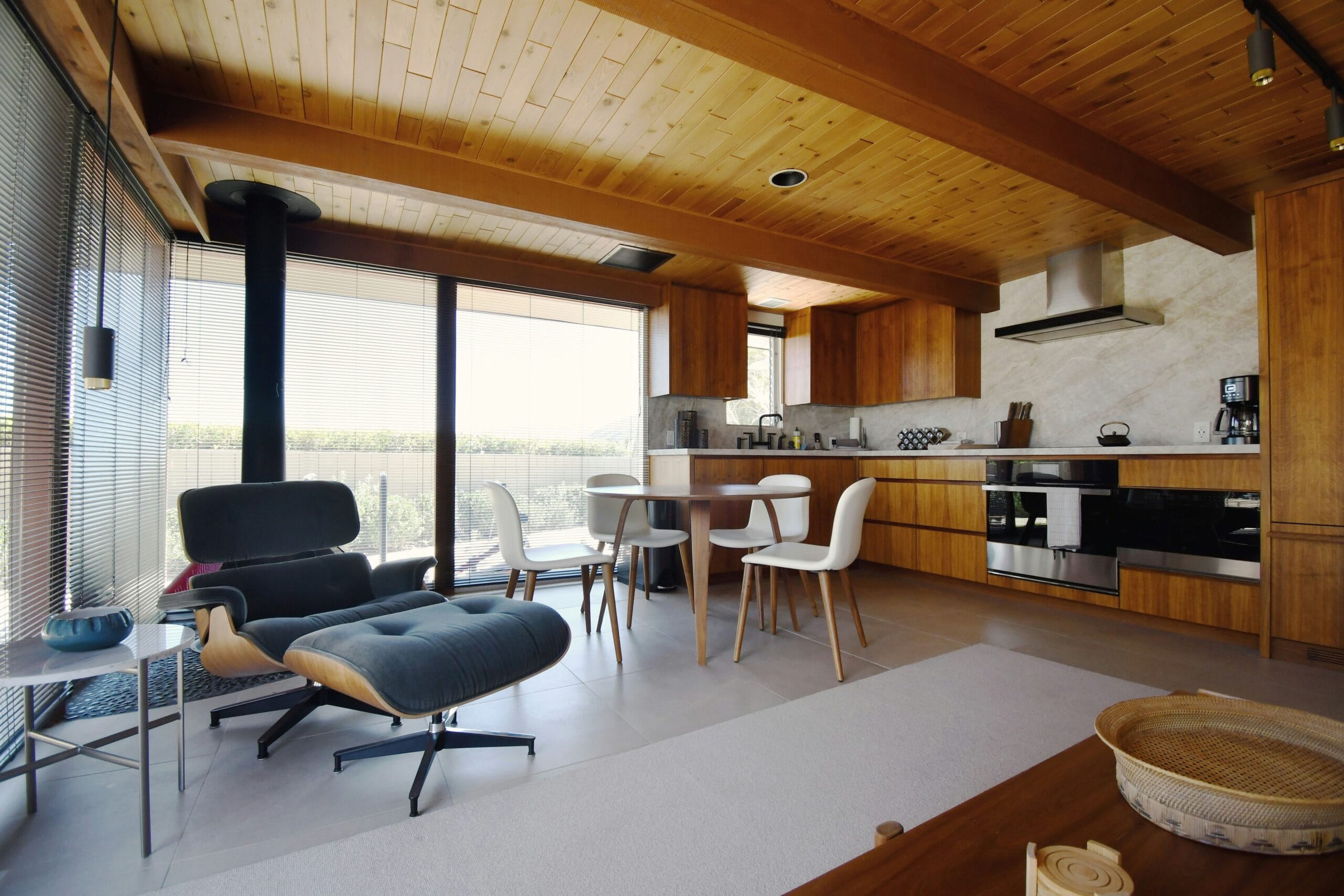
Design brands make an argument with every object they produce. Alessi argues that a kettle can provoke thought. Areaware — which closed in May 2025 — argued that a toy should make you look again. Marimekko argues that a pattern should outlast fashion. HAY argues that design intelligence should be accessible at everyday prices. Each brand staked out a position on what designed objects are for.

Three design brands, three arguments for what objects should do
Most homeware companies make objects. Design brands make positions. Alessi, founded in 1921 in Omegna, Italy, argues that a kettle can carry intellectual content — treating an everyday tool as a proposition. Areaware, founded in 2005 in Brooklyn and closed May 1, 2025, argued that an object should make you stop and look again. Marimekko, founded in Helsinki in 1951, argues that a pattern can carry the same cultural weight as a painting. Three brands, three different answers to the same question: what is a designed object actually for? If you’re deciding between Alessi and Areaware, the Alessi vs Areaware comparison covers the trade-offs directly.
These brands sit alongside the design legends who shaped the industry and the iconic furniture that defines our built environment. Together they represent the full argument for what designed objects can be.
What each brand was actually arguing
Alessi: objects that make you think
Michael Graves designed the 9093 kettle for Alessi in 1985. It has a bird-shaped whistle on the spout. The bird serves no ergonomic purpose — it doesn’t improve the whistle, doesn’t make the steam louder, doesn’t tell you anything the sound alone wouldn’t tell you. That’s the argument. Alessi wasn’t making a better kettle. Alessi was asking what a kettle could be if you treated it as a proposition instead of a tool.

Over 2 million units of the 9093 have sold. It’s in MoMA’s permanent collection, and in the Metropolitan Museum, the V&A in London, the Pompidou Centre, and the Stedelijk Museum in Amsterdam. Alessi evaluates between 600 and 1,000 design projects per year and works with more than 300 designers globally. Not all of those result in something as legible as the Graves kettle. The 1990s “Family Follows Fiction” theme produced Alessandro Mendini’s Anna G corkscrew — a figure-shaped object that drew sharp disagreement among designers and buyers alike. But the volume of the program is itself an argument: this is what it looks like when a company treats object-making as research.
The Alessi Michael Graves 9093 Kettle is the object to start with. Read the Alessi design profile for the full argument the brand has been making since the 1970s, or go directly to the best Alessi kettles if you’re ready to buy.
Areaware: objects that make you look again
The Cubebot is a small figure made from beechwood. It articulates at the joints: arms, legs, neck. When you fold it flat and tuck the limbs in, it collapses into a cube. That’s it. It doesn’t do anything useful. It sits on your desk and makes you pick it up.
That’s what Areaware was selling: the moment of looking again. Their catalog ran to thousands of products over twenty years — puzzles and candles and desk objects and toys. The consistent question underneath all of it was: what happens if a designed object refuses to be decorative? The Cubebot refuses. It’s a toy that becomes a geometric solid that becomes a toy again.
Areaware closed in May 2025. The objects still on Amazon are existing inventory. New production has ended, which means the catalog is now fixed. What exists is what exists. The Areaware Cubebot Micro is one of the clearest things they ever made, and there’s no guarantee how long stock will last. See the full Areaware profile for the broader catalog, or browse Areaware objects still available on Amazon.
Marimekko: objects that carry a pattern as cultural argument
In 1964, Maija Isola designed the Unikko — Finnish for poppy — against Armi Ratia’s explicit instructions. Ratia had decided that Marimekko would not use flowers. Flowers were what every other textile company was doing. Isola drew one anyway: a large-scale poppy with bold outlines and flat color. Ratia put it into production. It became the most reproduced pattern in the brand’s history.
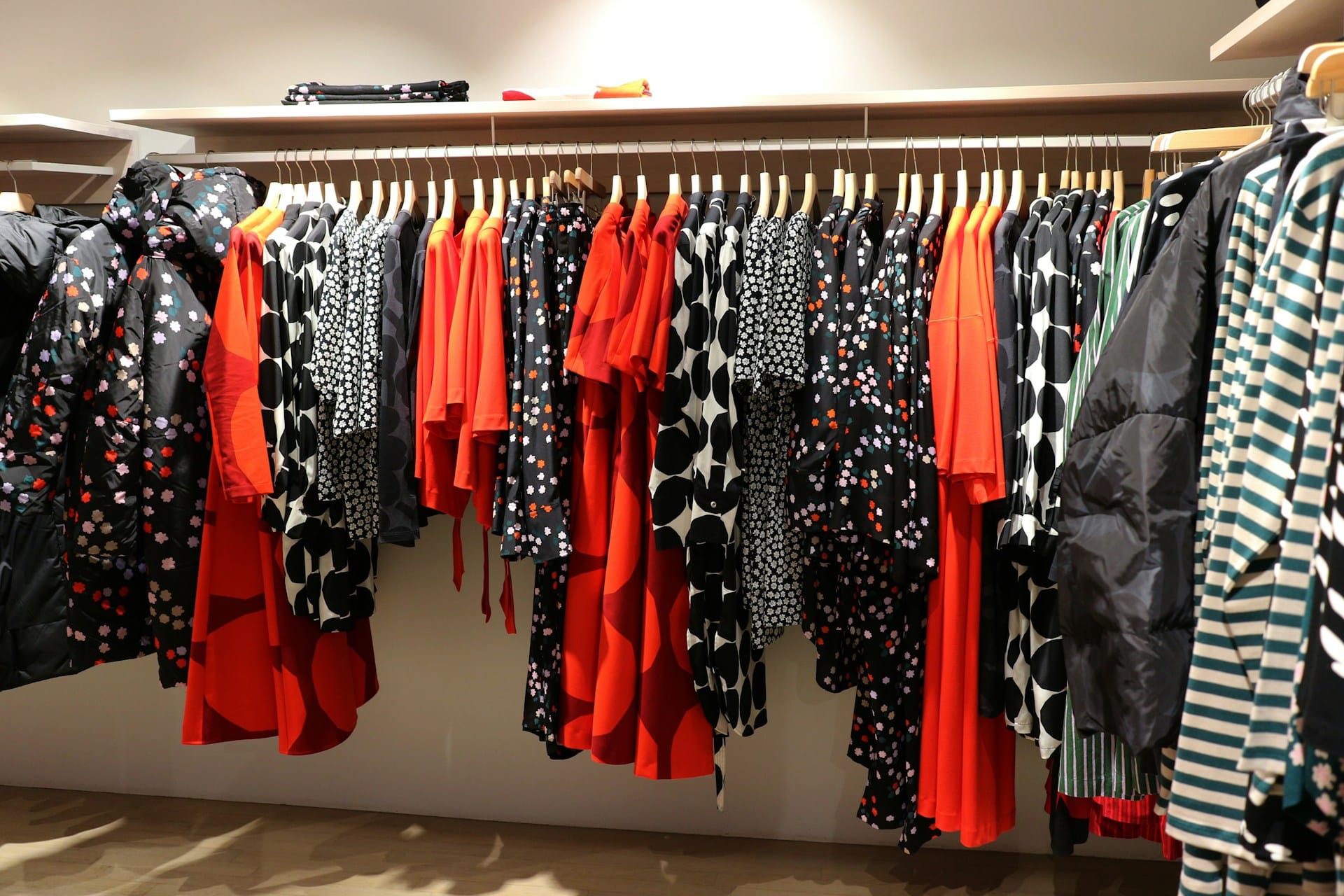
The reason the story matters is that it tells you what Marimekko’s argument actually is: the pattern is not decoration applied to an object. The pattern is the object’s position. Ratia was wrong about flowers. Isola knew that this particular flower — oversized, abstracted, and spare — was exactly the kind of cultural statement Marimekko was supposed to be making. The Design Museum London documents Marimekko as one of the defining textile design stories of the 20th century.
By 1965 the company employed more than 400 people and had applied the Unikko and other patterns to fabrics, clothing, dinnerware, toys, and accessories. Jacqueline Kennedy bought eight Marimekko dresses during the 1960 presidential campaign and wore them throughout. Architect Benjamin C. Thompson introduced Marimekko to the American market. By the mid-1960s the brand had a stable US presence, with Thompson’s store Design Research in Cambridge stocking Marimekko as a central part of its offer.
Today the pattern appears on everything from shower curtains to stoneware mugs. The Marimekko Oiva Unikko Stoneware Mug is the lowest-commitment version of the argument: the same pattern Isola designed in 1964, on a dishwasher-safe mug you use every morning. If you want the pattern at room scale, the Marimekko Unikko Throw Blanket holds the same logic at 59 inches.
For the full Marimekko story, read the Marimekko design profile, or go to Marimekko home products for what’s available to buy now.
Fritz Hansen: manufacturers whose judgment shapes design
Fritz Hansen is the oldest of these — a Danish firm that has spent 150 years producing other people’s designs rather than developing a house style. Founded in 1872 as a cabinetmaking shop, Fritz Hansen became the production partner for Arne Jacobsen’s Egg and Swan chairs, the vessels through which Jacobsen’s architectural logic entered the world as objects. The company’s role was not to author design but to decide which designs were worth the capital investment to manufacture. That editorial judgment — the choice to produce Jacobsen, to bring Poul Kjaerholm’s steel collection into production in 1982, to commit resources to pieces that serve no commercial expedience — is itself a design position.
HAY: design intelligence at accessible prices
HAY was founded in 2002 by Rolf and Mette Hay in Denmark. Their argument is straightforward: furniture and objects with genuine design thinking should not require a premium budget. HAY works with designers including Ronan and Erwan Bouroullec, Muller Van Severen, and Leif.designpark to produce pieces that hold their formal quality at mid-market prices.
The brand sits within the Scandinavian design tradition while updating it — cleaner production methods, broader material range, and a color sensibility that runs from neutrals to bold primaries. For the full brand story and how HAY positions itself in the design market, see the HAY design brand profile. For what to buy: best HAY products.
Vitra: licensed production of canonical twentieth-century design
Vitra is the Swiss manufacturer that holds European and Middle Eastern licensed production rights for Charles and Ray Eames, Verner Panton, and Jean Prouvé. Its position in the design brand landscape is distinct: rather than developing original design voices, Vitra curates and produces the authoritative versions of canonical pieces. The Vitra Design Museum on its Weil am Rhein campus — with buildings by Frank Gehry, Zaha Hadid, and Tadao Ando — reinforces that institutional frame. For the full brand story, see the Vitra design brand profile.
What gets design brands wrong
Buying the logo instead of the argument is the most common mistake. Alessi has more than 2,500 products in its catalog. Not all of them are the Graves kettle. Some are perfectly decent homeware that happens to carry the Alessi name. The brand’s argument lives in specific objects — the ones where a designer made a decision that’s still worth arguing about. The logo doesn’t transfer the argument to everything it touches.
Treating Areaware’s closure as a reason to wait is the opposite of the right response. A closed catalog is a finished body of work. What Areaware made is now a fixed set: no new production, no restocks once Amazon’s inventory sells through. If you’ve been circling a Cubebot or any other Areaware piece, the time to buy is now, not after you’ve thought about it for another few months.
Confusing Marimekko pattern with generic Scandinavian print is worth watching for. The Unikko has a documented history and a specific designer. Generic “poppy print” products exist in abundance — usually cheaper and usually less considered in their color relationships and scale. The difference between a licensed Marimekko Oiva mug and a knockoff poppy mug is not the logo. It’s that one was designed by Maija Isola in a specific context, and the other is approximating an aesthetic without the underlying argument.
Conflating price with design merit misreads how these brands work. Alessi’s catalog runs from roughly $20 to several hundred dollars. The object’s merit is not in its price point. It’s in whether the object makes a position worth owning. A $25 Alessi piece that encodes a clear design argument is worth more than a $200 piece that doesn’t. Price is not a proxy for seriousness.
Every Design Brands profile and guide on ADI
- Alessi design as art
- How to choose Alessi products
- The best Alessi products
- Alessi kettles
- Alessi vs Areaware
- Muji’s design philosophy
- Muji home products
- Vitra vs HAY
- Modern design objects for every room
Frequently Asked Questions
What makes Alessi a design brand rather than just a kitchenware company?
Alessi’s distinction is its collaboration model. Rather than employing in-house designers, Alessi has worked with more than 300 architects, artists, and designers since 1955, treating each project as a research question about what an everyday object can carry. Many of the resulting pieces are held in museum collections, not as curiosities but as design arguments in material form.
Is Areaware still in business?
No. Areaware closed on May 1, 2025, after 22 years in operation. The closure was driven by tariff increases that would have more than doubled their prices. Co-founders Lisa Yashon and Noel Wiggins explored shifting production to the US and Europe, but the company’s order sizes made it financially unworkable.
Where can I buy Areaware products now that the company has closed?
Amazon carries existing Areaware inventory, including the Cubebot and other objects from the catalog. Stock is not being replenished. Once it’s gone, it’s gone. Some pieces may also appear on secondary marketplaces over time, but prices will likely rise as availability shrinks.
What is the Marimekko Unikko pattern and why is it significant?
The Unikko is a large-scale poppy pattern designed by Maija Isola for Marimekko in 1964. Its significance is partly historical — Isola designed it against Armi Ratia’s instruction not to use flower motifs — and partly formal: the pattern’s oversized scale and flat color treatment gave it a graphic quality that held up across every surface Marimekko applied it to, from textiles to tableware to home accessories.
How do design brands like Alessi and Marimekko differ from regular homeware brands?
Regular homeware brands optimize for category needs: a kettle that boils water reliably, a mug that holds coffee at the right temperature. Design brands like Alessi and Marimekko treat the object’s form as a statement. They’re asking what the object means, not just what it does. That’s a different brief, and it produces different objects.
Are Marimekko products available in the US?
Yes. Marimekko products are widely available in the US through Amazon, major retailers, and Marimekko’s own US operations. The brand has been sold in the American market since the 1960s, when architect Benjamin C. Thompson introduced it and Jacqueline Kennedy wore Marimekko dresses during the 1960 presidential campaign.

About Zoe Post
Zoe Post holds a BFA and a Master of Architecture from the School of the Art Institute of Chicago. She now works as a product marketing leader at an architectural product design firm, bringing hands-on industry perspective to everything she writes. At ADI she covers contemporary artists, textile and pattern design, and the design objects that sit at the boundary of art and function.