Marimekko home products bring Finnish print design into daily life through stoneware, cotton textiles, and tote bags built around the brand’s signature patterns — especially the Unikko poppy, designed by Maija Isola in 1964. The best Marimekko home products are those that put the pattern to work in an object you actually use.
Our Top Picks
The five products below cover the main categories where Marimekko’s home line works: stoneware, bags, throws, cushion covers, and kitchen textiles. They’re ordered by how well they justify the price — the mug first because it earns its place on a counter every single morning.
Marimekko Oiva Unikko Mug (13.5 oz)
Mid-Range · Best Overall
Marimekko’s benchmark stoneware series — a purpose-designed vessel with a specific clay body and glaze, not a licensed print on a generic mug body. Dishwasher safe, oven safe, microwave safe, and freezer safe. The Unikko in the original red-and-white colorway at 13.5 oz.
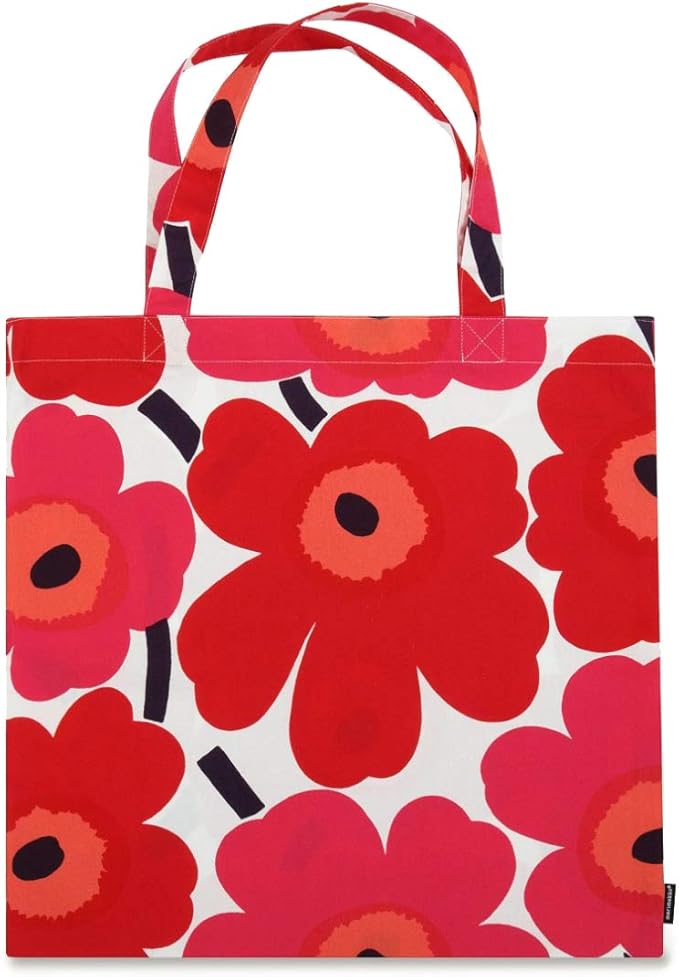
Marimekko Pieni Unikko Tote Bag (Red/White)
Mid-Range · Best Everyday Carry
17″×17″ printed cotton from Marimekko’s own Helsinki textile factory. The Pieni (“small”) Unikko print scales down to bag size without losing its graphic identity. Open-top construction.
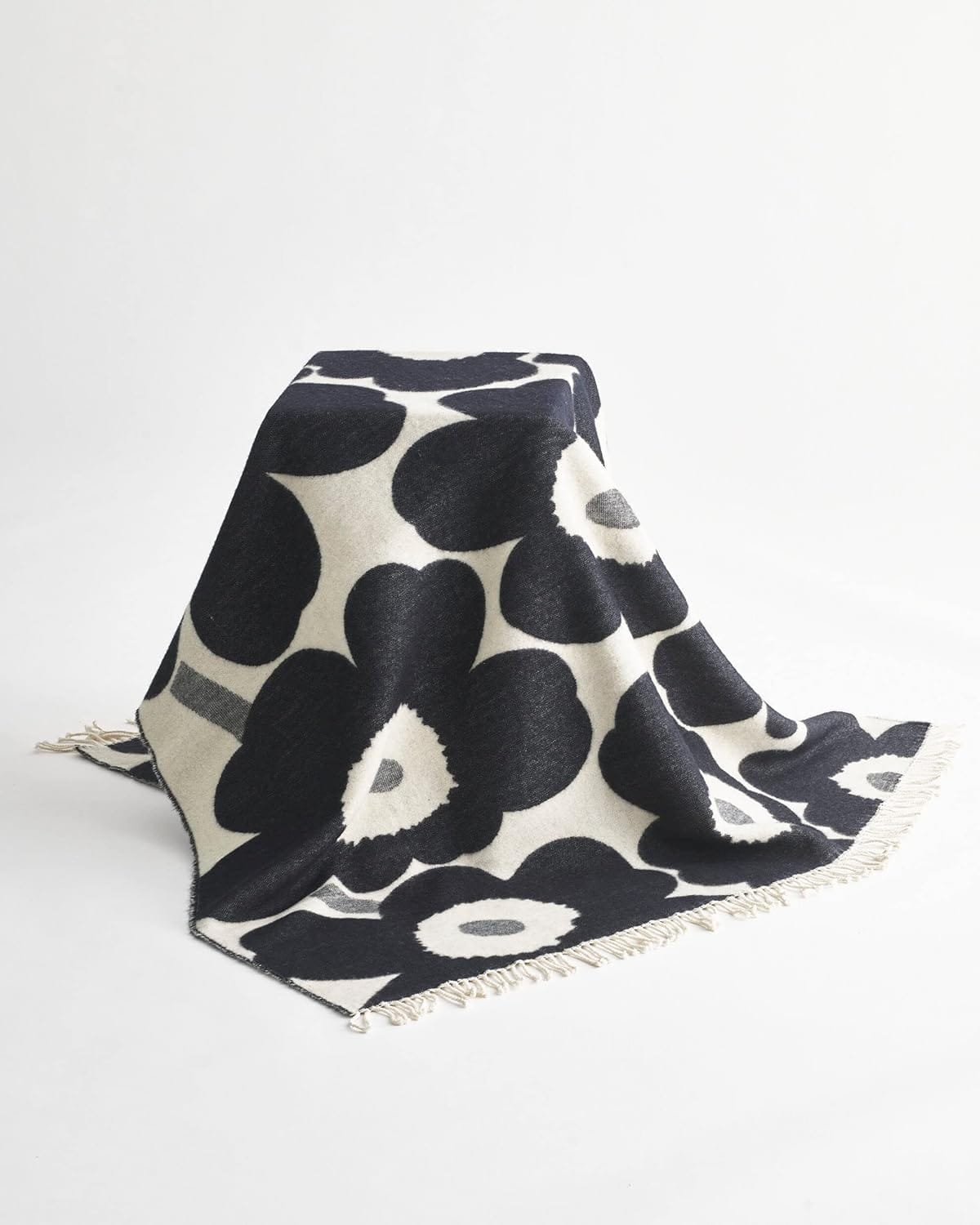
Marimekko Unikko Throw Blanket (51×71 in)
Premium · Best for the Living Room
The one item on this list that changes how a room looks. Wool/cotton blend, 51×71 inches — Unikko at the scale Maija Isola designed the pattern for. The grey/ivory colorway is softer than the original red.
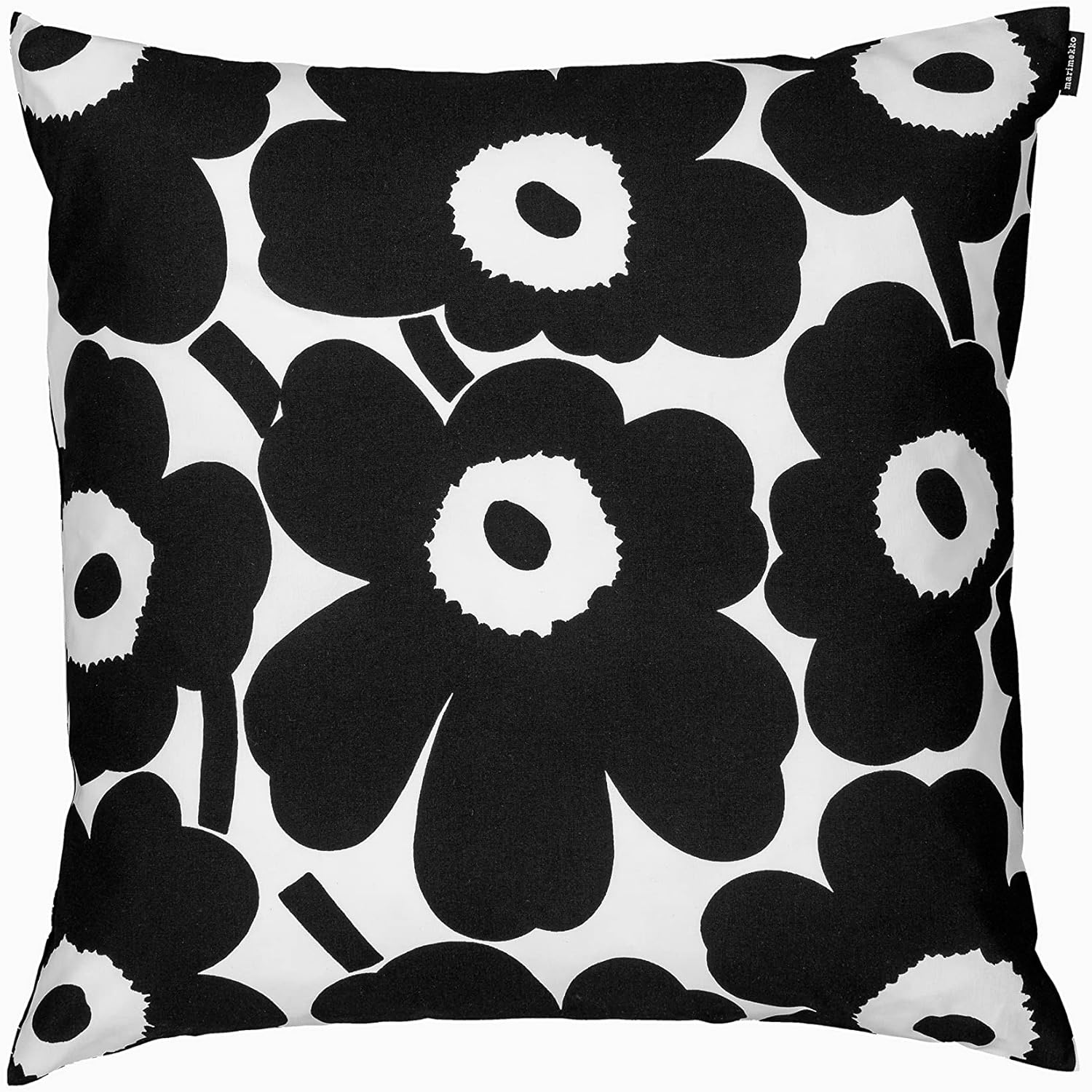
Marimekko Pieni Unikko Pillow Cover (Pink/White, 20×20 in)
Mid-Range · Best Accent
20×20 inch standard pillow cover in pink/white, unbleached cotton, printed at Marimekko’s Helsinki factory. Side-zip closure. The lowest-commitment way to test the Unikko print in a room. Insert not included.
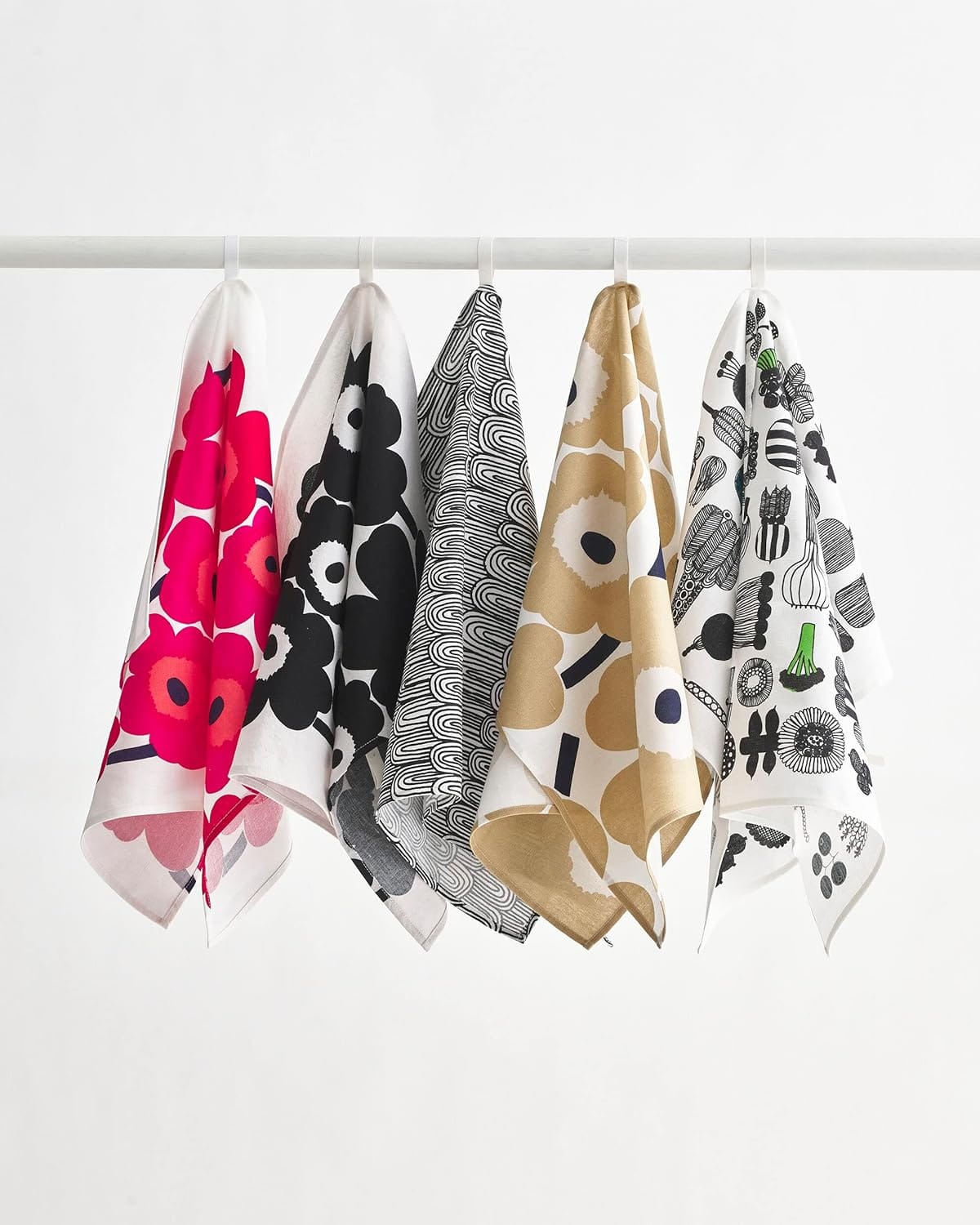
Marimekko Unikko Kitchen Towel Set of 2
Budget · Best Budget Entry
Set of 2 at 28×19 inches each, 61% cotton/39% linen — the correct ratio for kitchen textiles. Black-and-white Unikko colorway reads as graphic rather than floral. The most accessible first Marimekko purchase.
Quick Decision Guide
- Best overall: Oiva Unikko Mug — the Finnish design object with the clearest daily-use argument. You handle it every morning.
- Best budget option: Unikko Kitchen Towel Set — pattern entry at the lowest price point, in an object you actually need in a kitchen.
- Best premium option: Unikko Throw Blanket — the only item on this list where the print works at room scale.
- Best gift: Pieni Unikko Tote Bag — readable Finnish design, universally sized, no assembly required.
- Best for a Marimekko-curious buyer: Pieni Unikko Pillow Cover — lowest commitment, easiest way to test the print in your home before buying larger pieces.
Full Comparison
| Product | Use Case | Price Range | Standout Feature | Link |
|---|---|---|---|---|
| Oiva Unikko Mug | Daily coffee/tea | Mid-Range | Dishwasher/oven/freezer safe stoneware | Buy on Amazon |
| Pieni Unikko Tote Bag | Everyday carry | Mid-Range | 17″×17″ printed cotton, Helsinki factory | Buy on Amazon |
| Unikko Throw Blanket | Living room textile | Premium | 51×71 in, wool/cotton, room-scale print | Buy on Amazon |
| Pieni Unikko Pillow Cover | Accent cushion | Mid-Range | 20×20 in, printed in Helsinki, side zip | Buy on Amazon |
| Unikko Kitchen Towel Set (×2) | Kitchen | Budget | 28×19 in, 61% cotton/39% linen | Buy on Amazon |
What Each Marimekko Product Actually Delivers
Here’s what you get and what you give up with each pick — without softening the trade-offs.
Oiva Unikko Mug
Pros:
- Dishwasher, oven, microwave, and freezer safe — daily-use durable
- Stoneware body developed specifically for the Oiva line, not a generic vessel
- Unikko in the original red-and-white colorway at 13.5 oz — a proper volume for coffee
- The Oiva line has been in continuous production since its introduction
Cons:
- Premium price for a mug — you’re paying for the Oiva line’s pedigree and the Helsinki manufacturing chain
- The pattern is bold; it doesn’t recede into neutral or minimalist kitchens
Who it’s for: Someone who wants the single most recognizable Marimekko object in daily use — the item that earns its place by being handled every morning.
Why it stands out: The Oiva line is the benchmark Marimekko stoneware series. This isn’t a licensed print applied to a generic mug body. The clay body and the pattern are designed as a single object.
Pieni Unikko Tote Bag
Pros:
- Durable cotton construction; printed at Marimekko’s own Helsinki textile factory
- Pattern scales down to bag size without losing its graphic identity
- 17″×17″ dimensions work for grocery, market, or casual daily carry
- Entry-level price point for the brand — the most accessible Marimekko product
Cons:
- Open-top construction — no zipper, not suitable if you need to secure a phone or wallet
- The Pieni (“small”) Unikko print is a reduced-scale version; buyers who prefer the full-scale repeat may prefer the throw or a larger textile piece
Who it’s for: Anyone wanting a functional daily bag that carries Marimekko design credentials without the premium price tag of the throw or larger home textiles.
Why it stands out: The cotton is printed in-house in Helsinki — this is not a third-party licensed product. The manufacturing chain is the same as for the high-end textile range.
Unikko Throw Blanket
Pros:
- Wool/cotton blend delivers actual warmth, not just pattern
- Unikko at 51×71 inches operates at the scale the pattern was designed for — a sofa throw is closer to Isola’s original textile intent than a mug
- The one item on this list that changes a room’s character
- Grey/ivory colorway is softer than the original red — more versatile in contemporary interiors
Cons:
- Highest price point on this list — this is a statement purchase
- Unikko at room scale demands a commitment to the pattern; it will not disappear into a neutral space
Who it’s for: Buyers who already know they like the brand and want to bring it into the living room at a scale that makes a real difference.
Why it stands out: The throw is closer to what Maija Isola designed the Unikko pattern for than the mugs or bags. The textile is the original object class; everything else is the pattern applied to other things.
Pieni Unikko Pillow Cover
Pros:
- Printed in Marimekko’s own Helsinki factory — documented manufacturing origin, rare at this price point
- Unbleached cotton; side-zip closure for easy insert access
- 20×20 inch standard size fits any insert you already own
- Pink/white colorway is softer than the red original — easier to place in rooms with existing color
Cons:
- Insert not included (standard for pillow covers at any price)
- 20×20 is not oversized — if you have large sofas or floor cushions, you’ll need multiple covers
Who it’s for: Someone testing the Unikko print in their home before committing to larger pieces. Easiest entry into Marimekko at domestic scale.
Why it stands out: The Helsinki manufacturing documentation is rare at this price tier in the Marimekko product line. You’re not buying a licensed print; you’re buying a product from the same factory that produces Marimekko’s high-end interior fabrics.
Unikko Kitchen Towel Set (×2)
Pros:
- 61% cotton/39% linen is the correct ratio for kitchen textiles — low lint, fast drying, holds up to repeated washing
- Set of two at 28×19 inches each
- Black-and-white colorway reads as graphic rather than floral — works in kitchens without much color
- Budget entry point — the lowest-cost way into the Unikko pattern
Cons:
- The bold graphic repeat is visually active in small kitchens; in a tight space, it reads louder than intended
- Lower price reflects smaller scale of the product, not reduced design quality — but some buyers expect a “premium feel” that a kitchen towel, however well-designed, cannot deliver
Who it’s for: The easiest first Marimekko purchase. A functional kitchen object with Unikko credentials, at the most accessible price on this list.
Why it stands out: In black-and-white, the Unikko print reads as graphic design rather than florals — it works in kitchens that don’t have a Marimekko aesthetic everywhere else.
Why Marimekko Translates to the Home So Well
Marimekko was founded in Helsinki in 1951 by Armi and Viljo Ratia. The home was never secondary to the clothing line — from the beginning, the brand’s argument was about pattern as a way of living, not just dressing.
The Unikko pattern has a specific origin. In 1964, Armi Ratia had reportedly declared that no floral prints would appear in Marimekko’s range. Maija Isola, who had been designing textiles for the brand since joining at 22 after graduating from the Ateneum art school, painted the poppy pattern anyway. She was not painting a literal flower. She was responding to the idea of a flower at graphic scale — bold, flat, reduced to its essential form. The pattern was included in the collection immediately and has been in continuous production for sixty years.
That act of defiance is still visible in the products on this list. The Unikko print does not ask permission to be in a room. It states a position. The home products work because they carry that argument into objects — a mug, a sofa throw, a kitchen towel — that you handle daily. Marimekko’s boldness is not a marketing position. It was built into the pattern by a designer who painted it against her employer’s instructions.
As of 2024, 44% of Marimekko products are manufactured in the EU, with interior fabrics and many textiles printed in the brand’s own Helsinki factory. The home line is not a licensed extension of the clothing brand. It is the same brand, applied to the same logic: pattern as a reason for an object to exist.
Further Reading
If you want to understand why these products look the way they do, these two books cover the history and design logic of Marimekko more specifically than any general Scandinavian design survey.
Marimekko: The Art of Printmaking by Laird Borrelli-Persson (Yale University Press, 2021) — Published on Marimekko’s 70th anniversary, this is the most current survey of the brand’s print design, covering archive patterns and the designers behind them. Better entry than a general overview because it stays specific to Marimekko’s visual language.
Marimekko: Fabrics, Fashion, Architecture by Marianne Aav (Yale University Press, 2003) — The foundational monograph. Covers the brand from founding through its global expansion, with documentation of the principal designers including Isola and Nurmesniemi. More historical depth than the Borrelli-Persson volume; essential if you want to understand why the home line exists as a distinct design category.
Frequently Asked Questions
What are the best Marimekko products to buy on Amazon?
For home use: the Oiva Unikko Mug (13.5 oz, stoneware, dishwasher/oven safe) is the best single purchase — it earns its place through daily use. The Unikko Kitchen Towel Set is the best budget entry. For a room-scale statement, the Unikko Throw Blanket is the one item that changes how a space looks.
Is Marimekko worth the price for home products?
For the mug and pillow cover: yes, with a specific reason. The Oiva line is purpose-designed stoneware, not a licensed print on a generic body. The pillow cover is printed in Helsinki at Marimekko’s own factory, which is unusual at its price tier. For the throw: the price reflects that this is a premium textile at room scale, and the wool/cotton blend is actually warm. The kitchen towels are priced comparably to other quality kitchen linens — the Unikko print is what you’re paying a small premium for.
Where are Marimekko home products made?
As of 2024, 44% of Marimekko products are manufactured in the EU. Interior fabrics, kitchen textiles, and many bag fabrics are printed in Marimekko’s own textile printing factory in Helsinki. The pillow cover and tote bag on this list are produced there. Products manufactured outside the EU are disclosed on Marimekko’s product pages.
How do you wash Marimekko cotton products?
Machine wash cold, gentle cycle, with like colors. Line dry or tumble dry low. Do not bleach. This applies to the tote bag, pillow cover, kitchen towels, and throw. The Oiva stoneware mug is dishwasher safe on the top rack. Always check the care label on your specific item — Marimekko occasionally updates materials or care instructions by product generation.
What is the Unikko pattern and who designed it?
Unikko means “poppy” in Finnish. The pattern was designed by Maija Isola in 1964. Isola was Marimekko’s first commissioned textile designer, joining after graduating from the Ateneum art school in Helsinki. She designed the pattern as an act of defiance — Armi Ratia had reportedly declared no floral prints would appear in Marimekko’s range, and Isola painted Unikko anyway. The pattern was included immediately and has been in production ever since. 2024 marked its 60th anniversary.
How do Marimekko home products connect to the brand’s Finnish design roots?
Marimekko’s founding argument was that bold, flat, graphic pattern should appear on the objects of daily life — not as decoration, but as the reason those objects were worth choosing. The home line was always part of that argument, not a later extension. The specific Finnish design tradition at work in Marimekko is not craft minimalism (that’s a different lineage) but graphic boldness applied to functional objects — a position Isola made literal when she painted Unikko against her employer’s explicit instructions. For guidance on introducing Marimekko patterns into a home interior, see how to use Marimekko in your home.

About Zoe Post
Zoe Post holds a BFA and a Master of Architecture from the School of the Art Institute of Chicago. She now works as a product marketing leader at an architectural product design firm, bringing hands-on industry perspective to everything she writes. At ADI she covers contemporary artists, textile and pattern design, and the design objects that sit at the boundary of art and function.