Here is how to use Marimekko in your home without the pattern taking over: the Unikko poppy, designed by Maija Isola in 1964 in defiance of founder Armi Ratia’s ban on florals, was never meant to be delicate. This guide covers where that conviction reads correctly in a room, and where it overwhelms.
Our Top Picks
These four pieces represent every commitment level for using Marimekko in a home, from lowest-footprint to full-room statement. The mug is the start. The sheet set is the finish. Most people live somewhere in between.
One pillow is a conviction. Five pillows is a showroom.
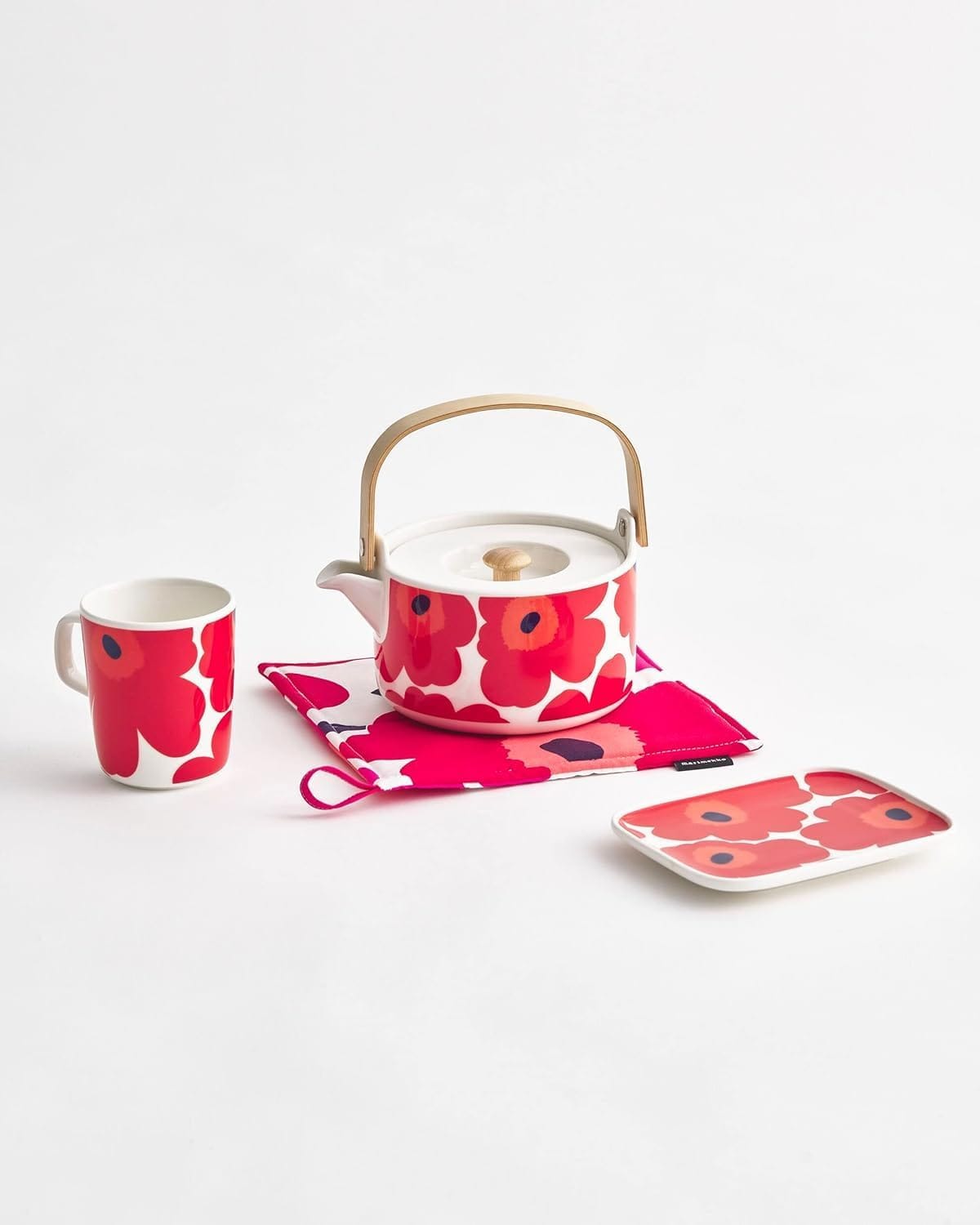
Marimekko Oiva Unikko Mug (Red/White, 13.5oz) — Mid-Range
The smallest entry point into the Unikko pattern. At tabletop scale, the poppy head fills the ceramic body without competing for space with anything else in the room.
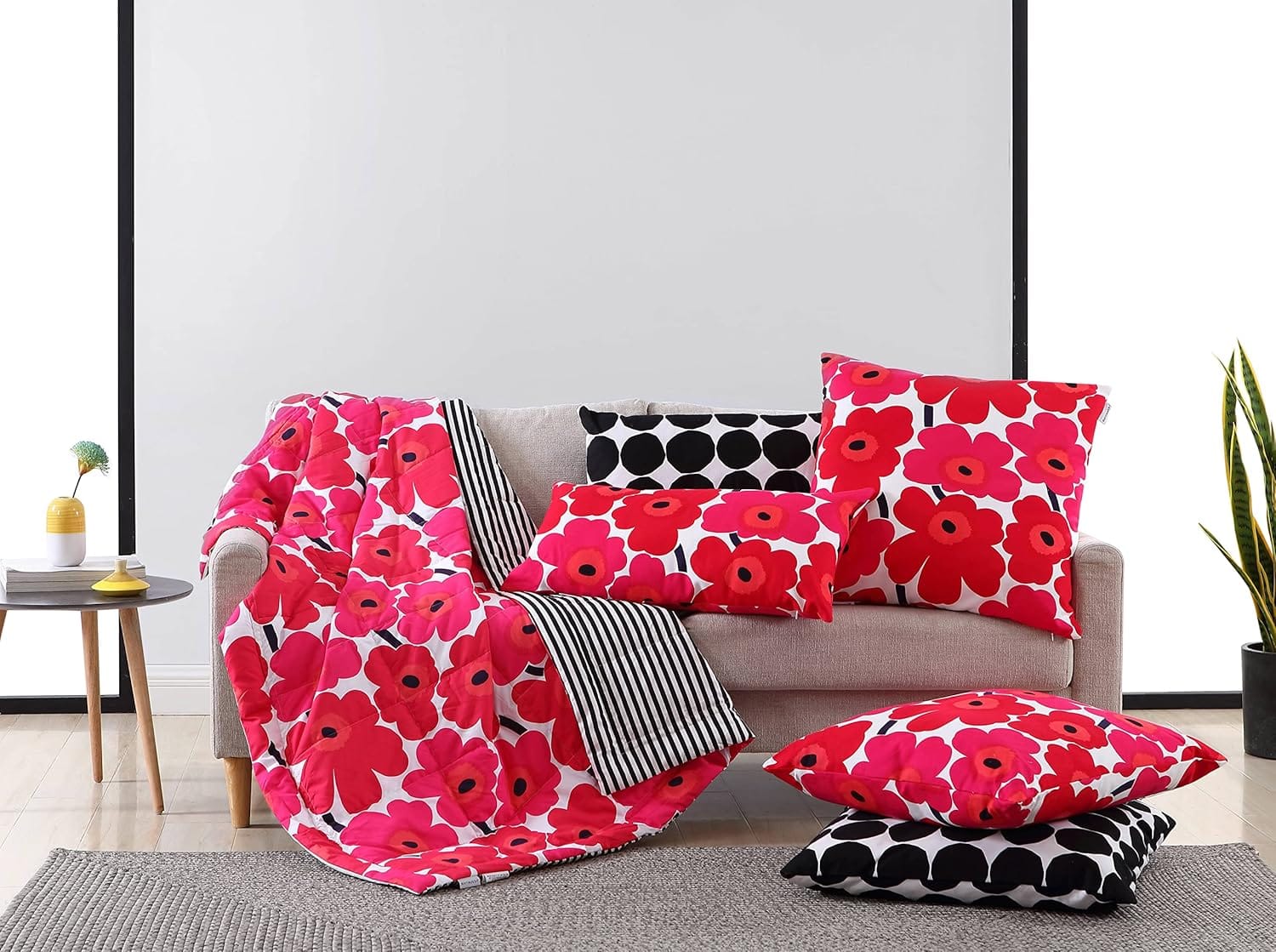
Marimekko Pieni Unikko Throw Pillow (Red, 20×20in) — Budget–Mid
One accent pillow on a neutral sofa is where the pattern argument lands correctly, present enough to read and contained enough to let the rest of the room breathe.
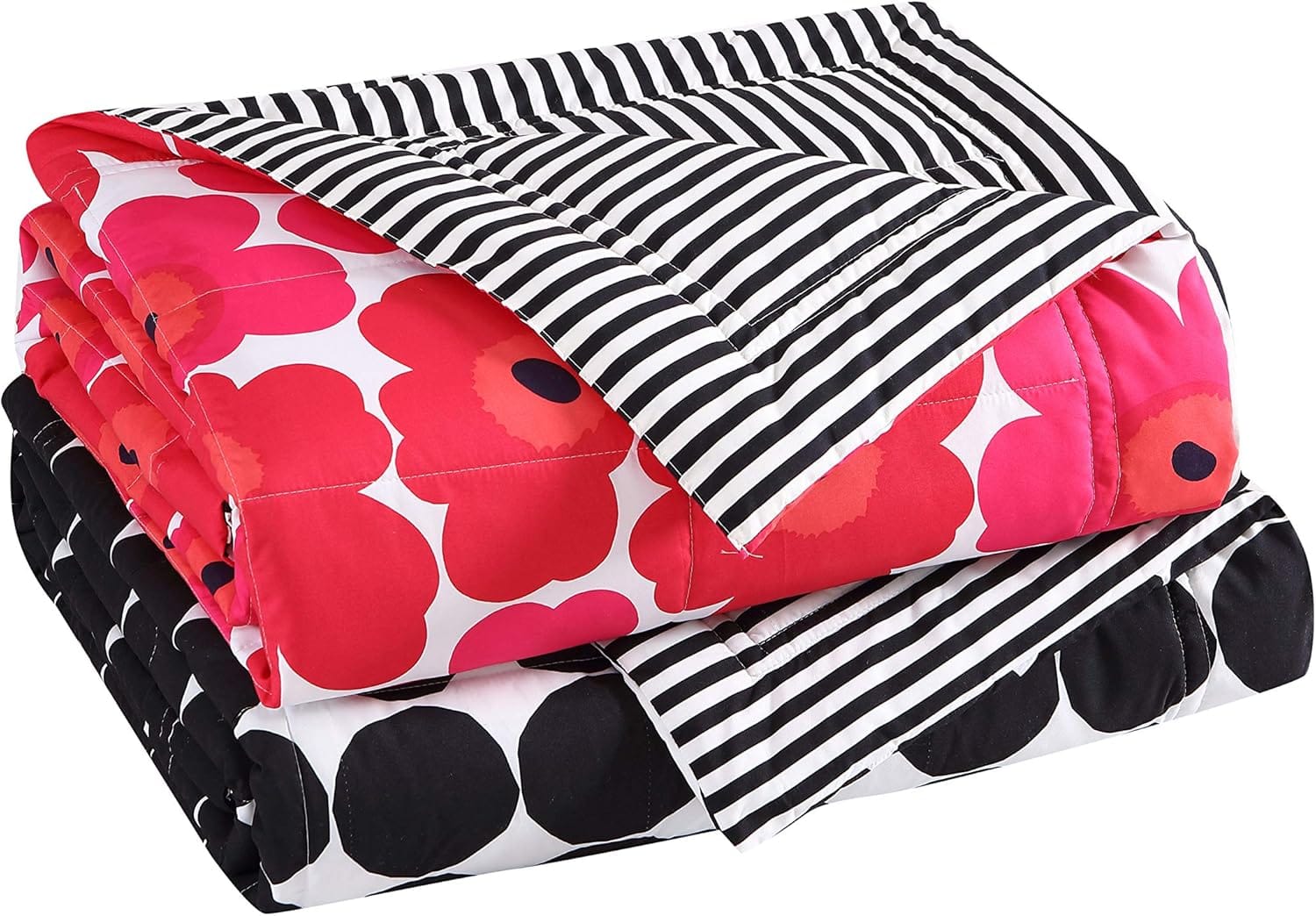
Marimekko Pieni Unikko Throw Blanket (Red, Oeko-Tex certified) — Mid-Range
Reversible. Unikko on one face, Ajo stripe on the back. It can be forward-facing or recessive depending on the day.
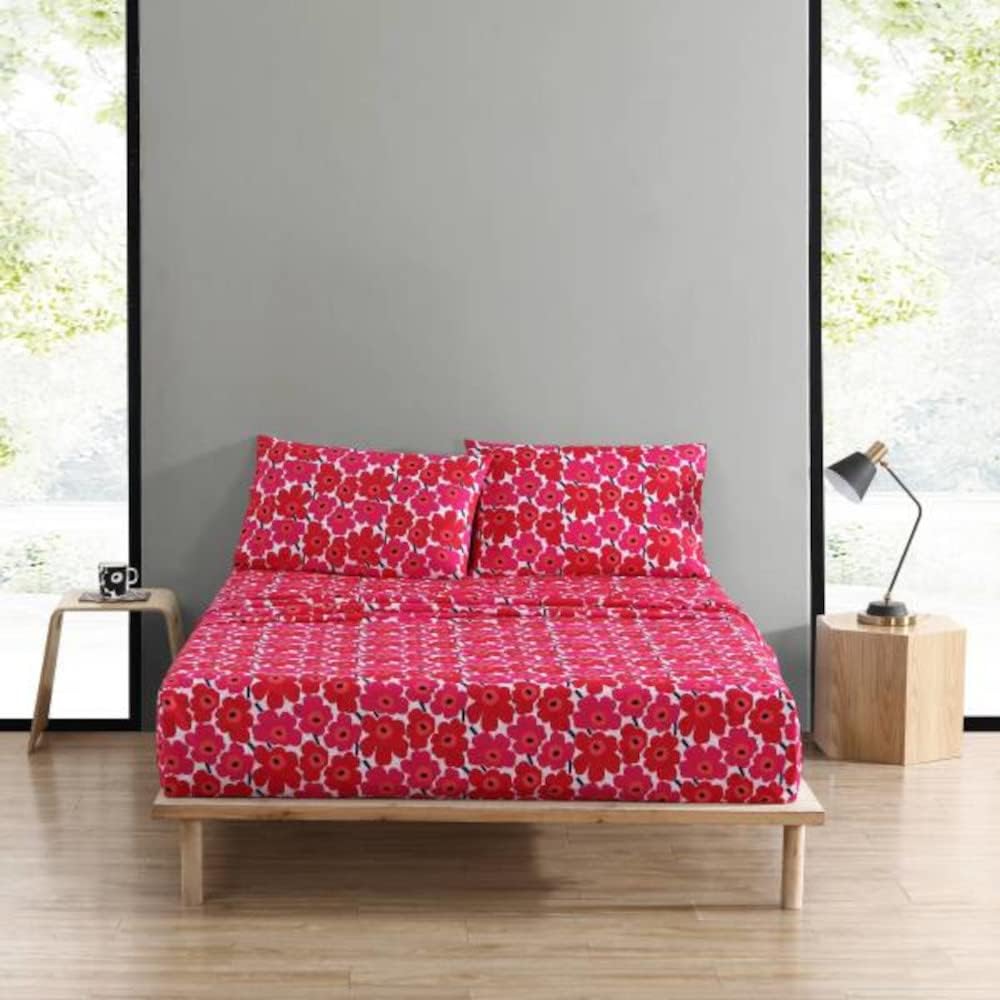
Marimekko Unikko Sheet Set (Red, Queen, Cotton Percale) — Premium
Full-scale Unikko across a bed is where the pattern was designed to operate; this is the committed choice, and it requires a bedroom willing to be organized around it.
Quick Decision Guide
- Best for your first Marimekko purchase: Oiva Unikko Mug. Low commitment, high visual payoff; the mug is the right scale to assess whether you actually want Unikko in your home before buying into larger textiles.
- Best budget option: Pieni Unikko Throw Pillow. The lowest price point of the four, and a single accent pillow on a neutral sofa is Marimekko’s own most-used home styling application.
- Best premium statement: Unikko Sheet Set. Full-surface Unikko on a bed is the maximum commitment; Isola designed the pattern at this scale.
- Best for renters: Pieni Unikko Throw Blanket. Portable, no installation, reversible; you can take it with you.
- Best for skeptics who think it will overwhelm: Start with the mug. Assess. The rest of the line will still be there.
Armi Ratia conceived Marimekko as a “total environment” lifestyle, a design conviction expressed through clothing, textiles, and home interiors simultaneously (Marianne Aav, Marimekko: Fabrics, Fashion, Architecture, Bard Graduate Center / Yale University Press, 2003). Buying one mug is the entry-level commitment to that philosophy. It does not obligate you to a bedroom sheet set.
Full Comparison
| Product | Best For | Price Range | Pattern Scale | Surface Area | Link |
|---|---|---|---|---|---|
| Oiva Unikko Mug | Kitchen / gift / first purchase | Mid-Range | Full original scale on ceramic | Contained | Buy |
| Pieni Unikko Throw Pillow | Living room accent | Budget–Mid | Small (Pieni = scaled-down variant) | Accent | Buy |
| Pieni Unikko Throw Blanket | Sofa / bedroom throw | Mid-Range | Small-Medium | Medium | Buy |
| Unikko Sheet Set | Bedroom statement | Premium | Full-scale original | Large | Buy |
What Each Piece Actually Does in a Room
Oiva Unikko Mug
Pros:
- Porcelain stoneware; dishwasher, microwave, and oven safe
- 13.5oz capacity; the full Unikko print at a scale where the poppy head fills the ceramic body without crowding
- Is a standalone design object on an open shelf; multiple colorways available (red/white, black/white, green/pink)
- The lowest financial commitment of any Marimekko home piece that reads as a design statement
Cons:
- One mug reads as a collector’s object. Six mugs in a cabinet reads as a theme. The line between the two is a personal judgment call the brand will not make for you.
- The red-on-white colorway is the most legible; other colorways are less immediately recognizable as Unikko
Who it’s for: Anyone who wants to understand what Marimekko is before buying into larger textiles, or anyone who already knows and wants the lowest-footprint version of the pattern in their kitchen.
Why it stands out: At mug dimensions, the Unikko proportions work in a way they cannot at pillow scale; the poppy head and the ceramic form are sized for each other.
Pieni Unikko Throw Pillow Red
Pros:
- Heavyweight upholstery cotton; side-zip closure
- 20×20 inch, standard accent size, works with most sofa scales
- Red/white is the original 1964 colorway and the most recognizable
Cons:
- “Pieni” means “small” in Finnish: the Pieni Unikko is a reduced-scale variant of the original print. From distance, it reads as surface texture rather than as a declarative pattern. Buyers expecting the full large-scale Unikko will be surprised.
- Pillow insert sold separately
Who it’s for: Anyone decorating a neutral living room who wants one decisive color object that does not require rearranging the room around it.
Why it stands out: A single Pieni Unikko pillow on a grey or white sofa is the use case Marimekko’s own home styling consistently demonstrates, and Marimekko’s stylists know what they’re doing.
Pieni Unikko Throw Blanket Red
Pros:
- Reversible: Unikko on one face, Ajo stripe on the reverse — two visual modes in one piece
- Oeko-Tex certified; machine washable
- Lightweight enough to work year-round as a throw; not a heavy winter blanket
Cons:
- Ultra-soft microfiber is not the same hand-feel as Marimekko’s cotton originals. The fabric is softer and less substantial than the textile the brand was built on.
- The red colorway is vivid. It reads as an accent, not a neutral. If you want Marimekko to recede slightly, look for the darker colorways.
Who it’s for: Renters, or anyone who wants Marimekko presence in a room without committing to permanent textiles or installation.
Why it stands out: The reversible design is functionally honest: the Ajo stripe on the back is a second Marimekko pattern, not a plain reverse, giving the piece two genuine modes rather than a decorative front and a blank back.
Unikko Sheet Set Queen
Pros:
- 200-thread-count cotton percale, a crisp hand-feel that softens with washing; this is not soft-knit or jersey
- Full-scale Unikko at bed dimensions; the red colorway is the original 1964 palette
- Bed scale is where the full-size Unikko proportions were designed to operate; Isola designed the pattern at this scale, and it reads accordingly
Cons:
- Highest price point of the four; this is the maximum commitment
- Full-scale Unikko on a bed requires the rest of the bedroom to be organized around it. Competing pattern elsewhere in the room will not work. This is a design argument you need to be prepared to make with the whole room.
- Cotton percale starts stiff. It softens with washing, but the first few nights are firm.
Who it’s for: Anyone who has already decided Marimekko is their design conviction, not their experiment.
Why it stands out: This is the piece where the pattern is working as Isola intended, the poppy heads at full queen scale, the red-on-white as the room’s primary color statement.
Full-scale Unikko on a bed requires the rest of the bedroom to be organized around it. This is a design argument you need to be prepared to make with the whole room.
Why Marimekko pattern works differently from every other floral
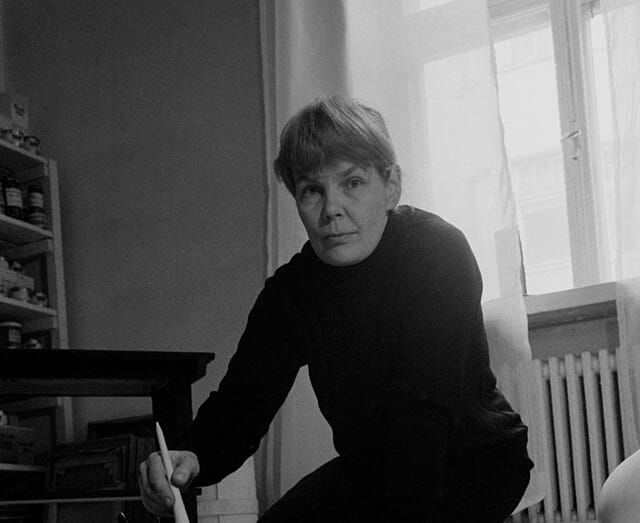
Armi Ratia publicly banned floral patterns from Marimekko in the brand’s early years. She believed photorealistic florals were sentimental and old-fashioned, design looking backward rather than forward (Marianne Aav, Marimekko: Fabrics, Fashion, Architecture, Bard Graduate Center / Yale University Press, 2003). In 1964, Maija Isola designed an entire collection of florals anyway. Ratia accepted eight of them, including Unikko. The pattern has been in production since.
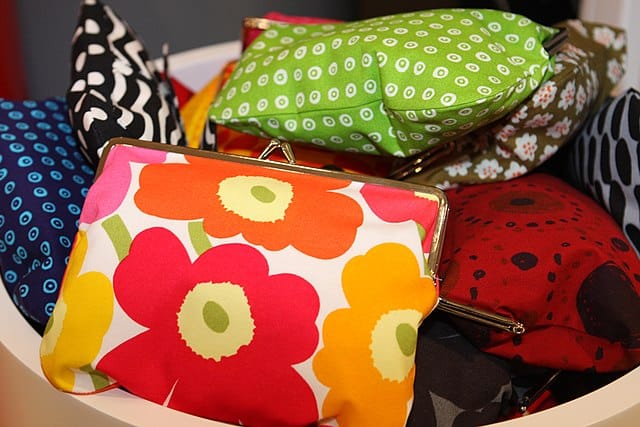
That origin story is not just brand mythology. It explains what Unikko actually is. The Unikko poppy is hand-painted, abstract rather than photorealistic, and approximately 8–10 inches in diameter on fabric. It is a refusal to be tasteful in the decorative sense. It does not recede. It does not function as a background pattern. Unikko is always foreground, and every other decision in a room has to be made with that in mind.
For Scandinavian design context and comparisons with other Finnish and Nordic brands, see the best Scandinavian design products guide.
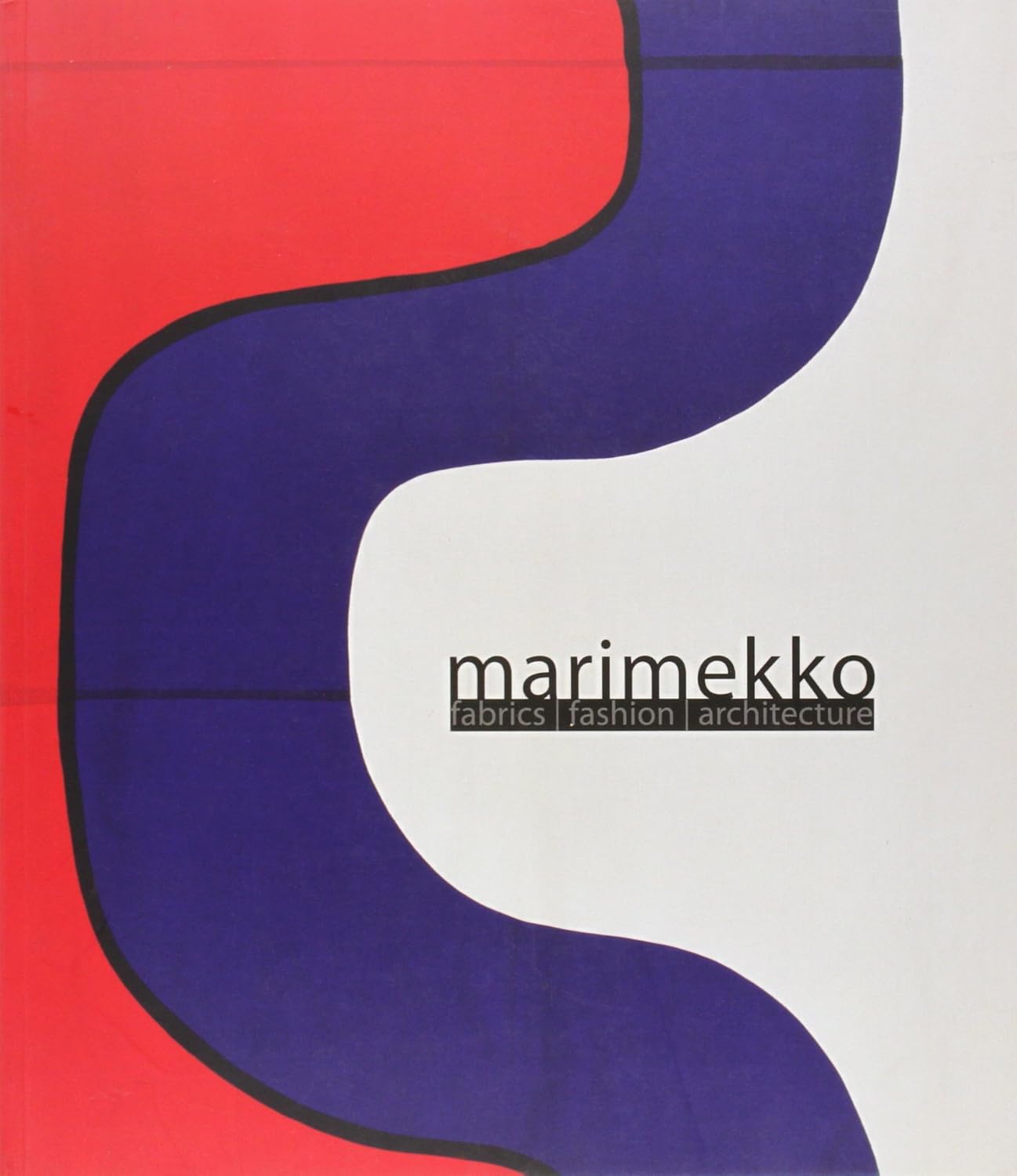
Marimekko: Fabrics, Fashion, Architecture — Marianne Aav
The institutional monograph published on the occasion of the Bard Graduate Center exhibition. The only English-language survey that covers design history alongside fashion and architecture simultaneously.
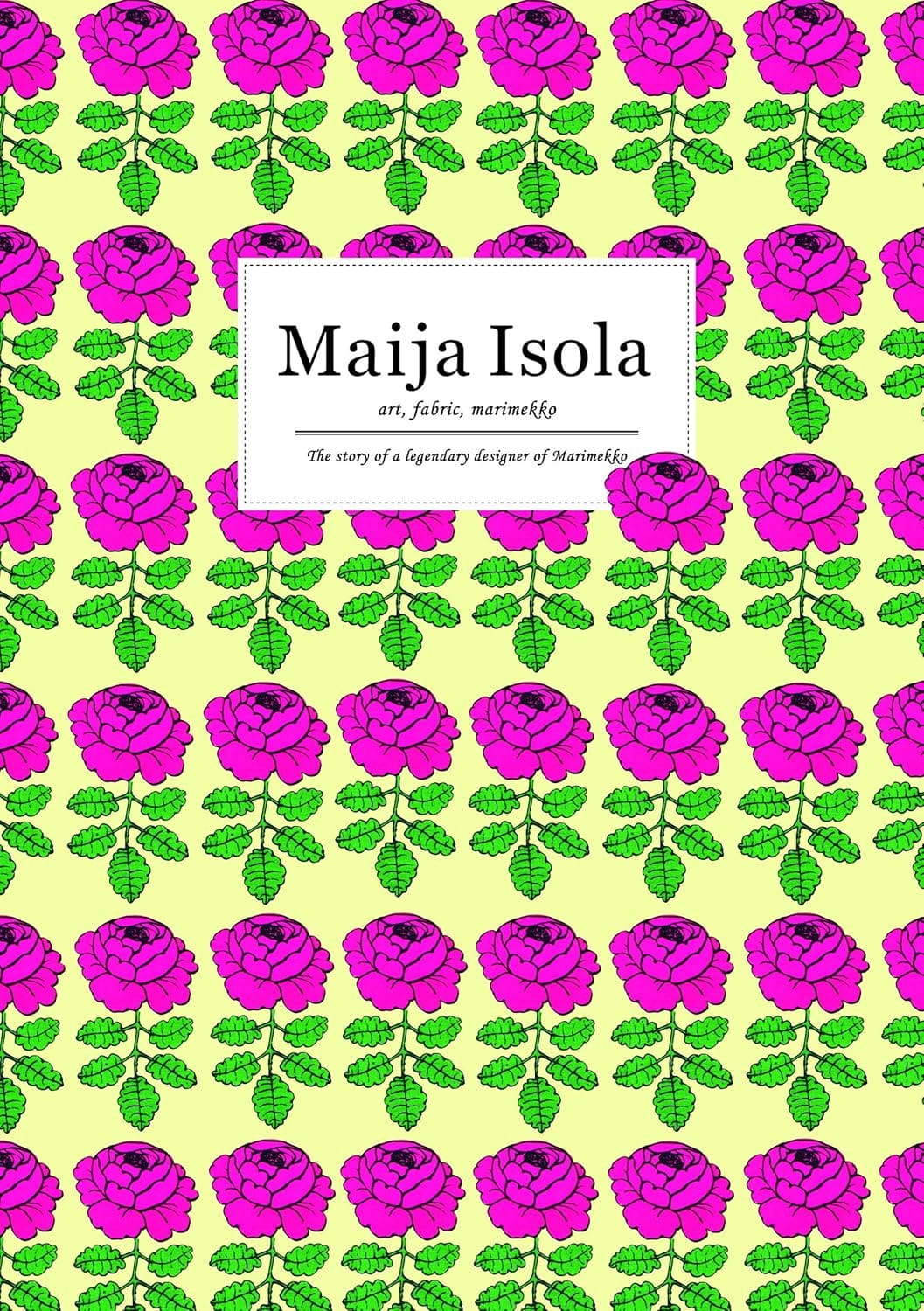
Maija Isola: Art, Fabric, Marimekko — Eri Shimatsuka (ed.)
Isola designed over 500 patterns yet the Unikko story dominates her legacy. This monograph is the fullest visual account of the breadth of her work and the only book that treats her as an artist rather than a brand asset.
Frequently Asked Questions
What is the Unikko pattern and why is it on everything Marimekko makes?
Unikko means “poppy” in Finnish. The pattern was designed by Maija Isola in 1964 in defiance of founder Armi Ratia’s ban on florals. Ratia accepted it along with seven other floral designs Isola submitted. The pattern has been in continuous production since 1964, over 60 years, and has been issued in more than 40 colorways. It became the most recognized Marimekko pattern globally, which is why it appears across the full product range from mugs to bedding to clothing.
How do I use Marimekko without it taking over a room?
Scale and containment are the variables. The mug is contained by its own form; the pattern fills the ceramic body without spreading. A single accent pillow is contained by the surrounding neutral furniture. The sheet set is contained only if the bedroom around it is organized to let it be the room’s primary statement. The pattern takes over when you add multiple large Unikko surfaces in the same room. One large surface reads as a decision; two reads as a theme.
Is Marimekko bedding worth the price?
At the premium price point, the Unikko Sheet Set delivers 200-thread-count cotton percale, a genuine material, not a microfiber substitute, and full-scale pattern at the proportions Isola intended. Whether it’s worth the price depends on whether you’ve committed to Marimekko as a design direction rather than an experiment. If you’re still testing, start with the mug. If you know, the sheet set is the right piece.
What is the difference between Unikko and Pieni Unikko?
“Pieni” means “small” in Finnish. Pieni Unikko is a reduced-scale variant of the original 1964 print. The original Unikko poppy head is approximately 8–10 inches in diameter on fabric; it reads as an oversized, unapologetic statement. The Pieni variant scales that down, so it reads as surface texture from a distance rather than as a declarative pattern. Neither is wrong; they serve different use cases. Pieni works as an accent in rooms where you want Marimekko present but not the room’s dominant statement.
Can Marimekko patterns mix with other prints?
Yes, with discipline. The principle is to mix by scale: pair a large Unikko with solid colors or small-scale stripes. Do not mix two large patterns together. Black-and-white colorways of Unikko are more flexible; they work with more palettes than the red-on-white flagship. Marimekko’s own Ajo stripe (which appears on the reverse of the Pieni Unikko Throw Blanket) is a valid mix-mate for Unikko because it’s a smaller, linear pattern that doesn’t compete with the poppy form.
Where does Marimekko pattern work best in a small apartment?
The kitchen is the lowest-commitment zone: one mug, one dish towel. The living room comes next, one accent pillow on a neutral sofa. The bedroom is the maximum commitment, because Unikko at bed scale requires the whole room to be organized around it. In a small apartment, start at the kitchen and assess before moving to larger surfaces.
For specific product picks across the Marimekko home range, see our guide to best Marimekko home products.

About Zoe Post
Zoe Post holds a BFA and a Master of Architecture from the School of the Art Institute of Chicago. She now works as a product marketing leader at an architectural product design firm, bringing hands-on industry perspective to everything she writes. At ADI she covers contemporary artists, textile and pattern design, and the design objects that sit at the boundary of art and function.