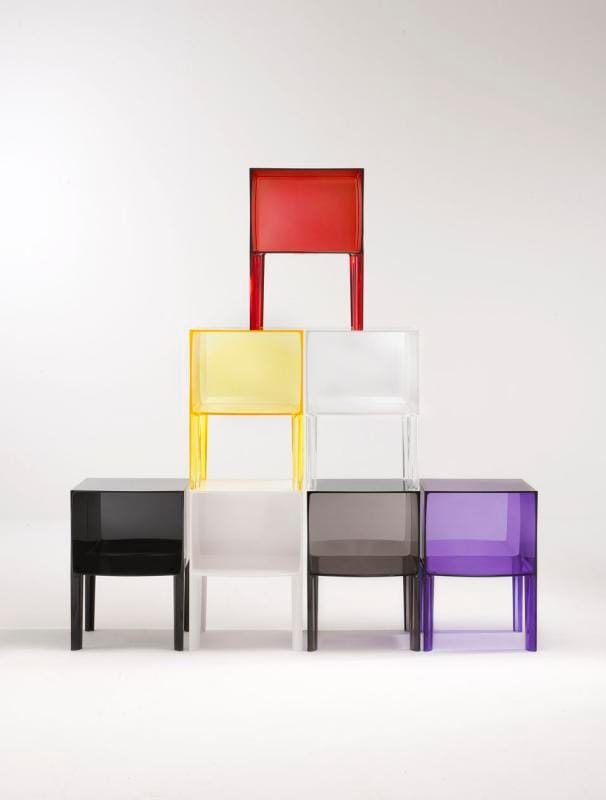


The best Memphis design products draw on the Memphis Design Movement, a postmodern movement founded by Ettore Sottsass in Milan in 1981, defined by bold geometric shapes, clashing color combinations, and deliberate rejection of Modernist restraint. The Memphis Group operated from 1981 to 1987, producing furniture, textiles, ceramics, and objects that treated design as cultural provocation rather than problem-solving.
Our Top Picks
Most of what the Memphis Group actually made is now in auction houses or private collections. The visual language has moved into contemporary goods at prices most people can actually spend: the circle-on-triangle geometry, the color blocking, the laminate surface patterns. These picks are selected for design fidelity, meaning objects that carry the Memphis vocabulary honestly without diluting it into generic retro aesthetics.
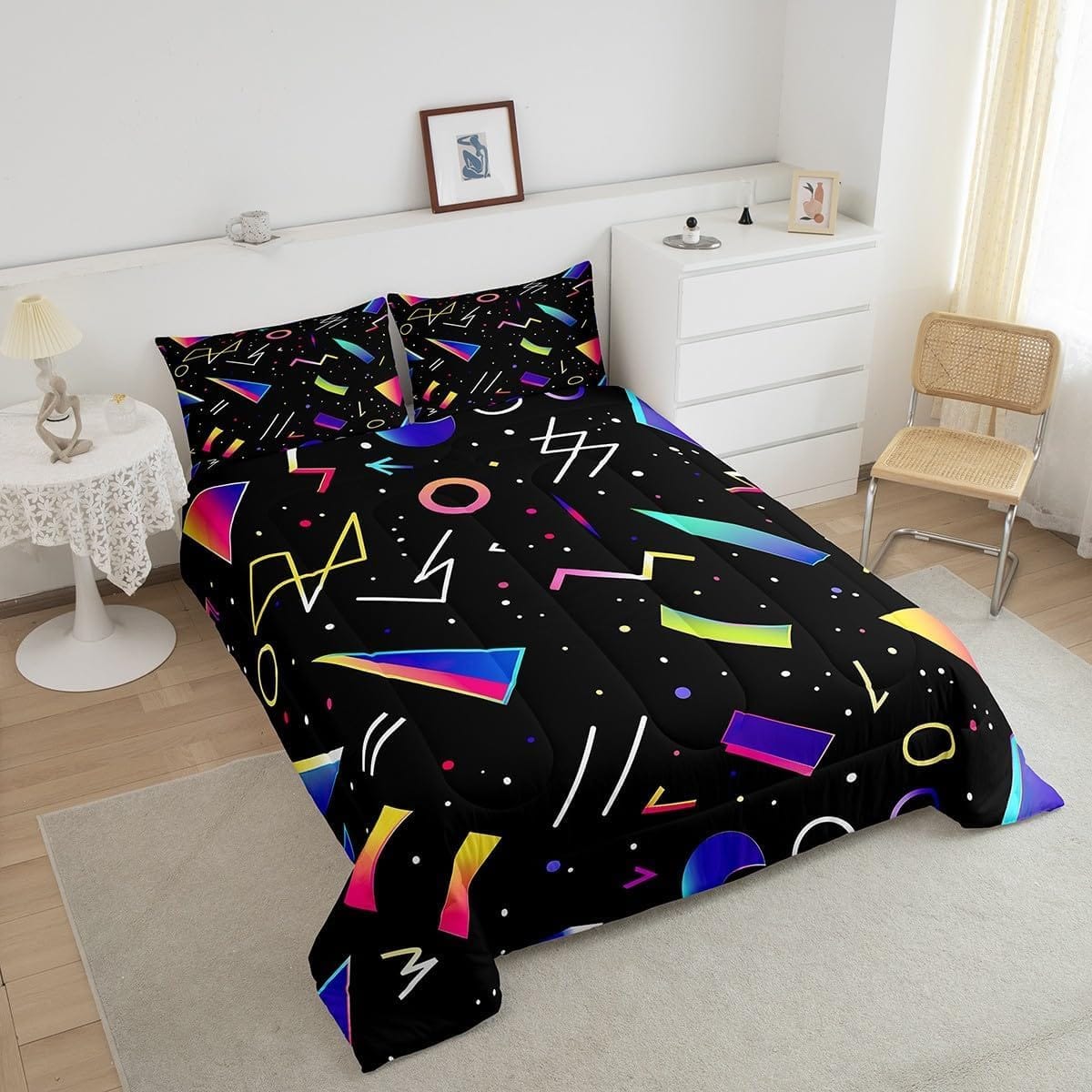
Memphis Pattern Comforter Set (Queen) (Mid-Range)
Brings the circle-and-triangle geometry of the Memphis surface language into a domestic textile context. The right entry point for testing the aesthetic before committing to anything permanent.
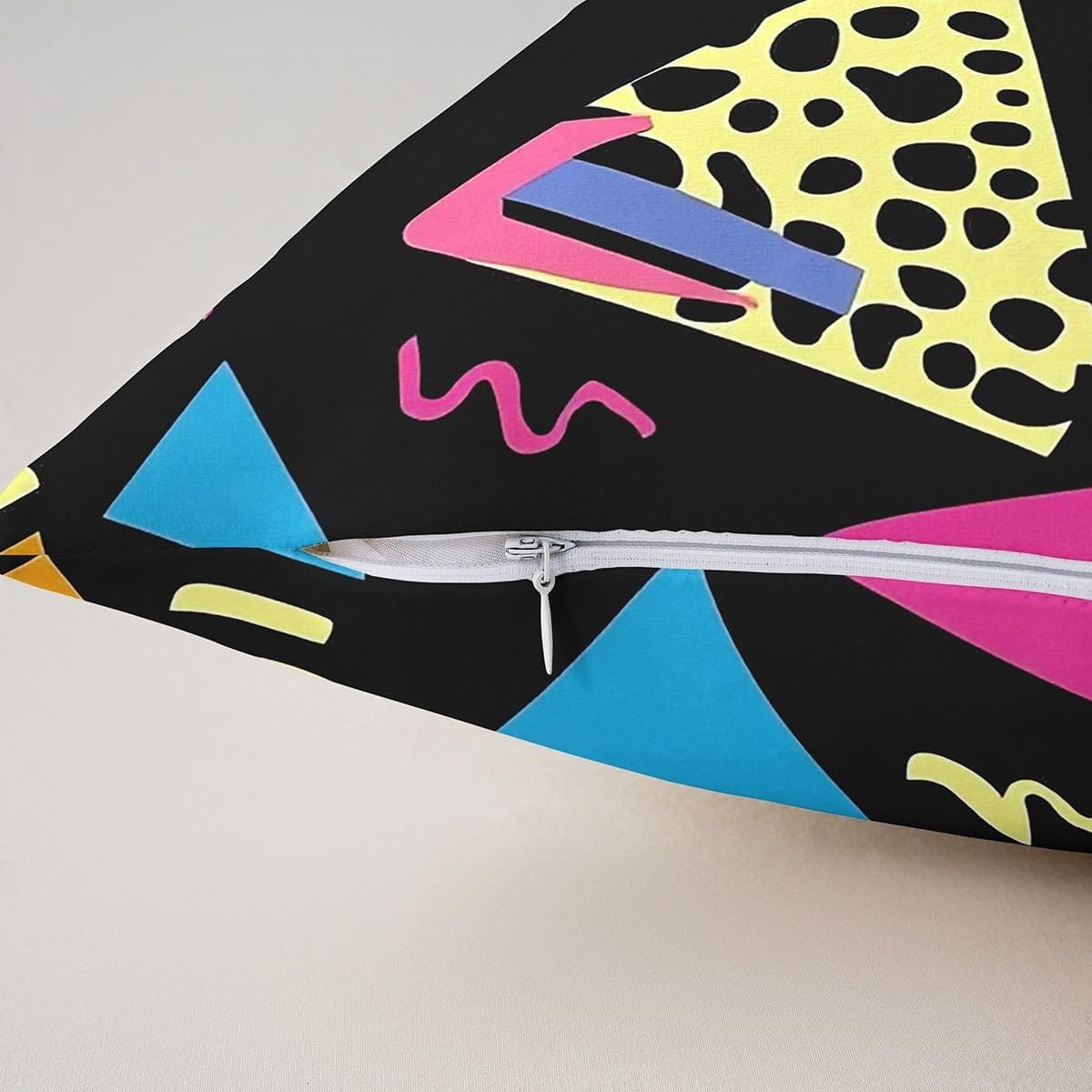
Set of 2 Memphis Throw Pillow Covers 18×18 (Budget)
Two covers let you place the Memphis palette against your existing room before deciding whether to go further. Lower friction than a comforter, easier to remove if the experiment fails.
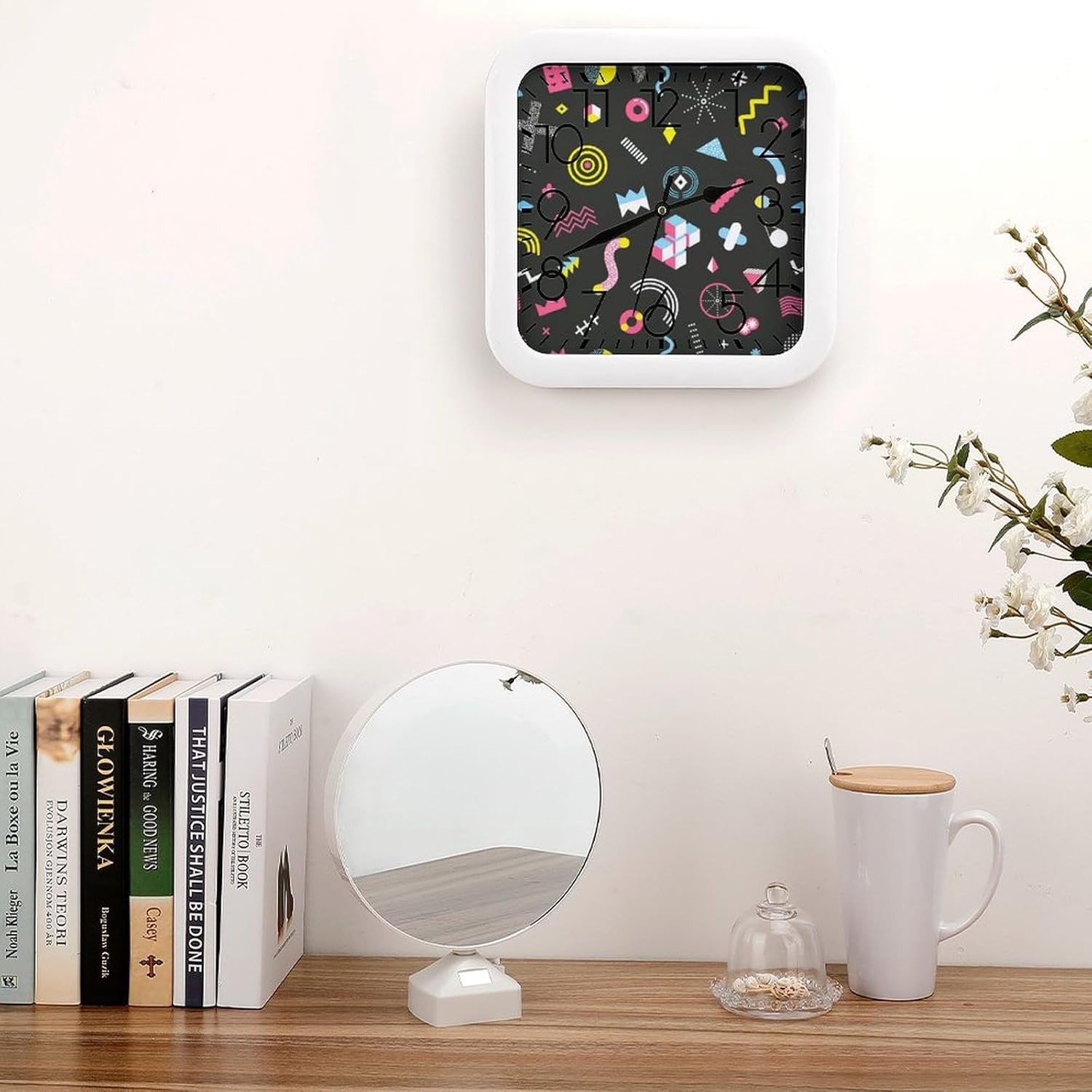
Memphis Design Pattern Silent Clock (Budget)
A wall object that carries the movement’s graphic language in a form most households already use. Quieter commitment than upholstery, harder to argue against.
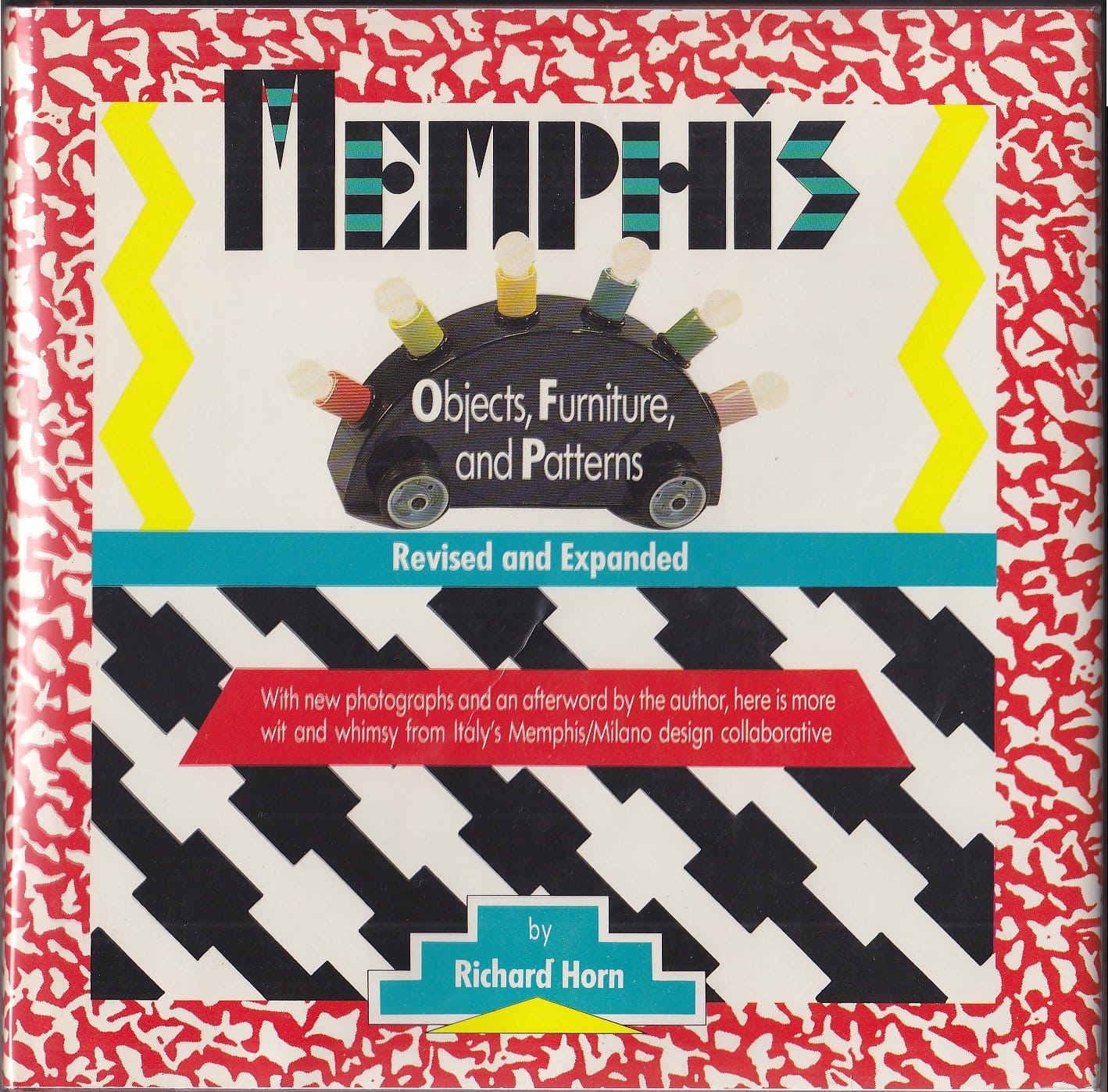
Richard Horn, Memphis: Objects, Furniture, and Patterns (Running Press, 1985) (Mid-Range — book)
The primary English-language survey published during the movement’s active years; written from inside the moment, not reconstructed by hindsight.
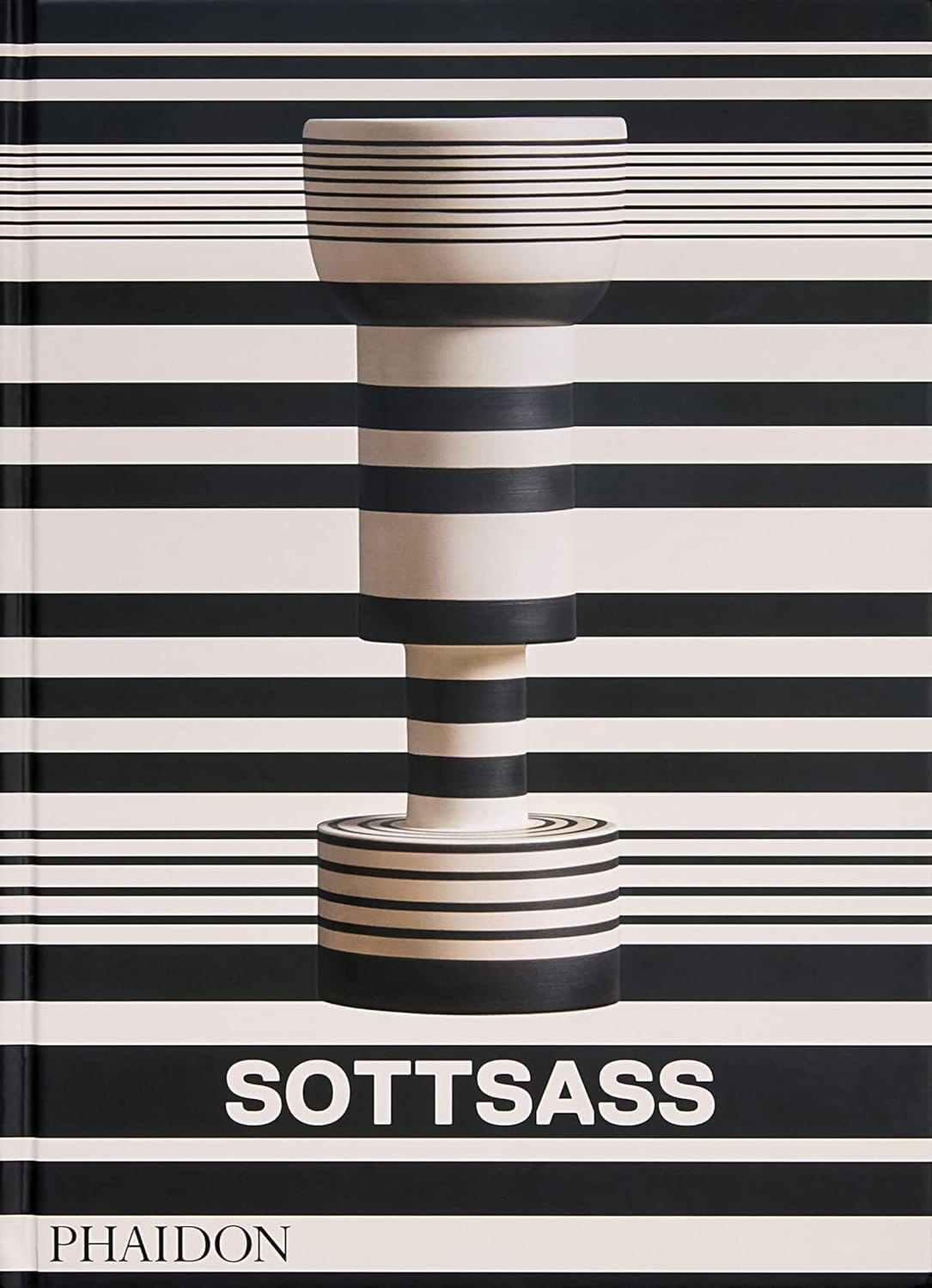
Philippe Thomé, Ettore Sottsass (Phaidon, 2021) (Premium — book)
A nearly 500-page monograph drawing on the Sottsass archive. The most complete accounting of the intellectual biography behind Memphis.
Quick Decision Guide
- Best for introducing the aesthetic gradually: Memphis Throw Pillow Covers. Two covers, low commitment, easy to reverse.
- Best budget option: Memphis Design Pattern Silent Clock. Graphic language at minimal cost, no room overhaul required.
- Best mid-range domestic piece: Memphis Pattern Comforter Set. The most substantial domestic application of the three objects.
- Best for understanding the movement: Richard Horn, Memphis: Objects, Furniture, and Patterns. The period survey; gives you the objects in their original context.
- Best for the full intellectual history: Philippe Thomé, Ettore Sottsass (Phaidon). If you want to understand Memphis, you need to understand Sottsass’s full trajectory from the 1940s onward.
Full Comparison
| Product | Best For | Price Range | Key Feature | Link |
|---|---|---|---|---|
| Memphis Pattern Comforter Set | Bedroom anchor piece | Mid-Range | Full Memphis geometry at bed scale | Shop |
| Memphis Throw Pillow Covers (set of 2) | Low-commitment test | Budget | Two-cover set, reversible experiment | Shop |
| Memphis Design Pattern Silent Clock | Wall graphic | Budget | Wall-mounted, minimal installation | Shop |
| Horn, Memphis: Objects, Furniture, and Patterns | Movement survey | Mid-Range | Published 1985, inside the moment | Shop |
| Thomé, Ettore Sottsass (Phaidon) | Full intellectual history | Premium | ~500 pages, Sottsass archive access | Shop |
What each of these Memphis design products gets right — and where it stops short
Memphis Pattern Comforter Set (Queen)
Pros:
- Carries the Memphis circle-and-triangle geometry at a scale that actually reads in a room
- Functional domestic object, justifiable as bedding rather than purely as an art object
- Mid-range price means the experiment doesn’t require serious capital
Cons:
- Textile interpretation of Memphis necessarily softens the hard-edge graphic quality of the originals
- Comforters are not easy to photograph well; the pattern compresses in natural light
Who it’s for: Someone who wants to introduce the Memphis palette into a bedroom without committing to furniture.
Why it stands out: It applies the visual language to a domestic function Memphis itself never prioritized. The movement was about furniture and objects, not bedding, which makes this a contemporary interpretation rather than a reproduction.
Set of 2 Memphis Throw Pillow Covers 18×18
Pros:
- Two covers let you test the aesthetic against multiple palettes before settling
- Lowest financial commitment of the three objects
- Easy to remove: if the experiment reads wrong against your room, the decision costs nothing to reverse
Cons:
- Two 18×18 covers will not anchor a room. They are an accent, not an argument.
- Pattern fidelity varies by manufacturer; examine images carefully before ordering
Who it’s for: Someone new to the Memphis aesthetic who wants to verify it works in their specific space before investing further.
Why it stands out: The lowest-friction entry point into a visual language that can look forced if introduced at the wrong scale.
Memphis Design Pattern Silent Clock
Pros:
- Wall object with genuine utility; unlike a print, it has a function
- Silent movement means no noise disruption from the Memphis commitment
- Graphic language reads well at wall distance, where geometric patterns perform best
Cons:
- Clock face design varies; the Memphis vocabulary works better on some models than others
- A clock is a small wall object. In a large room, it will not carry the aesthetic alone.
Who it’s for: Someone who wants one Memphis graphic element on a wall without repainting or hanging a print.
Why it stands out: It introduces the pattern language through an object most rooms already accommodate, which means the design work is less about acquisition and more about placement.
The Memphis vocabulary works best when it is introduced deliberately, one object at a time, not deployed as a room theme.
Richard Horn, Memphis: Objects, Furniture, and Patterns (Running Press, 1985)
Pros:
- Published during the movement’s active period, documenting the objects as they actually appeared in 1985, not as they have been reconstituted by subsequent design history
- Color-rich; gives you the chromatic reality of the work, not just black-and-white documentation
- Covers furniture, textiles, ceramics, and the laminate patterns (including Sottsass’s pre-Memphis Bacterio pattern for Abet Laminati) in a single volume
Cons:
- Published in 1985, it does not cover the movement’s cultural afterlife or the 2015-onward revival
- Out of print in some editions; availability and pricing fluctuate
Who it’s for: Anyone who wants to understand what the Memphis Group actually made rather than what it has come to represent.
Why it stands out: There is no substitute for a survey written inside the moment it documents. Horn’s book is that survey for Memphis.
Philippe Thomé, Ettore Sottsass (Phaidon, 2021)
Pros:
- Nearly 500 pages, 800 illustrations, drawing directly on the Sottsass archive. The most complete monograph available in English.
- Covers Sottsass’s full career from the 1940s onward, which means Memphis arrives in the book with its full intellectual context
- Phaidon’s production standards are consistent; the reproduction quality is reliable
Cons:
- At premium book pricing, it is a serious investment
- Its scope of nearly a century of design practice means Memphis receives proportional rather than exclusive attention
Who it’s for: Someone who wants to understand Memphis as the product of a specific intellectual biography rather than as an autonomous aesthetic movement.
Why it stands out: You cannot fully read Memphis without reading Sottsass. This is the book that makes that reading possible.
You cannot fully read Memphis without reading Sottsass — the movement was not a style he developed; it was an argument he had been building toward for thirty years.
What the Memphis Group was actually arguing against
Memphis was not arguing against boredom. Sottsass was arguing against an ideology.
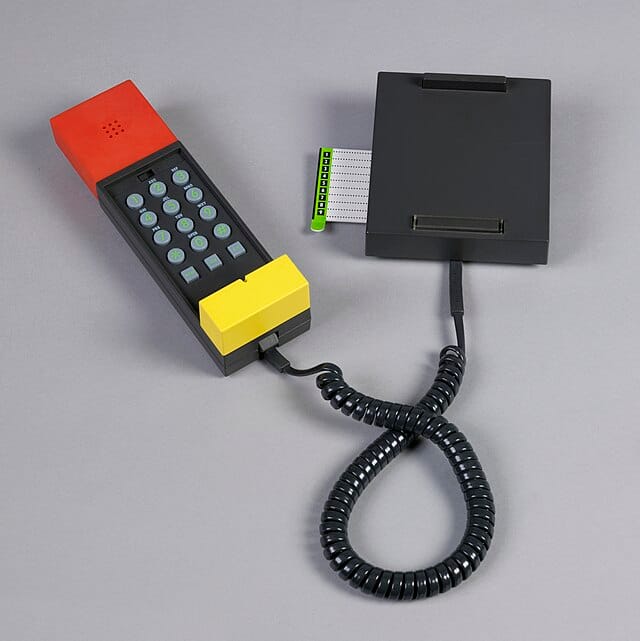
On December 6, 1980, Sottsass gathered collaborators in his Milan apartment and they listened to Bob Dylan’s “Stuck Inside of Mobile with the Memphis Blues Again” on repeat until the group had a name. The founding conviction: Modernism’s equation of restraint with moral seriousness was a position, not a universal law, and worth dismantling.

The September 1981 debut at Milan’s Arc ’74 gallery showed 55 pieces. Within three months, more than 400 periodicals worldwide had covered the show (Memphis Group archive, memphis.it). The Design Museum London records the critical reception as “a shotgun wedding between Bauhaus and Fisher-Price.” Sottsass framed the group’s intent plainly: “radical, funny, and outrageous” (MasterClass, Memphis Design Guide, 2026).
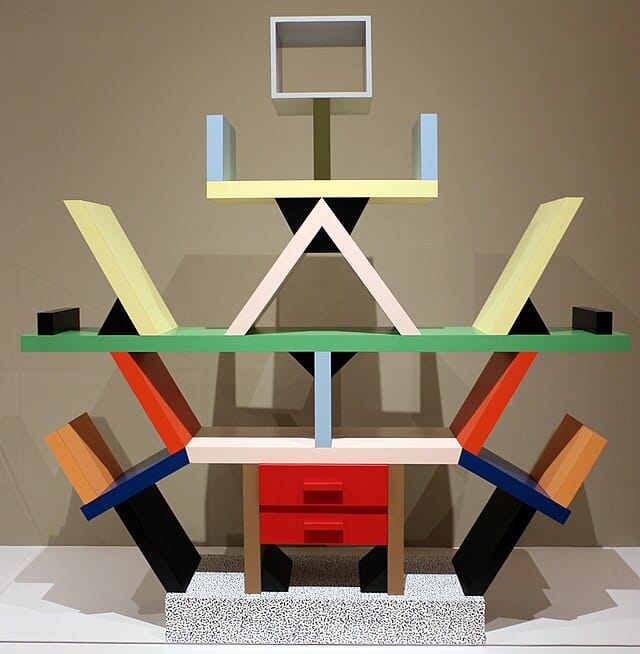
The stakes were philosophical. If Dieter Rams argued that restraint was an ethics of design, Memphis argued that restraint was itself a position. To claim that ornament is crime, as a strand of Modernism inherited from Loos, is to claim that one cultural preference is a universal standard. Memphis said it wasn’t.
Frequently Asked Questions
What is Memphis design?
Memphis design is a postmodern design movement founded in Milan in 1981 by Ettore Sottsass and a group of collaborators including Michele De Lucchi, George Sowden, and Nathalie Du Pasquier. The movement produced furniture, textiles, ceramics, and objects defined by bold geometric shapes, clashing colors, plastic laminate surfaces, and a deliberate rejection of Modernist functionalism. The Memphis Group operated from 1981 to 1987.
Why is it called Memphis design if it started in Italy?
The name comes from Bob Dylan’s “Stuck Inside of Mobile with the Memphis Blues Again,” which was playing on repeat during the founding meeting at Sottsass’s Milan apartment on December 6, 1980 (Wikipedia, Memphis Group article). The name had no geographic or cultural connection to Memphis, Tennessee. It was accidental, the song that happened to be playing, which suited a group that was skeptical of design movements taking themselves too seriously.
How do I incorporate Memphis design into my home without overdoing it?
The Memphis vocabulary works best when introduced deliberately, one object at a time rather than as a room theme. A single textile piece, a clock, or a pair of pillow covers can carry the geometric language without requiring you to repaint or replace furniture. The movement’s original work was meant to provoke through contrast with its surroundings; a room designed entirely in Memphis style loses that tension.
Are authentic Memphis Group pieces still being made?
The original Memphis Group dissolved in 1987. Memphis Milano, a successor company, has since licensed and reproduced certain pieces. Original 1981–1987 works are auction-house territory, selling at four- to five-figure prices on platforms like 1stDibs and Pamono. What you will find at accessible prices are Memphis-inspired objects: contemporary goods that carry the geometric vocabulary without being licensed reproductions.
Who were the main designers in the Memphis Group?
The core founding group included Ettore Sottsass (b. 1917, Innsbruck; d. 2007), Michele De Lucchi, George Sowden, Nathalie Du Pasquier (b. 1957, Bordeaux, who created many of the textile patterns and later moved to painting), Matteo Thun, Aldo Cibic, and Marco Zanini (Wikipedia, Memphis Group article). Sottsass was the intellectual center; Du Pasquier and Sowden were among the most prolific contributors to the pattern and textile work.
Is Memphis design the same as postmodern design?
Memphis is one movement within postmodern design, not synonymous with it. Postmodernism in design is a broad reaction against Modernism’s universalist claims. Memphis is the most visually aggressive expression of that reaction. Other postmodern design tendencies (deconstructivism, neo-baroque, design pluralism) share the rejection of Modernist doctrine without sharing Memphis’s specific formal vocabulary of laminate surfaces, color blocking, and geometric pattern.
Memphis arose as a direct rejection of Bauhaus rationalism — the contrast between the two movements is the central argument in twentieth-century design history. See our full comparison of Memphis vs Bauhaus design philosophy, or explore Bauhaus design products for the opposing tradition.

About Joe Post
Joe Post holds an MFA in Art from California Institute of the Arts (CalArts) and has done additional graduate work at the School of the Art Institute of Chicago. He founded Art Design Ideas to write about design as cultural argument — the decisions, contradictions, and assumptions built into the objects we live with.