
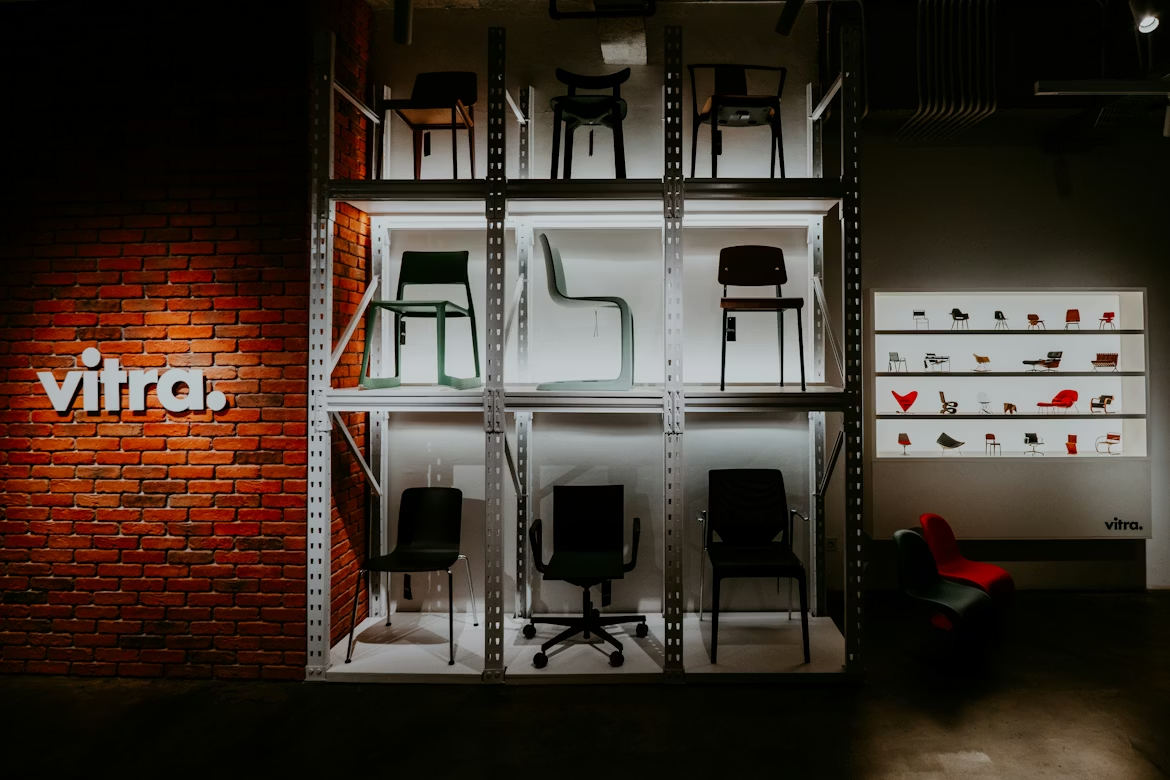
Vitra is a Swiss furniture manufacturer founded in 1950 that holds licensed production rights for designs by Charles and Ray Eames, Verner Panton, and Jean Prouvé in Europe and the Middle East. The company’s best Vitra products range from the Miniatures Collection of 1:6 scale chair miniatures to full-size originals from the Eames and Panton catalogues.
Our top picks
The five products below are the ones worth your attention. Each is a licensed Vitra piece. Not a reproduction, not a tribute, but the manufacturer with the actual rights to make it in Europe. That distinction matters more than it might sound.
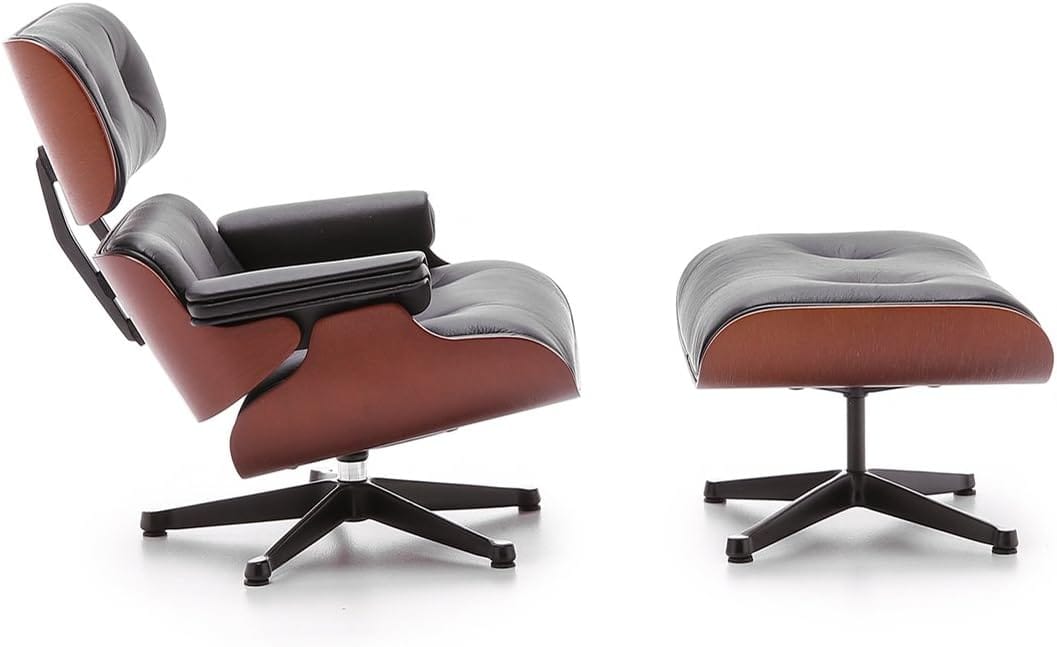
Vitra Miniature Eames Lounge Chair & Ottoman (Mid-Range)
The 1:6 scale miniature of the 1956 Eames Lounge Chair, complete with rosewood-finish shell and ottoman. Vitra is the only licensed manufacturer for this design in Europe, and the miniature matches the original’s 47-step construction logic in miniature form.
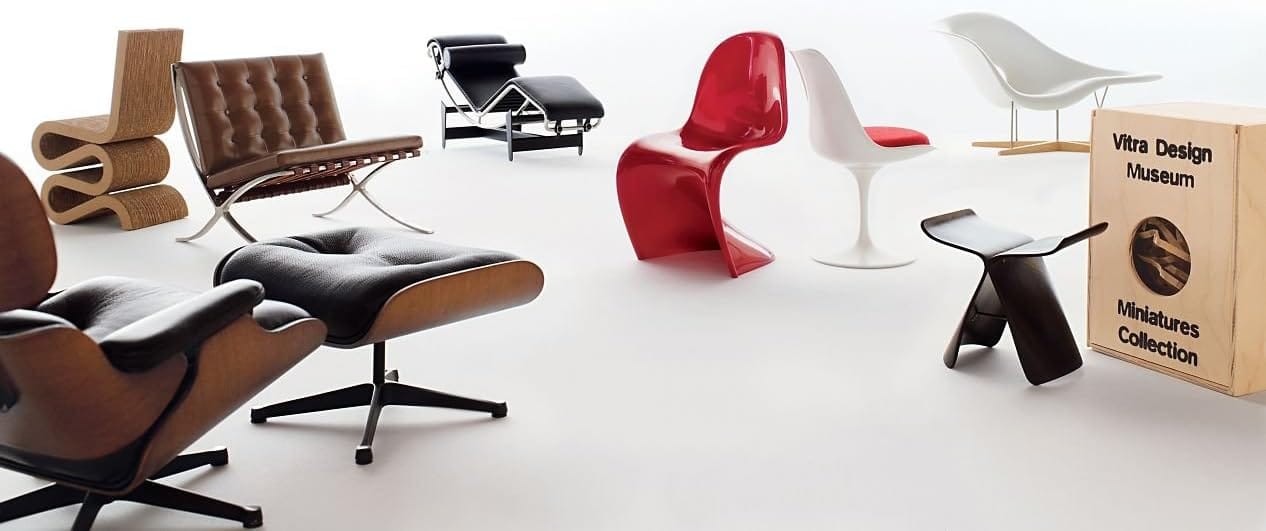
Vitra Miniature Eames DSW Chair (Budget)
The dowel-base side chair from 1950 in miniature. Wire cross-brace, wooden dowel legs, fibreglass shell rendered at 1:6 scale. Owning the Vitra-licensed version is a quiet argument about where the original actually comes from.
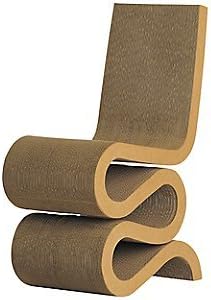
Miniature Wiggle Side Chair by Vitra (Budget)
Frank Gehry’s 1972 corrugated cardboard chair in 1:6 scale, handmade in cardboard to match the material logic of the original. It makes the same argument Gehry made, just smaller.
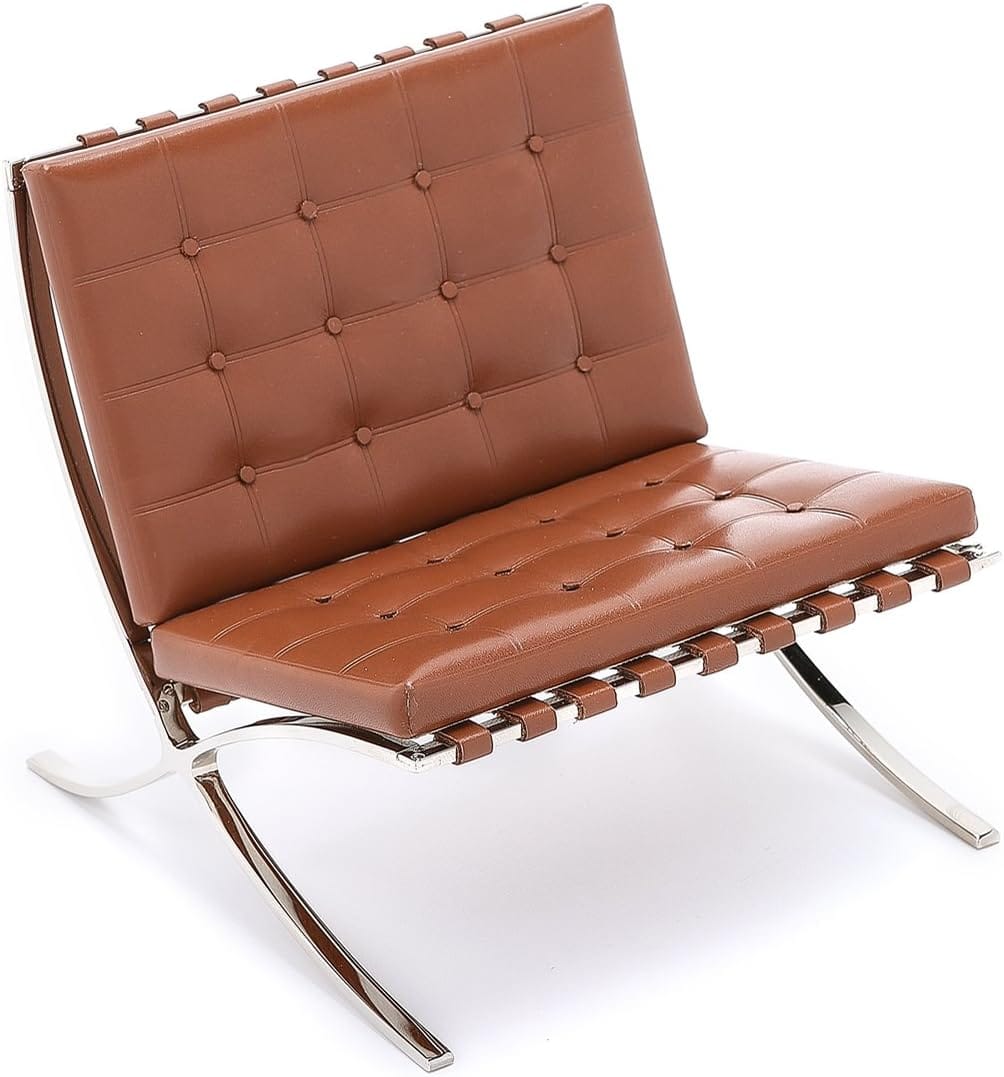
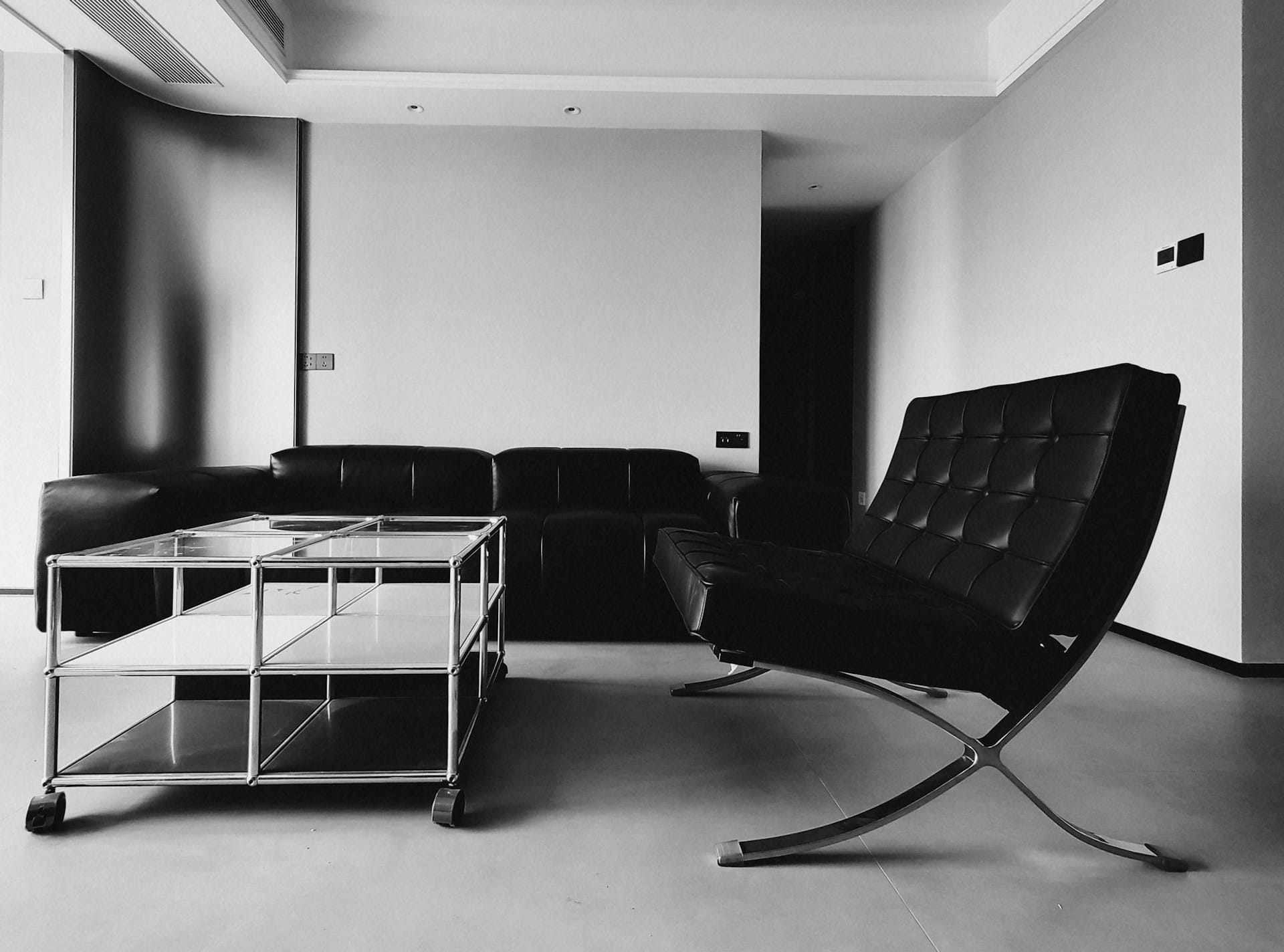
Vitra Miniature Barcelona Chair (Mies van der Rohe MR 90) (Mid-Range)
The 1929 Mies van der Rohe design, originally built for the German Pavilion at the International Exposition in Barcelona, reproduced at 1:6 scale with X-frame steel base and tufted leather cushion.
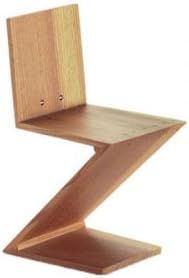
Vitra Miniature Rietveld Zig Zag Chair (Budget)
The 1934 De Stijl chair by Gerrit Rietveld, which reads as a geometric proof as much as furniture. At 1:6 scale, the argument of the form is if anything clearer.
Quick decision guide
- Best for the serious design collection: Vitra Miniature Eames Lounge Chair & Ottoman. The most recognisable piece in the Vitra catalogue, and the miniature version carries the same sourcing provenance as the full-size original.
- Best budget option: Vitra Miniature Rietveld Zig Zag Chair. One of the most formally rigorous chairs in design history at one of the lower price points in the Miniatures Collection.
- Best premium option: Vitra Miniature Eames Lounge Chair & Ottoman. When the miniature includes the ottoman, it costs more, but it’s also the complete object; the chair without the ottoman is a truncated argument.
- Best for a design school or teaching context: Vitra Miniature Eames DSW Chair. The DSW is one of the most copied chairs in history, which makes the question of provenance concrete rather than abstract when you’re teaching.
- Best for someone interested in materials as argument: Miniature Wiggle Side Chair by Vitra. Gehry’s corrugated cardboard chair at 1:6 scale, still in cardboard; material continuity is the whole point.
Full comparison
| Product | Best For | Price Range | Key Feature | Link |
|---|---|---|---|---|
| Vitra Miniature Eames Lounge Chair & Ottoman | Centrepiece of a design collection | Mid-Range | Complete set with ottoman; rosewood-finish shell | View on Amazon |
| Vitra Miniature Eames DSW Chair | Teaching; authenticity argument | Budget | Wire cross-brace, dowel legs at 1:6 scale | View on Amazon |
| Miniature Wiggle Side Chair by Vitra | Materials-focused collections | Budget | Handmade in corrugated cardboard | View on Amazon |
| Vitra Miniature Barcelona Chair | Modernism survey; Mies collections | Mid-Range | X-frame steel base; tufted leather; 1929 design | View on Amazon |
| Vitra Miniature Rietveld Zig Zag Chair | De Stijl; formal geometry collections | Budget | De Stijl chair-as-proof form; lowest price point | View on Amazon |
What the best Vitra products have that unlicensed versions lack
Vitra Miniature Eames Lounge Chair & Ottoman
Pros:
- Licensed production. Vitra holds the exclusive Eames rights for Europe and the Middle East; this is not a tribute piece.
- Rosewood-finish shell and leather upholstery match the original’s material character.
- Includes the ottoman, which completes the form as the Eameses designed it.
- 1:6 scale means it reads clearly on a shelf or desk without requiring a vitrine.
Cons:
- The mid-range price point is high relative to other miniatures in the collection.
- Rosewood finish is a print, not veneer. Appropriate at this scale, but worth knowing.
Who it’s for: Anyone who wants a serious design object rather than a souvenir, and who understands that the Vitra licence is the reason this miniature means something an unlicensed model does not.
Why it stands out: The full-size Eames Lounge Chair is one of the most counterfeited pieces of furniture in history. Counterfeits reproduce the shape, not the 47-step moulded plywood process. The miniature sidesteps that argument entirely: it’s the version you can own without compromise.
The full-size Eames Lounge Chair is one of the most counterfeited pieces of furniture in history. The miniature is the version you can own without compromise.
Vitra Miniature Eames DSW Chair
Pros:
- Among the most affordable entry points into the Miniatures Collection.
- Wire cross-brace and wooden dowel legs reproduced accurately at 1:6 scale.
- The DSW is historically significant. It is one of the most reproduced chairs in furniture history, which makes the provenance argument unusually clear.
- Works well as a teaching object in design education contexts.
Cons:
- Fibreglass shell appears in one or two colourways in the miniature; the full-size version was made in many.
- The form is familiar to the point of cliché in some design circles, though that familiarity is itself an argument worth having.
Who it’s for: Design students, educators, and people who want to make the authenticity argument concrete rather than theoretical.
Why it stands out: Because the DSW has been reproduced so widely, owning the Vitra-licensed miniature is a deliberate position on what the design actually is and who made it.
Miniature Wiggle Side Chair by Vitra
Pros:
- Handmade in corrugated cardboard, matching the material logic of Gehry’s 1972 original.
- The formal argument of the Wiggle Chair is that furniture could be made from industrial packing material. That argument is intact at 1:6 scale.
- Unusual enough to be a genuine conversation object.
- Budget price point.
Cons:
- Cardboard is not durable in humid environments; this is a display object, not a working model.
- Less immediately recognisable than Eames pieces; the provenance story requires telling.
Who it’s for: People whose interest runs toward material experimentation and the history of what furniture can be made from.
Why it stands out: The Wiggle Chair miniature is handmade. Not injection-moulded, not cast. The material continuity between the miniature and the original is not incidental; it’s the whole point of the object.
Vitra Miniature Barcelona Chair (Mies van der Rohe MR 90)
Pros:
- Reproduces the X-frame steel base and two tufted leather cushions accurately at 1:6 scale.
- The 1929 provenance, designed for the German Pavilion at the International Exposition in Barcelona, is legible in the form.
- The Barcelona Chair’s position as one of modernism’s defining objects makes this a genuine design history piece.
Cons:
- The X-frame is not adjustable or functional at this scale; it’s a formal object, not a model.
- The mid-range price is higher than the Zig Zag or DSW miniatures.
Who it’s for: Modernism collectors and anyone interested in the history of the chair as a statement about architecture, the body, and occasion.
Why it stands out: Mies designed the Barcelona Chair for a room that had nothing in it — a pavilion without a permanent collection, built for a royal visit. The chair is a throne with no throne room behind it. The miniature holds that contradiction in 1:6 scale.
Mies designed the Barcelona Chair for a room that had nothing in it — a pavilion built for a royal visit. The chair is a throne with no throne room behind it.
Vitra Miniature Rietveld Zig Zag Chair
Pros:
- The lowest price point in this selection.
- The Zig Zag (1934) is the canonical example of De Stijl furniture logic. Four planes, cantilevered, no back legs.
- At 1:6 scale, the formal geometry reads as clearly as in the full-size original.
- A good entry point into the Miniatures Collection for anyone starting a design library.
Cons:
- The Zig Zag form is compositionally simple; it reads well but doesn’t carry the same biographical weight as the Eames pieces.
- Less visually complex than the Lounge Chair or Barcelona Chair miniatures.
Who it’s for: People interested in the De Stijl movement, formal geometry in furniture, or anyone who wants a rigorous object at a reasonable price.
Why it stands out: The Zig Zag Chair works as a geometric proof. Three right angles, one diagonal, zero redundant material. At 1:6 scale, the argument is intact.
Why Vitra can make these and no one else can
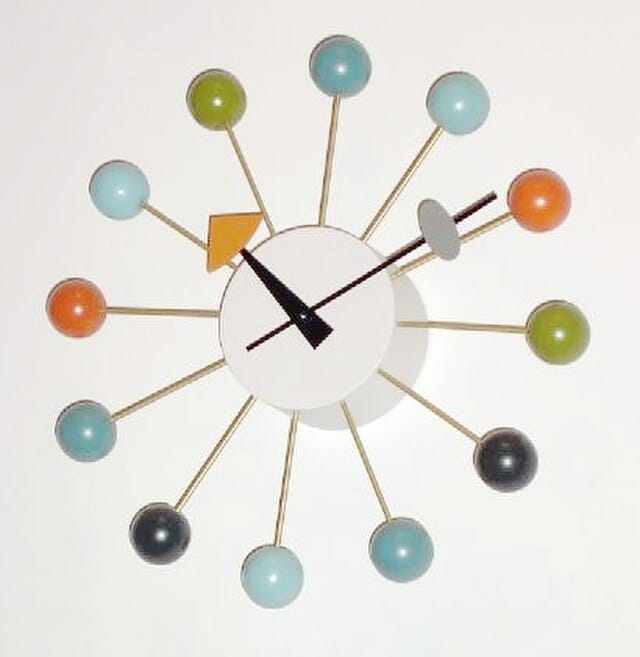
In 1953, Willi Fehlbaum visited New York and saw Eames and George Nelson furniture at a Herman Miller showroom. Four years later, Vitra began licensed production of the Herman Miller European collection: Eames, Nelson, Alexander Girard, Isamu Noguchi. When that partnership ended in 1984, all European and Middle East production and distribution rights for those designs transferred exclusively to Vitra.
A Vitra Eames Lounge Chair in Europe is not a reproduction of the Eames Lounge Chair. It is the Eames Lounge Chair, made by the licensed manufacturer, with the same construction process and quality requirements. What the many companies selling lookalike chairs cannot do, legally or practically, is claim that provenance. They can copy the form. They cannot copy the rights.
The Miniatures Collection extends this logic into a different price bracket. Each miniature is produced by the Vitra Design Museum with the same attention to material continuity as the full-size pieces. The Wiggle Chair miniature is in cardboard because the original is in cardboard. The Eames Lounge Chair miniature has a rosewood-finish shell because the original has rosewood-veneer shells. These are documentary decisions, not decorative ones.
Further Reading
Two books, not three. The third option is usually more of the same.
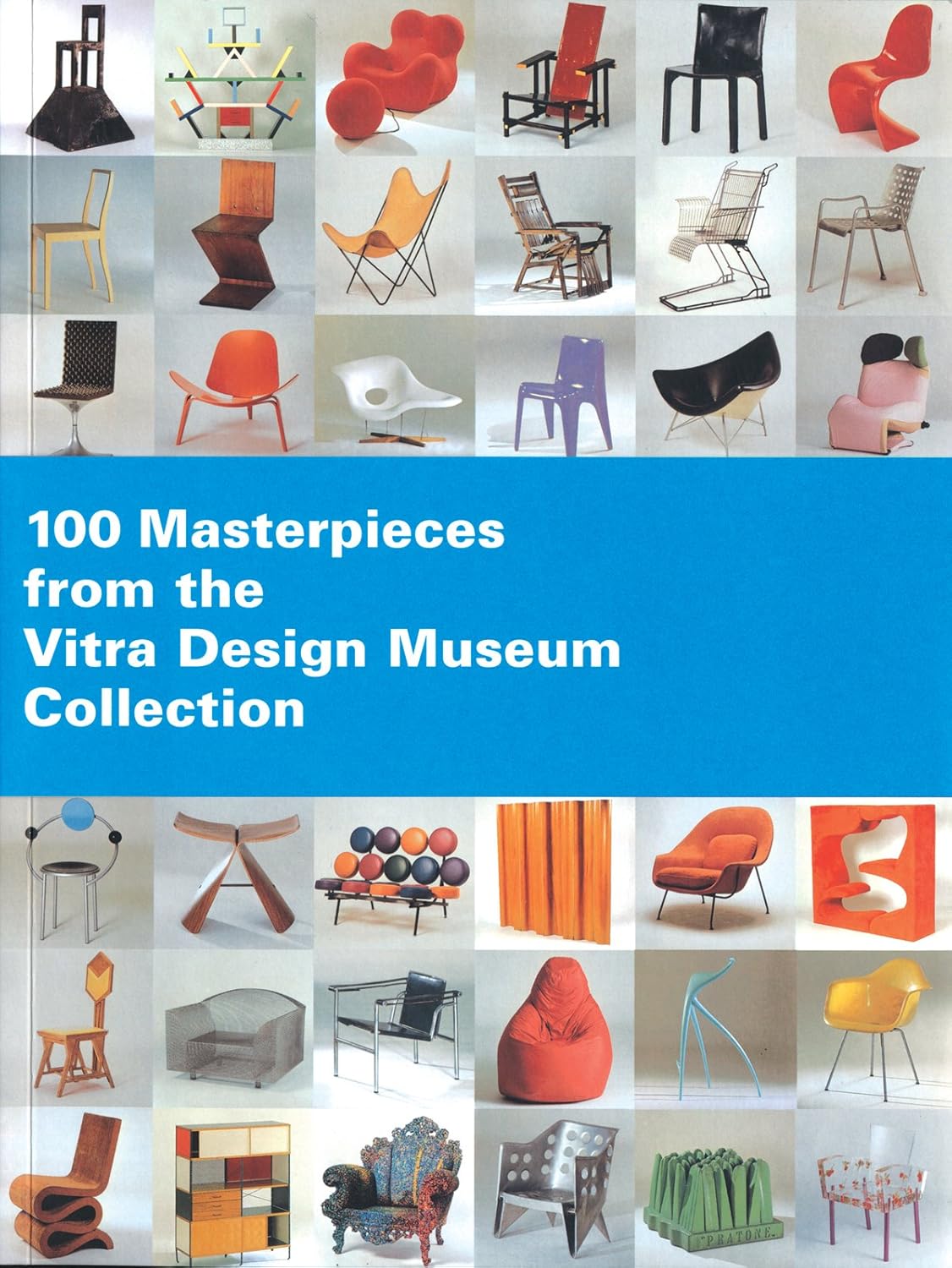
Von Vegesack et al., 100 Masterpieces from the Vitra Design Museum Collection (Vitra Design Museum, 1996)
This is the museum catalogue that contextualises every piece in the Miniatures Collection. The book and the objects were designed to be read together; if you own the miniatures, you need the book.
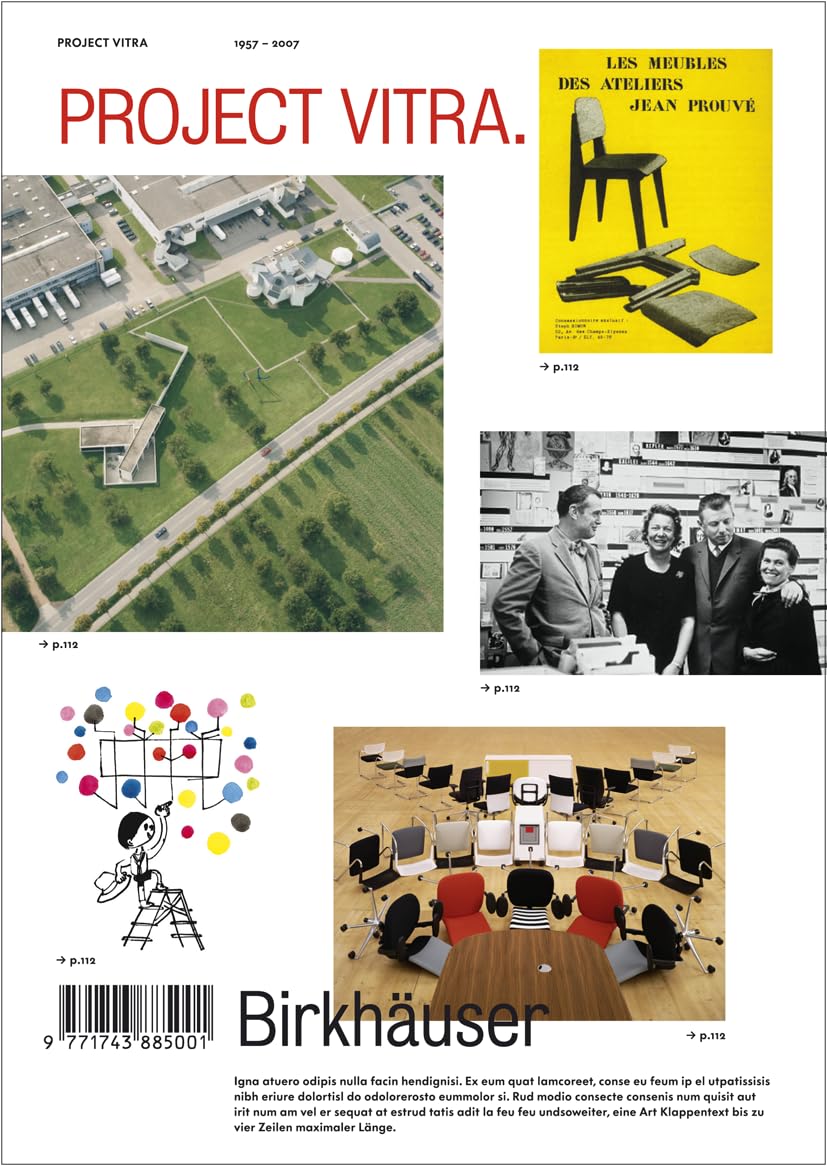
Windlin & Fehlbaum, Project Vitra: Sites, Products, Authors, Museum, Collection, Signs (Birkhäuser, 2008)
An inside account of how Vitra built its design philosophy across buildings, products, and relationships, written by the company’s chairman; opinionated in the right way, which is what you want from a primary source.
Frequently Asked Questions
What is the Vitra Miniatures Collection?
The Vitra Miniatures Collection is a series of 1:6 scale chair miniatures produced by the Vitra Design Museum, covering more than 100 designs from Art Nouveau through postmodernism. Each miniature is built to match the original’s construction, materials, and colour. They are used by design schools and universities as teaching objects and are the most affordable way to own a licensed Vitra piece, at roughly $50–150 each.
Are Vitra products worth the price?
For full-size pieces, yes — but the reasoning matters. Vitra holds exclusive European and Middle East production rights for Eames, Nelson, Panton, and Girard designs. When you buy a Vitra Eames Lounge Chair, you are buying the licensed object, not a reproduction. The construction process is the same one Herman Miller uses. Counterfeits reproduce the form at lower cost, but they are not the same object by any standard that holds up to examination.
What makes Vitra different from unlicensed furniture manufacturers?
Licensing. Vitra has held production rights for the Eames catalogue in Europe and the Middle East since 1957, rights that transferred exclusively to them when the Herman Miller partnership ended in 1984. Unlicensed manufacturers can copy the shape. They cannot hold the rights. The difference is not just legal. It determines whether the manufacturer has access to the original construction specifications, materials, and quality requirements.
Who designed the Eames Lounge Chair, and why does Vitra make it?
Charles and Ray Eames designed the Lounge Chair in 1956. Vitra makes it in Europe and the Middle East because of a licensing agreement established with Herman Miller in 1957, which gave Vitra exclusive production rights for the European market. When the Herman Miller partnership formally ended in 1984, those rights became Vitra’s outright. Herman Miller manufactures the same chair for North America; Vitra manufactures it for Europe and the Middle East. They are the same chair by different licensed producers in different territories.
Can you buy Vitra miniatures on Amazon?
Yes. Several Vitra Miniatures Collection pieces are available on Amazon, including the Eames Lounge Chair & Ottoman miniature (ASIN B002VSI4GG), the DSW Chair miniature (ASIN B005DPWB68), the Wiggle Side Chair miniature (ASIN B001CRGGEE), the Barcelona Chair miniature (ASIN B005DPWIAM), and the Rietveld Zig Zag Chair miniature (ASIN B005DPWISY). All carry the Vitra Design Museum provenance.
Where is Vitra furniture made?
Vitra manufactures at its campus in Weil am Rhein, Germany, just across the Swiss border from its original Birsfelden headquarters. The production facilities and the Vitra Design Museum are on the same campus, which is also the site of buildings by Frank Gehry, Zaha Hadid, SANAA, Tadao Ando, and Herzog & de Meuron.
For a direct comparison of how Vitra and HAY approach the market for design-forward furniture, see Vitra vs HAY. Vitra sits within the broader landscape of design brands covered in our HAY Danish design profile and the Design Brands & Ateliers hub.

About Joe Post
Joe Post holds an MFA in Art from California Institute of the Arts (CalArts) and has done additional graduate work at the School of the Art Institute of Chicago. He founded Art Design Ideas to write about design as cultural argument — the decisions, contradictions, and assumptions built into the objects we live with.