
Alessi has been making design objects worth giving since 1921. The best Alessi gifts carry a design story: a named architect, a specific argument about what a kitchen tool can be, alongside practical use. This guide covers the most giftable pieces across three price tiers, from the Anna G corkscrew to the Juicy Salif juicer.
Our Top Picks
These four products cover the range of what Alessi does well: objects that function, objects that provoke, and objects that sit at the edge between the two. The picks run from most accessible to most committed, but there’s no bad choice on this list.
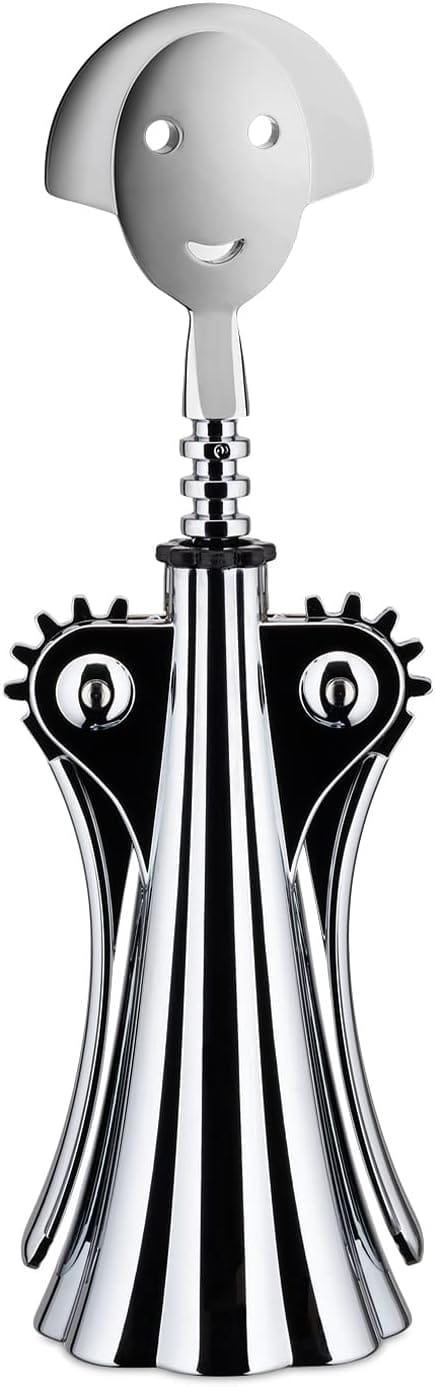
Alessi Anna G Corkscrew by Alessandro Mendini
Price range: Budget (~$35–50)
Mendini’s 1994 corkscrew is Alessi’s bestselling product. Arms raise as you turn the handle. Works, recognizable, and the Alessi box makes it a complete gift without wrapping.
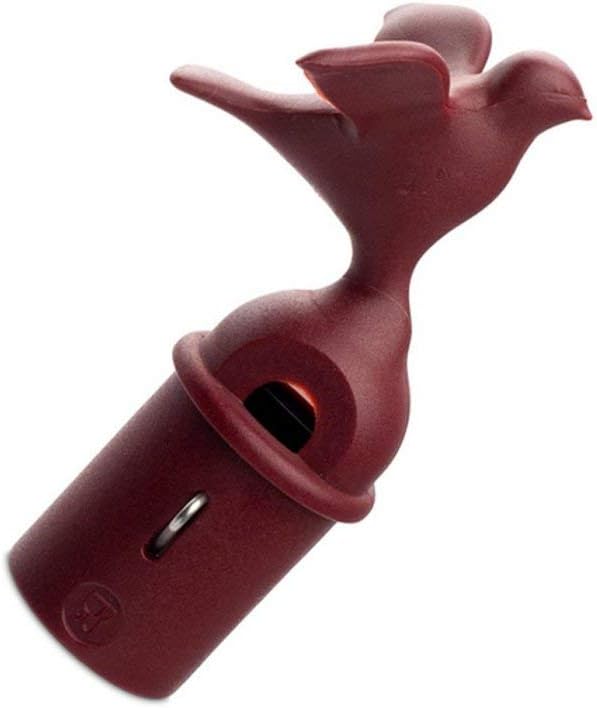
Alessi 9093 Kettle by Michael Graves
Price range: Mid-Range (~$80–120)
Stovetop stainless steel with a red, bird-shaped whistle. Designed in 1985, it was Alessi’s top-selling product for fifteen years. If the recipient uses their stove, they’ll use this every day.
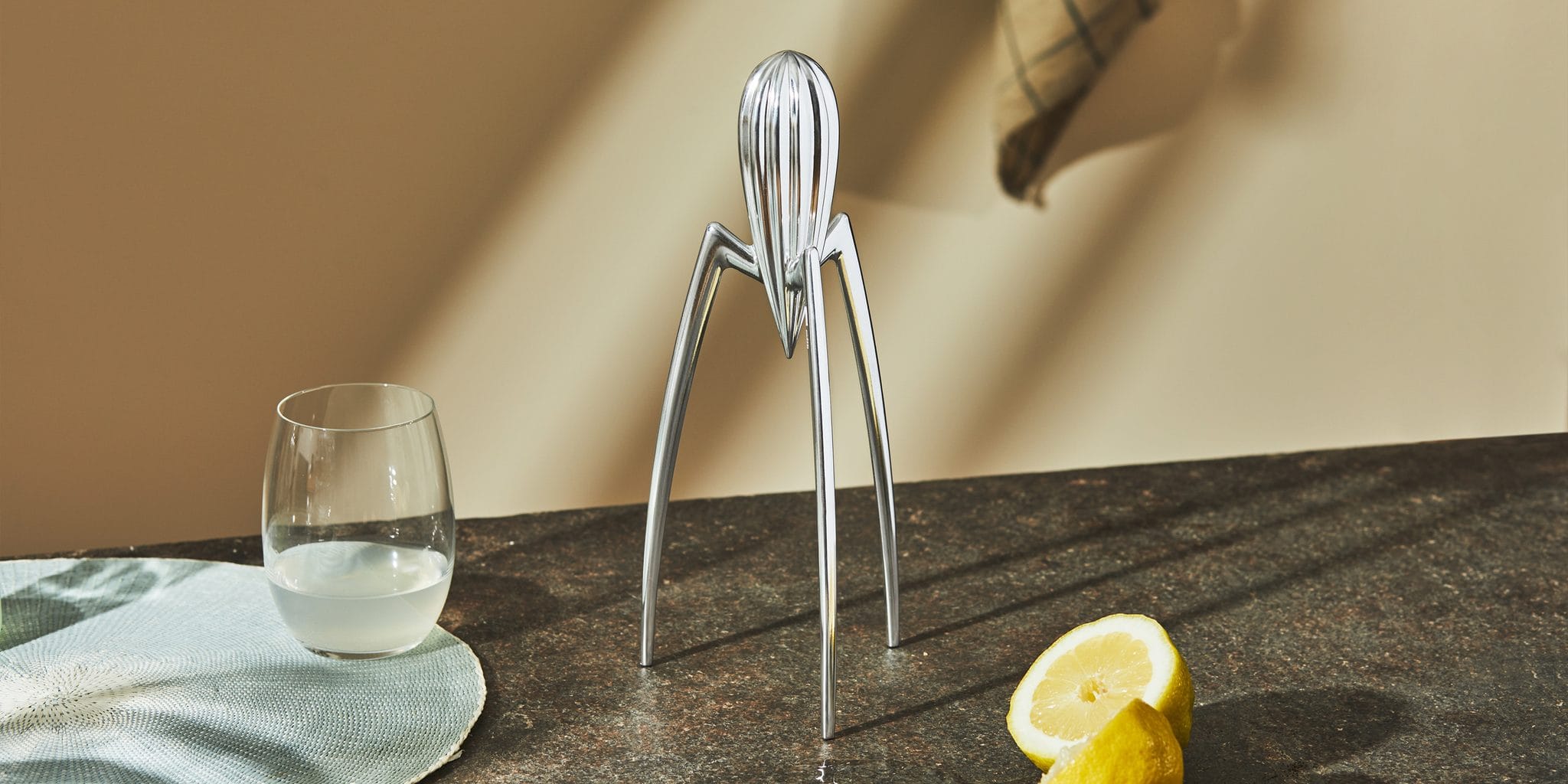
Alessi Juicy Salif Citrus Squeezer by Philippe Starck
Price range: Mid-Range to Premium (~$60–80)
Starck sketched the form on a napkin while eating squid. In the permanent collections of MoMA, the Metropolitan Museum of Art, and the V&A. “Not meant to squeeze lemons — meant to start conversations.”
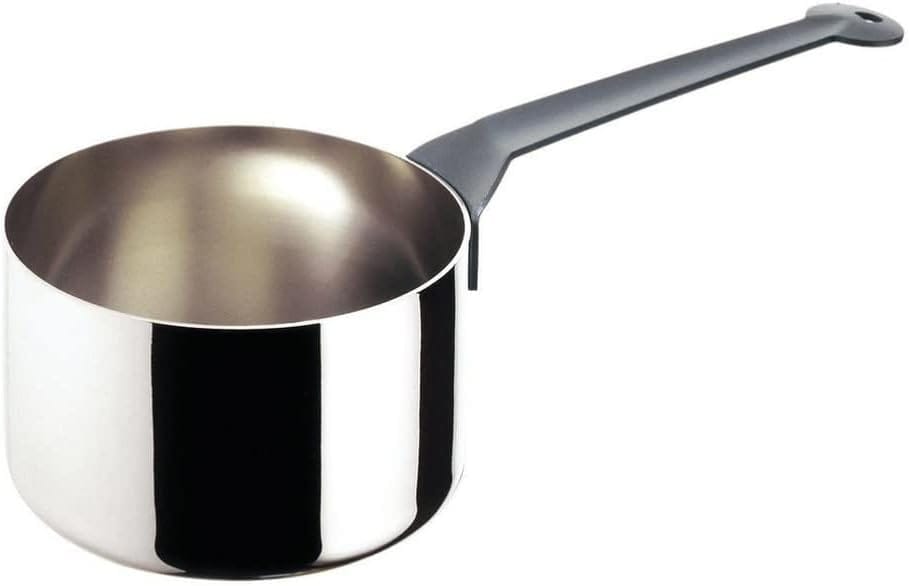
Alessi Mami Cookware by Stefano Giovannoni
Price range: Premium (~$200+)
Giovannoni’s Mami line is Alessi at its most functional. Rounded, biomorphic forms, serious cooking performance. The investment piece for someone outfitting a kitchen who wants the gift to last twenty years.
Quick Decision Guide
- Best for the design enthusiast who has everything: Juicy Salif. It is not a juicer you buy for juice. It is an object you buy because it has an argument to make, and that argument is still legible thirty-five years later.
- Best budget Alessi gift (under $50): Anna G Corkscrew. The most recognized entry point to the brand. At this price, nothing else in the Alessi range gives you the same combination of design provenance and daily use.
- Best mid-range gift ($50–$120): Michael Graves 9093 Kettle. Stovetop, comes with the Graves story attached. If the recipient uses their stove, they’ll use this every day.
- Best premium gift ($100+): Mami Cookware. The investment piece. Best for someone who cooks seriously and wants Alessi to mean something more than a shelf object.
- Best for architects and designers: Juicy Salif. The object that had a career in design criticism before most kitchen tools had a Wikipedia entry.
- Best housewarming gift: Anna G Corkscrew paired with a bottle of wine. The Alessi box does the rest.
How do these Alessi gifts compare?
| Product | Designed by | Year | Price Range | Best For | Link |
|---|---|---|---|---|---|
| Anna G Corkscrew | Alessandro Mendini | 1994 | ~$35–50 | Budget gift, housewarming, wine lovers | View on Amazon |
| 9093 Kettle | Michael Graves | 1985 | ~$80–120 | Mid-range gift, home cooks, stovetop users | View on Amazon |
| Juicy Salif Juicer | Philippe Starck | 1990 | ~$60–80 | Collectors, architects, design enthusiasts | View on Amazon |
| Mami Cookware | Stefano Giovannoni | 1993 | ~$200+ | Serious home cooks, premium gift | View on Amazon |
Which Alessi gift is actually worth what it costs?
The honest answer is: it depends on what you’re paying for. Alessi prices are high relative to comparable kitchen objects. But you’re not buying a comparable kitchen object. You’re buying something designed by a named person, made to a specific argument, and packaged in a way that makes the gift obvious before it’s opened.
Anna G Corkscrew
Under $50, the most accessible Alessi product with real design credentials. It opens bottles, it works, it holds up. Mendini designed it in 1994 and it’s been in continuous production since. The Alessi box makes it a complete gift without wrapping. It looks like something without needing context.
Where it falls short: the grip is less ergonomic than a waiter’s corkscrew for high-volume use. It’s a corkscrew and nothing else.
Good for someone new to Alessi, wine drinkers, housewarming guests, anyone who wants a designed object under $50 that doesn’t feel like a compromise.
Alessandro Mendini, editor of Domus from 1979 to 1985 and three-time Compasso d’Oro winner, designed a corkscrew that looks like a small humanist figure. The arms rise when you extract the cork. It is one of the few kitchen tools with a personality.
Michael Graves 9093 Kettle
Stovetop use, compatible with gas and electric (not induction, confirm before purchase). The red bird whistle is genuinely memorable; there’s no other kettle that sounds or looks like this. Designed in 1985, it was Alessi’s top-selling product for the following fifteen years. A daily-use object that earns its place in the kitchen.
Where it falls short: stove-only; buyers with induction cooktops need to confirm compatibility. The postmodern aesthetic is not for every kitchen. Slightly bulkier than minimal stovetop kettles.
Good for home cooks, people who use their stove every day, anyone who wants an Alessi object that doubles as a kitchen workhorse rather than a shelf piece.
The Graves 9093 outsold every building Graves ever designed. Michael Graves was a Princeton-trained postmodern architect; Alberto Alessi commissioned him for a sterling silver tea service in 1982, then asked him to make something affordable for the mass market. The 1985 kettle was the result. The New York Times once noted Graves was “perhaps best known for [a] teakettle,” which is either a damning or affectionate judgment depending on how you read it.
Juicy Salif Juicer
MoMA permanent collection, the Metropolitan Museum of Art, and the Victoria and Albert Museum. Philippe Starck’s most recognized product design. Gold-plated anniversary edition for serious collectors. The conversation it starts is specific and interesting.
Where it falls short: does not juice well. This is documented and intentional. Starck said it was “not meant to squeeze lemons — meant to start conversations.” The gold-plated version came with an explicit warning from Alessi: do not use it with actual fruit. Citric acid corrodes the finish. If the recipient expects a working juicer, this is the wrong gift.
Good for architects, designers, collectors, anyone who will put it on a shelf and know what it is. Not for someone who wants to make fresh orange juice.
The Juicy Salif appeared on the cover of Donald Norman’s Emotional Design (Basic Books, 2004) as an example of design that fails its stated function while succeeding at everything else. It had a career in design criticism before most kitchen objects have a Wikipedia entry. Over 500,000 units had been sold by 2003.
Mami Cookware
Serious cooking performance. This is functional Alessi, not decorative. Giovannoni’s biomorphic forms make a coherent set; the pieces look like they belong together. The range includes saucepans, frying pans, stockpots, and a full kitchen commitment. Strong design lineage: Stefano Giovannoni also designed the Bombo stool for Magis (1999), one of the most widely produced chairs of the 1990s.
Where it falls short: premium price makes this an investment purchase, not a casual add-on. Less immediately recognizable than the Anna G or Juicy Salif; the design story requires more explanation.
Good for serious home cooks, newly married couples equipping a kitchen, anyone for whom “I bought you Alessi cookware” means something.
Mami is Alessi making the case that design objects can perform as well as they look. Most of the brand’s most recognized pieces are shelf objects. Mami closes that gap.
What makes the best Alessi gifts worth the price
Alberto Alessi, the third-generation head of the company, described Alessi’s operating model as “an industrial research lab, a place for research and production,” not a manufacturer in the conventional sense. That framing explains why a corkscrew from 1994 and a kettle from 1985 are still in production and still worth buying.
Every Alessi product carries a named designer. That provenance is part of what you’re giving. The recipient can look up Alessandro Mendini, read about his run at Domus, understand why a postmodern architect designed a corkscrew that looks like a figure. That context travels with the object in a way it doesn’t with most kitchen purchases.
The packaging matters too. Alessi ships in a distinctive branded box. The gift announces itself before it’s opened. For a full account of how a small Italian metalworking company founded in Crusinallo in 1921 became the thing it is now, see our full look at Alessi’s design history.
Frequently Asked Questions
What is the best Alessi gift for someone who loves design?
The Juicy Salif is the most specifically design-literate choice. It’s in MoMA’s permanent collection and has a documented history in design criticism. If you want something more functional, the Michael Graves 9093 kettle has equal provenance and gets used every day. For an under-$50 entry point, the Anna G corkscrew is Alessi’s own bestseller and the most recognizable object in the range.
Is the Alessi Juicy Salif juicer actually usable?
Not well, and that’s intentional. Philippe Starck said the Juicy Salif was “not meant to squeeze lemons — meant to start conversations.” The standard version can extract citrus, but the yield is poor and the design makes it awkward to hold a glass underneath. The gold-plated anniversary edition came with an explicit warning from Alessi not to use it with actual fruit, as citric acid corrodes the finish. Buy it as an object, not as a juicer.
Why are Alessi products so expensive?
Alessi prices reflect named-designer royalties, stainless steel production in Italy, and small production runs relative to mass-market kitchenware. Alberto Alessi has described the company as “an industrial research lab,” which is the honest framing. You’re paying for design provenance and production quality, not just the object. Whether that’s worth it depends on what you’re giving and why.
What is the Anna G corkscrew?
The Anna G is a corkscrew designed by Alessandro Mendini for Alessi in 1994. It’s Alessi’s bestselling product. The design gives the corkscrew a human form: the handle looks like a woman’s head with a bun, and the arms rise as you remove the cork. Mendini was editor of Domus magazine from 1979 to 1985 and won the Compasso d’Oro three times. The Anna G has been in continuous production since its introduction.
Are Alessi products available on Amazon?
Yes. Alessi products are sold through Amazon, though availability and pricing vary by product and region. All links in this guide go to Amazon search results for each product. Prices on Amazon may differ from alessi.com. For the most accurate current pricing, check both.
What Alessi product should I buy for a housewarming gift?
The Anna G corkscrew is the strongest housewarming choice: under $50, functional, designed by Alessandro Mendini, and complete in its Alessi box. If you want to spend more, the Michael Graves 9093 kettle is the right step up. It’s the kind of stovetop object that becomes part of a kitchen’s daily rhythm. Either arrives looking like exactly what it is.
For the broader context of this work, see the Design Brands & Ateliers hub — a guide to the brands and studios driving contemporary design.

About Zoe Post
Zoe Post holds a BFA and a Master of Architecture from the School of the Art Institute of Chicago. She now works as a product marketing leader at an architectural product design firm, bringing hands-on industry perspective to everything she writes. At ADI she covers contemporary artists, textile and pattern design, and the design objects that sit at the boundary of art and function.