
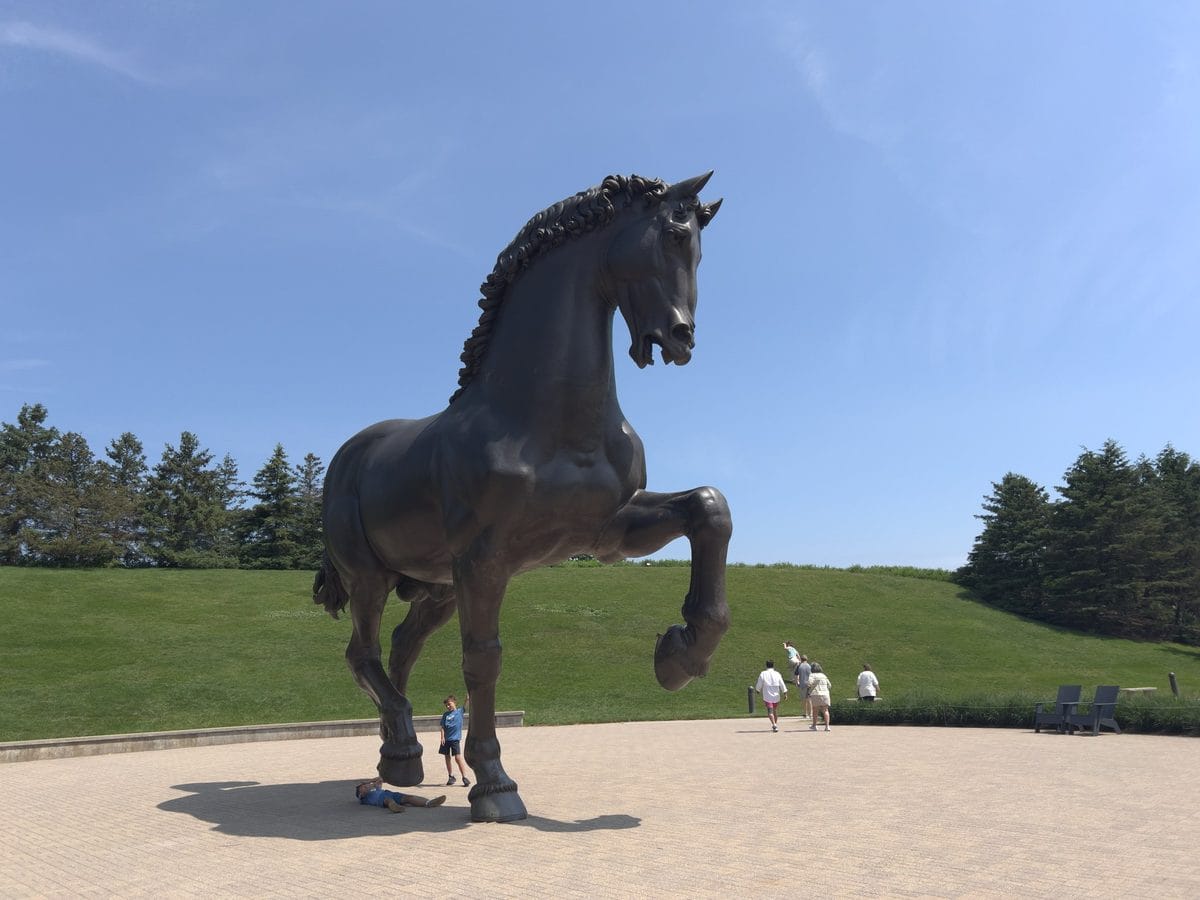
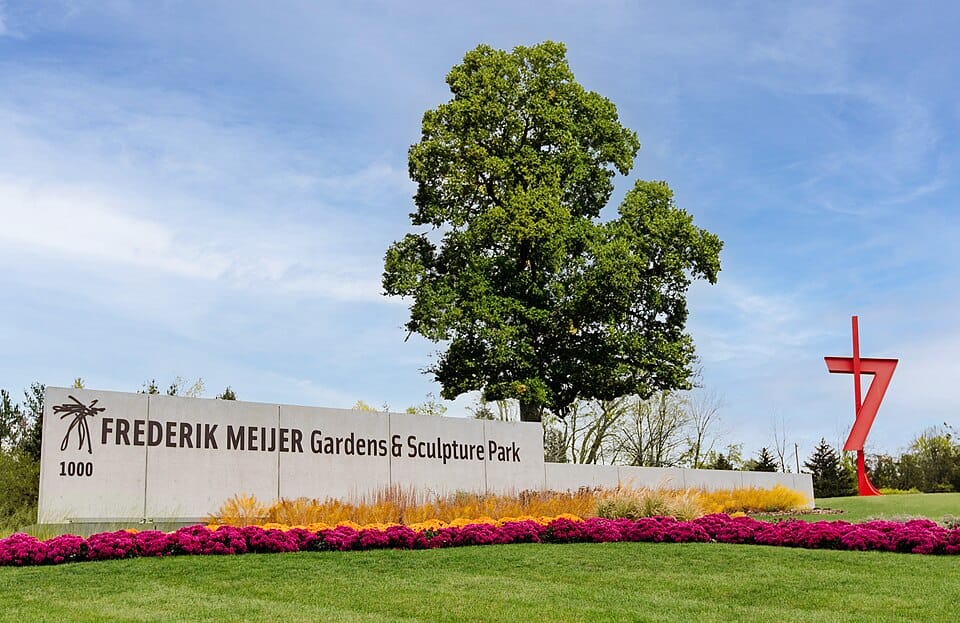
Frederik Meijer Gardens & Sculpture Park is a 158-acre outdoor sculpture park and botanical garden in Grand Rapids, Michigan, opened in 1995. It is the home of The American Horse, the Grand Rapids cast of Leonardo da Vinci’s Horse, and holds more than 300 permanent works across one of the strongest public sculpture collections in the United States.
What Fred Meijer Thought Art Was For
Fred Meijer was not a collector. That distinction matters more than it might appear. Collectors acquire. They hold. They control access. What Meijer wanted, from the time the West Michigan Horticultural Society first approached him in the early 1980s, was the opposite: a place where monumental sculpture would be available to the people of Grand Rapids, not sequestered in private galleries or flown to coastal biennials for the benefit of those who already had everything.
This is a civic conviction, not a philanthropic reflex. Meijer grew up in Greenville, Michigan, began working at age 14 in his father Hendrik’s North Side Grocery, and eventually invented the American supercenter concept at 28th Street in Grand Rapids in 1962, a grocery store combined with a general merchandise operation, calibrated to serve working families. He and Lena lived in the same modest house they built in 1957. He drove an old car. The philanthropy he constructed over his lifetime was consistent with that arithmetic: useful institutions for ordinary people, not monuments to his own taste.
Meijer was not building a trophy room. He was making an argument: that monumental sculpture belongs to the public, not to private collections or coastal cultural capitals.
The land Meijer Inc. donated in January 1991 was 70.7 acres of Grand Rapids Township farmland originally earmarked for another Meijer superstore. An alternative location was found, and the farmland was released for cultural use instead. A $13 million capital campaign, led by Earl Holton, followed. The park opened in April 1995, after thirteen years of planning. The outdoor sculpture wing opened May 16, 2002, and the park was formally renamed “Frederik Meijer Gardens & Sculpture Park” in their honor.
What Fred brought to the park was a growing collection of large-scale works by Marshall Fredericks, the Michigan sculptor he had long admired. What Lena brought was a commitment to horticulture that shaped the garden component. The two strands were always entangled. The park as it exists is a collaboration, not a solo project. Tod Williams Billie Tsien Architects completed significant expansion work beginning in 2017, but the organizing logic was established long before they arrived.
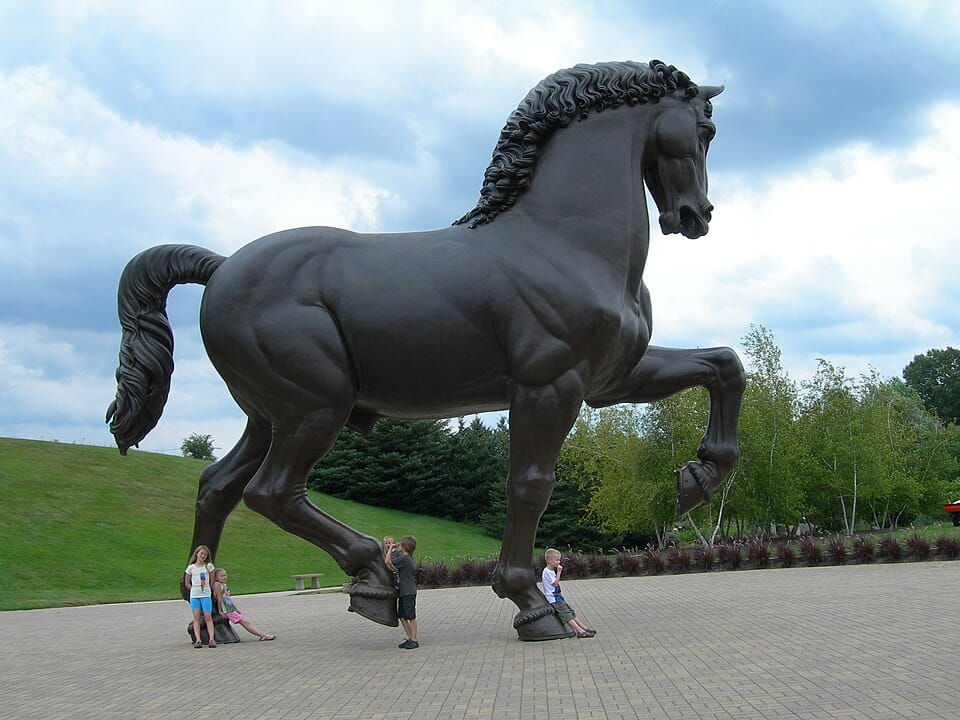
Today Meijer Gardens is the second-leading tourist attraction in Michigan, behind only The Henry Ford in Dearborn, and ranks among the 100 most-visited museums in the world, according to Philanthropy Roundtable and Crain’s Detroit Business. USA Today named it the number one sculpture park in the United States in 2023, 2024, and 2025. These numbers would have meant something to Fred Meijer. They confirm the argument he was making. Frederik Meijer Gardens & Sculpture Park describes the founding mission in its own institutional record as access, education, and public engagement, which is to say, exactly what Fred said he was trying to do.
The American Horse in Grand Rapids at the center of the park is the clearest single expression of that conviction. More on that below.
Why the collection is built for the ground, not the gallery
The outdoor sculpture park covers 30 acres of the 158-acre campus, and the design argument embedded in that landscape is not subtle. James van Sweden, the landscape architect known for the New American Garden approach, treated the ground plane as composition, not mere setting. He designed the outdoor grounds with a painterly, naturalistic planting style that makes the terrain part of the work, not a backdrop for it. Hoichi Kurisu designed the 8-acre Japanese Garden on the same principle.
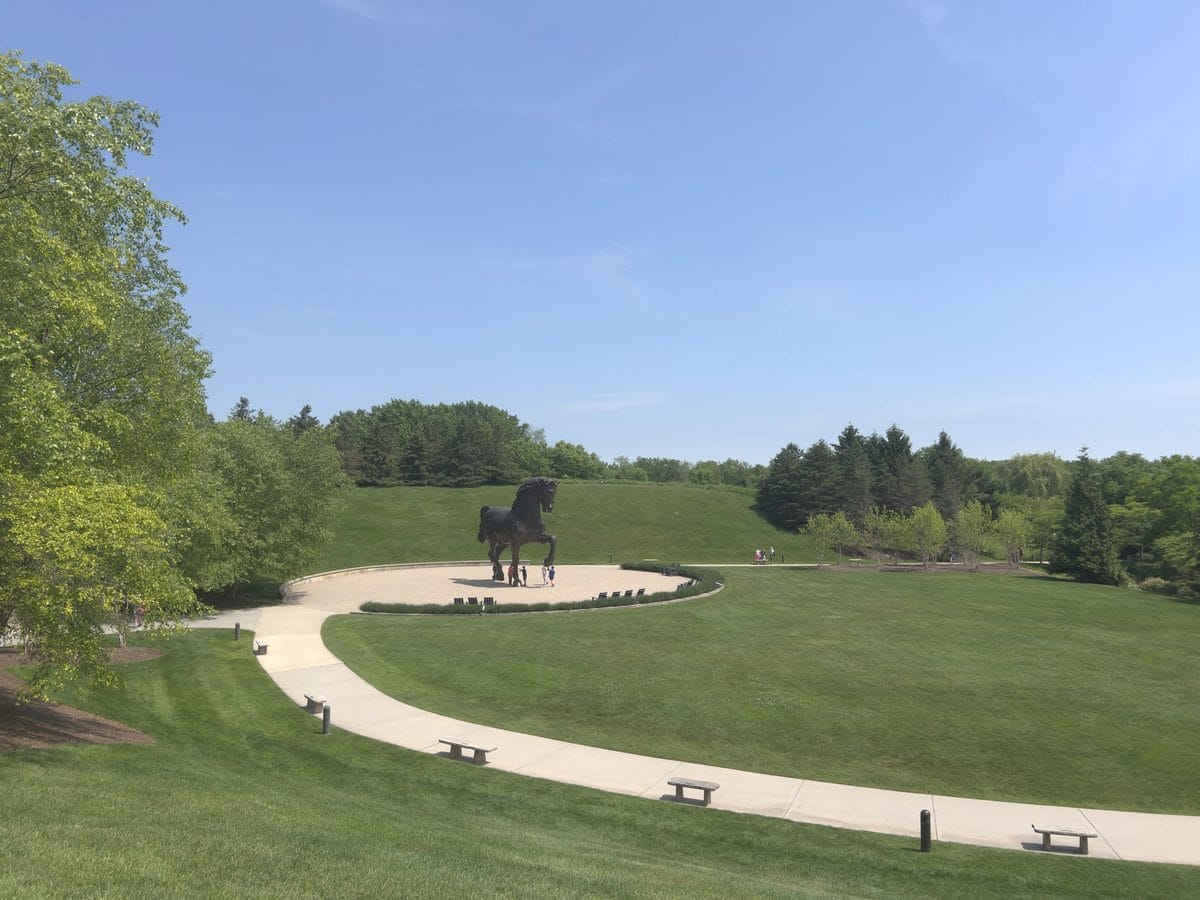
This matters for understanding why the collection looks the way it does. A 24-foot bronze horse makes no sense in a gallery. Neither does a Bourgeois spider at full scale, nor a Goldsworthy site commission, nor the crowds of headless bronze figures Magdalena Abakanowicz deploys across open ground. These works were made for spatial encounter. They require the viewer to move through them, around them, toward them from a distance. The park’s collecting instinct, stated plainly, is that certain sculpture cannot be experienced indoors, and that choosing to collect it outdoors is itself a position.
Compare this to the three obvious peer institutions. Storm King Art Center in New Windsor, New York, opened in 1960, occupies 500 acres of Hudson Valley terrain, and built its identity on rugged landscape as medium. Its collection runs deep in mid-century American abstraction: Calder, Smith, di Suvero, Serra. The landscape overwhelms the works in the best possible sense. Nasher Sculpture Center in Dallas, which opened in 2003 in a Renzo Piano building, is the concentrated urban counterpart: a small footprint, a refined garden, a collection selected for depth over breadth. Grounds for Sculpture in Hamilton, New Jersey, founded in 1992 by J. Seward Johnson, prioritizes figuration and is the most entertainment-oriented of the four.
Meijer Gardens occupies a specific curatorial position within that field. It is more encyclopedic and more civic than Storm King. It is more geographically accessible to a working Midwestern audience than the Nasher. And it reaches further into modernist abstraction than Grounds for Sculpture. That is not a compromise position. It is a defensible one, and it is the position that follows logically from Fred Meijer’s founding conviction about who sculpture is for.
The indoor component of the campus is Michigan’s largest tropical conservatory, a 5-story glass structure with its own separate collection. It is not part of the outdoor sculpture argument. Conflating the two does a disservice to both.
What the collection actually contains
The American Horse in Grand Rapids
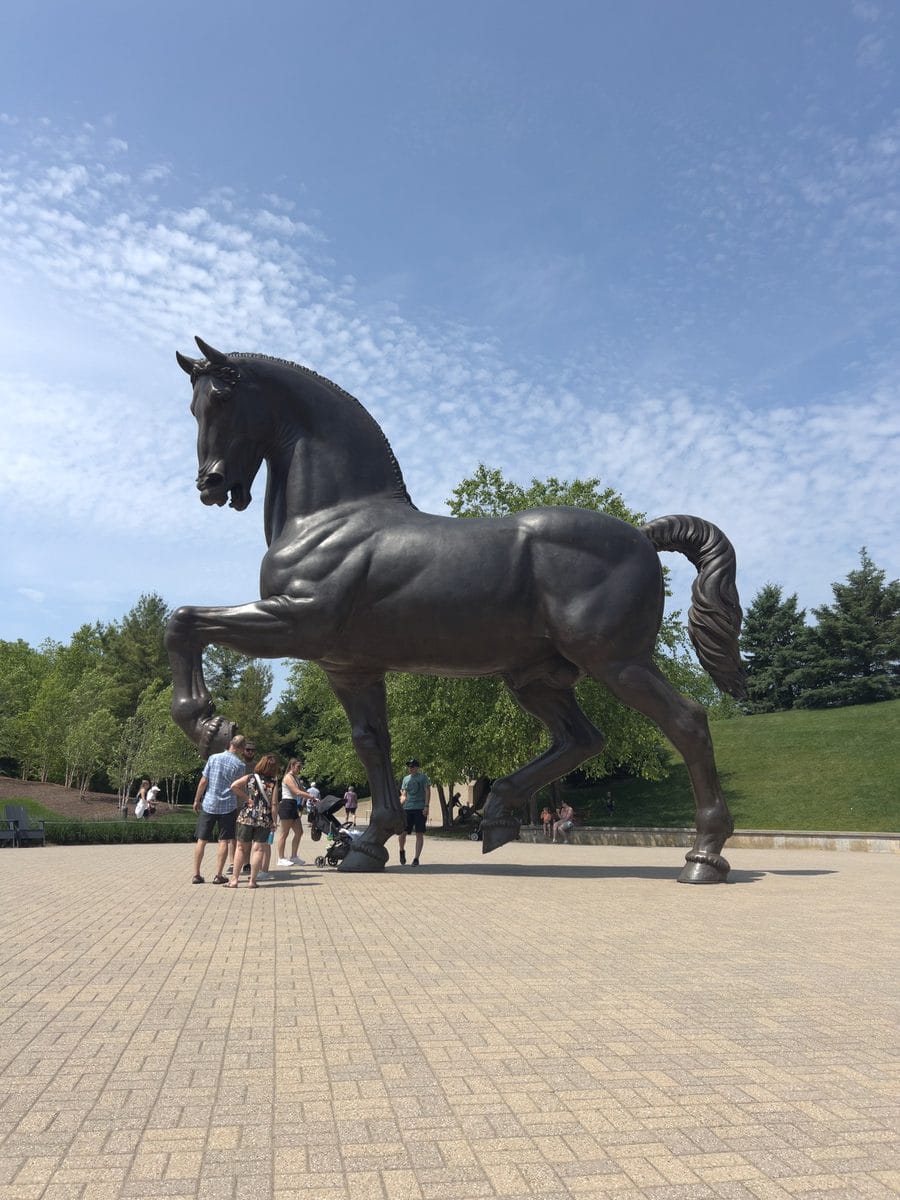
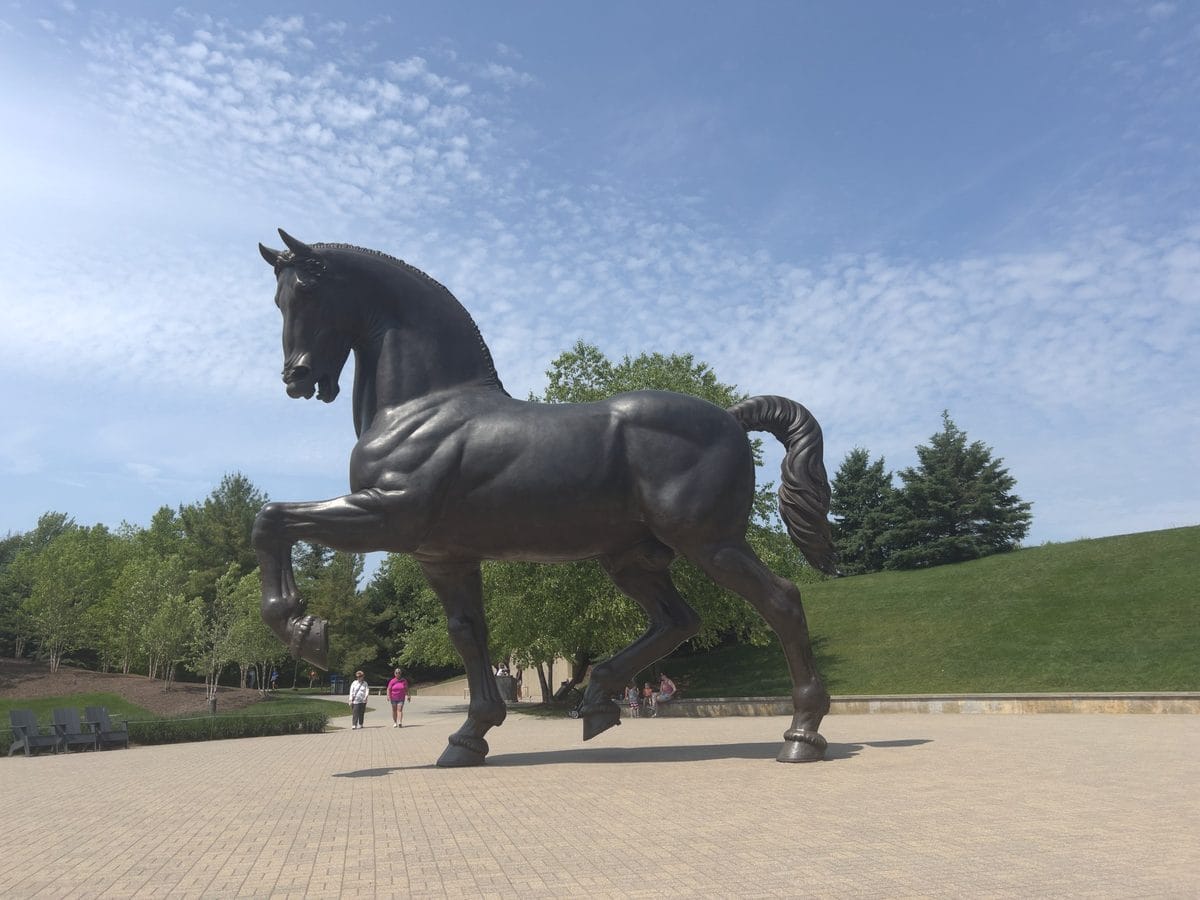
The centerpiece of the park, and the test case for everything its founder believed, is the sculptor who resolved what Leonardo could not: Nina Akamu’s 24-foot bronze horse, dedicated at Meijer Gardens on October 7, 1999.
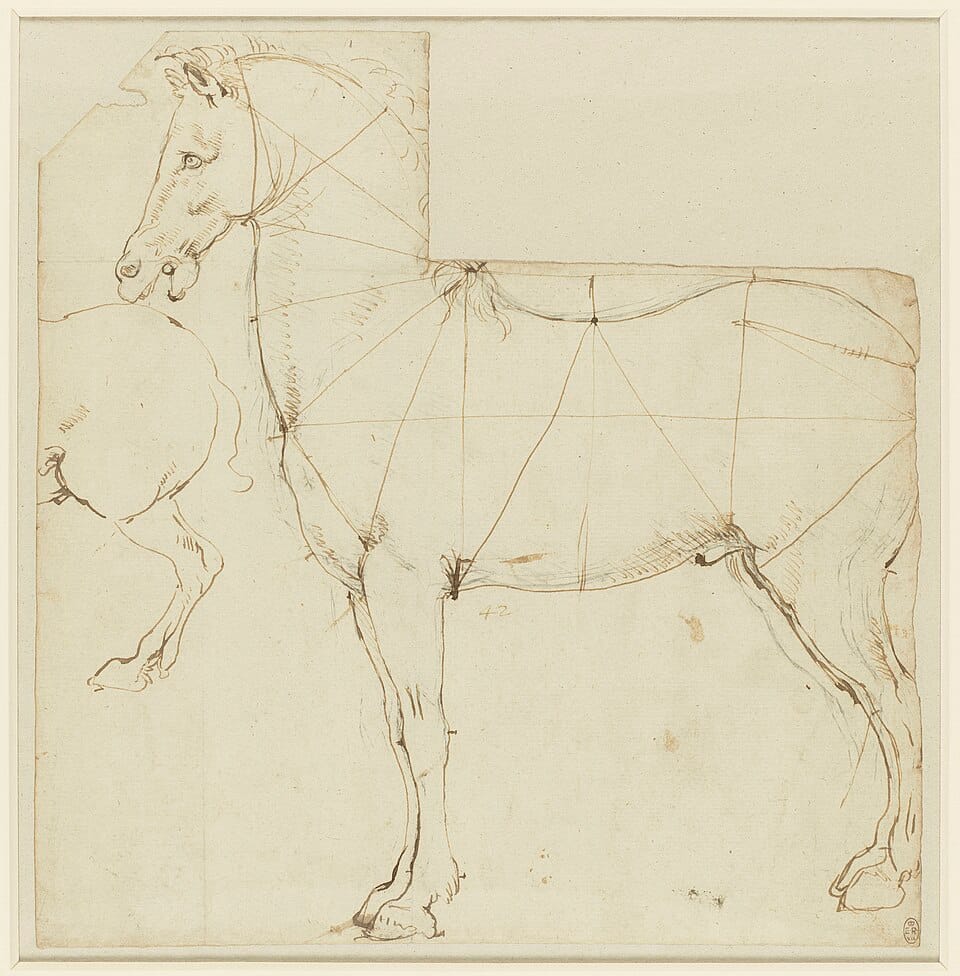
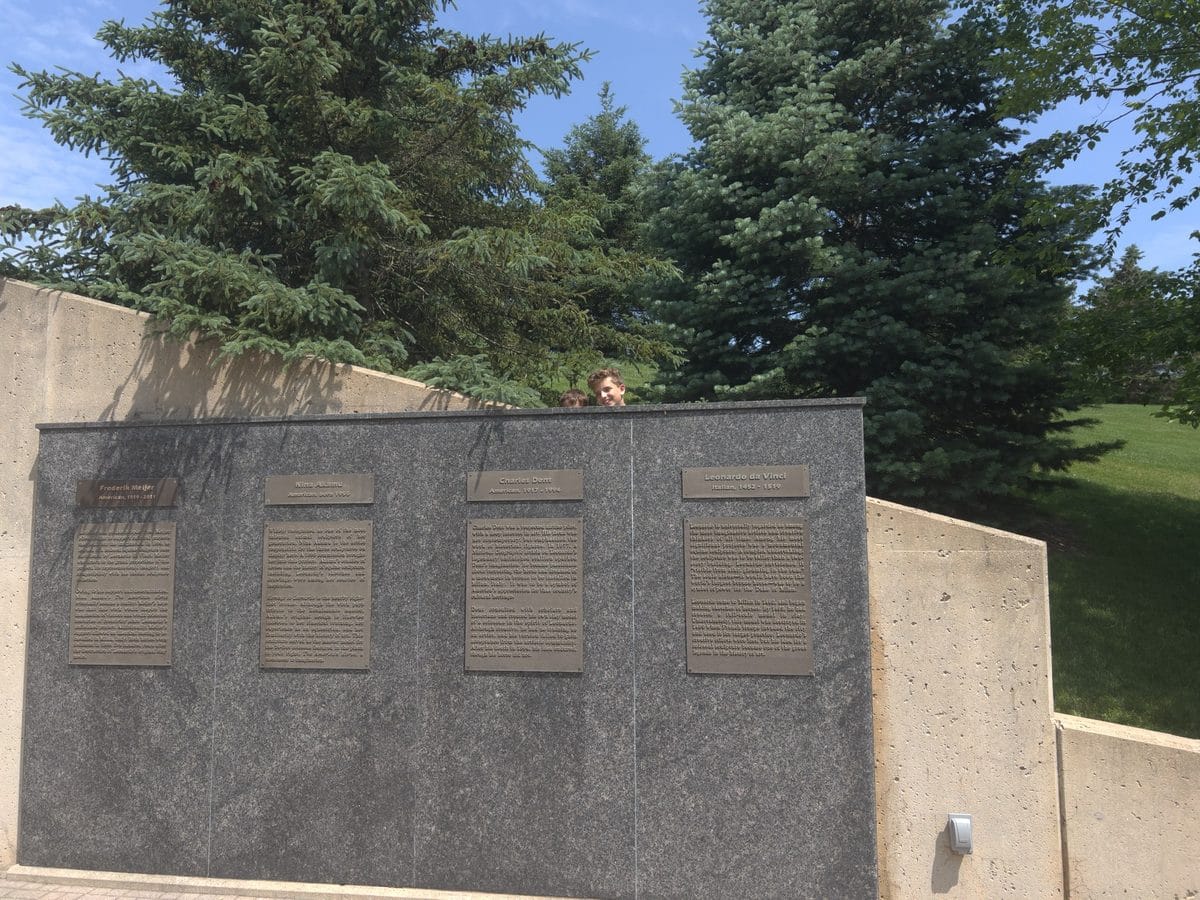
The project originated with Charles Dent, an American artist who had spent decades trying to complete the equestrian monument Leonardo da Vinci designed for Ludovico Sforza in the 1480s but never cast. Dent died in 1994 with the project unfinished. Frederik Meijer learned of it in 1996 and stepped in as the principal funder. Akamu studied all available Leonardo sketches, notes, and technical documents to determine dimensions and resolve the structural questions that had defeated previous attempts. The casting took three years and 60 artisans, completed at Tallix Fine Art Foundry in Beacon, New York.
Two casts were produced. Il Cavallo was unveiled in Milan on September 10, 1999. The American Horse was installed in Grand Rapids one month later. The five-century arc of Leonardo’s unfinished commission ends with both of them.
At 24 feet, The American Horse is visible from a distance and experienced at scale on approach. It works exactly the way the park’s outdoor collection is supposed to work. It is not a sculpture you stand in front of. It is a sculpture you walk toward. The scale changes the encounter. And the story of how it came to be in Grand Rapids, a retail magnate from Michigan rescuing a project that Italian and American arts institutions had failed to complete over five centuries, says more about American civic culture than any press release about the park ever will.
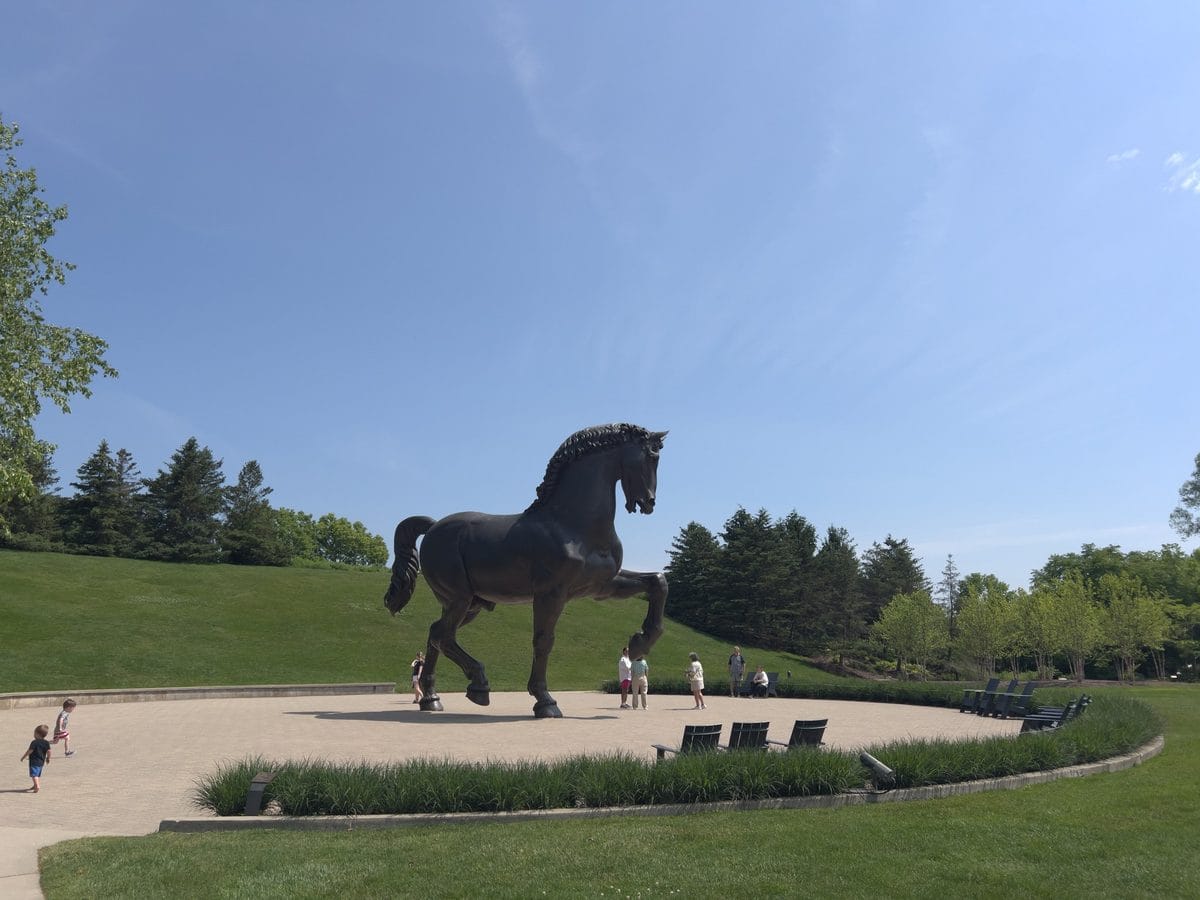
Fred Meijer funded a 500-year-old Leonardo project that Italian and American arts institutions couldn’t close. The horse ended up in Michigan. That tells you something about who actually builds public culture.
Il Cavallo and The American Horse: same bronze, different argument
Two full-size casts were produced from the same molds at Tallix Art Foundry in Beacon, New York. Il Cavallo was unveiled at the Ippodromo Snai San Siro in Milan on September 10, 1999 — presented as a formal gift from the American people to Italy. The American Horse was installed at Meijer Gardens one month later, on October 7, 1999.
They are physically identical. The argument they make is not. The Milan cast is about restitution: America completing what French soldiers destroyed in 1499, returning Leonardo’s lost commission to its city of origin five centuries later. The Grand Rapids cast is about civic culture: a Michigan grocery magnate funding what arts institutions on both continents failed to close. Both readings are built into the same bronze. Where the horse stands determines which reading leads.
Louise Bourgeois
Bourgeois’s large-scale spider sculptures are among the defining works of late 20th-century public art. Her presence in the permanent collection, confirmed by Wikipedia’s documentation of Meijer Gardens artists, positions the park alongside the Guggenheim Bilbao, the National Gallery of Canada in Ottawa, and the Tate Modern as a venue where Bourgeois’s arachnid forms can be encountered outdoors, at scale. The specific title of the Meijer Gardens Bourgeois work was not confirmed in available sources; I am describing it by artist and form only.
Andy Goldsworthy
Goldsworthy’s practice is inherently place-made: he does not transport finished objects, he commissions experiences. His Meijer Gardens work was created for the site, which is the point. A Goldsworthy piece at Meijer Gardens cannot travel to a retrospective elsewhere. It is the park, as distinguished from being displayed in the park. That specificity is what separates a collecting institution from a rental wall. The specific title and date of the Goldsworthy commission at Meijer Gardens were not confirmed in available sources.
Magdalena Abakanowicz
Abakanowicz’s figurative bronze works, headless, anonymous, grouped in crowds, appear in major collections globally, including Grant Park in Chicago. Her presence at Meijer Gardens anchors the park’s engagement with post-war European figuration, specifically the tradition of sculpture that uses the human form not to individuate but to depersonalize. The specific title of the Abakanowicz work at Meijer Gardens was not confirmed in available sources.
Henry Moore, Calder, Rodin, and the canonical range
The permanent collection also holds works by Henry Moore, Alexander Calder, Auguste Rodin, Edgar Degas, Barbara Hepworth, Mark di Suvero, Richard Serra, Ai Weiwei, Claes Oldenburg, Coosje van Bruggen, Beverly Pepper, and Jaume Plensa, among others confirmed by Wikipedia’s documentation of Meijer Gardens artists. The breadth is not accidental. The park made a collecting argument about range from the beginning, and the Moore bronzes in particular, set against open grass and seen from across a field, are the clearest example of what the outdoor installation approach is trying to do.
Shop the Collection
The two books below are the primary scholarly record of Meijer Gardens as a cultural institution. Both are published by the park and are worth owning before you visit, not after.
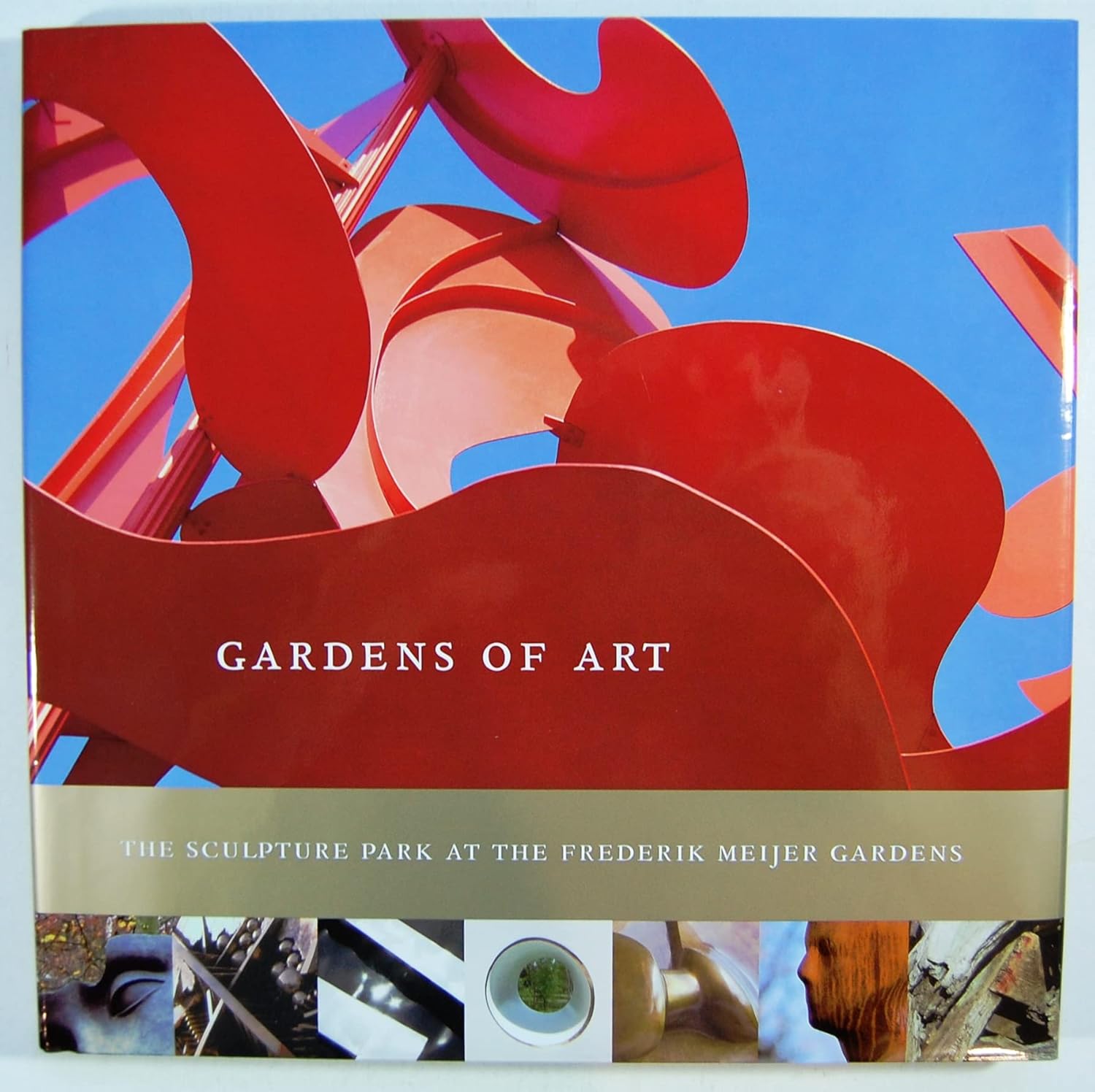
Gardens of Art: The Sculpture Park at the Frederik Meijer Gardens
The definitive catalogue of the park’s sculpture collection, authored by the Gardens’ chief curator: the primary reference for understanding how the collection was assembled and what argument it makes.
Frederik Meijer Gardens & Sculpture Park: Growing a Masterpiece
A photographic survey of the park’s development through its first decade, with more than 100 color illustrations of sculptures in situ, useful for readers who want the visual record before visiting.
Further Reading
These two books document not just the objects in the collection but the founding philosophy behind them. They are worth owning for different reasons.
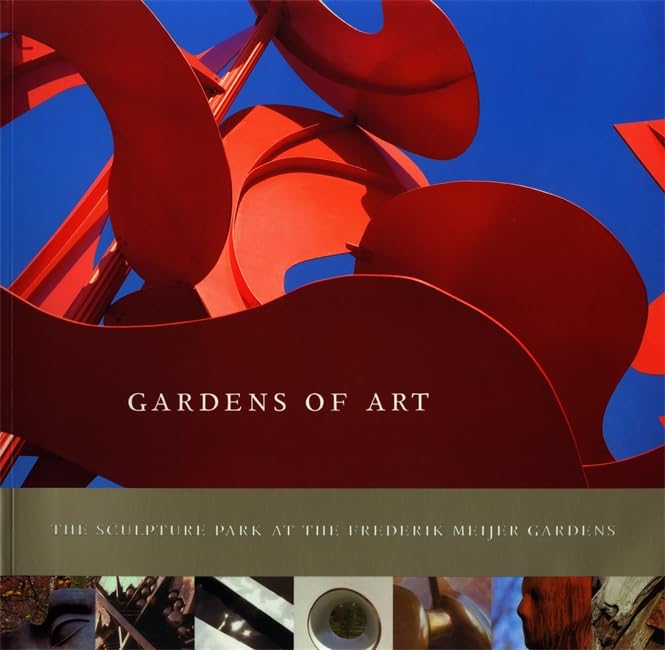
Gardens of Art: The Sculpture Park at the Frederik Meijer Gardens (Connell edition)
The companion volume to the main catalogue, focused on the park as a cultural institution: its founding philosophy and its relationship to the American landscape design tradition. More curatorial argument, less image survey.
Frederik Meijer Gardens & Sculpture Park: Growing a Masterpiece
Documents the park’s physical transformation across its first decade, for readers interested in how a civic sculpture collection is built over time, not just at its founding moment.
Frequently Asked Questions
How tall is The American Horse at Frederik Meijer Gardens?
The American Horse, the bronze sculpture by Nina Akamu dedicated at Meijer Gardens on October 7, 1999, stands 24 feet tall. It is one of two full-size casts made from Nina Akamu’s completion of Leonardo da Vinci’s unfinished Sforza equestrian monument; the other, Il Cavallo, was unveiled in Milan on September 10, 1999.
What is the horse at Frederik Meijer Gardens called?
The sculpture is called The American Horse. It is the Grand Rapids cast of Leonardo da Vinci’s Horse, also known as Il Cavallo or the Gran Cavallo. The Milan cast is usually called Il Cavallo; the Grand Rapids cast is The American Horse.
Is The American Horse the same as Leonardo’s Horse?
Yes, in the sense that both full-size bronzes come from Nina Akamu’s realization of Leonardo da Vinci’s unfinished Sforza horse commission. The Grand Rapids version is titled The American Horse and the Milan version is titled Il Cavallo. They are twin full-size casts of the same 1999 sculptural project.
What makes Frederik Meijer Gardens unique compared to other sculpture parks?
Meijer Gardens is more encyclopedic in scope than Storm King Art Center, more geographically accessible to a working Midwestern audience than the Nasher Sculpture Center in Dallas, and more deeply engaged with modernist abstraction than Grounds for Sculpture in New Jersey. Its curatorial position combines civic access with serious collecting across a 30-acre outdoor landscape designed by James van Sweden. It has ranked first in the USA Today 10Best Readers Choice Awards for Sculpture Park three consecutive years: 2023, 2024, and 2025.
Who funded the American Horse sculpture at Meijer Gardens?
Frederik Meijer was the principal funder. The project originated with American artist Charles Dent, who spent decades trying to complete the equestrian monument Leonardo da Vinci designed for Ludovico Sforza in the 1480s but never cast. Dent died in 1994 with the project unfinished. Meijer learned of it in 1996 and stepped in to fund its completion. Nina Akamu was the sculptor of record; casting took three years and required 60 artisans at Tallix Fine Art Foundry in Beacon, New York.

About Joe Post
Joe Post holds an MFA in Art from California Institute of the Arts (CalArts) and has done additional graduate work at the School of the Art Institute of Chicago. He founded Art Design Ideas to write about design as cultural argument — the decisions, contradictions, and assumptions built into the objects we live with.