
Abstract Expressionism was the first American art movement to achieve international authority. Emerging from New York in the late 1940s, the Abstract Expressionism art history argument was that gesture (paint applied as action, as decision, as psychological record) constituted meaning without representation. It was the last time painting successfully rewrote the rules for painting.
How Abstract Expressionism art history claimed the painting world from Paris
Abstract Expressionism did not emerge in isolation. It was made by a generation of artists who had lived through the Depression under the WPA Federal Art Project, absorbed surrealism from the European artists who fled the Nazis to New York, and watched European civilization produce the Holocaust. Some of the émigrés settled outside New York: Josef Albers, a Bauhaus student and then teacher from 1920 until 1933, came to teach at Black Mountain College in North Carolina in 1933 and later at Yale, where he developed the color theory behind his Homage to the Square paintings. The crisis of that history is the background material of these paintings, not as illustration, but as pressure.
The term “abstract expressionism” was first applied to American art by critic Robert Coates in The New Yorker in 1946. The movement gained institutional traction quickly, in part because of deliberate promotion by two critics who disagreed sharply about what it meant.
Clement Greenberg championed the Color Field painters, Rothko, Barnett Newman, Clyfford Still, Adolph Gottlieb, on formalist grounds. His argument, articulated in “American-Type Painting” (Partisan Review, Spring 1955), was that Abstract Expressionism represented the culmination of the modernist painting tradition: the painting had finally achieved full self-reference, had eliminated everything except color and the flat picture plane. Greenberg saw the movement as the logical endpoint of painting understanding itself.
Harold Rosenberg championed the Action Painters, Pollock, de Kooning, Franz Kline, on different grounds entirely. His 1952 essay “The American Action Painters” (Art News, December 1952) introduced the concept of the canvas as “an arena in which to act.” For Rosenberg, the painting’s content was not what was depicted but what happened during the making, the decisions, the body, the psychology. The painting was a record of a performance.
Both critics were right about different artists. The movement they were both describing was not stylistically unified; it was a generation of painters all asking the same question through different formal approaches.
The move from Paris to New York as the center of the art world was not inevitable. It was argued for, promoted, and in part manufactured. After World War II, the US government had reason to position American culture internationally. Since the mid-1970s, scholars have documented the CIA’s promotion of Abstract Expressionism through the Congress for Cultural Freedom (1950–1967) as Cold War cultural strategy. The movement’s individualism, its anti-ideological character, its rejection of Social Realism: all were positioned as the cultural opposite of Soviet-bloc art. Art historian Eva Cockcroft published the first detailed account of this program in “Abstract Expressionism, Weapon of the Cold War” (Artforum, June 1974). The CIA officer who ran the cultural program, Tom Braden, confirmed it publicly in 1967.
The work was genuinely powerful, and it was also instrumentalized. These are not mutually exclusive. The paintings did not require the CIA to be significant; but the CIA’s promotion shaped which artists became canonical and which were overlooked.
Why gesture was the argument, not the style
Jackson Pollock’s drip paintings (1947–1950) are the most radical version of the action painting thesis. There is no composition in the traditional sense. No figure, no ground, no horizon, no center. Pollock laid the canvas on the floor and moved around it, pouring and dripping paint from above. The result is a continuous, all-over surface in which every part has equal weight. The scale, many of these canvases are larger than walls, means the viewer cannot stand back far enough to see “the composition.” You are inside it before you have chosen to look at it.
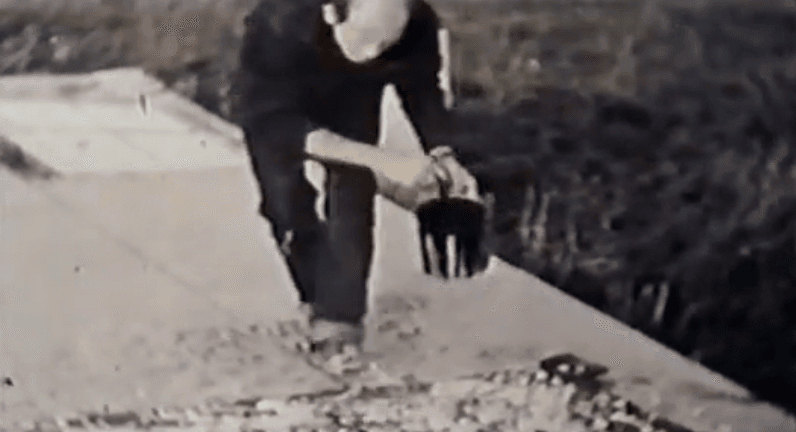
What Pollock was doing, and what Rosenberg was articulating, was this: the gesture itself could be meaning. Not gesture in service of subject matter, but gesture as the subject matter. Autumn Rhythm (Number 30) (1950, MoMA) is 2.7 meters tall and 5.3 meters wide. It is not about anything except what it takes to make a painting that size through continuous physical action. The fact that the result is also beautiful is beside the point.
De Kooning’s Woman I (1950–52, MoMA) took him two years and more than 30 complete repaintings before he considered it finished. The figure is present and destroyed simultaneously, recognizable enough as a body to register, torn apart enough to insist on the violence of representation. De Kooning was not expressionist in the European sense; he was not representing emotional states. He was showing the painting’s process of making and unmaking a figure as the content.
Franz Kline’s black-and-white paintings, Chief (1950, MoMA) and Mahoning (1956, Whitney), look like gestures but were not. Kline made preparatory studies and projected them up to mural scale. The “spontaneous” forms were planned. This is the complication in Rosenberg’s action painting thesis: the paintings that look most like pure gesture were often the most carefully calculated.
Barnett Newman’s Onement I (1948, MoMA), a small canvas (69 × 41 centimeters) divided by a vertical stripe of slightly lighter, warm paint, is the Color Field painter’s opposite answer to the action painting. No gesture, no surface incident, no process record. Just color divided by what Newman called “the zip.” He said this painting took him 18 months to understand after he made it. The zip is not a form; it is the event that divides color into space.
Abstract Expressionism is the last time painting successfully redefined its own terms on painting’s own ground. Pop Art defined itself against it; Minimalism defined itself against it; Conceptual Art defined itself against it. Every subsequent movement in painting or sculpture has had to account for AbEx, has had to say what it is doing that AbEx was not doing, or why the AbEx question was the wrong question. No earlier American art movement required this degree of response. What happened to sculpture specifically as it negotiated AbEx’s legacy is a different argument: see Sculpture in the Age of Doubt.
The paintings that made the case
Jackson Pollock, Autumn Rhythm (Number 30) (1950): The clearest argument for gesture as structure. 2.7 × 5.3 meters. Pollock moved around the canvas on the floor, pouring, dripping, flicking paint with sticks and hardened brushes. The painting has no center and no edge emphasis. Every part is equally activated. MoMA.
Willem de Kooning, Woman I (1950–52): The result of two years and more than 30 repaintings. A female figure, recognizable and destroyed. De Kooning worked on the painting until it was simultaneously a figure and an argument about what it costs to make a figure. MoMA.
Franz Kline, Chief (1950): Large-scale, black and white, a form that suggests a locomotive or a girder, or nothing specific except weight and velocity. Kline grew up near railway yards in Pennsylvania; the title refers to a locomotive he remembered. The abstraction removes the reference without removing the sense of mass. MoMA.
Barnett Newman, Onement I (1948): 69 × 41 centimeters. A painted-over canvas divided by a vertical stripe of warm paint applied with masking tape. Newman said this painting created a new kind of space: not figure-ground, not landscape, not anything that existed before. The Color Field painters’ answer to action painting. MoMA. For a deeper study of the Color Field tradition, see Mark Rothko and the Color Field.
Shop the Collection
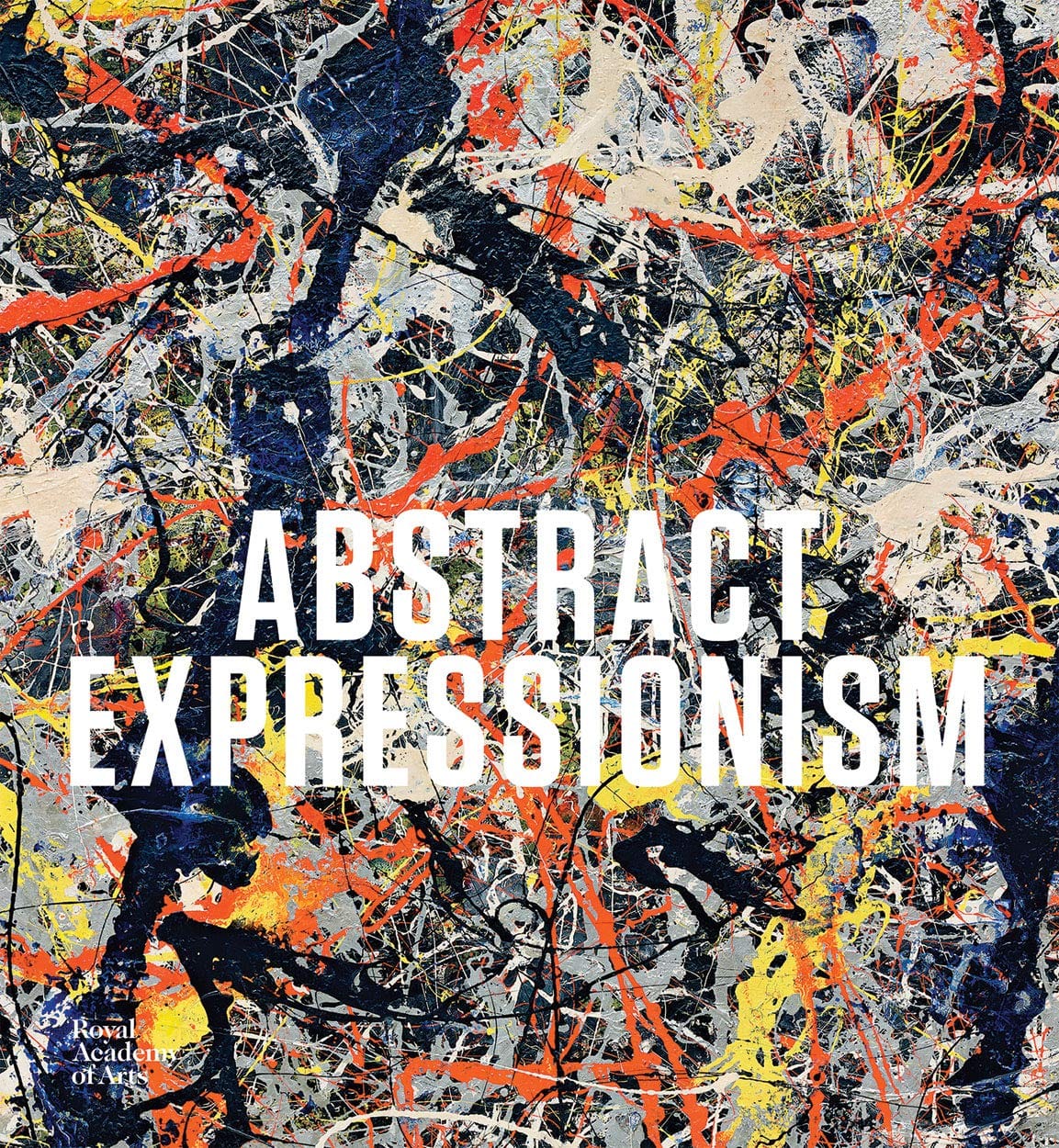
David Anfam, Abstract Expressionism (Royal Academy / Wunderkammer Press, 2016) is the catalog for the 2016 Royal Academy retrospective, the most comprehensive recent survey of the movement. Over 150 works reproduced with full critical apparatus. Anfam also wrote the definitive Rothko catalogue raisonné. This is the best single-volume survey currently in print. Buy on Amazon
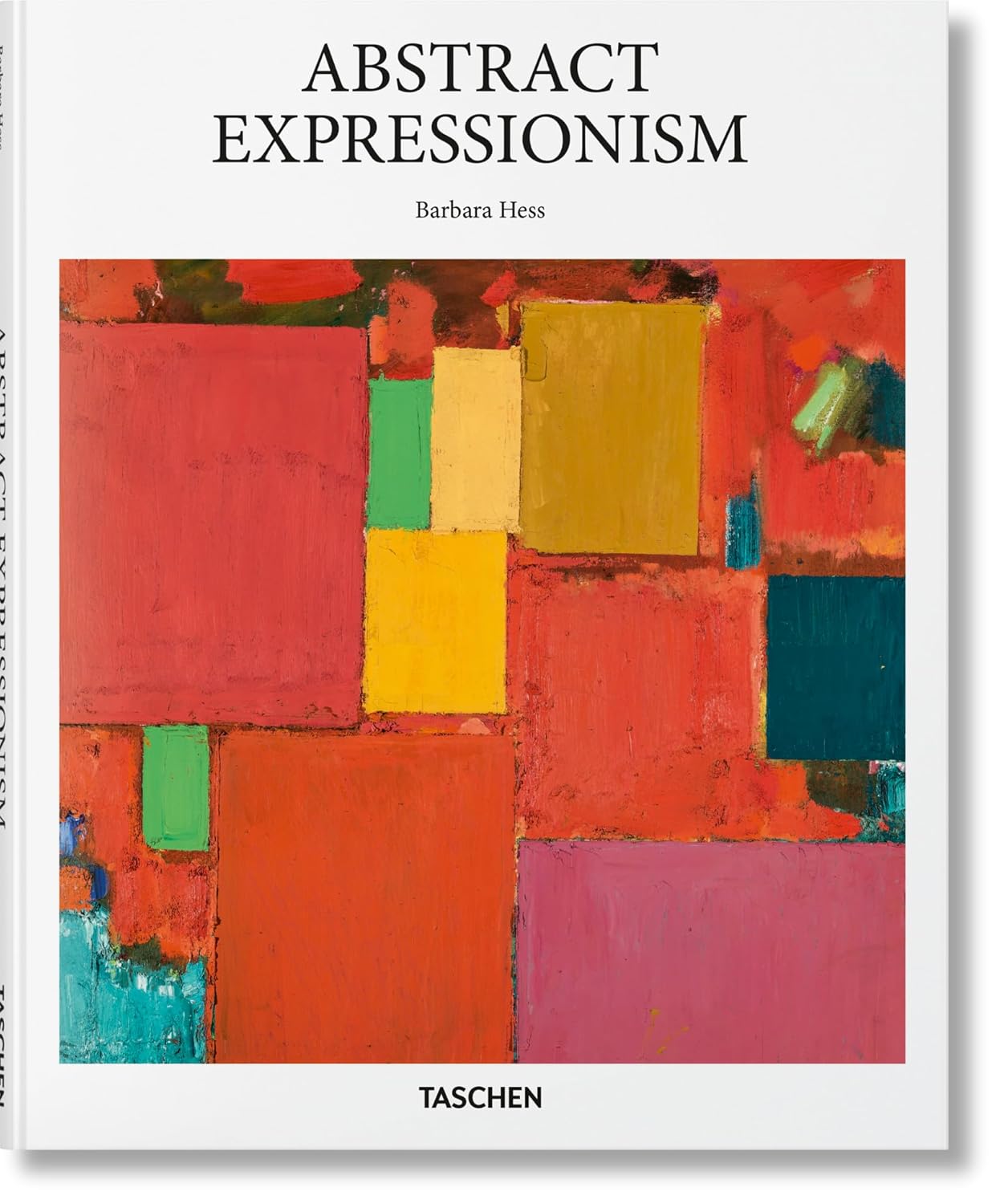
Barbara Hess and Uta Grosenick, Abstract Expressionism (Taschen, Basic Art 2.0) covers the major figures with clean reproductions in Taschen’s accessible format. A good entry point before committing to a more specialized study. Buy on Amazon
Further Reading
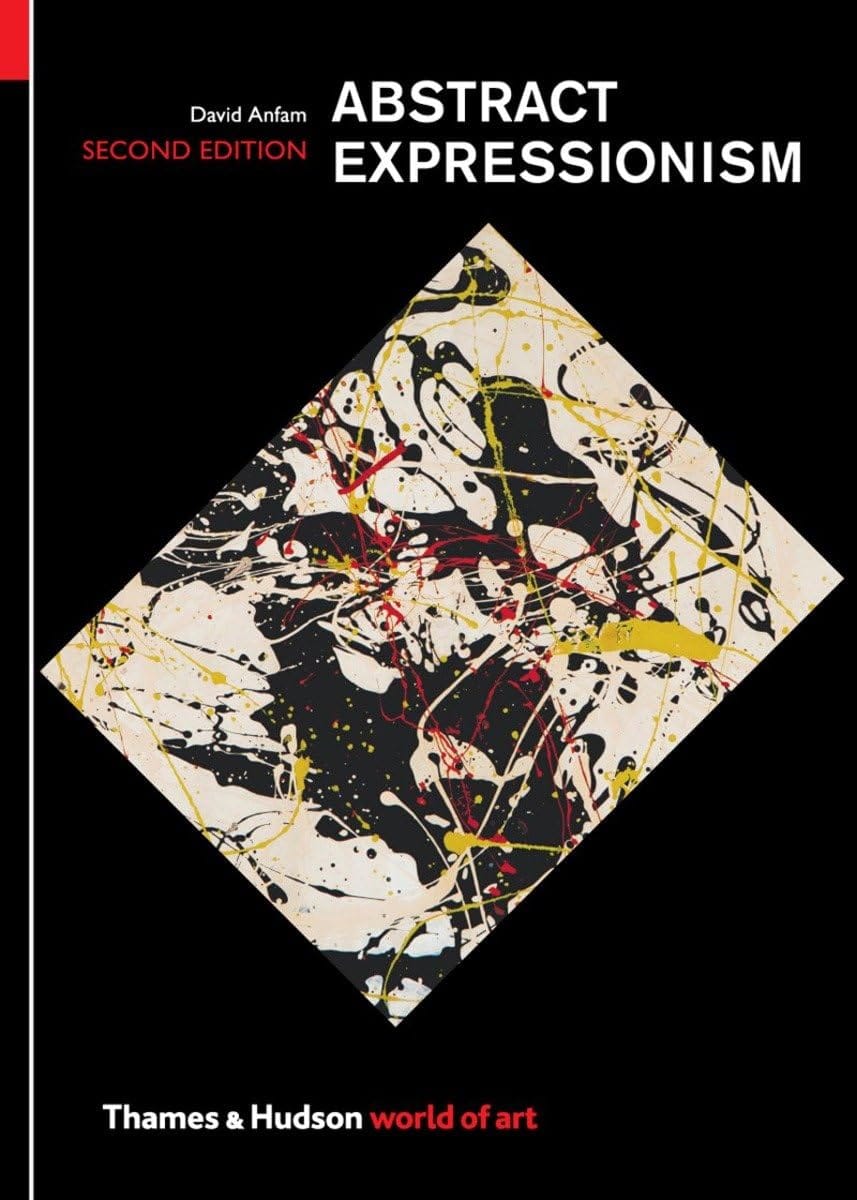
David Anfam, Abstract Expressionism (Thames & Hudson, World of Art series, updated second edition). The standard academic survey. Anfam’s command of the primary sources, the artists’ statements, the critics’ texts, the exhibition history, is complete. This is the book the field teaches from. Buy on Amazon
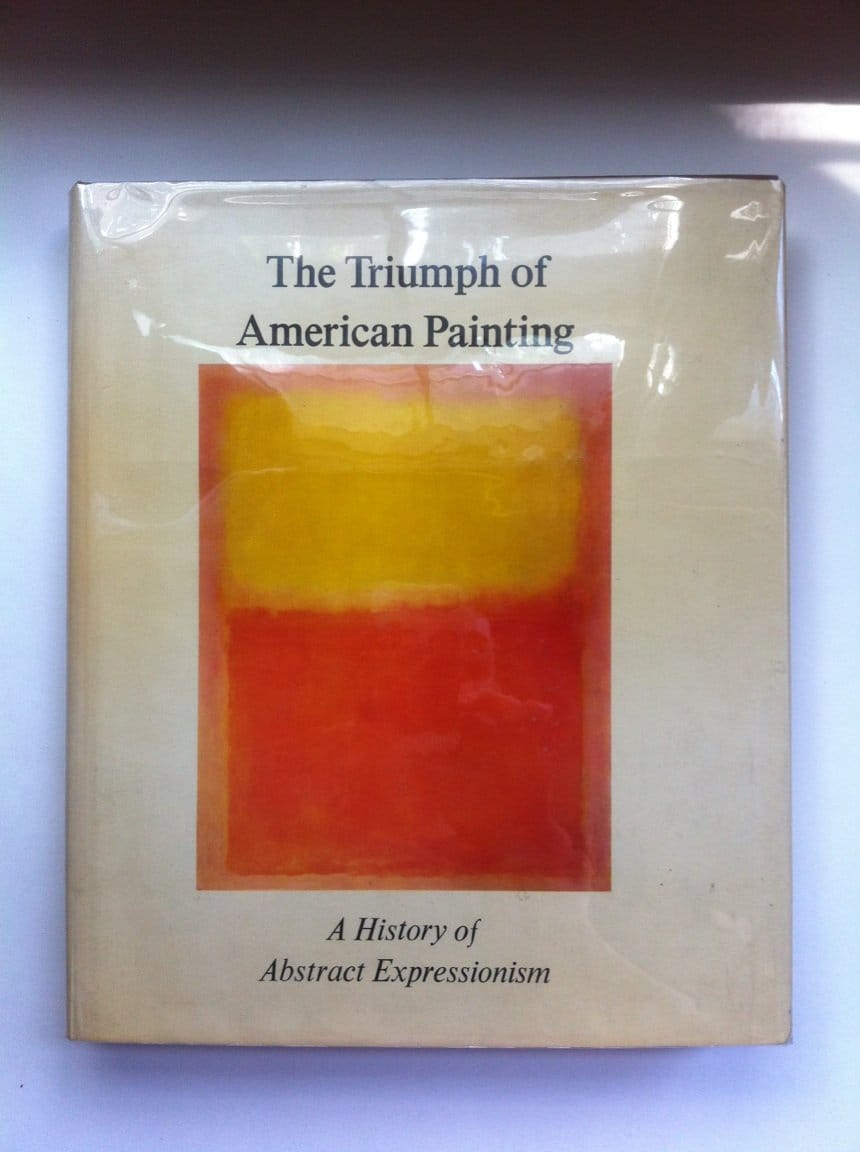
Irving Sandler, The Triumph of American Painting: A History of Abstract Expressionism (Harper & Row, 1970). Sandler was there; he knew Pollock, de Kooning, Kline, and the Cedar Tavern circle. The New York Times called this “the most important book yet written about the Abstract Expressionists.” It is history from inside the room, which no amount of retrospective scholarship can replace. Buy on Amazon
Frequently Asked Questions
What is Abstract Expressionism in art history?
Abstract Expressionism was the first American art movement to achieve international influence. It emerged in New York in the late 1940s and dominated Western painting through the 1950s. The movement’s argument was that painted gesture (without figure, narrative, or reference to the visible world) could generate meaning. It comprised two broad tendencies: action painting (Pollock, de Kooning, Kline) and Color Field painting (Rothko, Newman, Still).
Who were the main Abstract Expressionist artists?
The central figures were Jackson Pollock, Willem de Kooning, Franz Kline, Mark Rothko, Barnett Newman, Robert Motherwell, Clyfford Still, Adolph Gottlieb, Lee Krasner, Joan Mitchell, and Philip Guston. Sculptors David Smith and Louise Nevelson are also associated with the movement. Ellsworth Kelly, though he rejected the AbEx label, emerged from the same New York milieu before moving decisively toward hard-edge abstraction. All were centered in New York.
What is the difference between action painting and color field painting?
Harold Rosenberg coined “action painting” in 1952 to describe work in which the canvas recorded the physical act of painting, the decisions, the body, the process. Pollock and de Kooning are the primary examples. Color Field painting, championed by Clement Greenberg, emphasized large areas of color without gestural incident: Rothko, Newman, and Still. Both tendencies were part of Abstract Expressionism but represent different positions on what a painting’s content should be.
Why did Abstract Expressionism emerge in New York?
Several factors converged. European modernist artists fleeing the Nazis arrived in New York during the war, bringing Surrealism, Constructivism, and Bauhaus ideas into contact with American painters. The WPA Federal Art Project had given many future AbEx artists institutional support during the Depression. After the war, New York had the only functioning art market and institutional infrastructure in the Western world. The CIA also actively promoted American abstract art internationally through the Congress for Cultural Freedom, 1950–1967.
How did Abstract Expressionism influence later art movements?
Every major art movement after Abstract Expressionism defined itself partly against it. Pop Art rejected its seriousness and emphasis on private expression. Minimalism rejected its gesturalism and emotional weight. Conceptual Art rejected its prioritization of the physical object. Neo-Expressionism in the 1980s returned to its emotional directness. No earlier American art movement required this degree of response, and it set the terms that subsequent movements had to accept, extend, or refuse.
What is Harold Rosenberg’s action painting theory?
In his 1952 Art News essay “The American Action Painters,” Rosenberg argued that for the New York painters, the canvas had become “an arena in which to act rather than a space in which to reproduce, re-design, analyze or ‘express’ an object.” The painting’s content was not what was depicted but what happened during its making, the decisions, the revisions, the physical presence of the artist. This shifted critical attention from the painted object to the painting event.
For the broader context of this work, see the Design Legends hub — profiles of the designers and movements that shaped modern design. Abstract Expressionism established the vocabulary of gestural mark-making that remains central to contemporary art collecting: for bringing that tradition into your own space, see the guide to best art prints for modern interiors and the practical article on how to buy art prints.
See also: Conceptual Art After Minimalism, How to Read Conceptual Art

About Joe Post
Joe Post holds an MFA in Art from California Institute of the Arts (CalArts) and has done additional graduate work at the School of the Art Institute of Chicago. He founded Art Design Ideas to write about design as cultural argument — the decisions, contradictions, and assumptions built into the objects we live with.