Knowing how to buy art prints is mostly knowing what to avoid. The print market runs from museum-licensed reproductions to unlicensed generic wall art, and the visual difference is often undetectable at the point of purchase. What separates a considered choice from a regretted one is paper, provenance, and scale.
Why most art prints fail the rooms they end up in
The print market is split into two tiers that share the same search results. On one side: licensed museum-quality reproductions produced on archival pigment inks, acid-free 100% cotton rag paper, certified to maintain color for generations when properly displayed. On the other: generic “wall art,” unlicensed third-party prints with no paper specification, no production standard, and no reason to cost more than a poster.
The problem is that you cannot tell them apart from a product thumbnail. Both say “art print.” Both show the same image. The difference is in the paper spec, the ink type, and whether the artist’s estate or the rights holder authorized the reproduction. The search term “wall art” is itself part of the problem: it captures everything from genuine museum reprints to unlicensed generic prints with no way to filter by quality tier. “Fine art print” with a GSM specification narrows the field considerably.
How to buy art prints: five things that actually matter
Paper weight and material
200 GSM is the minimum for a print you intend to live with. Below that, the paper flexes, the surface reads as cheap under raking light, and the print behaves like a document rather than an art object. For a statement piece on a dedicated wall, 300 GSM is the threshold where the paper starts to carry physical presence.
Paper weight spec is also the fastest quality filter before purchase: 170–200 GSM is the floor for fine art prints; 210–300 GSM is premium; 300 GSM and above is museum grade. Named archival papers, including Hahnemühle Photo Rag, German Etching, and Breathing Color Elegance Velvet, are certified for 100+ year longevity. If the listing doesn’t state the GSM, assume it’s under 200.
Matte vs. glossy matters more in formal rooms than casual ones. Matte paper reads as “art”; it absorbs and scatters light the way a canvas does. Glossy paper reads as “photo print”; it reflects specular light and creates glare across the image. For abstract work, color-field paintings, and Bauhaus posters, matte is consistently the right choice.
Canvas prints are a separate category. They stretch over a frame, require no glazing, and suggest a painting rather than a document. That can work for some subjects, but for modernist subjects (Bauhaus, abstract expressionism, MCM graphic), canvas often reads as a cheaper substitute for a properly framed paper print rather than as a distinct format with its own merits. For specific product recommendations by print type, see Best Art Prints for Modern Interiors.
Edition size and what it actually means
An open edition print is an unlimited run. The printer can produce as many copies as the market will buy, indefinitely. A limited edition is a binding commitment to a fixed number: once that number is reached, the edition is closed forever. California’s Print Law of 1971 was the first US state regulation of limited edition art print sales; the Fine Art Trade Guild in the UK and New Zealand administers quality and verification standards for limited editions in those markets.
Edition size affects scarcity, resale value, and price. Emerging artists typically produce runs of 200–500; established artists sometimes produce editions under 10 for premium pricing. For most buyers making their first print purchase, edition size matters less than whether the print is a licensed reproduction or an unlicensed generic. A licensed open edition from MoMA’s store is a more considered purchase than a limited edition from an undifferentiated Amazon seller with no paper spec.
Real limited editions come with documentation: a certificate of authenticity issued by the artist’s studio, estate, or an accredited foundation. COAs from individual sellers are not independently verified and carry limited weight.
Scale and how it changes a room
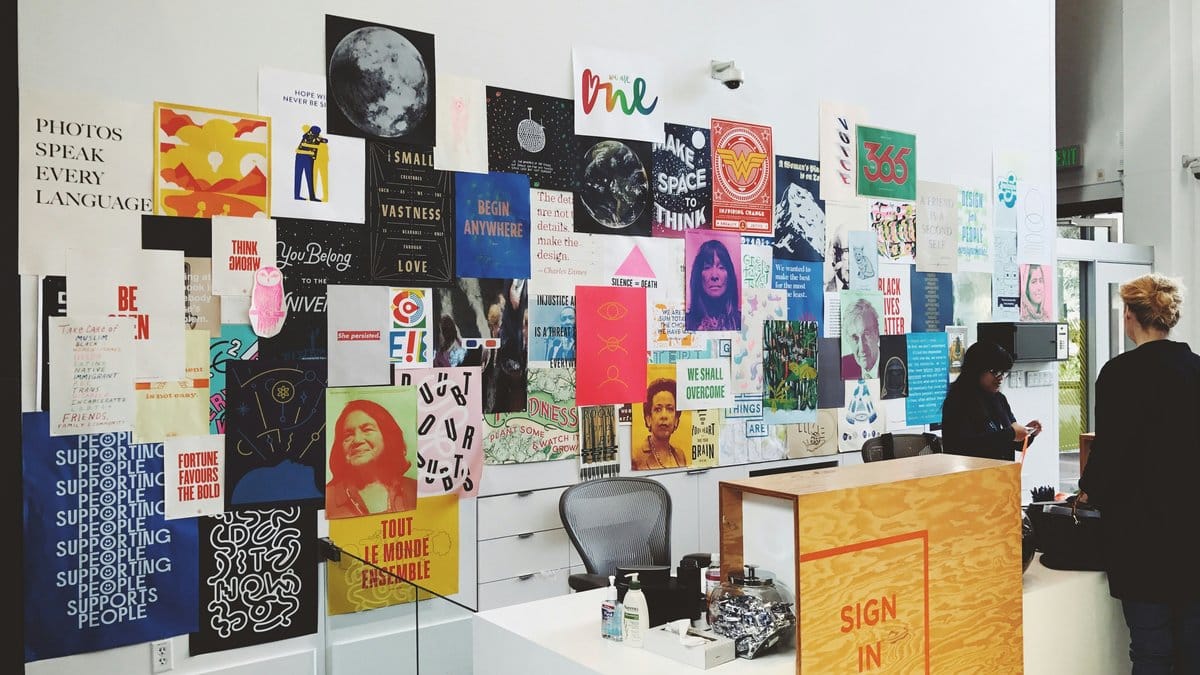
Scale is not just a size decision. It’s an argument about how the print relates to the room. One large print makes a single editorial statement: this is what this wall is about. A gallery wall of smaller prints reads as a personal collection, a variety of positions rather than one claim.
The practical rule: a print should fill two-thirds to three-quarters of the wall width above furniture. A sofa at 84 inches wide wants artwork between 56 and 63 inches across, either as a single piece or as a grouped arrangement. Below two-thirds, the print reads as misplaced.
Scale also changes what a print does formally. A Rothko-adjacent color-field print at 18×24 inches is a contained object; you look at it. The same image at 36×48 starts to create atmospheric peripheral effects; the color extends into the edges of vision in the way Rothko’s large paintings were designed to do. Size is not arbitrary. For picks sized and priced by category, see Best Art Prints for Modern Interiors.
Mixing periods without creating visual chaos
The anchor principle: choose one movement as the room’s primary visual argument, then add one accent from a movement with compatible formal logic. Bauhaus geometric and MCM graphic share a palette logic: primary color reduction, geometric structure, sans-serif type as visual element. Rothko-adjacent abstract and minimalist photography share tonal restraint. Both work in rooms organized around neutral ground colors with one controlled accent.
What creates chaos is three prints from three movements with no shared palette and no shared formal language. Art Deco curves next to Bauhaus geometry next to abstract expressionist color: each one makes a visual claim that contradicts the others. The room reads as indecisive rather than collected.
For Bauhaus specifically, the movement’s visual vocabulary of geometric forms, primary colors (red, yellow, blue, black, white), and sans-serif typography treated as design element was developed at the Weimar school founded by Walter Gropius in 1919. These forms share logic with contemporary Japandi and Scandinavian interior styles, which is why Bauhaus prints still read correctly in contemporary rooms. For deeper context on how to work with this movement specifically, see Bauhaus Design Ideas.
Where to buy for different price points
Amazon covers the accessible tier: $15–$80, best for Bauhaus and MCM reproductions. Quality varies significantly. The filter to apply: paper weight stated in the listing, licensed vs. third-party seller, and whether the listing names the artist’s rights holder. The Rothko options on Amazon are almost exclusively third-party reproductions, not licensed; for Rothko specifically, the correct source is a museum shop.
Museum shops (MoMA, National Gallery of Art, Met) offer licensed reproductions at $30–$150 with archival quality guaranteed. The NGA and MoMA both offer Rothko prints through their custom print programs; these are licensed under the Rothko estate and printed on archival paper. This is the correct tier for any in-copyright artist whose rights are actively managed.
Galleries handle original works and hand-pulled limited editions, starting at $500 and up. This is the tier for collectors, not for a first print purchase. The distinction between a gallery print and an Amazon reproduction is not snobbery; it’s a different category of object entirely.
What to skip and why
Generic “wall art” from undifferentiated Amazon sellers has no paper spec, no edition information, and is often unlicensed. If a listing doesn’t state GSM, treat it as under 200. If it doesn’t name the rights holder, treat it as unlicensed.
Unlicensed reproductions of in-copyright work carry real risk. Basquiat, Warhol, and Kusama rights are actively held and enforced. Unlicensed prints may be removed from sale, may have contested provenance, and may not survive the licensing landscape long-term. Licensed alternatives exist for all three artists: museum shop prints and estate-authorized editions are the correct sources.
Canvas wraps are not equivalent to framed paper prints. Canvas prints require no glazing and stretch over a frame, making them cheaper than properly framed paper prints. For modernist subjects, this usually reads as a substitute rather than an equivalent. For Bauhaus posters and color-field abstracts, a paper print in a clean frame is the correct choice.
Buying without checking the paper spec is the single most avoidable mistake. If the listing doesn’t state GSM, it is almost certainly under 200. Any seller confident in their paper weight states it.
Framed prints where you cannot inspect the margins hide condition problems. Framing can conceal sun damage, yellowing, or condition issues at the edges. For any significant purchase, request the print be removed from the frame for inspection; a seller who refuses is flagging a known condition problem.
Frequently Asked Questions
What paper weight should art prints be?
200 GSM is the minimum for a print you intend to keep. Below that, the paper lacks the physical presence that makes a print read as an art object rather than a document. 210–300 GSM is the premium range for fine art reproduction; 300 GSM and above is museum grade. Named archival papers, including Hahnemühle Photo Rag, German Etching, and Breathing Color Elegance Velvet, are certified for 100+ year longevity when properly displayed.
How do I know if an art print is licensed or unlicensed?
Licensed prints name the rights holder in the listing: typically the artist’s estate, a foundation, or a museum that holds reproduction rights. Museum shops (MoMA, NGA, Met) are the most reliable licensed sources for modern and contemporary artists. On Amazon, check the seller name and listing description for any reference to licensing or the estate. If the listing makes no mention of rights, treat it as unlicensed, particularly for in-copyright artists like Basquiat, Warhol, and Kusama whose estates are actively managed.
Is an open edition print worth buying?
Yes, if the other factors are right: paper weight, licensed reproduction, correct finish for the subject. Edition size is one variable among several; an open edition museum print on 270 GSM archival paper is a more considered purchase than a small limited edition on cheap stock from an unverified seller. For most buyers, the paper quality and licensing are more consequential than whether the print number is 47/500 or open edition.
What size art print should I buy for a living room?
The practical rule is two-thirds to three-quarters of the wall width above the furniture. For a standard sofa at 84 inches, that means artwork between 56 and 63 inches across, either as a single large piece or a grouped gallery wall arrangement that spans that width. A print significantly smaller than two-thirds of the furniture width reads as misplaced; it needs to be anchored by the furniture beneath it, and it won’t be.
Are canvas prints better than paper prints for modern interiors?
For most modernist subjects (Bauhaus, abstract expressionism, MCM graphic), paper in a clean frame is the more appropriate choice. Canvas reads as a painting; paper reads as a print or poster. When the subject is a reproduction of a painting (color-field work, for example), canvas can create a false equivalence between the reproduction and the original. Framed paper prints on 200+ GSM stock read correctly as reproductions while delivering the visual weight the subject requires.
For the broader context of this work, see the Design Legends hub — profiles of the designers and movements that shaped modern design.

About Zoe Post
Zoe Post holds a BFA and a Master of Architecture from the School of the Art Institute of Chicago. She now works as a product marketing leader at an architectural product design firm, bringing hands-on industry perspective to everything she writes. At ADI she covers contemporary artists, textile and pattern design, and the design objects that sit at the boundary of art and function.