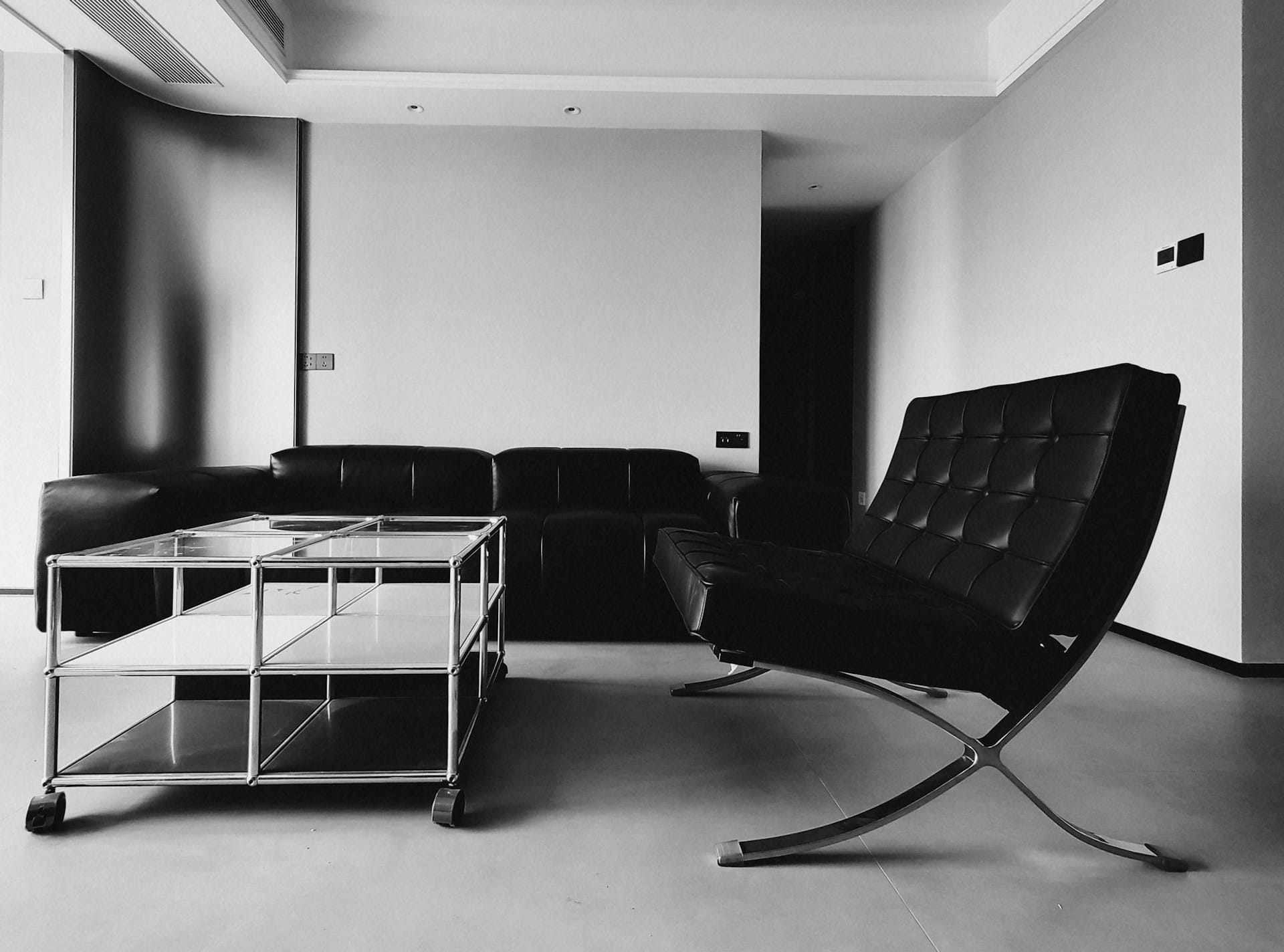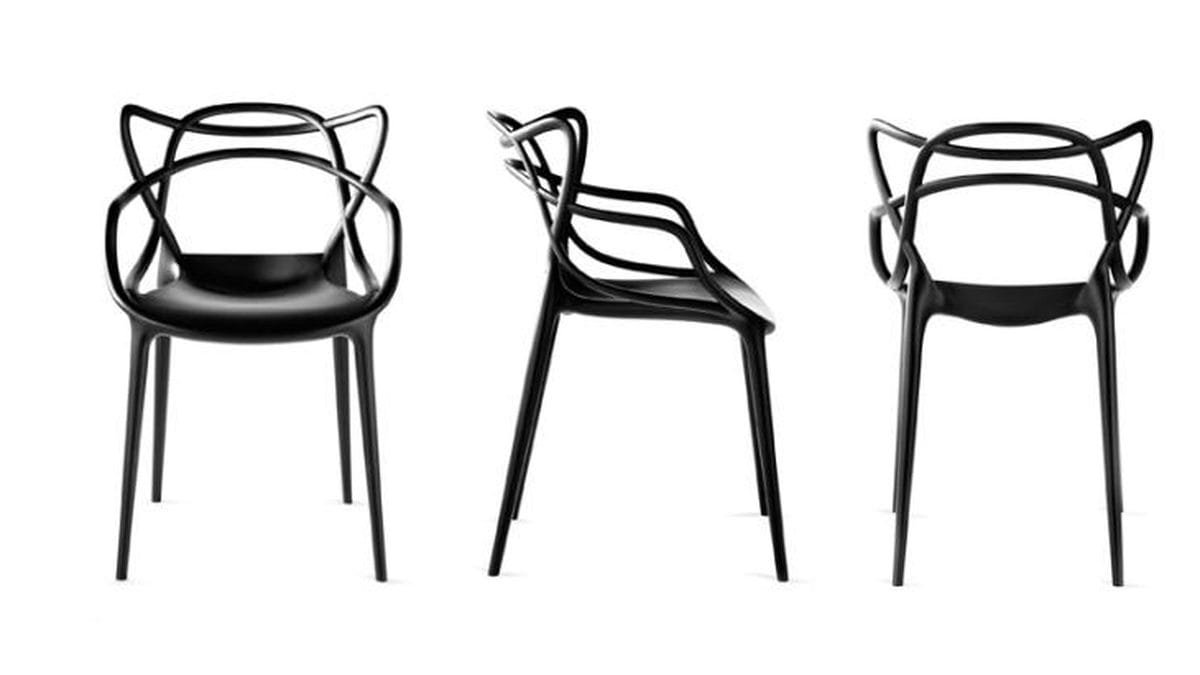

Design legends are the industrial designers whose positions — not just their output — changed how objects are made and understood. Dieter Rams argued for restraint. Raymond Loewy argued for desire. Philippe Starck argued for the question. Charles and Ray Eames argued for democratizing access to great design. From Mies van der Rohe through Dieter Rams to Vico Magistretti, ADI’s Design Legends series treats each figure as a position about what design is for, not just a portfolio of objects. Each built a body of work that is also a position you can name and argue with.
Why the designers who lasted were arguing for something, not just making things
Most designers style things. A few argue for something. The difference is not output — it’s whether the work adds up to a position you can state and defend.
The designers who became design legends — Rams, Loewy, Starck — are not interchangeable. Each was responding to a specific problem with the designed world of their era. Rams thought design had been corrupted by the ego of designers. Loewy thought it had been corrupted by indifference to psychology. Starck thought it had been corrupted by the assumption that function was the only legitimate answer. These are three different diagnoses of the same problem, which is why the work they produced looks nothing alike and why the disagreements between them are still worth having.
The objects these designers left behind live in our iconic furniture design guide and across the work of the design brands and ateliers they shaped. However, the designers themselves are the starting point — the arguments come before the objects.
What each design legend was actually arguing, and where to go deeper
Rams: restraint as an ethical claim, not a style preference
Dieter Rams joined Braun in 1955 and became head of design in 1961, a role he held until 1997. His ten principles of good design are usually taught as aesthetics. Use them in a design school and students reach for white surfaces and sans-serif type. That is a misreading. Rams was making an ethical claim: the designer’s ego should not appear in the object. Less design, not more design. The principle he kept returning to was that good design is as little design as possible — meaning the product should do what the user needs and then get out of the way.
The T3 pocket radio, 1958, is the proof. Rams designed it so a person could hold it in one hand and operate every control with one thumb. The form was determined by that single constraint — not by what looked right, not by what the Braun brand needed, but by the physical reality of how someone holds a small object. The Design Museum London cites the T3 as one of the most influential objects in postwar industrial design.
The 606 Universal Shelving System, designed for Vitsœ and launched in 1960, has been in continuous production ever since. It works because it was designed around what shelves need to do — not around what looked right, not around what the brand needed. The SK4 phonograph (1956, with Hans Gugelot) had a transparent acrylic lid at a time when phonographs were furniture: closed, decorative, hidden objects.
The SK4 was nicknamed “Snow White’s Coffin” because you could see the mechanism inside. That transparency was not a stylistic choice. It was Rams and Gugelot saying that the workings of an object are not something to be ashamed of.
Jonathan Ive wrote the foreword for Sophie Lovell’s Dieter Rams: As Little Design as Possible (Phaidon, 2011), the standard monograph on Rams and the one worth owning if you want to understand the principles rather than simply cite them. The Lovell monograph is thorough enough to serve as both biography and design theory.
For the full account of what the Rams principles actually require — with 100 documented objects showing where they hold and where they strain — see our profile at Dieter Rams design principles. For the objects that carry the argument into the market today: best Dieter Rams-inspired products.
Loewy: desire as a design problem worth solving
Raymond Loewy was born in Paris in 1893, founded his firm in New York in 1929, and built the largest industrial design practice of the 20th century. His MAYA principle (Most Advanced Yet Acceptable) sounds like a strategy for managing client conservatism. It is actually a theory about human psychology. Loewy argued in his 1951 autobiography Never Leave Well Enough Alone that consumers are caught between two forces: the pull toward the new (neophilia) and the fear of anything too strange (neophobia). Good design lands at the edge of the acceptable. It makes the future feel familiar.
The Coldspot refrigerator for Sears in 1934 is the test case. Before Loewy, refrigerators were industrial boxes. Loewy treated the object as something a family would want to display in their kitchen rather than conceal. Sears’s sales of the Coldspot went from 65,000 to 275,000 units in two years. The design did not change the mechanism. It changed what the object said about the people who owned it. Two decades later, Richard Hamilton put a television and a vacuum cleaner into his 1956 collage of the ideal modern home, and that kind of styled appliance became raw material for Pop Art’s argument about design and consumer culture.
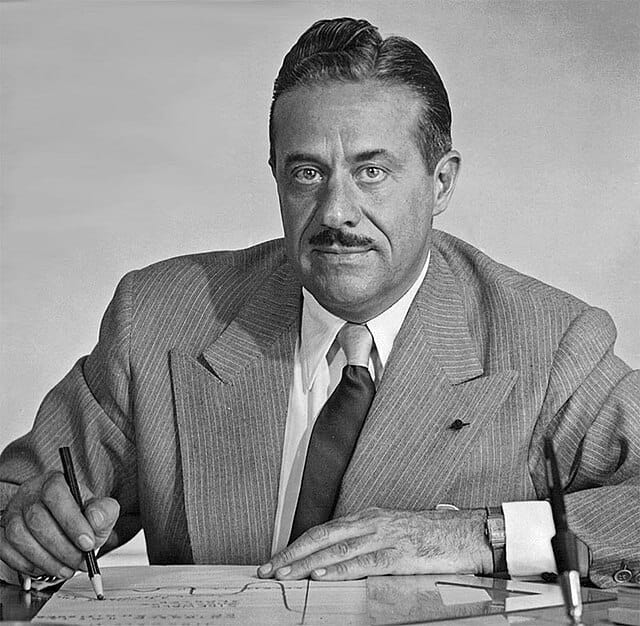
Loewy’s Lucky Strike redesign follows the same logic. He turned the cigarette pack over, eliminating the green on the back, making the brand read the same from both sides. Sales went up. The Air Force One livery, approved by Kennedy in 1962 and still in use with minor changes, completed the argument at the most public scale possible. As a result, Loewy became the designer most associated with the American century — an object-maker whose clients were Sears, NASA, Shell, and the White House. The V&A Museum situates this era of American commercial design as one of the defining applied arts movements of the 20th century.
MAYA is the design theory that has aged best precisely because it is not about design. It is about the psychology of how people adopt new things, and that does not change. For a deeper account of what Loewy was actually doing, the profile at Raymond Loewy covers the full body of work. The longer history that produced Loewy and what came after: the evolution of modern industrial design.
Starck: the object as a question the user has to answer
Philippe Starck redesigned the private apartments of the Élysée Palace for President Mitterrand in 1982, when Starck was 33. He opened Café Costes in Paris in 1984, one of the first destination cafes where people went to be seen inside a designed space. Then in 1990 he designed the Juicy Salif for Alessi, sketched on a restaurant napkin in Italy while eating squid. From that moment, the objects became secondary to the argument the objects were having.
Starck has said the Juicy Salif was not meant to squeeze lemons but to start conversations. The design is in the permanent collections of MoMA, the Metropolitan Museum, and the V&A. It drips. Seeds get through. Alessi knew this. The point was never the juice.
The democratic design push came next: Target’s “Good Everyday” line in 2002, mass-market chairs and lights that put Starck’s design language at household prices. Whether that was the logical conclusion of “design should improve the lives of as many people as possible” or the moment the argument was monetized is a fair question. Both readings are defensible.
For the full range of Starck’s work, the profile at who is Philippe Starck covers the trajectory. For the specific objects: top Philippe Starck designs and how to buy Philippe Starck furniture on a budget. The direct comparison with Rams: Dieter Rams vs. Philippe Starck.
The Dieter Rams: Ten Principles for Good Design (Klaus Klemp and Cees W. de Jong, Prestel, 2018) puts both designers’ positions in historical context. It is the more analytical companion to the Lovell monograph, useful for readers who want the intellectual framework before diving into the objects.
Eames: the case for democratic access to great design
Charles and Ray Eames operated from a different premise than Rams or Loewy. Their question was not what design should look like or how consumers adopt the new. Their question was whether good design could be made available to everyone. The molded plywood techniques they developed during World War II for leg splints found their way into the Eames LCW chair in 1945 — the same material logic, applied to a domestic object at a price most households could consider.
The Eames Lounge Chair (1956) sits at the other end of the spectrum: a luxury object that remains in production through Herman Miller at prices that reflect that. Both objects came from the same studio, the same argument. For the full philosophy behind the work, the profile at Charles and Ray Eames covers what they were actually arguing.
Four mistakes that undermine design appreciation before it starts
There are four ways to approach these designers that produce more noise than understanding.
Treating Rams’s ten principles as a style guide is the first. The principles are not instructions for making things look minimal. They are constraints on what a designer is allowed to impose on a user. “Good design is honest” means the object should not claim to be something it isn’t — not that objects should be beige. Misreading Rams as a style produces a lot of white products that make no ethical claims whatsoever.
Reading MAYA as an argument for compromise is the second mistake. Loewy was not saying that designers should water things down to please clients. He was saying that the most advanced design that can actually be adopted is more valuable than the most advanced design that cannot. The distinction matters: one is about conservatism, the other is about efficacy. Read his 1951 autobiography, Never Leave Well Enough Alone, before concluding that MAYA is a rationalization for safe choices.
In contrast, buying Starck-adjacent furniture without understanding the originals is the third error. Mass-market unlicensed versions of Starck designs carry the silhouette without the argument. The Louis Ghost chair, for Kartell in 2002, is polycarbonate specifically because Kartell works in polycarbonate and Starck wanted to test whether an aristocratic French chair form could be made from industrial plastic. A counterfeit in different plastic has neither the material logic nor the argument. For the budget-conscious path through Starck’s actual output, the buying guide is the right starting point.
Expecting the three designers to agree is the fourth mistake. They do not. Rams’s position implies that Starck’s approach is theatrical and therefore dishonest. Starck’s position implies that Rams’s restraint is itself a design assertion — a style that calls itself anti-style. These are real disagreements about what design is for. The comparison at Dieter Rams vs. Philippe Starck works through the specifics.
Every Design Legends profile and guide on ADI
- Raymond Loewy
- Raymond Loewy vs Dieter Rams: two theories of what design is for
- Dieter Rams’s design principles
- Products in the Dieter Rams tradition
- Philippe Starck’s key designs
- Philippe Starck furniture
- Philippe Starck objects under $100
Frequently Asked Questions
Who are the most influential design legends of the 20th century?
Dieter Rams, Raymond Loewy, and Philippe Starck are among the most frequently cited, though the list extends to Charles and Ray Eames, Ettore Sottsass, Achille Castiglioni, and Jony Ive. What distinguishes the legends from the merely prolific is that each staked a position — a theory about what design is for — that their work demonstrates across hundreds of objects over decades.
What made Dieter Rams a design legend?
Rams spent 42 years at Braun (1955–1997) developing a design practice built around a single claim: that good design should do as little as possible while doing everything necessary. His ten principles of good design are taught in design schools worldwide, and his influence on Apple’s product design, acknowledged in writing by Jonathan Ive, makes him the most cited design precedent in contemporary product culture.
How did Raymond Loewy’s MAYA principle change industrial design?
Loewy’s MAYA principle (Most Advanced Yet Acceptable) gave industrial design a theory of adoption rather than just a theory of form. It argued that the designer’s job is not to produce the most advanced object possible but to produce the most advanced object that users can actually integrate into their lives. This shifted the discipline’s self-understanding from aesthetic to psychological, and the principle has proven durable because it describes a real feature of human behavior, not a design style.
What is Philippe Starck’s design philosophy?
Starck’s stated philosophy is democratic design: the idea that good design should be available to everyone, not only to buyers of expensive objects. In practice, his philosophy is more unstable than that slogan suggests. Starck has consistently been more interested in what an object does to a person than in what it does as a mechanism. The Juicy Salif (1990) is the clearest statement: a citrus squeezer that is not particularly good at squeezing citrus, designed to prompt a question about what objects are for.
What is the difference between Rams and Starck as designers?
Rams argued that design’s obligation is to the user’s practical needs: restraint, honesty, and the removal of unnecessary elements. Starck argued that design’s obligation is to provoke the user into questioning those needs, asking whether function is always the right answer. The two positions are genuinely incompatible, and the disagreement is more useful than either position alone. The full comparison is at Dieter Rams vs. Philippe Starck.
For books that span the full range of these designers and movements, see our guide to best design books for design lovers.

About Joe Post
Joe Post holds an MFA in Art from California Institute of the Arts (CalArts) and has done additional graduate work at the School of the Art Institute of Chicago. He founded Art Design Ideas to write about design as cultural argument — the decisions, contradictions, and assumptions built into the objects we live with.