
Philippe Starck is a French designer whose design philosophy centers on democratic design, making well-designed objects available to the greatest number at affordable prices. Born in 1949, son of an aeronautical engineer, Starck has spent five decades arguing that design has a moral obligation to serve everyone, not just those who can afford it.
What is Philippe Starck’s design philosophy, and does it hold up?
In 1983, President François Mitterrand commissioned Philippe Starck to refurbish the private apartments of the Élysée Palace. This fact launched his international career and also created the tension that has defined it: the man who would become the loudest advocate for democratic design (design for the greatest number, at the lowest possible cost) introduced himself to the world by decorating the most exclusive private residence in France.
That tension does not resolve cleanly. Starck has a coherent statement of his position: “Democratic design is not a style. It is a humanism that aims to increase quality in every respect: cultural, qualitative, technological. To lower the price and to share it with as many people as possible.” And elsewhere, more economically: “The popular is elegant, the rare is vulgar.” These are not press releases. They are the inversion of the value hierarchy that European design culture ran on. For Starck, objects deliberately made unaffordable are not aspirational. They represent a failure of design’s social function.
But Starck’s career complicates his own thesis at almost every turn. Through the late 1980s and into the 1990s, he worked extensively with hotelier Ian Schrager. He designed the Royalton in New York in 1988 and the Paramount in 1990. These were not democratic spaces. They were boutique hotels charging rates that excluded most of the people Starck claimed to be designing for. His interiors became status markers for exactly the kind of exclusionary experience his philosophy was supposed to indict. The Élysée Palace commission and the Schrager hotels are not aberrations; they are a substantial thread in his career.
His father, André Starck, was an aeronautical engineer. Planes do not tolerate decoration. If a component is unnecessary, it weighs something, and weight costs fuel, and fuel costs lives. Starck absorbed this as a standard for objects: unnecessary mass is not just aesthetic failure, it is ethical failure. When he studied at the École Nissim de Camondo in Paris (applied arts, not the Beaux-Arts establishment), he came at design from engineering rather than fine art. By 1968 he had established his first company producing inflatable objects. His first major public interior commission, La Main Bleue nightclub in Paris, came in 1976.
The standard counterargument to the democratic-design thesis is direct: if your career depends on boutique hotel commissions for Schrager, presidential palace decoration, and collectible design objects sold at museum prices, then democratic-design rhetoric is branding. It’s a way of associating mass-market products with a designer whose real reputation was built serving wealthy clients. That objection deserves a direct answer. The answer comes from the work itself, and from the sequence.
Why the Juicy Salif Was Designed Not to Juice Lemons
The Juicy Salif arrived in 1990, designed for Alessi. Starck claims to have sketched it on a pizza box while eating squid in Ischia. Whether that origin story is verifiable history or self-mythology is secondary; what it describes accurately is the object’s relationship to function. The Juicy Salif drips. It reacts with citric acid. It is difficult to clean. Starck stated explicitly that it was designed not to juice citrus but to “start conversations.” Hundreds of thousands were sold. The Museum of Modern Art (MoMA) holds the Juicy Salif in its permanent collection, a recognition of the object’s standing as a designed artifact rather than merely a kitchen tool. The Design Museum London places the Juicy Salif at the center of Starck’s design argument: the object refuses domesticity while performing it, which is precisely what makes it worth arguing about.
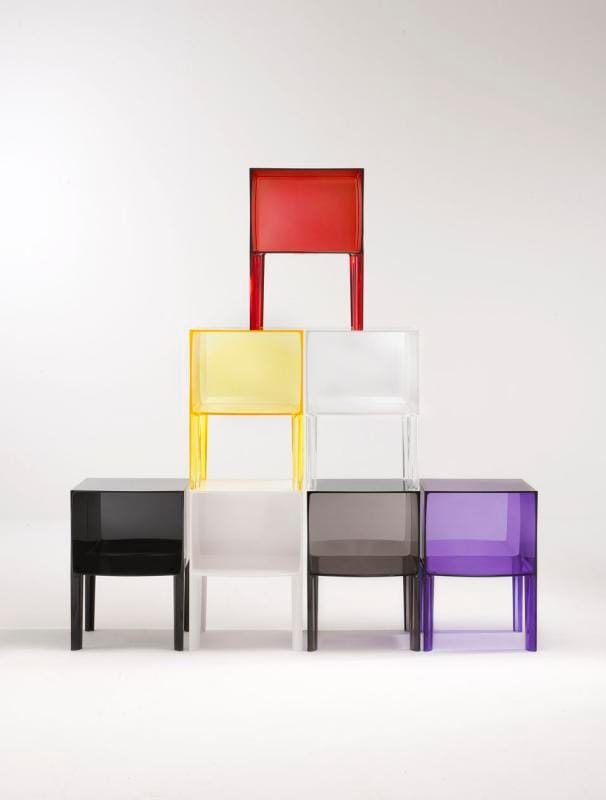
The Louis Ghost Chair, introduced circa 2001 by Kartell, is where the democratic-design argument becomes hardest to dismiss. It is a single injection-moulded polycarbonate shell reproducing the form of a Louis XVI fauteuil. No joints. No joinery. The Louis XVI armchair was made for a king’s court; Starck made it transparent and stackable for anyone who wanted one at a price point most middle-class households can reach. Over two million units have sold. The Vitra Magazine describes the Ghost Chair as the clearest single object demonstrating that formally ambitious design and industrial reproducibility are not opposites. This is the democratic luxury argument in physical form: a royal shape, an industrial material, a price that bypasses the exclusion built into the form’s history.
Then circa 2002, Target. Starck designed more than fifty household objects for the mass retailer, priced between $1.99 and $19.99. Toothbrush holders. Kitchen tools. Trash bins. A man who had spent a decade designing boutique hotel interiors for Schrager was now applying the same studio attention to a $3 toothbrush holder. This is where the counterargument about luxury-brand cover starts to lose ground. The Target collection cannot be explained by cynicism. It is the literal enactment of the democratic design claim, and it was reached through, not instead of, the prestige commissions that built the name that gave the Target work its cultural weight.
The contradiction in Starck’s career is real. The interesting question is not whether it can be dismissed but how he navigated it: by building enough prestige in one context to make democratic-scale design viable in another. Whether that navigation constitutes integrity or opportunism is a question the work poses and declines to answer on your behalf.
In 2008, Starck declared publicly that “everything I designed is unnecessary.” This was a recalibration, not a crisis. Design now had to justify its existence not just economically or aesthetically but ecologically. The same year he designed domestic wind turbines for Pramac. In 2009, the Zartan chair for Magis arrived: polypropylene compounded with recycled organic materials. Hemp, flax, and wood were incorporated into its structure. The chair was designed to be left outdoors year-round and to biodegrade at end of life. The democratic design argument, extended to ecological consequence.
The Philippe Starck Objects That Made the Argument
Juicy Salif (1990, Alessi)
Cast aluminum, spider-leg tripod form, approximately 29 cm high. Starck claims the sketch was made on a pizza box in Ischia. It drips, reacts with citric acid, and is difficult to clean. Its stated purpose, in Starck’s own words, is to start conversations, not to juice. The gap between what it does and what it is constitutes the work.
Louis Ghost Chair (circa 2001, Kartell)
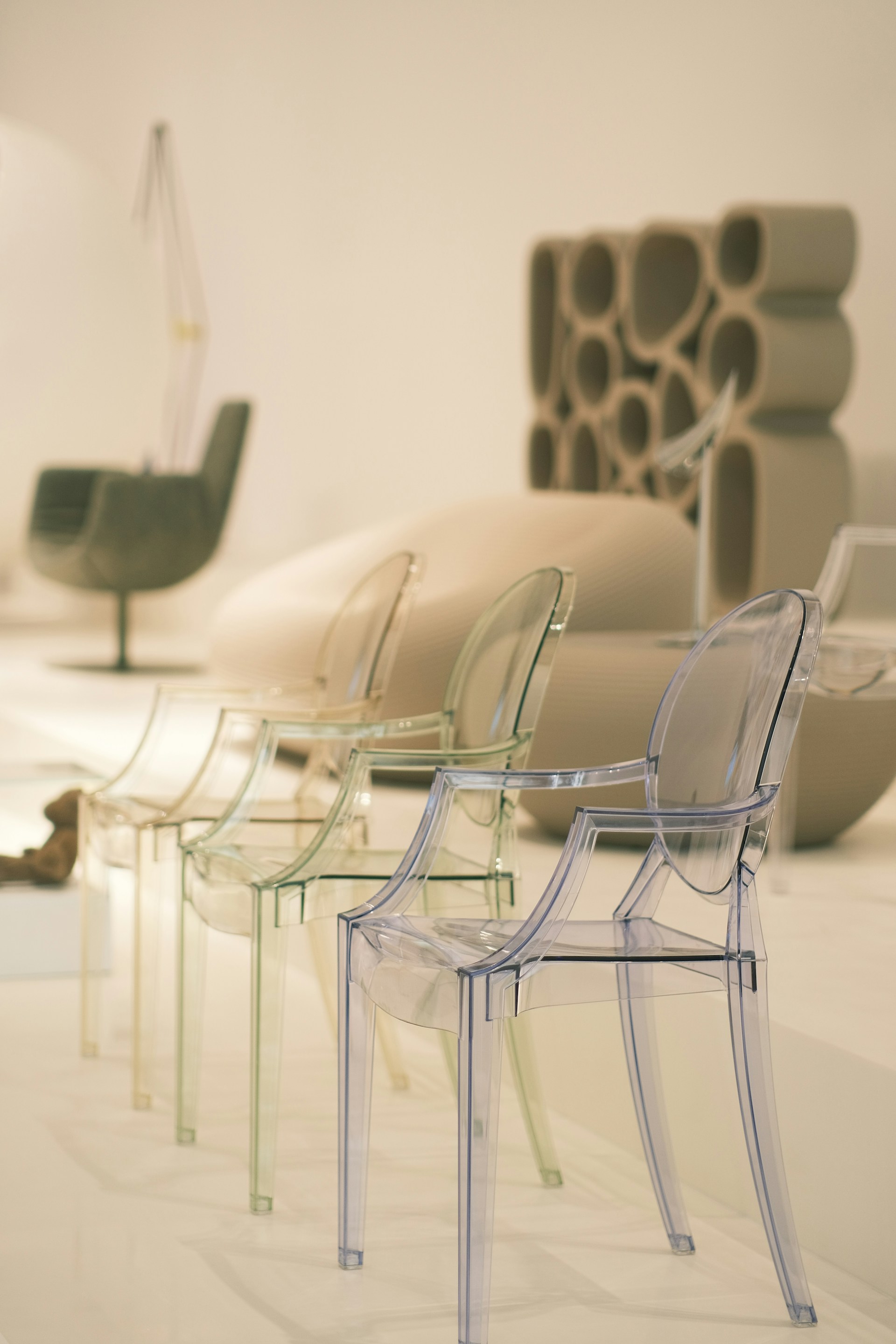
A single injection-moulded polycarbonate shell. No joints, no joinery. The Louis XVI armchair form, made transparent and stackable. Available in crystal clear and multiple colours. Over two million units sold. This is the most commercially successful single-mould polycarbonate chair in furniture design history. It demonstrates democratic luxury in the most direct sense: a form associated with aristocratic exclusion, made reproducible by industrial process.
Target collection (circa 2002)
More than fifty household objects, priced at $1.99–$19.99, sold through Target retail locations across the United States. The democratic design argument at mass scale. Not a statement piece but a toothbrush holder. The least glamorous object in the catalogue and the most coherent expression of the thesis.
Zartan chair (2009, Magis)
Polypropylene compounded with recycled organic materials: hemp, flax, wood. Designed for outdoor use, year-round, without maintenance. Intended to biodegrade at end of life. The ecological argument made structural. This is a material decision, not a claim.
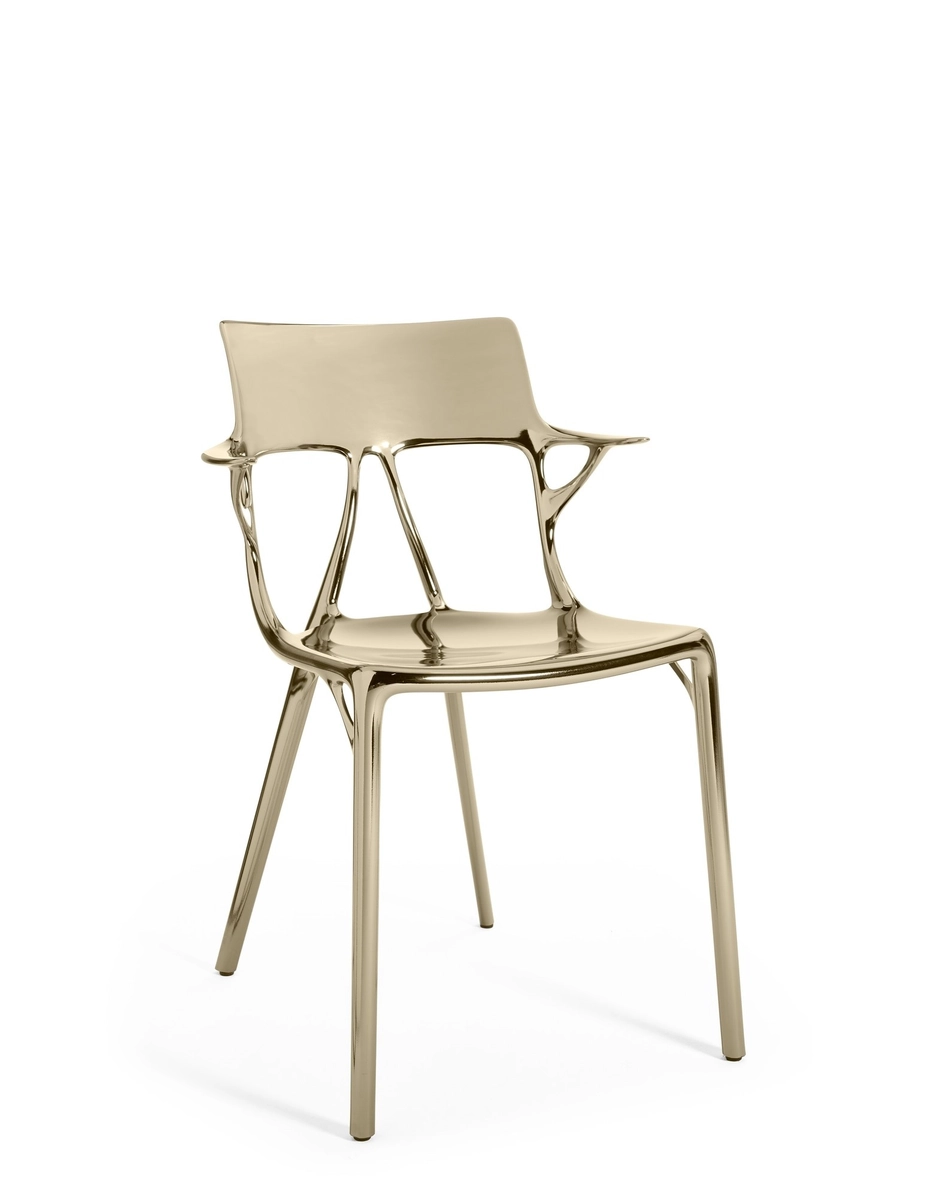
A.I. chair (2019, Kartell)
The first commercially produced chair developed with artificial intelligence assistance. An algorithm analyzed thousands of chair designs; the resulting form is skeletal, load-bearing, minimal. Starck framed this as ego-removal from the design process: the designer as editor rather than author. Whether the ego was actually removed from a process trained on the designer’s own aesthetic history is a reasonable question to carry into the showroom.
For a direct comparison of Starck’s democratic-design position against the more restrained functionalism of Dieter Rams, see Dieter Rams vs Philippe Starck. For a comparison with Raymond Loewy — whose MAYA principle approached market acceptance from a different angle than Starck’s democratic humanism — the contrast clarifies what each designer was actually arguing about. For buying guidance on Starck pieces at various price points, see How to Buy Philippe Starck Furniture on a Budget. For a review of his most commercially successful single object, see the Ghost Chair review. For a catalog of his most significant designs, see top Philippe Starck designs. And for objects available at accessible price points, see the best Philippe Starck objects under $100 and the best Philippe Starck furniture.
Shop the Collection
These are the three Starck objects most worth owning if you want to understand what the work is arguing, not just what it looks like.
- Alessi Juicy Salif Citrus Juicer: The object that made the argument concrete. A citrus juicer designed not to juice citrus, a sculpture that passes as kitchenware. Own it for the conversation it starts, not the orange juice it won’t make efficiently.
- Kartell Louis Ghost Chair (Crystal): Two million units sold. A Louis XVI armchair in industrial polycarbonate. The democratic luxury argument in its most commercially successful form, at a price point the Schrager hotel experience is not.
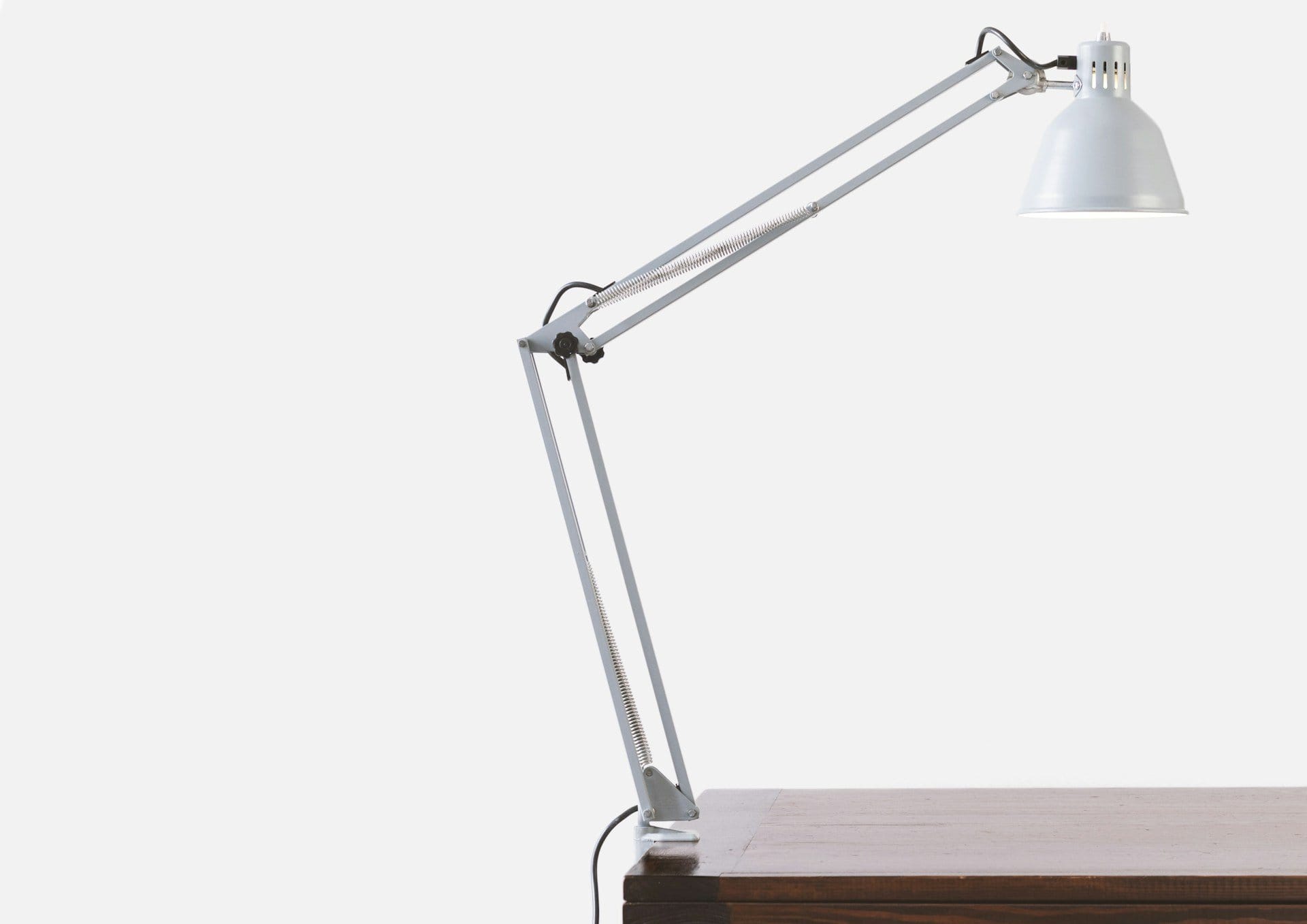
- Alessi Juicy Salif: Choose this only if you want the Juicy Salif as a study object in design mythology rather than as a functional kitchen tool. The desk-scale version makes the conversation-starting purpose literal.
Further Reading
Two books worth owning. These were chosen over exhibition catalogues because both make arguments about the work rather than simply documenting it.
- Ed Mae Cooper and Pierre Doze, Starck (Taschen, 2019): The complete visual monograph. Furniture, interiors, objects, yachts, across the full career arc including the Schrager hotel period and the post-2008 ecological work. Worth it for the project documentation and for the sheer range of what “designer” means when Starck uses the term.
- Judith Carmel-Arthur, Design Monograph: Starck (Oh! Life, 2023): The critical entry point. Compact, argument-first. Carmel-Arthur places Starck in design history rather than cataloguing his output. Start here if you want the argument before the pictures; move to the Taschen when you want the pictures.
Frequently Asked Questions
What is Philippe Starck’s design philosophy?
Philippe Starck’s design philosophy is democratic design: the belief that well-designed objects should be accessible to the greatest number of people at affordable prices, not reserved for those who can pay for exclusivity. He has described it as “a humanism that aims to increase quality in every respect — cultural, qualitative, technological — to lower the price and to share it with as many people as possible.” Since 2008, this has expanded to include an ecological dimension: design must also justify its material existence, not just its price point.
Who is Philippe Starck and what is he known for?
Philippe Starck is a French designer born January 18, 1949, in Paris. He is known for the Juicy Salif citrus juicer for Alessi (1990), the Louis Ghost Chair for Kartell (circa 2001), hotel interiors including the Royalton and Paramount in New York City with Ian Schrager, a Target collection of more than fifty household objects, and a decades-long public argument for democratic design — the claim that good design should be affordable. He studied at the École Nissim de Camondo and received the Excellence in Design Award from Harvard Graduate School of Design in 1997.
Why is the Juicy Salif famous if it doesn’t work properly?
The Juicy Salif drips, reacts with citric acid, and is difficult to clean. Starck has acknowledged all of this. He stated it was designed to “start conversations,” not to perform efficiently as a juicer. Its fame rests on that gap between form and function: the object is a sculptural argument about what kitchen tools are allowed to be, not a solution to the problem of citrus. Hundreds of thousands were sold on that basis.
How has Philippe Starck influenced modern furniture design?
Starck’s primary influence on modern furniture is the argument that formally ambitious design can be made reproducibly and affordably. The Louis Ghost Chair demonstrates this: a Louis XVI armchair in injection-moulded polycarbonate, with no joints. This proved that industrial process and design ambition are not opposites. His Target collection in the early 2000s extended this to mass retail at $1.99–$19.99, applying studio-level attention to objects that most designers at his career level would not have considered worth their time.
Is the Louis Ghost Chair still in production?
Yes. The Louis Ghost Chair is still in production by Kartell and available through Kartell retailers worldwide. It has been in continuous production since its introduction circa 2001. The chair is available in crystal clear and multiple coloured versions. Over two million units have been produced, making it the most commercially successful single-mould polycarbonate chair in furniture design history.

About Joe Post
Joe Post holds an MFA in Art from California Institute of the Arts (CalArts) and has done additional graduate work at the School of the Art Institute of Chicago. He founded Art Design Ideas to write about design as cultural argument — the decisions, contradictions, and assumptions built into the objects we live with.