Philippe Starck objects under $100 exist, but they require knowing where to look. Kartell chairs and the Louis Ghost start above $400. The accessible range is Alessi, Heller, and Duravit accessories: objects that carry the same design credentials as Starck’s furniture at a fraction of the price.
Our Top Picks
The genuine Starck range under $100 is narrower than most people expect. There are two physical objects worth buying, two books worth reading, and a number of Kartell chairs that are not on this list because they start at $400. This article covers what actually qualifies, and why.
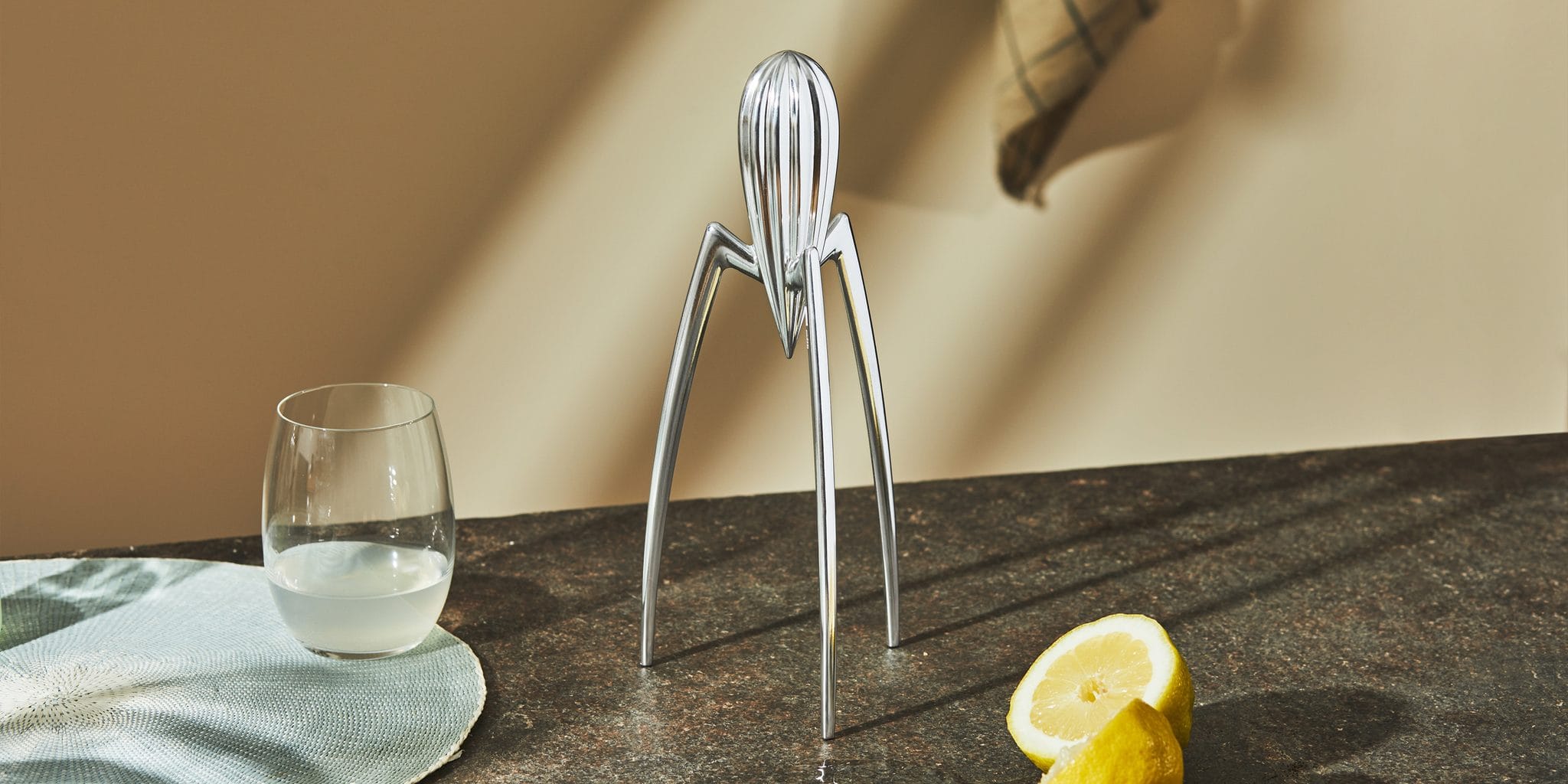
Alessi Juicy Salif Citrus Squeezer (Mid-Range, ~$80–100)
The Juicy Salif is the benchmark Starck object at this price. Designed in 1990, sketched on a pizzeria napkin during a holiday in Italy, cast in polished aluminum. It sits in the permanent collections of the Museum of Modern Art and the Metropolitan Museum of Art in New York. Starck has said explicitly that it is not designed to juice efficiently. It is designed to start conversations. Put it on a kitchen counter and you will have those conversations.
The form is three-legged and sculptural: a tall conical head that narrows to a point, propped on three angled legs that spread low and wide. It looks like something designed for a different kitchen entirely. That is the point. You see it and ask what it is, and someone tells you the story about the napkin and MoMA, and the object has done exactly what Starck intended.
At around $80–100, it is not cheap for something that squeezes citrus. It is reasonable for a museum-collected design object that also extracts juice, however inefficiently.
Check current price. Amazon prices fluctuate.
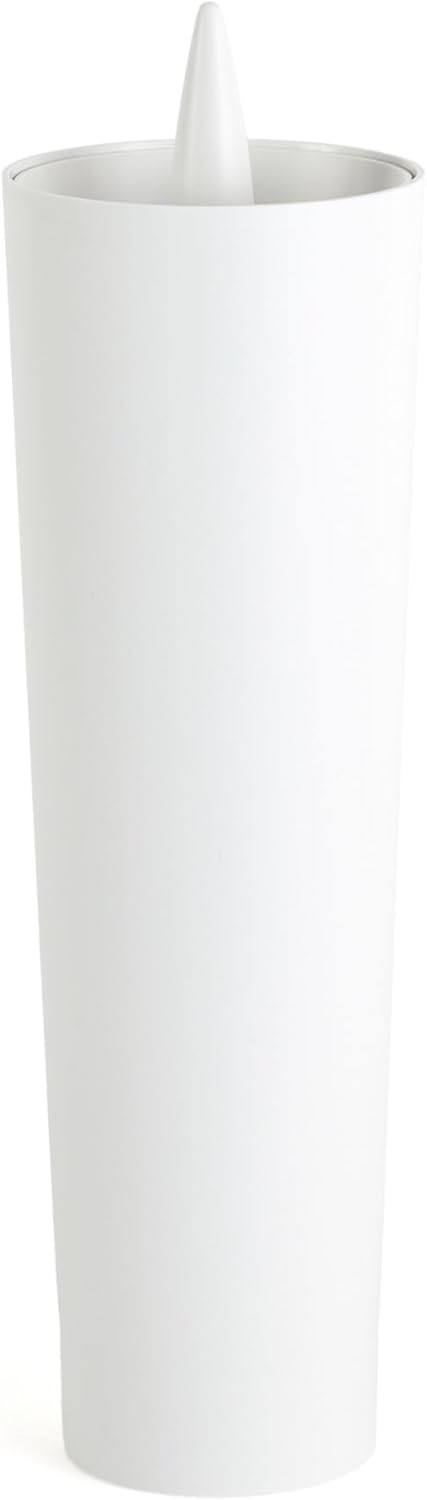
Heller Excalibur Toilet Brush by Philippe Starck (Budget, ~$49)
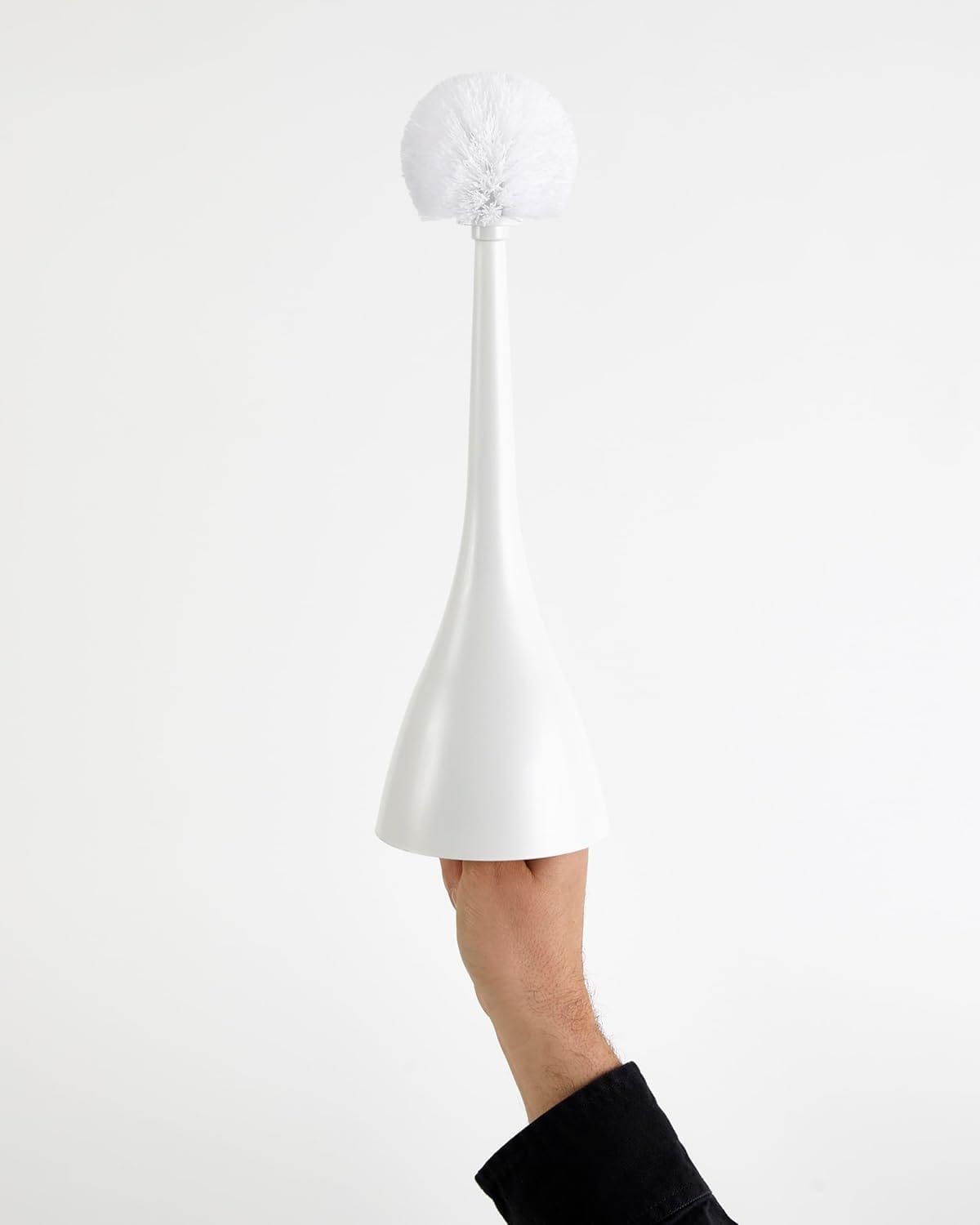
At around $49, the Excalibur is the most affordable genuine Starck design currently on Amazon. It is in MoMA’s permanent collection. The handle is sword-like: a narrow upright form in post-consumer recycled polypropylene that keeps your hand clear during use and reads as a design object when it stands in the corner. Heller reissued it. This is an authentic production piece.
Starck’s stated design philosophy is “the best possible service while using the minimum of materials, in order to improve the life of the user.” The Louis Ghost Chair is that argument at $450. The Excalibur is that same argument at $49. Both hold.
Available in Light Grey, Acid Yellow, and Chocolate.
Check current price.
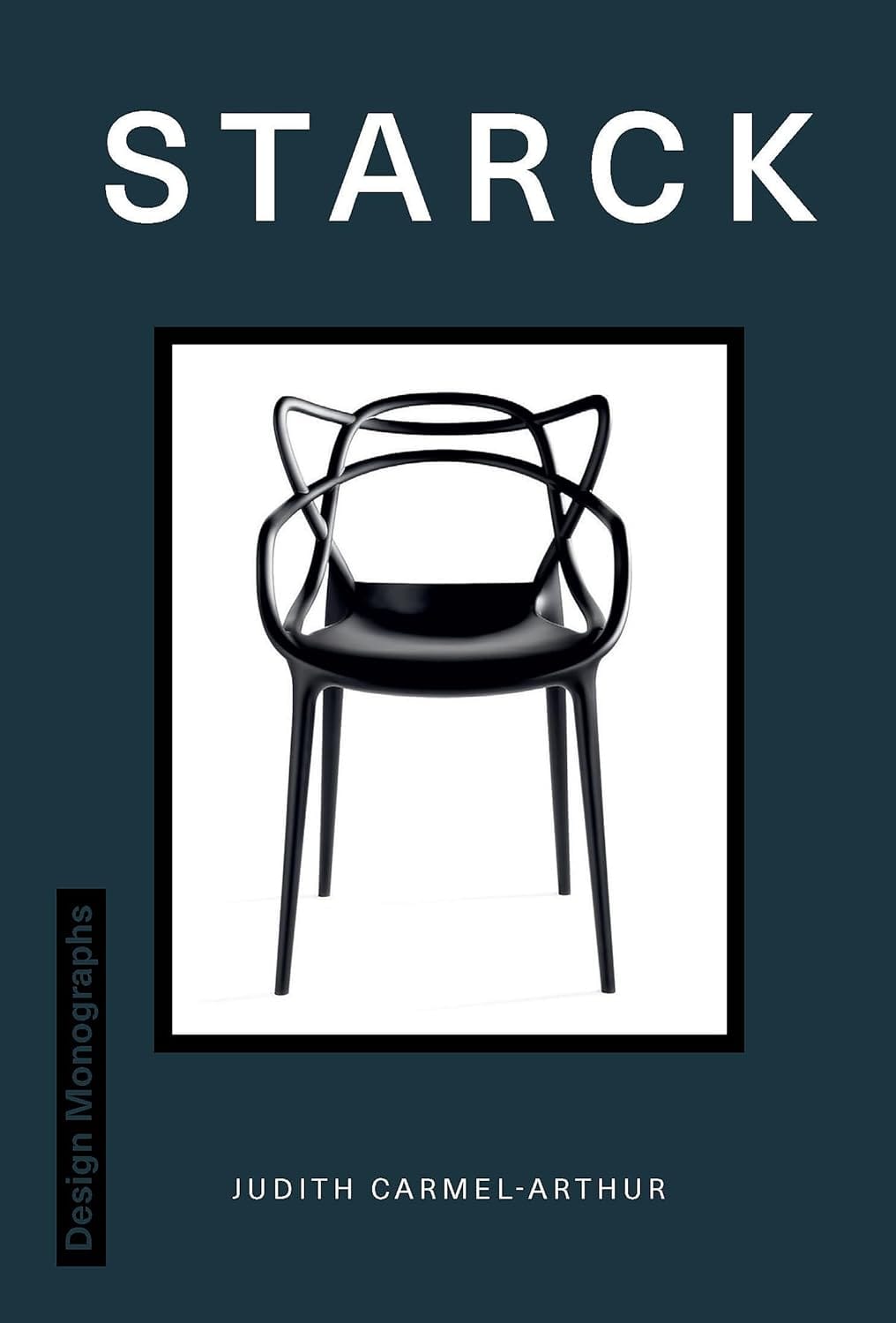
Judith Carmel-Arthur, Design Monograph: Starck (Phaidon, 2019) (Budget)
The most critically rigorous treatment of Starck’s work at an affordable price. Phaidon’s Design Monograph series is compact and analytical, not the large-format surveys, but genuine critical writing. This is the volume to read if you want to understand what Starck was arguing, not just see what he made. Under $30 at most times (check current price).
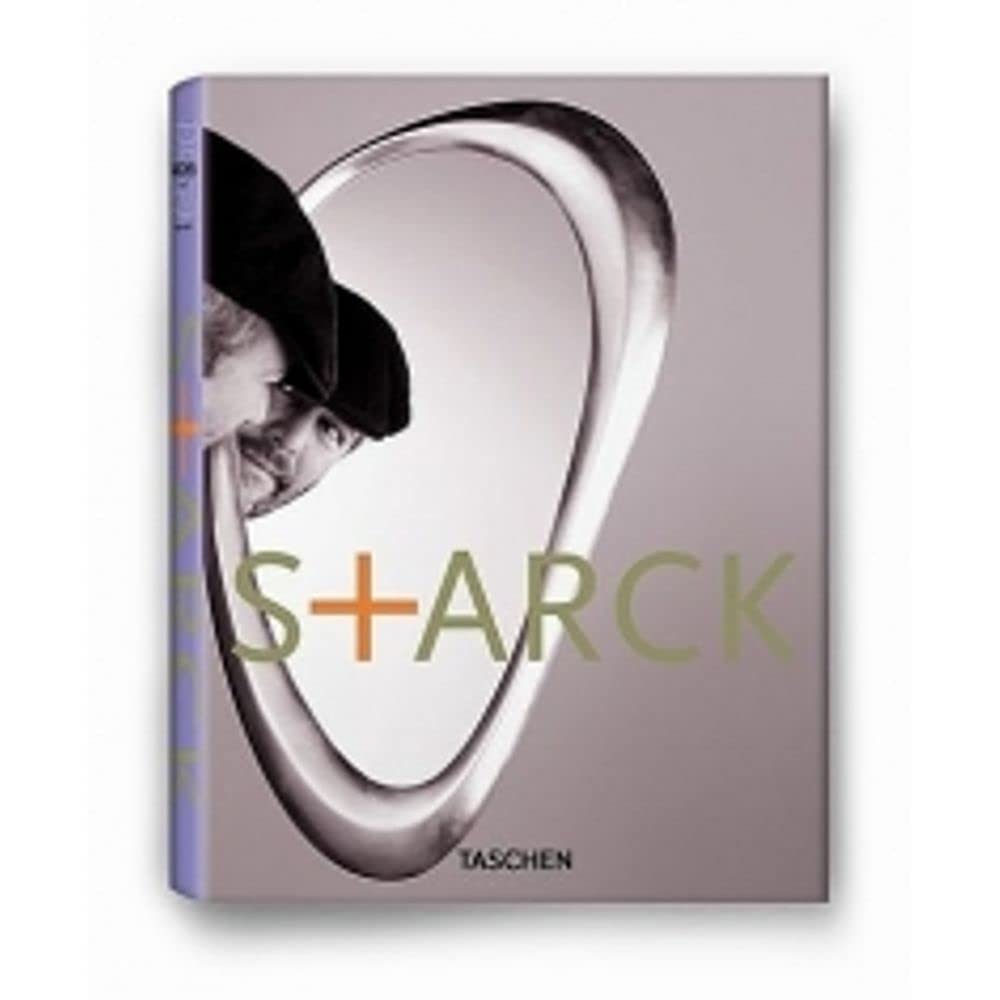
Ed Mae Cooper & Pierre Doze, Starck (Taschen, 2010) (Budget)
Visual comprehensiveness at Taschen’s mid-range price. If the Phaidon monograph is the critical argument, the Taschen is the documentation. It covers Starck’s full output (furniture, architecture, product design, interior work) with the photographic thoroughness Taschen does better than anyone. Typically $25–45 (check current price).
Quick Decision Guide
- Best design object under $100: Alessi Juicy Salif (~$80–100). Most museum-credentialed, most conversation-generating, most recognizable Starck object at this price.
- Best under $50: Heller Excalibur Toilet Brush (~$49). MoMA collection, recycled material, cheapest authentic Starck object on Amazon.
- Best for a design-curious gift: Alessi Juicy Salif. It arrives, gets asked about, tells a good story.
- Best for reading about Starck: Phaidon Design Monograph: Starck (~under $30). The critical version, not the hagiography.
- What you cannot get under $100: any Kartell chair. The Louis Ghost starts around $410 per chair; the Masters Chair around $385 per chair. For Starck furniture, that is a separate conversation — see the guide to best Philippe Starck furniture.
Full Comparison
| Product | Category | Price Range | Why It Qualifies | Link |
|---|---|---|---|---|
| Alessi Juicy Salif | Kitchen object / conversation piece | Mid-Range (~$80–100) | MoMA + Met permanent collection, cast aluminum | View on Amazon |
| Heller Excalibur Brush | Bathroom object | Budget (~$49) | MoMA collection, recycled material, authentic Starck | View on Amazon |
| Design Monograph: Starck (Phaidon) | Book | Budget (~under $30) | Critical monograph, analytical treatment | View on Amazon |
| Starck by Taschen | Book | Budget (~$25–45) | Visual survey, full output documentation | View on Amazon |
What Philippe Starck objects under $100 are worth buying?
Alessi Juicy Salif
- MoMA and Metropolitan Museum of Art permanent collections: design criticism in aluminum, not honorary acquisitions
- Cast and polished aluminum; the material quality is precise
- Unmistakable form that generates conversation without requiring explanation
- Starck’s stated intent (conversation, not juicing) is documented and coherent
- Poor at its primary function: the legs don’t channel juice efficiently; you need to catch the drips
- At ~$80–100, you have to accept the design-object framing entirely; better juicers exist at lower prices
- The mirror finish oxidizes over time and requires maintenance
The Juicy Salif is for anyone who wants a genuine Starck object for a kitchen counter and finds the fact that it’s a poor juicer interesting rather than a dealbreaker. At $80–100, it is the most museum-credentialed design object available in this category. The Excalibur brush is cheaper but narrower in design ambition.
Heller Excalibur Toilet Brush
- Cheapest genuine Starck object on Amazon; no other production Starck piece is available new at this price
- MoMA permanent collection: a verifiable fact, not marketing copy
- Post-consumer recycled polypropylene; the material claim is verifiable
- Available in three colors; the form reads as an object when standing in place
- It is a toilet brush; the design context does not change the use case
- Limited design presence compared to the Juicy Salif or any furniture piece
- A niche purchase; most buyers won’t prioritize it unless they already care about Starck
The Excalibur is for anyone who wants authentic Starck at the lowest possible price, or who genuinely appreciates a MoMA-collected bathroom object on its own terms. At $49, it is the entry point to authentic Starck. The democratic design argument is not theoretical here. It is the cheapest thing on the list.
The Books
- Deepest access to Starck’s thinking at the lowest price on the list
- The Phaidon monograph is genuinely critical, not celebratory (unusual for design publishing)
- The Taschen provides visual documentation no shorter survey matches
- Not an object; a different kind of purchase than the Juicy Salif or Excalibur
- The Taschen is heavier on image than argument; read the Phaidon first if you want analysis
Both books are for anyone who wants to understand the design argument before buying the object. Neither requires prior design knowledge. At under $30 for the Phaidon and typically under $45 for the Taschen, both cost less than the cheapest physical Starck object on this list. The depth of access per dollar spent is not matched by any of the objects.
Why does Starck make cheap things?
Starck’s democratic design philosophy is documented and explicit. His stated goal is “the best possible service while using the minimum of materials, in order to improve the life of the user.” He has built his product work around this for thirty years. The Juicy Salif was designed for Alessi because Alessi was producing design objects for general sale. The Excalibur brush for Heller occupied the same territory: genuine design credentials, accessible price.
The frustration, for a buyer trying to find Starck under $100, is that his most visible work has moved well above that threshold. The Kartell Ghost Chair runs around $410 per chair. The Masters Chair runs around $385 per chair. Both are sold in pairs on Amazon, meaning the minimum spend for either is $770–900.
The Juicy Salif and the Excalibur brush represent the original argument. They are the versions of Starck’s work that actually deliver on “design for everyone.” The chairs are extraordinary objects. See the full guide to best Philippe Starck furniture if that is the direction you want to go, but they are not under $100.
Further Reading
Both books below also appear in the Our Top Picks section as under-$100 purchases. They are listed here again as reading recommendations because they serve a different purpose: they are the context for understanding why those objects matter.
- Judith Carmel-Arthur, Design Monograph: Starck (Phaidon, 2019): The most critical treatment of Starck’s work at the lowest price. Phaidon’s monograph series prioritizes critical analysis over narrative biography: the volume for understanding the argument behind the objects.
- Ed Mae Cooper & Pierre Doze, Starck (Taschen, 2010): Visual comprehensiveness. If the Phaidon is for understanding Starck, the Taschen is for seeing his full output (furniture, interiors, architecture, product design) in one place.
Is the under-$100 Starck range worth buying?
The honest answer depends on what you are looking for. If you want a Starck object with genuine museum credentials and a story worth telling, the Juicy Salif delivers that at around $80–100. If you want the cheapest authentic Starck on the market, the Excalibur brush at $49 is exactly that. Both are real production pieces, both are in MoMA’s permanent collection, and both cost less than a round of drinks in most cities.
If you want a Ghost Chair or a Masters Chair, this is not the list. Those start at $385–410 per chair and the under-$100 range is a different category entirely. The books are a third path: the most cost-efficient way to understand what Starck was arguing with his objects before deciding whether to own any of them.
Frequently Asked Questions
What Philippe Starck products are under $100?
Two physical objects and two books. The Alessi Juicy Salif citrus squeezer (~$80–100) is in the permanent collections of MoMA and the Metropolitan Museum of Art. The Heller Excalibur Toilet Brush (~$49) is in MoMA’s permanent collection. The Phaidon Design Monograph: Starck and the Taschen Starck are both typically available under $45. No Kartell furniture is under $100. The Louis Ghost starts around $410 per chair.
Is the Alessi Juicy Salif actually good for juicing?
No. Starck has said explicitly that it was not designed to juice efficiently. It was designed to start conversations. The legs don’t channel juice effectively; you need a separate container to catch the drips. Both MoMA and the Metropolitan Museum of Art collect it as a design object, not as kitchenware. If you need a functioning citrus squeezer, buy something else and add the Juicy Salif to the counter for a different reason.
Where can I buy Philippe Starck designs affordably?
Amazon carries the Alessi Juicy Salif and the Heller Excalibur Toilet Brush, both verified authentic. The Alessi and Heller websites sell direct and may offer more color options. For furniture, Kartell.com sells direct and includes the full manufacturer warranty, with no third-party seller uncertainty. The books are available through Amazon and standard book retailers.
Why are Kartell chairs so expensive?
Injection-molded polycarbonate in a single mold is expensive to produce. The tooling costs are high; the manufacturing process is precise; and Kartell prices its chairs as design objects. The Louis Ghost Chair’s price reflects what it actually costs to produce a transparent armchair in a single polycarbonate mold at Kartell’s quality level. Cheaper chairs using ABS or composite plastics exist. They are not the same object.
What is the cheapest genuine Philippe Starck design?
The Heller Excalibur Toilet Brush at around $49 is the most affordable authentic Starck object currently on Amazon. It is in MoMA’s permanent collection and made from post-consumer recycled polypropylene. No authentic Starck chair exists at under $200 new.
Are Philippe Starck books worth reading for non-designers?
Yes. The Phaidon Design Monograph is written as design criticism, not as a technical text. It assumes no prior design knowledge. The Taschen is primarily visual and requires no background to engage with. Both books tell the story of what Starck was arguing with his objects, which is a story about culture and commercial life, not engineering.
For the broader context of this work, see the Design Legends hub — profiles of the designers and movements that shaped modern design.

About Zoe Post
Zoe Post holds a BFA and a Master of Architecture from the School of the Art Institute of Chicago. She now works as a product marketing leader at an architectural product design firm, bringing hands-on industry perspective to everything she writes. At ADI she covers contemporary artists, textile and pattern design, and the design objects that sit at the boundary of art and function.