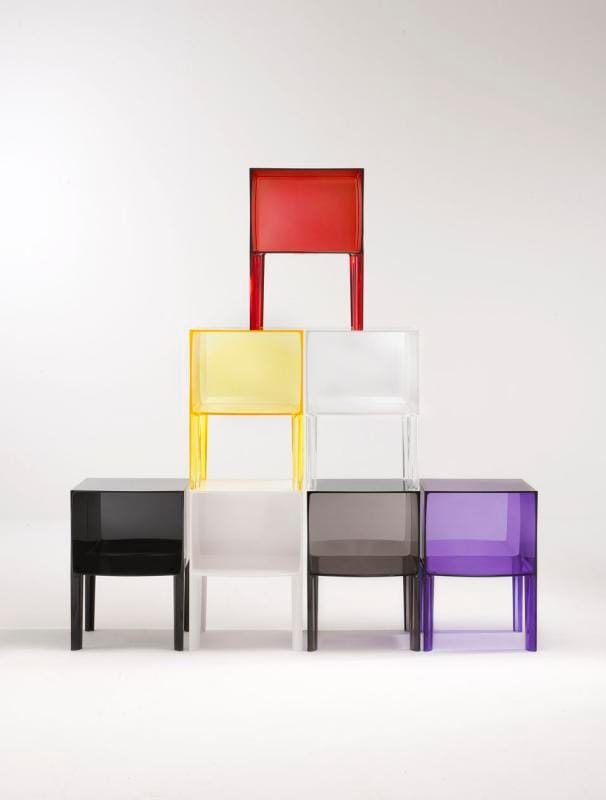
Philippe Starck has been designing commercially available furniture since the 1980s, with Kartell as his most accessible manufacturing partner. The best Philippe Starck furniture on Amazon spans ghost chairs and stacking designs to bathroom objects — genuine Kartell and Alessi pieces available through Kartell’s official Amazon store and select third-party sellers.
Our Top Picks
Every pick here is a genuine Philippe Starck design in production, not an unlicensed version, not a lookalike. The list runs from a ~$49 bathroom object in MoMA’s collection to the Ghost Chair at around $400 per unit. None of these are cheap in the lifestyle-blog sense of the word. What they are is specific: each one solves a problem, and the problem is worth solving.
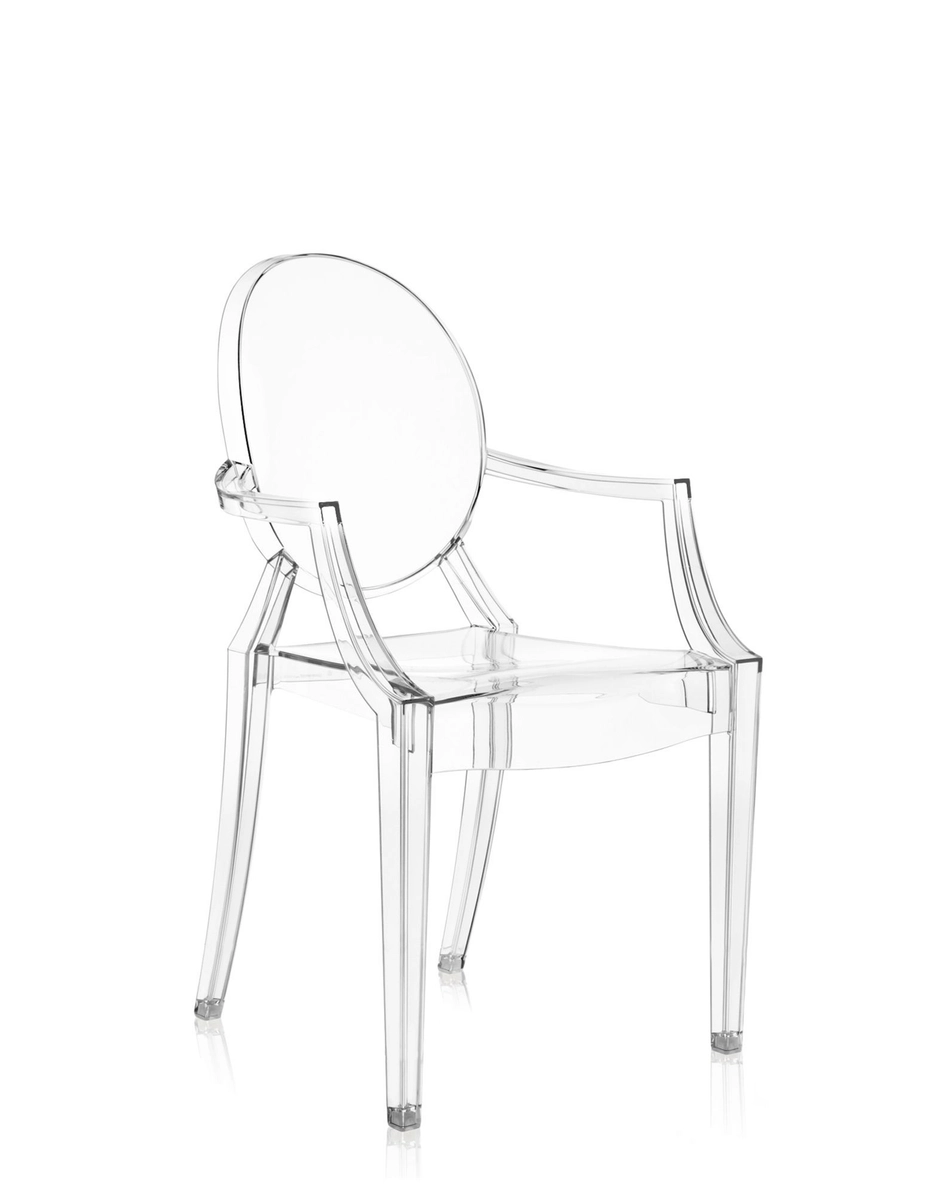
Kartell Louis Ghost Chair (Premium)
The Ghost Chair disappears. That is its commercial proposition, and over two million sales since Kartell launched it in the early 2000s have confirmed it. Injection-molded polycarbonate in a single mold, a manufacturing first at this scale, produces a transparent armchair that borrows the silhouette of an 18th-century Louis XVI piece and renders it weightless. Put it at a dining table in a small room and the chair stops competing with everything else in the space.
Stackable to six. Weather-capable. Available in crystal, glossy black, and transparent colors.
Before you buy — counterfeit warning: Kartell sells through its official Amazon brand store, but third-party sellers also list Ghost Chairs — and many are counterfeits. Buying through the official store eliminates this risk. If you buy from any other listing, authenticate on delivery: authentic chairs have the Kartell name, product name, and Philippe Starck’s name embossed directly into the polycarbonate. If the branding is on a paper label or hang tag rather than molded into the material, it is an unlicensed version. Fakes use ABS plastic or recycled polycarbonate blends that yellow within 18 months indoors.
Price range: around $410–450 per chair from kartell.com. Amazon stock check, 21 September 2026: the US-stocked Louis Ghost listings are gone; every genuine Kartell listing left on Amazon.com ships from Amazon Germany with April 2027 delivery and $140–500 freight. The button below opens the Kartell brand store so you see whatever is actually shippable; for the chair itself, buy from kartell.com, which also carries the warranty. Our Ghost Chair review covers how to spot a counterfeit.
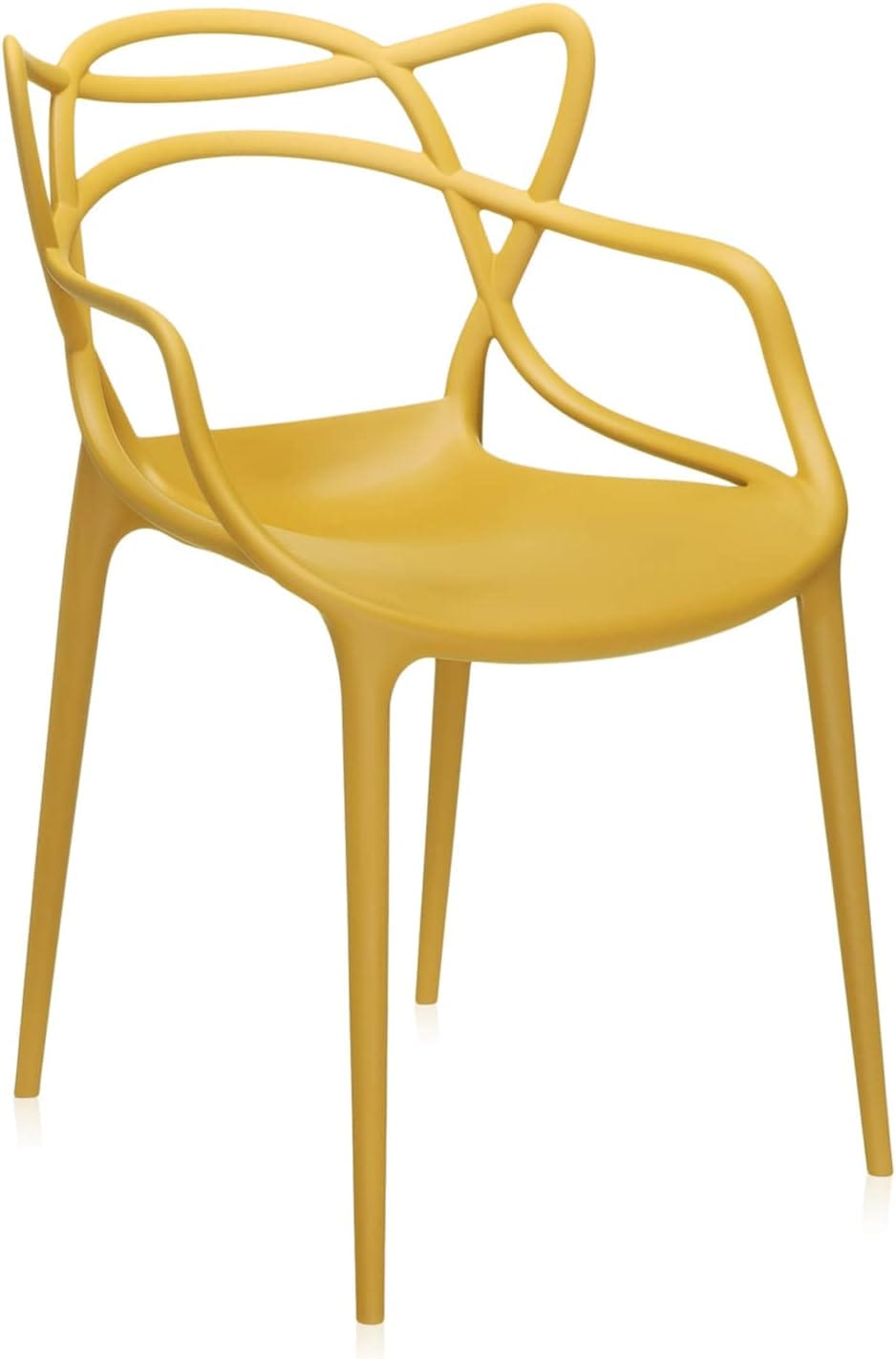
Kartell Masters Chair (Premium)
Designed by Starck with Eugeni Quitllet in 2009, the Masters Chair is a design-history exam in furniture form. The cutout back simultaneously traces three chairs: Arne Jacobsen’s Series 7 (1955), Eero Saarinen’s Tulip Armchair (1956), and Charles and Ray Eames’ Eiffel Chair (1951). The negative space in the back shows all three silhouettes at once. It’s the kind of thing that requires explanation when guests ask about it, which is either a selling point or not, depending on who you’re feeding dinner.
Available in a wide color range, stackable, sold in packs of two on Amazon. Same third-party seller caveat as the Ghost Chair; check for embossed branding on receipt.
Price range: around $385–450 per chair from kartell.com. The Amazon listing is a marketplace pack of two at about $1,490 with no Amazon buy box; treat it as a reference, not a deal.
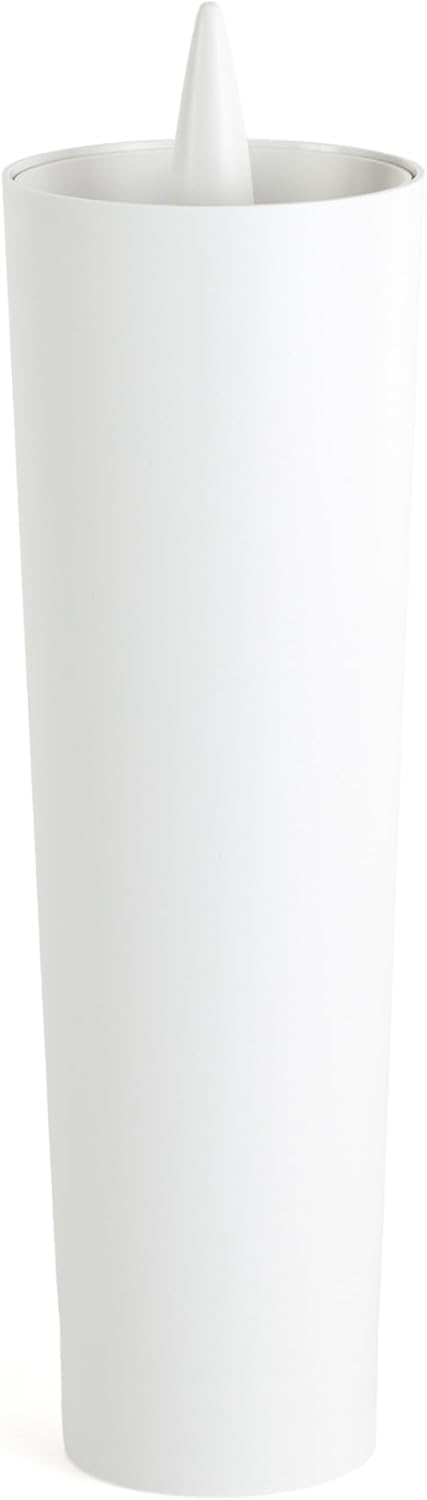
Heller Excalibur Toilet Brush by Philippe Starck (Budget)
At around $49, the Excalibur is the most affordable genuine Starck design currently on Amazon. It is a toilet brush. It is also in MoMA’s permanent collection. The sword-like handle in post-consumer recycled polypropylene keeps your hand clear during use and doubles as a narrow upright form that reads as a design object when it’s not in use. Heller reissued it; this is an authentic production piece, not a licensed approximation.
Starck spent three decades arguing that good design should not be exclusive. This is what that argument costs at $49.
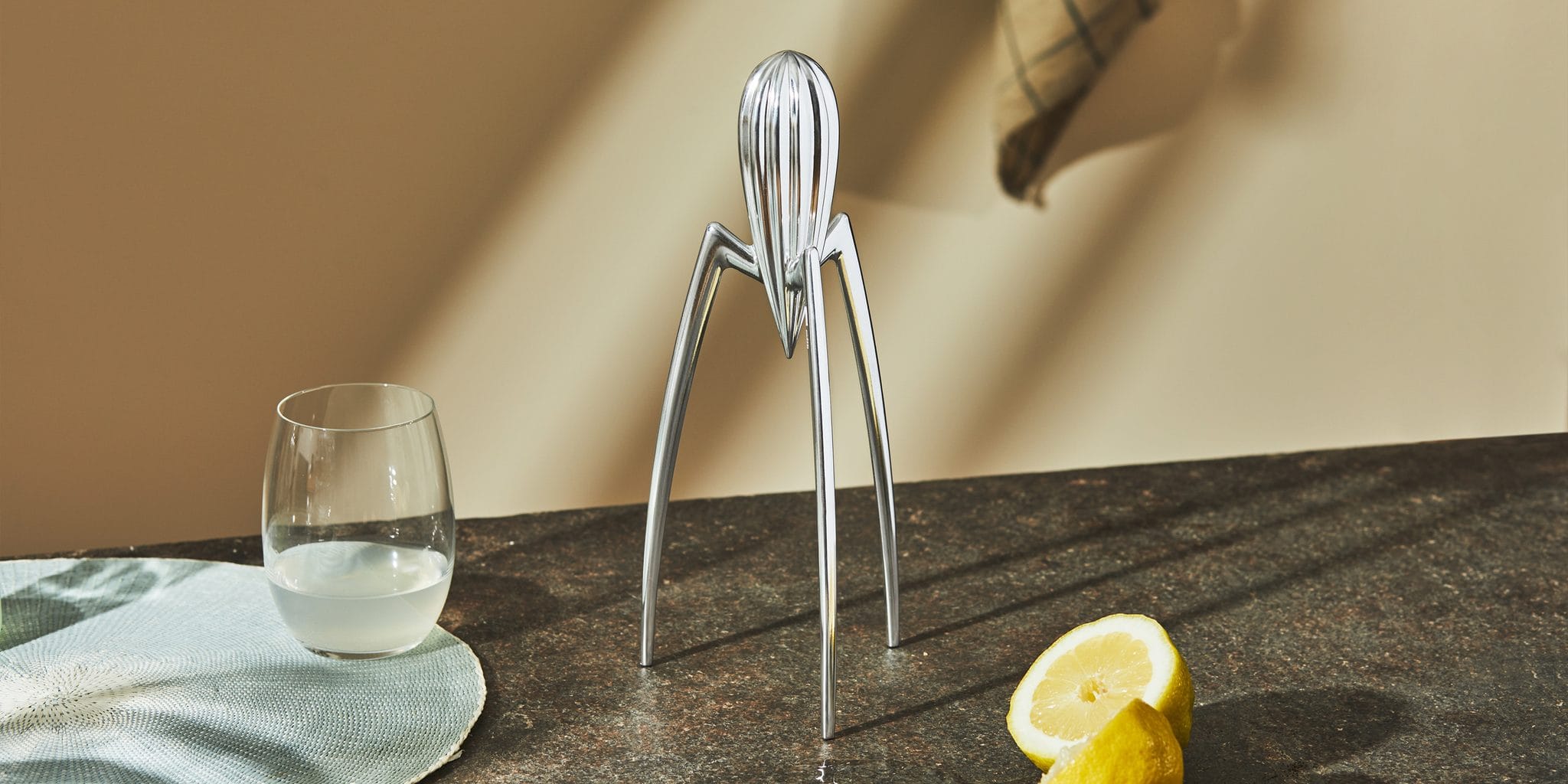
Alessi Juicy Salif Citrus Squeezer (Mid-Range)
Designed in 1990 on a pizzeria napkin during a holiday in Italy. Cast and polished aluminum. Permanent collections at the Museum of Modern Art and the Metropolitan Museum of Art in New York. Starck has said explicitly that the Juicy Salif is not designed to juice well; it is designed to start conversations. It does that. It sits on a kitchen counter like a question mark on three legs, and nearly everyone who sees it asks what it is.
At around $80–100, it is not inexpensive for a citrus squeezer. It is reasonable for a museum-collected design object that also extracts juice.
Price range: ~$80–100
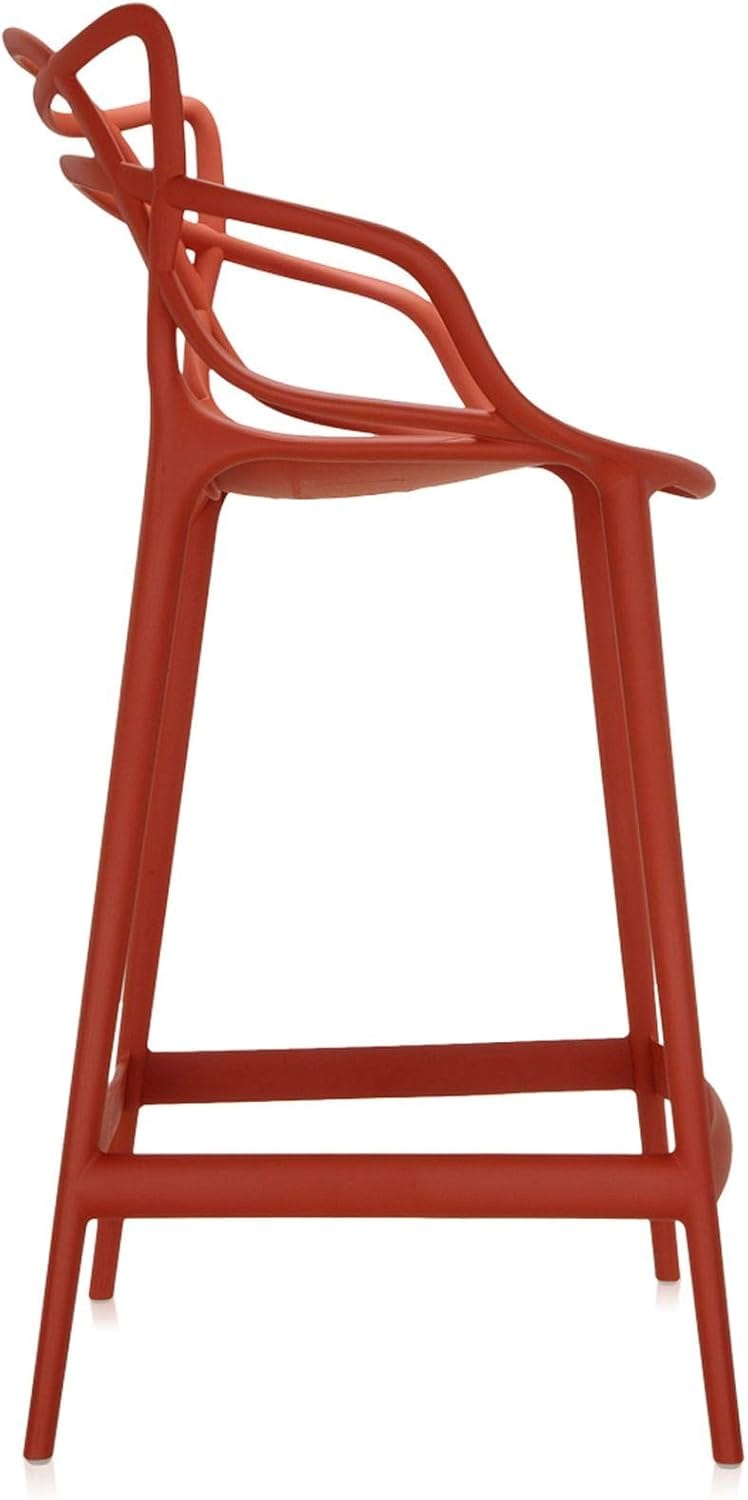
Kartell Masters Stool (Mid-Range)
Same cutout silhouette as the Masters Chair, reduced to counter height. The stool format addresses the one problem the Masters Chair pair purchase creates: entry price. The stool sells as a single unit, which means you can start with one. Counter height works for kitchen islands, bar areas, or anywhere the standard dining-chair seat height doesn’t fit.
Smaller footprint than the chair. Stackable. Available in multiple colors.
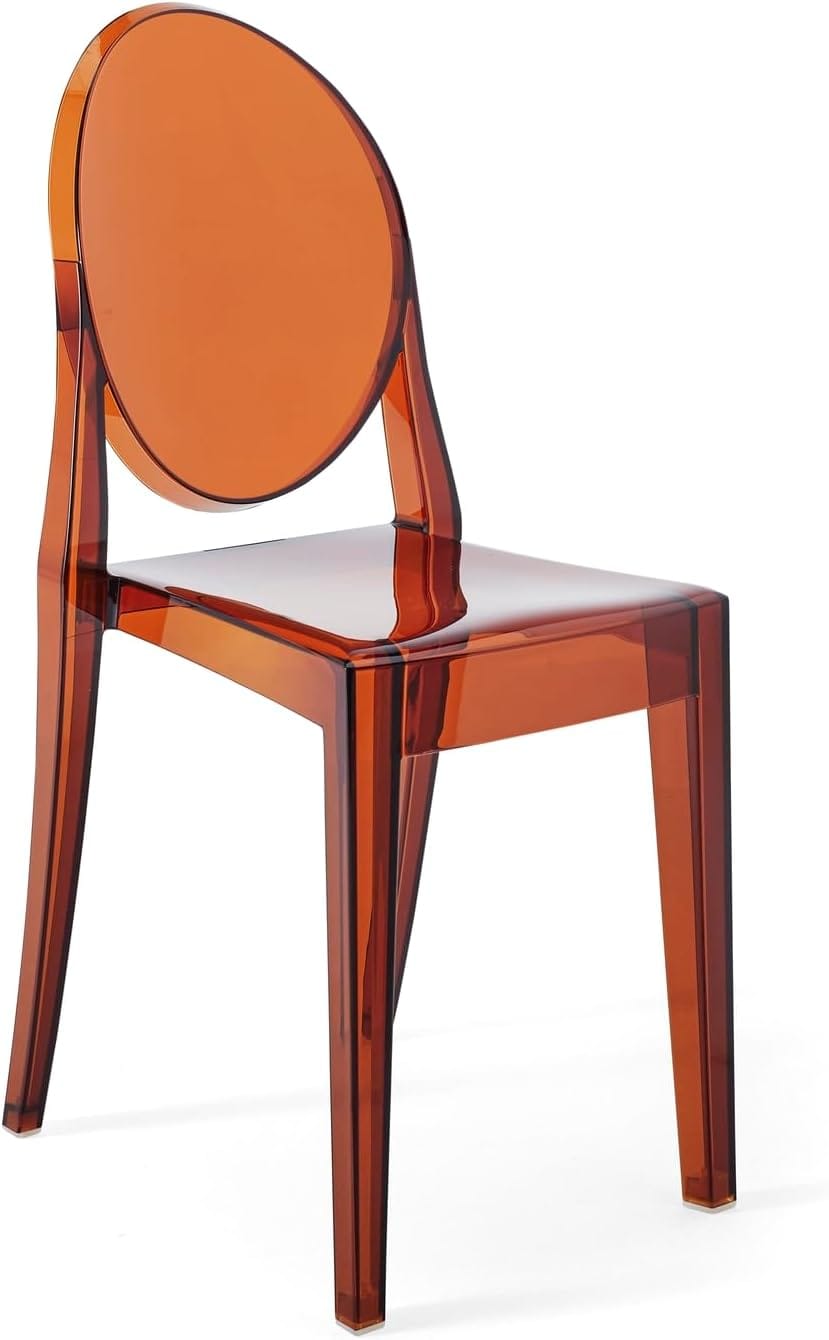
Kartell Victoria Ghost Chair (Premium)
The Victoria Ghost is the armless companion to the Louis Ghost — same polycarbonate construction, same stackable design, lower price. Where the Louis Ghost is an armchair, the Victoria is a side chair, which makes it more practical for dining tables where arm clearance matters. The disappearing-chair effect is less pronounced without the arms, but the transparency is still the point.
Price range: typically lower than the Louis Ghost per chair. Available in multiple colorways.
Quick Decision Guide
- Best statement piece: Louis Ghost Chair: the one Starck design that changes how a room reads visually. No other chair at any price achieves the same disappearing effect.
- Best under $200: Heller Excalibur Toilet Brush (~$49): no Starck chair exists new under $200; this is the most affordable authentic Starck object with genuine design credentials.
- Best for small spaces: Kartell Masters Stool: single-unit purchase, counter height, smaller footprint than any chair pair.
- Best design-history purchase: Masters Chair: three chairs from design history encoded in one silhouette.
- Best conversation object: Alessi Juicy Salif: MoMA-collected, deliberately provocative, and still the most-discussed kitchen object Starck has made.
Full Comparison
| Product | Best For | Price Range | Key Feature | Link |
|---|---|---|---|---|
| Louis Ghost Chair | Statement dining or accent chair | Premium (~$410+/chair) | Transparent polycarbonate, single-mold, stackable | View on Amazon |
| Masters Chair | Design-forward dining chair | Premium (~$385+/chair) | Tribute silhouette (Jacobsen/Saarinen/Eames) | View on Amazon |
| Heller Excalibur Brush | Bathroom accent object | Budget (~$49) | MoMA collection, recycled polypropylene | View on Amazon |
| Alessi Juicy Salif | Kitchen design object | Mid-Range (~$80–100) | MoMA and Met permanent collection, cast aluminum | View on Amazon |
| Masters Stool | Small space / counter seating | Mid-Range | Single-unit purchase, counter height | View on Amazon |
The Best Philippe Starck Furniture Reviewed: What Each Piece Gets Right and Where It Disappoints
Louis Ghost Chair
Pros:
- Genuine visual effect: transparent polycarbonate reads as almost absent in a furnished room
- Single-mold construction, structurally sound, not assembled from separate polycarbonate panels
- Stackable to six; suitable for outdoor use in covered areas
- Available in multiple color options beyond crystal
Cons:
- Polycarbonate scratches; the crystal finish shows marks most readily
- Comfort is limited for extended sitting; no padding, hard contact points
- Sold in pairs on Amazon (minimum ~$820–900 for two chairs)
- All Amazon listings are third-party: significant counterfeit risk; authentication on delivery is not optional
Who it’s for: Dining rooms and accent seating where visual space is the constraint. Not a desk chair, not anywhere you’ll sit for hours.
Why it stands out: Over two million sold. The market confirmed the disappearing-chair proposition in a way no other modern furniture piece has matched.
Kartell Masters Chair
Pros:
- The cutout back encodes three landmark chairs in one silhouette, a piece of design criticism you can eat dinner at
- Wide color range (matte, glossy, opaque options)
- Stackable; durable polypropylene construction
Cons:
- Sold in pairs only on Amazon; minimum outlay around $770–900
- Comfort is secondary to appearance; not designed for long sitting
- Third-party Amazon sellers carry the same authentication risk as Ghost Chair listings
Who it’s for: People who care about design history and want a dining chair that reflects it. Not for anyone whose first requirement is ergonomic comfort.
Why it stands out: No other production chair synthesizes Jacobsen, Saarinen, and Eames simultaneously. It is a design argument at a dining-chair price.
Heller Excalibur Toilet Brush
Pros:
- Most affordable genuine Starck design on Amazon (~$49)
- MoMA permanent collection
- Post-consumer recycled polypropylene, an actual sustainability credential, not marketing copy
- Multiple color options; the form reads as an object, not a cleaning tool
Cons:
- It is, functionally, a toilet brush; the design context does not change the use case
- Limited design statement compared to furniture
- A niche purchase; not for everyone
Who it’s for: Anyone who wants an authentic Starck piece without a $400+ furniture commitment, or who finds the idea of a MoMA-collected toilet brush worth owning on its own terms.
Why it stands out: Democratic design at its most literal. Starck’s stated philosophy is that good design should reach everyone. This is the version of that argument you can actually buy.
Alessi Juicy Salif
Pros:
- Permanent collections at MoMA and the Metropolitan Museum of Art, genuine museum credentials
- Cast and polished aluminum; the material handling is precise
- Unmistakable form; 35 years after its introduction it still generates conversation
- Starck’s stated intent (conversation, not juicing) is documented and coherent
Cons:
- Deliberately poor at its stated function; the legs don’t channel juice efficiently
- ~$80–100 for a citrus squeezer requires accepting the design-object framing entirely
- Aluminum oxidizes over time; the mirror finish requires maintenance
Who it’s for: Anyone who wants a museum-collected Starck piece for a kitchen counter at a price that makes sense.
Why it stands out: The Juicy Salif is the object that made Starck’s democratic design argument concrete in the 1990s. Its presence in both MoMA and the Met is not honorary; both institutions collect it as design criticism, not kitchenware.
Kartell Masters Stool
Pros:
- Single-unit purchase; no forced pair commitment
- Counter height works for kitchen islands and bar areas
- Smaller footprint than the chair; stackable
- Same design credentials as the Masters Chair
Cons:
- Backless seating is not for everyone
- Less visually dramatic than the Ghost Chair
- Still a significant purchase for a single stool
Who it’s for: Small apartments, kitchen counters, or anyone who wants the Masters design in a format that doesn’t require buying two.
Why it stands out: The most accessible entry point into Kartell/Starck furniture by unit price.
Why the Starck–Kartell Chairs Are More Than Brand Architecture
Philippe Starck’s collaboration with Kartell, which began in the 1990s, was built around a specific industrial argument: that polymer production could generate furniture with genuine cultural weight, not just efficient mass-market chairs. The Louis Ghost Chair was the proof. Polycarbonate injection-molded in a single mold had never produced a transparent armchair at scale before the early 2000s. The result is a chair that holds the neoclassical armchair form while making it structurally honest; the material’s transparency is not decorative, it is the product.
The Masters Chair extended the argument nine years later. A chair whose back traces three other chairs simultaneously is not nostalgic; it is a piece of design criticism. It says that the three chairs it references were each right about something, and that synthesis is possible. Neither the Ghost Chair nor the Masters Chair is optimized for comfort. That is deliberate. These are not ergonomic products. They are positions.
For his most celebrated designs, Starck consistently reached for the same principle: the minimum material that carries the maximum meaning. The Ghost Chair is polycarbonate and air. The Juicy Salif is aluminum and a question mark. The Excalibur brush is recycled plastic and a sword. What they share is a refusal to make the object neutral.
Further Reading
The two books worth owning if you want to understand what Starck was arguing with this body of work, not just catalog what he made.
- Judith Carmel-Arthur, Design Monograph: Starck (Phaidon, 2019): The most rigorous single-volume critical treatment of Starck’s output. Phaidon’s Design Monograph series operates as design criticism rather than celebration; this is the volume that engages with what Starck was arguing, not just what he made.
- Ed Mae Cooper & Pierre Doze, Starck (Taschen, 2010): Visual comprehensiveness at Taschen scale. More coffee-table than critical, but the documentation of Starck’s full output across furniture, architecture, product design, and bathroom systems is unmatched in a single volume.
Is Buying Starck Furniture Through Amazon Worth the Risk?
The honest answer: it depends on what you’re buying. For the Alessi Juicy Salif and the Heller Excalibur brush, Amazon is a reasonable channel — both are sold by verified merchants and the counterfeit risk is low on small objects. For Kartell chairs, the calculation changes. Kartell sells through its official Amazon brand store, which eliminates the third-party counterfeit risk for chairs purchased there. For listings outside the official store, every Ghost Chair or Masters Chair sold by a third-party seller carries no manufacturer warranty and real counterfeit exposure. Buying from kartell.com remains the safest option: 10-year structural warranty, confirmed authenticity, and direct manufacturer accountability. The price difference between kartell.com and Amazon third-party listings is typically small. On a $400+ chair, that difference is worth paying.
Frequently Asked Questions
What is the best Philippe Starck chair to buy on Amazon?
The Louis Ghost Chair is the best Philippe Starck chair available through Amazon if visual impact is your priority. It has sold over two million units for a reason; the transparent polycarbonate disappears in a room in a way no other dining or accent chair does at any price. The Masters Chair is the better choice if you care about design history. Both are sold through third-party Amazon sellers, not Kartell directly; verify embossed branding on delivery.
How much does a Kartell Ghost Chair cost?
The Kartell Louis Ghost Chair costs around $410–450 per chair through Amazon third-party sellers. Kartell typically packages and sells chairs in pairs, so budget around $820–900 for two. Kartell’s US store (kartell.com) sells directly at comparable pricing and includes the full manufacturer warranty, which third-party Amazon sellers do not provide.
Are Kartell chairs on Amazon authentic?
Kartell chairs on Amazon are sold by third-party sellers, not Kartell directly. Authentic Kartell chairs have the Kartell name, product name, and designer name embossed directly into the polycarbonate material, not printed on a paper label or hang tag. If the branding is on a label rather than molded into the chair, it is an unlicensed version. Fakes use cheaper ABS plastic or recycled polycarbonate that yellows within 18 months. Check the embossing before accepting delivery.
What is the most affordable Philippe Starck design?
The Heller Excalibur Toilet Brush, at around $49, is the most affordable genuine Starck design currently on Amazon. It is in MoMA’s permanent collection and made from post-consumer recycled polypropylene. No authentic Starck chair exists at under $200 new. The Alessi Juicy Salif citrus squeezer runs around $80–100 and is held in both MoMA and the Metropolitan Museum of Art.
Why is the Alessi Juicy Salif considered a design object rather than a kitchen tool?
Starck has stated explicitly that the Juicy Salif was not designed to juice efficiently. He sketched it on a pizzeria napkin during a holiday in Italy and described its purpose as starting conversations. Both MoMA and the Metropolitan Museum of Art have acquired it for their permanent design collections, not as kitchenware, but as design criticism in aluminum. Whether or not it performs well as a citrus squeezer is beside the point Starck was making.
What is the difference between the Louis Ghost Chair and the Masters Chair?
The Louis Ghost Chair (early 2000s) is about material and transparency: polycarbonate injection-molded in a single mold to produce a chair that is visually almost absent in a room. The Masters Chair (2009, designed with Eugeni Quitllet) is about design history; the cutout back traces the silhouettes of three landmark chairs simultaneously: Arne Jacobsen’s Series 7, Eero Saarinen’s Tulip Armchair, and the Eames Eiffel Chair. Both are Kartell productions. The Ghost Chair is a spatial solution; the Masters Chair is a design argument.
For the broader context of this work, see the Design Legends hub — profiles of the designers and movements that shaped modern design.

About Zoe Post
Zoe Post holds a BFA and a Master of Architecture from the School of the Art Institute of Chicago. She now works as a product marketing leader at an architectural product design firm, bringing hands-on industry perspective to everything she writes. At ADI she covers contemporary artists, textile and pattern design, and the design objects that sit at the boundary of art and function.