
Modern desk lamps range from task-focused engineering tools to objects that make a design argument about how a workspace should feel. The best modern desk lamps, from Anglepoise to Artemide, apply industrial design principles: purposeful adjustability, honest materials, and form that follows function without apology.
Our Top Picks
The five lamps below were selected on one criterion: each one makes its design argument legibly. You can see what it’s doing and why it does it that way. That narrows the field considerably.
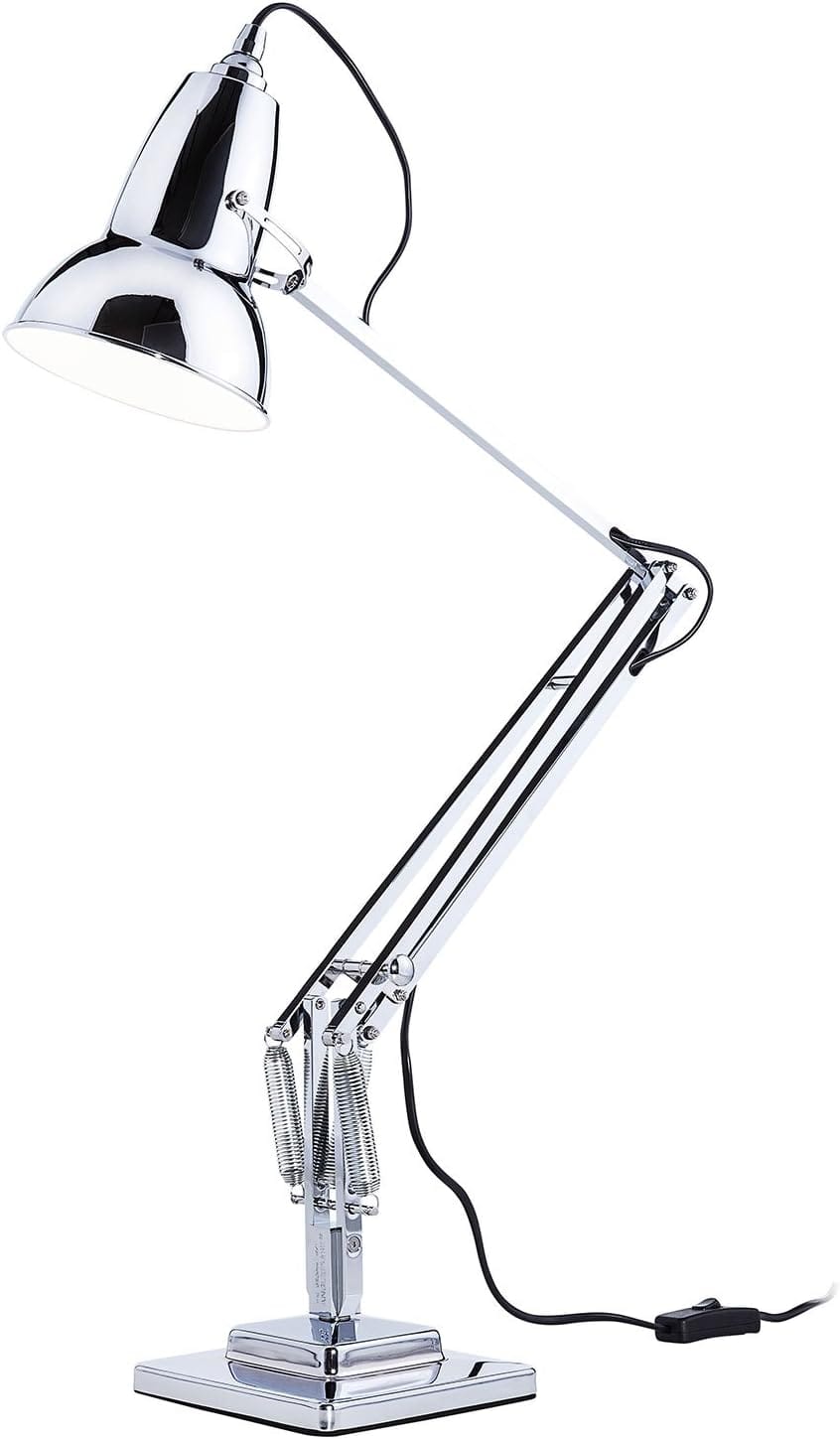
Anglepoise Original 1227
Mid-Range · $150–$250
George Carwardine’s 1935 spring-balanced arm lamp, still manufactured in Britain. The spring mechanism derives from vehicle suspension engineering, and that precision is legible in how the lamp moves.
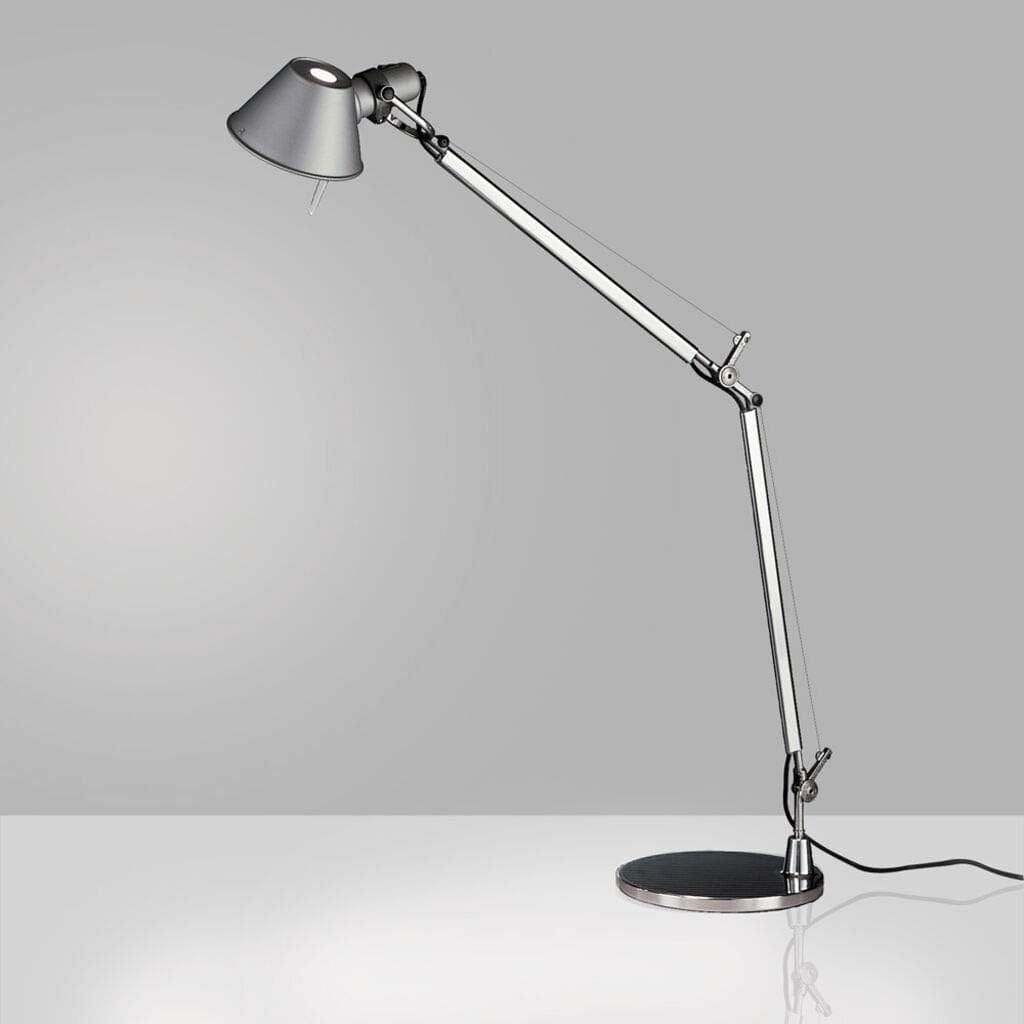
Artemide Tolomeo Classic
Premium · $300–$500
Michele De Lucchi and Giancarlo Fassina’s 1987 design, Compasso d’Oro winner in 1989. The external steel cable-tensioning system makes industrial engineering visible rather than hiding it inside the arm.
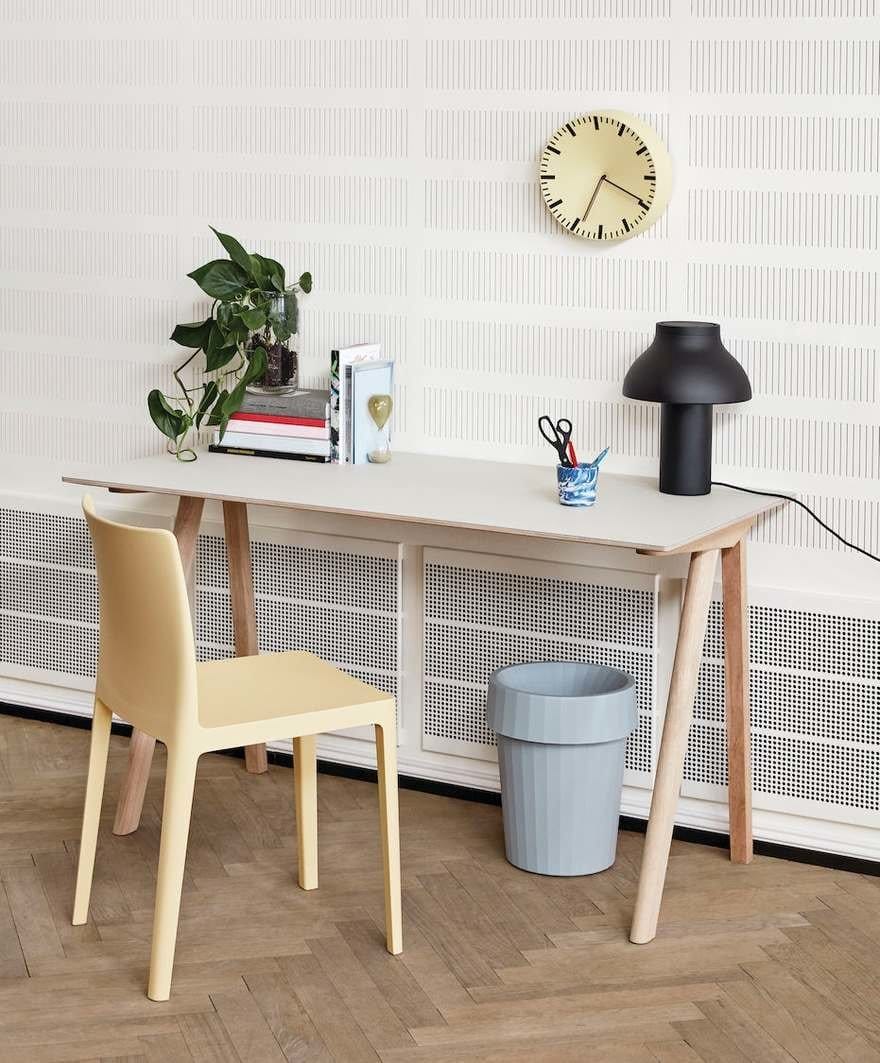
HAY PC Desk Lamp
Mid-Range · $150–$250
Pierre Charpin’s 2017 design for HAY takes the opposite position to the Tolomeo: a hidden gas spring, ABS body, mechanism completely concealed, object quiet.
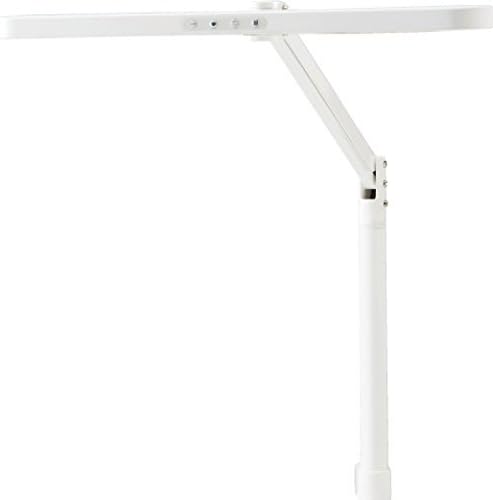
Muji LED Mobile Light
Budget · Under $80
A planar LED light guide plate for even diffusion, fold-flat form, no arm adjustability. The Muji reductive principle applied to a lamp at a price that doesn’t ask you to justify it.
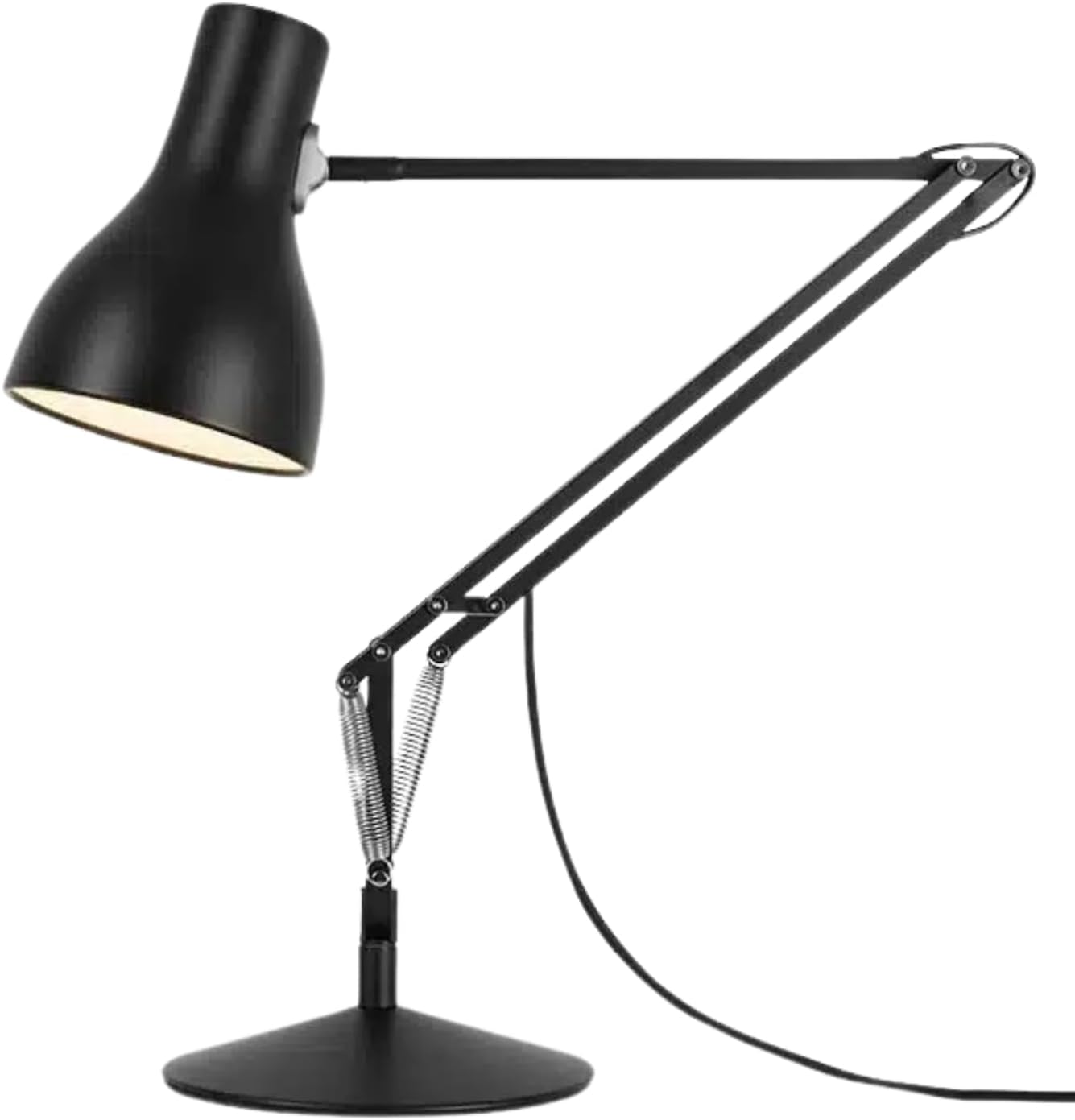
Anglepoise Type 75
Mid-Range · $150–$250
Kenneth Grange’s update on the Original 1227 formula, with a wider color range and a slightly more contemporary shade profile. For the workspace where the lamp is also a color decision.
Quick Decision Guide
- Best overall: Anglepoise Original 1227. For anyone who wants a lamp with a documented design lineage and real mechanical adjustability, not a commodity arm lamp dressed up with a matte finish.
- Best for focused task work: Artemide Tolomeo Classic. For architects, illustrators, and anyone who needs to direct light precisely and hold that position for hours without the arm drifting.
- Best budget option: Muji LED Mobile Light. For a clean desk that doesn’t draw attention to its own lamp, under $80.
- Best premium option: Artemide Tolomeo Classic or Anglepoise Original 1227. Italian cable engineering versus British spring engineering; both are defensible, the question is whether you want your mechanism visible or not.
- Best for a Scandinavian or color-forward workspace: HAY PC Desk Lamp. Charpin’s design was built to sit on a desk without dominating it, in a palette that reads as considered rather than neutral.
Full Comparison
| Product | Best For | Price Range | Key Feature | Link |
|---|---|---|---|---|
| Anglepoise Original 1227 | Design pedigree + adjustability | Mid-Range ($150–$250) | Three-spring suspension mechanism derived from vehicle engineering | View on Amazon |
| Artemide Tolomeo Classic | Precision task lighting | Premium ($300–$500) | External steel tension cables; Compasso d’Oro 1989 | View on Amazon |
| HAY PC Desk Lamp | Scandinavian / calm workspace | Mid-Range ($150–$250) | Hidden gas spring; mechanism fully concealed | Shop HAY at DWR |
| Muji LED Mobile Light | Minimalist / budget | Budget (under $80) | Planar LED light guide plate; fold-flat | View on Amazon |
| Anglepoise Type 75 | Color + contemporary form | Mid-Range ($150–$250) | Kenneth Grange update; wider color range | View on Amazon |
What makes each modern desk lamp worth considering?
Anglepoise Original 1227
Pros:
- True spring-balanced arm using three springs in the base, not a cheap hinge. The mechanism was patented 10 February 1934 and derived from Carwardine’s vehicle suspension work.
- Genuine British manufacture; cast iron base provides real stability without ballast tricks
- Available in matte and gloss finishes, multiple color editions including archive colors
Cons:
- Expensive relative to its mechanical simplicity. You’re paying for provenance and precision, not complexity.
- Shade runs warm with incandescent bulbs; LED retrofit required in some markets if you want lower heat output
- Does not ship with LED as standard in all markets
Who it’s for: Anyone who wants a lamp with a verifiable design history, one they can point to and explain rather than one that merely looks the part.
Why it stands out: The spring mechanism behaves differently from a commodity balanced-arm lamp on first use. The difference is immediately felt. That’s not marketing language; it’s the consequence of springs with effectively zero free length, an engineering principle Carwardine documented in academic literature before licensing the design to Herbert Terry and Sons in 1934.
Artemide Tolomeo Classic
Pros:
- Steel tension cables, not springs, maintain arm position with almost no resistance. The structure is external and visible, which is the design argument.
- Aircraft-grade aluminum body: light, durable, ages without deteriorating
- Distributes light cleanly across a wide spread; the bare-bulb aesthetic suits work surfaces where diffused light is counterproductive
Cons:
- Premium price point; one of the more expensive lamps in this category
- Cable tensioning can loosen over years of heavy use, requiring adjustment
- The exposed-mechanism aesthetic is not neutral. It makes a statement, and not every workspace wants a statement.
Who it’s for: Designers, architects, illustrators. Anyone who needs to track light precisely and wants the lamp’s own engineering legible rather than hidden.
Why it stands out: De Lucchi and Fassina’s choice to run the tensioning cables externally was a deliberate design argument about honesty of structure. The Tolomeo is not trying to look like something other than what it is. That’s a position, and it holds up in 1987 the same way it holds up now.
HAY PC Desk Lamp
Pros:
- Hidden gas spring holds any position without visible hardware. Charpin’s stated design intent was to make the mechanism disappear entirely.
- Available in a calibrated palette of calm colors; designed to coexist with other objects rather than dominate them
- Clean ABS body reads as contemporary rather than retro
Cons:
- No confirmed direct Amazon listing at time of writing; search URL links to third-party listings rather than a direct product page
- ABS plastic will not age as gracefully as aluminum. Surface wear is more apparent over time.
- Less adjustability range than the Tolomeo or Original 1227; the hidden mechanism trades range for appearance
Who it’s for: The Scandinavian or HAY-aesthetic workspace where everything else is also restrained, and the lamp should not announce itself.
Why it stands out: The PC Lamp’s design argument is the direct inverse of the Tolomeo’s. Where De Lucchi and Fassina made engineering visible, Charpin made it vanish. Both positions are coherent. Which one you choose says something about what you think design should do.
Muji LED Mobile Light
Pros:
- Planar LED light guide plate produces even light distribution without the hot-spot problem of directional task lamps
- Fold-flat portability; works on a desk or as a travel lamp
- Low price; does not ask for justification
Cons:
- No arm adjustability; purely vertical and horizontal positioning
- Minimal physical presence. Not an object you’d want on a desk if the lamp is also meant to be interesting.
- Light output is calibrated for ambient use, not precision task work
Who it’s for: A minimalist workspace where the lamp should not draw attention, where the design decision is the absence of decision.
Why it stands out: Muji applies the same reductive principle to this lamp that they apply to their stationery and storage: correct, sufficient, invisible. That is itself a design position, and at this price it is the most honest one on this list.
Anglepoise Type 75
Pros:
- Kenneth Grange’s update on the Original 1227 formula: same spring-balance mechanism, more contemporary shade profile
- Wider color range than the Original 1227, including seasonal and archive editions that reward deliberate color choices
- Compatible with LED bulbs across all market versions
Cons:
- Slightly less mechanical authority than the Original 1227. The updated form softens the industrial edge.
- Higher price than the visual complexity warrants if the color range is not the reason you’re buying it
Who it’s for: The workspace where the lamp is also a color decision, where the Original 1227’s palette is too conservative.
Why it stands out: Grange’s update does not try to replace the Original 1227; it extends the formula into contemporary colorwork without abandoning the mechanism. The spring is still the spring.
Why industrial design principles actually matter when choosing a lamp
Dieter Rams formulated his tenth principle while working as chief designer at Braun from 1961 to 1995: “Good design is as little design as possible.” The desk lamp is one of the few product categories where that principle is directly observable in the object in front of you.
You can see the Anglepoise spring. You can follow the Tolomeo cable. You can understand, just by looking, that the HAY PC’s arm holds position without showing you how. These aren’t decorative differences. They determine how the lamp behaves over time: whether the arm drifts, whether the mechanism wears, whether the shade positions easily under pressure.
Rams’ principle is not an argument for minimalism as a style. It is an argument for honesty about what an object is doing. The lamps on this list differ in how they make that argument. The Tolomeo argues that engineering should be legible. The HAY PC argues that engineering should disappear. The Anglepoise argues that a mechanism with genuine precision needs no decoration. All three are coherent positions. The commodity desk lamp aisle makes none of them.
Frequently Asked Questions
What is the best modern desk lamp for a home office?
The Anglepoise Original 1227 is the best all-around choice for a home office: it has real mechanical adjustability, a documented design history, and enough visual presence to make the workspace feel considered without demanding attention. If precision task lighting matters more than aesthetics, the Artemide Tolomeo Classic is the stronger call.
How is the Anglepoise Original 1227 different from cheaper balanced-arm lamps?
The Original 1227 uses three springs with effectively zero free length — an engineering principle George Carwardine documented and patented in 1934, derived from his vehicle suspension work. Cheaper balanced-arm lamps use looser spring mechanisms that drift over time and resist repositioning. The difference is felt immediately on first use, not just described in marketing copy.
Is the Artemide Tolomeo worth the price?
For precision task work (drafting, illustration, detailed reading): yes. The steel cable-tensioning system holds position with almost no resistance and maintains that position under sustained use better than spring-based lamps. For a desk lamp used mainly as ambient lighting, the price is harder to justify. The Tolomeo was designed for people who track light deliberately, and it rewards that use.
What desk lamp did designers like Dieter Rams or architects use?
Rams himself used Braun products, but the Anglepoise has been a fixture in British design studios since the 1930s. The Tolomeo became a studio standard in architectural and design offices after its 1989 Compasso d’Oro win. Its cable-tensioning arm and aircraft aluminum construction were developed with that use in mind. The Anglepoise predates it by fifty years and was standard in British industrial and clinical settings before becoming a design object.
Are HAY lamps available in the US?
HAY ships to the US through its own website and through Design Within Reach and other authorized retailers. The PC Desk Lamp does not have a consistent Amazon listing; the search link above leads to third-party sellers. For the full color range and direct purchase, hay.com is the reliable source.
What should I look for in a modern desk lamp beyond brightness?
Mechanism precision (does the arm hold position without drifting?), material honesty (is the construction what it appears to be?), and adjustability range (can it reach where you need it?). Brightness is a bulb decision, not a lamp decision — any lamp here accepts LED upgrades. The questions that actually differentiate a good lamp from a commodity lamp are about how the arm moves, how long it holds, and whether the object ages as well in five years as it looks on the day you buy it.
For the broader context of this work, see the Iconic Furniture Design hub — a survey of the chairs and objects that defined twentieth-century design. For chairs that pair with these lamps, see our guide to best modern office chairs.

About Joe Post
Joe Post holds an MFA in Art from California Institute of the Arts (CalArts) and has done additional graduate work at the School of the Art Institute of Chicago. He founded Art Design Ideas to write about design as cultural argument — the decisions, contradictions, and assumptions built into the objects we live with.