
Modern office chairs worth buying sit at the intersection of ergonomics and considered design. The best modern office chairs — including the Herman Miller Aeron, Steelcase Leap V2, and Humanscale Freedom — offer full adjustability, breathable materials, and a visual language that doesn’t embarrass the rest of your workspace.
Our top picks
The five chairs below were selected on two criteria: ergonomic performance documented by the designers and their own research, and visual authority, meaning each chair has a design position, not just a spec sheet. They range from mid-range to premium; all are available new or through a certified refurbished market that makes the price more manageable.
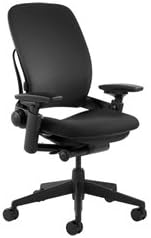
Herman Miller Aeron Chair (Size B)
Premium · The benchmark ergonomic office chair since 1994
PostureFit SL sacral-and-lumbar support and 8Z Pellicle mesh remain the standard every competitor measures itself against.
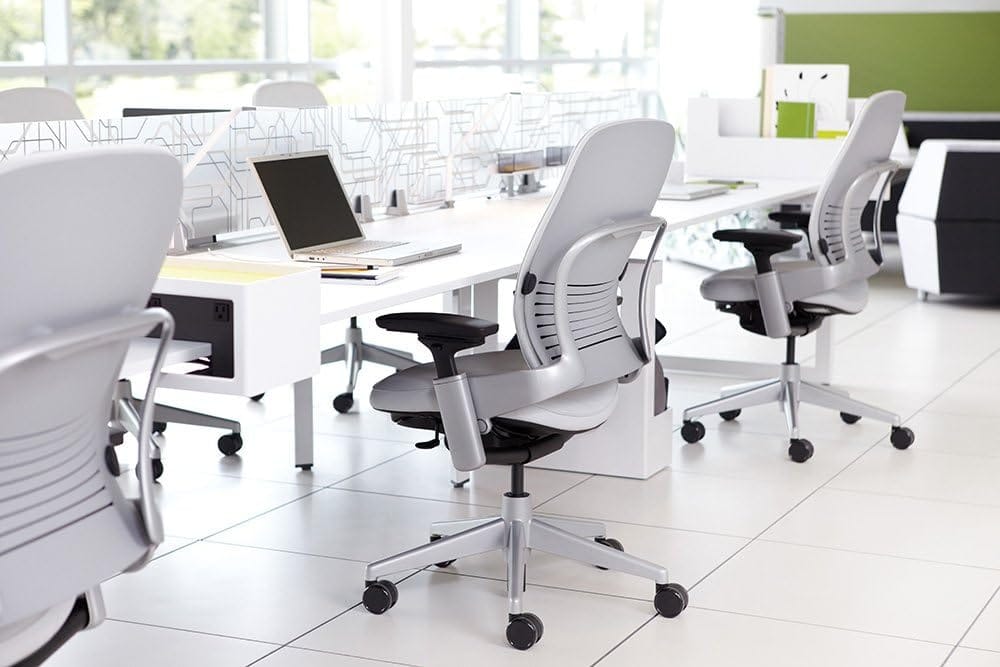
Steelcase Leap V2
Mid-Range to Premium · Best for long hours and posture shifts
LiveBack technology and the Natural Glide System make this the purest ergonomic performer for sitters who shift posture constantly through a long workday.
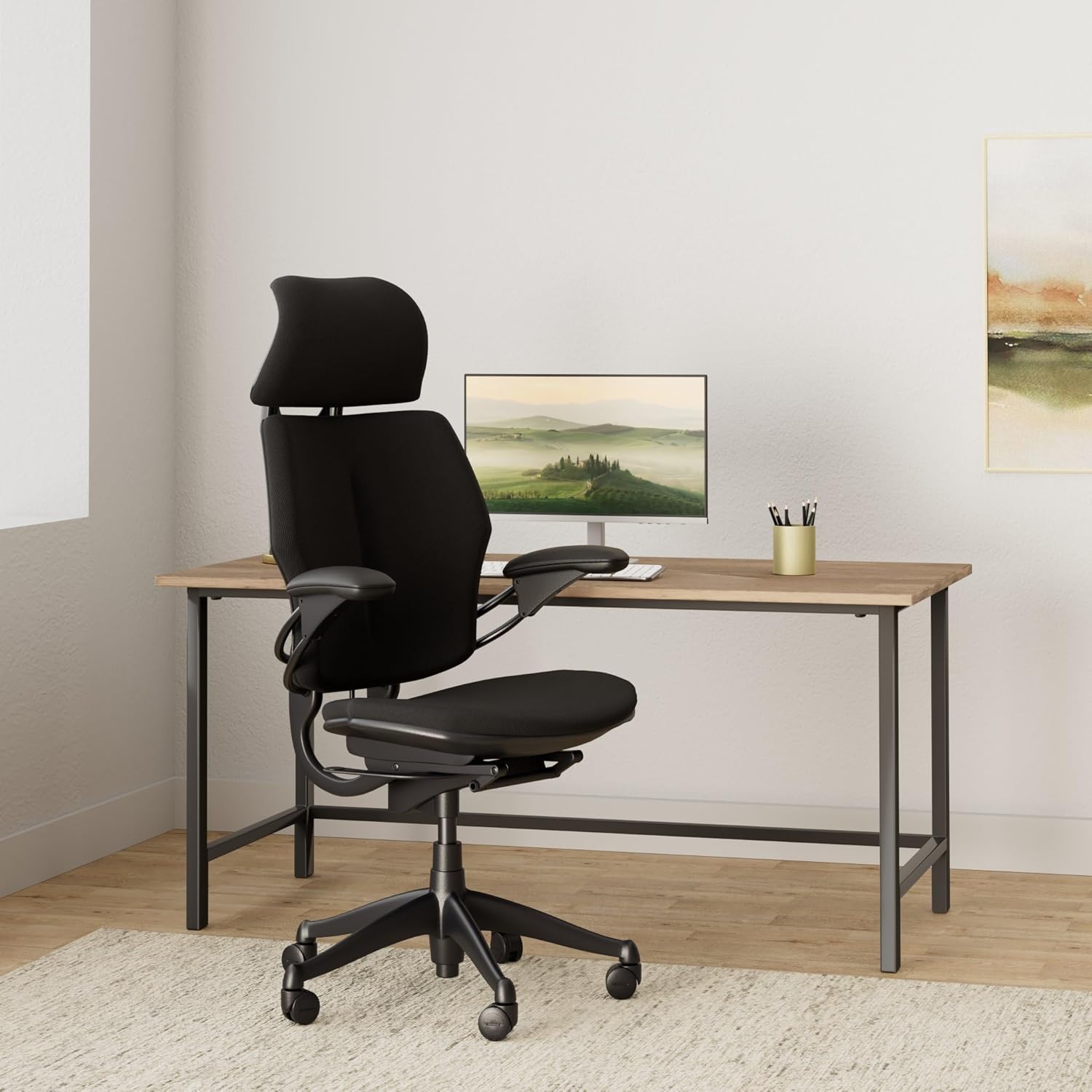
Humanscale Freedom with Headrest
Premium · Minimalist design with self-limiting recline
Niels Diffrient’s self-limiting recline mechanism, calibrated by the sitter’s weight with no dial required, is the most principled ergonomic philosophy in this category, and it looks better than anything at this price.
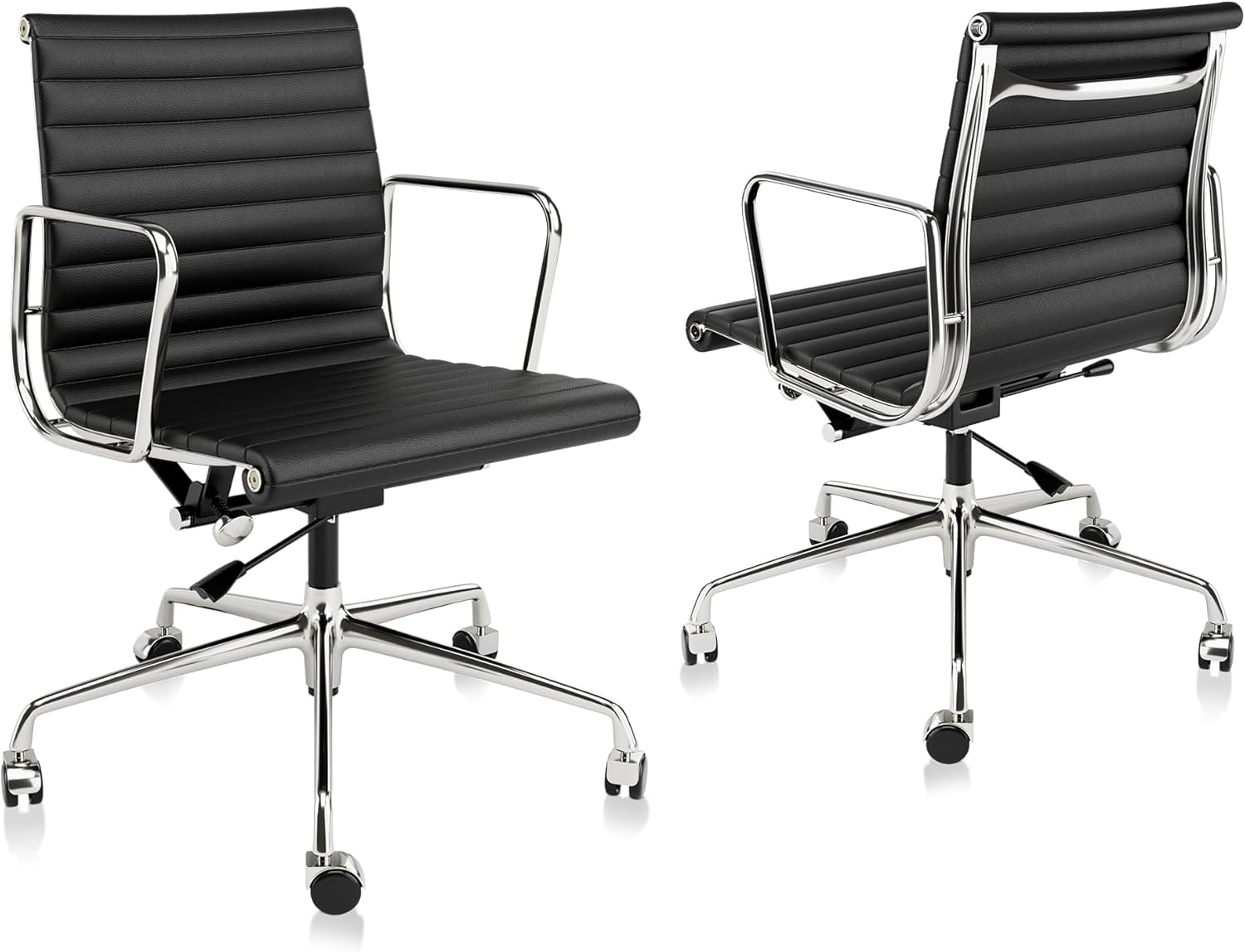
Eames Aluminum Group Management Chair (Herman Miller)
Premium · Design heritage made functional
Designed by Charles and Ray Eames in 1958, originally for outdoor use at a home in Columbus, Indiana. The sling seat between aluminum rails is still formally distinctive 65 years later; you are buying design history, not a back-health tool.
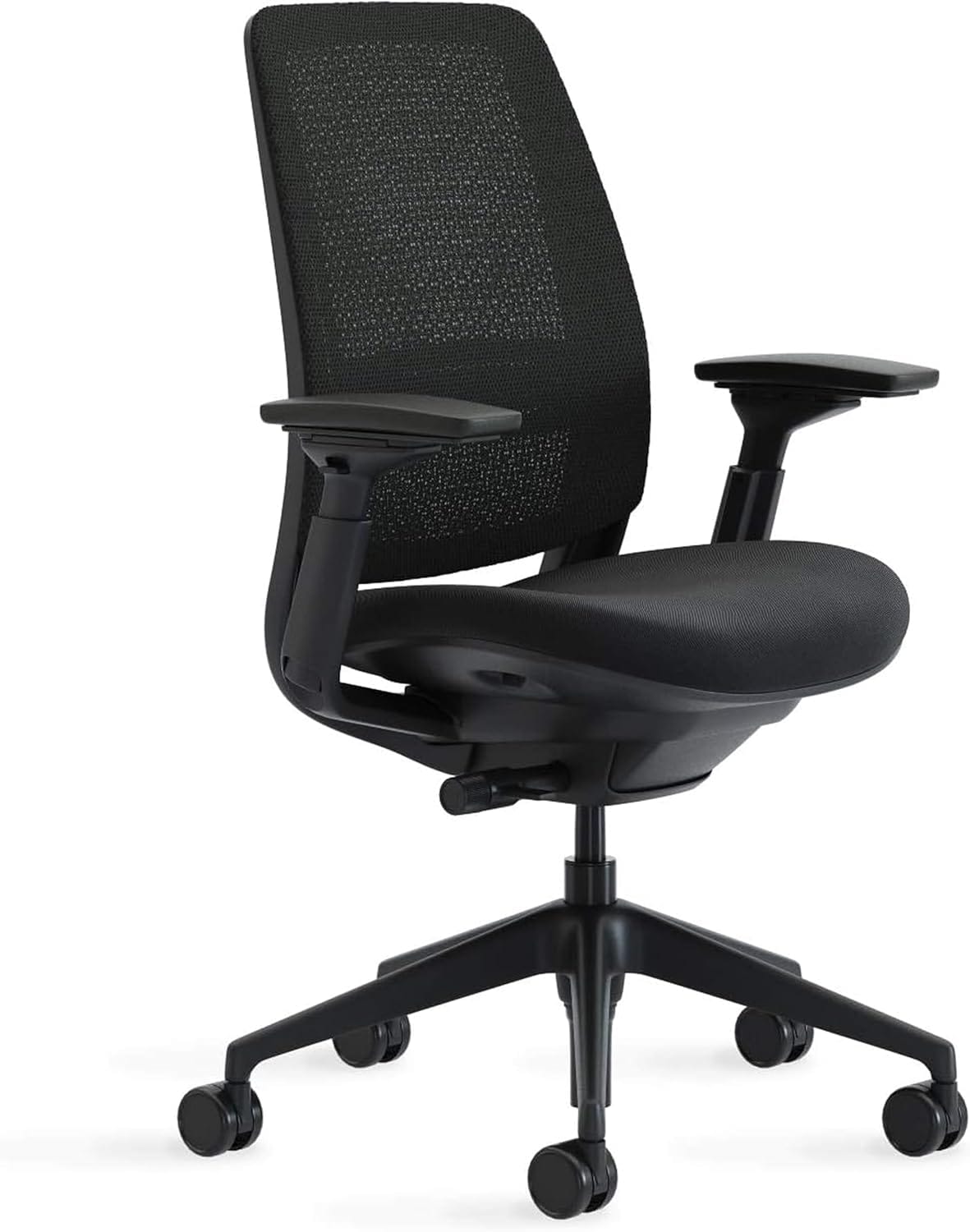
Steelcase Series 2
Mid-Range · Best mid-range value
Steelcase’s ergonomic technology passed down the price ladder. LiveBack flex and 3D adjustable arms at a price the Leap V2 doesn’t reach.
Quick decision guide
- Best overall: Herman Miller Aeron (Size B) — The ergonomic gold standard since 1994; buy this if you want the benchmark and don’t want to research further.
- Best for long hours or back issues: Steelcase Leap V2: LiveBack and Natural Glide make it the best choice for 6–8+ hour workdays where posture shifts constantly.
- Best minimalist design: Humanscale Freedom with Headrest: The design-literate alternative to the Aeron, cleaner visually, with a genuinely different ergonomic philosophy built around subtraction rather than addition.
- Best design object / status chair: Eames Aluminum Group Management Chair: Buy this when ergonomics is not the only criterion; it is design heritage made functional.
- Best mid-range: Steelcase Series 2: Steelcase ergonomics without the Leap V2 price; the honest recommendation for buyers who can’t justify the step up.
- Best for someone who values automatic adjustment over dial-tweaking: Humanscale Freedom: Its self-limiting mechanism adjusts to you; nothing to configure.
Full comparison
| Chair | Best For | Price Range | Standout feature | Link |
|---|---|---|---|---|
| Herman Miller Aeron B | All-day ergonomics | Premium | 8Z Pellicle mesh + PostureFit SL | Buy |
| Steelcase Leap V2 | Long hours, posture shifting | Mid–Premium | LiveBack + Natural Glide System | Buy |
| Humanscale Freedom | Minimal-adjust design | Premium | Self-limiting recline, headrest | Buy |
| Eames Aluminum Group | Design statement | Premium | Sling seat, aluminum frame, 1958 provenance | DWR |
| Steelcase Series 2 | Mid-range value | Mid-Range | 3D arms + LiveBack flex | Search |
What the best modern office chairs actually do well — and where they fall short
Herman Miller Aeron
The Aeron was introduced at NeoCon in 1994 by designers Don Chadwick and Bill Stumpf. It departed from foam-and-fabric convention with an elastomeric mesh they called 8Z Pellicle: zones of varying tension calibrated to different pressure points. The result is a chair that doesn’t trap heat over long sessions, which matters more than most buyers realize until they’ve spent a summer in one.
PostureFit SL is the differentiator within the Herman Miller line. It supports both the sacrum and the lumbar simultaneously, which lumbar-only systems don’t do. That’s why the Aeron is in MoMA’s permanent collection: not as a curiosity, but as a curatorial argument that this object solved a problem with formal rigor.
Pros:
- 8Z Pellicle mesh eliminates heat buildup over long sessions
- PostureFit SL supports lumbar and sacral simultaneously, unique to Aeron
- Three sizes (A/B/C) accommodate a genuine range of body types
- MoMA permanent collection, visual authority alongside ergonomic performance
Cons:
- Premium price entry point; new retail around $1,400–$1,800
- Arms feel utilitarian; not the most visually resolved element of the chair
The Aeron is for the buyer who wants the ergonomic gold standard and doesn’t want to spend weeks researching alternatives. PostureFit SL is what separates it: sacral support is genuinely different from lumbar-only systems, and no other chair at this price replicates it.
Steelcase Leap V2
The original Leap was introduced in 1999; the V2 update came in 2006. Steelcase’s LiveBack technology flexes independently in its upper and lower zones to match the natural S-curve of the spine as the sitter moves. That’s different from a chair that simply reclines as a single unit. The Natural Glide System lets you lean forward into a screen without losing lumbar contact, which most ergonomic chairs don’t solve.
The Leap V2 is not a design object in the sense the Eames Aluminum Group is. It is a performance tool. Its aesthetic is purely functional, which is a legitimate position if what you need is a chair that protects your back over 2,000-plus hours a year.
Pros:
- LiveBack technology flexes in two dimensions to match the spine’s natural movement
- Natural Glide System maintains lumbar support during forward-lean tasks
- Lower back firmness dial allows granular adjustment rare in this category
- Strong certified refurbished market brings the price into range (~$450 from established dealers)
Cons:
- Visually unremarkable; this is a performance tool, not a design statement
- Upper back support less adaptive than the lower back system
The Leap V2 is for someone at a desk 6–8+ hours a day whose primary concern is back health over design presence. The LiveBack system is the closest thing in production to a chair that actively adapts to posture shifts rather than waiting for the sitter to readjust.
Humanscale Freedom with Headrest
Niels Diffrient designed the Freedom in 1999, and his stated principle was direct: intelligent products should adjust themselves to the user rather than requiring the user to adjust the product. The self-limiting recline mechanism is calibrated at the factory to the sitter’s weight. Lean back and it responds; no tension dial, no setup sequence.
The counter-balancing headrest is the best-executed in this price range. It moves with the recline angle rather than staying fixed, which is what makes competing headrests feel like afterthoughts. The polished aluminum frame holds its own visually alongside premium monitors and desks in a way the Leap V2 never quite manages.
Pros:
- Self-limiting recline requires zero configuration, weight-calibrated at factory
- Counter-balancing headrest moves with back angle rather than staying fixed
- Polished aluminum frame reads as a considered design object, not office equipment
- Diffrient’s stated principle: remove levers, not add them. The chair delivers on it.
Cons:
- Limited customization compared to Aeron or Leap V2; intentional, but some sitters want more control
- Headrest position fixed relative to back angle; may not work for every neck height
The Freedom is for the buyer who wants a chair that looks like it belongs in a design studio and works without a setup tutorial. It is the only chair in this group built on a philosophy of simplification rather than feature addition.
Eames Aluminum Group Management Chair
Charles and Ray Eames designed the Aluminum Group in 1958, originally for a private home in Columbus, Indiana. The brief was outdoor furniture; the solution was a sling seat suspended between aluminum side rails, chosen because it wouldn’t trap heat the way upholstered furniture did outdoors. The outdoor logic turned out to produce something formally distinctive enough for decades of indoor use. The sling seat still reads as specific and intentional rather than as a period artifact.
This is not an ergonomic chair in the contemporary sense. There is minimal lumbar support. You are buying the object because of what it means as an object: design history made functional, not because it will protect your back over eight hours a day. That trade-off is real, and you should make it consciously.
Pros:
- 1958 design by Charles and Ray Eames; legitimate design provenance, not retro styling
- Sling seat between aluminum side rails remains formally distinctive 65+ years later
- Available in leather or fabric; both hold up to commercial use
- The only chair in this guide with a design argument that predates ergonomics as a product category
Cons:
- Not an ergonomic chair in the contemporary sense; minimal lumbar support
- Price significantly higher than Steelcase and Humanscale for less ergonomic return
- Many “Aluminum Group” chairs on the secondary market are unlicensed reproductions; buy only from Herman Miller authorized dealers
The Aluminum Group is for someone furnishing a home office where visual coherence with a design collection matters as much as sitting mechanics. No other chair in this guide has been in continuous production for 65+ years. That’s a curatorial argument, not a marketing claim.
Steelcase Series 2
The Series 2 is Steelcase’s accessible ergonomic line, priced well below the Leap V2. It carries LiveBack flex technology from the Leap line, along with 3D adjustable arms (height, width, and pivot) and seat depth adjustment. The adjustability range is narrower than the Leap V2, but the core of what makes a Steelcase chair worth owning is present.
Pros:
- LiveBack flex technology from the Leap line at a significantly lower price
- 3D adjustable arms: height, width, and pivot
- Available in multiple upholstery options; solid warranty from certified dealers
- Passes real ergonomic capability down the price ladder without sacrificing the essentials
Cons:
- Less adjustability than the Leap V2; seat depth range is narrower
- Purely functional aesthetic; not a design statement
The Series 2 is for the buyer who wants Steelcase ergonomics but can’t justify the Leap V2 price. It is what the Leap V2 would be if Steelcase had designed it for a different budget: the compromise is in range of adjustment, not in the underlying mechanism.
Why office chair design matters more than it used to
The office chair is the most-used piece of furniture most people own. It is also, for most people, a procurement decision: something chosen by a facilities manager or bought in twenty minutes from an office supply site. The chairs in this guide share something different. Each was designed with the assumption that the chair would be visible, and that its visual language would carry weight in a home office, a studio, or an executive workspace where objects are legible.
The Eames Aluminum Group is the hinge point here. It was designed in 1958, before ergonomics existed as a product category. It holds up formally because it started from material and structural logic: aluminum rails, sling seat, weight distribution, rather than from a feature checklist. The result is an object with a design argument, not a solution to a brief.
The Aeron’s placement in MoMA’s permanent collection is not a marketing claim. It is a curatorial argument that Don Chadwick and Bill Stumpf’s mesh chair solved a problem, long-duration sitting for knowledge workers, with the same formal rigor that earns any object a place in that collection. That argument runs through every chair in this guide.
Frequently Asked Questions
What is the most ergonomic office chair you can buy?
The Herman Miller Aeron and Steelcase Leap V2 are the two strongest performers in this category. The Aeron’s PostureFit SL provides simultaneous sacral and lumbar support; the Leap V2’s LiveBack technology flexes independently in two zones to match the spine’s natural movement. Which is better depends on whether you need the Aeron’s precise size calibration or the Leap’s natural forward-lean support.
Is the Herman Miller Aeron worth the price?
At new retail ($1,400–$1,800), the Aeron is a significant purchase. It is easier to justify if you spend 6–8 hours per day at a desk, or if you have back issues that a standard task chair worsens. The certified refurbished market, through dealers like Crandall Office and Madison Seating, brings the price down to $500–$800 for chairs with remaining warranty coverage, which changes the calculus for many buyers.
How long do Herman Miller and Steelcase chairs last?
Herman Miller offers a 12-year warranty on the Aeron; Steelcase offers a 12-year warranty on the Leap V2. In practice, both chairs have well-documented secondary lives: Aerons from the late 1990s are still in daily use after replacement of the mesh and cylinder. The warranty is the floor; the actual lifespan, with reasonable maintenance, is considerably longer.
What is the difference between the Steelcase Leap V2 and the Herman Miller Aeron?
The Leap V2 and Aeron represent different ergonomic philosophies. The Aeron is calibrated to body size, with three models (A, B, C) for different weight and height ranges, and its PostureFit SL provides fixed sacral-lumbar support. The Leap V2’s LiveBack adapts dynamically to posture shifts throughout the day. The Aeron is the better chair for someone who sits in a consistent posture; the Leap V2 is better for someone who moves constantly.
Are Eames office chairs good for all-day sitting?
Not in the way the Aeron or Leap V2 are. The Eames Aluminum Group Management Chair lacks the lumbar support systems that contemporary ergonomic chairs provide. It is a design object first, designed in 1958 before ergonomics was a product category, and a sitting solution second. For all-day work sessions, a chair with a proper lumbar support system is the better choice; the Aluminum Group is more appropriate for a home office where sessions are shorter or where visual coherence with a design collection is the priority.
Can I buy a certified refurbished Herman Miller or Steelcase chair?
Yes, and the refurbished market is a legitimate purchasing path for both. Dealers like Crandall Office and Madison Seating offer certified refurbished Aerons and Leap V2s with remaining factory warranty coverage, typically at 40–60% of new retail. The chairs are mechanically identical to new; the difference is cosmetic wear on non-structural parts. Many design-conscious buyers prefer pre-owned for both price and sustainability reasons.
For the full context on iconic furniture design, see the hub. For dining chairs that pair with these office picks, see our guide to best modern dining chairs.

About Joe Post
Joe Post holds an MFA in Art from California Institute of the Arts (CalArts) and has done additional graduate work at the School of the Art Institute of Chicago. He founded Art Design Ideas to write about design as cultural argument — the decisions, contradictions, and assumptions built into the objects we live with.