The Bertoia Diamond Chair is a wire mesh lounge chair designed by Harry Bertoia for Knoll in 1952. Built from welded steel rods bent into a sculptural lattice, the Bertoia Diamond Chair reproductions available today replicate its open, airy form at a fraction of the original price. Bertoia described his wire chairs as studies in space, form, and metal.
Why Harry Bertoia designed furniture like a sculptor, not a designer

Harry Bertoia did not arrive at Knoll with a furniture brief. When Hans and Florence Knoll brought him into their studio in 1950, they told him simply to explore whatever interested him and show them the results. This arrangement was more residency than commission: studio space, materials, no deliverables. Bertoia was, above all, a sculptor.
He was born in 1915 in San Lorenzo, Pordenone, Italy, and emigrated to the United States in 1930. His training followed a metalworker’s path: Detroit Technical High School, the Detroit School of Arts and Crafts, then Cranbrook Academy of Art in Bloomfield Hills, Michigan, where he later taught metal crafts. In 1946 he left Cranbrook to move to California, where he worked with fellow Cranbrook alumnus Charles Eames — primarily on graphics and jewelry — before joining Knoll in 1950.
At Knoll, with metal wire available and no mandate beyond experimentation, Bertoia worked from 1950 to 1952 on a series of wire seating shells. Secondary sources, including essays by the Cooper Hewitt Smithsonian Design Museum, note that he was reportedly inspired by a household wire dish rack. The structural logic of bent wire achieving stability through geometry rather than mass was the point. Whether or not that origin story is exact, it captures the method. He was not designing a chair; he was studying what wire could do.
The Diamond Chair emerged from that study in 1952. It was patented that year, first displayed publicly in 1952, and entered production in 1953. The commercial success was swift. By the mid-1950s, Knoll royalties were substantial enough that Bertoia could step back from furniture design entirely and return to sculpture, which remained his primary practice for the rest of his life. He had designed a product that freed him from the obligation to design products.
For the full story of Harry Bertoia’s design philosophy, including his work in sculpture and sound, see the Harry Bertoia profile at Art Design Ideas.
What the Diamond Chair is actually made of — and why it matters for buying Bertoia Diamond Chair reproductions
The Diamond Chair’s structure is a welded steel rod lattice. Not sheet metal stamped or bent into a shell, but individual rods welded at each intersection point. That construction method gives the chair its specific visual weight: open, geometric, almost grid-like in the way it holds space. Bertoia’s goal was a form where air and light passed through the seat rather than stopping at it.
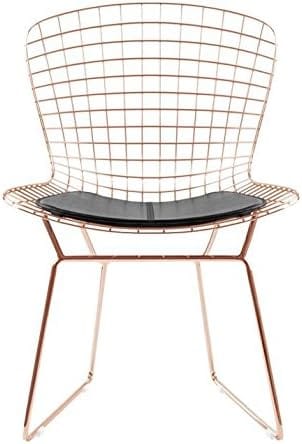
Two sizes exist. The Small Diamond, measuring 33 inches tip-to-tip, is what 99% of buyers encounter, according to detailed size documentation at Bertoiapads.com. The Large Diamond runs 45 inches tip-to-tip and reads more like a lounge piece. Knoll also produces an outdoor version in weather-resistant finish, though most reproduction market discussion centers on the indoor small version.
Finish options on genuine Knoll chairs include polished chrome, satin chrome, and bonded rilsan — an adhesive-fused nylon-dipped coating that is, technically, a polyamide 11 (PA 11) compound derived from castor oil. Rilsan produces a dense, matte, colored finish that reproductions cannot replicate. Reproduction manufacturers substitute powder coat, which looks similar in product photography but behaves differently at the surface level.
The construction differences between a genuine chair and a reproduction are observable if you know where to look. According to an authentication guide published by Couch Potato Company, genuine Knoll Diamond Chairs use dowels that measure exactly 0.5 inches in diameter; reproductions tend toward thicker gauge. More telling is the strut placement: on a genuine chair, each individual vertical wire strut sits on top of the wire frame. Most reproductions invert this and run a horizontal wire piece across the top instead. Authentication can also run through measurements: the Knoll logo stamps into the base; the backrest measures 75cm on a genuine chair; the diamond dots sit 85cm apart.
None of this means reproductions are without value. It means they are different objects, and understanding the difference is how you buy the right one for what you actually need.
Reproductions can copy the silhouette. They cannot copy the weld.
Our Top Picks
The reproductions below were selected for structural fidelity, finish durability, and consistent buyer feedback on proportions. Chrome is the original finish; gold reads contemporary. All four are appropriate for indoor use.
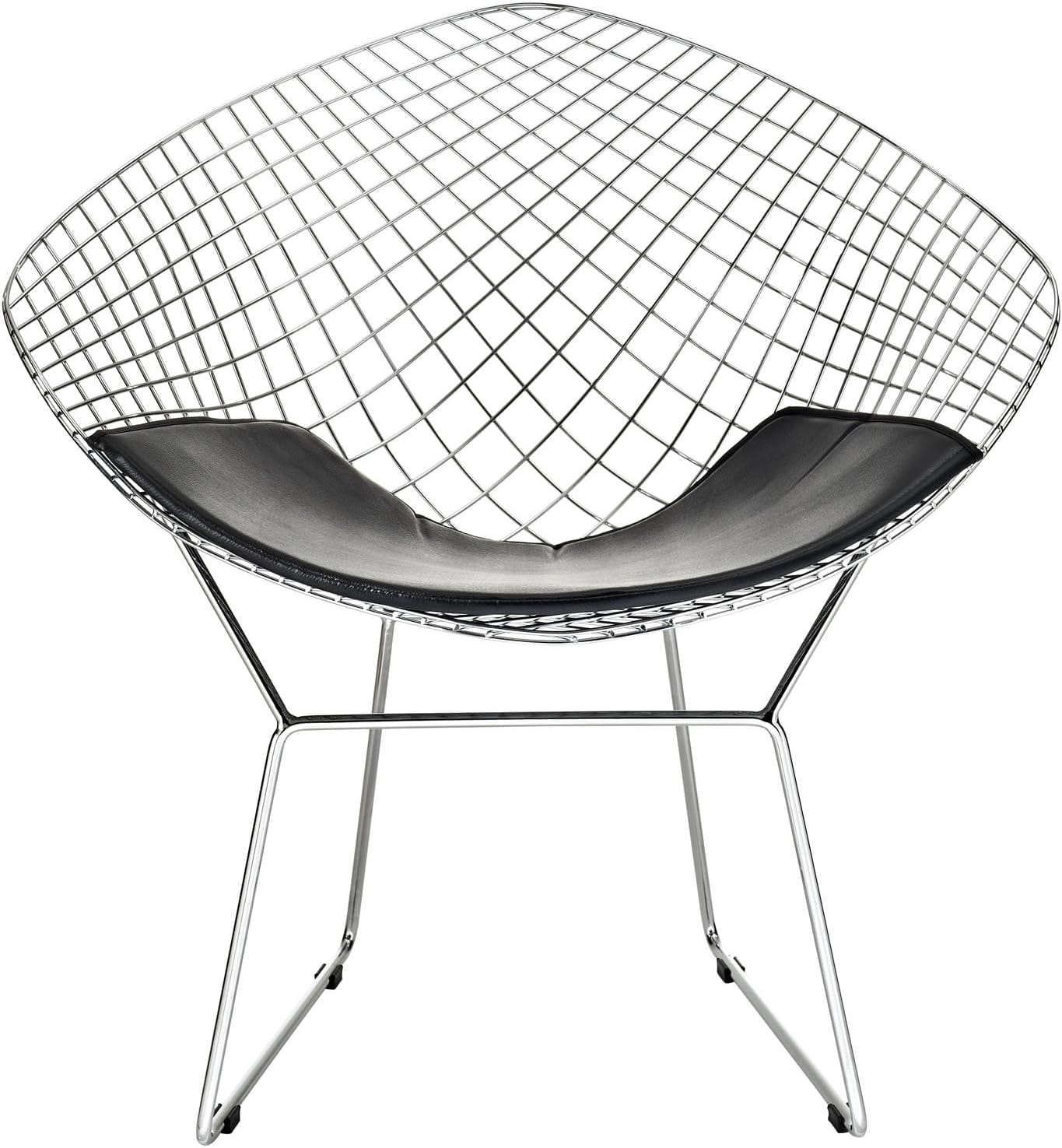
Modway CAD Wire Lounge Chair (Black) — Mid-Range
The most reviewed Bertoia-style reproduction on Amazon with consistent buyer feedback on proportions and structural integrity. It is the safest choice for indoor use if you want the Diamond Chair silhouette without the Knoll price.
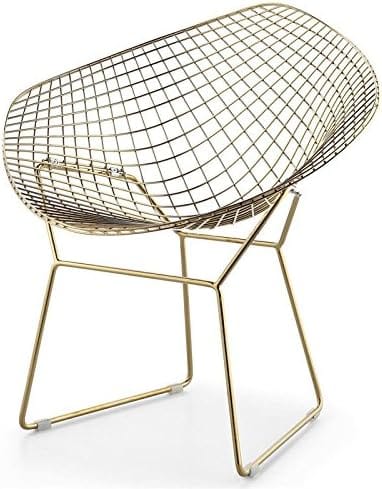
ApexStore Wire Mesh Diamond Chair (Gold Finish) — Budget
A contemporary reading of the original form with a gold powder coat that holds up in warm interior palettes where chrome would read cold. Steel frame, seat pad included.
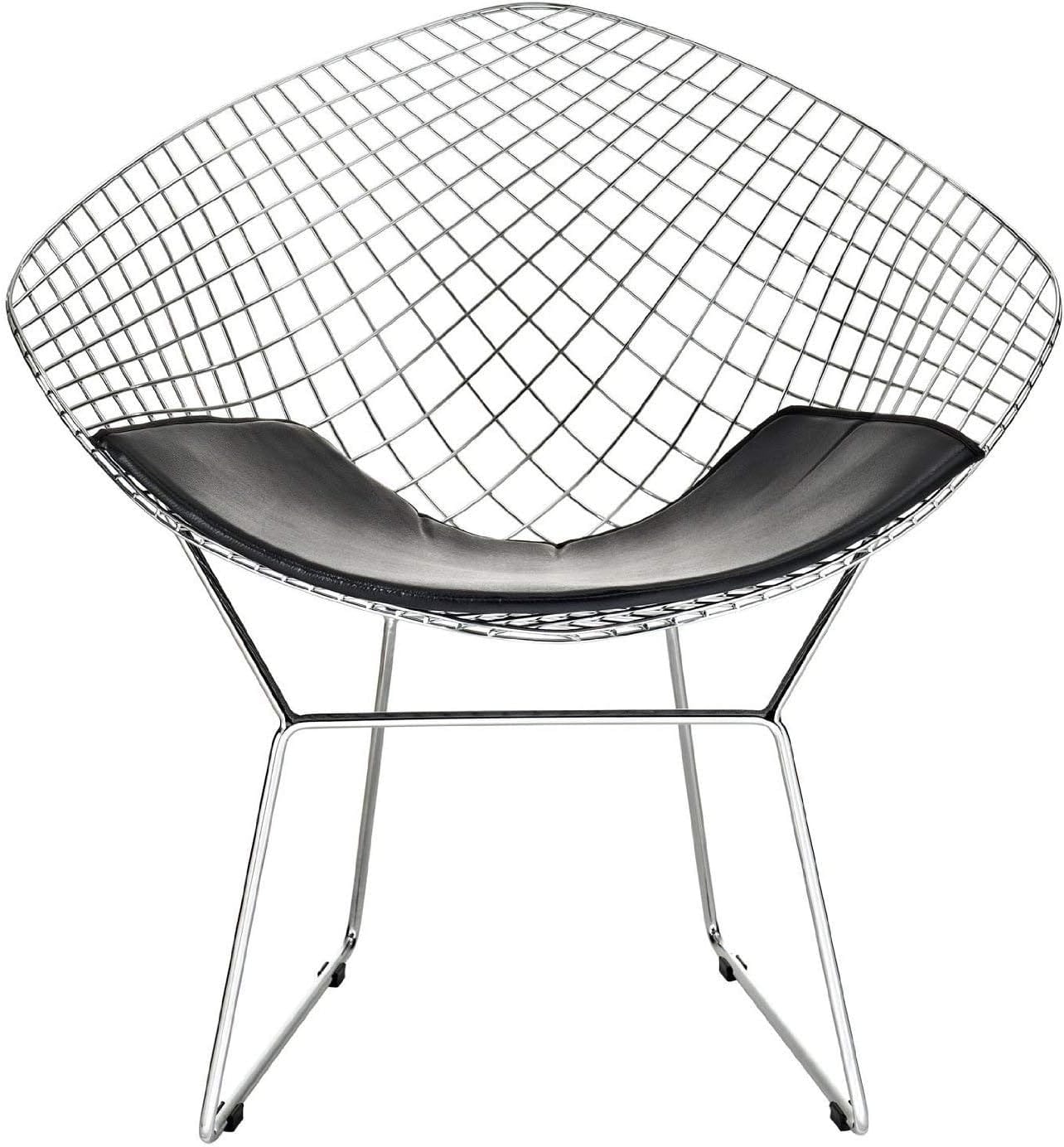
Wire Mesh Bertoia Style Diamond Chair (Gold Finish) — Budget
A second gold-finish option at a similar price point, useful for comparison shopping buyers who want to evaluate build differences between two reproductions before committing.
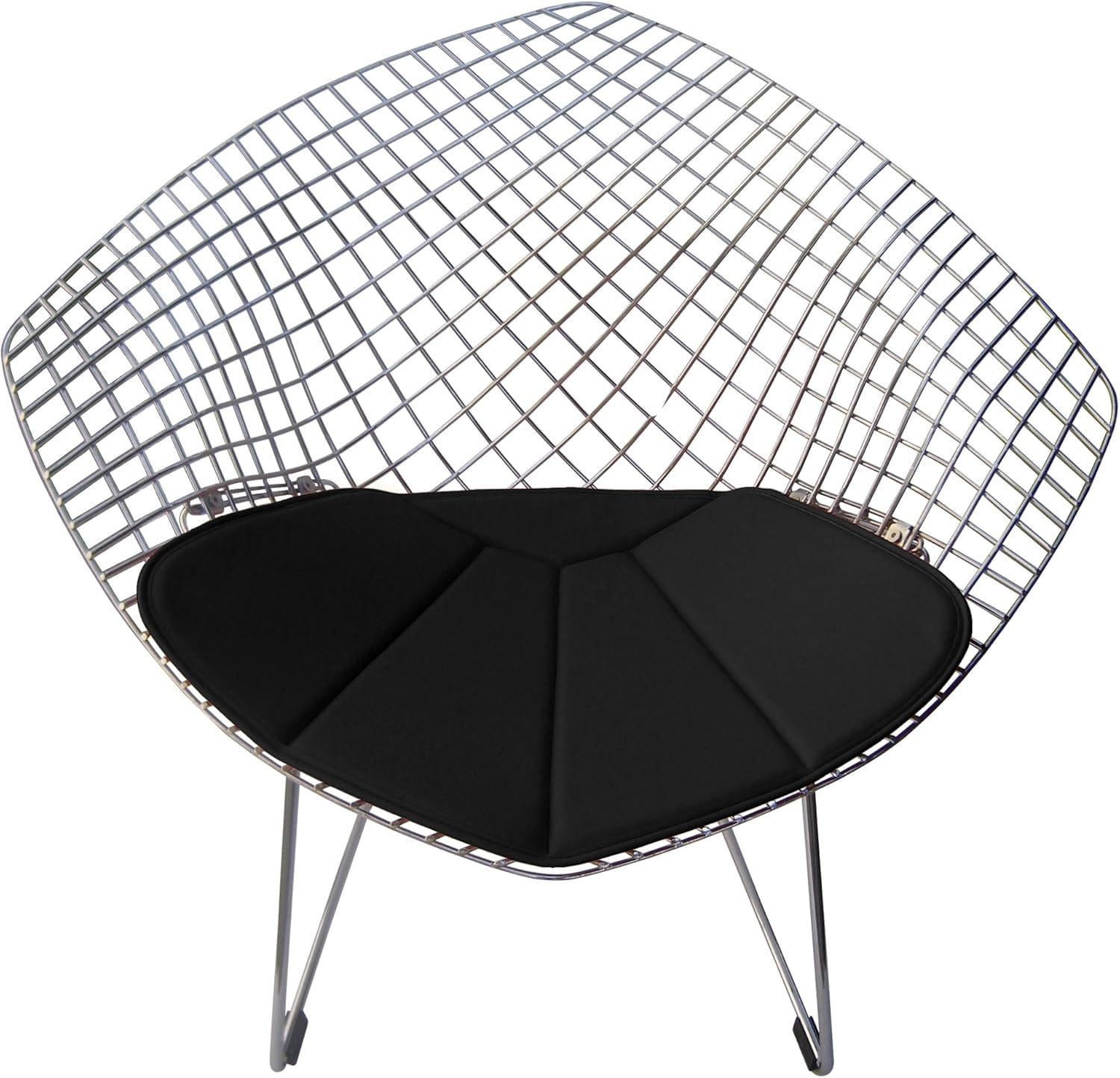
Replacement Cushion for Bertoia Diamond Chair (Black) — Accessory
Fits both Knoll originals and reproductions. The wire form is visually right but physically unforgiving without padding, and this cushion fits the basket geometry of the chair rather than just sitting on top of it.
Quick Decision Guide
- Best overall reproduction: Modway CAD Wire Lounge Chair: most reviewed, proportions faithful to the original, built for indoor daily use.
- Best for a contemporary palette: ApexStore Wire Mesh Diamond Chair (Gold): chrome is the original, but gold works in warm interiors where chrome would fight the room.
- Best budget comparison option: Wire Mesh Diamond Chair (Gold Finish): second reference point if you’re comparing two budget builds side by side before deciding.
- Best add-on for any wire chair: Replacement Cushion for Bertoia Diamond Chair: the chair form rewards a cushion; this one fits the basket geometry of both originals and reproductions.
Full Comparison
| Product | Best For | Price Range | Key Feature | Link |
|---|---|---|---|---|
| Modway CAD Wire Lounge Chair | Indoor daily use, proportional fidelity | Mid-Range | Most reviewed; proportions closest to original | View on Amazon |
| ApexStore Wire Mesh (Gold) | Warm-palette contemporary interiors | Budget | Gold finish; seat pad included | View on Amazon |
| Wire Mesh Diamond Chair (Gold) | Comparison shopping, tightest budget | Budget | Secondary gold option; useful reference | View on Amazon |
| Replacement Cushion (Black) | Add-on for any wire diamond chair | Accessory | Fits originals and reproductions; lock-snap attachment | View on Amazon |
What each reproduction gets right — and where the trade-offs are
Modway CAD Wire Lounge Chair (Black)
- Proportions are faithful to the original Diamond Chair silhouette
- Chrome-plated steel frame holds up for indoor daily use
- Most documented buyer feedback of any Bertoia-style reproduction on Amazon
Cons:
- Chrome plate is not outdoor-rated; rust develops with moisture exposure
- Included cushion is frequently noted as thin in buyer reviews
Who it’s for: Design-literate buyers who want the Diamond Chair form in a home or studio setting and are not prepared to spend Knoll prices. This is the reference reproduction; the one other options get measured against.
Why it stands out: Structural fidelity at this price point is unusual. Most budget-tier reproductions drift in proportion; this one holds the geometry.
ApexStore Wire Mesh Diamond Chair (Gold Finish)
Pros:
- Gold powder coat reads distinctively in contemporary warm-metal interiors
- Steel frame construction; seat pad included in purchase
- Departure from the original that works as a design decision, not just a cost-saving material swap
Cons:
- Gold is not how Bertoia designed it. Buyers who want historical accuracy should look at chrome.
- Finish options are limited to gold; no chrome variant from this seller
Who it’s for: Buyers furnishing spaces with warm metals: brass fixtures, amber glass, wood-tone palettes, where chrome would fight the room.
Why it stands out: The only gold-finish option with a reasonable volume of buyer reviews. Gold Diamond Chairs are a genuine design gesture, not just a budget substitute: Knoll itself released a gold-plated version in 2015 for Bertoia’s centennial.
Wire Mesh Bertoia Style Diamond Chair (Gold Finish)
Pros:
- Budget entry into the gold-finish Diamond Chair form
- Available when other options are out of stock
Cons:
- Fewer buyer reviews make build quality harder to assess independently
- Less documented structural feedback than the Modway option
Who it’s for: Buyers at the tightest end of the budget range who want the gold form and are comfortable with less documented quality assurance.
Why it stands out: Useful as a secondary reference when comparison shopping gold-finish options. Not the first choice, but a real alternative.
What separates a faithful reproduction from a cheap copy
Three construction details distinguish reproductions worth buying from ones that aren’t.
Wire gauge
According to the Couch Potato Company’s authentication guide, genuine Knoll Diamond Chairs use dowels measuring exactly 0.5 inches in diameter. Budget reproductions run thicker, which changes how the lattice reads visually and how the chair sits in a room. The original’s geometry depends on a specific wire weight.
The original’s geometry depends on a specific wire weight. Thicker is not stronger — it is wrong.
Strut placement
On a genuine Knoll chair, individual vertical wire struts sit on top of the wire frame at the top edge of the seat basket. Most reproductions invert this and run a horizontal wire piece across instead. This is not a cosmetic difference. It changes the structural logic of how the basket holds its form under load.
Finish type
Knoll’s bonded rilsan coating, a polyamide 11 compound, produces a surface that powder coat cannot replicate at the same density or durability. For outdoor use or high-traffic environments, that gap matters. For indoor occasional use, powder coat performs adequately.
The wire lattice does not block light or displace air the way upholstered seating does. That visual logic is what the reproduction market is actually selling, and a well-made reproduction delivers it.
Further Reading
Two books go deep enough to be worth owning alongside the chair.
- Celia Bertoia, The Life and Work of Harry Bertoia: The Man, the Artist, the Visionary (Schiffer Publishing): Written by Bertoia’s daughter, this is the closest thing to a primary-source account of his design philosophy, including the wire chair development and what the Knoll arrangement meant for his sculpture practice.
- Beverly H. Twitchell, Bertoia: The Metalworker (Phaidon, 2014): The most rigorous treatment of Bertoia’s metalwork practice. The craft traditions behind the wire chairs, the material decisions, and where the Diamond Chair sits within his broader output as a metalworker and sculptor.
- June Kompass Nelson, Harry Bertoia, Sculptor (Wayne State University Press): Traces his career from Detroit through Cranbrook to Knoll, contextualizing the furniture within his sculpture practice rather than treating it as the main event. Which is how Bertoia himself saw it.
Frequently Asked Questions
What is the difference between a Knoll Bertoia Diamond Chair and a reproduction?
A genuine Knoll Bertoia Diamond Chair is manufactured by Knoll using the original specifications: 0.5-inch-diameter steel dowels, bonded rilsan or chrome finish, and a specific strut construction where vertical wire struts sit on top of the wire frame rather than behind it. Reproductions replicate the overall form but use thicker wire gauge, powder coat instead of rilsan, and often reverse the strut placement. Genuine Knoll chairs retail for roughly $1,500–$2,500 new; quality reproductions run $150–$400.
How do I know if my Bertoia Diamond Chair is authentic?
Check the base for a stamped Knoll logo. On a genuine chair, the backrest measures 75cm and the diamond dots are spaced 85cm apart, according to the Couch Potato Company authentication guide. The wire dowels on a genuine chair measure exactly 0.5 inches in diameter; reproductions typically run thicker. On vintage 1950s chairs, inspect the welds at stress points, as early production is prone to breakage.
Are Bertoia Diamond Chair reproductions comfortable?
The wire mesh form is visually open but physically unforgiving without a cushion. This is true of both genuine Knoll chairs and reproductions. For extended sitting, a seat pad or full cushion cover is necessary. Most reproduction listings include a thin seat pad; a replacement cushion designed for the Diamond Chair basket geometry makes a significant difference in comfort.
What size is the Bertoia Diamond Chair?
The standard version, which most buyers and reproductions reference, is the Small Diamond, measuring 33 inches tip-to-tip. A Large Diamond version exists at 45 inches tip-to-tip. According to Bertoiapads.com, roughly 99% of Diamond Chairs in circulation are the Small version. Knoll also produces an outdoor version of the Small Diamond in a weather-resistant finish.
Can the Bertoia Diamond Chair be used outdoors?
The original Knoll Diamond Chair has a dedicated outdoor version with weather-resistant finish. Standard chrome-finish versions and most reproductions are not outdoor-rated; chrome plating develops rust with sustained moisture exposure. If outdoor use is the goal, the Knoll outdoor version is the appropriate choice. Budget reproductions should be treated as indoor furniture only.
Who designed the Bertoia Diamond Chair?
Harry Bertoia (1915–1978), an Italian-born American sculptor and metalworker, designed the Diamond Chair for Knoll between 1950 and 1952. Bertoia approached the commission as a sculptor rather than a furniture designer — he described his wire chairs as ‘studies in space, form, and metal.’ The chair was patented and first displayed in 1952 and entered production in 1953. Bertoia is equally known for his large-scale sound sculptures.
For the broader survey of postwar seating, see the iconic furniture design hub. For companion chairs from the same era, see guides to Wassily Chair design history and Saarinen Tulip Chair reproductions.

About Zoe Post
Zoe Post holds a BFA and a Master of Architecture from the School of the Art Institute of Chicago. She now works as a product marketing leader at an architectural product design firm, bringing hands-on industry perspective to everything she writes. At ADI she covers contemporary artists, textile and pattern design, and the design objects that sit at the boundary of art and function.