

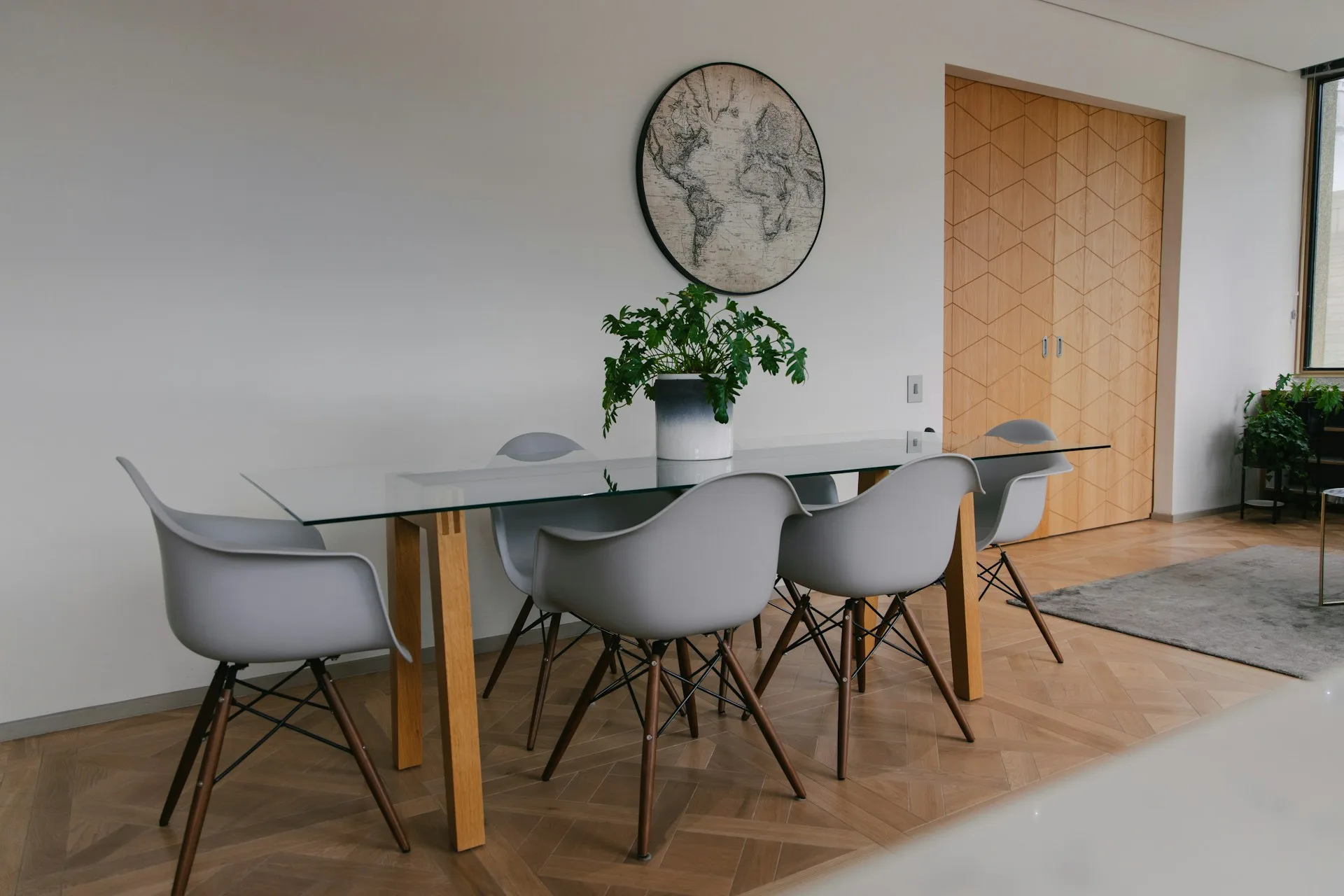
Saarinen tulip chair reproductions are pedestal-base dining and accent chairs built to the proportions of Eero Saarinen’s 1955–56 design for Knoll. The originals now cost over $1,000 each; reproductions use cast aluminum bases and either fiberglass or ABS shells to approximate the form at a fraction of that price.
Our Top Picks
The chairs below were selected on one criterion: how faithfully they execute the pedestal silhouette Saarinen designed. That means a single-column base, a shell that curves without hard breaks, and proportions that stay close to the original 80 cm height and 46 cm seat height. Price labels reflect what you’re actually getting at that tier — not what the listing claims.
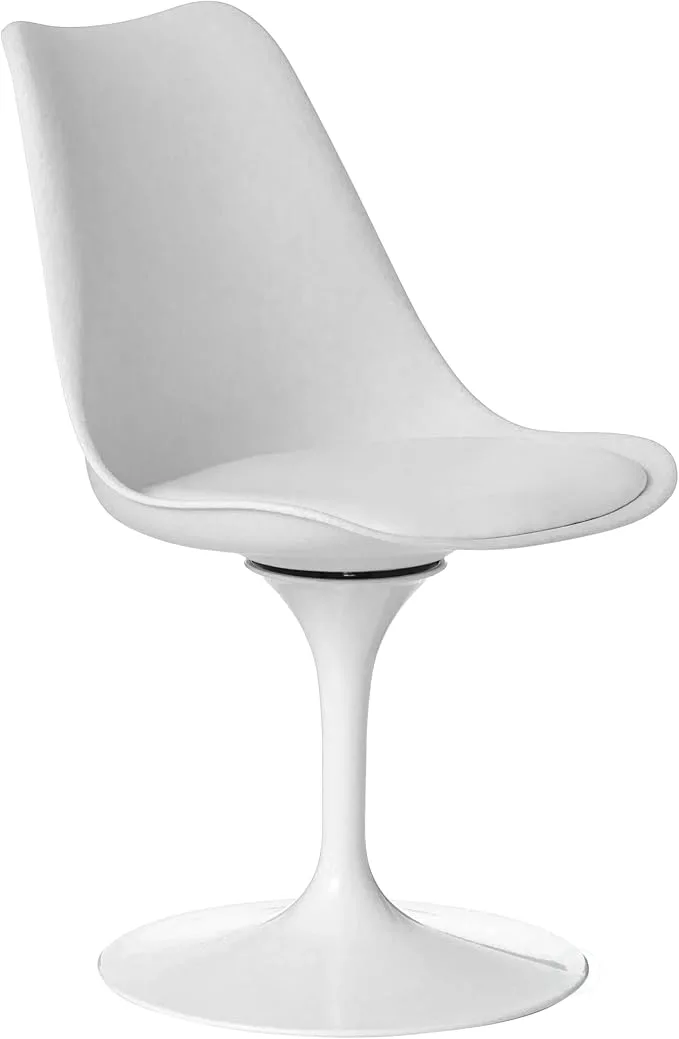
- Tulip Dining Chair Replica — Mid Century Side Chair (Budget): The side chair format (no arms) matches Saarinen’s model 151, the version designed specifically for dining, and the ABS shell holds the form at this price point without the surface quality dropping into obviously cheap territory.
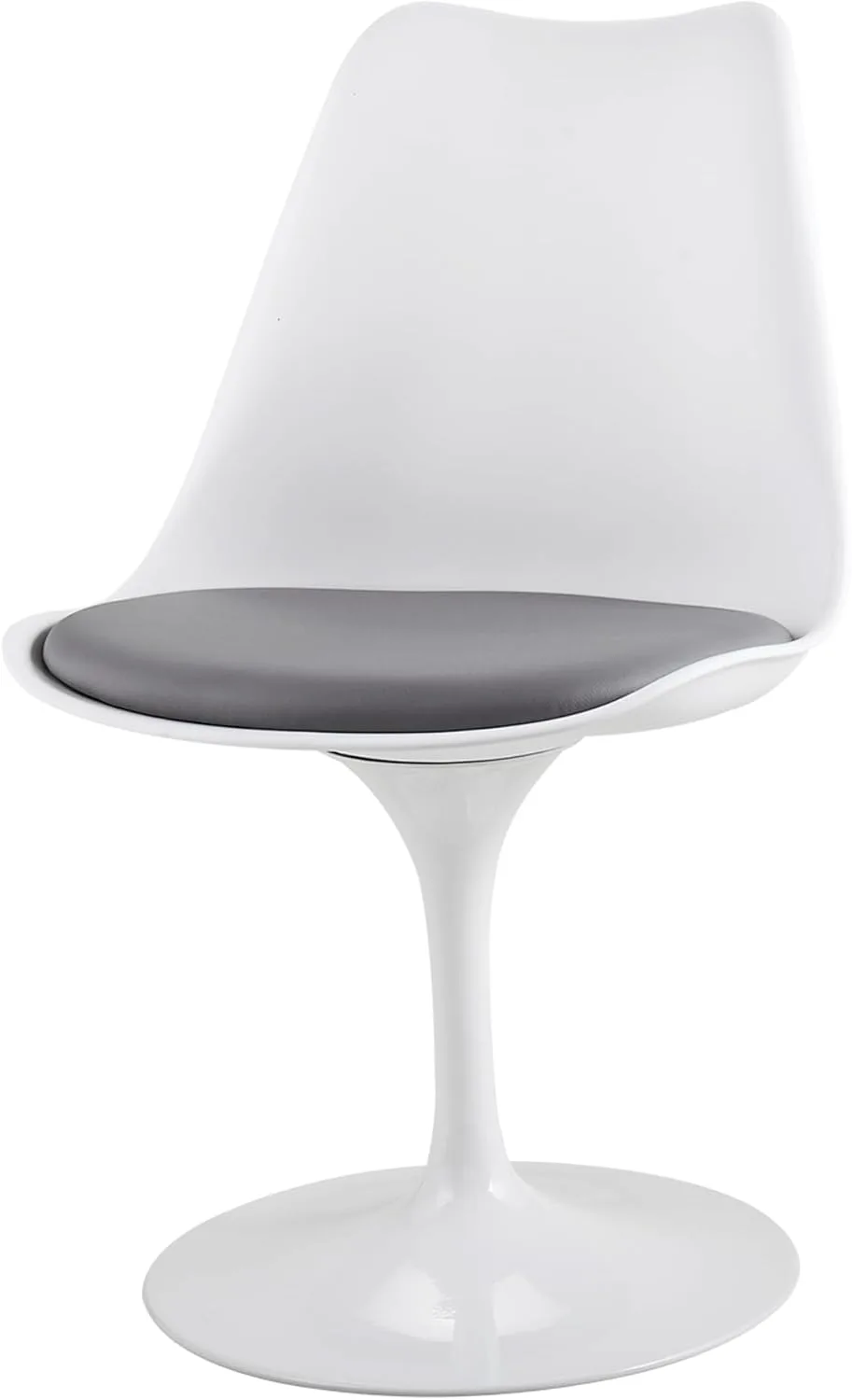
- JAXPETY Swivel Tulip Side Chair (Budget): The swivel is the detail most budget reproductions omit, and Saarinen’s original rotates, so this is actually more faithful to the design intent than a fixed-base chair that costs the same or more.
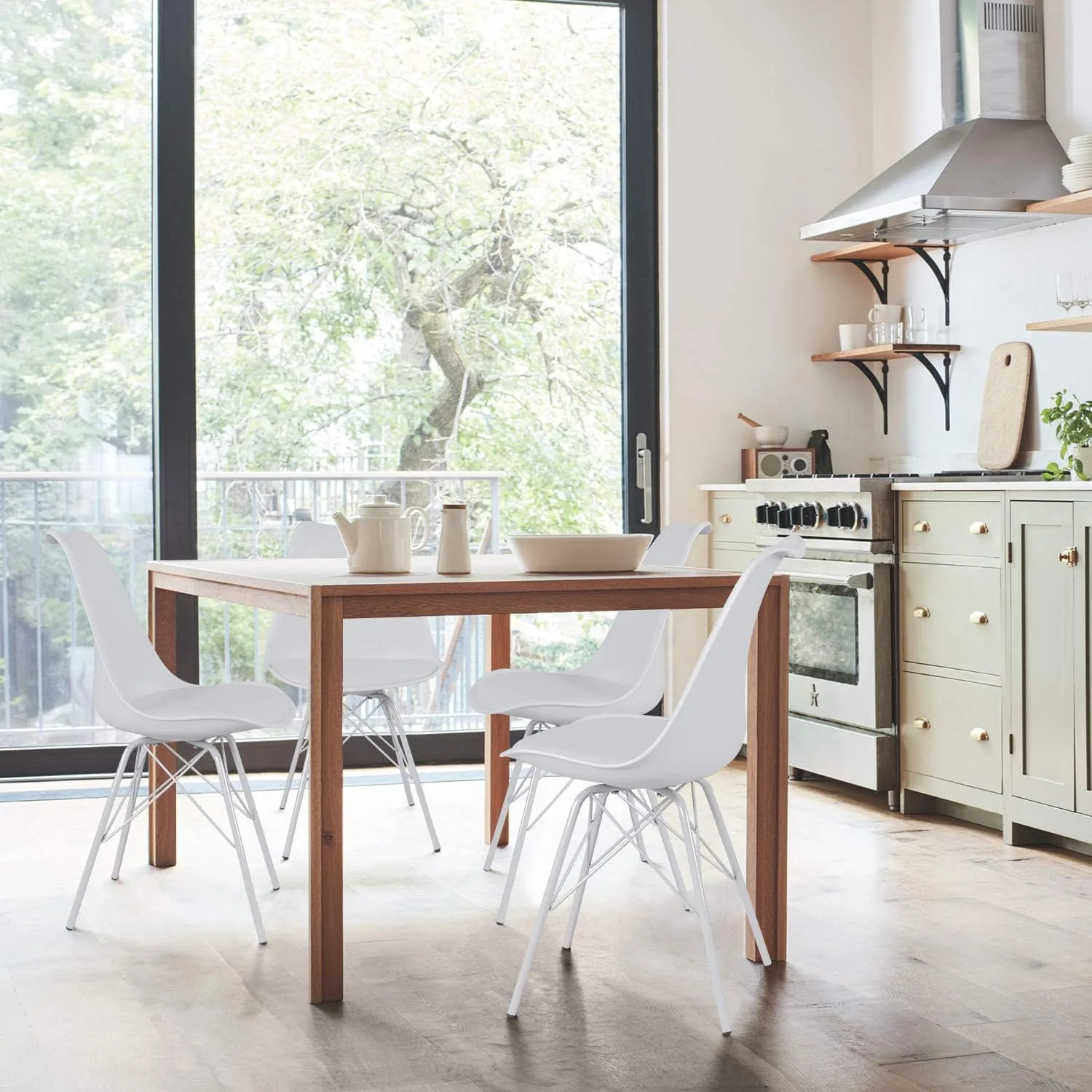
- JUMMICO Tulip Chair Set of 4 (White) (Mid-Range, set pricing): The all-white shell and base is the colorway Saarinen and Knoll intended; buying four at once makes the per-chair cost competitive, and placing four pedestal chairs around a round table is the spatial arrangement the design was made for.
- netuera Mid Century Modern Tulip Chair Set of 4 (Budget, set pricing): The PU-upholstered seat is more durable than fabric cushions in a dining context, but some netuera SKUs use wooden splayed legs rather than a pedestal base, so verify you are ordering the pedestal variant before purchasing.
Quick Decision Guide
- Best for strict formal fidelity: JUMMICO Set of 4 — all-white shell and base, armless profile, and the set format delivers the Pedestal Group effect Saarinen designed the chair to create.
- Best budget single chair: Tulip Dining Chair Replica — side chair proportions, ABS shell, easy to clean, good entry point if you’re buying one or two chairs rather than a full set.
- Best for swivel function: JAXPETY Swivel Tulip Side Chair — the only pick in this tier that rotates, which makes it appropriate for home office use or dining rooms where guests need to turn.
- Best for durability in high-traffic dining: netuera Set of 4 — PU upholstery wipes clean and holds up better than fabric cushions over time, though you sacrifice some visual fidelity.
Full Comparison
| Product | Best For | Price Range | Key Feature | Link |
|---|---|---|---|---|
| Tulip Dining Chair Replica | Entry-level single chair | Budget | ABS shell, side chair (no arms) | View |
| JAXPETY Swivel Tulip Side Chair | Swivel function, home office | Budget | 360° swivel, white steel base | View |
| JUMMICO Set of 4 (White) | Full dining room, closest to original colorway | Mid-Range (set) | All-white shell + base, armless, set of 4 | View |
| netuera Set of 4 | Durability, color options | Budget (set) | PU upholstered seat, multiple colors | View |
What each Saarinen tulip chair reproduction gets right — and where it falls short
Tulip Dining Chair Replica (B0CLWWZ6FZ)
Tulip Dining Chair Replica — Mid Century Side Chair
The side chair format (no arms) matches Saarinen’s model 151, the version designed specifically for dining. The ABS shell holds the form at this price point without the surface quality dropping into obviously cheap territory.
Pros:
- Side chair (armless) format stays close to Saarinen’s model 151 dining version
- ABS shell maintains the curved profile without visible seams at this price point
- White finish wipes clean — practical in a dining context
Cons:
- ABS injection-molded shell has a uniform matte surface rather than the soft sheen of a fiberglass layup
- Steel base, not cast aluminum — reads slightly different at close range, particularly where the base meets the floor
- No swivel on the standard variant
Buyers who want the pedestal silhouette at the lowest single-chair price and are not placing it next to a Knoll original for comparison will find this delivers the form without notable compromise at the price.
The armless format is the correct one for a dining table — Saarinen’s model 151 side chair is the piece the Pedestal Group was built around, and most budget reproductions default to the arm version instead.
The armless format is the correct one for a dining table — most budget reproductions default to the arm version instead.
JAXPETY Swivel Tulip Side Chair (B08G4JZKLK)
JAXPETY Swivel Tulip Side Chair
Full 360° swivel matches Saarinen’s original functional intent. White steel base with a Rilsan-style finish approximates the single-material appearance of the original cast aluminum construction.
Pros:
- Full 360° swivel matches Saarinen’s original functional intent
- White steel base with a Rilsan-style finish approximates the single-material appearance
- Cushioned seat included; removable cover for cleaning
Cons:
- Steel base reads as steel at close range — the weight and finish of cast aluminum are different
- Cushion cover quality is variable; check dimensions against the original 46 cm seat height if fit matters
This chair is for home office or dining use where rotation is a functional requirement, not just a preference.
Swivel is the one functional detail that distinguishes the Tulip from a generic pedestal chair. A fixed-base tulip reproduction is missing the point.
JUMMICO Tulip Chair Set of 4 (B07Q9Q8W8B)
JUMMICO Tulip Chair Set of 4 (White)
All-white shell and base is the colorway Saarinen and Knoll presented in the original 1957 introduction. The set format delivers the Pedestal Group effect the design was built to create.
Pros:
- All-white shell and base is the colorway Saarinen and Knoll presented in the original 1957 introduction
- Set pricing makes per-chair cost competitive with buying individually
- Armless shell profile preserves the cleaner side-chair silhouette
Cons:
- Sold as a set — you cannot buy a single chair at this per-unit price
- Soft padded seat is built-in rather than a separate removable cushion
- ABS shell
Anyone furnishing a dining room where four chairs around a round pedestal table is the arrangement will find this set the most direct path to that result.
One tulip chair is a conversation piece. Four of them around a round table is the complete argument.
One tulip chair is a conversation piece. Four of them around a round table is the complete argument.
netuera Tulip Chair Set of 4 (B08THFP4LR)
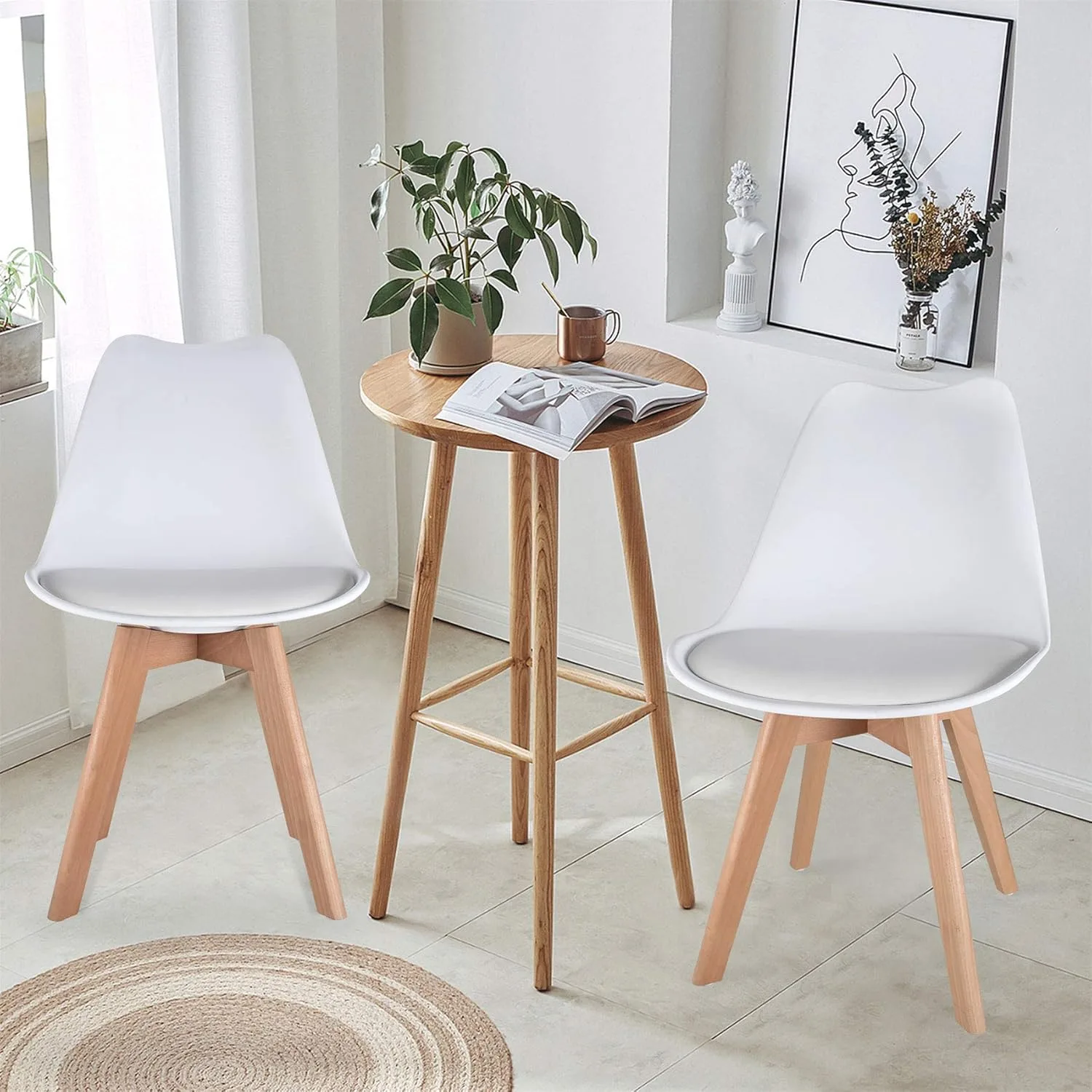
netuera Mid Century Modern Tulip Chair Set of 4
PU-upholstered seat is more durable than fabric cushions in a dining context. Multiple color options available. Verify you are ordering the pedestal-base variant, not the wooden-leg SKU.
Pros:
- PU upholstered seat is more durable than fabric in dining use — stains wipe off
- Multiple color options available, including non-white configurations
- Set-of-4 pricing is competitive
Cons:
- Some netuera SKUs on Amazon use wooden splayed legs rather than a pedestal base. These listings use the word “tulip” and mid-century framing, but the defining feature of the design is absent: the single column. Verify the specific SKU before ordering.
- PU upholstery adds visual weight to the lower half of the chair, softening the pedestal silhouette
- Color options that move away from white require more careful coordination with table and floor
Buyers prioritizing seat durability and color flexibility over strict formal fidelity to the original design will get the most out of this set. In a household with children or in a dining room that gets daily use, a PU seat that wipes clean is a practical advantage the other picks don’t offer at this price.
Why the pedestal base is the whole point
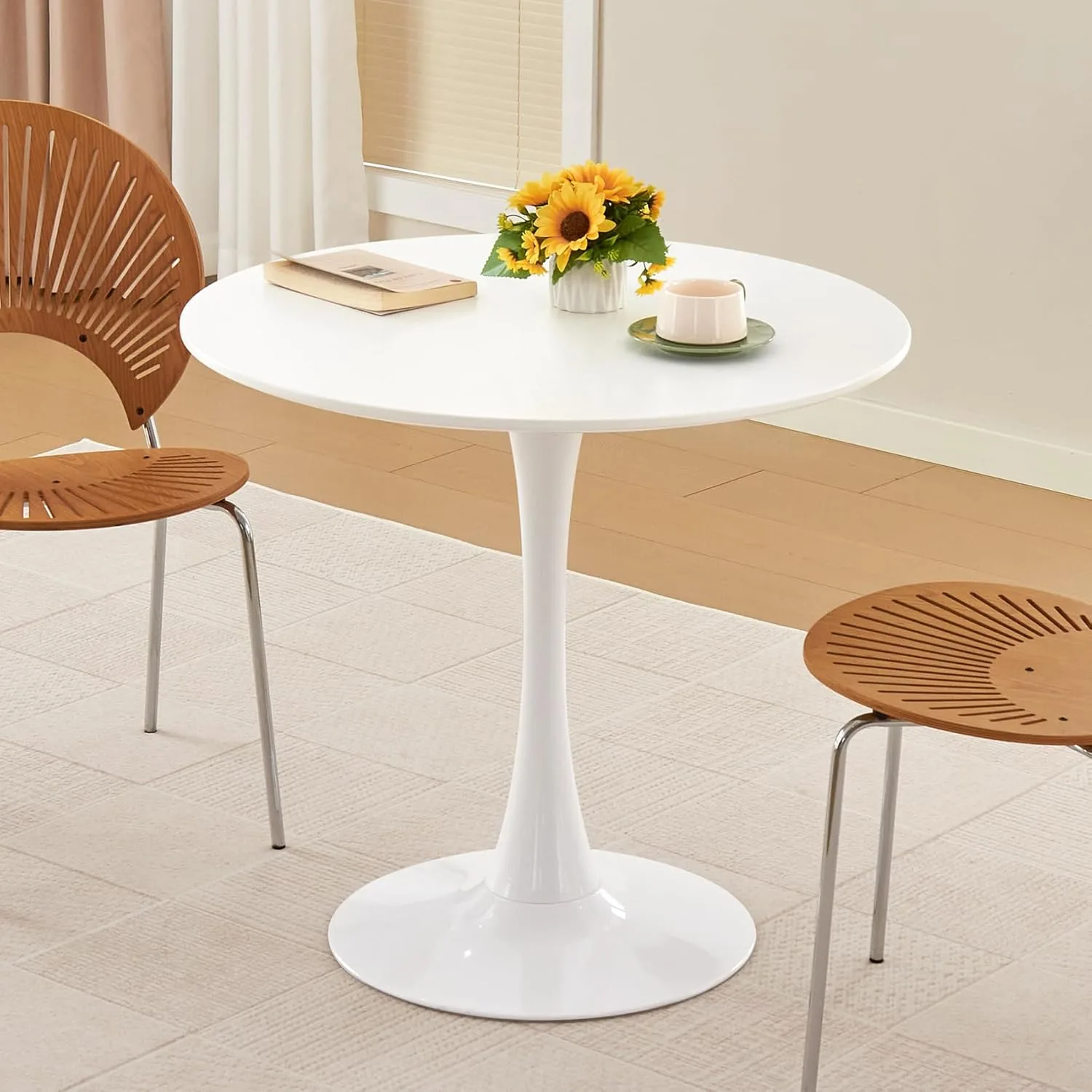
Saarinen designed the Tulip Chair between 1955 and 1957, as part of what he called the Pedestal Collection — a group that included chairs, armchairs, and tables, all built on single-column bases. His stated problem, as documented in Knoll’s archives and quoted in Brian Lutz’s Eero Saarinen: Furniture for Everyman (powerHouse Books, 2012), was the visual noise produced by furniture undercarriages: “The undercarriage of chairs and tables in a typical interior makes an ugly, confusing, unrestful world. I wanted to clear up the slum of legs. I wanted to make the chair all one thing again.”
The pedestal base was not a styling choice but the end of a five-year project, and what Saarinen was actually trying to remove from the room explains why he thought four legs were the problem.
The original intent was a single piece of molded fiberglass — chair and base as one form. That didn’t work. Fiberglass prototypes failed structurally at the base. The solution was a cast aluminum base coated in Rilsan, a nylon-based powder coat applied to match the shell’s color and surface, producing the appearance of material continuity between two different components. Saarinen received his patent in 1960; the chair received the Design Award of the New York Museum of Modern Art in 1969.
Every reproduction makes the same fundamental compromise Saarinen made: two materials reading as one. What separates a good reproduction from a poor one is how well that illusion holds. A steel base with thin Rilsan-style finish holds it at arm’s length. A cast aluminum base with a proper coating holds it closer. ABS versus fiberglass is a secondary question — the base is where the design either works or doesn’t.
Frequently Asked Questions
What is the difference between a fiberglass and ABS tulip chair reproduction?
Fiberglass shells are formed by hand-laying resin over a mold, which produces a surface with a soft sheen and slight texture variation. ABS shells are injection-molded, giving them a more uniform, slightly matte finish. At price points under $200 per chair, the shell is almost always ABS. Fiberglass reproductions exist but cost significantly more and are typically sold by specialty retailers rather than through mass-market channels.
Are Saarinen tulip chair reproductions legal to sell?
Yes. Saarinen received his design patent in 1960; US design patents run approximately 14 years from grant, so the protection expired in the mid-1970s. Knoll retains trademark rights to the names ‘Tulip’ and ‘Pedestal’ in some markets, which is why many sellers describe their chairs as ‘tulip-style’ or ‘pedestal dining chairs’ rather than using the Saarinen name. The manufacture and sale of reproductions is broadly legal in the US.
How do I tell if a tulip chair has a cast aluminum base?
Cast aluminum is heavier than steel and has a slightly warmer, less uniform surface appearance. You can check by weight — a cast aluminum base will be noticeably heavier than a comparable steel base. Product listings that specify ‘cast aluminum’ are distinct from listings that say ‘metal’ or ‘steel.’ The original Knoll Tulip carries a rilsan-coated cast aluminum base; on the underside of authentic Knoll pieces, you will find a ‘BR-51’ marking.
What size table should I pair with tulip chairs?
Saarinen designed the chairs as part of a Pedestal Group that included a round table. A 42–48 inch round table seats four tulip chairs comfortably. For sets of four chairs, a round pedestal table in that range creates the symmetrical arrangement the chairs are proportioned for. A rectangular table works, but the visual argument the design makes is stronger with a round pedestal table that eliminates legs entirely.
Is the original Knoll tulip chair still made?
Yes. Knoll continues to manufacture the Tulip Chair in both side chair (model 151) and armchair (model 150) versions. As of 2026, pricing for the Knoll original starts above $1,000 per chair at retail. Knoll uses the original cast aluminum base with Rilsan coating and a molded fiberglass shell. The chair is part of Knoll’s Classic Designers catalog and is produced under license from the Saarinen estate.
Can tulip chair reproductions swivel?
Some do, some don’t. The original Saarinen Tulip Chair rotates on its pedestal base. Many reproductions omit the swivel mechanism to reduce manufacturing cost. If rotation matters for dining comfort, home office use, or fidelity to the original, verify that the specific listing includes swivel before purchasing. Among the picks above, the JAXPETY Swivel Tulip Side Chair is the option that retains this feature at a budget price point.
Further Reading
Two books cover Saarinen’s furniture at the depth the design deserves — one focused exclusively on the objects, one placing them in the full career context.
- Brian Lutz, Eero Saarinen: Furniture for Everyman (powerHouse Books, 2012): The only monograph devoted entirely to the furniture, not the buildings. Florence Knoll wrote the preface, and Niels Diffrient (a Saarinen protégé) contributes context from inside the design process. If you want to understand what separates the Knoll original from any reproduction, the archival photography here makes the material differences visible.
- Jayne Merkel, Eero Saarinen (Phaidon, 2005): The standard single-volume survey — the first major Saarinen publication since the early 1960s, according to Merkel. Places the Pedestal Collection in the full arc of the architecture career, which matters for understanding why Saarinen was solving a spatial problem, not just a furniture one.
For the broader survey of postwar seating, see the iconic furniture design hub. For companion chairs from the same mid-century moment, see guides to Bertoia Diamond Chair reproductions and best Noguchi coffee table reproductions.

About Zoe Post
Zoe Post holds a BFA and a Master of Architecture from the School of the Art Institute of Chicago. She now works as a product marketing leader at an architectural product design firm, bringing hands-on industry perspective to everything she writes. At ADI she covers contemporary artists, textile and pattern design, and the design objects that sit at the boundary of art and function.