
Eero Saarinen furniture is the group of chairs and tables the Finnish-American architect designed for Knoll between 1946 and 1957, including the Womb chair, the Tulip chair, and the Pedestal tables. Saarinen treated seating as structure, replacing four-leg bases with a single stem and joinery with molded shells.
Cranbrook built an American design elite, and Saarinen grew up inside it
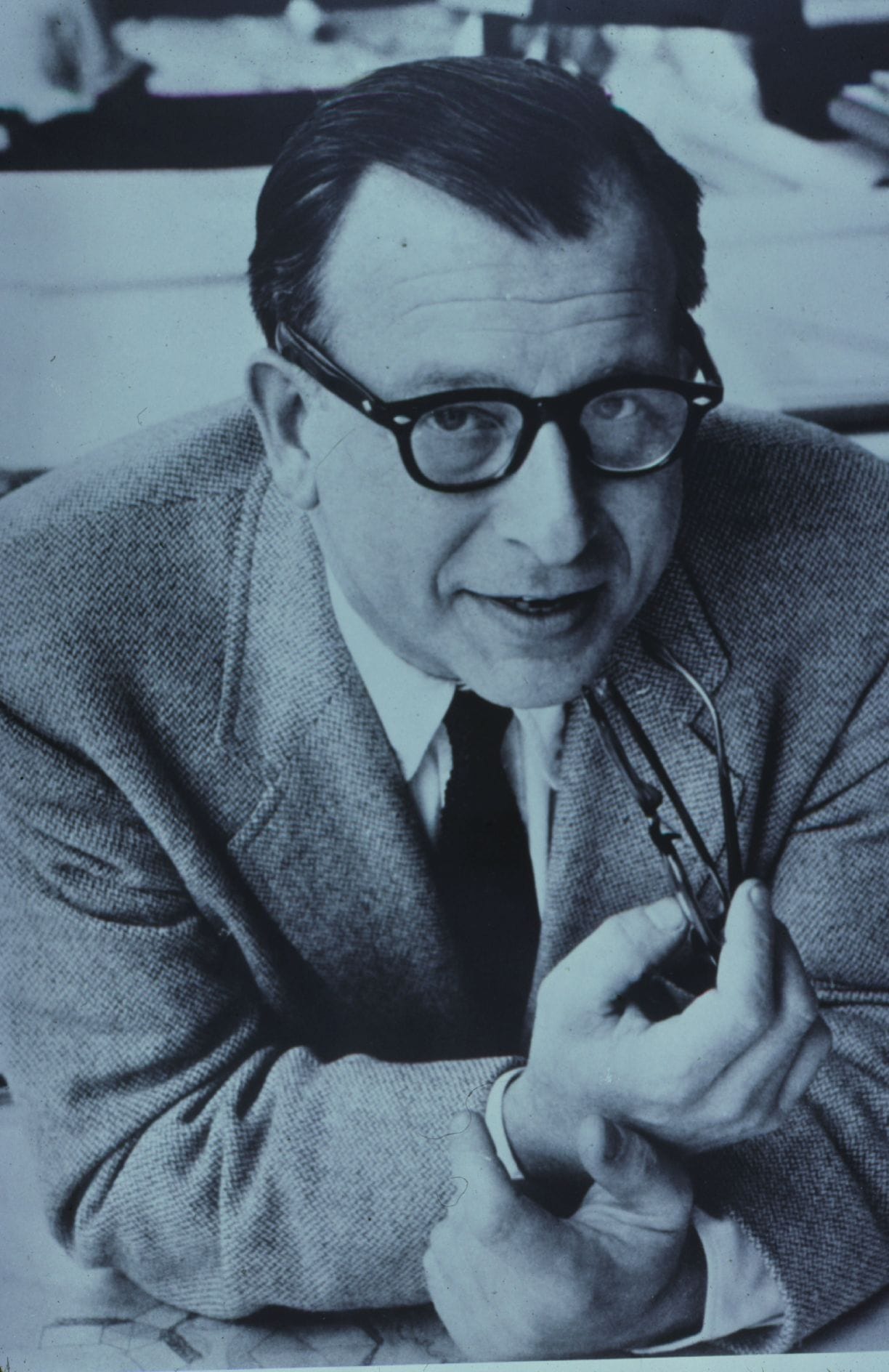
Eero Saarinen did not break into American furniture design. He grew up standing inside it instead.
His father, Eliel Saarinen, was the first president of the Cranbrook Academy of Art. Students and colleagues who passed through that campus in suburban Michigan became the seating canon this site keeps returning to. Charles and Ray Eames were there. So was Harry Bertoia, another Cranbrook sculptor Knoll put to work on chairs. So was Florence Schust, who later ran Knoll. She would go on to commission nearly everything Eero designed for a living room.
Cranbrook was not a school Saarinen attended. It was, instead, a family business he was born into. That fact explains the speed of his access better than his talent does.
The training that got him there was sculpture, not cabinetmaking. So that detail explains the furniture more than any biography does.
In September 1929, Saarinen went to Paris. He studied sculpture at the Académie de la Grande Chaumière. He did not take up architecture until Yale, where he graduated in 1934 (nps.gov). The year before, he had already designed furniture for Cranbrook’s Kingswood School for Girls. That was a joint project with his father and his mother, the weaver Loja Saarinen (dezeen.com, 8 October 2024).
A cabinetmaker solves a chair with joints and a frame. But a sculptor solves it with one continuous surface. That is the difference between the Grasshopper chair’s visible wooden legs and everything Saarinen designed once he had access to a mold.
The hinge year is 1940. That year, Saarinen entered the competition entry he and Charles Eames won in 1940: the Museum of Modern Art’s Organic Design in Home Furnishings competition. The win is still listed in the museum’s own artist file.
The prize went to two young men who could not yet manufacture what they had drawn. Molding a single continuous shell in plywood, and later fiberglass, would take Saarinen most of the next two decades.
That same year, Saarinen became a US citizen. He married the sculptor Lilian Swann (en.wikipedia.org). He did not practice architecture independently in earnest until his father died in 1950 (britannica.com). The furniture came first, at least by the calendar. Read as more than sequence, it reads as where his structural ideas surface earliest and are easiest to see.
What Eero Saarinen furniture was trying to get rid of
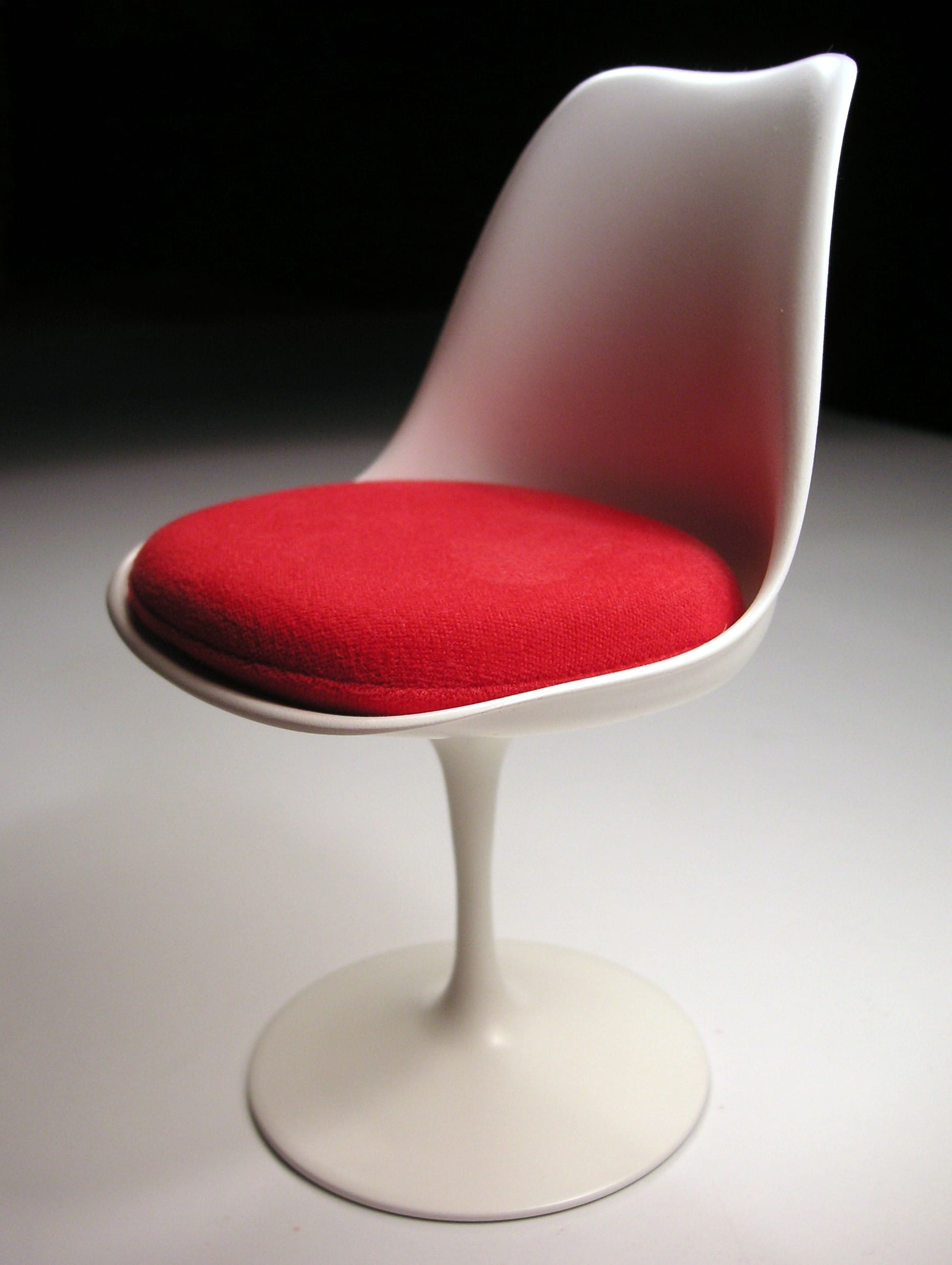
Saarinen named the enemy himself. In a 1957 Knoll press release announcing the Pedestal Collection, he said: “I’ve been wanting to clear up the slum of legs in our rooms for many years” (Knoll, “Original Design: Saarinen Pedestal Collection”). Two years before that, he had told Florence Knoll more plainly: “We have chairs with four legs, with three and even with two, but no one has made one with just one leg, so that’s what we’ll do” (knoll.com).
Read the two quotes together and the Pedestal Collection stops looking like a styling exercise.
The Pedestal Collection is not a styling exercise. It is a five-year argument for clearing the room below knee height.
It is a five-year argument. It clears the room below knee height. Saarinen was still making that argument a decade after he first said it out loud.
The compromise gets skipped in most retellings, and it should not be. Saarinen wanted the Tulip chair built from one material, shell to floor. Fiberglass could not carry a sitter’s weight through a stem that thin in 1957. So Knoll cast the base in aluminum. It finished the base with a Rilsan coating to match the shell’s color exactly (knoll.com). The chair reads as one continuous object in every photograph. But it is not one continuous object in your hand.
The Tulip chair is a material lie dressed as a finish, and Saarinen shipped it anyway because the photograph was the argument he needed to win.
Saarinen knew the difference, but he shipped the chair anyway. The photograph was the argument he actually needed to win.
Saarinen was not solving this problem alone. In Denmark, the same years Jacobsen was pressing shells into the Egg and the Swan. Keep that parallel in mind. It matters before you accept the charge American writers made against Saarinen while he was still alive.
The charge was simple: no signature style. He built sweeping shells for the TWA Flight Center. He built plain brick for the Yale residential colleges. The CIA’s own architectural history feature repeats the charge, in a piece titled “Eero Saarinen: A Place in Architectural History.” So does Forbes, in a 2010 profile titled “A Corporate Architect Who Was Also An Artist.”
Antonio Román argued the opposite. He said the multiplicity itself was the method, not its absence (Román, Eero Saarinen: An Architecture of Multiplicity, Princeton Architectural Press, 2003). But I side with Román. The furniture makes his case better than the buildings do.
The Womb chair and the Pedestal Collection do not share a look. Instead, they share one instruction, repeated across eleven years: remove the part the body does not use.
Which Saarinen designs still hold up under their own logic?
Womb Chair and Ottoman (Knoll, 1948)
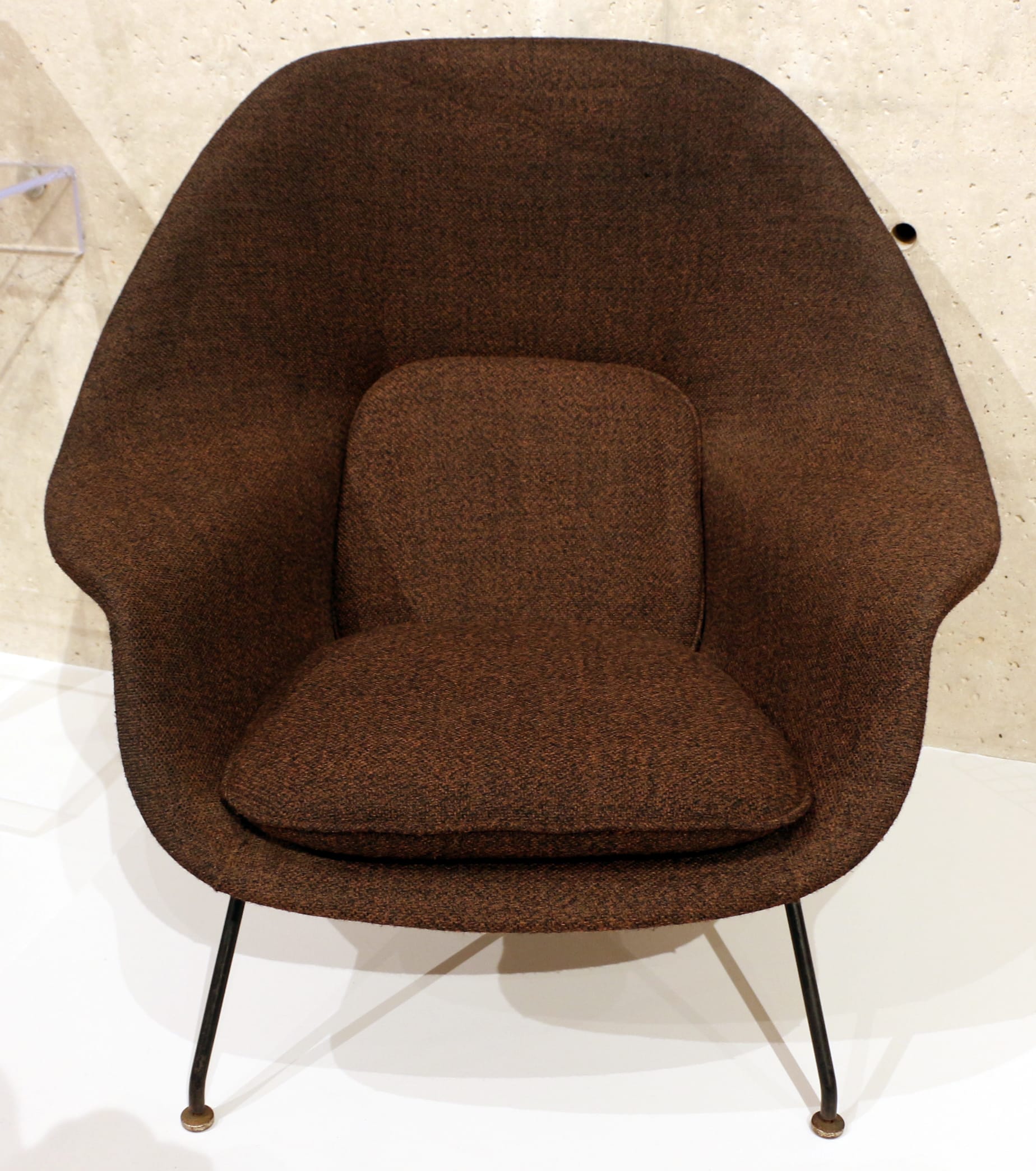
Florence Knoll asked for a chair she could curl up in. So Saarinen gave her one with a shell wide enough for that. Sitting sideways in it is a legitimate use, not a failure.
The chair is a molded fiberglass shell with foam and fabric over it. It sits on a thin chrome-steel rod base that all but disappears.
Sources disagree on the date. Some retailers date it to 1946. Knoll’s own dating is 1948, with development beginning around 1946. The honest answer is the late 1940s. But either date supports the same point: the Womb chair predates the Tulip chair by roughly a decade, and it solves a different problem. That problem is comfort, not the floor.
Grasshopper Chair (Knoll, 1946)
This is the “before” picture. Its laminated bent-birch frame and upholstered seat still show a visible wooden armature. It is the last time Saarinen let a chair’s skeleton remain part of its appearance. Every design that follows removes it.
Tulip Chair (Knoll, 1957)
This is the chair most people mean when they say Saarinen. Its swivel and its single stem make it read as furniture designed for a photograph as much as for a room. That is the same trade named above. Saarinen never fully resolved it, though.
Pedestal Tables (Knoll, 1957)
The same stem logic applies here. Here it works without compromise. A table has no comfort problem to solve. A single base is a pure gain in floor legibility, with none of the material lie the Tulip chair’s base has to cover for. Knoll still sells the tables today with marble, laminate, and veneer tops.
TWA Flight Center, JFK (opened 1962)

This is not furniture. But it reads as the same argument at building scale: a shell with no visible structural skeleton, finished after Saarinen’s death in 1961. The furniture is where that argument is easiest to see, and the building is where it gets hardest to prove.
That invites an objection. Saarinen trained as an architect before he trained as a furniture designer, and his years in Eliel’s office ran alongside every chair Knoll commissioned. The two practices developed in parallel, not in sequence, and a shared vocabulary of shells does not prove which one led. The objection is fair; it corrects any claim of a strict, one-way handoff. But chronology favors the furniture. The Womb chair predates 1950, and the Tulip chair and Pedestal tables shipped in 1957, five years before TWA opened in 1962. A structural idea is legible in a chair in a way it never quite is in a building, which is why the furniture is where Saarinen could test it first.
Shop the Collection
Stock check, 21 September 2026: Amazon.com has no Womb chair or Tulip side chair worth linking. The two unlicensed listings this page carried at publication are gone, and what replaced them in search are unreviewed listings from sellers with no track record. Knoll’s originals are sold through Design Within Reach and knoll.com. The one Saarinen-derived object Amazon does stock in depth is the pedestal table, so that card stays; the books below are all in stock.
Further Reading
These three books treat the furniture as an argument instead of a footnote to the buildings. That is the gap most Saarinen writing leaves open.
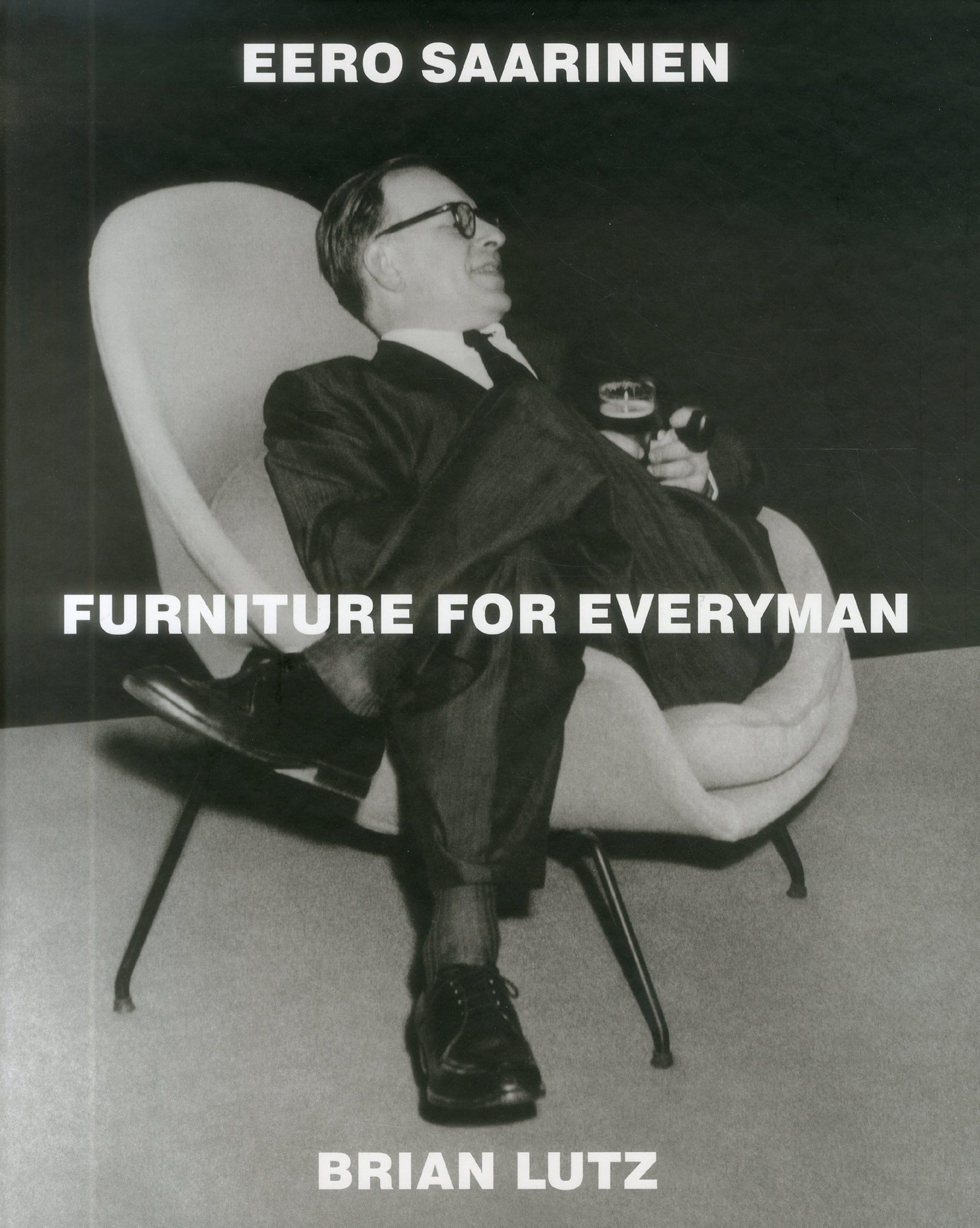
Brian Lutz, Eero Saarinen: Furniture for Everyman (Pointed Leaf Press, 2012)
The only monograph that puts the furniture at the center, not the margins.
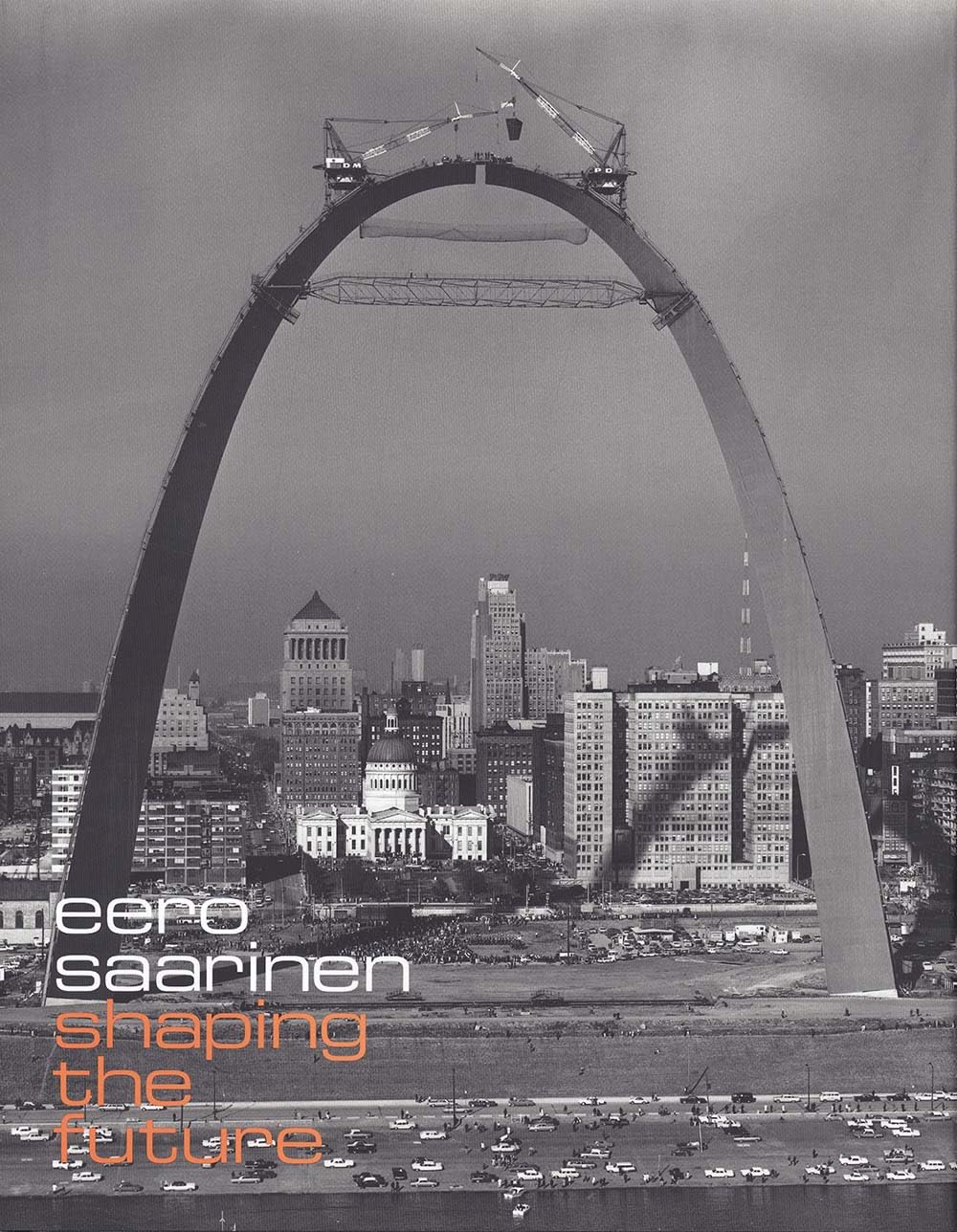
Donald Albrecht and Eeva-Liisa Pelkonen, Eero Saarinen: Shaping the Future (Yale University Press, 2006)
The Yale exhibition catalogue that reopened the archive. Buy this one if you buy only one.
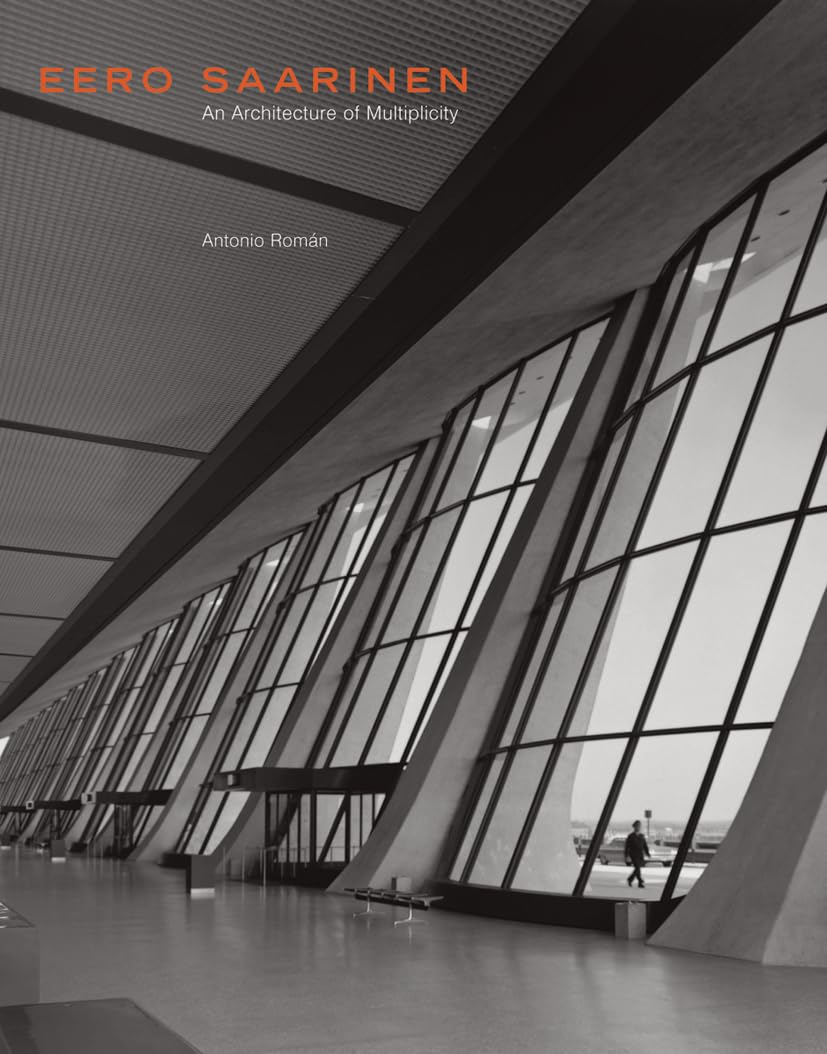
Antonio Román, Eero Saarinen: An Architecture of Multiplicity (Princeton Architectural Press, 2003)
It takes the “no signature style” charge seriously. It argues the multiplicity was the method. So this article takes that same position.
Frequently Asked Questions
What is Eero Saarinen furniture?
Eero Saarinen furniture is the group of chairs and tables the Finnish-American architect designed for Knoll between 1946 and 1957. It includes the Womb chair, the Tulip chair, and the Pedestal tables. Each piece replaces a four-leg base with a single molded stem or shell. So that structural idea moved from furniture into his later buildings.
Who designed the Tulip chair?
Eero Saarinen designed the Tulip chair for Knoll. He released it in 1957 as part of the Pedestal Collection. He had told Florence Knoll two years earlier that no one had made a chair with just one leg. So that is what he set out to do.
Why does the Tulip chair have only one leg?
Saarinen wanted to remove what he called the “slum of legs” cluttering a room’s floor. He replaced the usual four-leg base with a single pedestal stem. The idea worked visually. Saarinen never achieved his original goal, though: building the chair from one material, top to base.
Is the Womb chair comfortable to sit in?
Yes. Florence Knoll asked Saarinen for a chair she could curl up in. So the resulting shell is wide enough for that. Sitting sideways or tucking your legs underneath you is a normal way to use it, not a misuse of the design.
How can I buy a Saarinen chair for less than list price?
Buy a licensed Knoll example secondhand. Tulip chairs and tables were produced in large numbers and turn up regularly at auction houses and on resale sites; check for Knoll’s label under the seat. For what to look for, see our Tulip Chair guide.
When did Saarinen design the Pedestal Collection?
Saarinen developed the Pedestal Collection, including the Tulip chair and matching tables, over roughly five years. Knoll released it in 1957. The Womb chair came before, designed in the late 1940s, with Knoll dating it to 1948.

About Joe Post
Joe Post holds an MFA in Art from California Institute of the Arts (CalArts) and has done additional graduate work at the School of the Art Institute of Chicago. He founded Art Design Ideas to write about design as cultural argument — the decisions, contradictions, and assumptions built into the objects we live with.