
Areaware vs HAY: both sold design-forward everyday objects at accessible prices — Areaware from Brooklyn (founded 2005), HAY from Copenhagen (founded 2002). Their premises were opposite: Areaware treated objects as arguments made by independent designers; HAY treated them as optimized solutions delivered at scale. Areaware closes May 1, 2026.
What Areaware vs HAY Reveals About Two Competing Design Premises
Two brands entered the same market gap, the space between IKEA and Vitra, and arrived at completely different answers about what design is for.
Areaware was founded in 2005 by Lisa Yashon and Noel Wiggins, Brown University classmates who built the company on a licensing model that Noel Wiggins would later describe to Fast Company as “more common in Italy than the U.S.” They worked with independent designers: Fort Standard, David Weeks Studio, Josh Owen. They licensed those designers’ work to produce small housewares at commercial scale. The company was, in that sense, a curatorial project dressed as a product company. Areaware’s job was to find designers whose work made an argument and give that argument a retail price tag.
HAY was founded in 2002 by Mette and Rolf Hay in Copenhagen. Their first collection showed at imm Cologne in January 2003. The thesis was explicit: outstanding design should be accessible not as a charitable gesture but as a business model. Quality industrial manufacturing plus affordable price point equals mainstream market entry for contemporary Danish design. By 2018, HAY had 180 furniture items, 350 accessories, and projected revenue of $155 million (Wikipedia, HAY entry). Herman Miller acquired a 33% equity stake for $66 million in June 2018, then an additional 34% for approximately $78 million in October 2019, making them majority owner. HAY scaled by solving the production problem, not by curating independent voices.
What separated the two was what they thought the independent designer was for. Areaware believed the designer’s individual voice was the point. HAY believed the design solution was the point, and that the designer’s job was to produce it. This is not a trivial difference. It determines product decisions, pricing structures, and collaborations at every level. It also explains, in part, why one company is being acquired into global architecture and the other is closing in May 2026.
The closure of Areaware, announced in February 2026, cited tariffs and “mounting pressures on the home goods industry.” Wiggins told Fast Company the tariffs would more than double product prices. He investigated shifting production to Vermont and Ukraine; the order sizes were too small. But the structural problem was older than the tariffs. Wiggins named it plainly: “To be both a curatorial voice and a manufacturing voice are two disparate and incompatible forces.” That is the brief history of Areaware in one sentence.
“To be both a curatorial voice and a manufacturing voice are two disparate and incompatible forces.”
Why the difference in premise produces different objects
The easiest way to see the distinction is through specific objects, not through brand statements.
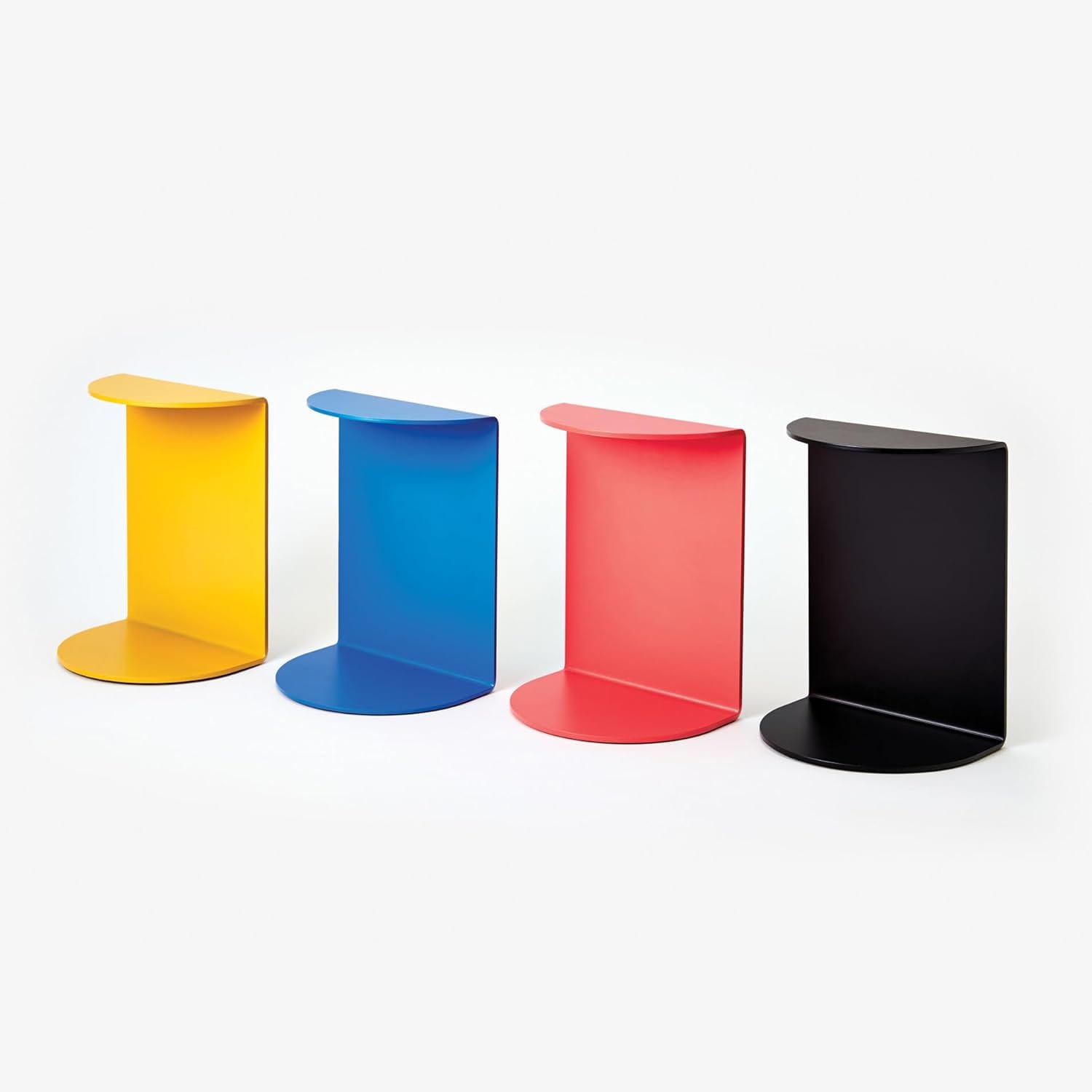
Areaware’s Reference Bookend is available in powder-coated metal with a rubber grip and a long bottom flange. It looks like a component from a machine tool. It solves the bookend problem, the one where books lean and the bookend tips over, but it solves it with such formal severity that you notice it. The object has a posture. The Fort Standard-designed Balancing Blocks are ten faceted solid oak blocks in a drawstring bag that exist only to be stacked until they fall. There is no other use. The brand’s official description: “We believe the best design evokes good feelings. We think everyday objects should be as fun as they are functional.” That’s Areaware’s thesis in two sentences, and the Balancing Blocks are its purest expression.
HAY’s About A Chair (designed by Hee Welling, ongoing) makes a different argument. The entire AAC series is built around combinability: different seat shells, upholstery options, underframe choices, all interchangeable. The shells are made from 100% recycled post-consumer polypropylene with water-based lacquered oak frames. The chair is solving a problem — how to make a chair family that works in multiple contract and residential contexts at accessible prices — and it solves it so thoroughly that the chair disappears into competent service. You don’t notice it. That is not a failure; it is the design intention.
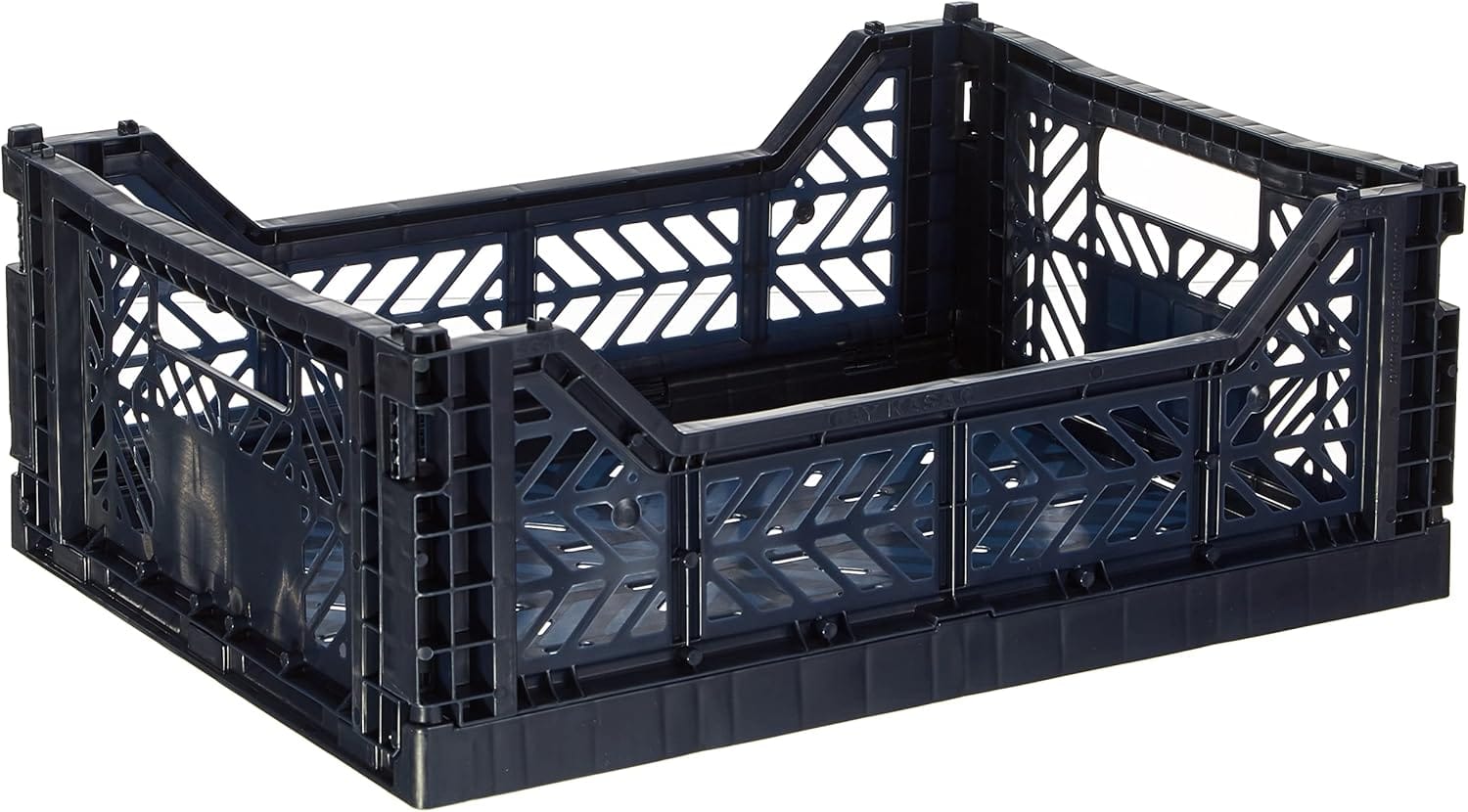
HAY’s Colour Crate follows the same logic. Foldable, stackable polypropylene in a full spectrum of colors, now made from 100% recycled post-consumer plastic. The form is entirely determined by function. The color is the expressive variable, the one decision that reads as aesthetic rather than engineering. HAY’s collaborators include Ronan and Erwan Bouroullec, Muller Van Severen, Scholten & Baijings, and Gam Fratesi. These are not independent designers making idiosyncratic arguments. They are solving design problems inside HAY’s production architecture.
The argument this creates is real: Areaware’s approach produces objects with friction. You notice them; they interrupt your attention and ask something of it. HAY’s approach produces objects that fit. Neither is superior. They are answering different questions about what everyday design is for.
Areaware’s approach produces objects with friction. HAY’s approach produces objects that fit.
Five objects that show the difference
The Areaware Reference Bookend is powder-coated metal, rubber grip, long bottom flange that prevents tipping. The form is borrowed from industrial hardware, not from the long tradition of decorative bookends. It looks like it belongs in a workshop, which is precisely why it doesn’t disappear on a shelf. One of Areaware’s most durable design arguments.
The Areaware Little Puzzle Thing (Durian) is a 50-piece mini-puzzle designed to complete in under 20 minutes, printed in limited editions organized around a single fruit or object. The edition logic is borrowed from art publishing, not from toy manufacturing. With Areaware’s closure now announced, existing stock of each series becomes the definitive run.
The HAY Colour Crate M (Navy) is foldable, stackable polypropylene in a full spectrum of colors. The form is entirely functional; the color is where HAY makes its aesthetic argument. Available in small and medium with an optional lid. The crate HAY became known for, and the clearest single-object statement of their design thesis.
The HAY About A Chair AAC22 (Hee Welling) has a curved back shell, four-leg oak base, and 100% recycled polypropylene shell. The combinability logic of the full AAC family makes the family the product, not any individual configuration. Sophisticated precisely because it asks nothing of you.
The Lisa Cheng Smith connection: Smith, formerly ADO of Areaware, later developed products for both HAY and Design Within Reach. That career trajectory is the shortest possible summary of the distance between the two brands. The fact that it is traversable at all suggests the distance is less absolute than each brand’s stated premise implies.
Shop the Collection
These three objects make the argument in physical form. The Areaware pieces are worth acquiring before the closure makes existing stock the final supply.
Areaware Reference Bookend (Black)
Powder-coated metal with rubber grip and an industrial formality that solves the bookend problem without disguising itself as decor. One of the clearest statements of Areaware’s design premise you can put on a shelf.

Areaware Little Puzzle Thing: Durian
A 50-piece mini-puzzle in a timed limited edition. Areaware applied art-publishing logic to a toy, and with the closure now announced, existing stock becomes the record.
HAY Colour Crate M (Navy)
Stackable, foldable, recycled polypropylene in a full color range. The form is entirely functional. The color is where HAY makes its aesthetic argument, and the navy is the version that reads least like storage.
Further Reading
Two books. One is the primary source on HAY’s design logic; the other is the essential historical context for understanding what HAY inherited and what it departed from.
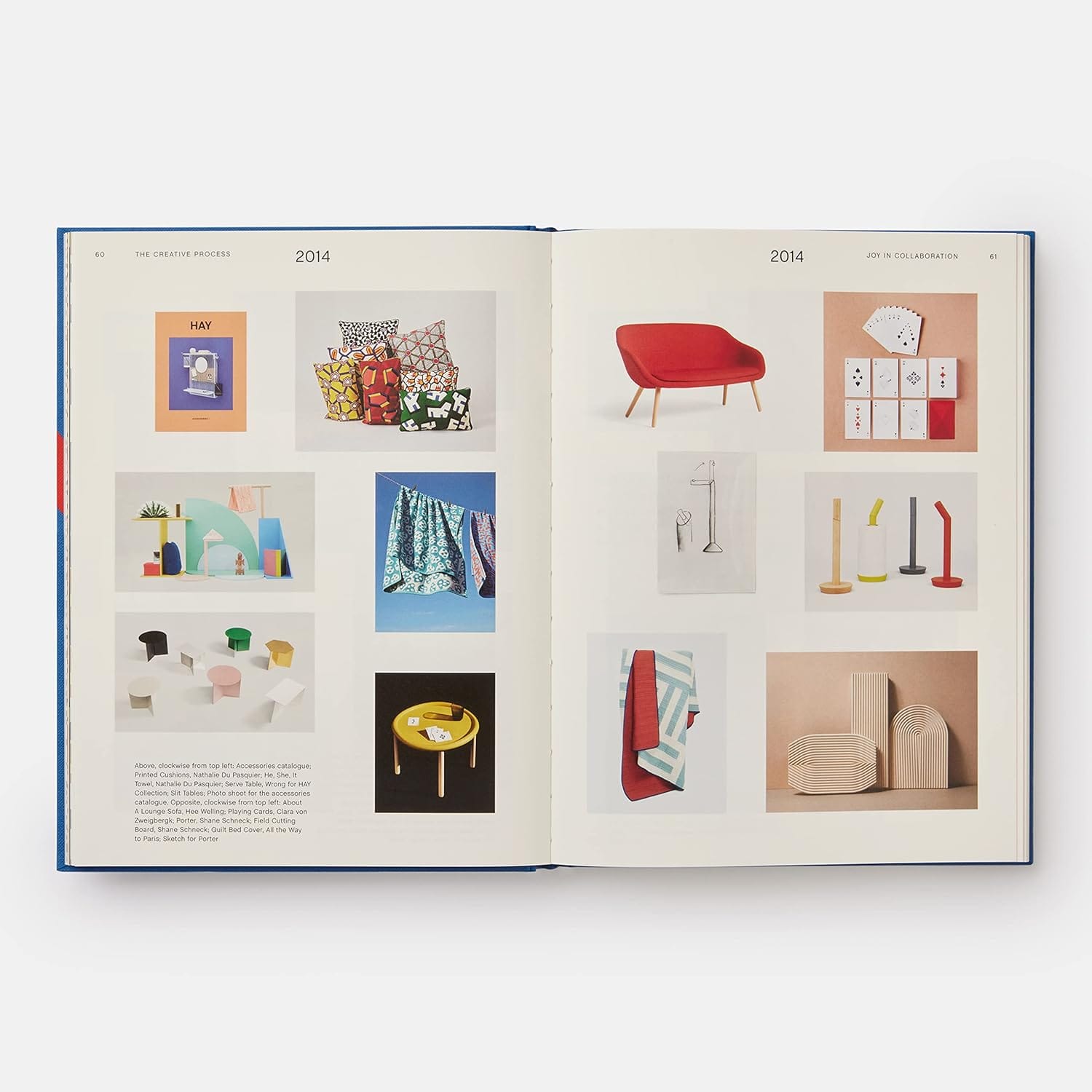
Kelsey Keith, Rolf and Mette Hay, HAY (Phaidon, 2022)
The authorized 20th anniversary monograph with 600 color images, interviews with the Bouroullec brothers, and an account of how two founders turned a price-accessible thesis into a global brand with Herman Miller as majority owner. This is the closest thing to a primary source on HAY’s design logic in English.
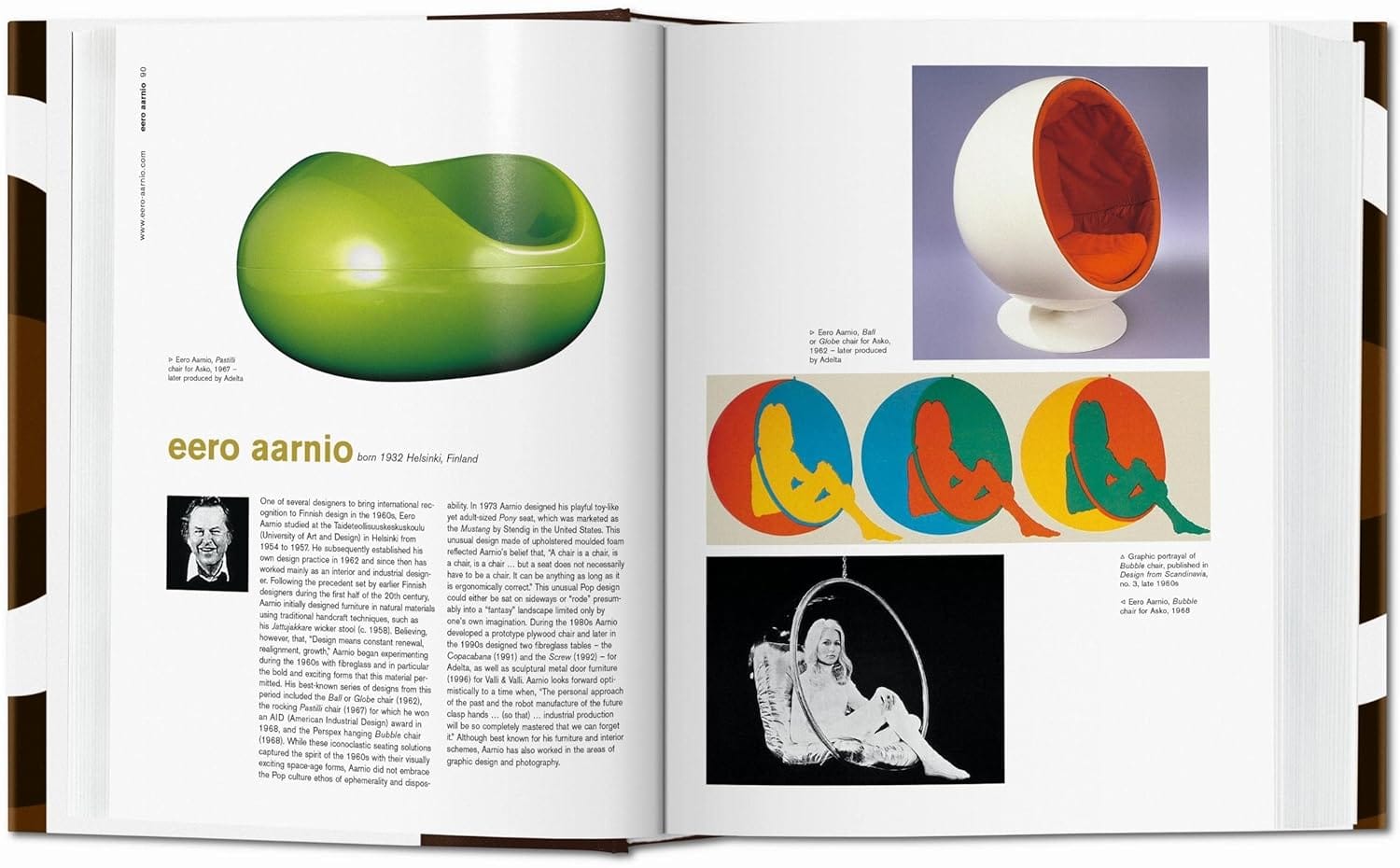
Charlotte and Peter Fiell, Scandinavian Design (TASCHEN, Bibliotheca Universalis, 2013)
704 pages on 180+ designers and companies across five Scandinavian countries. The essential context for understanding what HAY inherited, adapted, and departed from. The Fiells remain the most authoritative English-language critics of this tradition.
Frequently Asked Questions
Why is Areaware closing?
Areaware announced in February 2026 that it would close on May 1, 2026, citing tariffs and “mounting pressures on the home goods industry.” CEO Noel Wiggins told Fast Company the tariffs would more than double product prices, and that production alternatives — shifting to Vermont or Ukraine — were not viable at Areaware’s order sizes. But Wiggins also named a structural tension that predated the tariffs: “To be both a curatorial voice and a manufacturing voice are two disparate and incompatible forces.” The tariffs accelerated a collision that was already building.
Is HAY better than Areaware?
They answer different questions. HAY makes objects optimized to fit efficiently into daily life at accessible price points. The design disappears into function. Areaware made objects that carried a designer’s individual argument and asked you to engage with it. Whether you want an object that fits or one that argues depends on what you think everyday design is for. Both positions are defensible. They are not the same position.
What makes HAY furniture different from other Scandinavian brands?
HAY entered the market in 2002 with a specific thesis: quality industrial manufacturing plus accessible pricing can reach mainstream buyers, not just design professionals. Their collaborators — Hee Welling, the Bouroullec brothers, Muller Van Severen — are brought in to solve design problems inside HAY’s production architecture, not to express individual voices. The Herman Miller majority ownership since 2019 extended that production reach globally. What distinguishes HAY from older Scandinavian brands is that the accessibility is the design intention, not a compromise of it.
Are Areaware products still available after the closure?
Areaware’s official close date is May 1, 2026. After that date, existing retail inventory through third-party sellers will remain available until it sells through, but new production will end. For limited-edition products like the Little Puzzle Thing series, existing stock becomes the final supply. The Reference Bookend and other standard catalog items may persist longer through secondary markets, but there will be no replenishment.
Who designs products for Areaware?
Areaware worked with independent designers on a licensing model. Areaware produced and distributed; the designer retained their individual voice. Key collaborators include Fort Standard (Gregory Buntain and Ian Collings, Brooklyn), David Weeks Studio, and Josh Owen (also documented in Wikipedia’s entry on Owen’s career). The licensing model, which Wiggins described as more common in Italy than the U.S., was the structural reason Areaware’s objects carried a designer’s posture rather than a brand’s.
How does HAY keep prices accessible without compromising design quality?
HAY’s model treats industrial manufacturing as a design tool rather than a cost constraint. The About A Chair’s 100% recycled post-consumer polypropylene shells and the Colour Crate’s polypropylene construction are not budget compromises. They are HAY’s production thesis applied to material choice. Scale enables the price point; the design decision is to use scale as a constraint that forces formal clarity rather than formal complexity. HAY’s 2018–2019 acquisition by Herman Miller extended that manufacturing reach significantly.
For Areaware’s full catalogue context, see the Areaware designed objects profile. For specific product picks before the brand closes, see our guide to best Areaware design objects.

About Joe Post
Joe Post holds an MFA in Art from California Institute of the Arts (CalArts) and has done additional graduate work at the School of the Art Institute of Chicago. He founded Art Design Ideas to write about design as cultural argument — the decisions, contradictions, and assumptions built into the objects we live with.