

Areaware design objects are produced by a Brooklyn-based studio that has worked with independent designers since 2005 to make objects that earn a place on a desk or shelf by doing something specific. The best Areaware design objects — Cubebot, Blockitecture, the Concrete Desk Set — are sold on Amazon while supplies last.
Our Top Picks
Five products that hold up when you ask why they exist. Each one has a formal answer to that question, which is what separates them from decorative objects that merely look the part.
Areaware Cubebot Small (Multi)
Discontinued · Areaware closed in 2026; sold out on Amazon
A wooden robot that folds into a perfect cube, designed by David Weeks Studio in 2010, and the clearest argument Areaware has ever made that a desk object should do something.
Areaware Blockitecture Habitat
Discontinued · Areaware closed in 2026; sold out on Amazon
James Paulius’s hexagonal pine blocks for desk stacking. The hexagonal module handles cantilevering better than square-grid systems, which means your cityscape stays up.
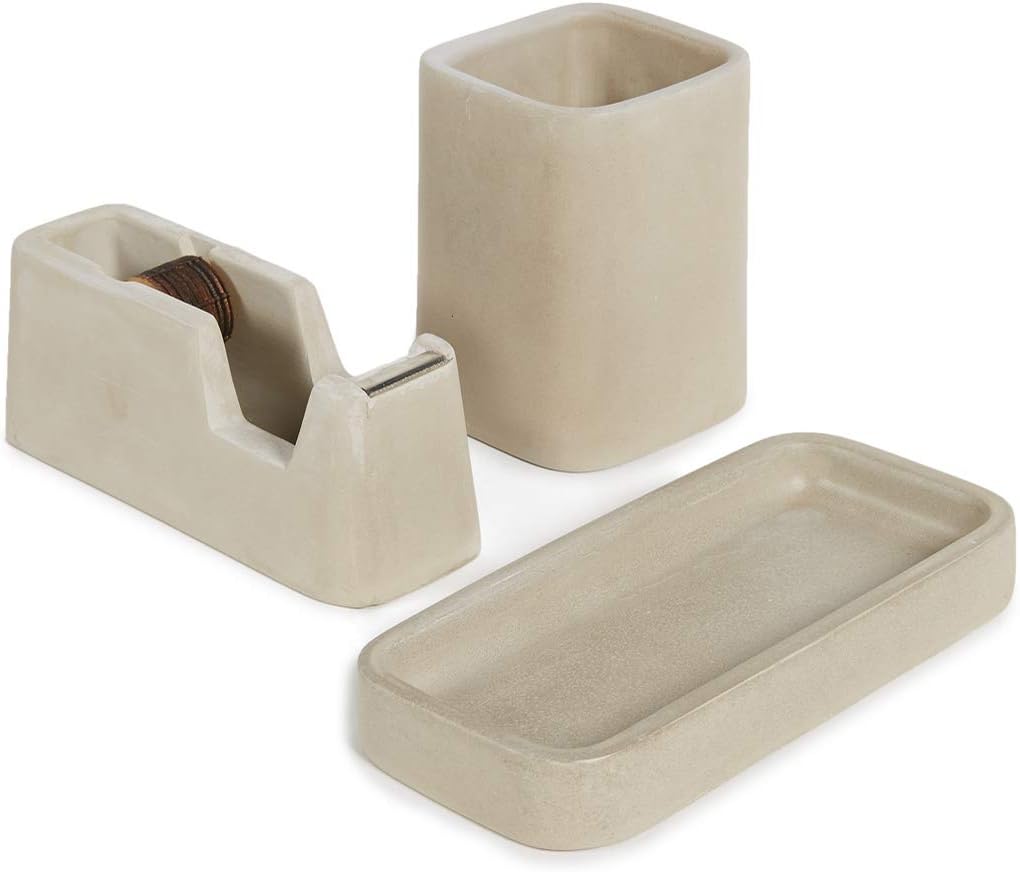
Areaware Concrete Desk Set
Mid-Range · Office utility with material weight
Cast concrete tape dispenser, pencil holder, and tray designed by Magnus Pettersen. Heavy by design, because a desk set with actual weight changes how the desk feels to work at.
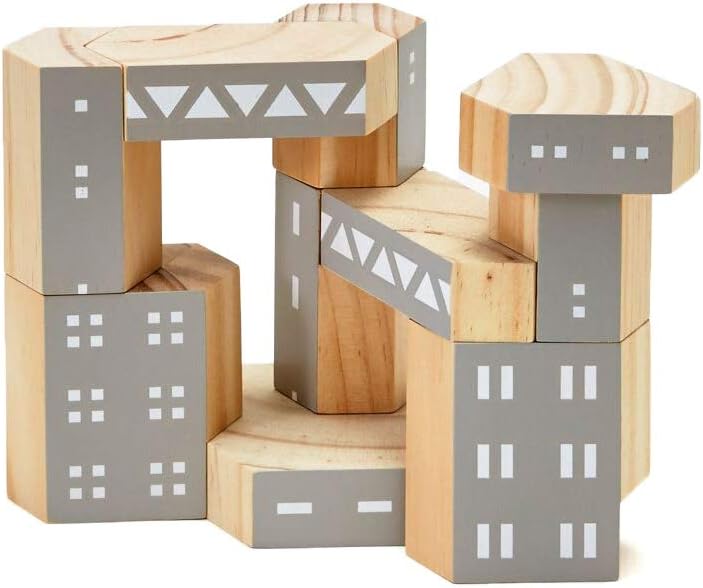
Areaware Blockitecture Brutalism
Mid-Range · Architecture-literate buyers
The same hexagonal system as Habitat in a gray palette that makes the structural logic of the blocks more visible. The right pick for anyone who already owns architecture books.
Areaware Reference Bookend
Budget · Minimalist shelf solution
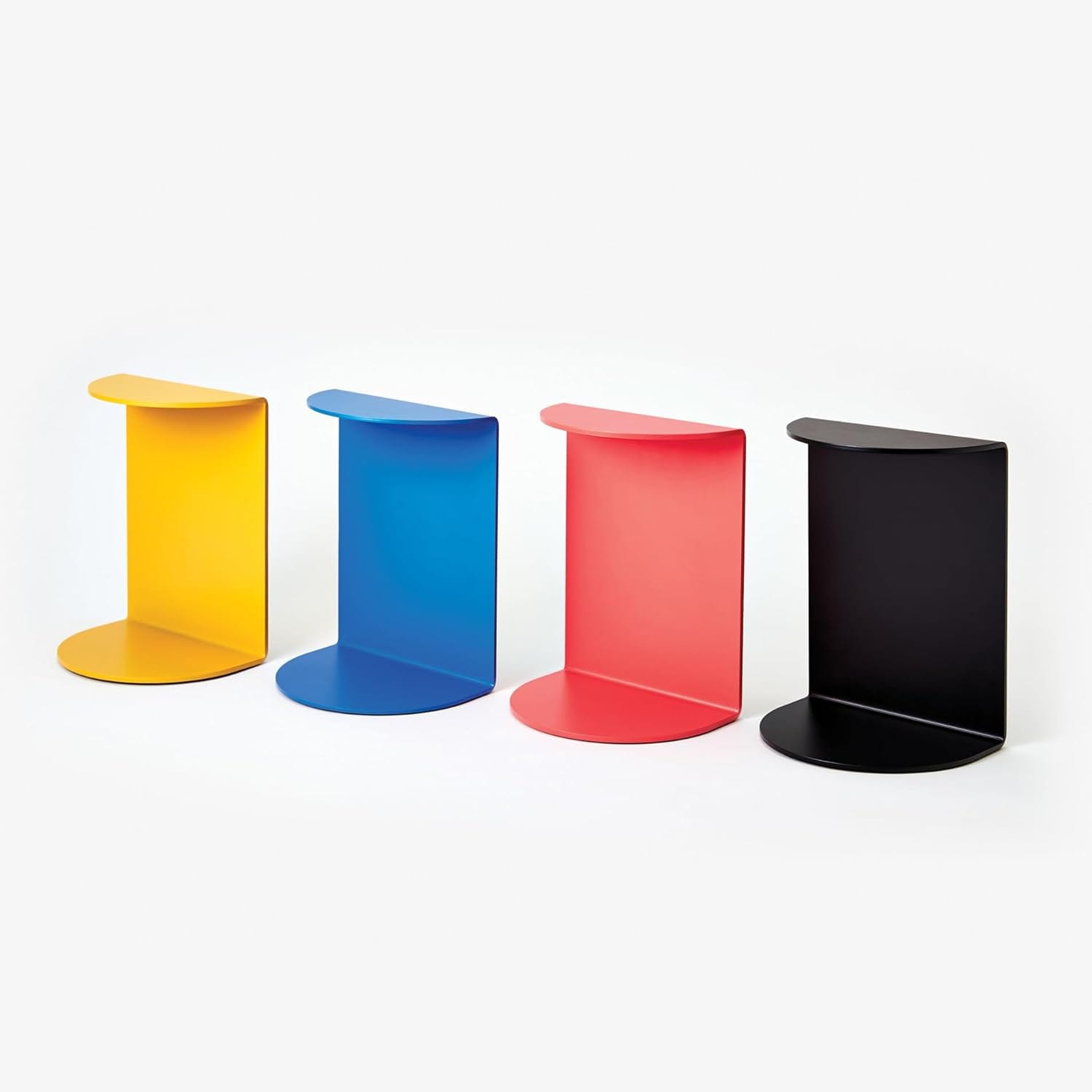
Minimal metal form with a rubber grip base. A bookend that answers the question of what a bookend needs to be without adding anything extra.
Quick Decision Guide
- Best overall (now discontinued): Cubebot Small — poseable, folds to a cube, and lasts for years on a desk without becoming background noise. Sold out on Amazon following Areaware’s 2026 closure.
- Best for your desk right now: Concrete Desk Set: immediate utility with material weight; the tape dispenser alone changes how the desk reads.
- Best for spatial thinkers (now discontinued): Blockitecture Habitat — the stacking physics reward spatial thinking in a way that square-block systems don’t. Sold out on Amazon; Blockitecture Brutalism below remains available.
- Best budget Areaware pick: Reference Bookend: under $30, no decoration, does the job.
- Best gift for an architect or designer: Blockitecture Brutalism: the gray palette makes the form argument legible in a way the Habitat colorway doesn’t.
Full Comparison
| Product | Best For | Price Range | Standout Feature | Link |
|---|---|---|---|---|
| Cubebot Small (Multi) | Best overall | Mid-Range | Folds to perfect cube, holds dozens of poses | Sold out (discontinued) |
| Blockitecture Habitat | Desk display + spatial thinkers | Mid-Range | Hexagonal pine blocks, combinable sets | Sold out (discontinued) |
| Concrete Desk Set | Office utility with material weight | Mid-Range | Cast concrete, functional tape/pencil/tray | Buy on Amazon |
| Blockitecture Brutalism | Architecture-literate buyers | Mid-Range | Gray palette, same combinable system | Buy on Amazon |
| Reference Bookend | Minimalist shelf solution | Budget | Minimal metal, rubber grip, no ornament | Buy on Amazon |
What makes the best Areaware design objects worth buying
Cubebot by David Weeks Studio
Pros:
- Holds dozens of poses; the hardwood-and-elastic construction makes posing it feel like a physical argument
- Folds to a perfect cube when you’re done. The resolution is the design.
- Available in Micro, Small, and Medium sizes; multiple colorways
- Has been on desks since 2010 without becoming irrelevant
Cons:
- Price sits higher than most desk toys; it needs to earn its place
- Not for young children (small parts)
- Color variants are limited compared to competitors
Who it’s for: Anyone who wants a desk object that does something, not one that sits there being decorative.
Why it stands out: The fold-to-cube resolution is what David Weeks Studio designed. It’s a formal argument, not decoration.
Blockitecture Habitat
Pros:
- Hexagonal pine blocks stack with cantilevering; the irregular geometry handles weight distribution better than square modules
- Sets combine for larger builds; 5″×5″ footprint fits any desk
- Made from New Zealand pine with painted facades, light but not cheap-feeling
Cons:
- Pieces can be knocked over; there are no connectors, so physics is doing the work
- Limited color palette in the Habitat set
- Narrow shelf presence if you want height without width
Who it’s for: The person whose desk already has a physical model or a book of architectural drawings on it.
Why it stands out: James Paulius’s hexagonal module handles irregular stacking better than square-grid block systems. The geometry rewards spatial thinking.
Concrete Desk Set by Magnus Pettersen
Pros:
- Real cast concrete; the weight is the point, not a side effect
- Functional: tape dispenser, pencil holder, and tray together cover the working surface
- Magnus Pettersen’s design refuses to be decorative about the material
Cons:
- Heavy and not portable
- Gray only; no colorway options
- Price per piece is high relative to plastic equivalents, which is the entire point but still worth naming
Who it’s for: Someone who wants their desk to look like they made a commitment to working at it.
Why it stands out: The Concrete Desk Set doesn’t approximate concrete the way some objects approximate materials. It is concrete, and it reads that way.
Blockitecture Brutalism
Pros:
- Thematic coherence: the gray palette matches the raw concrete tones of Brutalist architecture
- Same combinable hexagonal system as Habitat; sets mix
- Conversation piece for architecture-literate rooms
Cons:
- Single-color palette limits playful stacking compared to Habitat’s warmer tones
- Narrower audience; the Brutalist reference excludes buyers who want something warmer
Who it’s for: Architects, urban designers, anyone whose bookshelves already hold Zaha Hadid monographs.
Why it stands out: The gray colorway makes the structural logic of the hexagonal module more legible. The blocks look like they have load-bearing intentions.
Reference Bookend
Pros:
- Minimal metal form with a rubber grip base; does the job without announcing itself
- Budget price for an Areaware product
- Works as a single object or in a pair
Cons:
- Sold as a single bookend; you need two for a real shelf, which doubles the cost calculation
- Function is strictly holding books upright, no secondary use
Who it’s for: The minimalist who needs bookends but doesn’t want them to be the first thing someone notices about the shelf.
Why it stands out: It’s the right answer to a problem most bookends over-solve.
Why Areaware objects hold their ground next to real architecture
Areaware was founded in 2005 by Lisa Yashon and Noel Wiggins, who debuted their first collection at NYNow 2005 with a group of independent designers including Harry Allen, Jonas Damon, Ross Menuez, Jason Miller, and Patrick Townsend. Their production model was specific: Areaware handles development, sourcing, marketing, and distribution; the designers make the objects. Products carry the designer’s name alongside the brand’s for a reason. Cubebot is a David Weeks Studio object that Areaware made possible. Blockitecture is James Paulius’s formal argument about the hexagonal module. The Concrete Desk Set is Magnus Pettersen’s position on what material should feel like in a working space.
Areaware closes May 1, 2026. What exists on Amazon is what remains. That’s a practical note, not a eulogy. These objects were always about the thing itself. An Areaware object holds its ground because it has a structural answer to the question of what a desk object is supposed to do. The closing doesn’t change the answer.
Frequently Asked Questions
What is Areaware known for?
Areaware is a Brooklyn-based design studio founded in 2005 that collaborated with independent designers to produce desk objects, toys, and home goods. Their best-known products include the Cubebot (designed by David Weeks Studio), the Blockitecture building block sets (designed by James Paulius), and the Concrete Desk Set (designed by Magnus Pettersen). The brand closes May 1, 2026.
Are Areaware products still available?
Areaware closed on May 1, 2026 and is no longer producing or restocking. A shrinking pool of objects remains on Amazon only while existing stock lasts. As of mid-2026 the Cubebot and Blockitecture Habitat have sold out, while the Concrete Desk Set, Blockitecture Brutalism, and Reference Bookend may still be found. Once current stock clears, these objects will be available secondhand only.
Where can I buy Areaware objects online?
With areaware.com wound down after the May 2026 closure, Amazon is the last reliable source, and only while existing stock lasts. Availability is now partial: the Concrete Desk Set, Blockitecture Brutalism, and Reference Bookend may still be listed, but the Cubebot and Blockitecture Habitat have sold out. Remaining inventory is not being replenished.
Is Cubebot worth it?
The Cubebot was a genuinely good desk object: it holds dozens of poses, folds to a perfect cube, and was made from hardwood with elastic-band joints, in production from 2010 until Areaware closed in 2026. It has now sold out on Amazon and turns up only secondhand. If you find one at a fair price it still earns its cost as a formal object rather than a decorative one.
What is Blockitecture made of?
Blockitecture blocks are made from New Zealand pine, carefully cut into hexagonal modules and painted to suggest building facades. The hexagonal shape is what separates Blockitecture from standard square-grid block sets. The geometry allows cantilevering and irregular stacking that square modules can’t handle. Sets are combinable, so multiple Blockitecture sets build into larger structures.
Who designed the Areaware Concrete Desk Set?
The Areaware Concrete Desk Set was designed by Magnus Pettersen. It consists of three cast concrete pieces: a tape dispenser, a pencil holder, and a small tray. The set is available in gray only. Pettersen’s design uses the weight of cast concrete as the central material statement. The heaviness of the objects on a desk is intentional.

About Joe Post
Joe Post holds an MFA in Art from California Institute of the Arts (CalArts) and has done additional graduate work at the School of the Art Institute of Chicago. He founded Art Design Ideas to write about design as cultural argument — the decisions, contradictions, and assumptions built into the objects we live with.