
The best art books are not the most famous ones. They are the ones where the artist actually explains their thinking, where the reproductions are large enough to read, and where the text has a position. This list is organized by what each book does that others in its category do not.
Our Top Picks
Six books, each selected for a specific function. Two Taschen, two Phaidon, one Yale/NGA catalogue raisonné, one Gallimard exhibition catalog. They are not interchangeable. A catalogue raisonné does something a monograph cannot, and a primary-document book like Warhol on Basquiat does something no critical study can replicate.
- Mark Rothko: The Works on Canvas (Anfam, Yale University Press / NGA, 1998) (Premium): The catalogue raisonné. 708 pages, every canvas in color, including 400 lesser-known works that trace Rothko’s path from surrealism and expressionism into the color-field paintings he’s known for.
- Phaidon The Art Book (Revised 2020 Edition) (Mid-Range): 600+ artists organized A-Z rather than chronologically. The only survey book that forces unexpected adjacencies, putting artists in conversation that no period-based history would place together.
- Yayoi Kusama: Revised & Expanded (Phaidon Contemporary Artists Series, 2017) (Mid-Range): Multiple critical essays from Tatehata, Hoptman, and Kultermann. The only Kusama book that treats her work as an argument rather than as a phenomenon to document.
- Warhol on Basquiat (Taschen, Dayton Hermann) (Premium): Hundreds of never-published Warhol photographs of Basquiat, plus excerpts from the Warhol Diaries and archival material. A primary document of their relationship, not a retrospective critical account.
- Basquiat (Marc Mayer monograph) (Mid-Range): 50 canvas works, 40 works on paper, 2 sculptures, 18 collaborations. The most complete single-artist Basquiat overview without the Taschen price tag.
- Basquiat x Warhol: Paintings 4 Hands (Fondation Louis Vuitton / Gallimard) (Premium): The exhibition catalog from the Fondation Louis Vuitton collaborative show, for readers who want the collaboration itself, not the individual careers.
Quick Decision Guide
- Best one Rothko book: Anfam catalogue raisonné: every canvas, the scholarly record, not an introduction; if you want the introduction first, start with the Taschen Basic Art 2.0 instead.
- Best one survey book: Phaidon The Art Book — A-Z organisation creates adjacencies no other survey does; 600+ artists across all periods.
- Best for understanding contemporary art through one artist’s voice: Warhol on Basquiat — Warhol’s photographs of Basquiat are a primary document; this is what their relationship looked like from inside it.
- Best introduction to a living artist: Kusama Phaidon revised edition — multiple critical essays from different perspectives; published in 2017, so it predates Kusama’s biggest commercial phase but covers the work that made it possible.
- Best affordable entry point: Rothko Basic Art 2.0 (Taschen) — chronological introduction with good reproductions; the right starting point before committing to the catalogue raisonné.
Full Comparison
| Book | Category | Price Range | What It Does Uniquely | Link |
|---|---|---|---|---|
| Rothko: Works on Canvas (Anfam) | Catalogue raisonné | Premium | Every canvas; traces Rothko from surrealism to color-field | View |
| Phaidon The Art Book (2020) | Survey / reference | Mid-Range | A-Z across all periods; forces unexpected adjacencies | View |
| Kusama: Revised & Expanded (Phaidon) | Critical monograph | Mid-Range | Multiple critical essays; treats work as argument | View |
| Warhol on Basquiat (Taschen) | Primary document | Premium | Never-published Warhol photographs; first-hand record | View |
| Basquiat (Marc Mayer) | Monograph | Mid-Range | Most complete single-artist overview; 108 works | View |
| Basquiat x Warhol: 4 Hands (Gallimard) | Exhibition catalog | Premium | The collaboration document; Louis Vuitton Foundation show | View |
What each book actually delivers
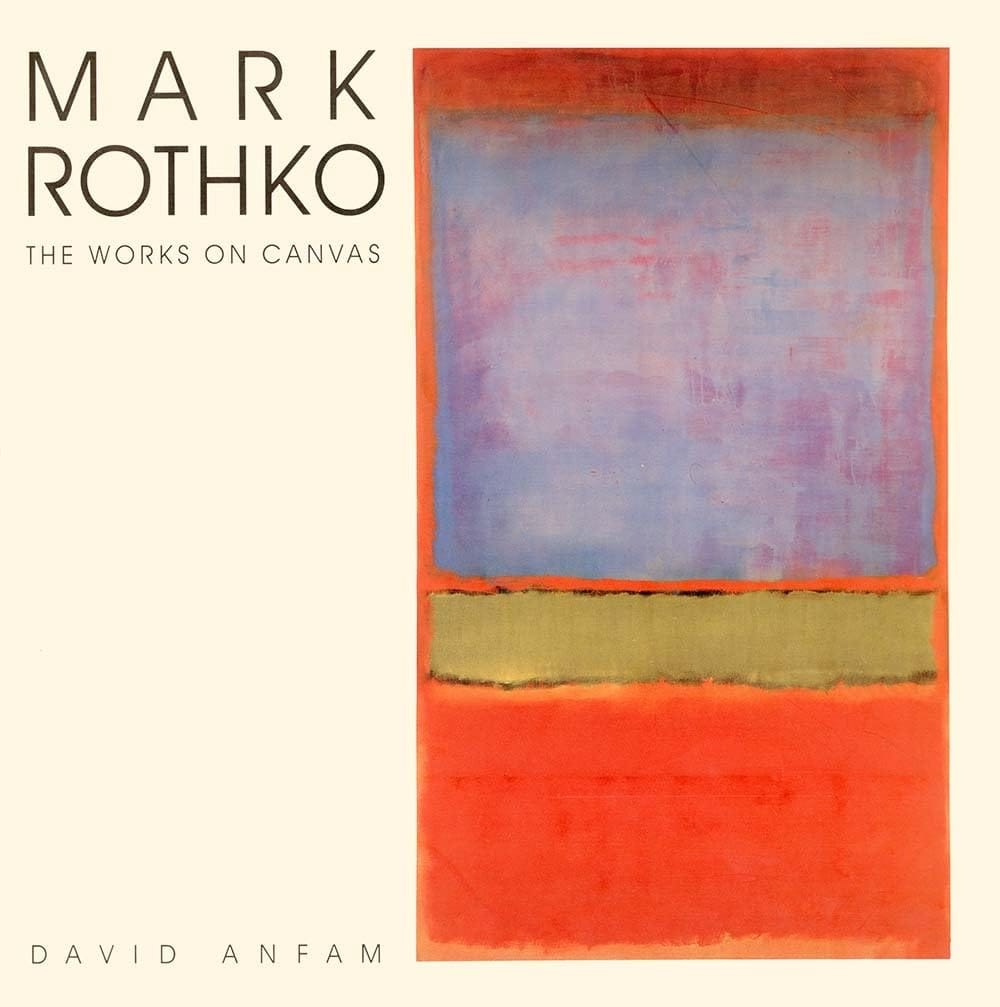
Mark Rothko: The Works on Canvas (Anfam, Yale/NGA, 1998)
Pros:
- 708 pages; catalogue raisonné format means every known canvas is documented in color
- Includes 400 lesser-known works: the realism, expressionism, and surrealism that preceded the color-field paintings; Rothko’s development is traceable work by work
- Published with the National Gallery of Art; this is the scholarly standard
Cons:
- This is a reference work, not a reading experience. It is not the book you open to understand Rothko; it is the book you consult once you already do.
- Price reflects its status; this is not an impulse buy
Who it’s for: Anyone who wants to own the authoritative record of Rothko’s output, from the figurative early work through the Chapel paintings.
Why it stands out: No other Rothko book shows the 400 pre-color-field works in color; without them, the familiar paintings look like a starting point rather than an arrival.
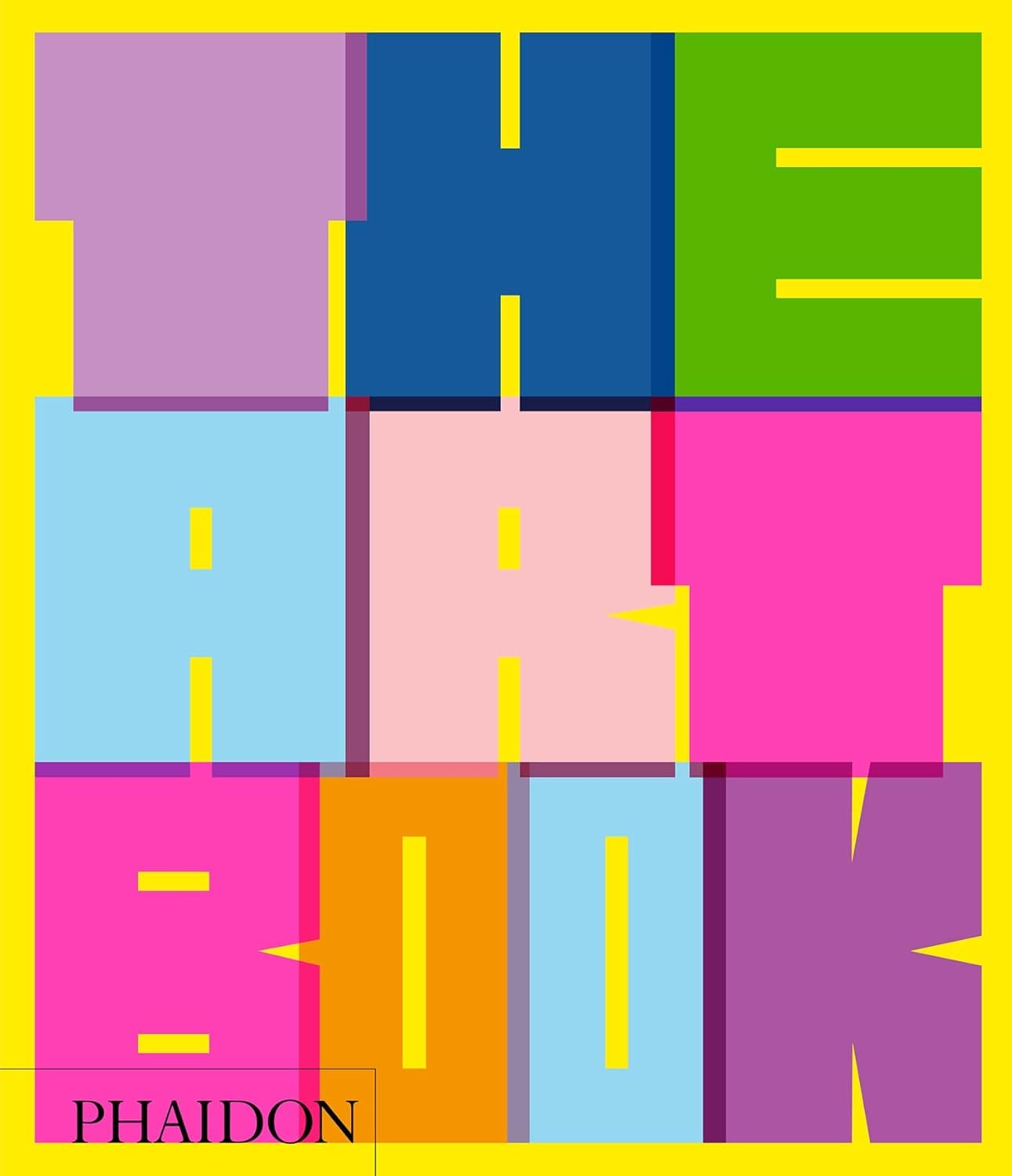
Phaidon The Art Book (Revised 2020 Edition)
Pros:
- 600+ artists organized A-Z: Cézanne next to Chia, Duchamp next to Dürer; the adjacencies are the point
- 40 new artists added in the 2020 revision; available in 20 languages
- The visual logic works: full-page reproductions, one per artist, brief critical text
Cons:
- One page per artist means no depth; this is orientation, not analysis
- A-Z organization can frustrate readers looking for movement context or chronology
Who it’s for: Someone who wants one survey book that covers everything and forces them to encounter artists they wouldn’t have sought out.
Why it stands out: The A-Z structure is the editorial position. It refuses to privilege any period, movement, or geography, which is itself an argument about how to look at art history.
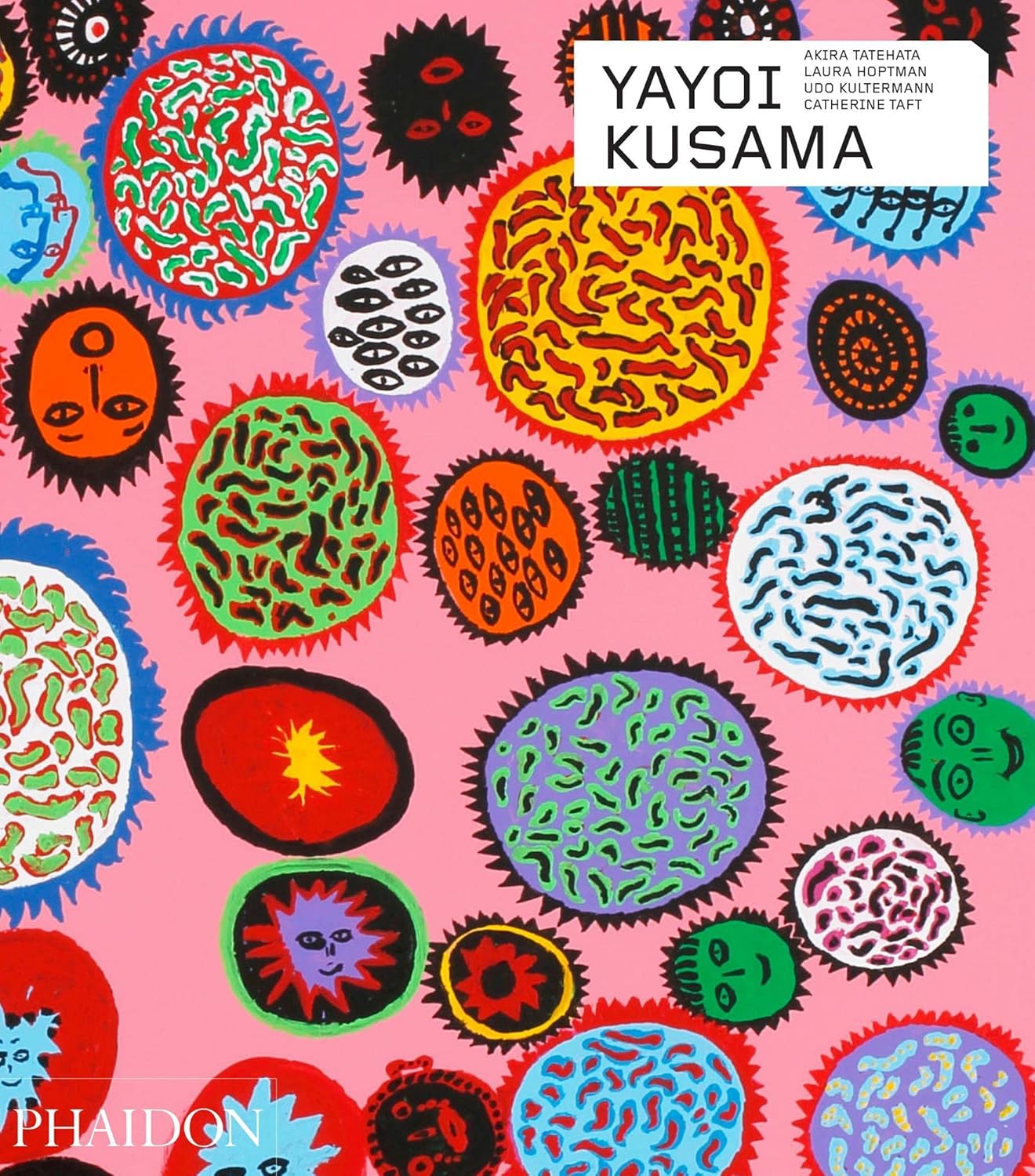
Yayoi Kusama: Revised & Expanded (Phaidon, 2017)
Pros:
- Multiple critical essays from Akira Tatehata, Laura Hoptman, and Udo Kultermann — different perspectives on the same body of work
- Revised and expanded from the 2000 original; covers the work up to 2017
- Treats obsession, repetition, and infinity nets as formal arguments, not as biographical curiosities
Cons:
- Published before Kusama’s biggest commercial phase (2017 onwards); the Infinity Rooms phenomenon that turned her into a global mass-culture figure is not in this book
- The institutional perspective, with multiple essays and Phaidon’s editorial framing, can underweight the commercial and populist dimension of her later career
Who it’s for: Someone who wants to understand Kusama’s work as an artistic argument, before the museum-queue phenomenon replaced the art conversation.
Why it stands out: It is the only Kusama book with multiple authors taking distinct critical positions; every other option is a single perspective or a catalog.
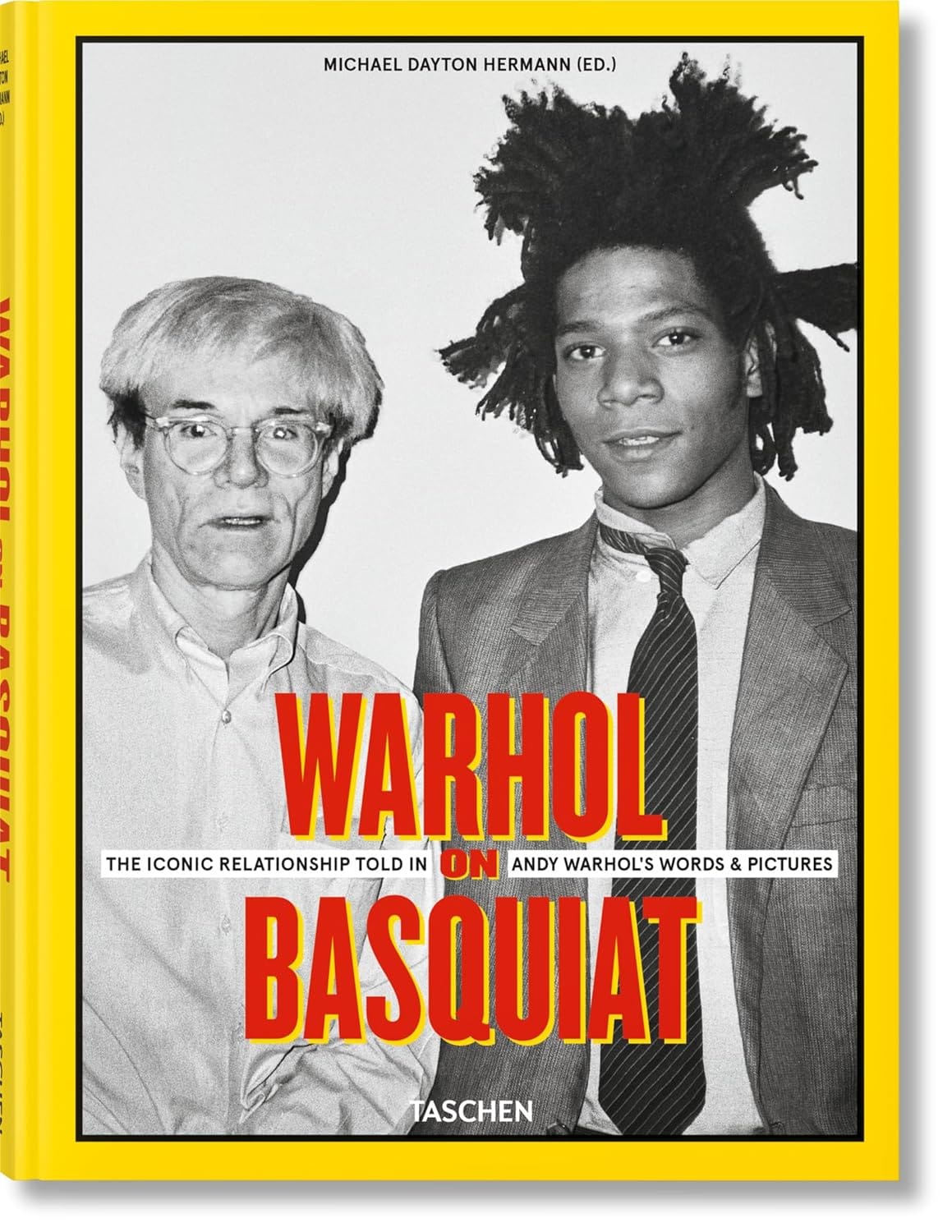
Warhol on Basquiat (Taschen, Dayton Hermann)
Pros:
- Hundreds of never-before-published Warhol photographs of Basquiat — the photographic record of their relationship
- Warhol Diaries excerpts, archival material, and collaborative artworks; this is primary source territory
- Taschen production quality is at its best here — the photographs justify the format
Cons:
- This is not a critical study; it does not analyze the work or place it in art history with any rigor
- The Taschen framing emphasizes the relationship’s mythology; a reader looking for critical distance won’t find it here
Who it’s for: Anyone who wants to understand what Warhol and Basquiat actually were to each other, as opposed to what the art world subsequently decided they meant.
Why it stands out: The photographs are the argument. Warhol photographed Basquiat obsessively during the years of their collaboration; this is what he saw.
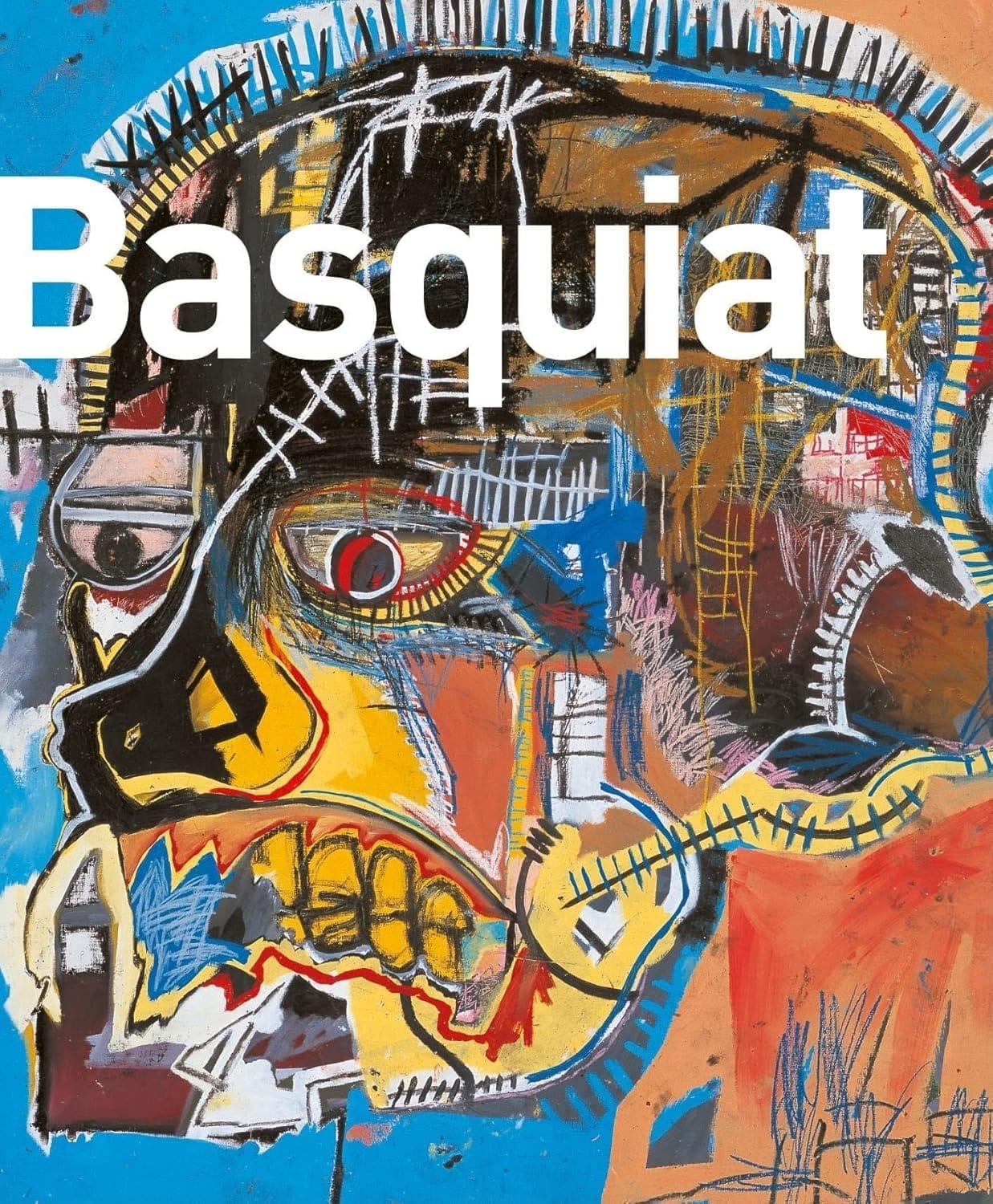
Basquiat (Marc Mayer monograph)
Pros:
- 50 canvas works, 40 works on paper, 2 sculptures, 18 collaborations (15 with Warhol) — the most complete single-artist overview available at this price point
- Critical text is described as “serious and generous”; treats Basquiat as an artist with a practice, not as a cultural phenomenon
- Smaller and less expensive than the Taschen volume
Cons:
- Smaller scope than the Taschen Warhol on Basquiat volume; fewer reproductions, less archival material
- Does not have the primary-document quality that makes the Taschen book irreplaceable
Who it’s for: Someone who wants a thorough critical overview of Basquiat’s output without paying Taschen prices or getting the Warhol relationship as the primary frame.
Why it stands out: The collaboration section — 18 works including 15 with Warhol — gives the Warhol relationship its proportionate place within a larger practice.
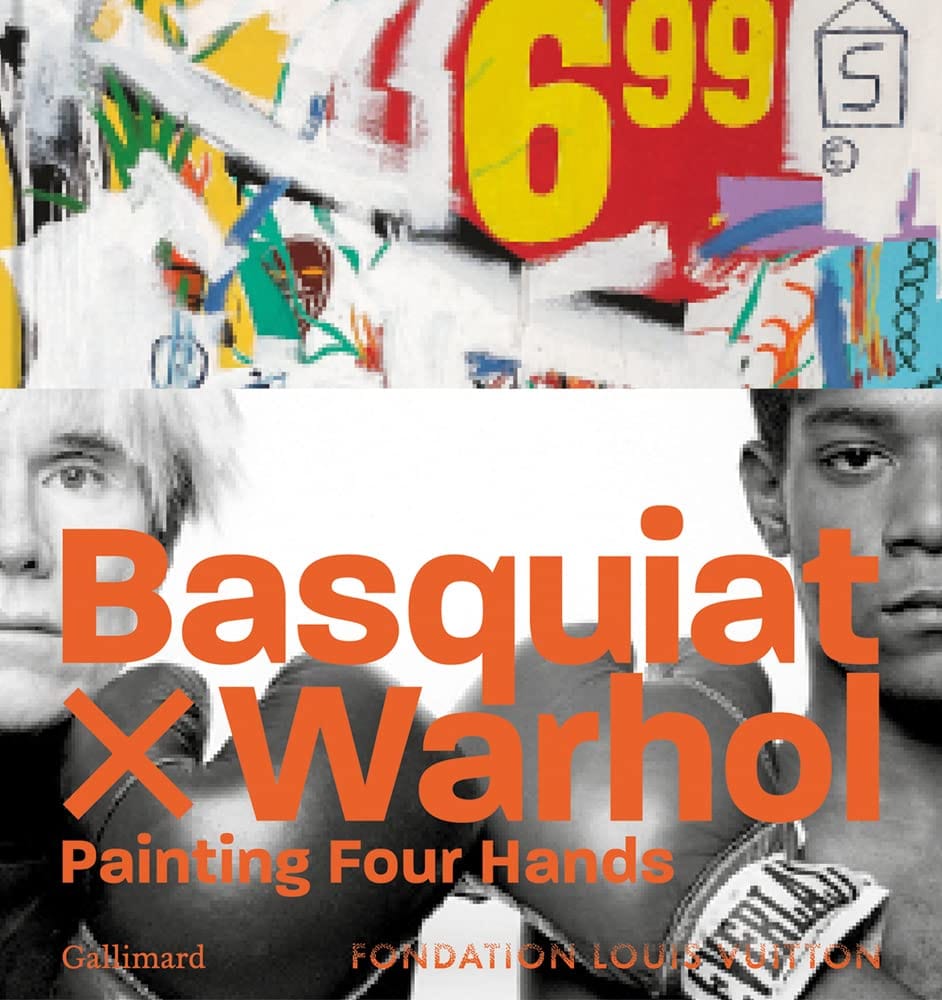
Basquiat x Warhol: Paintings 4 Hands (Fondation Louis Vuitton / Gallimard)
Pros:
- Exhibition catalog from the Fondation Louis Vuitton show — the document for the collaboration as a distinct body of work
- Published by Gallimard with the Fondation Louis Vuitton; institutional credibility and production quality
- Available on Amazon
Cons:
- An exhibition catalog, not a monograph; the scope is the collaboration, not either artist’s career
- Published for a specific show; readers who saw the exhibition will get more from it than those who didn’t
Who it’s for: Readers who want the collaborative paintings — the “4 Hands” works — treated as a body of work in their own right, not as a footnote to either individual career.
Why it stands out: The Fondation Louis Vuitton show assembled works that have not been shown together since; this is the record.
What separates the best art books from coffee table placeholders
Taschen and Phaidon occupy different positions in the art book market. Taschen, founded in Cologne in 1980, launched its Basic Art Series in 1985: affordable introductions ($10–$40) with high production quality and accessible writing. Phaidon, with over 1,500 titles in print across 100+ countries, tends toward greater critical rigor. The difference between them is consistent: Taschen production is strong; the writing in Phaidon’s art history titles tends to be more analytically serious.
A catalogue raisonné is not a monograph. The Anfam Rothko is a scholarly record: every canvas documented, provenance tracked, lesser works included alongside the famous ones. A monograph like the Marc Mayer Basquiat makes an editorial argument about which works matter and why. A survey book like the Phaidon Art Book refuses that argument entirely and presents everything at equal weight. An exhibition catalog like Basquiat x Warhol: Paintings 4 Hands documents a specific show. Its scope ends at the gallery walls.
The books worth keeping are the ones that have a function that no other book in the category performs. The Anfam Rothko is irreplaceable because it is the catalogue raisonné. Warhol on Basquiat is irreplaceable because the photographs are primary source material. The Phaidon Kusama is worth keeping because no other Kusama book has multiple authors in critical dialogue. The books not worth keeping are the ones doing something another book already does better.
Frequently Asked Questions
What is the difference between a Taschen and a Phaidon art book?
Taschen prioritizes production quality and accessibility. Its Basic Art Series offers affordable introductions with good reproductions and readable text. Phaidon prioritizes critical depth and scholarly rigor; its art history books tend toward more serious analysis. For someone starting with an artist, a Taschen introduction is the right first book. For someone who wants the critical record, Phaidon is the more serious choice. Some topics demand both: the Taschen Rothko Basic Art 2.0 is a good introduction; the Anfam catalogue raisonné (Yale, not Taschen) is the reference standard.
Are art monographs worth buying if I can find the images online?
The reproductions are only one reason to own a monograph. A well-made book with 270 GSM paper, accurate color profiles, and large format shows a painting differently than a screen does. More importantly, the critical text in a good monograph does something image search cannot: it places the work in an argument, traces the development, identifies what changed and why. The Anfam Rothko catalogue raisonné includes 400 pre-color-field works that tell you why the famous paintings look the way they do. That context does not exist as image search results.
Which art book is best for someone who knows nothing about modern art?
Start with the Phaidon Art Book (2020 edition) for range — 600+ artists, A-Z, no assumed knowledge. For a single artist as an entry point, the Taschen Basic Art series (including Rothko Basic Art 2.0) provides affordable, accessible introductions with good reproductions. Avoid catalogue raisonnés at the start — they assume you already know the work and want the complete record; they are reference books, not introductions.
How do I choose between a survey book and a single-artist monograph?
A survey book is for orientation — it tells you what exists and where things fit in relation to each other. A single-artist monograph is for depth — it assumes you already know who the artist is and want to understand the work. If you don’t know where to start, begin with the Phaidon Art Book. Once you find the artists you want to spend time with, the monograph is the next step. The catalogue raisonné comes after that, when you want the full record.
Are exhibition catalogs worth keeping after the show closes?
Some are, some are not. An exhibition catalog is worth keeping when it assembled works that are unlikely to be shown together again, when the critical essays are substantial and not just show notes, and when the reproductions are at a quality that makes the physical book irreplaceable. The Basquiat x Warhol: Paintings 4 Hands catalog from the Fondation Louis Vuitton meets all three conditions. A catalog for a traveling group show with brief wall text entries does not.
Where can I find the best art books at a reasonable price?
Amazon carries most in-print titles and surfaces out-of-print copies through third-party sellers — the six books listed here are all available with confirmed Amazon listings. For new Taschen and Phaidon titles, Amazon and the publishers’ own sites are comparable. For out-of-print or limited-edition titles, AbeBooks and specialist dealers are more reliable than general Amazon search. The Anfam Rothko catalogue raisonné appears in used condition at significant discount — the scholarship has not dated, and the used copies are functionally identical to new.
For the broader context of this work, see the Design Legends hub — profiles of the designers and movements that shaped modern design. For the Pop Art context behind several of these picks, see Pop Art design culture and the profile of Karen Kilimnik.

About Zoe Post
Zoe Post holds a BFA and a Master of Architecture from the School of the Art Institute of Chicago. She now works as a product marketing leader at an architectural product design firm, bringing hands-on industry perspective to everything she writes. At ADI she covers contemporary artists, textile and pattern design, and the design objects that sit at the boundary of art and function.