
The best Alessi kitchen objects apply the same design rigor found in architecture and sculpture to tools you actually use. These six pieces (the 9091 kettle, Juicy Salif juicer, Anna G corkscrew, Mami pots, and two lesser-known gems) were made to function, but also to argue a position: that everyday objects deserve the attention usually reserved for art.
Our Top Picks
These five objects were selected because each one makes a specific argument that the others don’t. Not because they’re the most expensive or the most famous, but because each one does something a generic kitchen object doesn’t. The Mami set is the only pick that earns its place purely on performance; the rest earn it on performance plus something harder to name.
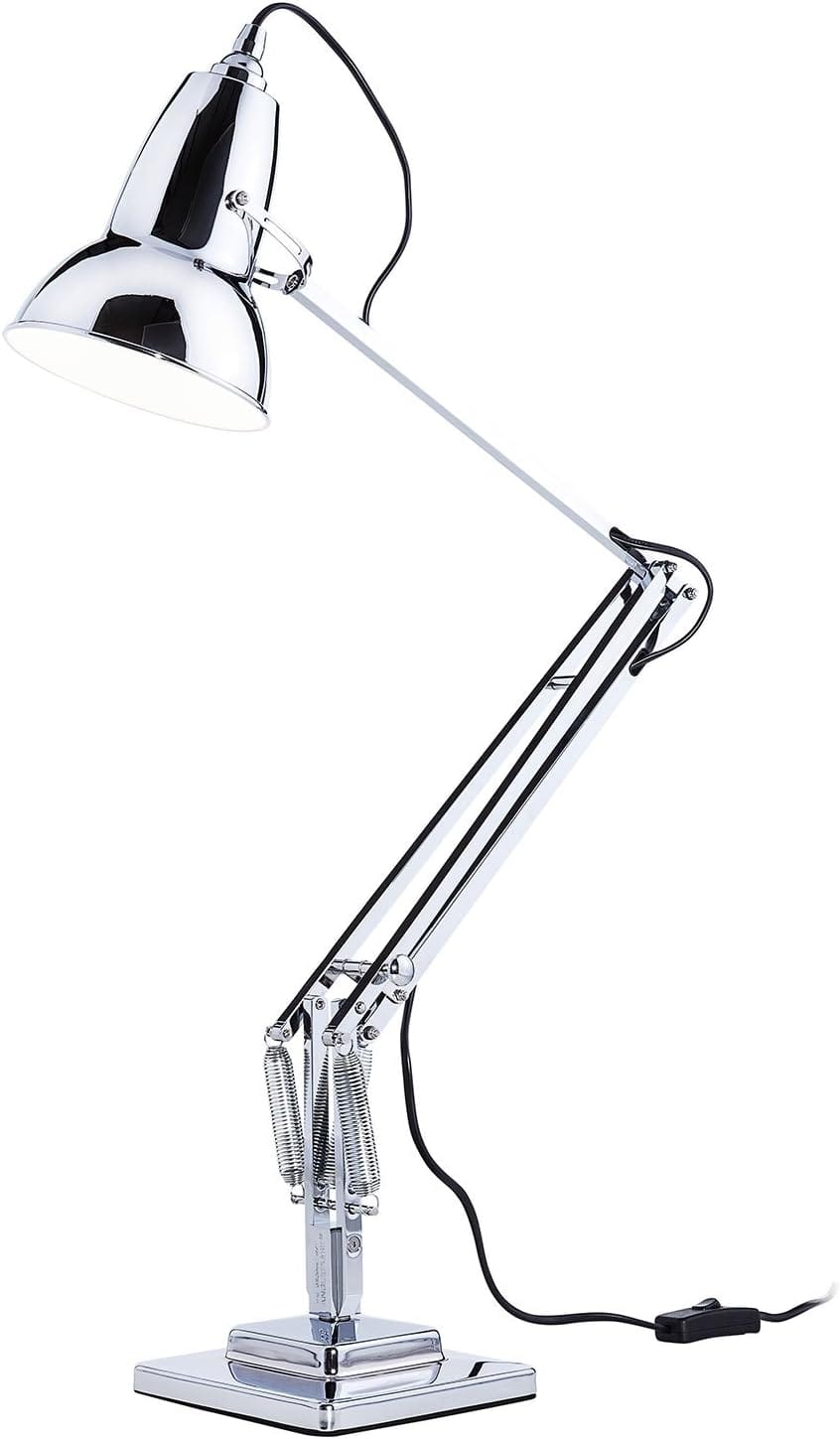
Alessi 9091 Kettle by Richard Sapper
Price range: Premium ($180–220)
The 1983 kettle that introduced multi-sensory design to the kitchen. Two-note brass whistle tuned to mi and si. The single most historically significant object Alessi has ever made.
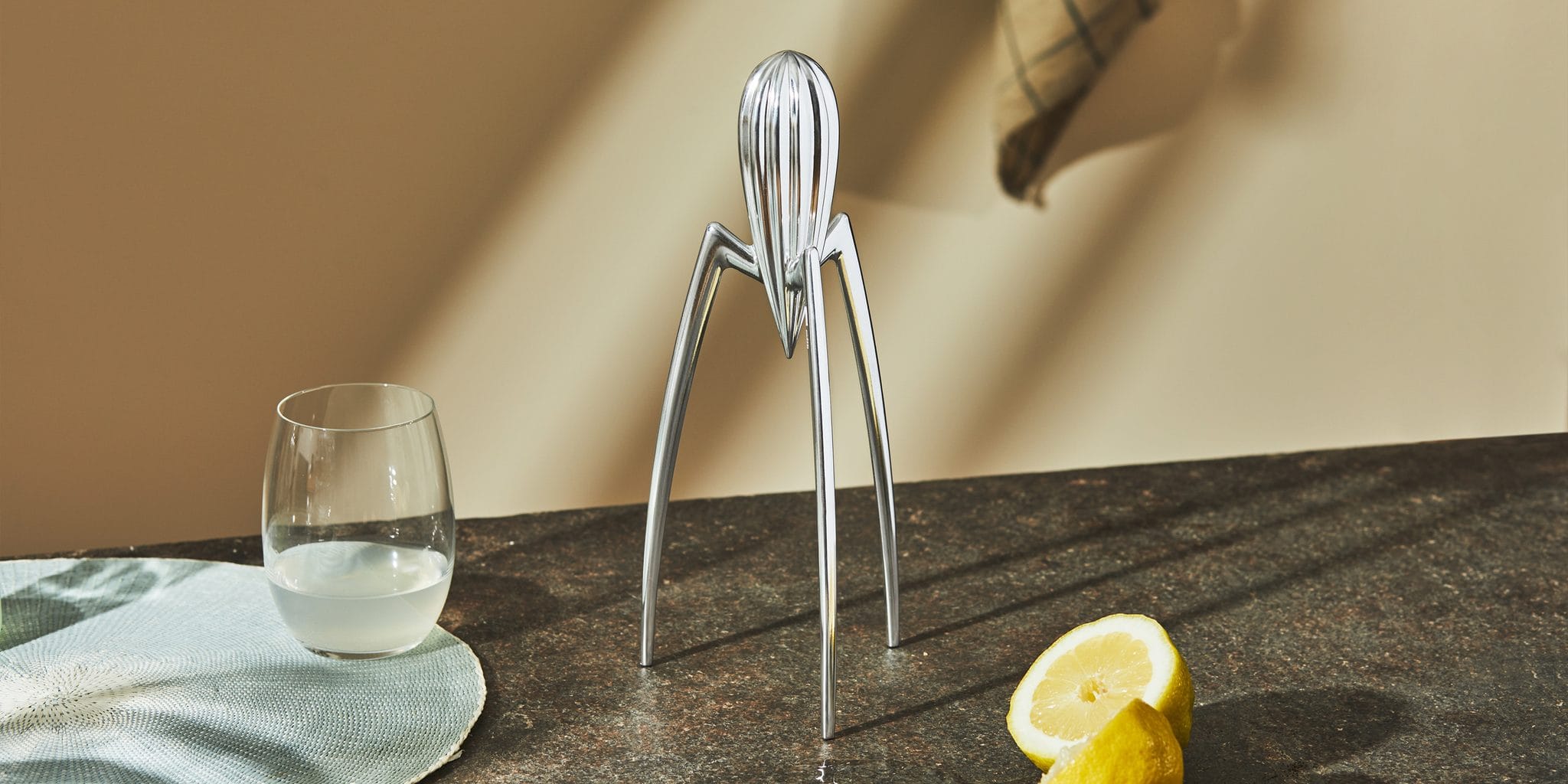
Alessi Juicy Salif Citrus Squeezer by Philippe Starck
Price range: Mid-Range ($95–110)
Cast polished aluminum, 29cm high, in MoMA’s permanent collection. Drips every time you use it, which Starck considers irrelevant. Designed to start conversations, not to juice lemons.
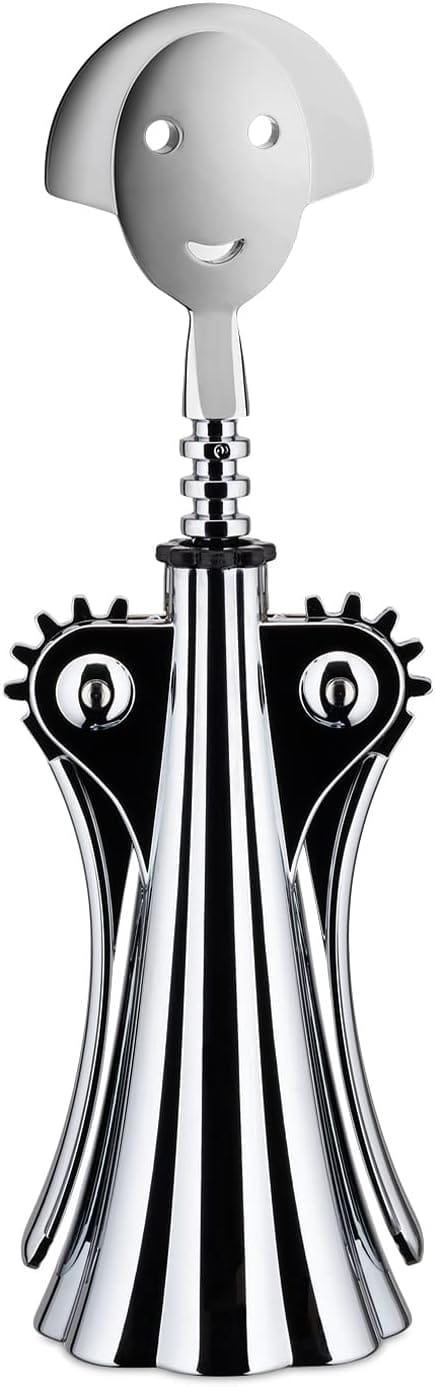
Alessi Anna G Corkscrew by Alessandro Mendini
Price range: Budget ($25–35)
A figural corkscrew from 1994 that launched the entire Anna family. Mendini gave it a face and a dress. Over 1.5 million sold. The most accessible entry point into Alessi’s design vocabulary.
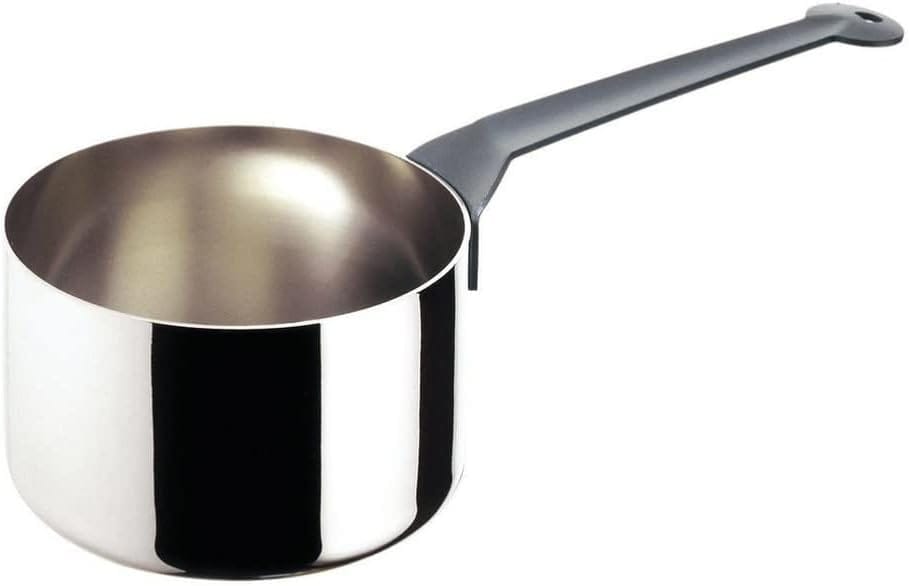
Alessi Mami Cookware Set by Stefano Giovannoni
Price range: Premium
18/10 stainless steel with induction-compatible base. The one Alessi kitchen object that performs at a professional level first and reads as a design object second.
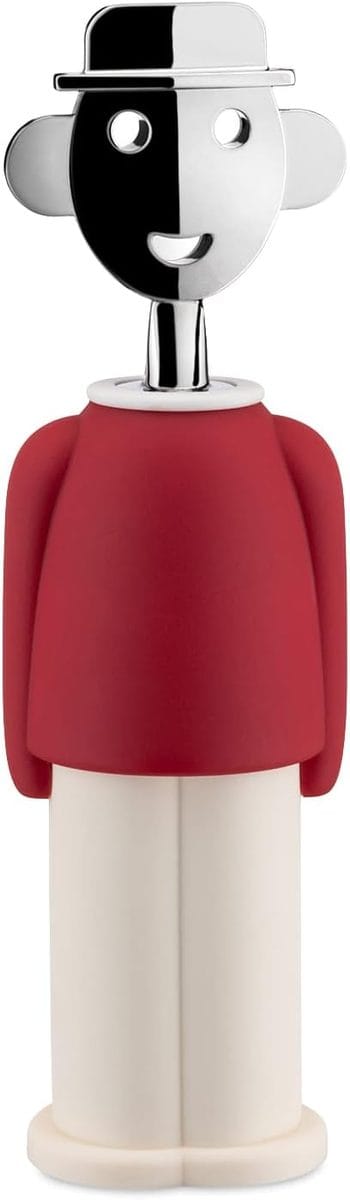
Alessi Alessandro M. Corkscrew by Alessandro Mendini
Price range: Budget–Mid (under $100)
Mendini’s self-portrait as a corkscrew, made in 2003 as the companion to Anna G: same lever-arm mechanism, same face, a smiling man in a bowler hat instead of a woman in a dress. Chrome-plated zamak and coloured resin, about 21 cm tall. Fewer people know it than the Anna G, which is the point of owning it.
Quick Decision Guide
- Best overall: Alessi 9091 Kettle — for buyers who want the single most historically significant Alessi kitchen object and are prepared to pay for it.
- Best for conversation: Alessi Juicy Salif — for people who want a piece that will prompt guests to ask “what is that?” before they ask whether it actually works.
- Best entry point: Alessi Anna G Corkscrew — under $80, the lowest-risk way to experience Alessi’s design logic without committing to a $400 kettle.
- Best for the whole kitchen: Alessi Mami 7-Piece Set — the one pick if you actually cook and want Alessi design performing rather than just existing on a shelf.
- Best for gift-giving: Alessi Alessandro M. Corkscrew — explains itself instantly, under $70, and gives the recipient the Mendini piece most people have not seen: the designer’s own face on the companion to Anna G.
Full Comparison
| Product | Designer | Year | Best For | Price Range | Stand-Out Feature | Link |
|---|---|---|---|---|---|---|
| 9091 Kettle | Richard Sapper | 1983 | Tea ritual / gift | Premium | Two-note melodic whistle (mi + si) | Buy on Amazon |
| Juicy Salif | Philippe Starck | 1990 | Display + occasional use | Mid-Range | Museum-collection form that drips by design | Buy on Amazon |
| Anna G Corkscrew | Alessandro Mendini | 1994 | Daily use + gift | Mid-Range | Anthropomorphic ballerina mechanism | Buy on Amazon |
| Mami 7-Piece Set | Stefano Giovannoni | 2000s | Serious cooking | Premium | Induction-compatible + sculptural form | Buy on Amazon |
| Alessandro M. Corkscrew | Alessandro Mendini | 2003 | Gift / daily use | Budget–Mid | Zamak and resin, Mendini self-portrait, Anna G companion | Buy on Amazon |
What each object gets right, and where it falls short
The 9091 kettle: the one that changed what a kettle could be
Pros:
- The whistle produces two distinct notes (mi and si). Sapper worked with a Black Forest tuning-pipe maker to get this right, and you can hear the difference from another room.
- Stainless steel body; the FM variant works on induction cooktops
- In the permanent design collections of multiple museums; value holds over time
- The form reads as architectural. It sits on a stovetop the way a well-designed building sits on a street.
Cons:
- $400+ is a significant price for a stovetop kettle, regardless of design pedigree
- The handle material is less durable than the steel body over decades of daily use; check condition carefully on pre-owned pieces
Who it’s for: Buyers who want the object that started Alessi’s multi-sensory design argument, and who make tea or coffee every morning and will hear that whistle hundreds of times.
Why it stands out: No other kettle on the market was designed around what it sounds like.
Juicy Salif: the squeezer that was never really about lemons
Pros:
- Cast polished aluminum; the surface and weight feel nothing like kitchen-store alternatives
- In MoMA, the Metropolitan Museum, and the V&A, the three most cited design museums in the world
- The form is genuinely singular; nothing else looks like this
- Initiates conversation about design, function, and the Alessi philosophy in a way that a conventional juicer never would
Cons:
- Drips when you use it. The juice runs down the legs rather than into the container.
- No seed filter; seeds end up in the glass
- Starck said it wasn’t designed to squeeze lemons efficiently; take him at his word and treat it accordingly
Who it’s for: Someone who wants a design object that is also a citrus squeezer on occasion, not someone who juices every morning and needs it to work reliably.
Why it stands out: The drip problem isn’t a manufacturing defect; it’s the most honest illustration of what happens when you commission a design piece from an architect with no brief attached.
Anna G: when a corkscrew becomes a character
Pros:
- The mechanism actually works. Arms rise and fall cleanly, and the ballerina form makes the operation intuitive rather than mechanical.
- Available in multiple colors; the form holds up across the range
- Under $80; the most accessible Alessi piece with a documented design story behind it
- Over 1.5 million units sold, which means it works well enough for people to keep buying it
Cons:
- Made from zamak (zinc alloy), not stainless steel. Less durable than premium corkscrews; handle with some care.
- The fame of the piece means you’ll see it everywhere, which takes something away from the owning-an-object-others-don’t-know feeling
Who it’s for: Someone new to Alessi who wants to spend under $80 on a piece that has real design substance behind it and actually opens wine bottles.
Why it stands out: Mendini made a corkscrew that reads as a portrait. The mechanism and the form are the same gesture.
Mami: the argument that Alessi can cook
Pros:
- 18/10 stainless steel with a magnetic base. Works on induction, gas, and electric.
- The 7-piece set covers the daily cooking range: stockpot, casserole, saucepan, three lids
- The form reads as sculptural without sacrificing handle ergonomics or lid fit
- The one Alessi kitchen object that performs at a professional level without requiring any adjustment to how you cook
Cons:
- Premium price for a cookware set. You’re paying for the design provenance as well as the materials, and serious home cooks can find equivalent performance at lower cost.
- May feel over-designed if you want cookware that disappears into the kitchen rather than making a statement
Who it’s for: Someone who cooks seriously and also cares that the pots on the shelf look like something Giovannoni designed rather than something from a kitchen supply catalog.
Why it stands out: Every other Alessi kitchen object asks you to accept some trade-off with function; the Mami set doesn’t.
Alessandro M.: Mendini’s other anthropomorphic object
Pros:
- The same lever mechanism as Anna G, in chrome-plated zamak with a resin body; it works as a corkscrew, which not every design corkscrew does
- The same Mendini design language as Anna G, at a lower price point (about $62 against $100) and with less market saturation
- Four colourways (red, pink, yellow, light blue); 560-plus reviews at 4.4 stars, so the mechanism is proven
- A giftable object that tells the recipient something specific about the giver’s design literacy
Cons:
- Less documented than Anna G. The self-portrait story is in Alessi’s own catalogue but rarely elsewhere, which matters if you are buying it as a conversation piece.
- Less collectible status than Anna G; it will not carry the same recognition on a shelf
Who it’s for: Someone who already owns the Anna G and wants the companion piece, or a buyer who wants a Mendini object that fewer people know.
Why it stands out: It makes the Anna G’s design logic legible. Once the woman and the man stand together, the anthropomorphic vocabulary becomes a system rather than a trick, and the pair is the gift.
What makes the best Alessi kitchen objects worth the price
Alberto Alessi calls his products “amphibious.” They function in a kitchen and read as art objects in a living room, which sounds like a marketing claim until you look at how this position was built. The Tea & Coffee Piazza in 1983 brought eleven architects to Alessi to reimagine tea and coffee sets as postmodern city squares; the New York Times credited that project with creating the designer kitchenware market category. The 9091 kettle came the same year, and it wasn’t an accident.
Before the 1983 pivot, Alessi tried straight art production: a collaboration with Salvador Dalí that failed because pressed-steel manufacturing couldn’t execute the prototypes. Alberto Alessi’s conclusion was that the factory’s constraints were the point. The discipline of making something that actually works, at scale, in a factory, was what separated Alessi from a sculpture studio. The pieces in this guide are the result of that position: objects made by named architects and designers, manufactured to function, priced to reflect that the design labor is real.
For more on where Alessi’s design philosophy came from, see the full profile at Alessi: Design as Art.
Further Reading
These two books are the primary sources for understanding why Alessi objects exist. The design decisions, the failed experiments, the factory constraints that shaped the product line: all of it is documented here.
- Alberto Alessi, The Dream Factory: Alessi Since 1921 (Rizzoli, 2016 updated ed.): Alberto Alessi’s own account of the factory’s transformation from metalware producer to design institution. The primary source for understanding the “amphibious” object concept and why the Tea & Coffee Piazza mattered.
- Alberto Alessi, Alessi: The Design Factory (Academy Editions, 1994): The earlier monograph, covering the formation of Alessi’s design philosophy in the 1970s and 80s with more specific project documentation than the Dream Factory volume. Worth owning if you want the Dalí collaboration story and the Tea & Coffee Piazza in detail.
Frequently Asked Questions
What is the most famous Alessi kitchen object?
It depends on the definition. The Michael Graves 9093 kettle (1985) is the highest-selling single Alessi product by unit count, with over 1.5 million sold. The Juicy Salif is the most cited by design institutions: it’s in MoMA, the Metropolitan Museum, and the V&A. The 9091 Sapper kettle is the one design critics consistently name as the most significant. No single answer covers all three measures.
Are Alessi products actually functional or just decorative?
Most function well. The Anna G corkscrew opens wine bottles reliably. The Mami cookware is fully professional-grade. The 9091 kettle boils water and whistles musically. The Juicy Salif is the exception: it can squeeze a lemon if you’re careful, but it drips, doesn’t filter seeds, and Starck said publicly that it was designed to start conversations rather than juice citrus efficiently. Know which category you’re buying before you spend the money.
Why are Alessi kitchen objects so expensive?
Each object is designed by a named architect or designer working under a real commission, not an in-house product development team. The manufacturing uses high-grade materials (18/10 stainless steel, cast polished aluminum, brass components). Production runs are small compared to mass-market cookware. And the museum-collection status of multiple pieces reflects genuine cultural recognition, not marketing. The premium covers real design and material costs.
What designers has Alessi worked with?
Over 300 collaborations to date. The most cited include Philippe Starck, Alessandro Mendini, Richard Sapper, Ettore Sottsass, Michael Graves, Achille Castiglioni, Aldo Rossi, Zaha Hadid, Toyo Ito, Jean Nouvel, and the Fratelli Campana. Alberto Alessi positioned the factory as an “industrial research lab” after taking over around 1970. The designer collaboration model was the mechanism, not a marketing decision.
Where can I buy Alessi kitchen objects?
Amazon carries the full range (affiliate links throughout this article). The US Alessi site at us.alessi.com sells direct. Specialty design retailers (Design Within Reach, MoMA Design Store, and independent design shops) carry selected pieces. Pricing is generally consistent across channels; used pieces on resale platforms are worth checking for the 9091 and Juicy Salif specifically.
Is the Juicy Salif actually good at squeezing lemons?
Technically yes. The three-leg form does function as a citrus squeezer. In practice: it drips rather than channeling juice cleanly, it has no seed filter, and Starck himself said it was designed to start conversations rather than juice efficiently. If you need a reliable citrus squeezer, buy a different one. If you want a design object that also squeezes lemons on occasion, the Juicy Salif is the correct choice.
For the broader context of this work, see the Design Brands & Ateliers hub — a guide to the brands and studios driving contemporary design.

About Zoe Post
Zoe Post holds a BFA and a Master of Architecture from the School of the Art Institute of Chicago. She now works as a product marketing leader at an architectural product design firm, bringing hands-on industry perspective to everything she writes. At ADI she covers contemporary artists, textile and pattern design, and the design objects that sit at the boundary of art and function.