
What happened to Leonardo’s horse? It was never cast. Ludovico Sforza commissioned the Gran Cavallo from Leonardo da Vinci in 1482 as a bronze monument to his father, Francesco Sforza. Leonardo finished a full-size clay model by 1493, but in 1494 the 70 tons of bronze set aside for it went to make cannon, and French troops who took Milan in 1499 used the model for target practice. Nina Akamu’s 24-foot bronzes of 1999 now stand in Milan and Grand Rapids.
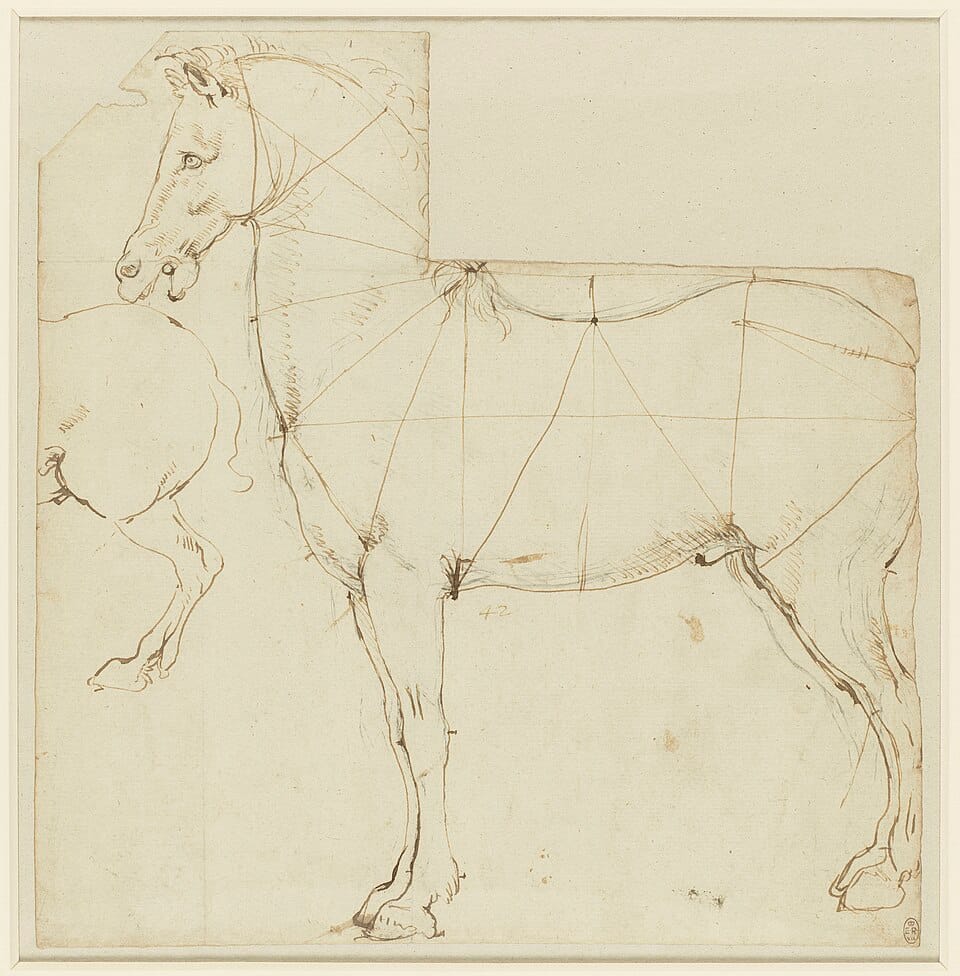
The Gran Cavallo was never a painting. What survives of it on paper are Leonardo’s preparatory horse drawings, most of them in the Royal Collection at Windsor, and those sheets are usually what people are looking at when they search for it.
Leonardo da Vinci sculptor identity is buried under his paintings, yet he spent seventeen years on a single commission: the Gran Cavallo, a bronze horse monument for Francesco Sforza. He designed two equestrian monuments, neither ever cast in his lifetime, and the best-known modern outcome of that sculptural ambition is The American Horse in Grand Rapids. His Codex Madrid casting notes remain the most technically sophisticated sculptural documents of the Renaissance.
What It Meant to Train as a Sculptor Under Verrocchio
The standard account of Leonardo positions him primarily as a painter who dabbled in sculpture. The historical record says something different. When Leonardo entered Andrea del Verrocchio’s workshop in Florence around 1466, at approximately fourteen years old, he entered a sculptor’s shop. Verrocchio was not primarily a painter. He was Florence’s leading sculptor, and the workshop that trained Leonardo covered metallurgy, plaster casting, bronze technique, drafting, and leather working from the first day.
This matters because professional formation leaves marks. The apprentice who learns to think in bronze, who spends years watching how metal moves in a mold, who understands the chemistry of an alloy before he has ever stretched a canvas, does not become a painter who happens to know about casting. He becomes something harder to categorize. Leonardo’s sculptural ambition, which would consume him for decades, was not a detour from his painting. It was the first thing he knew how to do.
The equestrian monument was not art in the Renaissance sense of self-expression. It was an instrument of dynastic legitimacy.
The design as declaration argument runs through everything Verrocchio’s shop was producing in those years. The equestrian monument was not art in the Renaissance sense of self-expression. It was an instrument of dynastic legitimacy. Donatello’s Gattamelata in Padua (1453) and Verrocchio’s own Bartolomeo Colleoni in Venice established the form: a bronze horse and rider, life-size or beyond, declared that the commemorated figure had earned the right to permanence. You could not buy that declaration with gold. You had to commission it, wait for it, and be large enough to deserve it. That model of public art, the monument handed down from patron to public, is the one that new genre public art set out to overturn five centuries later.
Verrocchio won the Venice contract for the Colleoni statue in 1483, the same year Leonardo received his first serious communication about the Sforza commission in Milan. The timelines overlapped. Leonardo was in the workshop during the preparatory years for Verrocchio’s Colleoni, observing or participating in the modeling and early bronze work. When the Sforza horse arrived as a commission, Leonardo was not learning the form for the first time. He had seen Verrocchio work through the same problems.
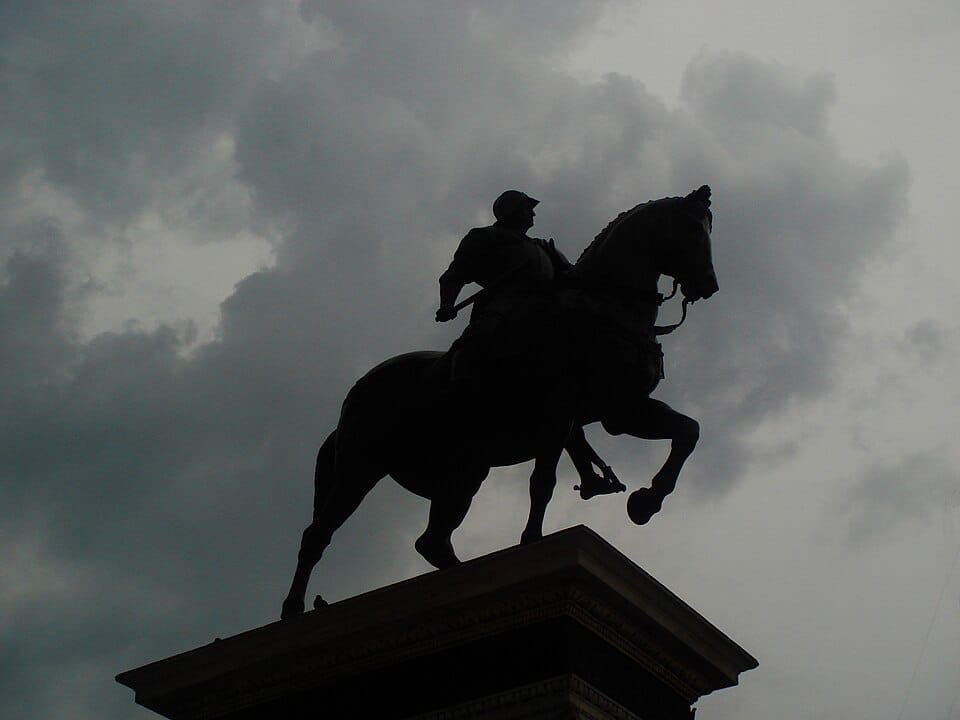
The political context of the Sforza commission, which arrived in 1482, is inseparable from Ludovico il Moro’s consolidation of power. Ludovico needed his dead father Francesco Sforza memorialized in bronze and at scale, placed in the same register as the Gattamelata and the Colleoni. He was announcing that the Sforza dynasty belonged to that tradition. Leonardo, writing to Ludovico in 1482 to advertise his qualifications, included the horse monument as a selling point: he could do what others could not. Walter Isaacson reproduces the text of this letter in Leonardo da Vinci (Simon & Schuster, 2017), and the confidence in it is precise. Leonardo promised the horse. He meant it.
Why Leonardo’s Horse Was the Wrong Problem to Solve Perfectly
On May 17, 1491, Leonardo wrote in what would become the Codex Madrid II: “Here a record shall be kept of everything relating to the bronze horse now under construction.” That sentence is the beginning of the most detailed foundry record to survive from the Renaissance, and it is worth pausing on what it represents. By the end of 1493 the clay model stood 24 feet high, 12 braccia from hoof to head, and had been exhibited at a Sforza wedding that November. The public had seen it. Ludovico had accepted it. The question was no longer whether Leonardo could design a horse. The question was whether any available metallurgical system could cast it.
The answer was almost certainly no, and Leonardo spent at least three years working out why.
Casting a 24-foot bronze horse at the scale Leonardo proposed would require approximately 70 to 75 tons of bronze. No single pour of that magnitude had been attempted in the Renaissance period. The technical barrier was not the design of the statue; it was the design of the foundry operation required to produce it. Leonardo’s initial plan called for casting the horse upside down, with the mold inverted in a pit. By December 20, 1493, he had changed his mind. The Lombard water table was too shallow. An inverted 24-foot horse in a vertical pit would require a 12-braccio excavation, and the head of the mold would sit dangerously close to groundwater. He resolved instead to cast the horse on its side, horizontally.
That decision appears in Codex Madrid II, a manuscript rediscovered in Madrid’s Biblioteca Nacional in 1965 and containing a 17-folio section on the horse casting. Folio 149v shows Leonardo’s foundry system in full: four reverberating furnaces arranged around a round, barrel-shaped casting chamber, with a schematic of the horse showing the aperture position on the back. He also wrote out the chemical recipe for his casting medium: “Mix coarse river sand, ashes, ground brick, egg-white and vinegar together with your earth — but test it first.” The foundry system visible in that folio is not a refinement of existing practice. It is a new engineering invention, designed to solve a problem that the available technology of 1493 could not otherwise address.
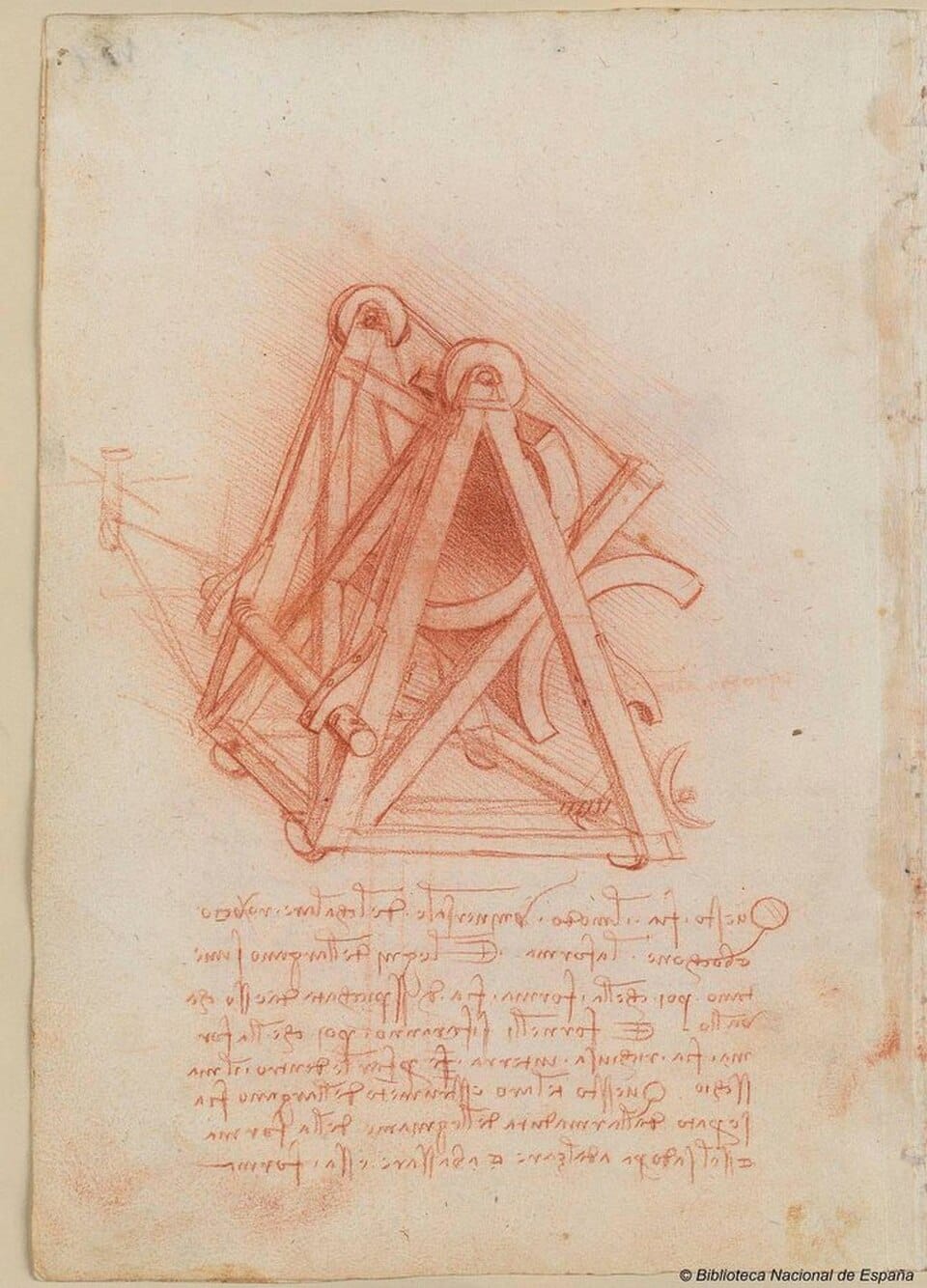
This is the argument the biographical tragedy frame misses. The standard account presents Leonardo’s unfinished work as evidence of psychological failure, of distraction, of an inability to complete what he started. The Codex Madrid II presents a different picture. He was not failing to finish a horse. He was solving, with systematic rigor, a metallurgical problem that was 500 years ahead of its moment. The FLOW-3D casting simulation study (flow3d.com), conducted centuries after Leonardo’s death, confirmed that his horizontal casting method was not only workable but was the correct solution given the available materials. He was right. The problem was not the design. The problem was that no foundry in 1493 Milan could execute what his Codex had figured out.
He was not failing to finish a horse. He was solving, with systematic rigor, a metallurgical problem that was 500 years ahead of its moment.
The bronze for the horse was diverted in November 1494, when Ludovico gave the 70 tons of metal to his father-in-law Ercole d’Este for cannon production during the French invasion threat. In September 1499, French soldiers used Leonardo’s clay model as an archery target. Weather destroyed what remained.
The Drawings That Survived the Horse That Didn’t
What survives of Leonardo’s sculptural ambition is almost entirely on paper.
The Windsor horse studies (c.1485–1490)
The Royal Collection Trust holds approximately 550 drawings by Leonardo, the largest group in the world. Among them, the horse studies made in preparation for the Sforza commission date to roughly 1485 through 1490 and were produced in metalpoint on prepared paper (RCIN 912321 and related). Looking at these drawings, the common description “sketches” fails immediately. Leonardo was studying the horses in the Sforza stables the way he studied human anatomy: systematically, from multiple angles, with attention to how the musculature moves under load. These are not compositional studies. They are investigations disguised as life drawings, produced by someone who knew he would eventually have to instruct foundry workers on how to model 24 feet of bronze muscle from the inside out.
Codex Madrid II, folio 149v (begun May 17, 1491)
The Biblioteca Nacional in Madrid holds the manuscript that is, arguably, the central document of Leonardo’s career as a sculptor. The 17-folio casting section is not a notebook. It is a construction manual for a project that never happened, complete with foundry diagrams, chemical recipes, and the recorded decision on December 20, 1493 to cast horizontally rather than inverted. That decision alone tells you more about how Leonardo actually worked than any of the standard biographical accounts do. It is methodical, reasoned, and precise about why the alternative was unworkable. The Europeana exhibition “The Colossus of Leonardo da Vinci” reproduces the key folios; they are worth finding.
Studies for the Trivulzio monument (c.1508–1511)
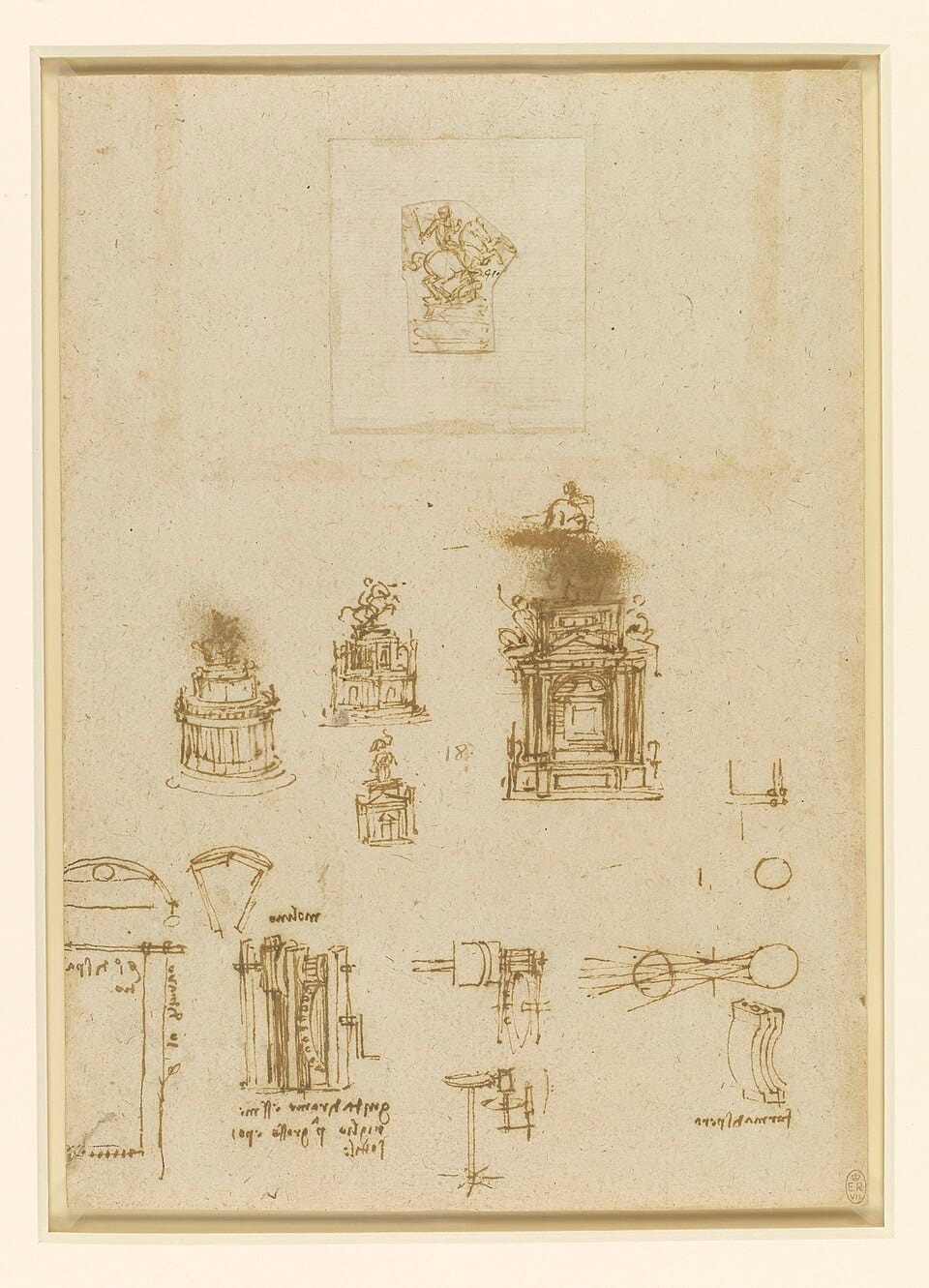
The Sforza commission was not Leonardo’s last attempt at an equestrian monument. Around 1507 to 1511, he produced studies for a monument to Gian Giacomo Trivulzio, the French commander who had taken Milan in 1499, the same man whose military campaign had indirectly caused the destruction of Leonardo’s first horse. The irony is specific and he must have felt it. The Trivulzio studies, now in the Royal Collection at Windsor Castle (RCIN 912353, 912355), show a rearing horse and rider on a marble sarcophagus base with eight columns and sculptured figures, with a resting effigy of Trivulzio below. Three different base designs appear on a single sheet. He priced out the monument in detail alongside the drawings. The Trivulzio monument was also never built.
The wax rearing horse (attributed, c.1508)
A small wax sculpture of a rearing horse and rider, held by the Budapest Museum of Fine Arts and dated to around 1508, carries an attribution to Leonardo or his immediate circle. It may have been a study model for the Trivulzio rearing horse design. If the attribution holds, it is the only surviving three-dimensional work in Leonardo’s hand. The scholarly consensus is cautious, but cautious is not the same as dismissive.
The American cast
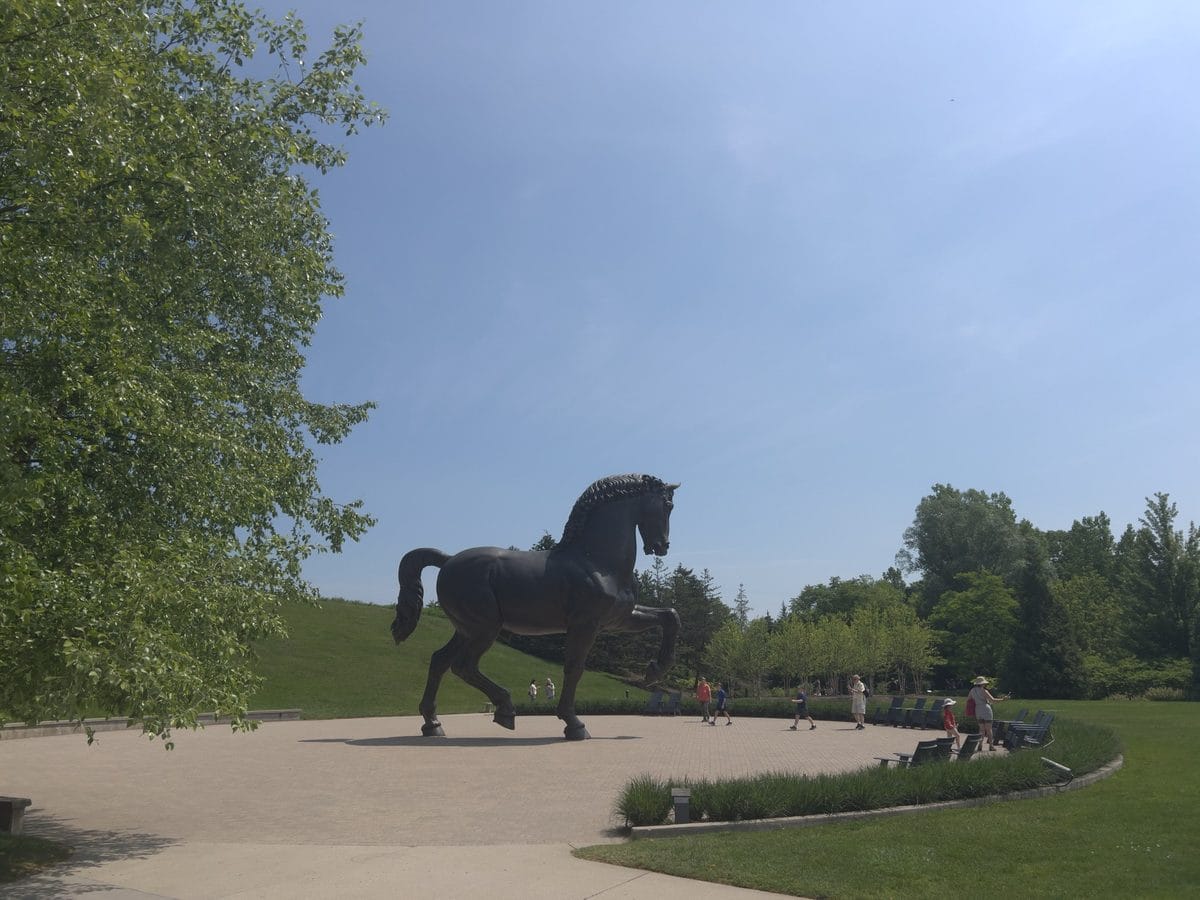
The clay model was destroyed in 1499. The Codex Madrid II sat undiscovered in Madrid for four and a half centuries. When sculptor Nina Akamu was brought in by the Tallix foundry in 1997, she judged the earlier model unsalvageable and made an entirely new sculpture, informed by Leonardo’s surviving drawings and the Codex notes. Her cast was unveiled on September 10, 1999, exactly 500 years after French soldiers had used the original clay model as an archery target. A second full-size cast followed in Grand Rapids, Michigan — at 24 feet and 15 tons, one of the largest equestrian bronzes in the United States. The full story of that American iteration is in The American Horse, the 500-year arc from Leonardo’s unfinished clay to the cast that finally existed. The full arc of the commission from Leonardo’s 1482 acceptance through five centuries of dormancy to the 1999 unveilings is documented in Il Cavallo: Leonardo’s Horse.
Shop the Collection
Two objects are worth owning here: one three-dimensional, one documentary. The Parastone horse gives you the physical form at a scale you can actually hold. The Zöllner drawings compendium gives you the paper record of how Leonardo saw the horse before he ever attempted to build it.
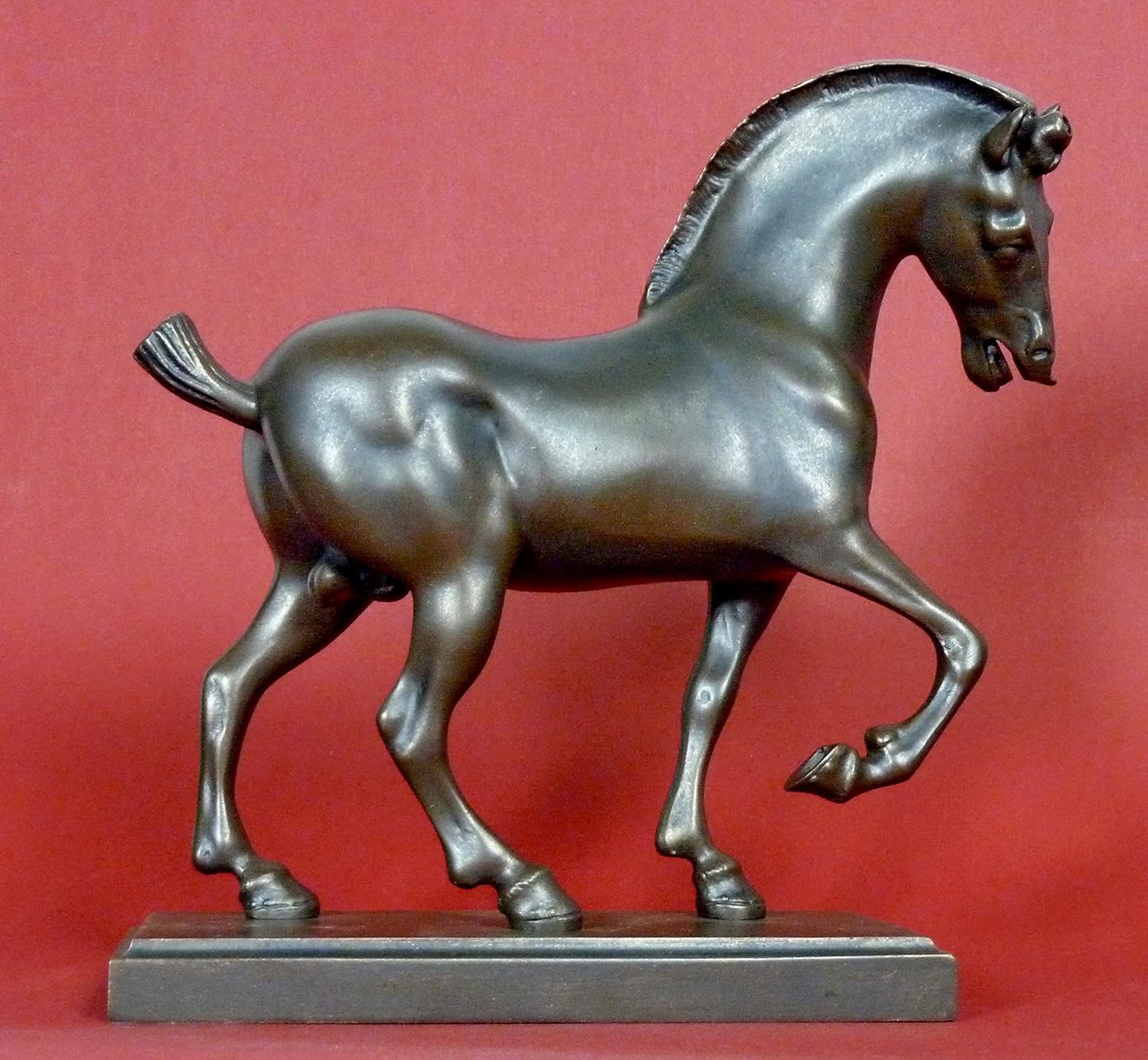
Parastone Leonardo da Vinci Horse Sculpture (DAV02)
A museum-quality resin reproduction from the Parastone Mouseion Collection, 9 inches, hand-painted, based on Leonardo’s drawings and those of his school, the closest widely available object to what Leonardo spent seventeen years trying to build.
Leonardo da Vinci: The Complete Paintings and Drawings (Zöllner): The two-volume Taschen complete works includes all known drawings, including all the horse studies and Trivulzio sheets, and is the reference object for anyone who takes Leonardo seriously as a visual artist.
Further Reading
Three books, not four. Each covers a different angle of the same problem: what Leonardo was actually doing when he was supposed to be building a horse.
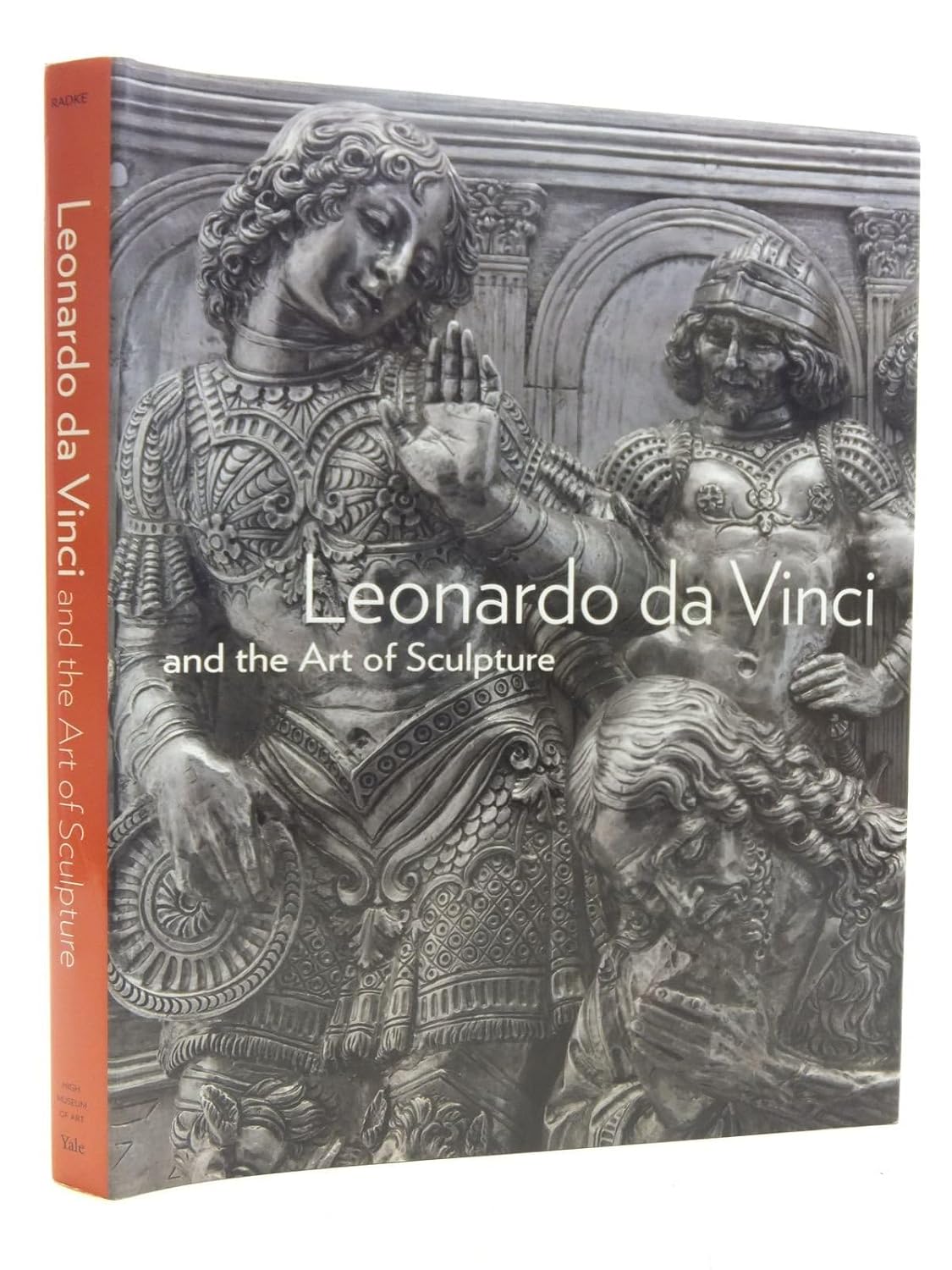
Leonardo da Vinci and the Art of Sculpture — Gary M. Radke (ed.)
The only scholarly monograph dedicated entirely to Leonardo as sculptor, with contributions from Martin Kemp and Pietro Marani; it challenges the assumption that Leonardo considered sculpture inferior and examines both the Sforza and Trivulzio projects in depth.
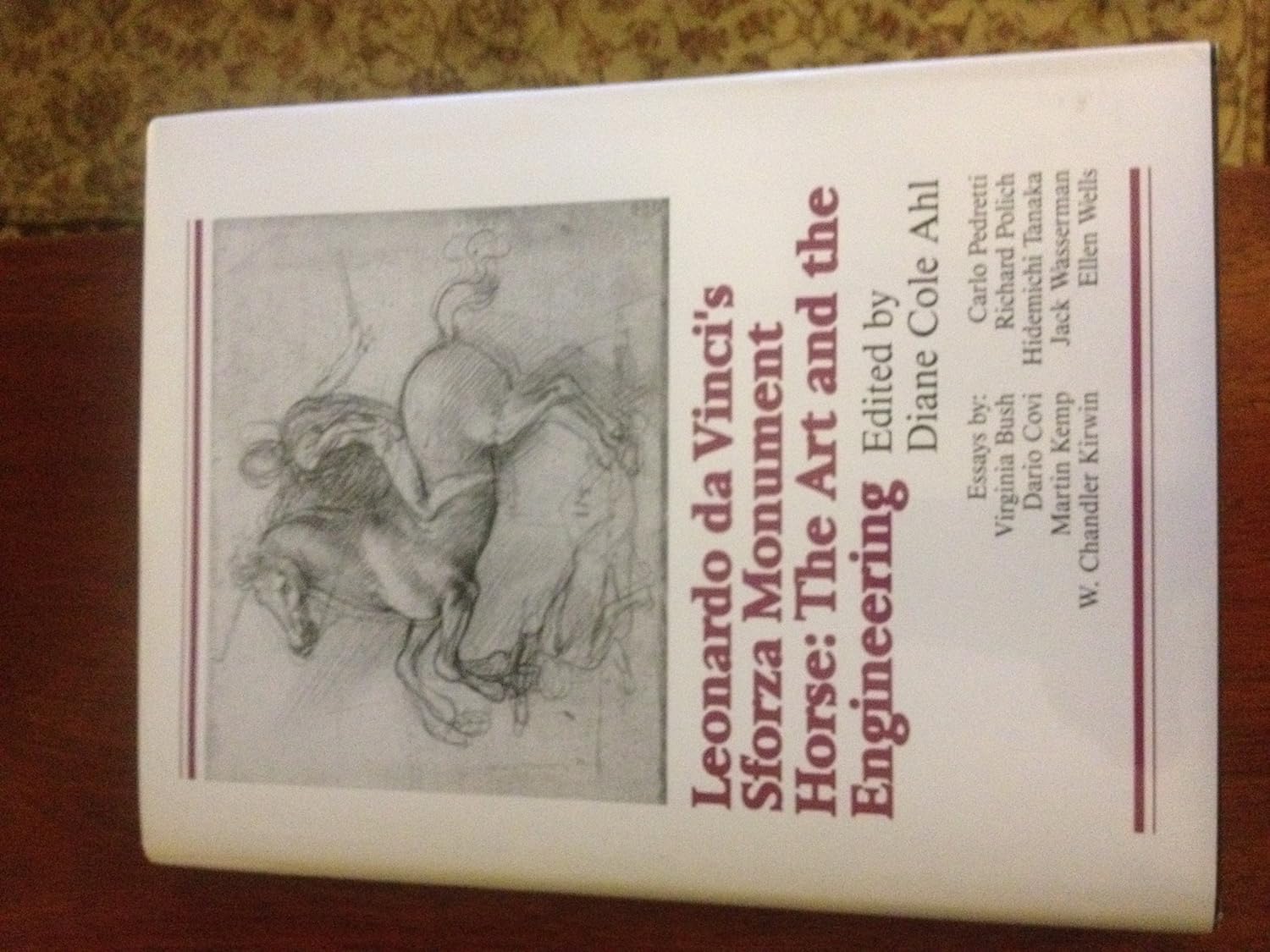
Leonardo da Vinci’s Sforza Monument Horse: The Art and the Engineering — Diane Cole Ahl
The first book-length study of the Gran Cavallo specifically, covering the preparatory drawings, the Codex Madrid casting documents, and the engineering problem that was never solved; essential for anyone who wants more than the standard biographical version of events.
Leonardo da Vinci — Walter Isaacson
The most readable account of how Leonardo’s working process operated in practice; Isaacson’s Milan chapters cover the Sforza commission in detail and are the narrative context for the more technical Ahl and Radke volumes.
Frequently Asked Questions
What happened to Leonardo’s horse?
It was never cast in Leonardo’s lifetime. Ludovico Sforza commissioned the bronze horse in 1482, and Leonardo had a full-size clay model on display by November 1493. In November 1494 Ludovico sent the bronze collected for it, about 70 tons, to his father-in-law Ercole d’Este to make cannon against the French invasion. When the French took Milan in 1499, their soldiers used the clay model as an archery target, and weather finished it off. Nina Akamu’s 24-foot bronze, cast twice in 1999, now stands in Milan and in Grand Rapids, Michigan.
What statues did Leonardo da Vinci make?
Leonardo designed two equestrian monuments: the Gran Cavallo (Sforza Horse) for Duke Ludovico il Moro in Milan, commissioned 1482, and the Trivulzio Monument, commissioned around 1507 to 1511. Neither was cast. A clay model of the Sforza horse was completed in 1493 and publicly displayed, but it was destroyed in 1499. A small wax rearing horse and rider in the Budapest Museum of Fine Arts is attributed to Leonardo or his circle, possibly a Trivulzio study model.
Why was Leonardo’s horse such a challenge to cast?
Scale was the primary problem. The clay model stood 24 feet tall, and casting it in bronze would have required approximately 70 to 75 tons of metal, more than any single Renaissance pour had attempted. Leonardo designed a complete foundry system in Codex Madrid II to solve this: four reverberating furnaces, a barrel-shaped casting chamber, and a horizontal casting position to avoid the shallow Lombard water table. The system was technically sound, as later computational analysis confirmed, but no foundry in 15th-century Milan could execute it.
Where is Leonardo da Vinci’s horse today?
The original clay model was destroyed in 1499 when French soldiers used it as an archery target. Two full-size bronze casts of Nina Akamu’s horse, a new sculpture based on Leonardo’s surviving studies, now exist, both completed in 1999: one at the Hippodrome of San Siro in Milan, unveiled September 10, 1999 on the 500th anniversary of the clay model’s destruction, and one in Grand Rapids, Michigan, unveiled October 1999. The surviving drawings are held primarily by the Royal Collection Trust at Windsor Castle.
What was the name of Leonardo da Vinci’s horse sculpture?
The Sforza commission is commonly called the Gran Cavallo (the Great Horse), or Leonardo’s Horse. It was formally a monument to Francesco Sforza, commissioned by his son Ludovico il Moro. The second equestrian commission is known as the Trivulzio Monument, after its patron Gian Giacomo Trivulzio.
Is the Gran Cavallo a painting?
No. The Gran Cavallo was a sculpture commission: a 24-foot bronze equestrian monument that never got past its full-scale clay model. What survives on paper are preparatory drawings, including the horse studies in the Royal Collection at Windsor, and those sheets circulate online where they are often mistaken for a painting. The horse finally exists in bronze through Nina Akamu’s 1999 casts in Milan and Grand Rapids.
Why did Leonardo da Vinci never finish his sculptures?
The biographical answer, that Leonardo was a perfectionist who struggled to complete projects, is accurate but incomplete. The Codex Madrid II shows that Leonardo was not failing to finish a horse; he was solving, systematically, a metallurgical problem that the available technology of his era could not support. The Gran Cavallo required a casting system that would not be buildable for centuries. The bronze was diverted for cannon production in 1494, ending the project externally. The Trivulzio Monument appears to have stalled as the commission became financially uncertain. In both cases, external conditions, not psychological failure, terminated the work.
How did Nina Akamu complete Leonardo’s horse 500 years later?
American sculptor Nina Akamu was brought in by the Tallix foundry in 1997. She set aside the earlier model and made a new sculpture based on her study of Leonardo’s surviving drawings and the Codex Madrid II casting notes. She produced a 24-foot, 15-ton silicon bronze horse with a stainless steel armature. The primary cast was unveiled in Milan on September 10, 1999, the 500th anniversary of the clay model’s destruction. A second cast was unveiled in Grand Rapids, Michigan in October 1999. Her method and artistic decisions are covered in the ADI profile of Nina Akamu.

About Joe Post
Joe Post holds an MFA in Art from California Institute of the Arts (CalArts) and has done additional graduate work at the School of the Art Institute of Chicago. He founded Art Design Ideas to write about design as cultural argument — the decisions, contradictions, and assumptions built into the objects we live with.