
Scandinavian design and minimalism are frequently conflated but come from different traditions with different arguments. Scandinavian vs minimalist design: Scandinavian is democratic, material-honest, and functional — a social project. Minimalism is philosophical, often anti-material, concerned with absence. Both produce spare rooms, but for reasons that lead to different decisions when you are actually furnishing one.
Two Traditions That Look Alike and Mean Different Things
The difference between Scandinavian and minimalist design comes down to motivation. Scandinavian design practices restraint because restraint serves daily life — its spare rooms are a byproduct of functional and democratic priorities. Minimalism practices restraint because absence is itself the argument — a philosophical position, not a practical one. Both traditions produce clean, uncluttered interiors, which is why they get confused. The objects inside them, and the reasoning behind those objects, are different.
Scandinavian design developed across Denmark, Finland, Norway, Sweden, and Iceland in the early twentieth century and reached its clearest expression in the 1950s. The tradition is inseparable from its political context. Børge Mogensen, designing furniture for the FDB (Danish Consumers’ Cooperative Society) from 1945, was building chairs and tables for working families: not stripped-down versions of luxury goods, but the genuine article. Swedish functionalism from the 1930s framed design as social policy. The restraint that emerged from this (light woods, natural fibers, clean lines, controlled warmth) was a byproduct of an argument about democratic access, not an aesthetic program designed to look that way. For the full history, see our piece on Scandinavian design history.
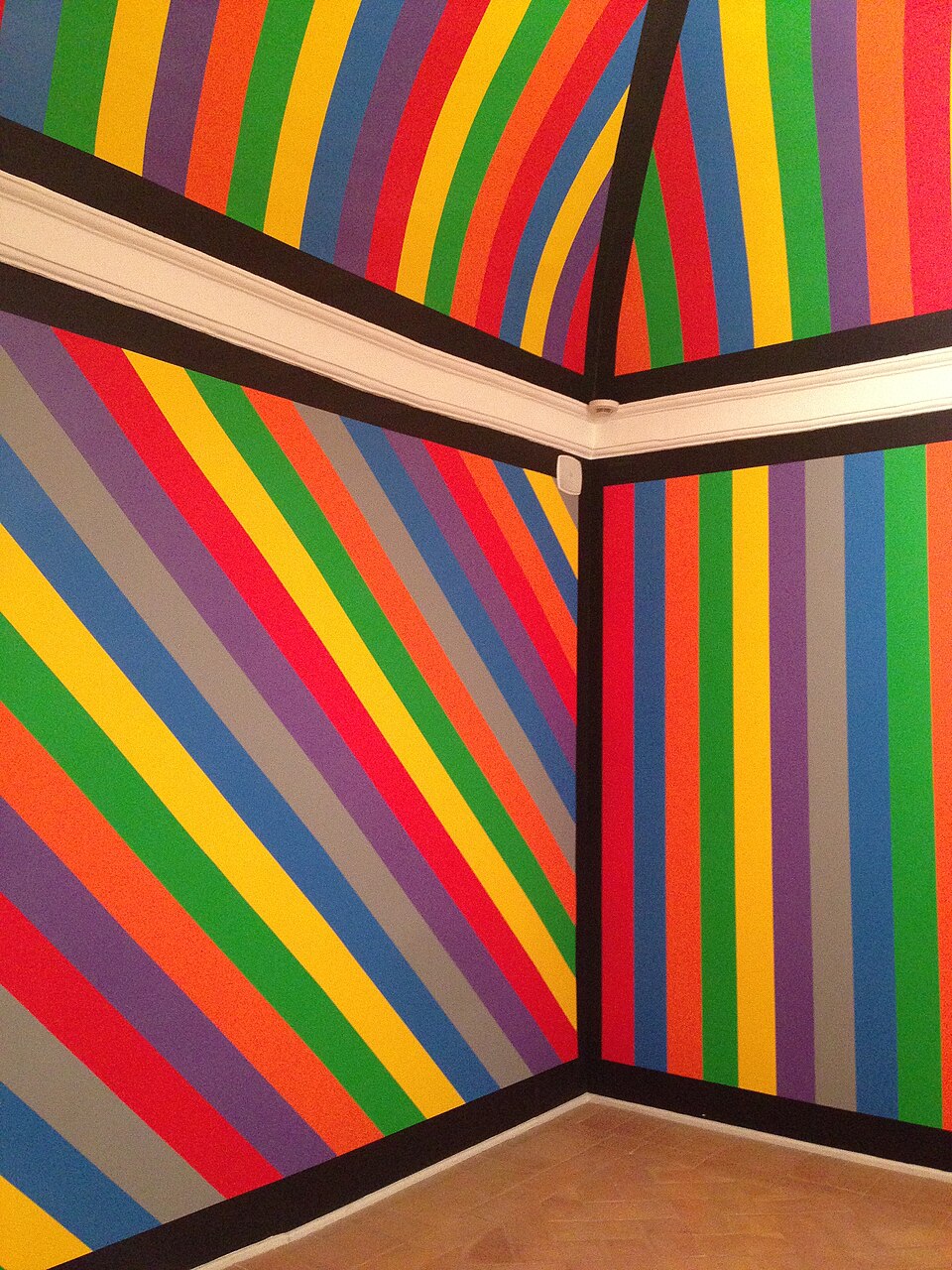
Minimalism arrived from a different direction. In the 1960s, American and Japanese artists — Donald Judd, Frank Stella, Agnes Martin — were stripping their work to essential form. Judd’s “specific objects” (1965) were not reduced for practical reasons; reduction was the point. The architectural branch, articulated most carefully by John Pawson in Minimum (1996), defined the discipline around “the perfect amount” — not the least possible, but exactly what is needed. Kenya Hara, who took over art direction at Muji in 2001, developed a parallel but distinct concept he calls emptiness, a Japanese philosophical idea he has explicitly distinguished from Western minimalism (Dezeen, 2017). Emptiness is generative, Hara argues. Western minimalism is subtractive.
What this history produces in practice: a Scandinavian room contains a HAY Colour Crate because it is well-made, useful, and honest about what it is. A minimalist room might not contain it at all. Or it contains one, chosen because its absence of decoration allows the space to remain coherent. The reasoning behind the object differs even when the object is the same.
Scandinavian design practices restraint because restraint serves daily life. Minimalism practices restraint because absence is the argument.
Where Scandinavian and Minimalist Design Actually Diverge
Origins and Intent
Scandinavian design’s restraint is functional and social. The tradition wanted to make well-built objects accessible — not to argue that possessions are philosophically problematic. The result was furniture designed to serve daily life: durable, repairable, honest about materials. Minimalism’s restraint is philosophical. The reduction is the point. When that logic moved into architecture and interiors, it became an argument about environments: the space itself is the object, and what populates it must earn its place through formal necessity rather than accumulated preference.
Materials
Scandinavian design defaults to organic materials: light woods (birch, pine, oak, beech), wool, linen, unglazed ceramics, leather. The material warmth is a value, not a concession — warmth is part of the argument. Minimalism is comfortable with industrial materials — steel, concrete, lacquer, glass — and sometimes prefers them precisely because they don’t introduce the visual noise of grain, texture, or color variation. When minimalist interiors use natural materials, they tend to choose ones that read as uniform: smooth concrete, honed stone, white plaster.
Color
Scandinavian interiors use white and cream bases with controlled accent colors: blush pink, grey-blue, sage green. HAY’s full range, the Danish brand founded in 2002, pushes this further with more aggressive color use: brighter primaries alongside the softer Scandinavian palette, demonstrating that the tradition is not afraid of color, only of color without purpose. Minimalism treats color as potential noise. Most serious minimalist spaces are monochromatic: black, white, and grey, occasionally with the specific color of a natural material. When a minimalist room has color, it is usually the color of one precise object.
Comfort and Warmth
Scandinavian design builds around hygge — the Danish and Norwegian concept of domestic coziness, warmth, and well-being. Textiles, soft lighting, accumulated objects you actually love are not failures of discipline. They are what a Scandinavian interior is designed to accommodate. Minimalism does not have a hygge equivalent. Pawson’s architecture, at its most rigorous, produces spaces where austerity is the achievement. These spaces are genuinely moving. They are also demanding to live in.
Application to Contemporary Interiors
Scandinavian design is forgiving. It works with family life, with objects acquired over time, with imperfect maintenance. A room can evolve and remain coherent. Muji’s product logic — neutral, functional, recessive — operates in the same register, though it draws from the Japanese emptiness tradition rather than Scandinavian warmth. Minimalism is not forgiving. It requires sustained visual discipline and usually an architecturally considered space where the structure itself carries meaning. A minimalist interior in a generic apartment often just looks sparse.
Scandinavian vs Minimalist Living Room
In a Scandinavian living room, a wooden coffee table, wool throw, and a few well-chosen objects constitute a coherent scheme. Natural light, warm textiles, and objects that earn their place through use or genuine affection are all consistent with the tradition. In a minimalist living room, those same decisions multiply into a design problem: the throw either earns its formal position or it goes. Each element must justify itself against the whole composition.
Scandinavian vs Minimalist Bedroom
A Scandinavian bedroom layers textures — linen duvet, knit blanket, wood-frame bed — to create warmth. A minimalist bedroom removes layers: one material surface, one textile, consistent light. The difference is most visible in how textiles are treated. Scandinavian bedrooms accumulate them; minimalist bedrooms edit them down to the one that is formally necessary.
Scandinavian vs Minimalist Furniture
Scandinavian furniture is made to be touched: rounded edges, natural finishes, visible joinery that tells you how the piece was made. Minimalist furniture tends to disappear into the room: flush hardware, lacquered surfaces, recessed handles. A HAY piece and a Pawson-influenced cabinet might share a clean silhouette, but their relationship to the user’s hand is different. Scandinavian furniture invites contact. Minimalist furniture invites distance.
Japandi: The Synthesis Between the Two Traditions
Japandi is the design hybrid that has dominated commercial interior language since roughly 2019. The name is a compound of Japanese and Scandinavian, and the description is reasonably accurate: it takes Scandinavian warmth in materials and combines it with the Japanese preference for emptiness in form. Low profiles, natural woods, negative space, no decorative surplus.
The appeal is obvious. Japandi looks sophisticated without being cold. It is easier to live in than pure minimalism and more visually disciplined than generic Scandinavian. But executing it well requires knowing which tradition governs which decision — and that means understanding both traditions’ actual arguments rather than just their visual outputs.
Seven practical Japandi principles:
- Natural materials, minimal form. Use Scandinavian materials (oak, linen, ceramics with texture) in Japanese formal language: low profiles, simple silhouettes, no applied ornament.
- Negative space is structural. Leave wall surfaces and floor area genuinely empty. This is the Japanese contribution. Scandinavian design tolerates accumulation; Japandi does not.
- Neutral palette, one warm note. Earth tones, stone grey, off-white. One warm accent — terracotta, warm oak, natural linen — stops the space from reading as cold minimalism.
- Functional objects only. Every object serves a purpose or is formally strong enough to earn the space it takes. Decorative objects that are merely decorative do not fit Japandi.
- Legible handcraft. Japandi allows evidence of human making: visible wood grain, slight irregularity in ceramic glaze, a hand-stitched seam. This is the wabi-sabi influence. Perfect factory surfaces belong to a different vocabulary.
- Light as material. Both traditions pay attention to natural light. Window treatments and surface finishes should work with available light rather than override it.
- Edit twice. The Scandinavian instinct is to keep objects you love. The Japanese instinct is to remove what is not necessary. Japandi resolves this by requiring two rounds: first keep what you love, then remove what is not earning its position in this specific space.
Japandi requires two edits: keep what you love, then remove what isn’t earning its position in this specific room.
What Each Tradition Gets Right and Where Each Falls Short
Scandinavian design does three things well that matter for most people furnishing actual homes. It is livable: it tolerates the accumulation that daily life generates without dissolving into clutter, as long as the objects are reasonably well-chosen. Its material logic is coherent: birch and pine age in ways that industrial materials don’t, and they are honest about what they are. And it connects to a design heritage with genuine social purpose — the democratic argument was real, and it still shows in how the tradition approaches price points and accessibility.
The weaknesses are also real. The Scandinavian aesthetic has been absorbed so thoroughly by mass production that it now reads as generic rather than considered in many contexts. An IKEA living room and a carefully composed Scandinavian-influenced room can look similar in a photograph. The democratic argument gets lost when reproduction culture swamps the original reasoning. And the hygge-adjacent accumulation mode, taken too far, produces rooms that are simply cluttered with natural-fiber objects rather than genuinely designed.
Minimalism creates something Scandinavian design cannot always guarantee: genuine visual calm in a space where the architecture itself is strong. A well-executed minimalist interior is coherent in a way that rewards sustained attention. The philosophical framework — Zen emptiness, Pawson’s “perfect amount,” Hara’s generative nothing — is serious and worth understanding on its own terms. The tradition also forces honest decisions: every object in a minimalist space has been chosen deliberately, which tends to produce fewer objects and better ones.
The costs are well-documented. Minimalism is punishing to maintain with children, guests, or any life that generates objects that need to go somewhere. It often requires expensive materials to avoid reading as merely sparse rather than genuinely spare. And it tips easily into performative austerity, where the discipline is the point rather than the space it creates.
Which Should You Choose?
Choose Scandinavian design if you have a life that generates objects — children, books, things acquired over time that you are not willing to remove. The tradition was built for exactly this use case. It gives you a framework for choosing objects and a material logic that keeps the room coherent even as it accumulates. Natural materials, warm light, and an honest relationship to function will work in almost any residential space. The Scandinavian design history is worth understanding if you want to apply the principles rather than just copy the aesthetic.
Choose minimalism if you are working with a space where the architecture is the statement: high ceilings, considered light, strong geometry — and you are genuinely prepared to maintain visual discipline over time. The philosophy is coherent and deep, but it makes real demands. Half-committed minimalism usually looks like an apartment that hasn’t been furnished yet.
Choose Japandi if you want the visual result of minimalist restraint without the philosophical absolutism. It is a legitimate hybrid with its own internal logic, but it requires knowing which tradition’s rules apply when they conflict. When you have an object you love but it breaks the visual discipline of the space, you need to decide: Scandinavian logic says keep it if it serves life; Japanese logic says the space takes priority.
On whether minimalism still holds in 2026: it remains intellectually serious and architecturally relevant, but it has ceded commercial dominance to Scandinavian-influenced design and its Japandi derivative. Most people want warmth. Minimalism asks them to give it up, which is a harder proposition in 2026 than it was in 2010, and the market reflects it.
Further reading: Charlotte and Peter Fiell, Scandinavian Design (Taschen, 2002), amazon.com/dp/3836544520, is the reference most worth owning. For product comparison: HAY Colour Crate and MUJI Polypropylene Box are useful physical examples of what each tradition looks like in an everyday object.
Frequently Asked Questions
What is the difference between Scandinavian and minimalist design?
Scandinavian design is a functional, democratic tradition rooted in Nordic welfare-state politics — its restraint comes from material honesty and practicality. Minimalism is a philosophical and aesthetic tradition, rooted in 1960s art and Zen-influenced architecture, where reduction is itself the argument. Both produce clean, spare interiors, but Scandinavian design accommodates lived life while minimalism requires sustained discipline to maintain.
What is Japandi?
Japandi is a design hybrid combining Scandinavian material warmth (natural woods, linen, ceramics) with Japanese formal restraint: negative space, low profiles, no decorative surplus. It has been commercially prominent since roughly 2019. The key difference from pure minimalism is that Japandi allows natural materials and a warm accent color. The key difference from pure Scandinavian is that Japandi requires genuine negative space and disciplined editing rather than comfortable accumulation.
What is the 3-5-7 rule in interior design?
The 3-5-7 rule is a composition guideline: group decorative objects in odd numbers — three, five, or seven — because odd groupings read as more natural and less staged than even numbers. It applies in both Scandinavian and minimalist contexts, though a minimalist interpretation favors smaller groups (three rather than seven) and more formally related objects. In a Scandinavian room it shows up in ceramics on a shelf, textile layering, or art arrangements.
Can you mix Scandinavian and minimalist styles?
Yes — and the result is effectively what Japandi describes. The main decision to make upfront is which tradition governs when they conflict: when the minimalist logic says remove it and the Scandinavian logic says keep it if it serves a purpose, you have to pick one. The hybrid works well when that rule is clear and consistently applied.
What is hygge?
Hygge (roughly “hoo-ga”) is a Danish and Norwegian concept of domestic coziness, warmth, and ease — the specific pleasure of a warm room, good company, soft light, and physical comfort. It is structural to Scandinavian design in a way that has no equivalent in minimalism. A hygge-oriented room invites you to stay and be comfortable. A minimalist room is not necessarily trying to do that.
Which is better for a small apartment — Scandinavian or minimalist design?
Scandinavian design is generally more practical in small apartments. The tradition has a long history of solving storage and multi-use furniture for small Nordic homes. Minimalism can work in small spaces but requires rigorous storage discipline — if everything must have a hidden place, a small apartment needs well-considered built-in storage to make minimalism livable rather than merely sparse.
Is Scandinavian design the same as minimalism?
No. Scandinavian design and minimalism share a preference for restraint and uncluttered spaces, but they come from different traditions with different motivations. Scandinavian design’s restraint is functional and social, rooted in democratic design principles and material honesty. Minimalism’s restraint is philosophical: reduction is the argument itself. A Scandinavian room accommodates daily life and accumulated objects; a minimalist room requires sustained discipline to maintain.
Are HAY and Muji Scandinavian or minimalist?
HAY is Danish — unambiguously Scandinavian in tradition, with a more aggressive color palette than earlier Scandinavian design. Muji is Japanese — its design logic is closer to Kenya Hara’s concept of emptiness than to either Scandinavian warmth or Western minimalism, though it shares a commitment to functional restraint. HAY objects are warm and participatory; Muji objects are neutral and recessive.
This article contains affiliate links. If you purchase through them, we may earn a small commission at no cost to you. See our affiliate disclosure for details.

About Zoe Post
Zoe Post holds a BFA and a Master of Architecture from the School of the Art Institute of Chicago. She now works as a product marketing leader at an architectural product design firm, bringing hands-on industry perspective to everything she writes. At ADI she covers contemporary artists, textile and pattern design, and the design objects that sit at the boundary of art and function.