Areaware is a Brooklyn-based design brand, founded in 2005, that collaborates with independent designers to produce everyday objects (puzzles, games, coasters, and toys) that treat form as an argument rather than decoration. The best Areaware gifts hold that position on a shelf: they prompt a conversation about what an object is supposed to do.
Our Top Picks
These five objects show what Areaware did consistently well. Each one removes something the conventional version of the category takes for granted, and asks the user to do more work as a result. That friction is the point.
- Areaware Gradient Puzzle (Red/Yellow) (Mid-Range): A 500-piece jigsaw with no image, only a color gradient from red to yellow, so the puzzle itself becomes the subject.
- Areaware Blockitecture — Brutalism (Mid-Range): Hexagonal beech-wood blocks named after a design movement; they cantilever and nest into towers that could sit on a desk for years.
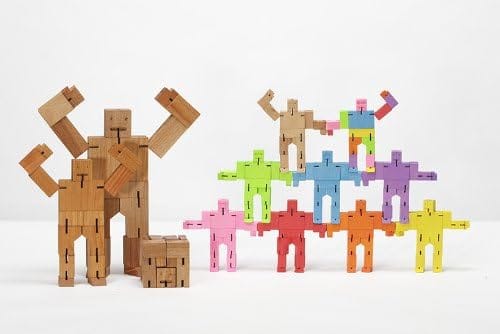
- Areaware Cubebot Micro (Natural) (Budget): A wooden robot that collapses into a 3-inch cube, designed by David Weeks, the same studio that designed grown-up furniture for the brand.
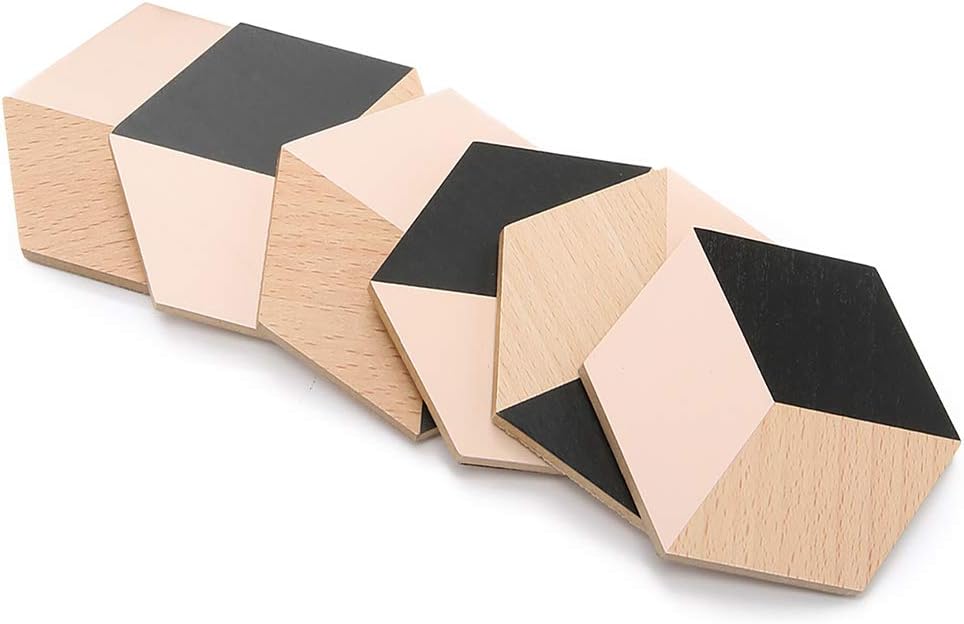
- Areaware Table Tiles — Black/Beige (Bower Studio) (Mid-Range): Six coasters that are a modular tile arrangement problem. The set rewards whoever notices how things are organized on a table.
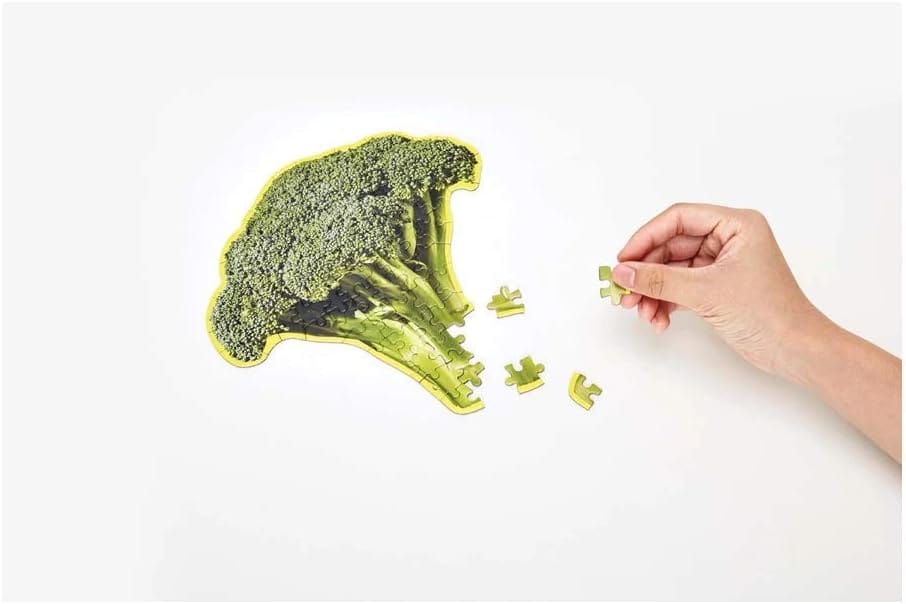
- Areaware Little Puzzle Thing: Broccoli (Budget): Under 100 pieces, completable in 20 minutes. The subject is broccoli. That’s the entire editorial position.
Quick Decision Guide
- Best for the person who wants a desk object that also starts arguments: Areaware Blockitecture — Brutalism — the gray palette and architectural naming make it the most coherent of the series.
- Best budget option: Areaware Little Puzzle Thing: Broccoli — under $20, specific about what it is, no pretense.
- Best premium option: Areaware Gradient Puzzle (Red/Yellow) — the strongest single design argument Areaware made in puzzle form.
- Best for someone who designs, or is married to someone who does: Areaware Table Tiles — the person who notices how things are placed will get it immediately.
- Best for a child who will eventually be a designer: Areaware Cubebot Micro — it’s a toy that doesn’t explain itself, which is how good objects work.
Full Comparison
| Product | Best For | Price Range | Key Feature | Link |
|---|---|---|---|---|
| Gradient Puzzle (Red/Yellow) | Puzzle solvers who want a real challenge | Mid-Range | No image — gradient-only sorting | Buy |
| Blockitecture — Brutalism | Desk display + play | Mid-Range | Hexagonal beech blocks, architectural naming | Buy |
| Cubebot Micro (Natural) | Gift at any scale | Budget | Collapses to a 3-inch cube | Buy |
| Table Tiles — Black/Beige | Thoughtful gifting | Mid-Range | Modular coaster arrangement | Buy |
| Little Puzzle Thing: Broccoli | Low-stakes, high-specificity gift | Budget | Under 100 pieces; the subject is the joke | Buy |
Why these five objects hold up when others don’t
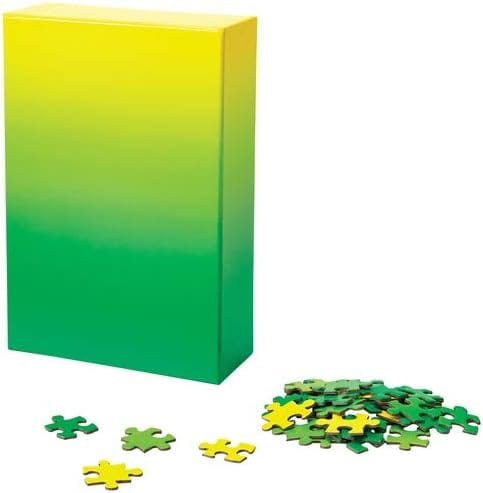
Areaware Gradient Puzzle (Red/Yellow)
The Gradient Puzzle removes the one thing a jigsaw puzzle conventionally relies on: the image. There is no picture on the box to compare pieces against. The puzzle is sorted purely by color gradient. Hue is the only organizing principle. That means the solver has to reason about color relationships rather than match shapes to a reference image.
This is what Areaware did consistently well: removing the scaffold to make the activity the subject. The puzzle is harder than it looks, and some reviewers on Thingtesting (which gave the brand a 4.7 aggregate rating from 32 reviews) noted that certain colorways are “extremely difficult.” That’s not a design flaw. It’s the design working correctly.
Pros:
- Removes the conventional puzzle scaffold; difficulty is genuinely earned
- Available in multiple colorways (Red/Yellow, Blue/Green, Black/White, Pink/Blue)
- Appropriate gift for someone who designs or thinks about color
Cons:
- Significantly harder than a standard puzzle; not for casual solvers
- No picture on the box means the finished piece doesn’t photograph as a conventional puzzle success
For someone who reads design publications and has an opinion about Pantone. The puzzle is a design argument made in puzzle form. That’s a harder thing to do than it sounds.
The puzzle is a design argument made in puzzle form. That’s a harder thing to do than it sounds.
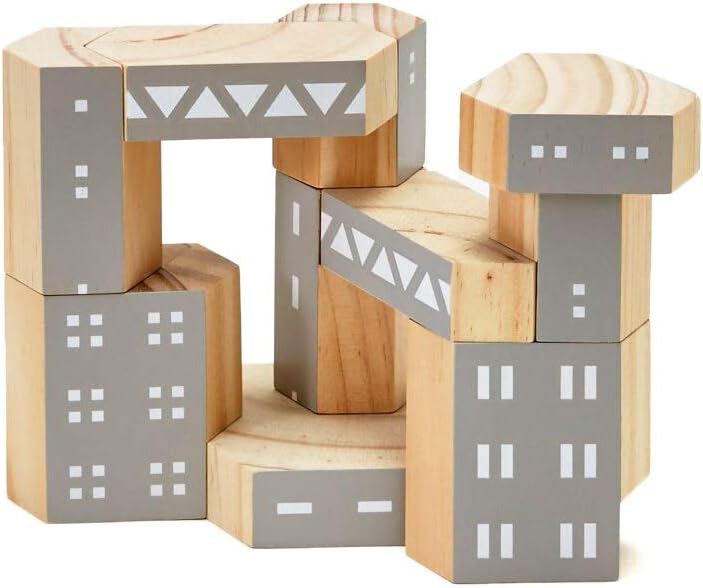
Areaware Blockitecture — Brutalism
James Paulius designed the Blockitecture series as hexagonal beech-wood blocks that cantilever and nest into architectural towers. The sets are named after design movements and types: Habitat, Brutalism, Parkland, Factory, NYC Greenway, Frank Lloyd Wright. The naming is not incidental. The gray palette of the Brutalism set is calibrated to the reference.
The blocks sit on a desk as a display object and work as a building toy without a prescribed outcome. There are no instructions about what to build. The system is the point; the output is whatever you make of it. That’s consistent with the brand’s logic across products: the activity, not the artifact.
Areaware was closing as of early 2026. Noel Wiggins, one of the founders, told Fast Company in February that the combination of tariffs and structural pressures on the home goods industry had made continuation impossible (Fast Company, Feb. 2026). The Brutalism set is still available on Amazon. It will not be restocked after Areaware’s May 1, 2026 close.
Pros:
- Desk display object and play system in one
- Architectural naming and gray palette are coherent and specific
- No prescribed outcome — the builder determines what success looks like
Cons:
- Blocks are small; loose pieces can scatter on a desk without a base or tray
- The play value depends on the person; someone who wants instructions will be frustrated
An architect, interior designer, or someone who keeps objects on a desk that have something to say. The Brutalism set can hold a conversation about 20th-century housing policy and also keep a four-year-old occupied. That range is genuinely difficult to design for.
Areaware Cubebot Micro (Natural)
David Weeks Studio designed the Cubebot, a beech-wood robot held together by elastic bands that collapses into a perfect cube. The Micro size is 4.25 inches in cube form; the Small is 6.75 inches; the Medium is 9.5 inches. Weeks also designed grown-up furniture for Areaware, which matters: the Cubebot is not a toymaker’s sideline. It came from the same design sensibility that produced Areaware’s serious objects.
The Micro is the right gift scale. It sits on a desk. It collapses into a cube small enough to lose, which is part of the experience. The object is, as Areaware’s own framing goes, “dysfunctional as a toy and useless as furniture.” Entirely correct as a designed object.
Pros:
- Designed by a serious studio (David Weeks), not a novelty product
- Micro size is appropriate for desk use and gift-giving at modest price
- The elastic-band mechanism is satisfying to collapse and expand
Cons:
- Elastic bands can wear over time with heavy use
- The robot-figure reading requires some imagination from the recipient
For anyone who keeps a few objects on a desk that reward looking at. The scale difference between the Micro and the Medium, the same object at different sizes, is itself a design argument about what the right size is. The Micro is the answer.
The Cubebot is dysfunctional as a toy and useless as furniture. Entirely correct as a designed object.
Areaware Table Tiles — Black/Beige (Bower Studio)
Bower Studio designed the Table Tiles as a set of six coasters in MDF, beech veneer, and cork. The cork base protects the table surface; that’s functional. The visible surface is geometric and the arrangement is modular: you set them out as you like, and the composition is part of what you own. The set comes in several colorways (Optic White, Red/Blue, Green/Gray, Modern Multi, and concrete); the Black/Beige is the most coherent.
Common criticisms from Thingtesting reviewers include coasters that stick to glasses, which is a real limitation in functional terms. Areaware’s best objects frustrate in productive ways, but this one frustrates in a less productive way. The Table Tiles work best when the person receiving them will notice the arrangement and care about it. If they just need coasters, buy them something else.
Pros:
- Modular arrangement adds a design dimension that standard coasters lack
- Cork base is functional; the geometric pattern is specific and not decorative-generic
- Black/Beige colorway is calibrated, not busy
Cons:
- Some colorways can stick to glasses (user reports); the cork wears over time
- The tile-arrangement value only works if the recipient engages with it
For someone who notices how objects are placed on a table: an interior designer, an architect, or someone who rearranges things by instinct. The coaster-arrangement problem is a small design argument about how objects occupy space. It works for the right person.
Areaware Little Puzzle Thing: Broccoli
The Little Puzzle Thing series is under 100 pieces and completable in 20 to 30 minutes. Each puzzle in the series depicts a single object (Broccoli, Cereal, Pickle, Pinata, Shrimp, Rose, S’More, Durian), printed in limited editions. The Broccoli is the one to get. The subject is the entire editorial position. There is no hidden meaning: Areaware decided to make a puzzle of broccoli, and the fact that this is an object that exists and costs money is itself worth something.
This is the right gift when you want something specific, under $20, and not generic. It’s not a statement about design. It’s a statement about the person who is giving it and the person receiving it, which is what a good small gift is.
Pros:
- Under $20 and under 100 pieces — achievable in a single sitting
- The subject (broccoli) is precise and deliberate; not themed kitsch
- Works as an introduction to Areaware for someone who hasn’t encountered the brand
Cons:
- Short completion time means it’s a one-time experience unless you lose pieces deliberately
- Limited editions mean specific subjects may go out of stock
For anyone who needs a specific, inexpensive gift for someone with a design sensibility and a sense of humor. The subject is the joke and the design argument simultaneously. That’s efficient.
Why the best Areaware gifts argue with their categories
Areaware was founded in 2005 by Lisa Yashon and Noel Wiggins in Brooklyn. Their model licensed work from independent designers at a 6% royalty; Areaware handled manufacturing, marketing, and distribution, so designers could focus on making. Less than 10% of products were designed in-house (Areaware, “Looking Back: Our Brand Story,” areaware.com/blogs/areaware-blog/). The designer roster reads like a Brooklyn design roll call: Susan Kare (who designed the original Mac typefaces), James Paulius (Blockitecture), Bower Studio (Table Tiles), David Weeks Studio (Cubebot), and Fort Standard, among others.
Annual revenue averaged $4 million, but profits were volatile. Noel Wiggins told Fast Company in February 2026: “$40,000 one year, zero the next, then minus $20,000.” The brand announced closure in early 2026 and closes May 1, 2026, citing tariffs and the structural diagnosis Wiggins called “two disparate and incompatible forces” (Wiggins, Fast Company, Feb. 2026). The Cooper Hewitt shop carried Areaware products; Urban Outfitters featured the brand in 2017. That range, institutional credibility to mass-market retail, held for twenty years. These are not objects that will appreciate. They do something specific, and the question is whether that’s worth the price. In most cases, it is.
Shop the Collection
Areaware’s strongest objects are the ones that remove something: the image from the puzzle, the instructions from the building blocks, the decorative gesture from the coasters. Those are the ones worth having before May 1.
- Areaware Gradient Puzzle (Red/Yellow): The strongest design argument Areaware made in puzzle form — no image, only gradient — and the most giftable because it frustrates in exactly the right way.
- Areaware Blockitecture — Brutalism: The Brutalism set’s gray palette and architectural naming make it the most coherent of the Blockitecture series — a desk object that can hold a conversation about 20th-century housing policy.
- Areaware Cubebot Micro (Natural): The Micro size is the right gift scale — it sits on a desk and collapses into a cube small enough to lose, which is part of the experience.
- Areaware Table Tiles — Black/Beige (Bower Studio): Coasters that are also a tile-arrangement problem — the set rewards the kind of person who notices how things are arranged on a table.
- Areaware Little Puzzle Thing: Broccoli: Under $20, under 100 pieces, completable in 20 minutes — the subject is broccoli, and that’s correct.
Further Reading
One book is worth owning if you want the context for where Areaware’s design collaborators came from.
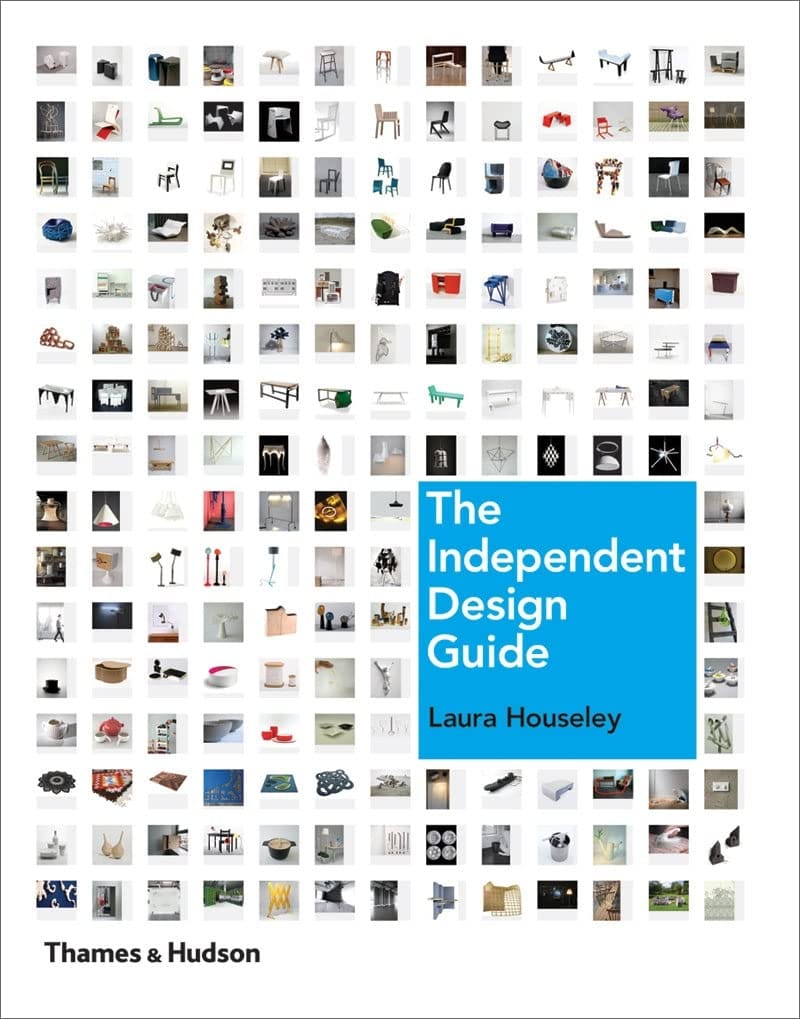
Laura Houseley, The Independent Design Guide (Thames & Hudson, 2012): Documents the ecosystem of small-batch independent design studios that Areaware drew its roster from — the context for why those collaborations produced objects with an argument rather than objects with a price point.
Frequently Asked Questions
What is Areaware known for?
Areaware is known for everyday design objects (puzzles, toys, games, and coasters) produced in collaboration with independent designers at accessible price points. The brand’s signature approach removes conventional scaffolding from familiar categories: puzzles with no image, building blocks with no instructions, coasters that function as modular tile arrangements. Founded in Brooklyn in 2005 by Lisa Yashon and Noel Wiggins, Areaware licensed designs from independent designers including Susan Kare, David Weeks Studio, James Paulius, and Bower Studio.
Are Areaware products still available now that the brand is closing?
Areaware announced its closure in early 2026 and closes May 1, 2026. Products currently listed on Amazon remain available while stock lasts and will not be restocked after the brand closes. Some items will become harder to find over time. If there is a specific Areaware object you want, the current window is the one to buy in.
What are the best Areaware gifts for someone who doesn’t want something generic?
The best Areaware gifts for someone with a design sensibility are the Gradient Puzzle (for someone who thinks about color), the Blockitecture Brutalism set (for someone who keeps objects on a desk that have something to say), and the Cubebot Micro (for someone who likes objects that reward looking at). The Little Puzzle Thing: Broccoli is the right under-$20 option when you need something specific rather than something safe.
How hard is the Areaware Gradient Puzzle?
The Gradient Puzzle is significantly harder than a standard jigsaw. Because there is no image to compare pieces against, only a color gradient from one hue to another, the solver must reason about color relationships rather than match shapes to a reference. The 500-piece version takes most people considerably longer than a standard 500-piece puzzle. Thingtesting reviewers noted this, with some calling certain colorways ‘extremely difficult.’ That difficulty is the design working as intended.
Who designed Areaware’s products?
Areaware licensed designs from independent designers rather than producing most products in-house. Notable designers in the roster include Susan Kare (who designed the original Macintosh typefaces), David Weeks Studio (Cubebot; also designed furniture for Areaware), James Paulius (Blockitecture), Bower Studio (Table Tiles), and Fort Standard (early collaborator). The brand’s founding model gave designers 6% royalties while Areaware handled manufacturing and distribution.
Is Areaware on Amazon?
Yes. Areaware products are available on Amazon, including the Gradient Puzzle, Blockitecture sets, Cubebot, Table Tiles, and the Little Puzzle Thing series. Given that Areaware closes May 1, 2026, Amazon listings represent available stock rather than ongoing supply. Some items will go out of stock and not be replenished.
For the full Areaware object catalogue, see our guide to best Areaware design objects. For a direct comparison of Areaware’s approach against a comparable brand, see Alessi vs Areaware.

About Zoe Post
Zoe Post holds a BFA and a Master of Architecture from the School of the Art Institute of Chicago. She now works as a product marketing leader at an architectural product design firm, bringing hands-on industry perspective to everything she writes. At ADI she covers contemporary artists, textile and pattern design, and the design objects that sit at the boundary of art and function.