
Raymond Loewy published two major books himself and inspired several critical studies, covering a career that ran from the 1934 Coldspot refrigerator to NASA’s Skylab interior. The best Raymond Loewy books span autobiography, exhibition catalogue, and cultural biography, with particular attention to MAYA, his theory of how radical design earns mass acceptance.
Why Loewy wrote about design — and why others followed
I have not found a good annotated Loewy reading list on the internet. What turns up are raw Amazon listings and the occasional design-blog roundup that conflates the books without distinguishing what each one actually does. This is a genuine gap. The Loewy literature is richer than its reputation suggests, and reading it in the right order changes what you get from each book.
I have not found a good annotated Loewy reading list on the internet. What turns up are raw Amazon listings and the occasional design-blog roundup that conflates the books without distinguishing what each one actually does.
Loewy published Never Leave Well Enough Alone (Simon & Schuster, 1951) at the peak of his celebrity. His October 31, 1949 Time magazine cover appeared under the headline “He Streamlines the Sales Curve.” The book is not a vanity memoir. It is a sustained argument that good appearance is a salable commodity, and that the designer’s job is to make that argument to clients who have not yet understood it. Loewy was selling design as a profession to the business community, and the book is that pitch delivered as autobiography.
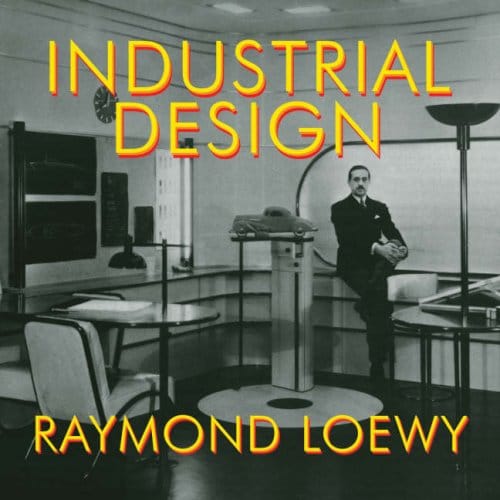
His second book, Industrial Design (Overlook Press, 1979; Abrams reissue, 2007), came at the other end of the career. Loewy was in his mid-eighties, had returned to France, and was taking stock. It is primarily a visual catalogue: photographs of fifty years of work with his own captions. Less argument, more archive.
The critical literature that followed has focused on two problems: how Loewy built his own persona as a brand before branding was a word, and how MAYA (Most Advanced Yet Acceptable) explains the commercial logic behind his aesthetic choices. EBSCO Research Starters credits Loewy with coining MAYA as his “grand theory of popularity,” the observation that consumers are simultaneously drawn to novelty and frightened by it, and that optimal design sits exactly at the edge of what they can accept. Every book in this list illuminates a different facet of that idea.
For the biographical and design context behind the career itself, the ADI profile at Raymond Loewy: The Designer Who Sold America on Good Design covers the objects and the person. This post’s job is the books — what reading them actually gives you.
What the best books actually cover — and what they skip
The autobiography is self-promotional by design, but it is also genuinely funny and surprisingly candid about client dynamics and the business of design. Loewy describes the Lucky Strike redesign in detail: American Tobacco president George Washington Hill wagered him $50,000 that he couldn’t improve the pack; Loewy changed the background from green to white (which also reduced printing costs) and placed the red target on both sides. The pack remained essentially unchanged for over forty years. The book’s real subject is how Loewy made himself indispensable to clients who thought they already knew what they wanted.
John Wall’s Streamliner (Johns Hopkins University Press, 2018) is the most rigorous critical biography in the Loewy literature. Wall’s argument is that Loewy’s most important design was his own image and reputation, that he was “a national brand a half century before branding became relevant.” It is the most intellectually productive frame for understanding how visible Loewy became and how deliberately he had engineered that visibility. At 344 pages, drawing on archival research Loewy’s own books never attempted, Streamliner is the book that changes how you read everything else.
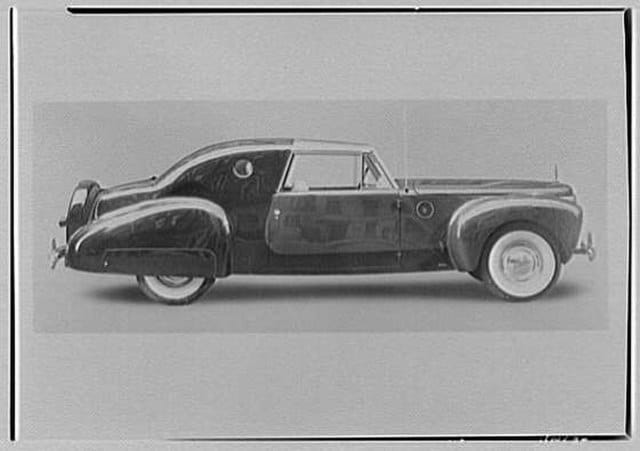
It is the most intellectually productive frame for understanding how visible Loewy became and how deliberately he had engineered that visibility.
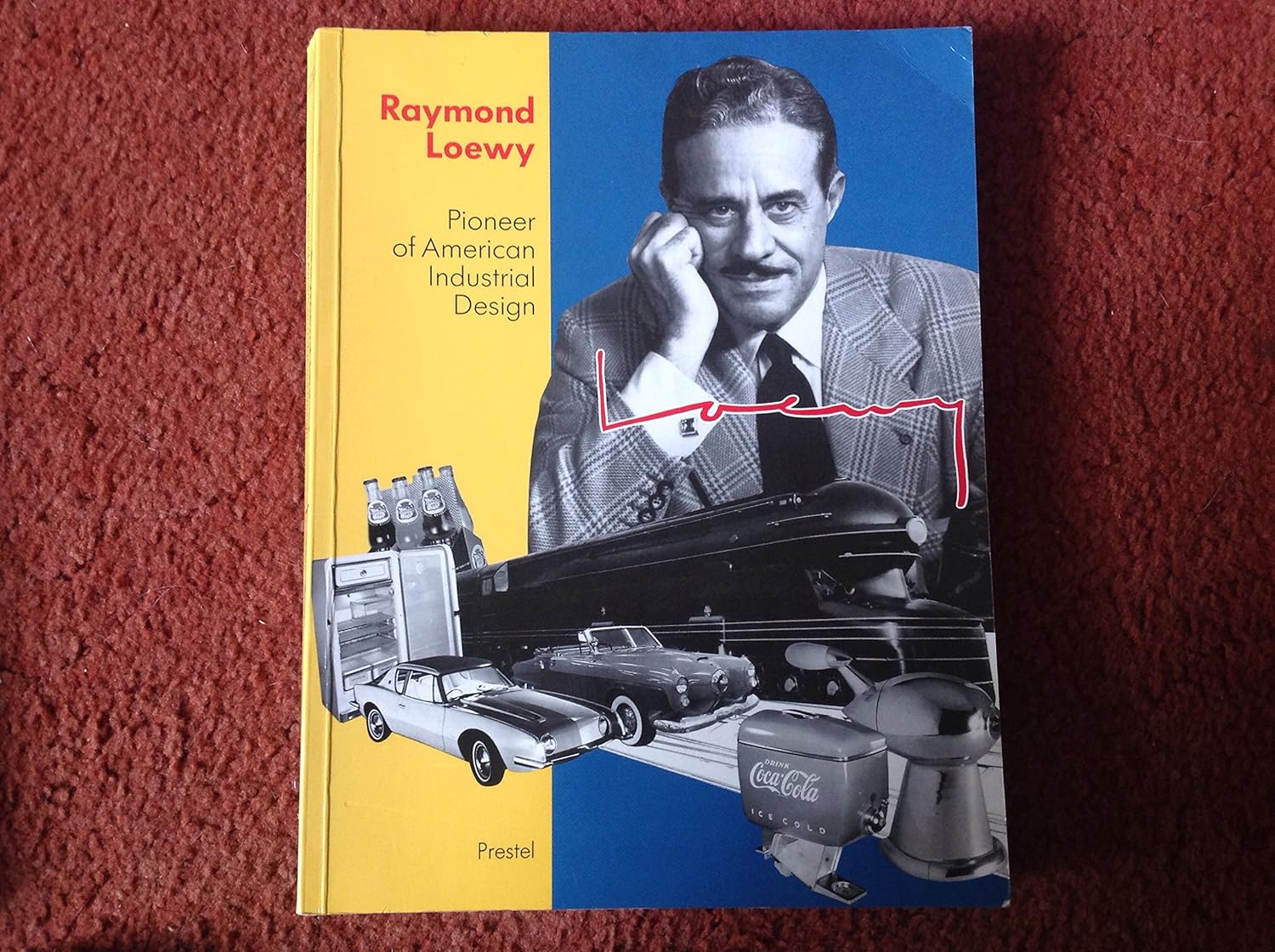
Angela Schonberger’s edited catalogue Raymond Loewy: Pioneer of American Industrial Design (Prestel, 1990) situates Loewy within the broader peer group of American industrial designers (Henry Dreyfuss, Walter Dorwin Teague) through essays by more than twenty international scholars and more than 300 illustrations. It is the best entry point for readers who want design history rather than Loewy biography specifically.
What none of these books cover adequately is the post-1970 work. Loewy served as a NASA habitability consultant from 1967 to 1973, working on the Skylab interior with attention to its psychology, safety, and comfort for long-duration spaceflight. He redesigned the Air Force One livery in 1962. These are genuinely important commissions that remain under-documented in book form.
The best Raymond Loewy books, annotated
Never Leave Well Enough Alone — The primary source
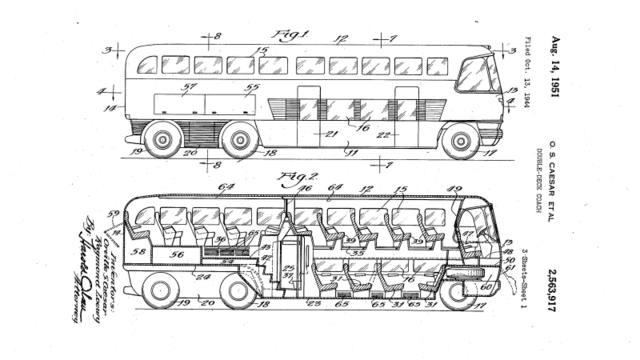
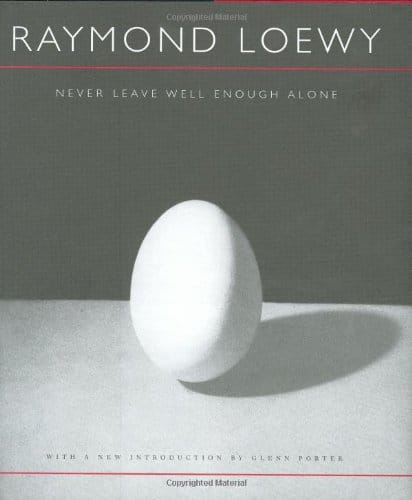
Never Leave Well Enough Alone by Raymond Loewy
488 pages of Loewy narrating his own career with the confidence of someone who knows exactly how the story ends. Covers the Coldspot refrigerator commission, the Pennsylvania Railroad GG1 locomotive, the Lucky Strike redesign. The logic of MAYA runs throughout — the argument the book is making — but Loewy had not yet formalized it as a term. The foundational text.
Never Leave Well Enough Alone by Raymond Loewy (Simon & Schuster, 1951; Johns Hopkins University Press reissue, 2002, with a foreword by Glenn Porter) is 488 pages of Loewy narrating his own career with the confidence of someone who knows exactly how the story ends. He covers the Coldspot refrigerator commission, the Pennsylvania Railroad GG1 locomotive, the Lucky Strike redesign.
What he does not do is use the acronym MAYA. The logic of Most Advanced Yet Acceptable runs throughout — it is the argument the book is making — but Loewy had not yet formalized it as a term. Reading the book with that frame in mind makes it considerably richer than reading it as a career retrospective. This is the foundational text.
Streamliner — The critical biography
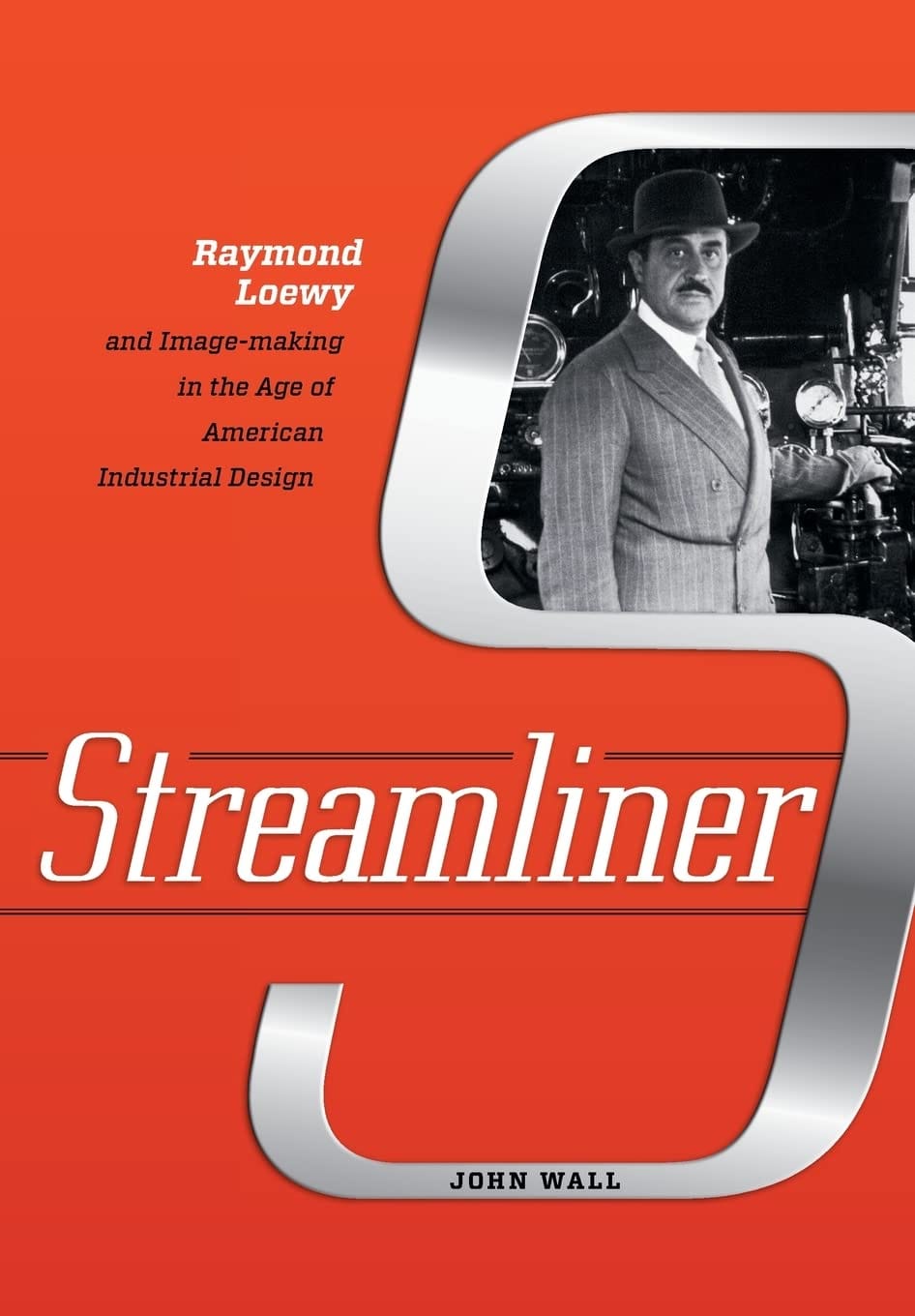
Streamliner: Raymond Loewy and Image-making in the Age of American Industrial Design by John Wall
The book that Loewy’s autobiography makes necessary. Where Loewy narrates his career as a series of brilliant client relationships, Wall shows how those relationships were themselves designed. The archival depth is what distinguishes it. The strongest critical biography in the Loewy literature.
Streamliner: Raymond Loewy and Image-making in the Age of American Industrial Design by John Wall (Johns Hopkins University Press, 2018) is the book that Loewy’s autobiography makes necessary. Where Loewy narrates his career as a series of brilliant client relationships, Wall shows how those relationships were themselves designed. The archival depth is what distinguishes it. This is the strongest critical biography.
Industrial Design — The visual archive
Industrial Design by Raymond Loewy
Primarily a visual document: photographs of the work with Loewy’s own captions. Weaker analytically than Never Leave Well Enough Alone or Streamliner, but essential as an object. Holding it is different from reading about the career. The Abrams 2007 reissue runs 256 pages.
Industrial Design by Raymond Loewy (Overlook Press, 1979; Abrams reissue, 2007) is primarily a visual document: photographs of the work with Loewy’s own captions. It is weaker analytically than either Never Leave Well Enough Alone or Streamliner, but it is essential as an object. Holding it is different from reading about the career. The Abrams 2007 reissue runs 256 pages and is the accessible version.
Raymond Loewy: Pioneer of American Industrial Design — The scholarly catalogue
Raymond Loewy: Pioneer of American Industrial Design, edited by Angela Schonberger
The most useful book for readers who want to situate Loewy within design history rather than simply follow his biography. Essays from more than twenty international contributors — readings of Loewy that are not Loewy’s own account of himself. More than 300 illustrations make it viable as a visual reference alongside the analytical text.
Raymond Loewy: Pioneer of American Industrial Design, edited by Angela Schonberger (Prestel, 1990) is the most useful book for readers who want to situate Loewy within design history rather than simply follow his biography. The multi-scholar format brings essays from more than twenty international contributors, which means you get readings of Loewy that are not Loewy’s own account of himself. The 300-plus illustrations make it viable as a visual reference alongside the analytical text.
The Designs of Raymond Loewy — The archive hunt
The Designs of Raymond Loewy — Smithsonian Institution Press, 1975
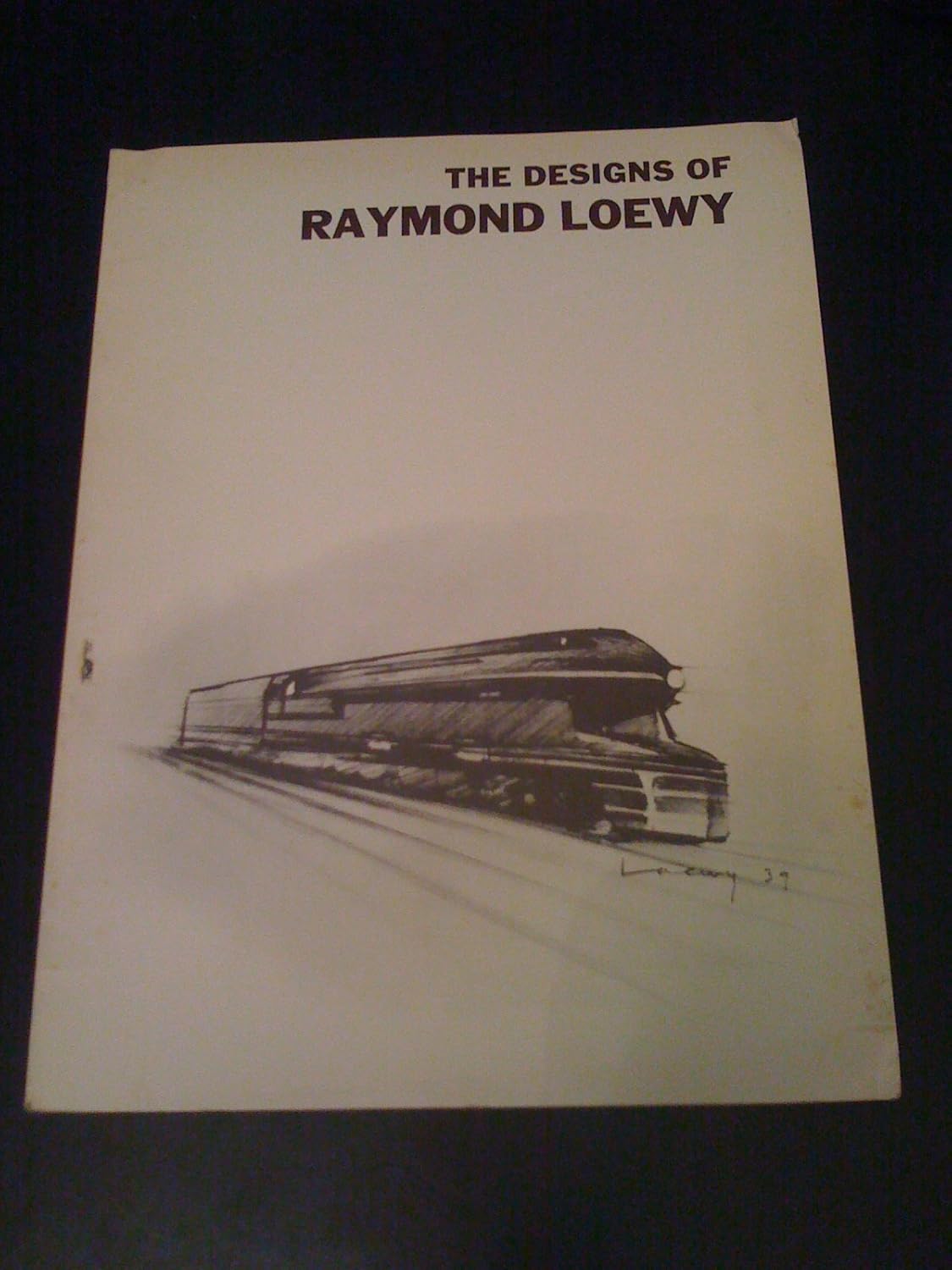
The catalogue for the Renwick Gallery retrospective exhibition. Out of print. Used and collectible listing only — availability varies, prices reflect collector-market dynamics. Two dense scholarly essays plus black-and-white photography. The essays alone justify tracking down a copy.
The Designs of Raymond Loewy (Smithsonian Institution Press, 1975) was the catalogue for the Renwick Gallery retrospective exhibition. It is out of print. Note: this is a used and collectible listing — availability varies, and prices will reflect collector-market dynamics rather than cover price. Two dense scholarly essays plus black-and-white photography. The essays alone justify tracking down a copy.
Shop the Collection
Five books, in the order I’d recommend reading them. Never Leave Well Enough Alone first — you need Loewy’s own account before you can read what others make of it. Streamliner second, to see what Wall makes of that account. The others depend on what you’re looking for.
- Never Leave Well Enough Alone, Raymond Loewy: The foundational text — Loewy’s own account of his career, including the Lucky Strike wager and the Pennsylvania Railroad commissions.
- Industrial Design, Raymond Loewy: The visual retrospective — fifty years of work in photographs, with Loewy’s own captions.
- Streamliner, John Wall: The strongest critical biography; argues that Loewy’s self-image was his most deliberate design.
- Raymond Loewy: Pioneer of American Industrial Design, ed. Angela Schonberger: Multi-scholar Prestel catalogue — best for design history context beyond biography alone.
- The Designs of Raymond Loewy, Smithsonian Institution Press: Out-of-print Renwick Gallery catalogue — used/collectible listing only; worth the hunt for the scholarly essays.
Further Reading
These two books are not about Loewy. They are about the cultural and economic conditions that made his career possible, and they fill in what Loewy’s own books leave out.
- Henry Dreyfuss, Designing for People (Allworth Press, 2003 reissue): Loewy’s contemporary and peer. Reading Dreyfuss alongside Loewy clarifies what was shared design philosophy in their era versus what was distinctly Loewy’s personal brand. The contrast is more instructive than either book alone.
- Jeffrey Meikle, Twentieth Century Limited: Industrial Design in America, 1925–1939 (Temple University Press, 2001): The canonical academic history of the streamlining era that made Loewy’s career possible — gives the economic and cultural scaffolding that his own books leave out entirely.
Frequently Asked Questions
What is Raymond Loewy’s most important book?
Never Leave Well Enough Alone (1951; Johns Hopkins reissue, 2002) is the essential Loewy text. It is a primary source — Loewy in his own voice, describing his method and his client relationships at the peak of his career. John Wall’s Streamliner (2018) is the most important book written about Loewy, and it is the stronger critical work, but it assumes you have read the autobiography first.
What is the MAYA principle and where did Loewy explain it?
MAYA stands for Most Advanced Yet Acceptable. Loewy’s theory holds that consumers are torn between neophilia (the desire for novelty) and neophobia (the fear of the unfamiliar), and that optimal design sits at the edge of what they can accept. He never uses the acronym in Never Leave Well Enough Alone, but the logic runs throughout the book. The term itself appears in secondary sources; EBSCO Research Starters credits Loewy with coining it as his ‘grand theory of popularity.’
Is Never Leave Well Enough Alone still in print?
Yes. The Johns Hopkins University Press reissue (2002), with a foreword by Glenn Porter, is the current in-print edition. The original Simon & Schuster edition (1951) is out of print but available used. The Johns Hopkins edition runs 488 pages.
Are there any recent biographies of Raymond Loewy?
John Wall’s Streamliner: Raymond Loewy and Image-making in the Age of American Industrial Design (Johns Hopkins University Press, 2018) is the most recent full critical biography and, in terms of archival depth and argument, the best available. No comparable full-length critical biography has been published after 2018.
Who else should I read alongside Loewy to understand American industrial design?
Henry Dreyfuss’s Designing for People (Allworth Press, 2003 reissue) is the most useful companion — Dreyfuss was Loewy’s contemporary and the contrast between their approaches clarifies both. Jeffrey Meikle’s Twentieth Century Limited (Temple University Press, 2001) provides the economic and cultural history of the streamlining era that neither Loewy nor Dreyfuss fully accounts for in their own books.
How do Raymond Loewy’s own books differ from books written about him?
Loewy’s books (Never Leave Well Enough Alone and Industrial Design) are primary sources: his account of his career, his design decisions, his clients. They are not academic, they are not unbiased, and they are not interested in what Loewy did not see. Books written about him, particularly Wall’s Streamliner, use archival sources to examine how Loewy constructed his own narrative and what it leaves out. Both kinds of books are necessary; neither is a substitute for the other.
The full profile of Loewy’s career and design philosophy is in our Raymond Loewy guide. For products in his tradition, see best Raymond Loewy inspired products.

About Joe Post
Joe Post holds an MFA in Art from California Institute of the Arts (CalArts) and has done additional graduate work at the School of the Art Institute of Chicago. He founded Art Design Ideas to write about design as cultural argument — the decisions, contradictions, and assumptions built into the objects we live with.