
Vitra is a Swiss furniture and design brand founded by the Fehlbaum family in 1950. Since 1957, Vitra has manufactured the work of Charles and Ray Eames under European license, growing into a brand whose campus in Weil am Rhein, with buildings by Frank Gehry, Zaha Hadid, and Herzog & de Meuron, is an architectural statement in its own right.
What the Fehlbaums Understood That Most Furniture Companies Didn’t
The name comes from “vitrine,” the French word for display case, because that is what Willi and Erika Fehlbaum initially made. Shop display furniture in Birsfelden, Switzerland, early 1950s. Not a glamorous origin for a company that would eventually commission Zaha Hadid’s first building.
The pivot happened in 1953. Willi and Erika went to New York and walked into Herman Miller’s showroom. They saw what Charles and Ray Eames were doing with molded plywood and fiberglass: the DSW, the DAW, the Lounge Chair just coming into production. They understood something that most European furniture manufacturers apparently did not. This was not American novelty. This was an argument about what furniture could be when the design took the material seriously rather than imposing form on it. By the time they left, they had started a conversation about European manufacturing rights.
Production began in 1957. The license gave Vitra the right to manufacture Eames pieces for European markets, but it also committed Willi to building a factory capable of the molded fiberglass and plywood processes that Herman Miller had developed in Grand Rapids. Vitra was not just distributing American furniture. It was learning a new way to make things.
Rolf Fehlbaum, Willi and Erika’s son, joined the company in the 1960s initially as a translator and traveled to the United States in 1960 as a young man. He met George Nelson in New York, the Eameses in Los Angeles, Alexander Girard in New Mexico. These were not trade visits. They were intellectual relationships of the kind that shape what a company thinks it is for. Rolf took leadership of Vitra in 1977, and from that point the company’s direction was less about furniture manufacture and more about what Cornel Windlin, Rolf Fehlbaum, and Deyan Sudjic describe in Project Vitra (Birkhäuser, 2008) as the development of a “design culture institution.” Vitra’s own account of that development — the designer relationships, the campus commissions, the museum program — is documented in depth in the Vitra Magazine, which the company uses as its primary long-form record of the ideas behind the work.
The bet Willi made in 1953 was not, finally, about furniture. It was ideological: that European buyers would accept American postwar design rationalism, and that a Swiss company could be its European steward. That bet paid off. But the more interesting version of the story is what Rolf made of it. The company was not just a manufacturer but a curator. A curator needs space to make the argument visible.
The bet Willi made in 1953 was not, finally, about furniture. It was ideological.
Why Vitra’s factory fire became an architecture commission

In July 1981, a lightning strike destroyed roughly half of Vitra’s production campus in Weil am Rhein. This is the hinge on which the company’s second act turns.
The conventional response would have been to rebuild what was there, to restore the factory and get production running again. Rolf did not do that. He commissioned Nicholas Grimshaw to develop a master plan for reconstruction, but the relationship with Grimshaw was a start, not a conclusion. When Rolf met Frank Gehry in the mid-1980s, he departed from Grimshaw’s unified plan and began what would become the most concentrated collection of significant architecture on any industrial site in Europe.
The Vitra Design Museum opened in 1989. It was Gehry’s first completed building in Europe. White plaster, titanium-zinc cladding, the deconstructivist vocabulary Gehry was developing simultaneously at the Bilbao Guggenheim, but constrained here to a smaller scale and a specific program. The building houses the museum collection and mounts major temporary exhibitions annually; it also makes an argument about what a factory campus can be when the company running it treats architecture as a medium rather than as infrastructure.
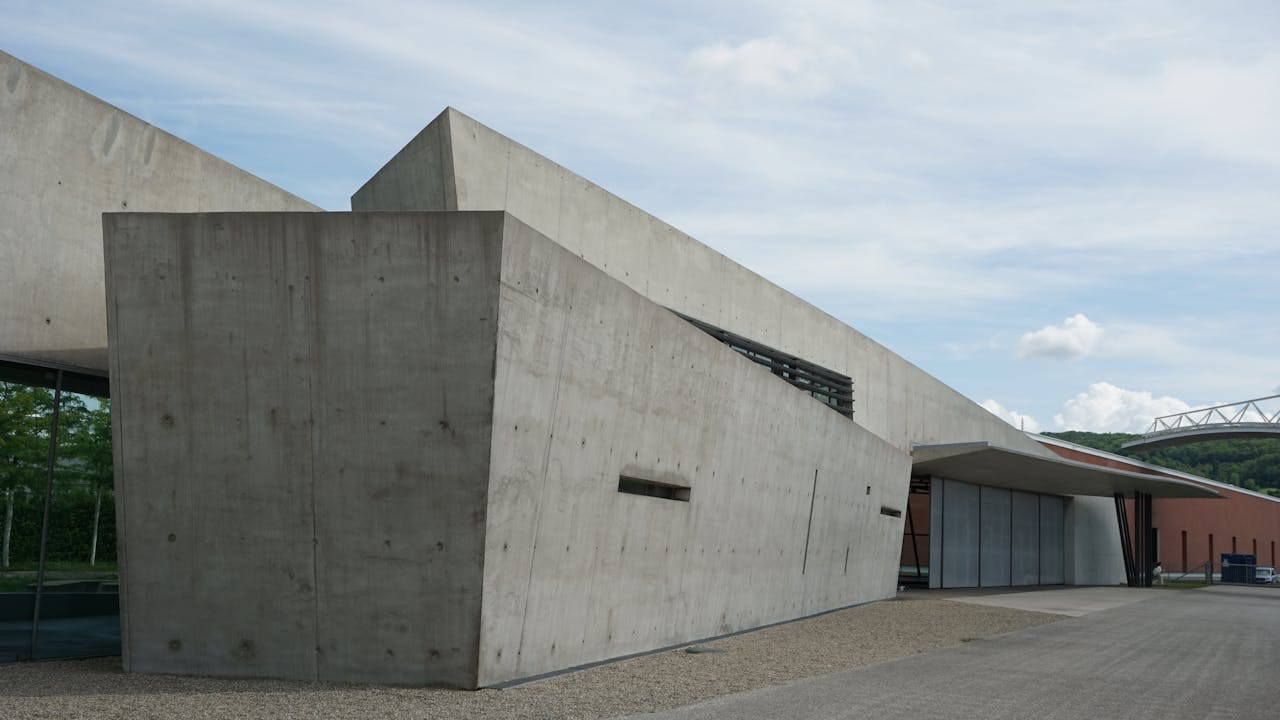
The campus grew from there. Zaha Hadid’s Fire Station (1993), also her first completed building, sits at the campus entrance. Tadao Ando’s Conference Pavilion opened the same year. Álvaro Siza contributed factory buildings and a passage in 1994. Herzog & de Meuron’s VitraHaus (2010) stacks house-form volumes to create a showroom that reads from the outside as a sequence of domestic typologies, a retail space that performs domesticity rather than concealing it. SANAA added a factory in 2011.
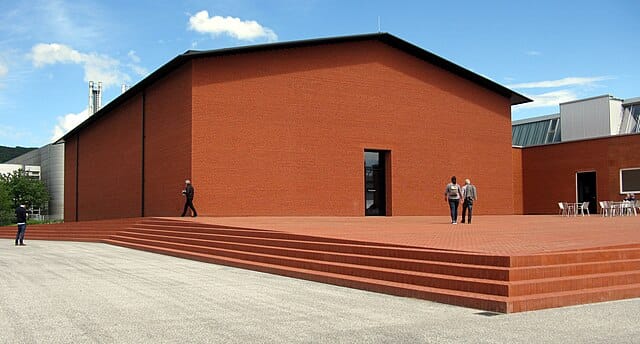
The Vitra Schaudepot, designed by Herzog & de Meuron, holds a permanent collection of approximately 400 objects, one of the largest collections of modern furniture in the world. The Eames Lounge Chair is there. So is the Panton Chair, the Verner Panton original Vitra introduced in 1967. So are pieces most design museums don’t have because most design museums didn’t build the kind of relationships with designers that Rolf spent sixty years cultivating. Several of Vitra’s key pieces — including the Eames fiberglass chairs — are also held in the MoMA permanent collection, which has documented them as objects that resolved, rather than merely illustrated, specific structural problems in postwar materials technology.
The question worth asking about all of this is not how impressive the campus is. The question is what it means that a furniture company felt it needed one. The answer is that Vitra was not, by the time Rolf was done, a furniture company in the ordinary sense. It was an institution that happened to manufacture furniture. The campus is not a marketing exercise — it is the argument made physical.
The campus is not a marketing exercise — it is the argument made physical.
The objects that define the Vitra design brand
Eames Lounge Chair & Ottoman (1956, Charles and Ray Eames; Vitra European production)
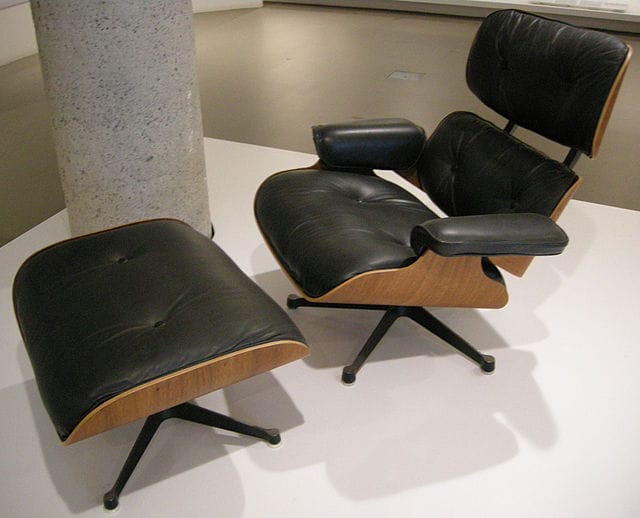
Molded rosewood plywood shells on an aluminum base, with leather cushions. The chair that proved postwar American design rationalism could produce something luxurious without abandoning its principles. The shells were not upholstered over a conventional frame. The plywood was the structure and the surface simultaneously. Vitra produces the European-market version under the Herman Miller license still in force today.
The miniature is 1:6 scale, handmade, approximately five hours per piece, shipped in a wooden Vitra box. It is now itself an object worth considering. It is not merchandise. It is Vitra making the argument that the accuracy of a reproduction is a form of respect for the original design. The same reasoning that drives the full-scale license is in the miniature.
Panton Chair (1967, Verner Panton; produced by Vitra)
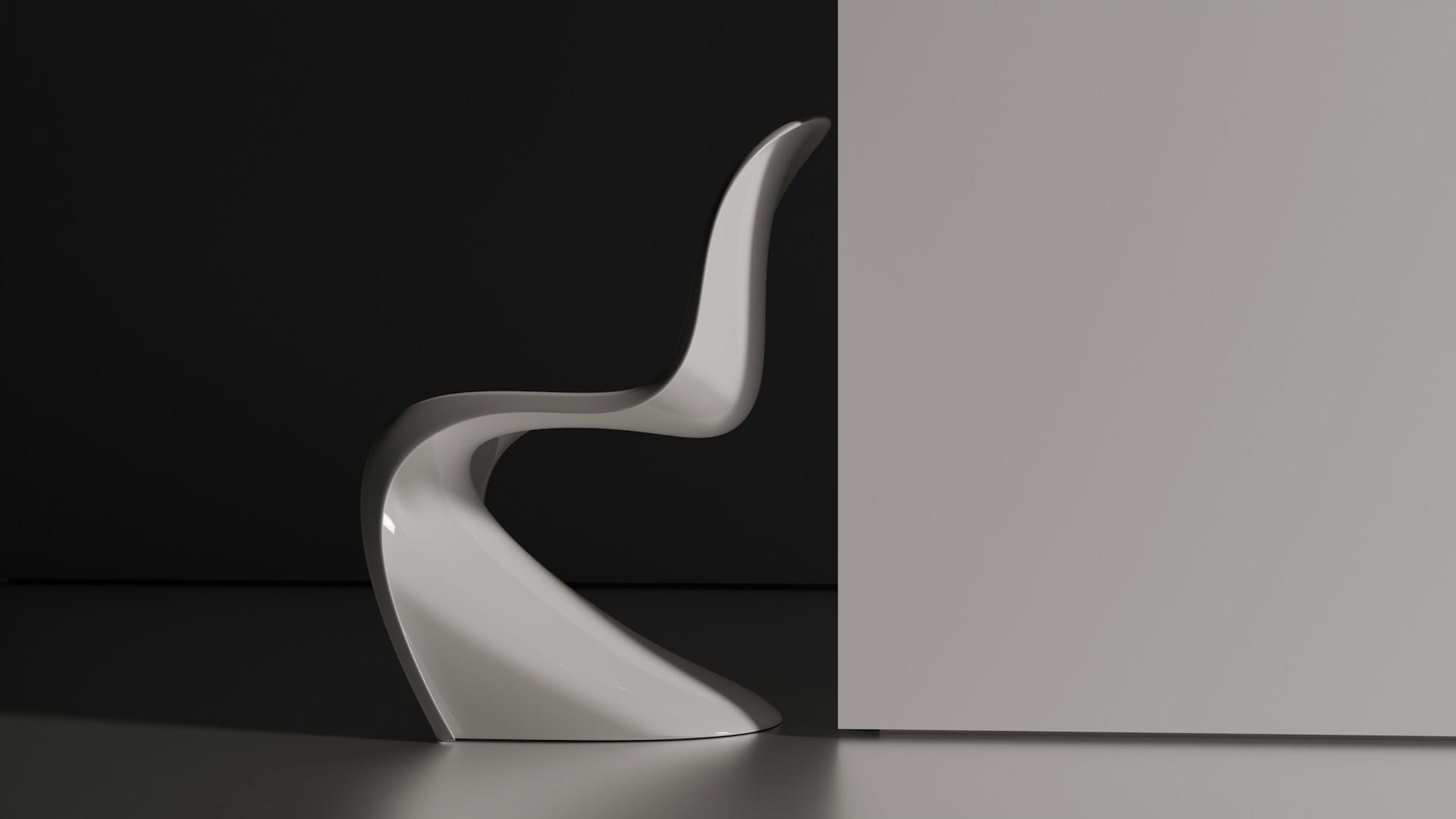
The Panton Chair is the first single-material, single-form cantilevered chair made entirely of plastic. This is not a minor technical distinction. The S-curve resolves the structural problem of cantilevering in a material with no tensile strength in the way wood or steel has it, and it does so without compromise: no internal armature, no secondary material, one continuous form from foot to seat back.
Vitra introduced it in 1967 after years of development with Panton, multiple failed prototypes, and attempts by other manufacturers that did not result in commercial production. The difficulty of making it is part of what the chair means.
DSW Chair (1950 design, Charles and Ray Eames; Vitra European production)
Originally designed for the Museum of Modern Art’s Low-Cost Furniture Design competition in 1948, the DSW’s fiberglass seat shell on wooden dowel legs and a metal crossbar is a precise piece of engineering dressed as furniture. The dowel leg base is not decorative. It was the cheapest, lightest structure that would hold the shell at the right height. The design is the solution. Vitra produces the European version and the 1:6 miniature, which reproduces the natural wood grain of the dowel legs at fingertip scale. The Design Museum London has written on the Eames fiberglass chair series as a case study in how postwar American manufacturing constraint generated formal solutions that no European tradition would have produced by the same path.
Vitra Design Museum (Frank Gehry, 1989)
The museum sits at the entry to the Weil am Rhein campus. White plaster and titanium-zinc. Gehry’s first European building. The institution it houses mounts two major temporary exhibitions annually and publishes scholarship on design history that treats furniture with the same seriousness as any other cultural artifact.
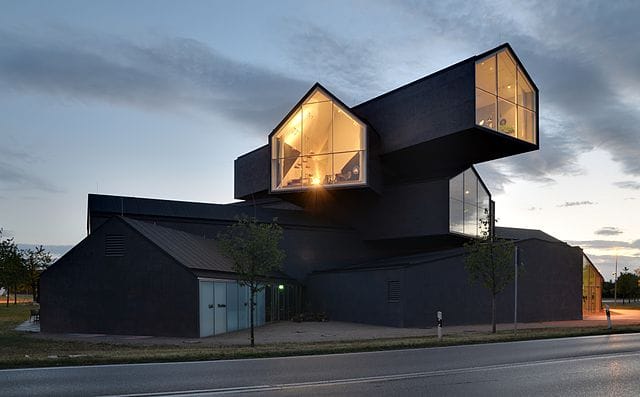
VitraHaus (Herzog & de Meuron, 2010)
Twelve house-form volumes stacked and cantilevered over the campus, housing the Vitra Home Collection showroom. The form makes the building legible from a distance as a collection of domestic typologies, a building that signals from the outside that what is inside concerns the house. The retail logic and the architectural logic are the same logic.
The Vitra pieces most worth buying, whether at full scale or in miniature form, are documented in detail in Vitra’s best-known products, which covers the current production lineup and current pricing.
Shop the Collection
Vitra makes two miniatures that are worth owning as objects, not as souvenirs. Both are at 1:6 scale, handmade, and accurate enough to function as small-scale studies of the original designs.
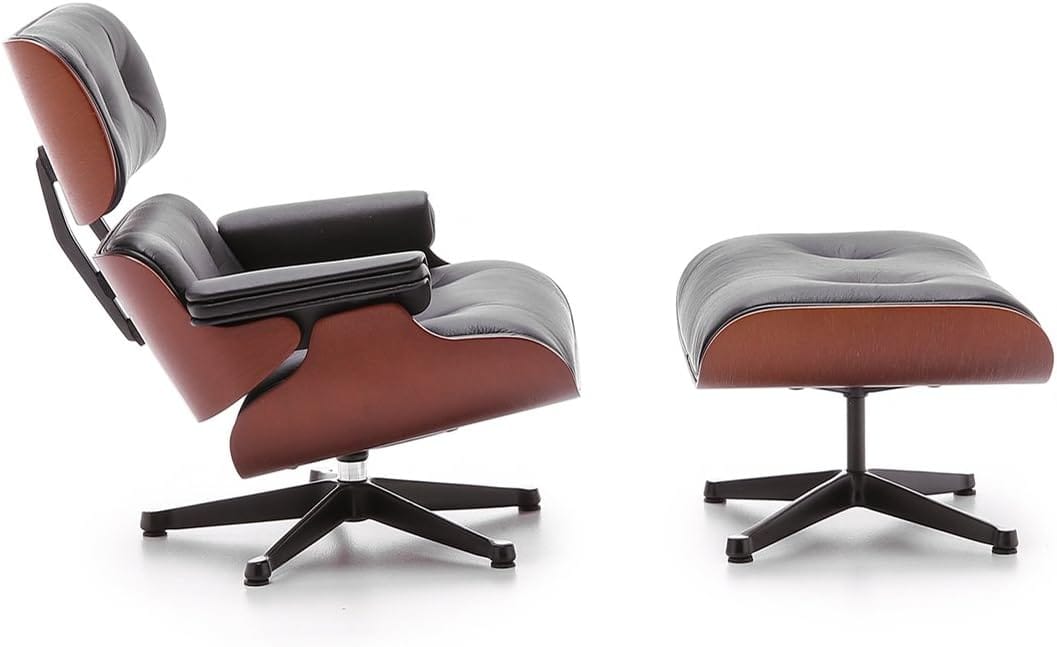
Vitra Miniature Eames Lounge Chair & Ottoman
Bent plywood, cast aluminum, leather, made in Poland, approximately five hours of handwork per piece, ships in a wooden Vitra box. The miniature is the argument for what the Miniatures Collection is: not merchandise but a catalog of the canon.
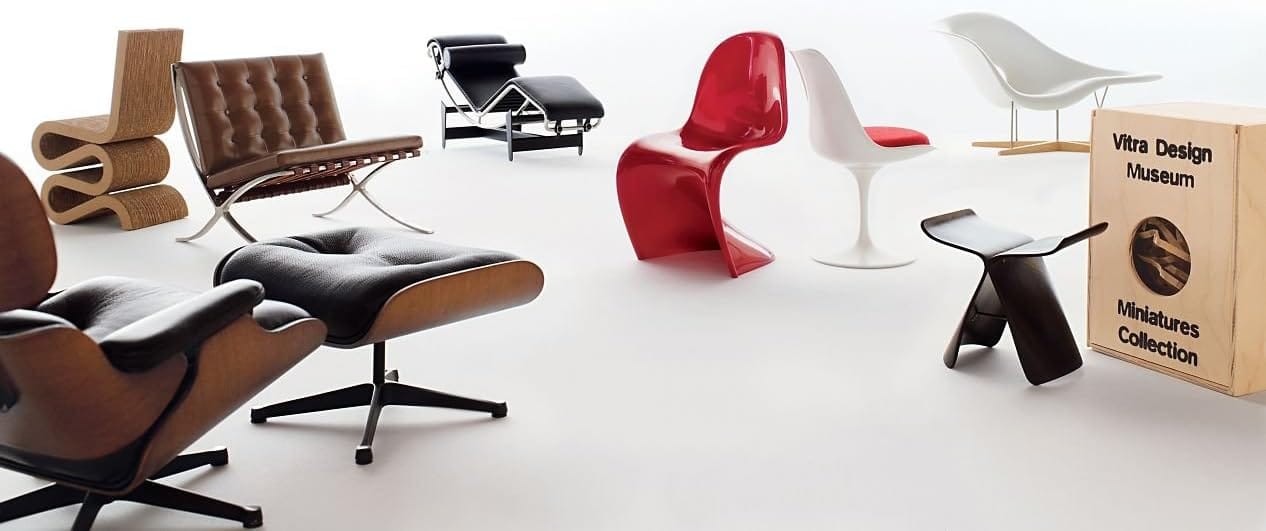
Vitra Miniature Eames DSW Chair
At 1:6 scale the DSW miniature reproduces the natural wood grain of the dowel legs and the screws, a reminder that the original 1950 design was an engineering solution dressed as furniture, and that Vitra understood this well enough to replicate it at fingertip scale.
Further Reading
Two books cover Vitra’s history with the depth the subject requires. There is no third one worth mentioning.
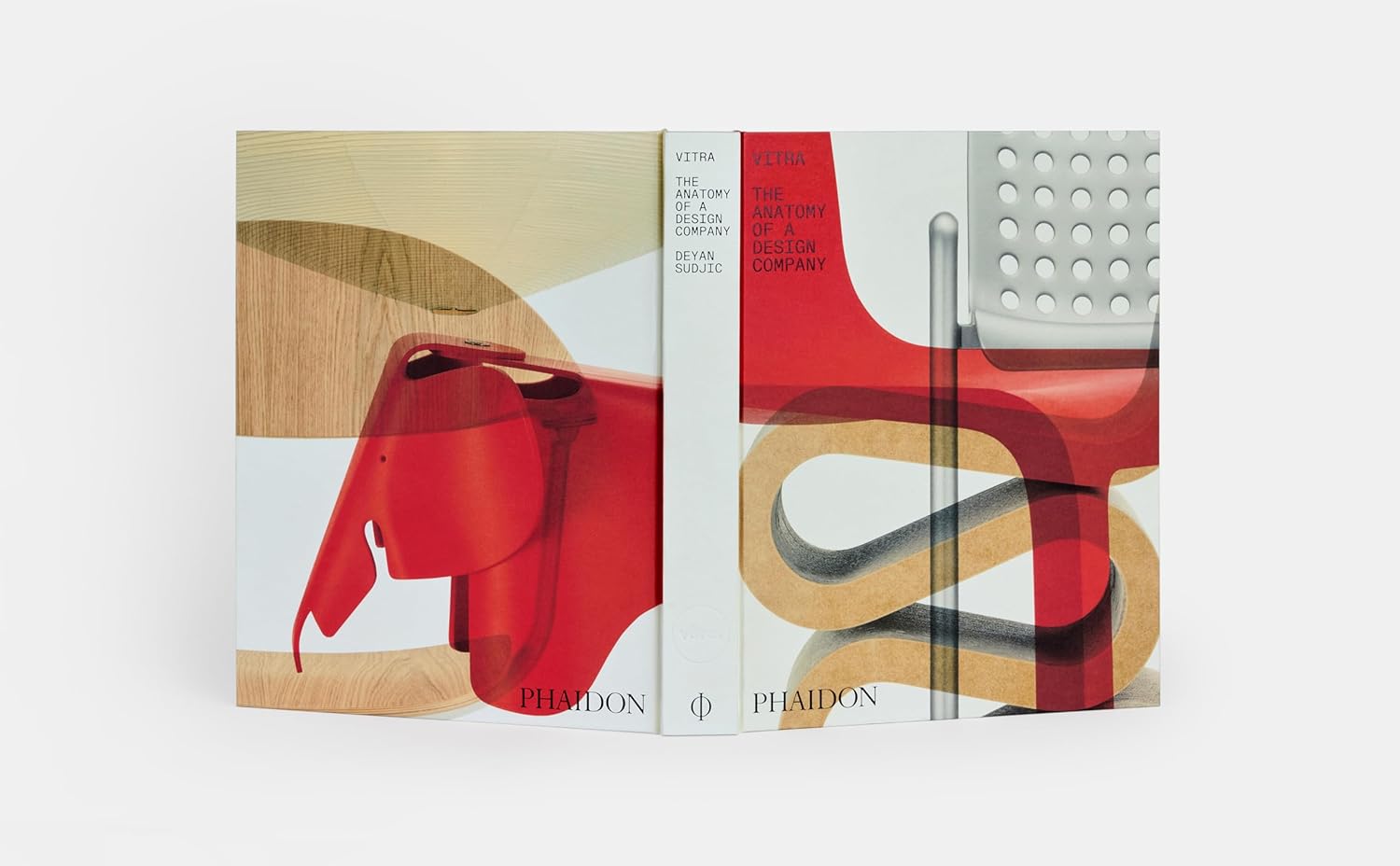
Deyan Sudjic, Iwan Baan, and Karen Stein, Vitra: The Anatomy of a Design Company (Phaidon, 2025)
The most recent and comprehensive account: 410 pages, over 400 illustrations, three generations of the Fehlbaum family and every major designer relationship documented. Phaidon’s production standards are what you would expect. This is the book to own if you want one.
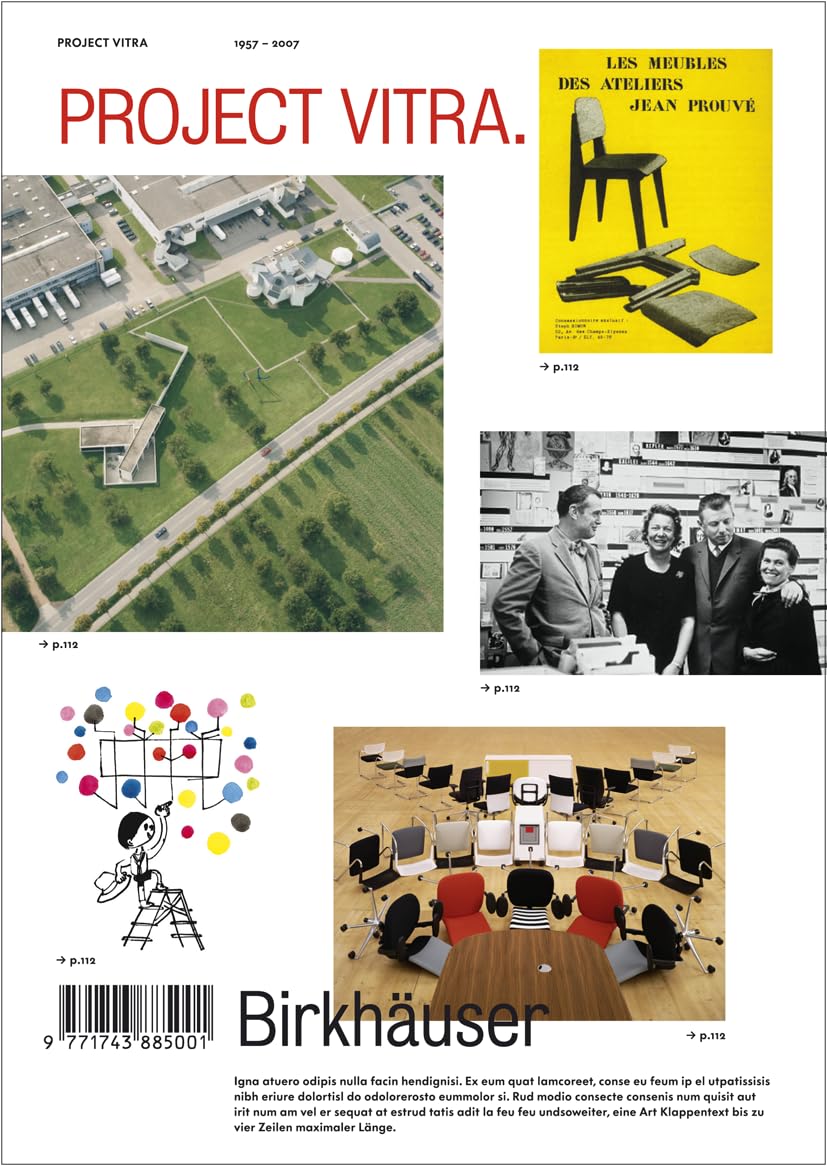
Cornel Windlin, Rolf Fehlbaum, and Deyan Sudjic, Project Vitra: Sites, Products, Authors, Museum, Collection, Signs (Birkhäuser, 2008)
The earlier institutional account, co-authored by Rolf Fehlbaum himself. The Birkhäuser architecture press framing situates Vitra in architectural history rather than brand history. Better sourced on the campus buildings than the Phaidon volume, and more candid about the decisions behind them.
Frequently Asked Questions
What is Vitra furniture?
Vitra is a Swiss furniture manufacturer founded in 1950 by Willi and Erika Fehlbaum. Since 1957, Vitra has produced the work of Charles and Ray Eames for European markets under a manufacturing license from Herman Miller. The company also produces pieces by Verner Panton, George Nelson, and a range of contemporary designers, and operates the Vitra Design Museum in Weil am Rhein, Germany.
Where is Vitra furniture made?
Vitra manufactures its furniture primarily at its campus in Weil am Rhein, Germany, near the Swiss border. The campus includes production facilities alongside the buildings by Frank Gehry, Zaha Hadid, Tadao Ando, and other architects. The Miniatures Collection is handmade in Poland.
Is Vitra the same as Herman Miller?
No. Vitra and Herman Miller are separate companies with a longstanding licensing relationship. Herman Miller holds the rights to Eames designs; Vitra holds the European and Middle Eastern manufacturing license for those designs. The two companies have been partners since the late 1950s and share some ownership overlap, but they operate independently and produce the same licensed designs for their respective markets. What they cannot do is call a reproduction an ‘Eames chair’ — that designation is licensed exclusively to Herman Miller and Vitra.
Who founded Vitra and when?
Willi and Erika Fehlbaum founded Vitra in Birsfelden, Switzerland in 1950. The company initially made shop display furniture — the name derives from “vitrine,” the French and German word for display case. Willi and Erika’s son Rolf Fehlbaum took leadership of the company in 1977 and shaped its development as a design culture institution over the following decades.
What is the Vitra Design Museum?
The Vitra Design Museum is a privately operated design museum on the Vitra campus in Weil am Rhein, Germany. The main building was designed by Frank Gehry and completed in 1989. It was Gehry’s first building in Europe. The museum’s permanent collection, housed in the adjacent Schaudepot designed by Herzog and de Meuron, includes approximately 400 objects and constitutes one of the largest collections of modern furniture in the world. The museum mounts major temporary exhibitions and publishes design scholarship.
Why are Vitra miniatures so expensive?
Vitra’s Miniatures Collection pieces are priced the way they are because they are handmade at 1:6 scale using the same materials and processes as the full-scale originals: bent plywood, cast aluminum, leather, natural wood grain. The Eames Lounge Chair miniature takes approximately five hours of handwork per piece. The price reflects labor, not brand premium. Whether that reasoning justifies the cost is a question for the buyer.
Vitra sits within the broader category of European design brands covered in our Design Brands & Ateliers hub. For the Danish competitor with an overlapping market position, see our Vitra vs HAY comparison. For a contemporary electronics brand that applies a similar level of design intentionality to a completely different product category, see our profile of Teenage Engineering. For specific product picks across the Vitra catalogue, see our guide to best Vitra products.

About Joe Post
Joe Post holds an MFA in Art from California Institute of the Arts (CalArts) and has done additional graduate work at the School of the Art Institute of Chicago. He founded Art Design Ideas to write about design as cultural argument — the decisions, contradictions, and assumptions built into the objects we live with.