
Memphis Design and the Bauhaus represent the two poles of twentieth-century design ideology: the Bauhaus (Dessau, 1919–1933) held that form follows function and ornament is waste; Memphis (Milan, 1981–1987) held that ornament is the point. Memphis vs Bauhaus is not a style debate — it is a disagreement about what design is fundamentally for.
What the Bauhaus was arguing, and why Memphis had to destroy it
Gropius founded the Bauhaus in Weimar in 1919 with a specific claim: industrial production and human dignity were not opposites, but only if the designer submitted ornament to function. The school moved to Dessau in 1925 and was forced to close under Nazi pressure in 1933. The faculty dissolved the Berlin iteration by vote in July of that year. Fourteen years is not a long run for a design institution. The Bauhaus’s actual influence came after it closed, carried by its diaspora: László Moholy-Nagy to Chicago, Walter Gropius and Marcel Breuer to Harvard, Ludwig Mies van der Rohe to the Illinois Institute of Technology. By mid-century, the Bauhaus argument had colonized design education across the industrialized world.

The philosophical grounding came from Adolf Loos’s 1913 essay “Ornament and Crime,” which declared that decorative impulse was a sign of moral and cultural regression, that evolved civilization moved toward the plain and functional. The Bauhaus took this as permission to treat every act of decoration as a failure of discipline.
By 1981, that argument had won so completely it had become invisible. “Good design” meant neutral surfaces, steel and glass, a design language that claimed universal rationality while encoding a very specific ideology of austerity. It was, in practice, the taste of Northern European modernism dressed up as objective truth.
Ettore Sottsass assembled the Memphis group in Milan on December 11, 1980. The name came from the Bob Dylan song “Stuck Inside of Mobile with the Memphis Blues Again,” which was playing on repeat at Sottsass’s apartment during the first meeting. The founding Italian core included Michele De Lucchi, George Sowden, Nathalie Du Pasquier, Matteo Thun, Marco Zanini, and Aldo Cibic; international contributors included Michael Graves from the United States, Hans Hollein from Austria, and Arata Isozaki and Shiro Kuramata from Japan. The theorist Barbara Radice, Sottsass’s partner, gave the group its critical framework.
Memphis’s opening move was a diagnosis: the Bauhaus had not liberated design from decoration. It had declared one aesthetic neutral and banned everything else. Sottsass called the dominant culture of “good design” the “culture of the condom” — design that separated the user from sensation, that wrapped every object in a prophylactic of rationality so no one had to feel anything about what they were holding.
The Bauhaus declared one aesthetic neutral and banned everything else.
What Memphis actually put on the table, and what it cost
Memphis’s argument was philosophical before it was visual. Decoration carries meaning. Suppressing it is not rationality. It is a specific cultural preference masquerading as universal truth. A design that refuses to communicate anything but function still communicates something: conformity.
The contrast is most visible in specific objects. Take Mies van der Rohe’s MR Chair, designed for the 1927 Weissenhof Estate exhibition: cantilevered steel tubing and a leather sling, no color, no embellishment. The object as proof that structure is beautiful without decoration, that the engineering solution is also the aesthetic solution. Against that, put Sottsass’s Tahiti lamp of 1981: bright colors, Abet plastic laminate base, slanted neck, the silhouette of a duck. A lamp that refuses every expectation of what a lamp should look like. Sottsass said it was a lamp that “tells a little story.” The MR Chair tells no story. That was the point of both objects.
Memphis used cheap materials deliberately. The Abet Print laminates that drove the movement’s visual language were the plastic surface materials from the catalog Sottsass and his collaborators worked from. They were the materials of everyday consumer culture, of kitchen counters and inexpensive furniture. Not the noble materials of “good design.” The choice was argument: if your design theory requires noble materials to work, it is not a universal theory. It is a class position.
If your design theory requires noble materials to work, it is not a universal theory. It is a class position.
The cost of the argument was real. Memphis pieces are difficult to live with long-term. Many of them were expensive to produce correctly despite using cheap materials; the fabrication was complex even when the laminate was cheap. The group dissolved in 1987, partly because Memphis had become a style. Once fashion absorbed it, once the diagonal lines and primary colors appeared on everything from album covers to television sets, the argument it was making became inaudible. Sottsass had been trying to argue about what design was for. By 1987, people thought he had been designing wallpaper patterns.
Six objects that show what the argument looked like in practice
The objects are the argument. These six, three from each tradition, show what the Memphis vs Bauhaus debate looked like when it was built in three dimensions.
The Carlton room divider, Ettore Sottsass, 1981
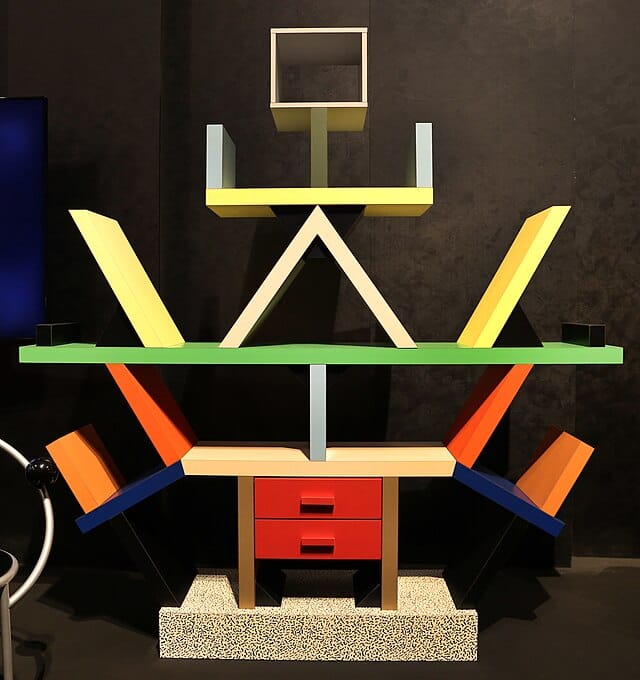
The definitive Memphis object. Asymmetric shelving in laminated particleboard and wood, multiple colors, the overall silhouette closer to a face or a totem than to furniture. Non-neutral in every axis. The Carlton does not try to fit into any room. It makes demands. The Art Institute of Chicago and the Metropolitan Museum of Art have it in their permanent collections, which is a way of acknowledging that it is more sculpture than furniture while also acknowledging that it is furniture.
The Tahiti lamp, Ettore Sottsass, 1981
A table lamp with the silhouette of a duck. Abet laminate base, slanted neck, shapes that have nothing to do with illumination as a function. Sottsass built the duck silhouette into a lamp to make a specific point: that an object can communicate at the level of symbol without sacrificing its function. The lamp still works. The duck is still a duck. The cognitive dissonance is the design.
The Casablanca sideboard, Ettore Sottsass, 1981
A sideboard with a mirror arm, zebra-striped laminate, and a shelf that appears structurally improbable. A functional storage object treated as non-functional sculpture, which is another way of saying that Memphis did not distinguish between those two categories. Whether this is liberation or confusion depends on what you think furniture is for.
The MR Chair, Ludwig Mies van der Rohe, 1927
The Bauhaus counter-object. Cantilevered steel tubing, leather sling seat. No color, no decoration, nothing that is not load-bearing. The argument that engineering constraint produces its own aesthetic sufficiency, that the chair does not need to be anything other than a chair, and that this restraint is not poverty but discipline. Mies built this for the Weissenhof Estate exhibition in Stuttgart, and it is still in production nearly a century later.
The Wassily Chair, Marcel Breuer, 1925–26
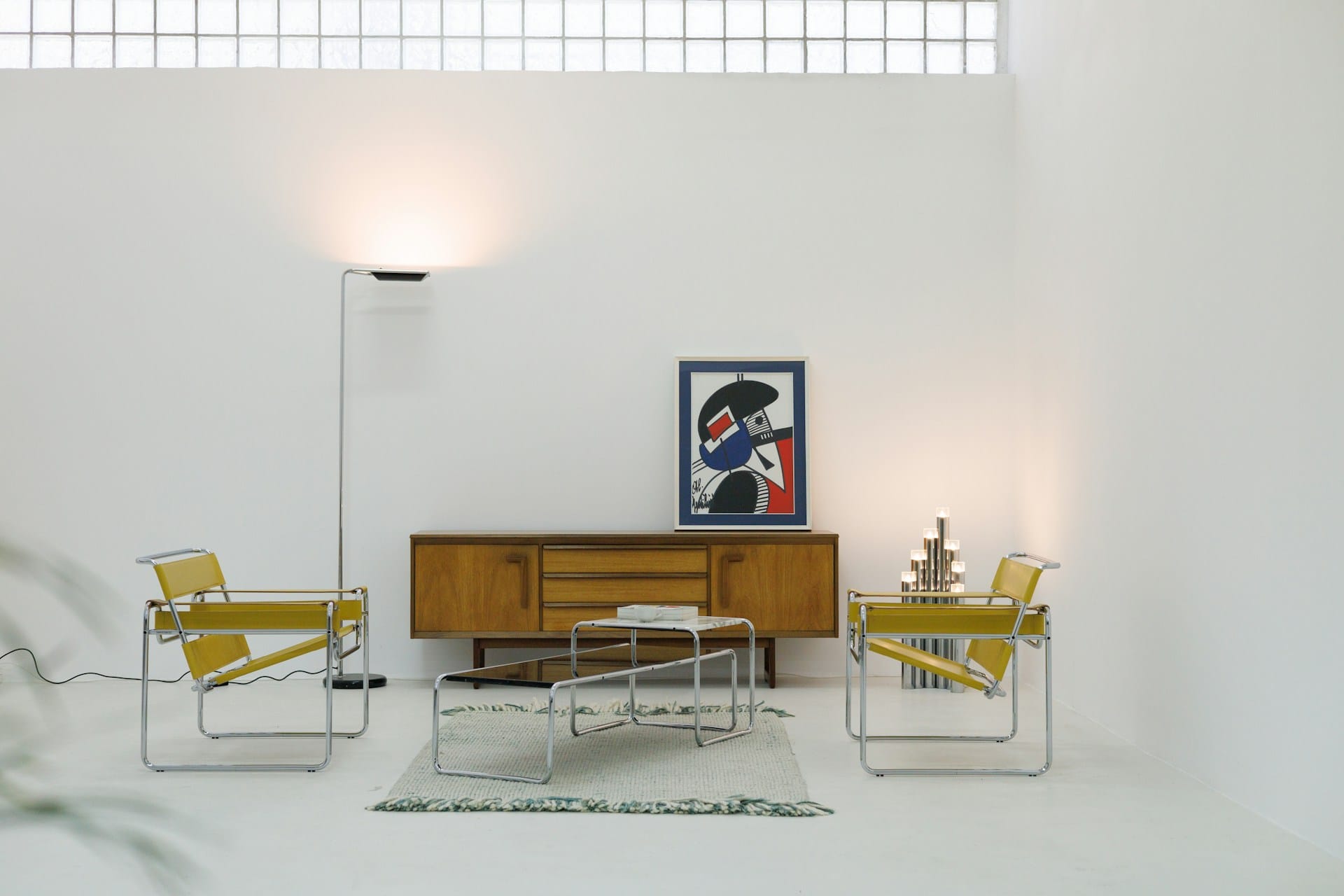
Built at the Bauhaus workshop by Breuer, who was reportedly inspired by the tubular steel construction of bicycle handlebars. The canvas seat and back within the steel frame, named for Wassily Kandinsky, who admired the early prototype, is the Bauhaus idea made domestic: industrial materials, rational construction, the form determined by the method of making. It belongs in the same sentence as the Carlton only because the contrast clarifies both of them.
The Valentine typewriter, Ettore Sottsass for Olivetti, 1969
This is the precursor that shows where Memphis came from. A portable typewriter in red ABS plastic, designed a full twelve years before the Memphis Group existed, for Olivetti. Sottsass was already arguing in 1969 that a machine could be an emotional object, that the color red on a typewriter was not arbitrary decoration but a communication about what the machine was for. Memphis, twelve years later, was the same argument with the volume raised.
Shop the Collection
The most significant Memphis pieces, the Carlton, the Tahiti lamp, the Beverly sideboard, are in museum collections or available through specialist dealers at prices that require a conversation rather than a price tag. For a broader product guide, the related post on Memphis design products covers the full range of what is actually purchasable. What is available on Amazon sits at the level of Memphis-influenced consumer goods, which is, in a certain light, exactly where Sottsass wanted his argument to land.
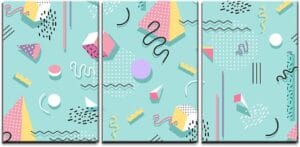
wall26 Memphis Pattern 3-Panel Canvas Wall Art (24″×36″×3)
A vector-based Memphis geometric print in three-panel format. The most accessible way to put the argument on a wall without the budget for a Carlton.
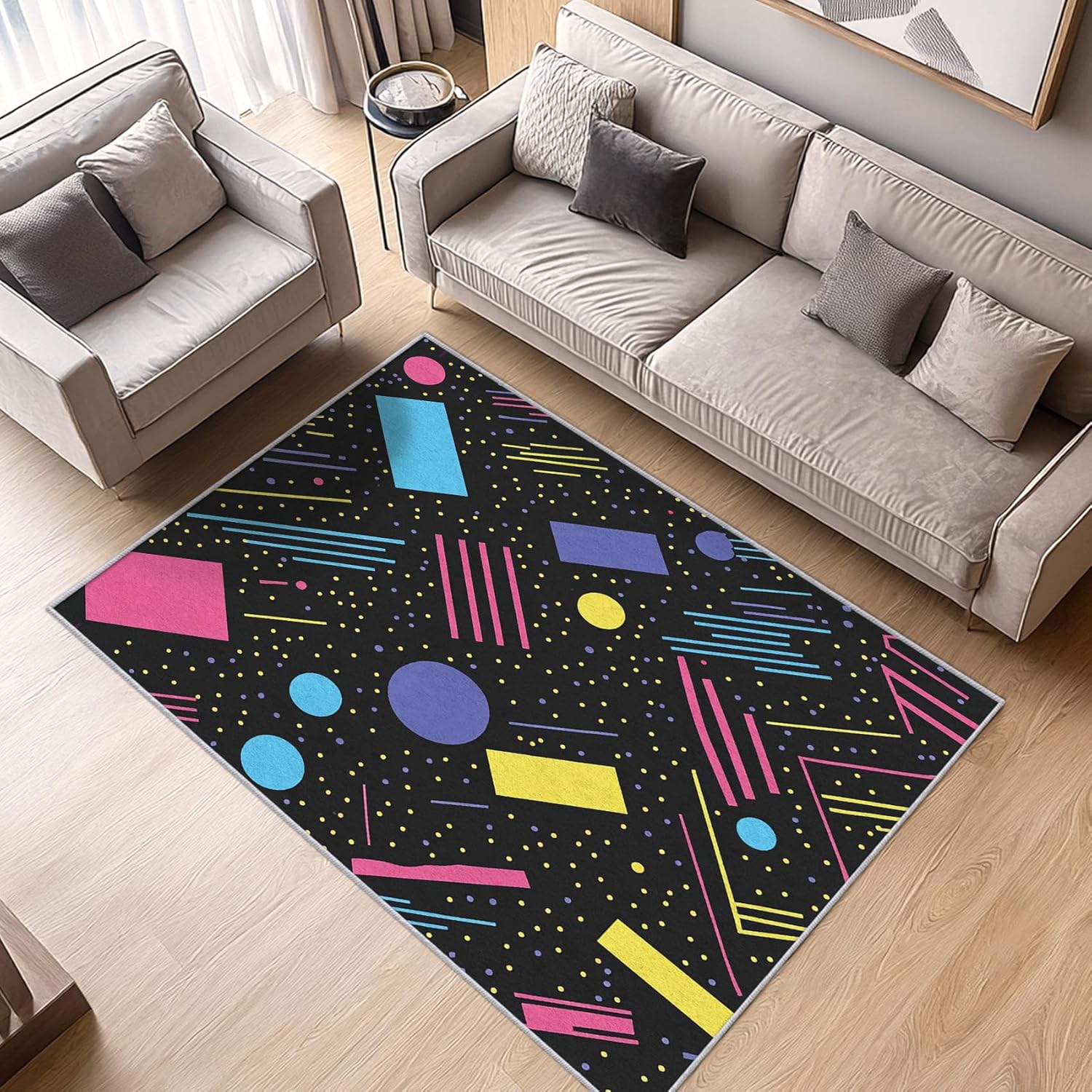
SZLYZM Memphis Style Geometric Rug, 7×9
Memphis’s visual language as a floor object, zigzags, geometric shapes, saturated color fields. This is exactly the category of everyday material Memphis argued design should occupy: not noble, not precious, but present.
Further Reading
The Memphis-Bauhaus argument is well documented, but two accounts are worth reading side by side, and a third corrects the ones that flatten the Bauhaus into a style.
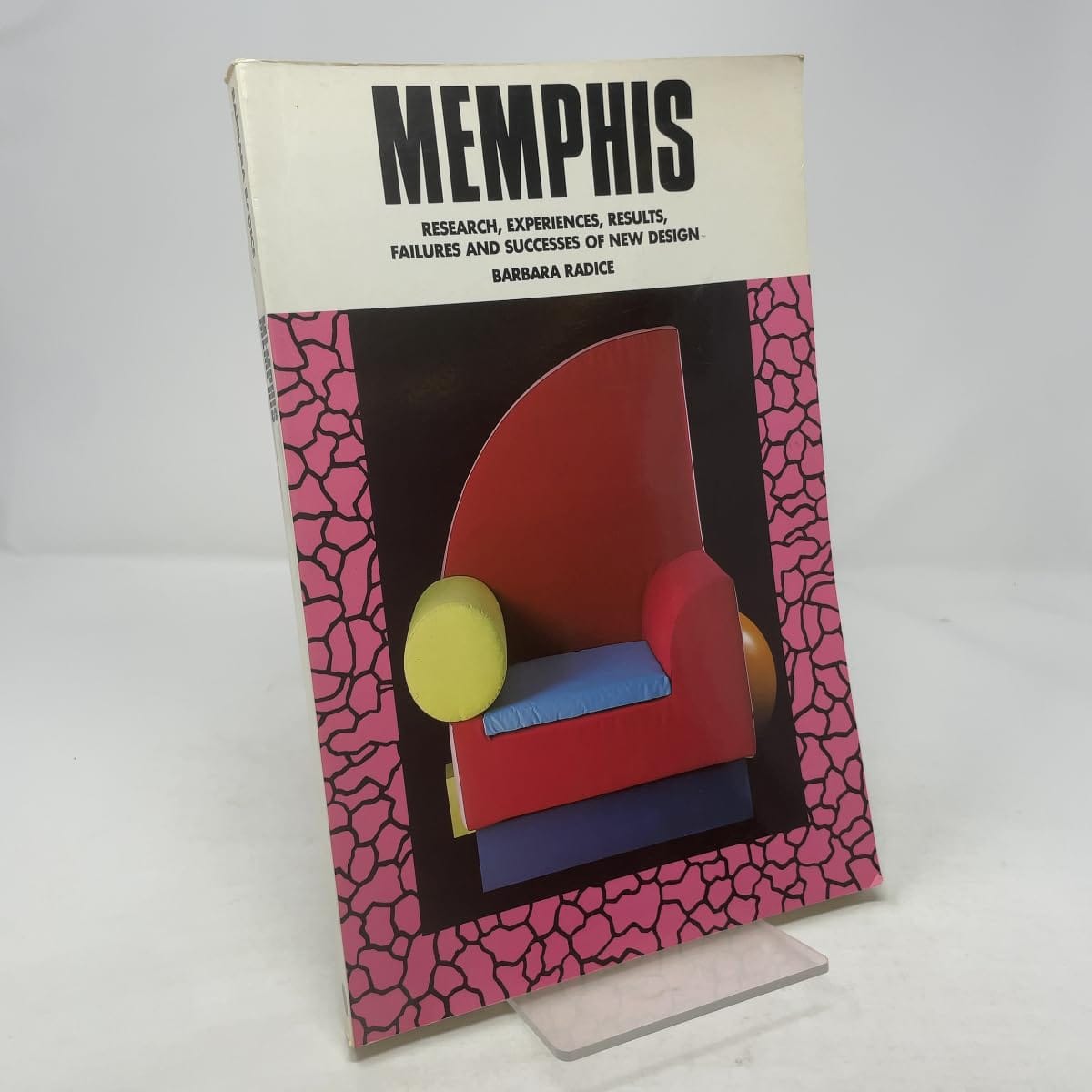
Barbara Radice, Memphis: Research, Experiences, Failures and Successes of New Design (Thames & Hudson, 1984)
Radice was the group’s theorist and Sottsass’s partner. This is not a survey written after the fact. It is a primary document, with the arguments made from inside the room where they were happening. The title’s inclusion of “failures” is honest in a way that most design writing is not.
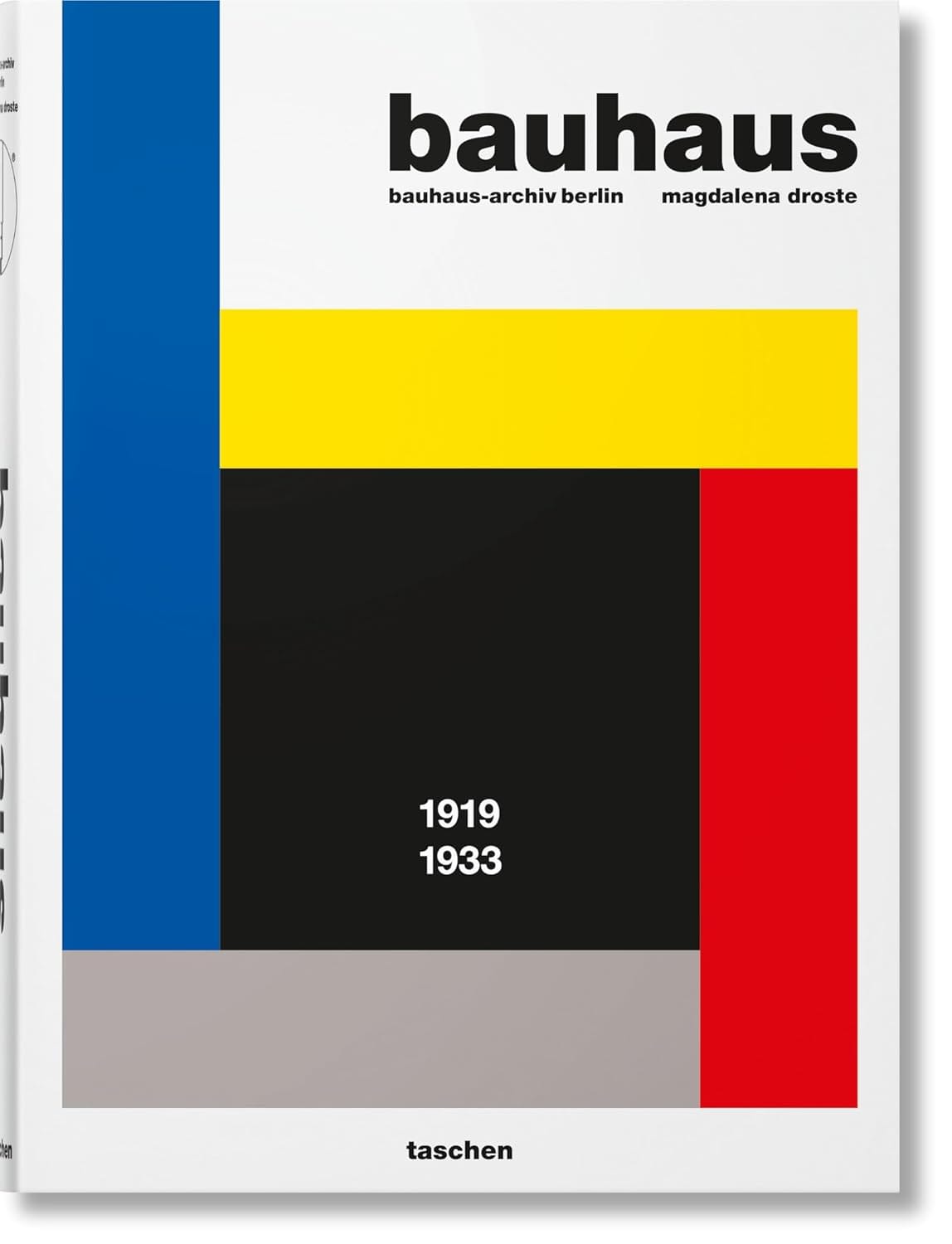
Magdalena Droste, Bauhaus (Taschen, updated ed.)
The standard scholarly reference for the Bauhaus, with comprehensive documentation of the school’s full arc from Weimar through Dessau. The object photography lets you see exactly what Memphis was pushing against, which is why this book belongs beside the Radice, not instead of it.
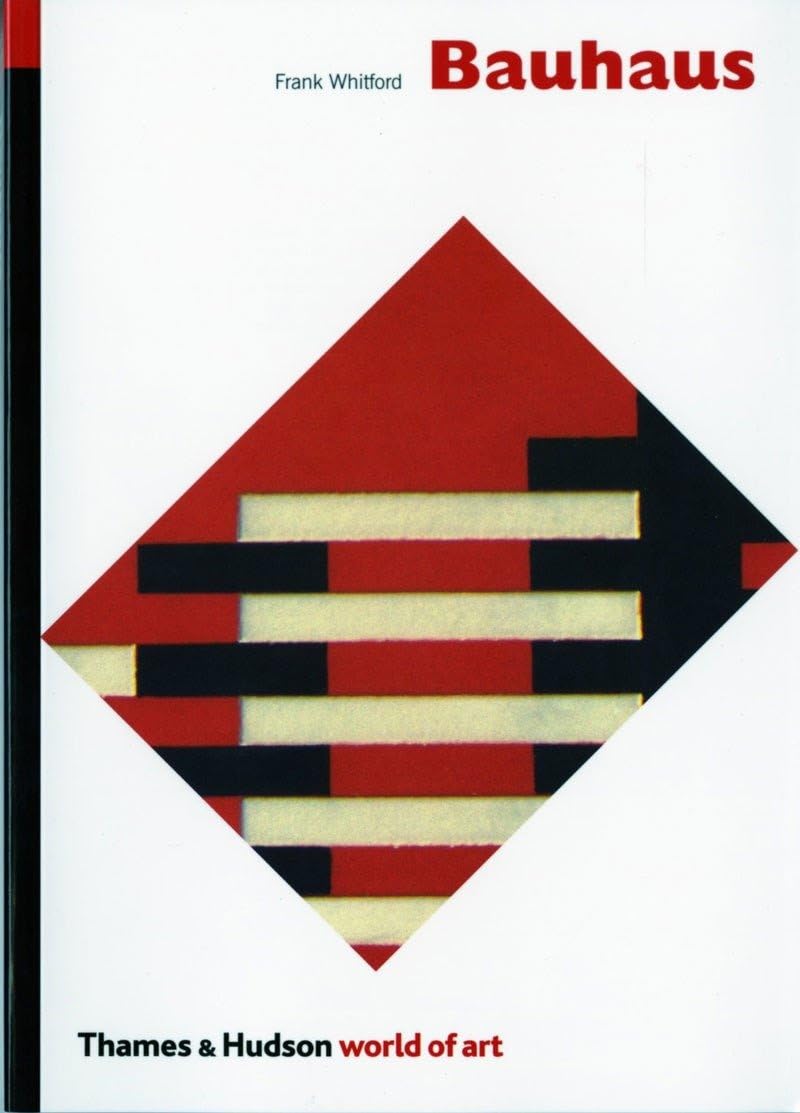
Frank Whitford, Bauhaus (World of Art, Thames & Hudson)
Whitford’s account is more critical and argumentative than the coffee-table Bauhaus books. Closer to the analytical register this article works in, and more likely to challenge a reader who thinks they already know the story. Whitford is particularly good on the tension between the school’s stated socialism and the actual market for its products.
Frequently Asked Questions
What is the main difference between Memphis Design and Bauhaus?
The Bauhaus held that form follows function and that ornament is waste. Its objects are defined by industrial materials and the refusal of decoration. Memphis held that decoration carries meaning and that suppressing it is a cultural preference, not a universal truth. The difference is not aesthetic. It is philosophical: a disagreement about what design is fundamentally for.
Why did Memphis Group reject Bauhaus principles?
Sottsass and the Memphis designers argued that the Bauhaus had won too completely, that “good design” had become a dominant ideology that treated one aesthetic (restrained, rational, Northern European modernism) as if it were objective truth. Memphis rejected this by using cheap materials, saturated colors, and symbolic decoration deliberately, treating those choices as argument rather than failure.
Who founded the Memphis Design movement?
Ettore Sottsass organized the first Memphis meeting at his Milan apartment on December 11, 1980. The founding Italian core included Michele De Lucchi, George Sowden, Nathalie Du Pasquier, Matteo Thun, Marco Zanini, and Aldo Cibic. Barbara Radice served as the group’s theorist. International contributors included Michael Graves, Hans Hollein, Arata Isozaki, and Shiro Kuramata.
Is Memphis Design still relevant today?
Memphis’s visual language has been absorbed into commercial culture so thoroughly that it no longer reads as argument. It reads as an aesthetic choice. But the underlying argument, that design cannot escape ideology, that ‘neutral’ design encodes specific values, remains valid and unresolved. The Bauhaus still wins commercially: IKEA, Apple, and the entire minimalist interior industry are Bauhaus outputs. Memphis remains a corrective.
What materials did Memphis designers use compared to Bauhaus?
The Bauhaus favored steel, glass, and leather, materials associated with industrial production and structural honesty. Memphis used Abet Print plastic laminates: the materials of kitchen counters and cheap furniture. This was deliberate. Using the materials of everyday consumer culture rather than noble industrial materials was part of Memphis’s argument that design theory should work at every price point, not just for those who could afford steel and leather.
Can you mix Memphis and Bauhaus design in the same room?
You can, and the combination is interesting precisely because the objects argue with each other. A Wassily Chair and a Carlton bookcase in the same room is not incoherent. It is a conversation. What you are doing is staging the ideological disagreement that drove forty years of design history. Whether that registers as a design statement or just a clash of objects depends on how intentionally you frame it.

About Joe Post
Joe Post holds an MFA in Art from California Institute of the Arts (CalArts) and has done additional graduate work at the School of the Art Institute of Chicago. He founded Art Design Ideas to write about design as cultural argument — the decisions, contradictions, and assumptions built into the objects we live with.