
Photography arrived in 1839 and immediately raised a question painting had never had to answer: why do this by hand? How photography changed painting is a story not of replacement but of forced self-examination. Painting surrendered accuracy to the camera and kept argument, producing Impressionism, abstract expressionism, and every subsequent move toward the unmechanically expressible.
What Photography Actually Threatened — and What It Didn’t
Paul Delaroche, a successful French history painter, reportedly said “From today, painting is dead” upon seeing the daguerreotype announced in 1839. The quote is widely cited and probably apocryphal. The panic it names was real and immediate. Portrait miniature painting, which had been a legitimate commercial and social practice for centuries, did not survive the decade. At the Royal Academy in London, more than 300 portrait miniatures were exhibited in 1830; by 1870, that number had collapsed to 33 (History of Painting, Wikipedia). Photography did, in fact, kill that particular function. Delaroche wasn’t wrong about what the camera could do. He was wrong about what was worth mourning.
What photography killed was not painting. It killed painting’s least interesting job: making accurate records of faces, rooms, and objects. The painters who understood this first were the ones who had already been using photographs privately as reference tools. Delacroix, Courbet, Manet, Degas, Cézanne, Gauguin — all of them working from photographs while publicly maintaining the prestige of the hand-made image (History of Painting, Wikipedia). The negotiation between painting and photography was not philosophical at the start. It was practical. Painters were taking the new tool and deciding what it was good for, which meant also deciding what it was not good for. Only the painted surface could still do what the camera could not.
Charles Baudelaire, writing in his 1859 essay “The Modern Public and Photography” (Salon de Paris, 1859), called photography “the mortal enemy of art.” But Baudelaire was wrong about the direction of the threat. Photography did not kill art. It forced art to figure out what it was for.
What Painting Kept When It Gave Up Accuracy
The answer painting arrived at, slowly, across the second half of the nineteenth century, was that the camera could record what the eye saw in an instant, but it could not record what the eye experienced over time. Color was the first line of defense. Autochrome color photography was not commercially available until 1907, when the Lumière brothers introduced the process (standard photographic history). For the Impressionists working in the 1870s and 1880s, color was genuinely inimitable by the contemporary camera. Monet, Renoir, and Pissarro were not experimenting with broken brushwork and saturated hues as a stylistic gesture. They were doing something the camera of their era could not do at all.
The first Impressionist exhibition was held in 1874, organized by the Société anonyme des artistes peintres, sculpteurs, graveurs, in Paris. The title came from mockery. Critics took Monet’s Impression, Sunrise as proof that the whole enterprise was unfinished, slapdash, not serious. But unfinished was the point. The shimmer on the harbor water in that painting is not a record of the harbor. It is a record of how the harbor appeared to someone standing at the edge of it in a specific quality of morning light for a specific duration. The photograph captures the harbor. The painting captures the experience of seeing it.
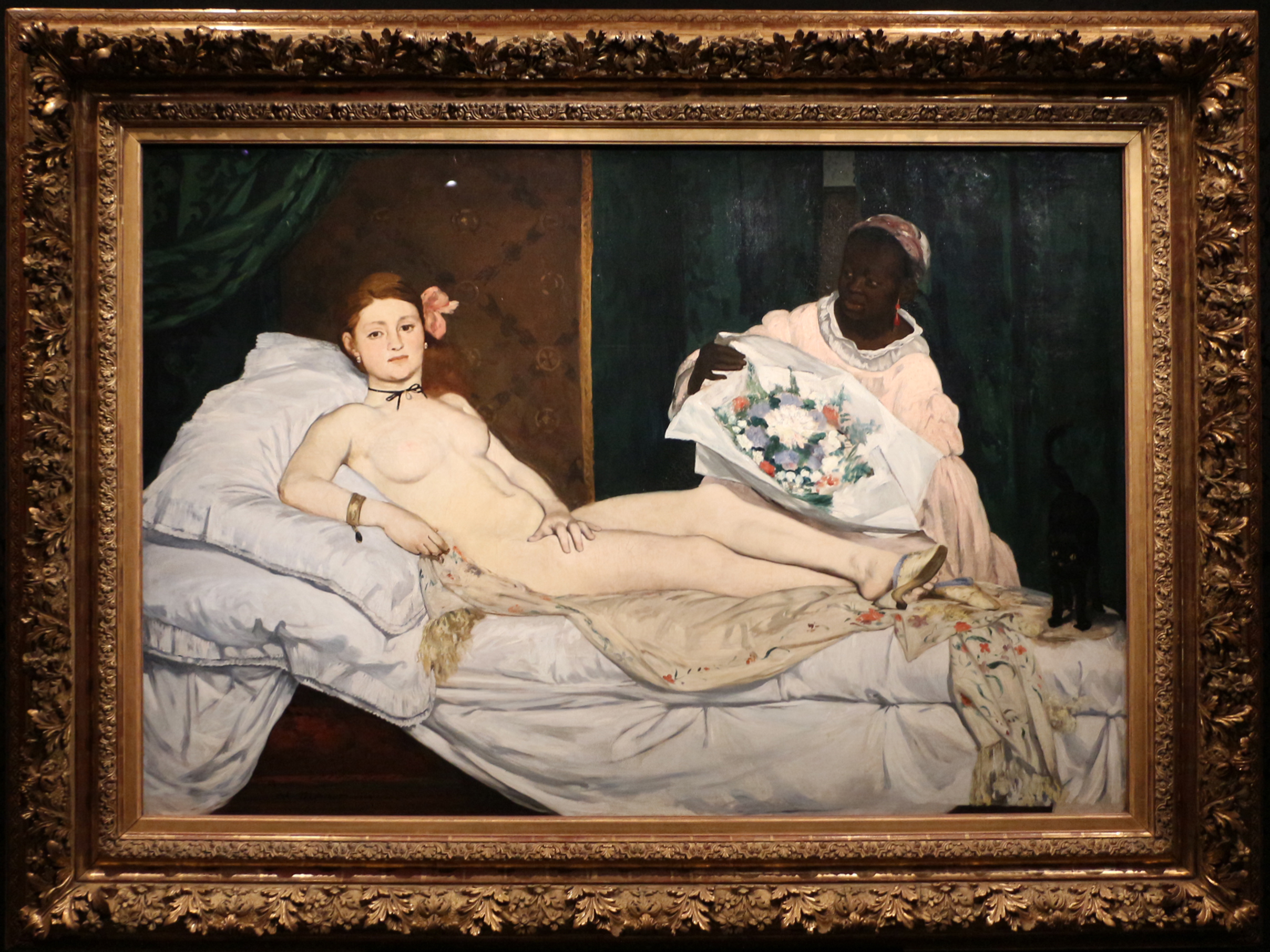
Édouard Manet cleared the path for the Impressionists in the 1860s by breaking academic painting conventions without fully abandoning representation. Olympia (1863) and Le Déjeuner sur l’herbe (1863) are transitional works. They still make recognizable images of recognizable things, but the relationship between the image and its subject has changed. Manet was working at the intersection of realism and modernity, flattening the pictorial space and removing the conventional allegorical scaffolding that had made academic painting feel legitimate (see MoMA’s Manet page for context). Without that scaffolding, painting had to argue from its own terms.
By the mid-twentieth century, that argument had reached its terminal form. Harold Rosenberg, writing in “The American Action Painters” (Art News, December 1952), named what Abstract Expressionism was doing: the canvas had become “an arena in which to act — rather than as a space in which to reproduce, re-design, analyze, or ‘express’ an object.” Jackson Pollock, Willem de Kooning, and Mark Rothko were not ignoring photography. They were answering it with the most extreme refusal they could mount. No subject matter existed. No image appeared. No record of anything outside the act of making remained. What painting kept was not accuracy. It kept argument.
Abstraction was not the only answer. The canvas as an arena for action rather than representation is one terminus. Pop Art offered a deliberately opposite response. Andy Warhol and Roy Lichtenstein borrowed photography’s flatness and mechanical reproduction as a statement about consumer culture, not despite the camera but through it. Pop Art’s engagement with mass-media image culture shows the range of responses photography made possible. That deliberate inversion could be understood as a second terminus, equal and opposite to Abstract Expressionism’s earnestness, shows how much room the question left open.
Five Works Where You Can See Painting Arguing Back
Édouard Manet, Olympia (1863)
Manet painted Olympia the same year photographic nudes were circulating widely as “academic studies” — legal, commercial, largely indistinguishable from the painted nudes that preceded them. Manet strips the conventional allegorical dressing: no Venus, no mythology, no soft focus. The body is presented as confrontation. The woman in the painting looks back at you. A photograph could document a body; this forces a reckoning with the act of looking. Olympia is held at the Musée d’Orsay, Paris.
Claude Monet, Impression, Sunrise (1872)
The painting that gave Impressionism its name, used as an insult. A photograph of the harbor in Le Havre in 1872 would show you where the boats were. Monet’s painting — oil on canvas, Musée Marmottan Monet, Paris — shows you the shimmer of dawn light on harbor water as experienced in duration, not captured in an instant. The orange disc of the sun and its fractured reflection are painted in approximately the same value as the blue-grey water around them; in a black-and-white photograph of the painting, both disappear. The color is the argument, and the argument cannot be photographed.
Eadweard Muybridge, Animal Locomotion (1887)
Included here as counterpoint because the relationship ran both ways. Muybridge’s motion studies, gelatin silver prints in multiple series from 1887, showed what the eye could not see: the exact positions of a horse’s legs at full gallop, the mechanics of a human body in mid-jump. Degas absorbed this and changed how he painted horses. Marcel Duchamp’s Nude Descending a Staircase (1912) draws directly on Muybridge’s sequential imagery (Wikipedia, Eadweard Muybridge; Smarthistory). The camera gave painters new visual information about the world at the same moment it made their traditional role obsolete. Both things are true.
Mark Rothko, No. 61 (Rust and Blue) (1953)
The logical conclusion of painting’s argument. No subject matter at all. Rothko’s color fields at the Museum of Modern Art, and at MOCA Los Angeles where No. 61 is held, address what cannot be photographed: a sustained, enveloping experience that cannot be photographed. The large-scale format is part of the argument. You can reproduce a Rothko, and the reproduction tells you what colors he used. It cannot tell you what it is like to stand in front of one, which is the whole point.
Gerhard Richter, Tisch (Table) (1962)
Richter’s first mature statement, held at Museum Ludwig, Cologne. He began the painting from a photographic image: a realistic, enlarged copy of a black-and-white photograph of a table, then disrupted it with gestural brushwork. The work makes the negotiation between photography and painting visible. Here is the photograph. Here is what only painting can add. Richter began painting enlarged copies of photographs in the early 1960s, using them as starting points, not copies — to achieve the “objectivity” he felt was absent from the abstract art of the period (Wikipedia, Gerhard Richter). He has continued this negotiation for sixty years. The question is unresolved. What painting can do that a photograph cannot, even when the source is photographic, is still being worked out.
Shop the Collection
Two books worth owning for this argument. Not the introductions — the actual critical texts.
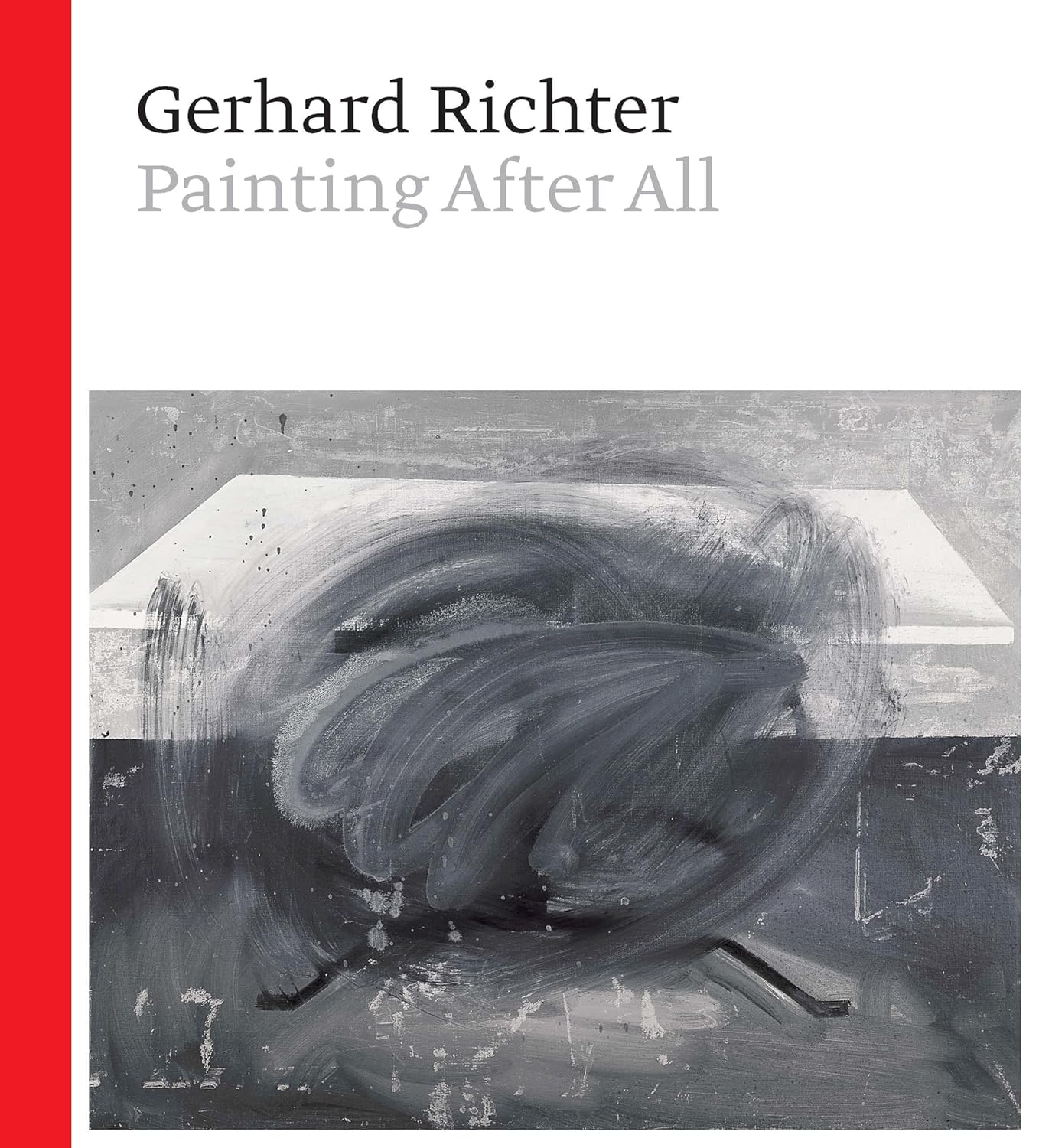
Gerhard Richter: Painting After All (Met Museum Exhibition Catalogue, 2020): The definitive survey of Richter’s six-decade negotiation between photography and painting. Essays by Hal Foster, Benjamin Buchloh, and Briony Fer; 268 full-color reproductions. This is the book to own if you want to understand what painting has been doing with the photographic image since 1962.
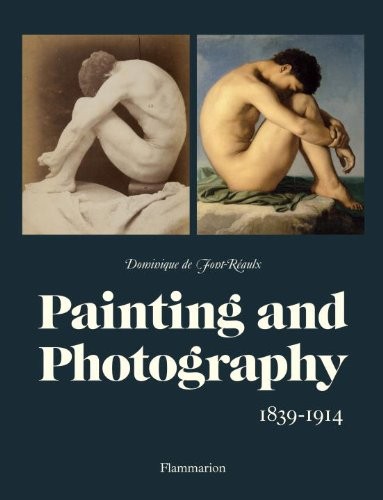
Painting and Photography: 1839–1914 by Dominique de Font-Réaulx (Musée d’Orsay / Flammarion, 2012): De Font-Réaulx is the curator of photography at the Musée d’Orsay. This catalogue puts actual paintings and photographs on facing pages for direct comparison across portraiture, landscape, nudes, and still life. The only single volume that covers the critical 75-year period this way.
Further Reading
These are not introductions. They are arguments. Both assume you already know the subject and want to go further.
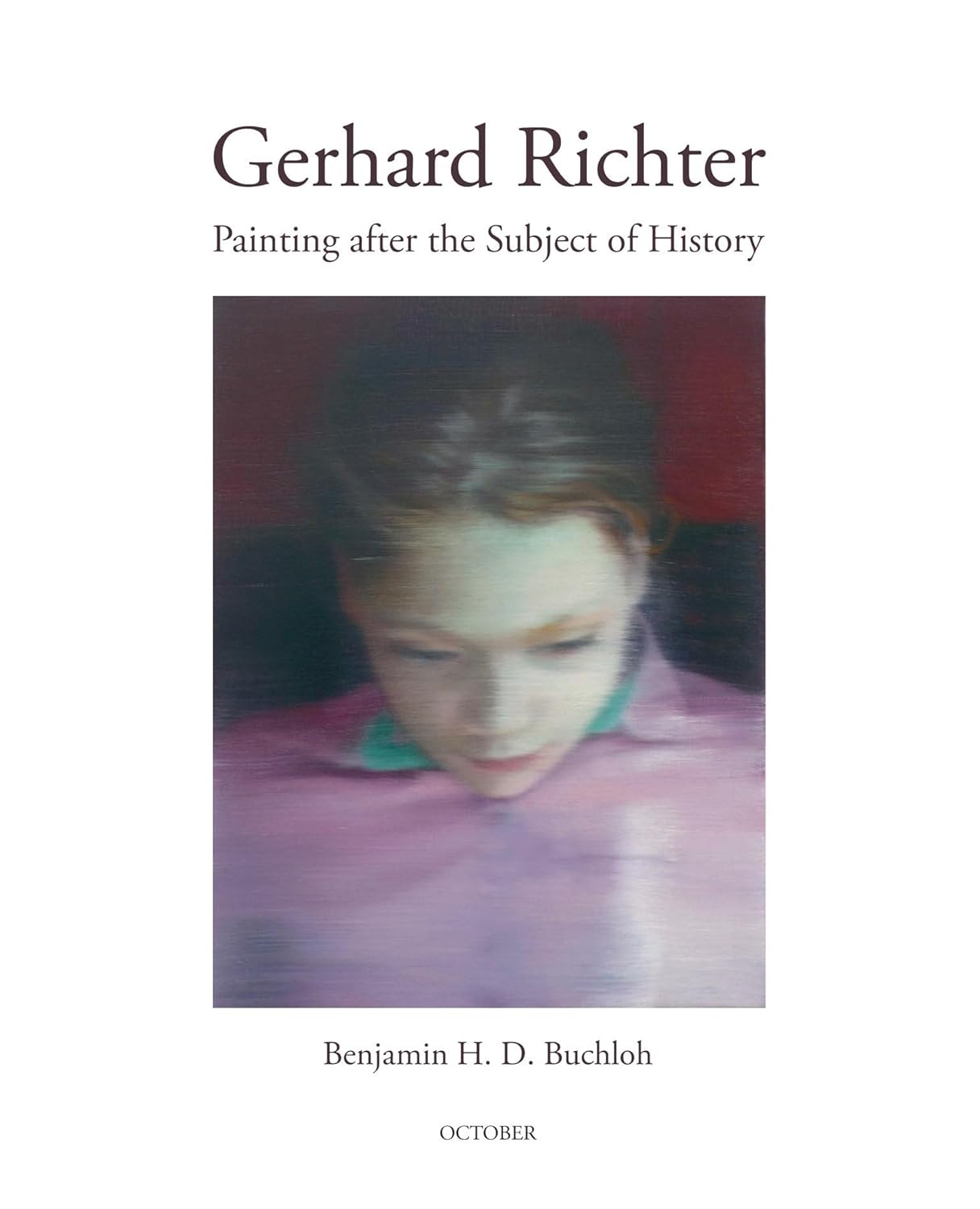
Benjamin H. D. Buchloh, Gerhard Richter: Painting after the Subject of History (MIT Press/October Books, 2023): Buchloh is the Andrew W. Mellon Professor of Modern Art at Harvard and the foremost critical voice on Richter. This is not a survey but a sustained argument about what it means to paint from photographic source material in the shadow of historical atrocity. The most demanding book on the list, and the most necessary.
Helen Molesworth et al., Luc Tuymans (Wexner Center/SFMOMA, 2009): Tuymans paints from photographs, film stills, and iPhone images; paints each work in a single day; produces nothing photorealistic. This catalogue is the most comprehensive survey of his career and the best evidence that the argument painting has been having with photography since 1839 is still open.
Frequently Asked Questions
How did photography change painting in the 19th century?
Photography arrived in 1839 and immediately made painting’s most commercially viable function — accurate portraiture and record-keeping — obsolete. Portrait miniature commissions collapsed: more than 300 were exhibited at the Royal Academy in 1830; fewer than 35 by 1870. What survived was the work photography could not do: subjective sensation, color (before color photography arrived in 1907), duration, and the physical trace of human decision-making. Impressionism is the first organized response; it turned toward exactly what the camera of the 1870s could not capture.
Did photography cause the rise of Impressionism?
Not by itself, but it was the pressure that made Impressionism necessary. Once the camera could produce accurate records of the visible world, painters who continued making accurate records had no particular argument for why. The Impressionists turned toward transient light, subjective sensation, and color experience. Things the early camera could not capture. In doing so they defined a new set of reasons for painting to exist. Photography created the conditions; the Impressionists made the argument.
Why did painters continue painting after photography was invented?
Because photography can record what the eye sees in an instant, but it cannot record what the eye experiences over time. Painting kept the territory that resists mechanical capture: interiority, duration, the emotional charge of a sustained perceptual experience, and the physical evidence of human decision-making at a scale and material density no photograph reproduces. The Abstract Expressionists took this to its logical extreme. Mark Rothko’s large-scale color fields address an experience that cannot be photographed. You can see the reproduction; you cannot have the experience of the original from it.
What is the relationship between Gerhard Richter’s work and photography?
Richter began in the early 1960s by painting enlarged, realistic copies of black-and-white photographs, then disrupting them with gestural brushwork, making the negotiation between photographic image and painterly act visible in a single surface. He was after the “objectivity” of the photograph, which he felt abstract painting lacked, but not after photography itself. Painting from the photograph was a way to use its qualities without being replaced by it. He has continued this practice for sixty years, working from news photographs, family snapshots, and found images. The body of work is the most sustained argument any painter has made about what painting is for in the age of the camera.
How is Luc Tuymans different from a photorealist painter?
Photorealists like Chuck Close or Richard Estes use paint to achieve the visual effect of a photograph. The goal is fidelity to the photographic source. Tuymans uses photographs, film stills, and iPhone images as starting points, then paints each work in a single day at low saturation and reduced contrast, producing images that are deliberately removed from their photographic source material. The degradation is the point. Tuymans has said painting provokes different responses from viewers than photography and allows us to see the world in a different way. What he is after is not the photographic image but what happens to meaning when painting works on top of it.
Can photography replace painting?
It already replaced the function painting had that photography could do better: accurate visual recording. What it cannot replace is the argument painting makes from its own terms. The physical scale of a Rothko, the gestural trace in a de Kooning, the deliberate degradation in a Tuymans. MoMA established its Department of Photography in 1940, with Beaumont Newhall as first curator, institutional recognition of photography as a distinct art form. That recognition paradoxically confirmed painting had to find another identity, and it did. The two mediums have been talking to each other, not competing, for most of the last century.
See also: Image, Memory, and Violence in Contemporary Painting, The Best Books on Contemporary Painting

About Joe Post
Joe Post holds an MFA in Art from California Institute of the Arts (CalArts) and has done additional graduate work at the School of the Art Institute of Chicago. He founded Art Design Ideas to write about design as cultural argument — the decisions, contradictions, and assumptions built into the objects we live with.