
Alessi kettles are stovetop and electric water kettles produced by the Italian design house Alessi, founded in Omegna in 1921. The best Alessi kettles — from Richard Sapper’s 1983 melodic 9091 to Michael Graves’s 1985 bird-whistle 9093 — are objects designed to perform and to mean something in a kitchen.
Our Top Picks
These four objects cover the range of what Alessi has argued a kitchen tool can be: a sound-producing instrument, a postmodern architectural statement, a contemporary electric, and a functional sculpture that functions only sometimes. Each earns its price through design history, not merely brand recognition.
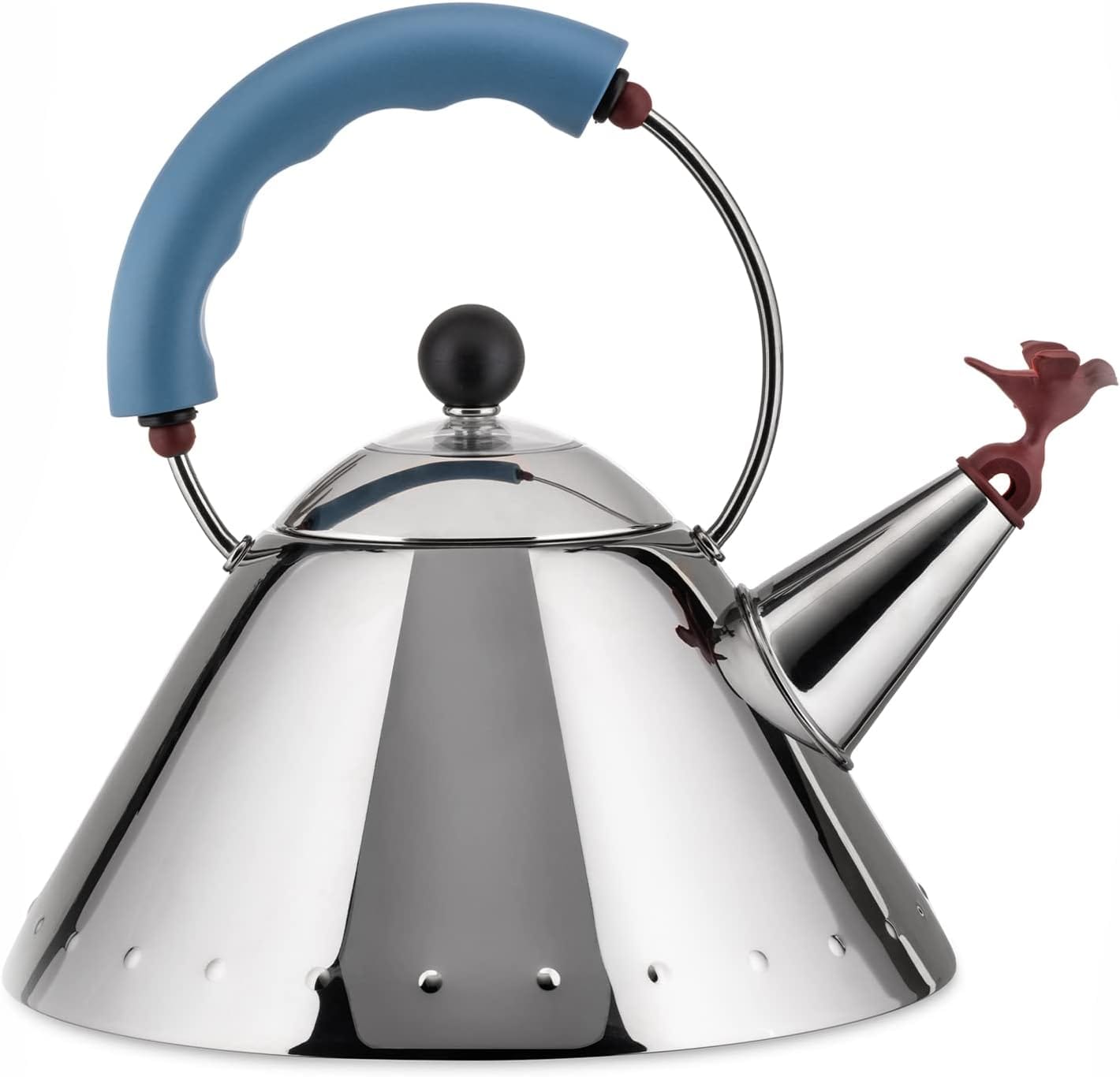
Alessi 9093 Bird Kettle — Michael Graves, 1985
Premium · Stovetop / Induction
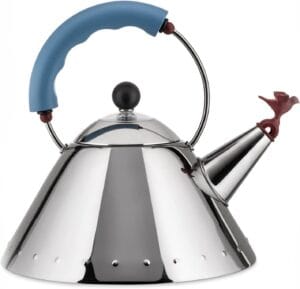
The best-selling object in Alessi’s entire catalogue. Over 1.5 million units sold, it put postmodern architecture on the kitchen countertop; the bird-whistle spout is the single gesture most cited when design writers explain what happened to housewares in the 1980s.
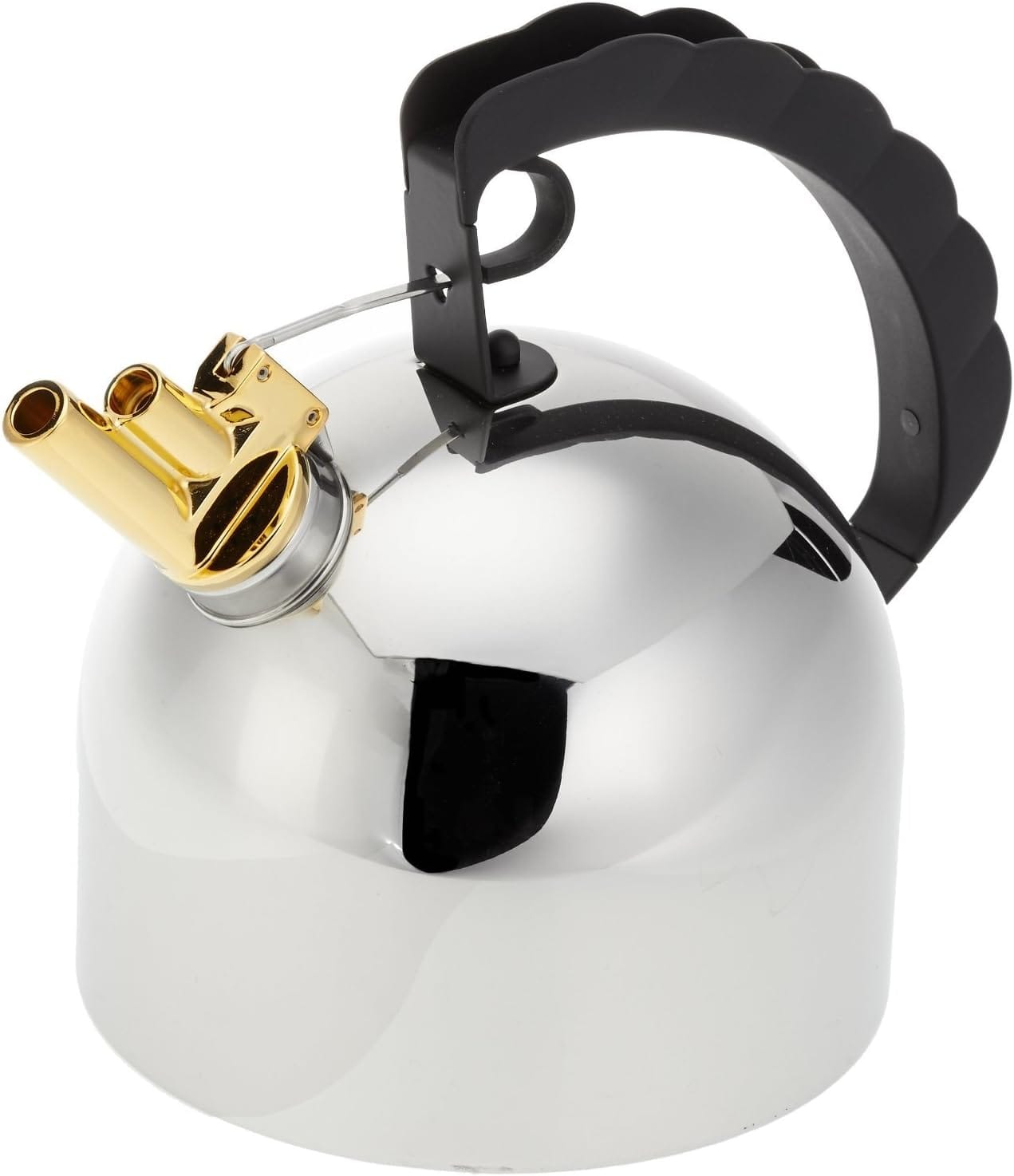
Alessi 9091 Melodic Kettle — Richard Sapper, 1983
Premium · Stovetop / Induction
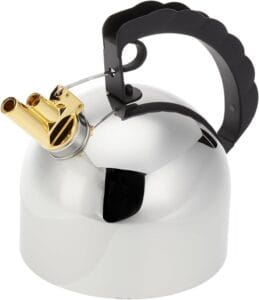
Alessi’s first designer kettle, commissioned after Sapper told Alberto Alessi he wanted to make something “multi-sensorial — not only to the eyes, but also to the ears”; two brass vents produce notes mi and si in harmony, a sound no other kettle makes.
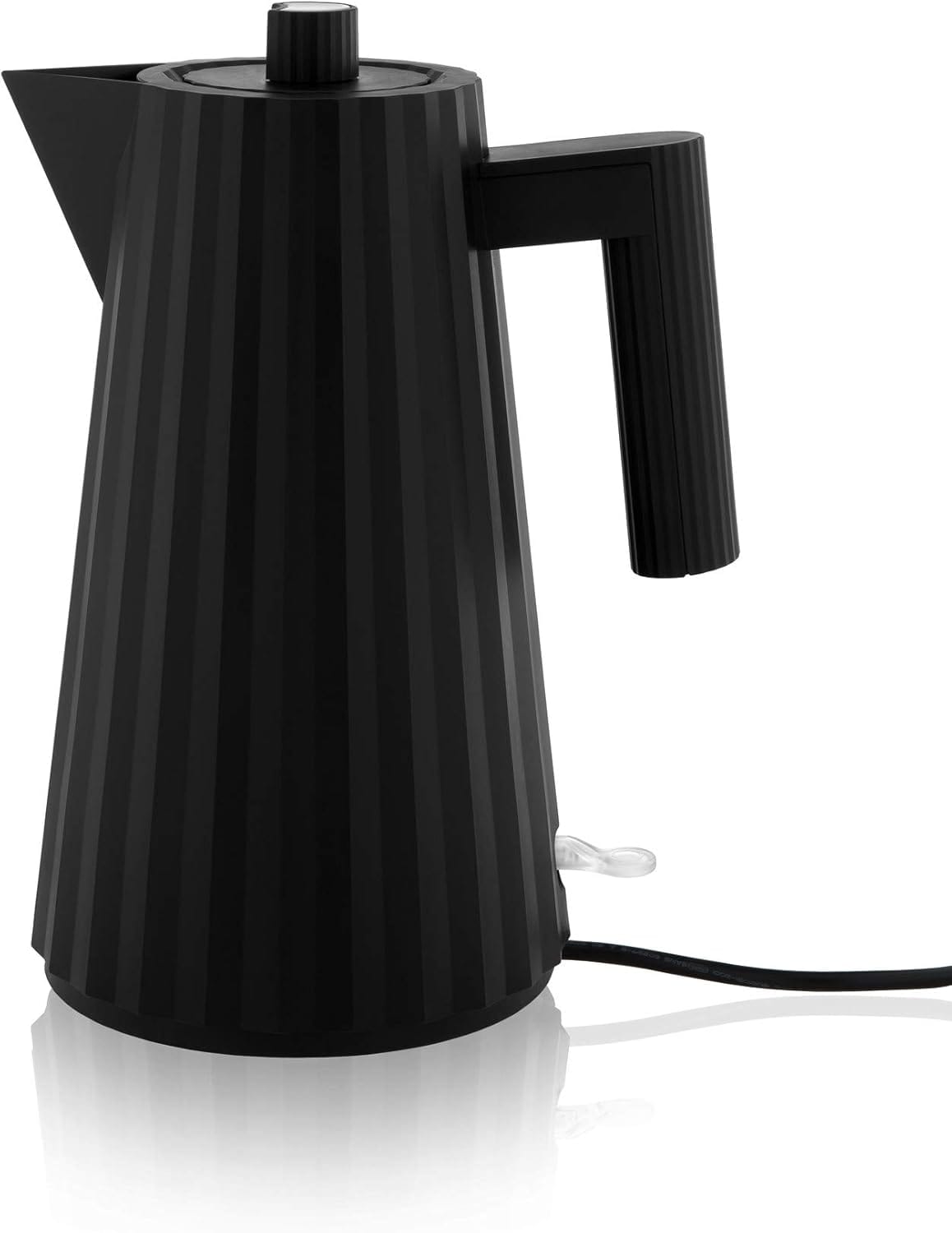
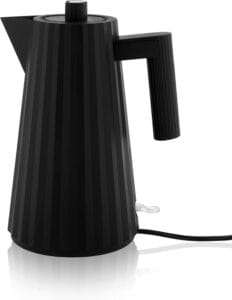
Alessi Plissé MDL06 Electric Kettle — Michele De Lucchi, 2018
Mid-Range · Electric
The strongest contemporary entry in Alessi’s electric line: thermoplastic resin with a pleated form De Lucchi described as “light as a haute couture dress.” The US-plug version (1500W, 57.5 fl oz) is the right buy for buyers without a gas hob.
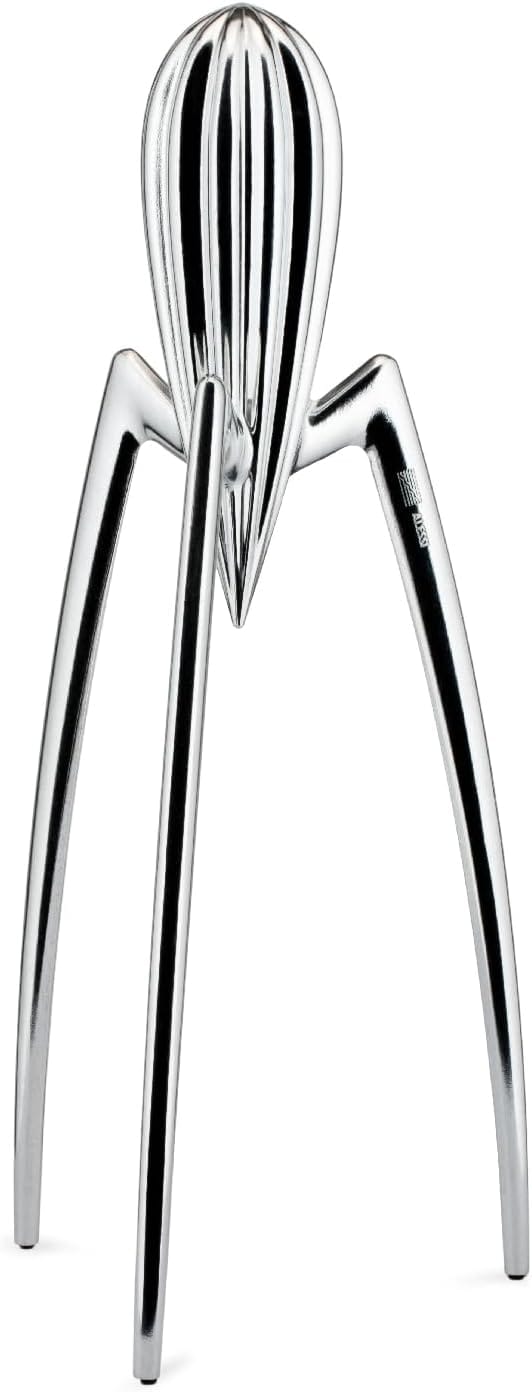
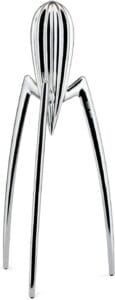
Alessi Juicy Salif Citrus Squeezer — Philippe Starck, 1990
Premium · Countertop
Not a kettle, but the Alessi kitchen object that most directly states the brand’s argument: polished cast aluminum, three-legged spider form, deliberately impractical in use, and Alberto Alessi has never apologized for that. It rounds out the kitchen design story the kettles begin.
Quick Decision Guide
- Best overall: Alessi 9093 Bird Kettle — the canonical first Alessi purchase; works on gas and, in the 9093/1 induction model, on induction hobs too.
- Best premium stovetop: Alessi 9091 Melodic Kettle — for buyers who want the object that came first, the one where Sapper set the terms.
- Best electric: Alessi Plissé MDL06 (black, US plug) — the right electric pick for modern kitchens; confirm you are ordering the /USA model, not the European 2400W version.
- Best statement piece: Alessi Juicy Salif — for buyers who want the Alessi object that argues most plainly that a kitchen tool does not have to justify itself through pure function.
Full Comparison
| Product | Designer | Year | Type | Price Range | Best For | Buy |
|---|---|---|---|---|---|---|
| 9093 Bird Kettle | Michael Graves | 1985 | Stovetop / Induction | Premium | Most popular; canonical bird whistle | Buy |
| 9091 Melodic Kettle | Richard Sapper | 1983 | Stovetop / Induction | Premium | Design collectors; first designer kettle | Buy |
| Plissé MDL06 | Michele De Lucchi | 2018 | Electric | Mid-Range | Modern kitchens; no gas hob needed | Buy |
| Juicy Salif | Philippe Starck | 1990 | Countertop tool | Premium | Statement piece; design argument on a counter | Buy |
Which of the best Alessi kettles is worth the price?
Alessi 9093 Bird Kettle (Michael Graves, 1985)
Pros:
- Over 1.5 million units sold and still the most recognized stovetop kettle in postmodern design history
- The bird whistle produces an auditory event, not just a shriek; the PA plastic bird in the spout lifts and sings
- Available in multiple colors (blue, white, yellow, red) with induction-ready 9093/1 version for buyers who need it
- Currently in the MoMA Design Store collection; the institutional validation is genuine, not marketing copy
Cons:
- The PA plastic bird can discolor over time, particularly with heavy use
- The handle is narrow and some buyers find the pour angle requires more wrist angle than they expect
- Not dishwasher safe
Who it’s for: Someone buying their first Alessi object who wants the one that started the conversation about what a kitchen kettle could be asked to do.
Why it stands out: It is the object most cited by design historians when explaining what Alessi did to housewares in the 1980s; the design-history argument is inseparable from the object itself.
Alessi 9091 Melodic Kettle (Richard Sapper, 1983)
Pros:
- The melodic whistle (notes mi and si from two brass vents) is genuinely distinctive. Sapper’s brief was explicit: multi-sensorial, not merely visual.
- 18/10 mirror-polished stainless steel with brass whistle ages well; the material register is different from the 9093’s mixed materials
- The design story (Rhine river steamboat sirens, Sapper’s commission brief to Alberto Alessi) gives it intellectual weight that holds up on examination
Cons:
- More expensive than the 9093 for a stovetop kettle
- The brass whistle mechanism requires occasional cleaning to maintain tone
- Some Amazon listings carry European-plug versions that are not induction-compatible; confirm induction spec before ordering
Who it’s for: Buyers who know enough design history to want the kettle that came first: the one that established Sapper’s argument rather than Graves’s more popular answer to it.
Why it stands out: Sapper explicitly rejected the idea of a beautiful-but-mute kettle; the sound is not a feature added to the design, it is the design argument.
Alessi Plissé MDL06 Electric Kettle (Michele De Lucchi, 2018)
Pros:
- The US-plug version (B082MSVHTH in black, B0911TZ91J in white) is properly specced for North American kitchens at 1500W
- The pleated thermoplastic form is formally original: no other electric kettle on the market looks like this
- Auto shut-off and removable limestone filter handle the practical requirements without ceremony
Cons:
- Thermoplastic resin is not the same material register as Alessi’s steel classics; some buyers find it reads as “plastic” when seen in person next to the 9091 or 9093
- European plug versions (2400W) are widely listed on Amazon alongside the US models; buyers must confirm they are ordering the /USA variant before completing purchase
Who it’s for: Buyers who want an Alessi on the kitchen counter without a gas hob, or who simply find electric more practical than stovetop.
Why it stands out: De Lucchi’s pleating gives the Plissé a formal argument that most electric kettles, including more expensive ones, never attempt.
Alessi Juicy Salif Citrus Squeezer (Philippe Starck, 1990)
Pros:
- The most widely replicated silhouette to come out of postmodern kitchen design: polished cast aluminum, three-legged spider form that reads as sculpture from any angle
- Starck designed it on a napkin during a vacation in Ischia; the design mythology is part of the object’s cultural weight, and Alberto Alessi has endorsed that reading
- Alberto Alessi has stated openly that it “was not meant to squeeze lemons, it was meant to start a conversation.” He presents the impracticality as the position, not a flaw to overlook
Cons:
- The three legs are too wide for most standard citrus glasses without a bowl underneath; you will lose juice
- The pointed aluminum feet can scratch countertops; a rubber mat under it is advisable
- Expensive for what it functionally delivers as a citrus tool
Who it’s for: Buyers who want the Alessi kitchen object that most clearly demonstrates what the brand was arguing: that design does not have to justify itself through function alone.
Why it stands out: No other kitchen tool in wide production makes the same argument this explicitly; the Juicy Salif is honest about its priorities in a way that most objects designed to look expensive are not.
What Alessi was actually arguing about kitchen design
Alberto Alessi did not position his company as a maker of well-designed goods. He articulated it, in his own words, as a “Research Lab for Applied Arts” — a place where design culture itself could be produced, tested, and distributed through everyday objects.
That framing matters when you are deciding whether to spend $150 on a kettle. The 9091 and 9093 exist because Sapper and Graves were given genuine design briefs, not product specifications. Sapper’s brief asked for something multi-sensorial. Graves brought postmodern architectural vocabulary: the references to European art, American Pop, and pre-Columbian cultures that appear in his work throughout the 1980s were brought into a stovetop appliance.
The Juicy Salif is the clearest case of what this model produces at its limit: an object Alberto Alessi has never defended on functional grounds. His defense is cultural, not utilitarian. The best Alessi kettles operate on the same principle, which is why they cost what they cost and why that cost is, on balance, an honest one.
Frequently Asked Questions
What is the most popular Alessi kettle?
The Alessi 9093 is the most popular Alessi kettle by a significant margin; it has sold over 1.5 million units worldwide and is Alessi’s best-selling object overall. Designed by Michael Graves in 1985, it is recognizable by the PA plastic bird perched in the spout. It is currently part of the MoMA Design Store collection. The 9093 is available in multiple colors; the 9093/1 version is the induction-compatible model.
Is the Alessi 9093 kettle induction compatible?
The standard Alessi 9093 is not induction compatible. The induction-ready version is the 9093/1, which has a magnetic steel base designed for induction hobs. This distinction matters: buyers searching for a basic 9093 on Amazon will encounter listings for both versions, and the standard model will not work on an induction hob. Confirm the model number before ordering.
What is the difference between the Alessi 9091 and 9093 kettles?
The 9091 (Richard Sapper, 1983) came first and was designed around the whistle: two brass vents produce notes mi and si in harmony, inspired by Rhine river steamboat sirens. The 9093 (Michael Graves, 1985) came two years later and introduced the bird-shaped whistle that became Alessi’s most recognized design gesture. The 9091 is in mirror-polished stainless steel with brass fittings; the 9093 mixes stainless steel with PA plastic. The 9091 is more expensive and harder to find; the 9093 is the one most people mean when they say “Alessi kettle.”
Who designed the Alessi bird kettle?
The Alessi bird kettle (model 9093) was designed by American architect Michael Graves in 1985. It was the first time Alessi commissioned an American designer. Graves drew on postmodern architectural language, with references to European Art, American Pop, and pre-Columbian cultures, to produce what became the company’s best-selling object. The bird perched in the spout is made from PA plastic and is the whistle mechanism.
Are Alessi kettles dishwasher safe?
No. Alessi kettles, including the 9091 and 9093, should not be put in a dishwasher. Hand wash with mild soap and dry immediately to avoid water marks on the polished stainless steel. The brass whistle components on the 9091 require occasional cleaning to maintain tone; Alessi recommends a soft cloth and, if needed, a brass cleaning solution applied carefully to the vent area only.
What Alessi kitchen products are worth buying besides kettles?
The Juicy Salif citrus squeezer (Philippe Starck, 1990) is the Alessi kitchen object most discussed alongside the kettles. It is a polished cast aluminum citrus squeezer with a three-legged form that works better as a counter sculpture than as a juicer; Alberto Alessi has acknowledged this openly. For buyers who want a functional Alessi kitchen tool at a lower price point, the company also produces well-regarded colanders, serving bowls, and bar tools under its standard and limited-edition lines.
For the full brand profile and design history, see the Alessi design and art guide. For a broader selection of Alessi kitchen objects, see best Alessi kitchen objects.

About Joe Post
Joe Post holds an MFA in Art from California Institute of the Arts (CalArts) and has done additional graduate work at the School of the Art Institute of Chicago. He founded Art Design Ideas to write about design as cultural argument — the decisions, contradictions, and assumptions built into the objects we live with.