
Art Deco design history traces a movement that originated in Paris around 1910 and was named at the 1925 Exposition Internationale des Arts Décoratifs. It synthesized geometric ornament, machine-age materials, and global sources — from Cubism to Egyptian antiquity — into a style spanning luxury furniture, ocean liners, and skyscraper facades, active roughly 1910–1939.
What Art Deco Design History Gets Wrong About Its Own Origins
The art deco design history that gets told most often is a visual one: sunbursts, zigzags, jazz-age glamour. That version is not wrong. It is just incomplete. Art Deco was not a style that happened to look a certain way. It was a position taken in a live argument about what design owed to modernity.
The argument had two fronts. Against Art Nouveau, the case was formal: Paul Follot and René Guilleré at the Société des Artistes Décorateurs contended that organic, plant-derived ornamentation was incompatible with industrial production. A chair leg shaped like a lily stem required a craftsman. A chevron could be stamped. Against the emerging Modernism of the Bauhaus, founded by Walter Gropius in Weimar in 1919, Art Deco’s case was cultural: ornament was not waste. It was meaning. To strip it entirely was to produce buildings and objects that said nothing.
Art Deco was not a style that happened to look a certain way. It was a position taken in a live argument about what design owed to modernity.
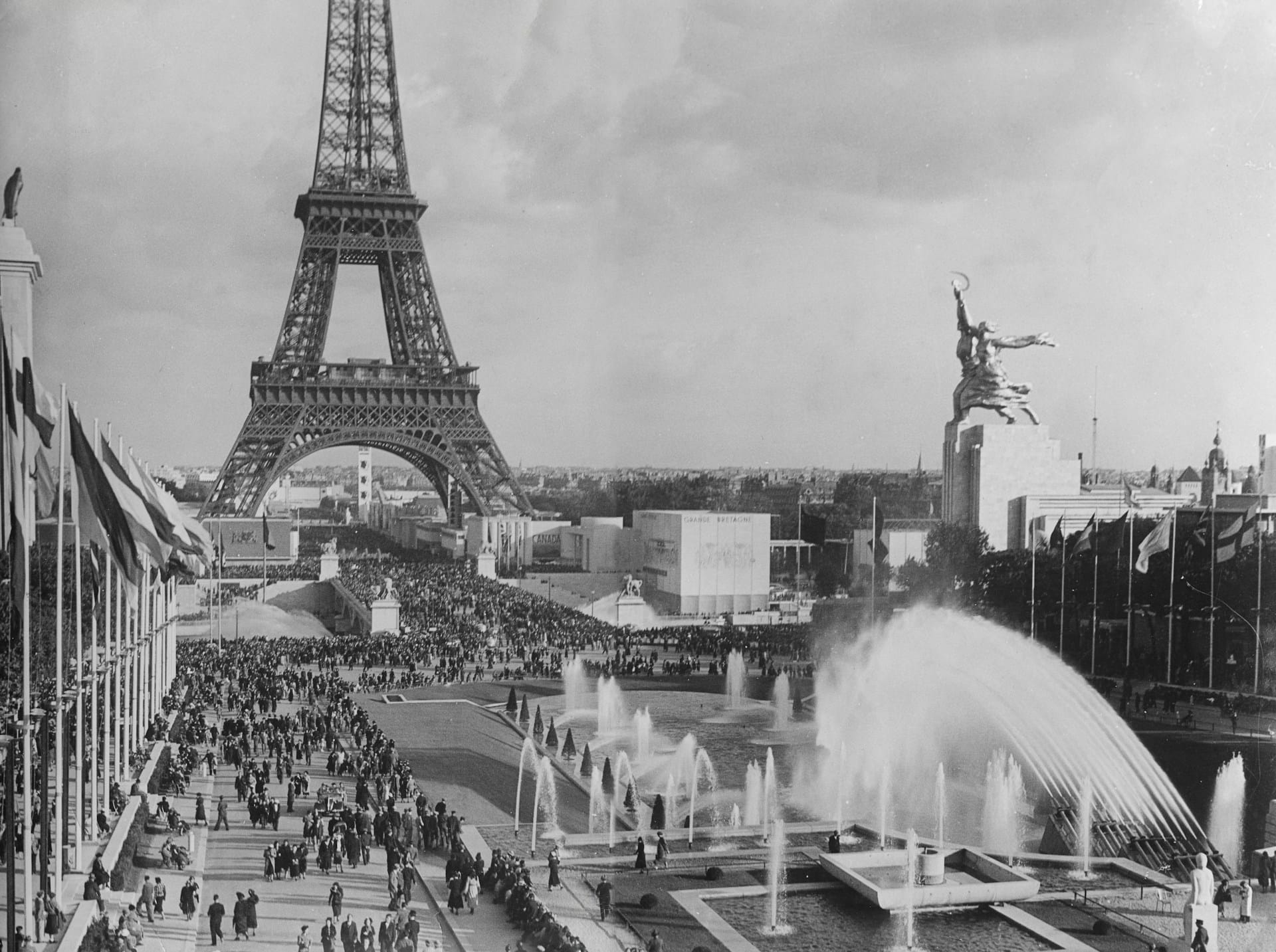
This explains why the Exposition Internationale des Arts Décoratifs et Industriels Modernes, held in Paris in 1925, was designed as a provocation as much as an exhibition. The French government excluded Germany as a deliberate political act, Germany having been an enemy power. The United States declined to participate, Commerce Secretary Herbert Hoover concluding that American design was insufficiently advanced to compete. The Exposition was, from the start, an argument about who controlled the visual culture of modernity, denominated in luxury goods: furniture, glass, textiles, jewelry. The V&A’s collection of objects from the Exposition documents the range of what was shown, and how deliberately the exhibiting nations positioned their crafts industries as national culture (vam.ac.uk/articles/art-deco-style).
What the movement drew on for its ornamental vocabulary was global in a way that reflected both colonial reach and genuine aesthetic hunger. That reach came at a cost: Egyptian, African, and pre-Columbian motifs were absorbed into a European luxury aesthetic with no credit to, or commercial benefit for, the cultures they originated in. Léon Bakst’s saturated palette brought the Persian miniatures and Hindu textiles he introduced to Diaghilev’s Ballets Russes in Paris in 1909, and those sources became the color logic of early French Art Deco. Howard Carter’s opening of Tutankhamun’s antechamber on November 26, 1922, sent Egyptian imagery through the movement within months: lotus columns, scarabs, stepped pyramids, hieroglyphics in jewelry, lobbies, and apartment facades.
The term “Art Déco” itself did not appear in print until 1966, in the catalog for the first modern retrospective at the Museum of Decorative Arts in Paris. The movement named itself retroactively. Which is one way of saying it was too busy arguing to stop and define itself while it was happening.
How Art Deco Resolved the Ornament Problem
The formal solution Art Deco reached was specific: impose industrial logic on ornament. Where Art Nouveau wound plant stems into chair legs, Art Deco replaced the stem with a chevron, a sunburst, a stepped pyramid. The ornament acknowledged the machine. It could be stamped, pressed, extruded, without pretending it was alive. Symmetry, repetition, and abstraction made ornament manufacturable without making it mechanical.
Materials were chosen for what they said as much as for what they did. Chrome-plated steel announced the machine age. Bakelite put modernity in the hands of people who could not afford lacquer. Aluminum was light and new. Exotic veneers, zebrawood and amboyna and macassar ebony, carried the colonial provenance of the luxury market: proof that the world’s resources were available to the right buyer. Hand-hammered wrought iron said that craft had not been lost. It had been formalized.
The Ruhlmann problem
Jacques-Émile Ruhlmann (1879–1933) is the figure who makes Art Deco’s central tension most visible. Called the “Pope of Art Déco” by contemporaries, as documented in Alastair Duncan’s Art Deco Complete (Abrams, 2009), Ruhlmann used rare veneers, ivory inlays, and tapered legs derived from 18th-century French Neoclassical forms. A single cabinet could occupy a craftsman for years. He was not trying to make things that factories could reproduce. He was arguing that the standard of excellence established by the great French ébénistes, the court furniture makers, remained the correct aspiration for design, regardless of what industrial production made possible.
This was a political claim, not just an aesthetic preference. The counterargument, and it is a reasonable one, is that Ruhlmann’s clients were not buying an argument. They were buying ebony and ivory. The political claim and the commercial transaction are not mutually exclusive, but they are not identical either. Ruhlmann’s work said: the machine age does not set the ceiling.
Ruhlmann’s work said: the machine age does not set the ceiling.
The Loewy correction
The argument that the machine age absolutely did set the ceiling, or rather that the ceiling should be raised through industrial means, was made most effectively by Raymond Loewy (1893–1986). French-born, trained as an electrical engineer, Loewy arrived in New York in 1919 and spent the next four decades designing objects that looked faster, sleeker, and more modern than their predecessors. His 1934 Pennsylvania Railroad GG1 locomotive was 139 feet long with a welded, not riveted, carbody and a five-stripe livery that made it look like it was moving even at rest. His reading of Deco’s formal vocabulary was that streamlining, geometry, and speed belonged on everything, from locomotives to pencil sharpeners. In his autobiography Never Leave Well Enough Alone (Simon & Schuster, 1951), Loewy argued that good design and commercial success were the same thing. Ruhlmann would not have agreed.
Five objects that prove what Art Deco was doing
These are not decorative examples. They are arguments in material form.
Chrysler Building, New York, 1930
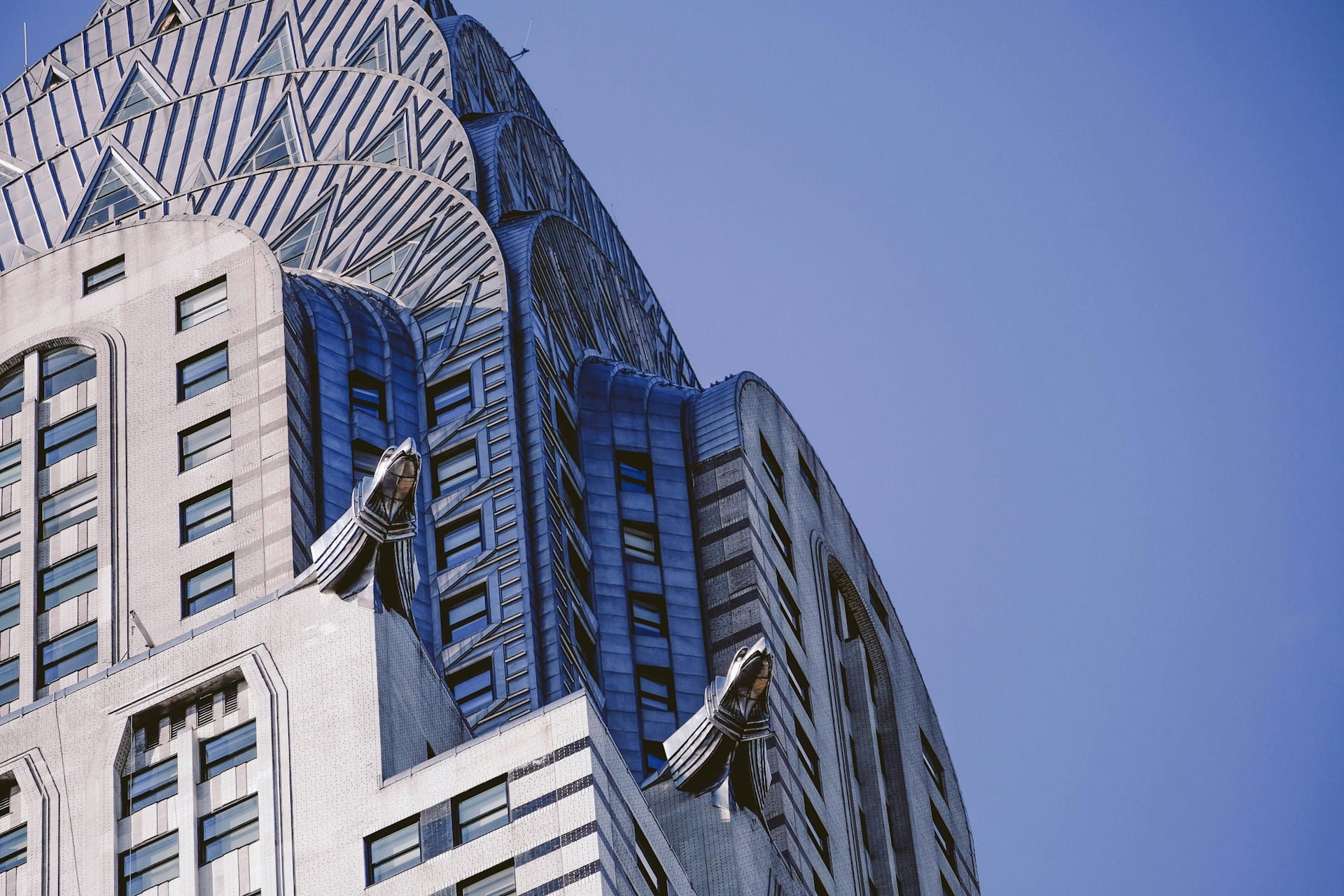
Architect William Van Alen designed the Chrysler Building’s stainless steel crown with seven radiating arches and eagle gargoyles derived directly from the 1929 Chrysler hood ornament. It was the movement’s most legible single statement: industry made monumental, ornament pressed from automotive steel. The spire was assembled in secret inside the building’s upper floors and raised in 90 minutes on October 23, 1929, surpassing 40 Wall Street to claim the title of world’s tallest. The record lasted eleven months. The building has lasted rather longer.
Jacques-Émile Ruhlmann, Cabinet with “Palmette” marquetry, c. 1916–1925
Amboyna veneer, ivory sabots. Ruhlmann’s forms are geometric; the Deco vocabulary is present. But the execution is deliberately unreproducible at industrial scale. The piece makes the case that geometric form is not the exclusive property of the machine. It is the High Deco argument in cabinet form.
René Lalique, “Bacchantes” vase, 1927
Opalescent glass, relief of dancing female figures. Lalique (1860–1945) moved through Art Nouveau, his jewelry made for Sarah Bernhardt, and arrived at Art Deco glassware without changing his fundamental approach to material and surface. The Bacchantes vase was produced in multiple versions, some clear, some opalescent, and remains in production today. A single career spanning both movements is itself evidence of how continuous the underlying impulse was, whatever the stylistic discontinuity.
Eileen Gray, E.1027 Adjustable Side Table, 1927
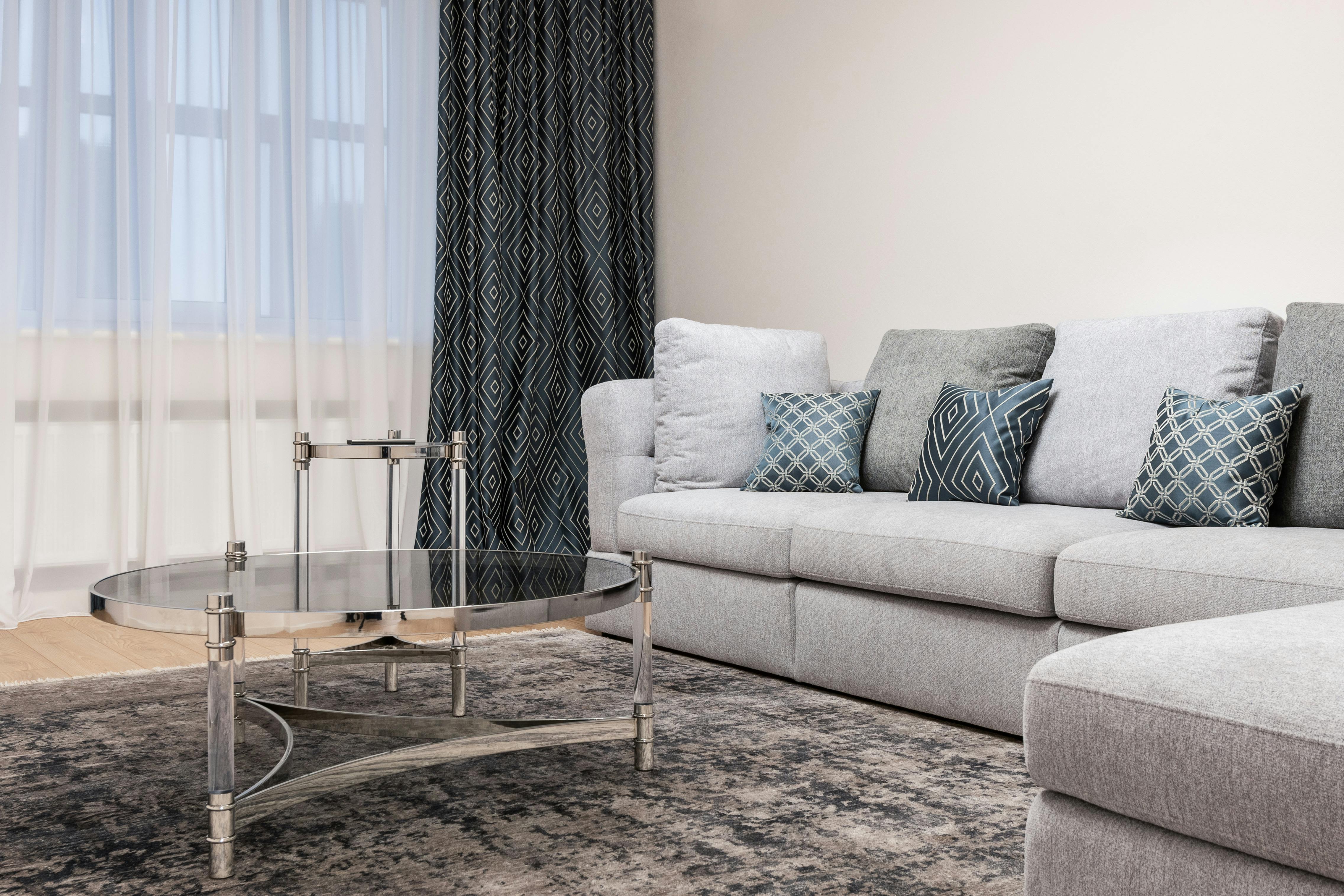
Chromed tubular steel, cantilevered arm, designed for Gray’s Villa E.1027 at Roquebrune-Cap-Martin. No ornament. Functional geometry. Yet produced with the material specificity of a luxury object: the finish, the mechanism, the weight. Gray (1878–1976) trained in Japanese lacquer with the master Sougawara and carried that attention to surface into everything she made. Her work sat outside most Art Deco survey histories for decades — she was typically framed as a Modernist architect — until renewed critical attention in the 1970s restored her furniture and objects to the movement’s record, as Patricia Bayer documents in Art Deco Interiors (Thames & Hudson, 1999). The E.1027 table now retails as a Classicon reproduction for approximately $1,200. That price tests the line between design object and furniture in a way Ruhlmann would have found clarifying.
Raymond Loewy, Pennsylvania Railroad GG1 Locomotive, 1934–1935
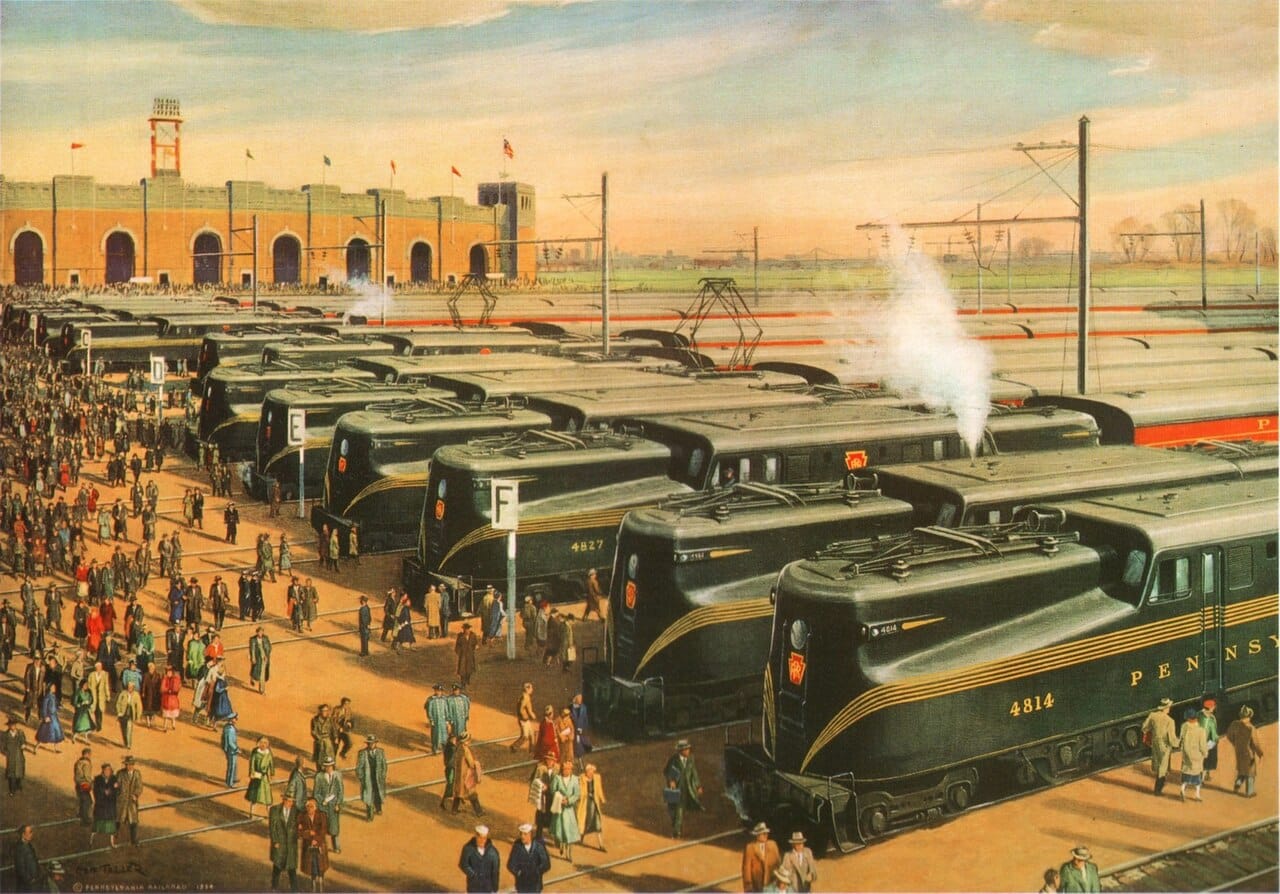
The Streamline Moderne branch of Art Deco is sometimes treated as a lesser application of the movement’s principles. The GG1 suggests otherwise. The welded carbody, the five-stripe “cat whiskers” livery, the form that reads as speed at a standstill: this was Deco’s vocabulary applied to the largest moving object most Americans would ever see. The GG1 carried Franklin D. Roosevelt’s funeral train in 1945. It remained in service until 1983. That is not a lesser application of anything. The Vitra Design Museum’s historical account of Streamline Moderne positions Loewy not as a stylist but as someone who understood that industrial form could carry exactly the same symbolic weight as fine ornament — just aimed at a different audience (design-museum.de/en/collection/streamline).
Shop the Collection
Art Deco produced objects intended to be owned. These three pieces carry the movement’s vocabulary into contemporary living spaces at different scales and price points. For deeper buying guides, see Best Art Deco Home Decor and Best Art Deco Lamps.
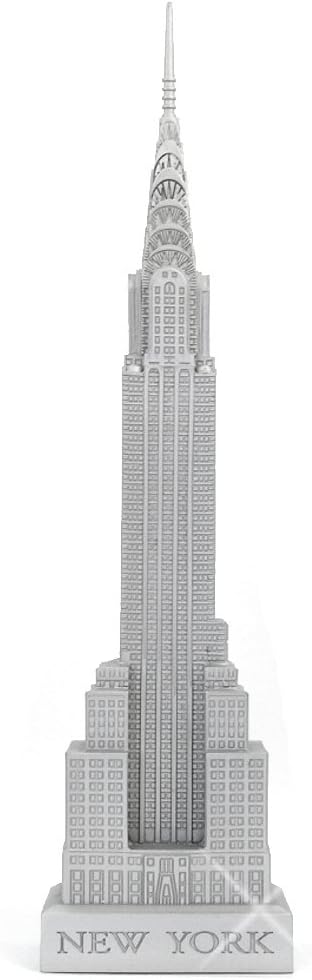
Chrysler Building 18-inch Replica Statue
The stainless steel crown and eagle gargoyles of the Chrysler Building are the movement’s most legible formal statement. This scaled replica captures the sunburst spire in enough detail to read as an object, not a souvenir.
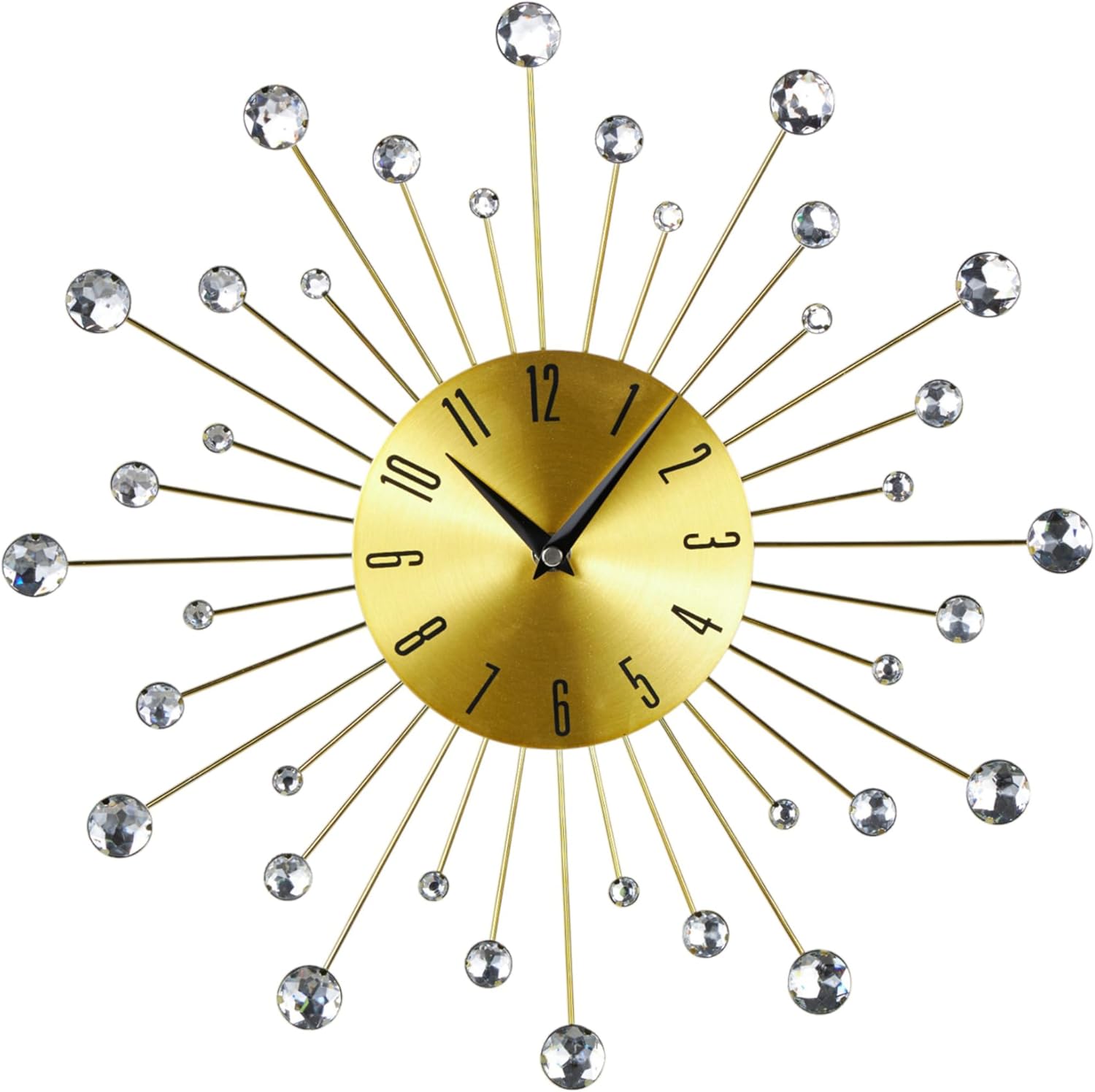
Art Deco Sunburst Wall Clock
The sunburst was Art Deco’s most repeated motif, radiating geometry that carried both solar symbolism and the formal logic of the machine. A clock is the correct object for it: time measured by the form that announced a new age. Look for pieces in the $40–$80 range with a spoke design in gold or brass finish and a clean dial without ornamental numerals.
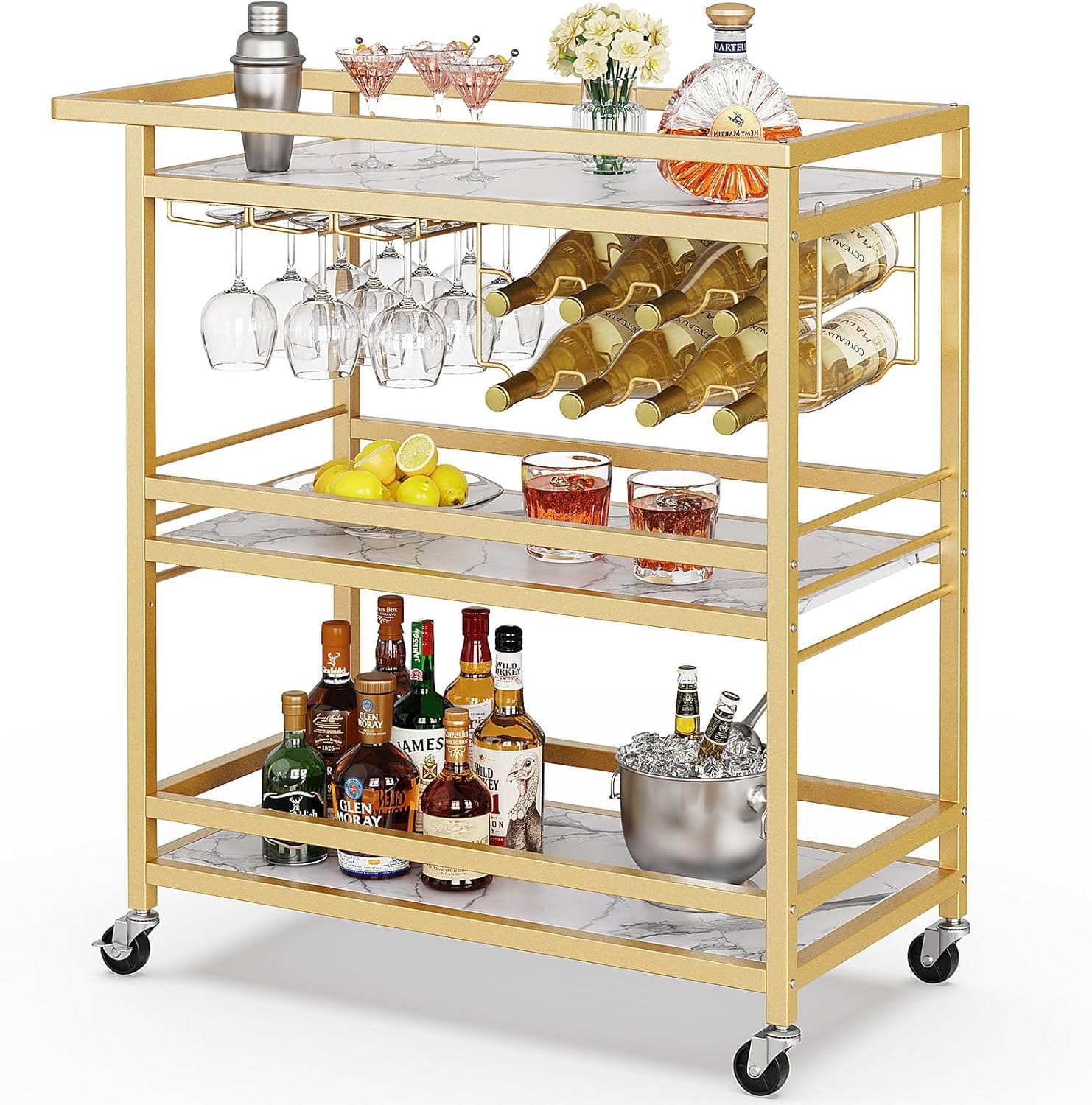
Art Deco Geometric Bar Cart
The bar cart’s Art Deco form is a Jazz Age invention: geometric steel rails, mirrored shelves, rolling service, shaped by cocktail culture and the era’s appetite for visible domestic theater. Look for pieces with geometric brass or gold rails and at least one mirrored shelf. The form has not improved since 1929.
Further Reading
Three books cover the movement with enough depth to function as ongoing references.
- Alastair Duncan, Art Deco Complete: The Definitive Guide to the Decorative Arts of the 1920s and 1930s (Abrams, 2009): 544 pages, more than 1,000 color images, covering furniture, jewelry, architecture, glass, and everyday objects. Duncan’s survey is the closest thing the movement has to a standard reference, and dense enough to return to rather than read once.
- Patricia Bayer, Art Deco Interiors: Decoration and Design Classics of the 1920s and 1930s (Thames & Hudson, 1999): Where Duncan surveys the movement’s objects, Bayer shows how those objects assembled into rooms. The spatial argument Art Deco was making about how people should live is what the domestic version of the movement was actually about.
- Alastair Duncan, American Art Deco (Abrams, 2017): The Streamline Moderne branch, Loewy, Donald Deskey, Paul Theodore Frankl, Russel Wright, is the most under-theorized part of Art Deco scholarship. Duncan’s American volume corrects the Eurocentric bias of most Deco surveys and makes the case that the GG1 and the Chrysler Building belong in the same conversation.
Frequently Asked Questions
What is Art Deco design?
Art Deco is a decorative design movement that originated in Paris around 1910 and flourished internationally through the late 1930s. It is defined by geometric ornament, symmetry, and the use of machine-age materials including chrome, Bakelite, and aluminum, combined with luxury materials such as exotic wood veneers and ivory. The movement spans architecture, furniture, jewelry, fashion, and industrial design.
When did Art Deco start and end?
Art Deco emerged in Paris around 1910–1912, reached its most visible peak at the 1925 Exposition Internationale des Arts Décoratifs et Industriels Modernes in Paris, and declined with the onset of World War II around 1939–1940. The American Streamline Moderne branch continued into the early 1940s. The term ‘Art Déco’ was not used until 1966, when the Museum of Decorative Arts in Paris held the first modern retrospective.
What are the key characteristics of Art Deco style?
Art Deco is characterized by geometric ornament (chevrons, sunbursts, stepped pyramids, zigzags), bilateral symmetry, and the use of both luxury and industrial materials. It absorbed influences from Cubism, the Ballets Russes, Egyptian antiquity, and African art. By contrast with Art Nouveau’s organic curves and Modernism’s rejection of ornament, Art Deco’s specific position was that ornament could be made compatible with industrial production through abstraction and repetition.
Who were the most important Art Deco designers?
Jacques-Émile Ruhlmann defined High Art Deco furniture in Paris: rare veneers, ivory inlays, Neoclassical proportions. René Lalique moved from Art Nouveau jewelry to Art Deco glass. Eileen Gray worked at the movement’s boundary with Modernism, producing the E.1027 table and Bibendum chair. In the United States, Raymond Loewy, Walter Dorwin Teague, and Norman Bel Geddes applied the movement’s vocabulary to industrial design, locomotives, and consumer products.
How is Art Deco different from Art Nouveau?
Art Nouveau (c. 1890–1910) drew its ornament from organic, plant-derived forms: stems, lilies, dragonflies. These were executed in flowing, asymmetrical curves. Art Deco replaced these with geometric, machine-compatible forms: chevrons, sunbursts, stepped pyramids. Art Deco was in part a direct critical response to Art Nouveau, with designers at the Société des Artistes Décorateurs arguing that organic ornamentation was incompatible with industrial production. The movements overlap in time but diverge in formal logic and in what they think design owes to the machine.
Is Art Deco still used in design today?
Yes. Art Deco’s geometric vocabulary reappears in architecture, interior design, fashion, and graphic design in regular cycles, particularly during periods of economic confidence or nostalgia for the 1920s and 1930s. The style’s most durable legacy may be in American cities: Miami Beach’s South Beach district contains the world’s largest single concentration of Art Deco architecture; Napier, New Zealand, rebuilt after a 1931 earthquake, is the world’s most complete Art Deco city by proportion. Both function as working demonstrations that the movement’s forms remain habitable.
Art Deco sits within a broader history of design movements that redefined how objects were made and what they meant. See Design Legends for profiles of the individual designers who drove this history — including Loewy, Rams, and Eames. For the direct comparison of Art Deco and its predecessor, see Art Deco vs Art Nouveau. The Memphis Design Movement can be read as a second wave of the same argument Art Deco made against Modernism: that ornament carries meaning and that restraint is not automatically correct. Scandinavian Design represents the other answer to that same postwar question — function preserved, but warmed with natural material and human scale.
For products in the Art Deco tradition: best Art Deco home decor, best Art Deco lamps, and best Art Deco furniture.

About Joe Post
Joe Post holds an MFA in Art from California Institute of the Arts (CalArts) and has done additional graduate work at the School of the Art Institute of Chicago. He founded Art Design Ideas to write about design as cultural argument — the decisions, contradictions, and assumptions built into the objects we live with.