
Charles Gaines, conceptual artist and CalArts faculty emeritus, born in 1944 in Charleston, South Carolina, uses number grids, photography, and rule-based systems to investigate how meaning, identity, and representation are constructed. Working outside the expressive traditions of painting, he was among the first African American artists to build a practice entirely within conceptual art.
What Gaines was refusing when he picked up a ruler instead of a brush
The pressure Gaines faced in the early 1970s was specific. He had trained at the Rochester Institute of Technology — earning his MFA in 1967, the first Black student admitted to that program — and he was building a practice around systems, rules, and numbers at the exact moment the Black Arts Movement was demanding something else. The demand, as he described it in a 2023 W Magazine interview, was blunt: “They told me I was making white art and that I should be making art about my culture.”
What the work does instead of expressing identity is substitute mathematical notation for subjective gesture: the grid assigns each tonal value a number; the number produces the mark; no hand decides the result. Gaines’s position, which he made explicit in his 1993 essay “The Theater of Refusal: Black Art and Mainstream Criticism,” was that the expressive mode—the artist’s body, emotion, and identity reading directly onto the canvas—was itself an ideological convention. It was not more authentic than systems-based work. It was just a different kind of mystification. In the context of the Black Arts Movement’s demand that Black artists produce politically legible work, that formal choice was, paradoxically, its own political stance.
The conceptual art tradition he was entering was, as his Wikipedia entry and multiple institutional biographies document, almost entirely white. Sol LeWitt published “Paragraphs on Conceptual Art” in Artforum in June 1967, the same year Gaines completed his MFA, arguing that “the idea becomes a machine that makes the art.” Lawrence Weiner worked in the same territory. So did Mel Bochner. Gaines entered that tradition as an outlier. Unlike LeWitt’s wall drawings—which carry the cool neutrality of geometry—Gaines’s choice of what to systematize was never neutral in the same way. He chose walnut trees. He chose Jim Crow legal texts. He chose faces of those accused of crimes alongside constellations. He was in dialogue with the systems-art tradition and distinct from it on a point that LeWitt’s practice did not need to address.
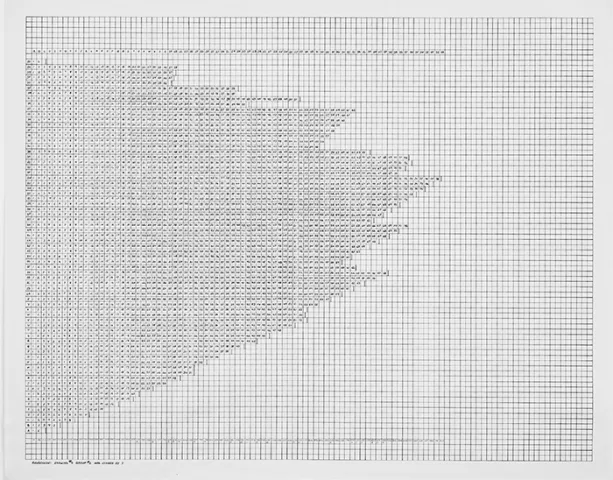
His first full articulation of the system came in the Regression series (1973–74): numbered ink marks on a grid, each drawing built on calculations from the previous one. The marks accumulate. Something that looks like an image emerges, without anyone intending it. He had found the tool he would use for the next five decades. Not expression. A machine that makes the image, in which the machine does not choose what to process. Only Gaines does that. This is also why his practice belongs to the tradition that argues form should follow function, not feeling. It is why it departs from that tradition at the point where function and ideology meet.
In 1993, Gaines wrote “The Theater of Refusal: Black Art and Mainstream Criticism” for a UC Riverside exhibition catalog. The argument he had been making with ink and numbers for twenty years he now made in prose: abstraction is not free of ideology. It is produced by it.
How a number system produces an image—and why that matters
The Walnut Tree Orchard series, which Gaines began in 1975 and extended through at least 2014, is where the system becomes visible in its full logic. He photographs walnut trees in a California orchard. Then he takes the visual data of each tree—tonal values, spatial positions—and assigns each value a number. Each number corresponds to a color on a grid. The photograph appears alongside the grid. What you see on the left is what the camera recorded. What you see on the right is what the rules produced.
The grid is not an abstraction of the tree. It is a parallel language for the tree. No hand decided how to represent it. The system represented it. Gaines described the goal in W Magazine: “My interest in doing this is to show the role that structures play in how things acquire meaning.” This is a claim that applies beyond art: the modernist design object as cultural argument — the Barcelona Chair no less than the Walnut Tree grid — derives its meaning from the decisions embedded in its structure, not from the feeling it expresses.
This is why the phrase “the trees could paint themselves” became his shorthand for the project. The Walnut Tree Orchard series earned him a place in the Whitney Biennial in 1975, the year after the Regression series. The art world recognized that something different was happening. Not just formally. Argumentatively.
The Manifestos series (2013 onward) makes the argument at higher temperature. Gaines took political texts. The Dred Scott v. Sandford decision of 1857 became material. So did speeches by Malcolm X. So did speeches by Martin Luther King Jr. He also used writings by Frantz Fanon. He translated each letter into a musical note by arbitrary correspondence. The letter A becomes one note, B another. This continues through a fixed rule. The political content becomes music through this system. The score is rendered graphically in the gallery alongside the original text. The music produced is, by documented accounts from the Museum of Modern Art, which holds Manifestos 2 in its collection, unexpectedly beautiful. It is jarring for that reason.
The question the series poses is not resolved. What does it mean that ideology can be converted to sound by a set of arbitrary rules? The system neither endorses the politics of Dred Scott nor erases them. It exposes how any meaning system operates: by arbitrary correspondences that, once fixed, feel inevitable. As Gaines put it in Artforum, the artwork employs “manipulative associations” and uses systems as “a tool to ‘unpack the force of ideology.'”
In the Night/Crimes series (1994–1997), the argument becomes most uncomfortable. Gaines pairs archival crime scene photographs with images of night-sky constellations visible on the same date and at the same location. Under Plexiglas, he inscribes dates, locations, astronomical coordinates, and a date fifty years in the future. The mug shots shown are not the perpetrators of the crimes documented. There is no causal connection. The pairing is produced entirely by the system. It comes from the same location. It comes from the same date. Nothing more. As Gaines noted in connection with the Art Institute of Chicago’s presentation of the series: “it seems compelling to people to override the fact that this relationship is completely made up.” The system creates the illusion of narrative. What we project onto it reveals how we read.
This also sits in conversation with the debate about whether art and design can share a methodology. The question is whether process and rules-based thinking shape meaning across disciplines independent of the discipline’s stated purpose.
What five key works by Charles Gaines show about how his system operates
Regression (1973–74)
Numbered ink marks on paper grid. This is where Gaines finds the system: each drawing built mathematically on the calculations of the previous one. The marks are tentative, accumulating into something that looks like an image without ever intending to be one. It is the foundational document of his practice. It is the proof-of-concept for a career’s worth of work.
Walnut Tree Orchard, Set #1 (1975–76)
Chromogenic photograph alongside graphite and colored pencil on gridded paper. A walnut tree from a California orchard, photographed by Gaines, appears beside a grid of ascending numbers. Each number is assigned a color corresponding to a tonal value in the photograph. The photograph was taken by a human. The numbers were assigned by rule. This is the earliest complete statement of what the Gridworks methodology does: the tree painted itself.
Night/Crimes (1994–1997)
Plexiglas, archival photographs, text. Crime scene photographs paired with constellation images from the same date and location. The murderers in the mug shots are unconnected to the crimes depicted. The system constructs the pairing. The annotation dismantles its apparent logic. The gap between what we see and what we are told is the place where the work operates.
Manifestos 2 (2013)
Multimedia installation, MoMA collection. The text of the Dred Scott v. Sandford decision translated into a musical score by arbitrary letter-to-note correspondence, then performed. The score is graphically rendered alongside the original legal text. That the music is beautiful is not incidental. It is the thing that disturbs.
Faces 1: Identity Politics (2018)
Gridded drawings systematically combining facial features. The “identity” in the title is not a celebration. It is the problem the work is examining. The face assembled by rule is not a person. The face that looks like one asks why we are so ready to read it as one.
Shop the collection
The argument Gaines has been making for fifty years is documented most precisely in two current publications. Both are worth owning.
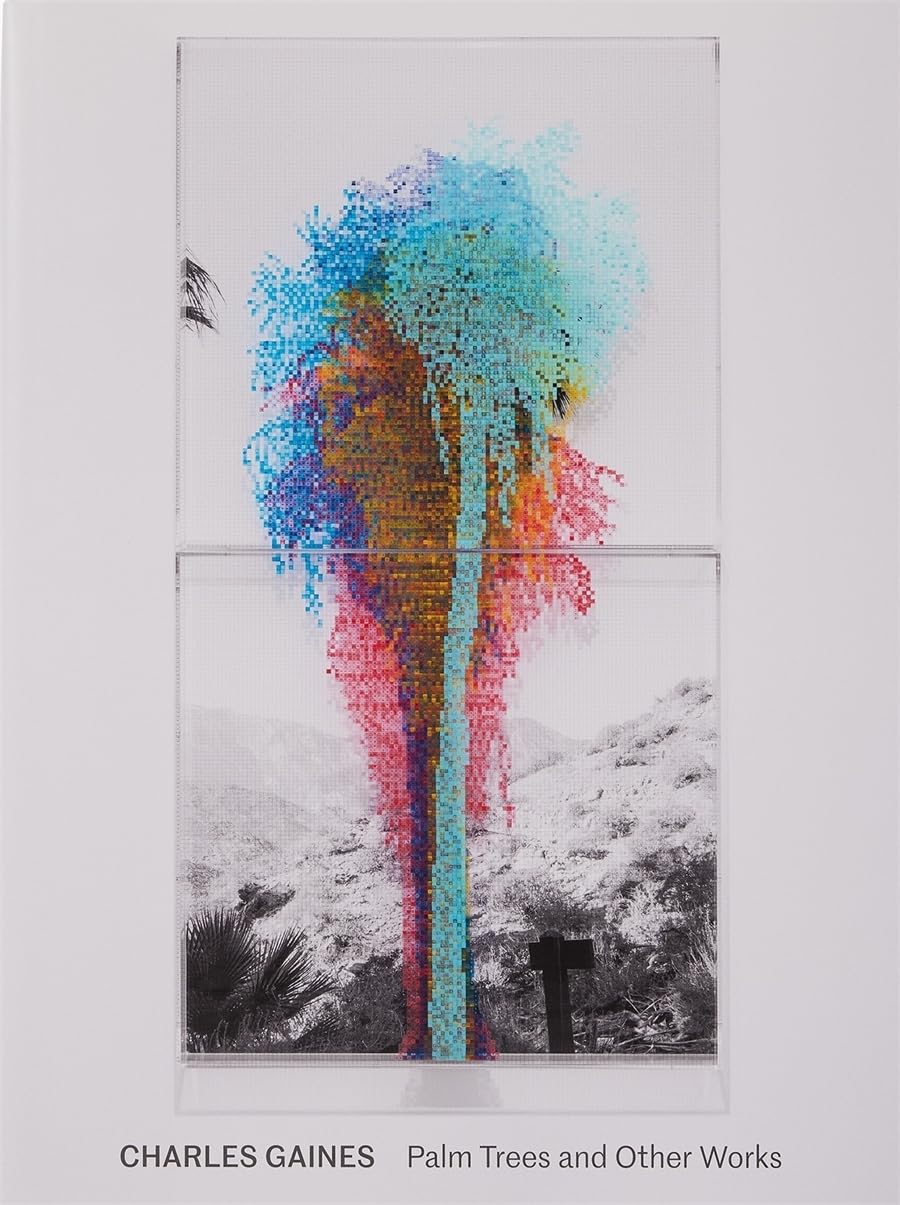
Charles Gaines: Palm Trees and Other Works (Hauser & Wirth Publishers / Karma, 2023): Extends the Gridworks project into the California landscape. Palm trees rendered in Gaines’s numbered grid appear alongside photographs, with essays by Cherise Smith and David Platzker. This is the most current monograph on the series.
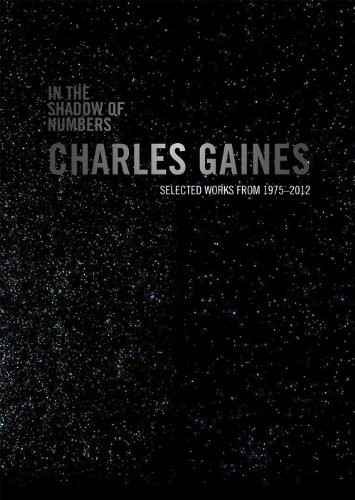
In the Shadow of Numbers: Charles Gaines, Selected Works 1975–2012 (Pomona College Museum of Art, 2012): The most focused survey of the Gridworks methodology across four decades, with essays by Michael Ned Holte, Rebecca McGrew, and Ciara Ennis. The text directly addresses what the numbers are actually doing.
Further reading
These are not supplementary reading. They are the theoretical frame that explains why Gaines’s practice matters beyond the art world. Own them if you want to understand the argument, not just the objects. For the movement’s own primary texts, start with the ranked guide to the best conceptual art books.

Edward W. Said, Orientalism (Pantheon, 1978; Vintage 25th Anniversary ed., 2003): Said’s central argument is that knowledge systems construct their objects. They carry the marks of the power relations that produced them. This runs exactly parallel to Gaines’s claim that abstraction is produced by ideology. The book that makes this argument at the level of cultural theory most directly explains why the choice of what to systematize is never innocent.
Roland Barthes, Image-Music-Text (Farrar, Straus and Giroux, 1977; trans. Stephen Heath): The Manifestos series is in direct conversation with Barthes’s argument in “The Death of the Author” and “The Rhetoric of the Image.” Systems of signs, Barthes argues, operate independently of authorial intention. Once a rule is fixed the author’s original meaning is not recoverable. When Gaines translates a political text into a musical score, he is demonstrating Barthes’s thesis with materials.
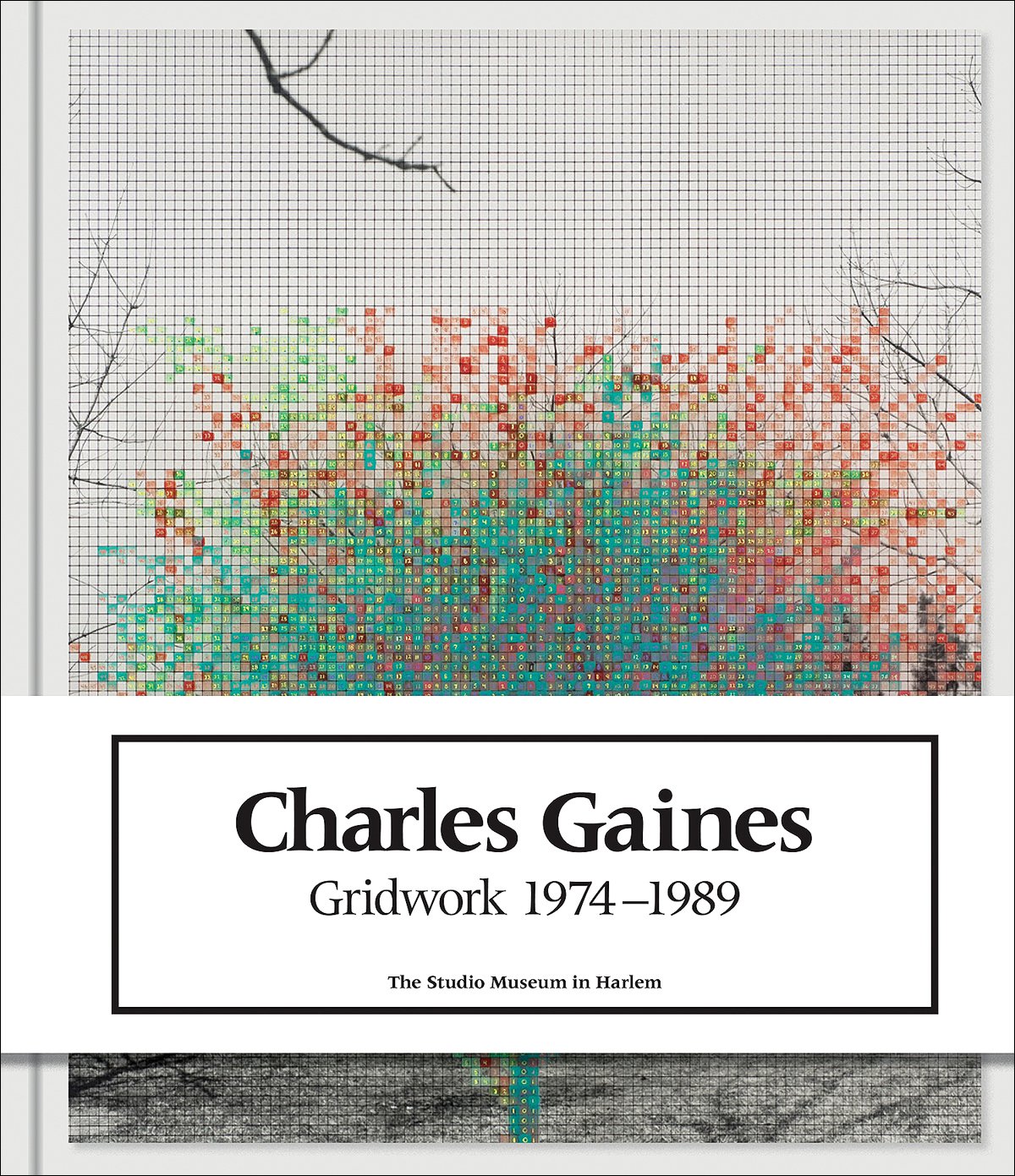
Courtney Martin et al., Charles Gaines: Gridwork 1974–1989 (Studio Museum in Harlem, 2014): Seventy-five key works with essays by Howard Singerman, Anne Ellegood, and Thelma Golden. The contextual argument locates Gaines against the Black Arts Movement and the rise of multiculturalism. This is the scholarly anchor for his foundational period. Nothing else covers this ground with this depth.
Frequently asked questions
What is Charles Gaines known for?
Charles Gaines is known for developing a rule-based, systems-driven practice that uses number grids and photography to investigate how meaning and representation are constructed. His Gridworks series began in the mid-1970s with photographs of walnut trees translated into numbered color grids. This is his foundational contribution. He is also known for the Manifestos series, which translates political texts into musical scores by arbitrary correspondence, and for his long tenure as faculty at the California Institute of the Arts (1989–2022).
How does Charles Gaines make his grid drawings?
Gaines photographs a subject. It might be a tree, a face, or a site. He then translates the visual data of that photograph into a numbered grid according to a fixed rule. Each tonal value in the photograph corresponds to a number. Each number corresponds to a color or mark on paper. The grid is produced entirely by the rule, not by expressive choice. The photograph and the completed grid appear side by side, showing the same subject in two languages simultaneously.
Why does Charles Gaines use systems instead of expressive painting?
Gaines’s position, developed from his earliest work in the 1970s, is that expressive mark-making is not more authentic than systems-based production. It is a different convention. It locates meaning in the artist’s interiority. His argument is that the system removes that particular fiction. It makes visible the structures through which meaning is produced. As he stated in Artforum, he was ‘interested in how remarkably meaningful things could be produced in situations that didn’t use the apparatus of subjectivity.’ That said, the system does not eliminate the artist’s choices. It shifts them to the selection of what to systematize, which Gaines has always charged with political and racial weight.
Is Charles Gaines part of the Black Arts Movement?
No. Gaines explicitly refused the Black Arts Movement’s demand for politically legible, identity-forward work. In a 2023 W Magazine interview, he described being told he was ‘making white art’ and that he should make art about his culture. He declined. His 1993 essay ‘The Theater of Refusal: Black Art and Mainstream Criticism,’ written for a UC Riverside exhibition catalog, argues that this refusal was not apolitical: abstraction is produced by ideology. Exposing that production is its own form of cultural critique. Gaines did not reject politics. He rejected the form of political art the Movement prescribed.
Where can I see Charles Gaines’s work?
Manifestos 2 (2013) is held in the permanent collection of the Museum of Modern Art, New York. Gaines has been represented by Hauser & Wirth since 2018 and by Galerie Max Hetzler. His work has been shown at the Whitney Biennial (1975), the Studio Museum in Harlem (Gridwork 1974–1989, 2014), the 56th Venice Biennale (2015), and ICA Miami (Charles Gaines: 1992–2023, 2023–2024). The Art Institute of Chicago presented the Night/Crimes series.
What is the Manifestos series by Charles Gaines?
The Manifestos series (2013 onward) translates political texts into musical scores by arbitrary correspondence. The source texts include the Dred Scott v. Sandford decision of 1857, speeches by Martin Luther King Jr. and Malcolm X, and writings by Frantz Fanon. Each letter of the alphabet is assigned a fixed musical note. The resulting scores are performed and displayed in the gallery alongside the original texts. The series is not advocacy for or against the source texts. It is an argument about how any system of signs—legal, musical, political—produces meaning through arbitrary rules that feel inevitable once fixed.
See also: West Coast Conceptual Art, The CalArts Mafia, Conceptual Art After Minimalism, Systems Art Explained

About Joe Post
Joe Post holds an MFA in Art from California Institute of the Arts (CalArts) and has done additional graduate work at the School of the Art Institute of Chicago. He founded Art Design Ideas to write about design as cultural argument — the decisions, contradictions, and assumptions built into the objects we live with.