

The CalArts Mafia is the informal name for the generation of artists trained at California Institute of the Arts in Valencia in the early 1970s under John Baldessari’s Post Studio pedagogy. They arrived in New York around 1980 and, through the Pictures Generation and its critical aftermath, reshaped how the art world argued about images, authorship, and meaning.
What was CalArts actually teaching that Yale and RISD were not?
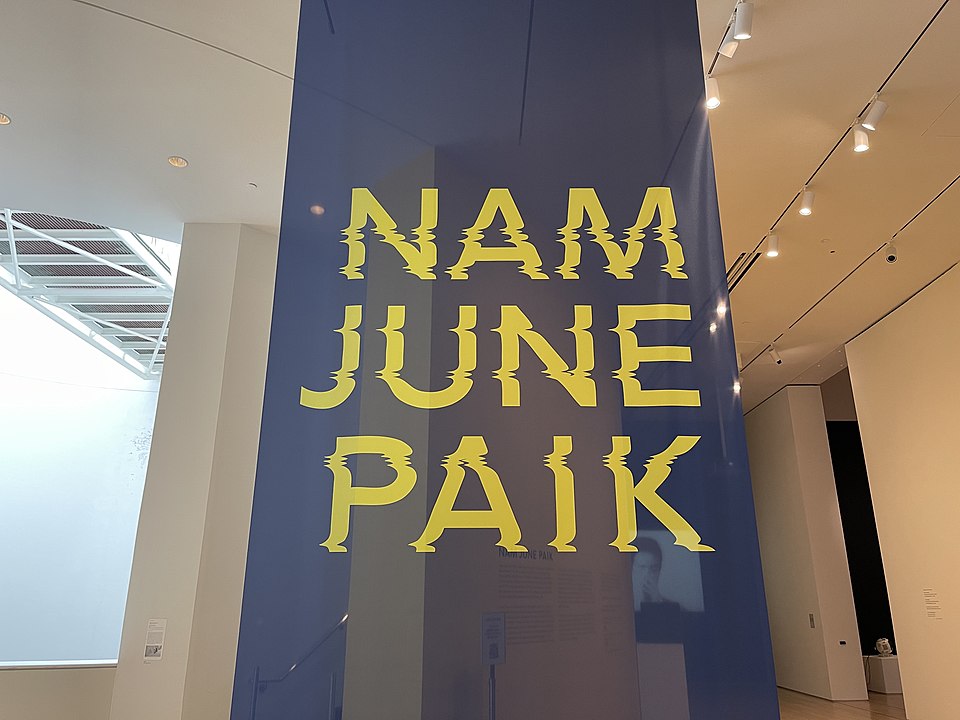
CalArts opened in 1970 as Walt Disney’s attempt to build an American Bauhaus, a cross-disciplinary arts university modeled on the Bauhaus’s interdisciplinary model and on Black Mountain College, which had closed thirteen years earlier. Disney’s original interest was animation. What he got instead was Allan Kaprow, John Baldessari, Judy Chicago, and Miriam Schapiro, faculty drawn, as the school’s founding documents describe it, from “politically and aesthetically revolutionary ranks of the East Coast avant-garde” (Wikipedia/CalArts). The gap between Disney’s vision and what actually happened on campus reveals something important about the institution itself: it was commissioned for one thing and immediately became something else.
The structural difference from Yale or RISD was not taste. Yale’s model in the 1970s was studio excellence plus rigorous instruction in drawing and color theory, with frequent critiques by visiting artists. RISD ran a parallel track, its critical theory an add-on provided through a Brown University partnership, important, but not the foundation of the curriculum. Both schools treated craft as the base you built argument on top of.
Baldessari inverted this. His Post Studio class replaced medium-specificity with discourse from the first day. Students were not taught to paint or sculpt. They were asked whether painting or sculpting was what they needed to be doing at all. This is a structurally different question. The School of Critical Studies at CalArts, still active, formalized what Baldessari initiated informally: a curriculum structured around argument, reading, and the relationship between theory and practice, with no equivalent institutional home at Yale or RISD.
I went through this system. What it felt like from inside was less a pedagogy than a sustained pressure on the premise of the art object itself. You were not being trained in a medium. You were being trained to interrogate whether the medium was the right decision. That argumentative posture is what the first generation took to New York.
Why Baldessari’s “Make No More Boring Art” was a pedagogical method, not a slogan

The phrase came first. In 1970, Baldessari took all his paintings from 1953 to 1966 and cremated them. He then baked the ashes into cookies. The Cremation Project was a literal disposal of the art object as the point. It was not a stunt, but a position stated with full commitment. The dictum “Make No More Boring Art” was directed first at himself, and only then turned into a teaching principle.
What he did in class was distribute a “List of Art Ideas” on the first day. These were vague provocations designed to interrogate the authority and limitations of the concept of the art assignment itself (CCA Wattis Institute documentation). The list was not an instruction set. It was a way of placing the structure of instruction itself under pressure. He presented students with exhibition catalogues, magazines, and pop culture ephemera to generate ideas. The goal, as he described it, was to “set up a situation where art might happen,” not to produce a particular kind of work.
Post Studio students learned art not as expression but as investigation. The distinction matters. An expressive model produces work that is a record of the maker’s inner state. An investigative model produces work that argues something about the world. It argues about images, about representation, about what happens when you put two things next to each other. David Salle’s layered canvases are not expressions. They are arguments about what images do when they share a surface. Jack Goldstein’s vinyl records of synthetic animal sounds are not expressions. They are arguments about mediation, about the difference between a sound and a recording of a sound.
This is why the Post Studio generation had a coherence that a shared aesthetic could never have produced. They didn’t look alike. What they shared was an argumentative posture. That posture traveled to New York intact.
The Memphis Design movement launched in the same historical window, around 1981, making a parallel argument through design: against modernist restraint, against Rams’s ethics of reduction, for ornament as a deliberate provocation rather than a lapse in judgment. The CalArts Mafia and Memphis were not the same project, but they were asking adjacent questions. Both pressed against what the dominant discourse had been suppressing. Both did this through objects that argued rather than decorated.
How the CalArts Mafia reshaped contemporary art discourse
The term “CalArts Mafia” was coined when the second and third waves of alumni began arriving in New York at the start of the 1980s, according to the documentation in Richard Hertz’s Jack Goldstein and the CalArts Mafia (Minneola Press, 2003). The first wave had already established the network: Jack Goldstein, David Salle, Ross Bleckner, Eric Fischl, Barbara Bloom, James Welling, Matt Mullican, Troy Brauntuch, Ericka Beckman.
Goldstein’s practice before the paintings was stranger than the paintings. He made performance works using vinyl records to create synthetic animal and natural sounds, sounds that had never been recorded because the sounds had never existed. The work occupied a space that was neither painting nor performance nor music but something like a recorded image of a thing that wasn’t there. That is Post Studio thinking made material.
Salle arrived in New York and immediately began making large canvases with layered appropriated images from high and low cultural sources. The images were juxtaposed without commentary. The paintings didn’t explain the relationship between the images they contained. They presented the problem of that relationship and left it open. The New York market, which was ready for this argument by the early 1980s, rewarded him for it.
The Pictures exhibition matters here. In 1977, Douglas Crimp curated a show at Artists Space in New York. The artists included Sherrie Levine, Jack Goldstein, Philip Smith, Troy Brauntuch, and Robert Longo. Two years later, Crimp’s essay in October expanded the argument and added Cindy Sherman to the account. Crimp edited October from 1977 to 1990. The journal was the primary theoretical apparatus through which the Pictures Generation received critical elaboration. The show named the generation. The essay gave the generation its argument about itself.
It is worth being precise about what CalArts actually caused. Cindy Sherman studied at Buffalo State College. Robert Longo attended Buffalo and Rosary Hill. Barbara Kruger studied at Parsons and Syracuse. All three arrived at essentially the same critical position, images as contested site, representation as power, without passing through Baldessari’s class. The discourse was forming from multiple directions simultaneously. What CalArts contributed was concentration and institutional coherence: a critical mass of artists trained in the same argumentative method, arriving in New York within a few years of each other. CalArts accelerated and gave structure to something already forming, rather than originating it outright.
Karen Kilimnik’s work belongs to the critical milieu the Pictures Generation created. She arrived a few years later but into a discourse that CalArts had helped structure and concentrate. You can read her use of found imagery and popular culture iconography through the same frame Crimp established in 1979.
Matt Mullican took the Post Studio method in a different direction. He developed a systematic symbolic language for categorizing human experience across cosmological, cultural, and biological registers. This practice was entirely built on the conceptual-systems emphasis Baldessari had instilled. There is no medium to speak of in Mullican’s work. There is only the system.
Mike Kelley is the significant exception in the timeline. He came through CalArts in the second generation and chose to stay in Los Angeles rather than migrate to New York. His 1992 inclusion in MOCA’s “Helter Skelter: L.A. Art in the 1990s” became a landmark event for the LA-based CalArts alumni who had made the same choice. Kelley, working with performance, stuffed animals, craft objects, mass cultural detritus, a sustained reckoning with repressed experience, became the most important artist to come out of the CalArts lineage. He built that from inside the institution’s city, not from a position in the New York market.
The backlash that was already contained in the model
The critique arrived on schedule. Aaron Rose, writing in the LA Weekly in 2005, observed that CalArts MFA work “seemed like nothing more than a rehash of conceptual ideas that were mined years ago” (as cited in Wikipedia/CalArts). Dave Hickey’s version was sharper: “I can go over to CalArts and ask them if they know who John Wesly is, and they would go, ‘Huh? What discourse does he participate in?’” (Wikipedia/CalArts). Hickey’s point was that the discourse model had calcified into a canon. CalArts was now teaching the authority of Post Studio as a new medium-specificity, with discourse as the medium no one was allowed to question.
This critique was correct. It was also already contained in the model’s internal logic. A pedagogy built on interrogating authority produces, at scale, students who are very skilled at interrogating the authority of previous work. It does not automatically produce students who can interrogate the authority of the interrogation. When Post Studio became an orthodoxy, it reproduced exactly the condition it was designed to break. That is not a reason to dismiss what Baldessari built. It is a reason to take it seriously.
Shop the collection
These two books are the shop. There are no relevant physical objects for this topic, and I am not going to pad this section with loosely associated design products to fill a convention. The Hertz book and the Végh/Kaiser catalogue are the primary documents. Own them.
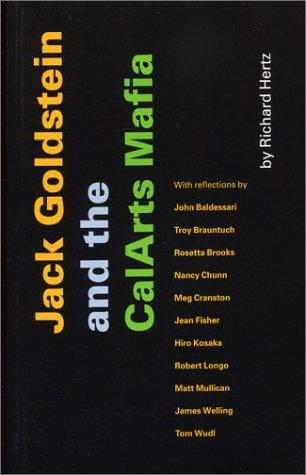
Richard Hertz, Jack Goldstein and the CalArts Mafia (Minneola Press, 2003): The primary social and economic history of the first CalArts generation. Built partly from Goldstein’s own voice, it documents not just the formation of the discourse culture but what happened when discourse-trained artists entered a market that rewards fame and product.
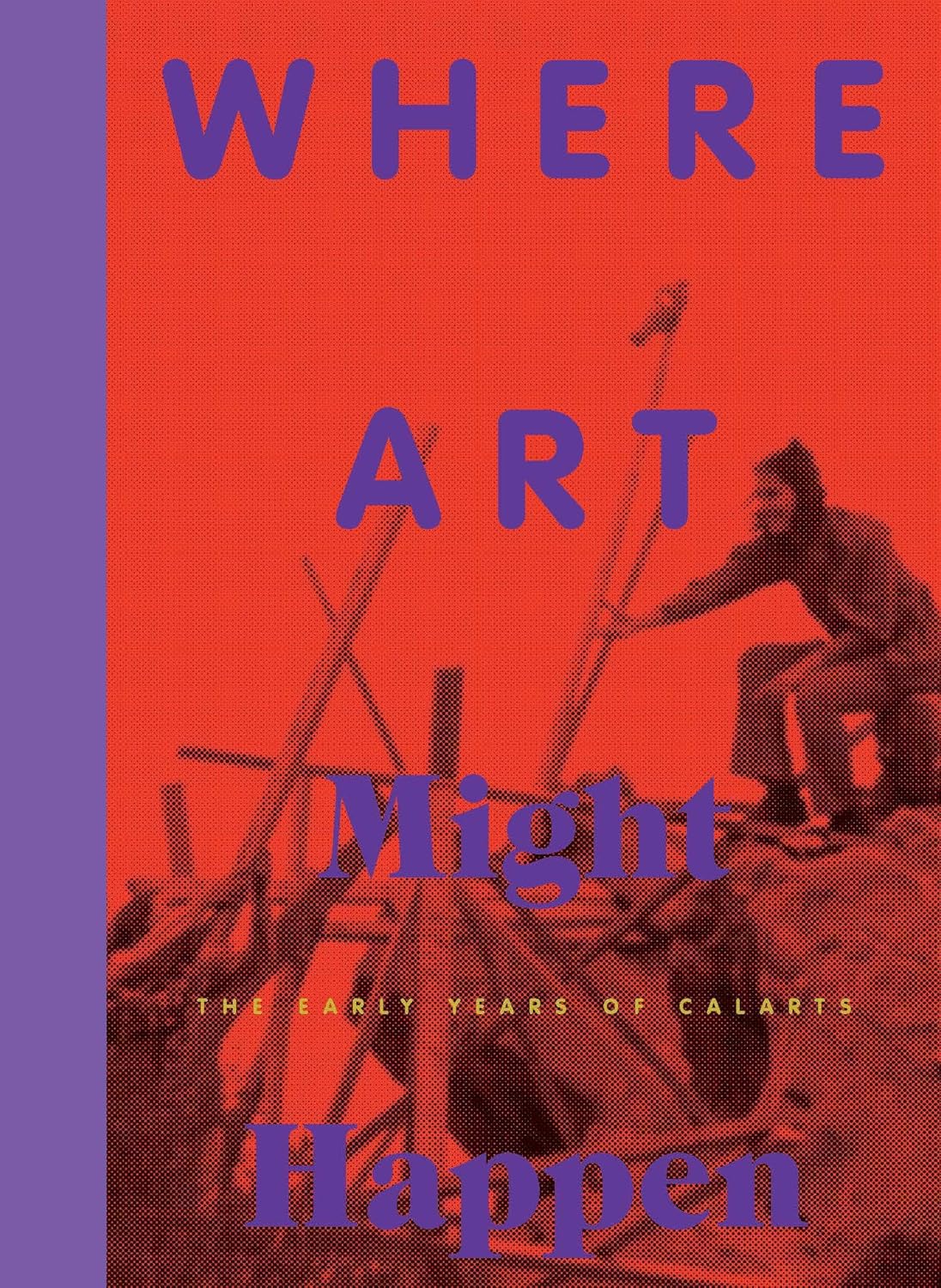
Christina Végh and Philipp Kaiser, Where Art Might Happen: The Early Years of CalArts (Prestel, 2021): 100-plus works from 41 artists, many unpublished, from the school’s founding decade. This is the best visual record of what Post Studio actually produced, as opposed to what has been written about it.
Further reading
Three books. They cover the formation (Végh/Kaiser), the social history of the generation in the market (Hertz), and the critical apparatus that received them in New York (Crimp). You need all three to have the full argument. See also broader reading resources on contemporary art for related titles beyond this specific lineage.
Richard Hertz, Jack Goldstein and the CalArts Mafia (Minneola Press, 2003): This is not a history-of-ideas book. It is a social and economic history of what happens when discourse-trained artists enter an art market that rewards fame and product. The tension is the argument.
Christina Végh and Philipp Kaiser, Where Art Might Happen: The Early Years of CalArts (Prestel, 2021): The only book that shows you the work alongside the pedagogy. You can see what Post Studio produced image by image rather than reading about it in the abstract.
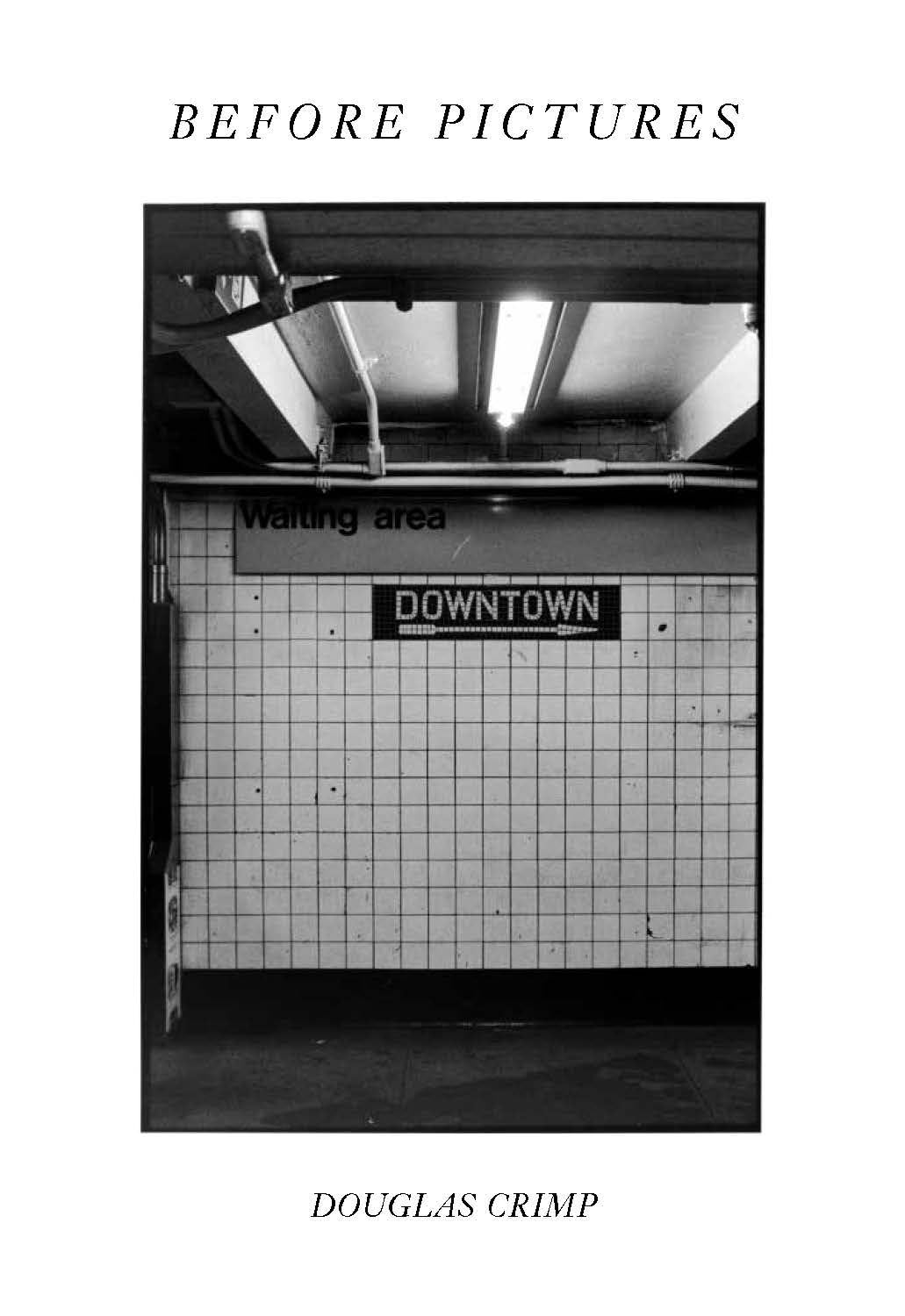
Douglas Crimp, Before Pictures (University of Chicago Press, 2016): Crimp’s memoir of the years before he curated “Pictures” in 1977 is also a history of how critical discourse in New York was structured. It shows the reception apparatus the CalArts Mafia arrived into, which is inseparable from what they produced.
Frequently asked questions
What is the CalArts Mafia?
The CalArts Mafia is the informal name for the generation of artists trained at California Institute of the Arts under John Baldessari’s Post Studio pedagogy in the early 1970s. The term emerged when the second and third waves of alumni began arriving in New York at the start of the 1980s. Through the Pictures Generation and the critical infrastructure of October magazine, they reshaped how American art thought about images, authorship, and representation.
Who were the most influential artists to come out of CalArts?
The first generation includes Jack Goldstein, David Salle, James Welling, Matt Mullican, Troy Brauntuch, Barbara Bloom, and Ross Bleckner. Sherrie Levine and Cindy Sherman are associated with the Pictures Generation milieu that CalArts helped produce, though their own institutional affiliations differ. The second generation, many of whom stayed in Los Angeles, produced Mike Kelley, the most significant artist to emerge from the full CalArts lineage and a central figure in American art of the 1980s and 1990s.
How did John Baldessari’s teaching change American art?
Baldessari replaced medium-specificity with discourse. His Post Studio class asked not how to make work in a given medium but whether that medium was the right decision. The effect was a generation trained in argumentative practice rather than craft practice. The coherence of the CalArts alumni network, across wildly different-looking bodies of work, came from this shared argumentative posture, not from a shared aesthetic. That posture restructured how the New York art world thought about what art was supposed to be doing.
What was the Pictures Generation and how does it connect to CalArts?
The Pictures Generation is the name Douglas Crimp gave to a group of artists, including Jack Goldstein, Sherrie Levine, Cindy Sherman, Troy Brauntuch, and Robert Longo, who appropriated images from mass culture to interrogate questions of authorship, originality, and representation. Crimp curated the original “Pictures” exhibition at Artists Space in New York in 1977 and elaborated the argument in a 1979 essay in October. The majority of the core group trained at CalArts under Baldessari, though key figures including Sherman, Longo, and Kruger arrived at the same critical positions through other institutions entirely. The Pictures Generation was not a CalArts project. CalArts was its most concentrated source, but the discourse was forming on multiple fronts.
How is CalArts different from Yale or RISD as an art school?
Yale and RISD both treat craft as the foundation on which critical thinking is built. Argument supplements studio practice. CalArts, through Baldessari’s Post Studio model and the School of Critical Studies, treated argument as the primary discipline, no medium was taught in advance of ideas. That structural inversion produced a different kind of artist: one equipped not to make work in a particular style but to argue for what art should be doing. The difference is not about quality; Yale has produced serious artists. It is about what the institution understands itself to be training.
Is the CalArts approach to critical practice still influential today?
The model has been widely adopted and widely criticized. Most serious MFA programs now include critical theory as a required component, which is partly a CalArts legacy. The backlash, articulated by critics including Dave Hickey, who argued that CalArts had replaced one orthodoxy with another, identified a real problem: a discourse-only culture eventually produces students who are skilled at citing authority but not at making work that earns attention on its own terms. The model remains influential. Whether what most programs are teaching is Post Studio or Post Studio as new medium-specificity is a question worth asking.
See also: West Coast Conceptual Art, Charles Gaines, Connie Hatch and the CalArts Lineage, Conceptual Art After Minimalism

About Joe Post
Joe Post holds an MFA in Art from California Institute of the Arts (CalArts) and has done additional graduate work at the School of the Art Institute of Chicago. He founded Art Design Ideas to write about design as cultural argument — the decisions, contradictions, and assumptions built into the objects we live with.