
West Coast conceptual art is a strain of the international conceptual art movement that developed in California between roughly 1962 and 1980. It differs from the New York school in its treatment of the image, institution, and representation rather than the object or market as the primary site of critique.
Why California Needed a Different Conceptualism
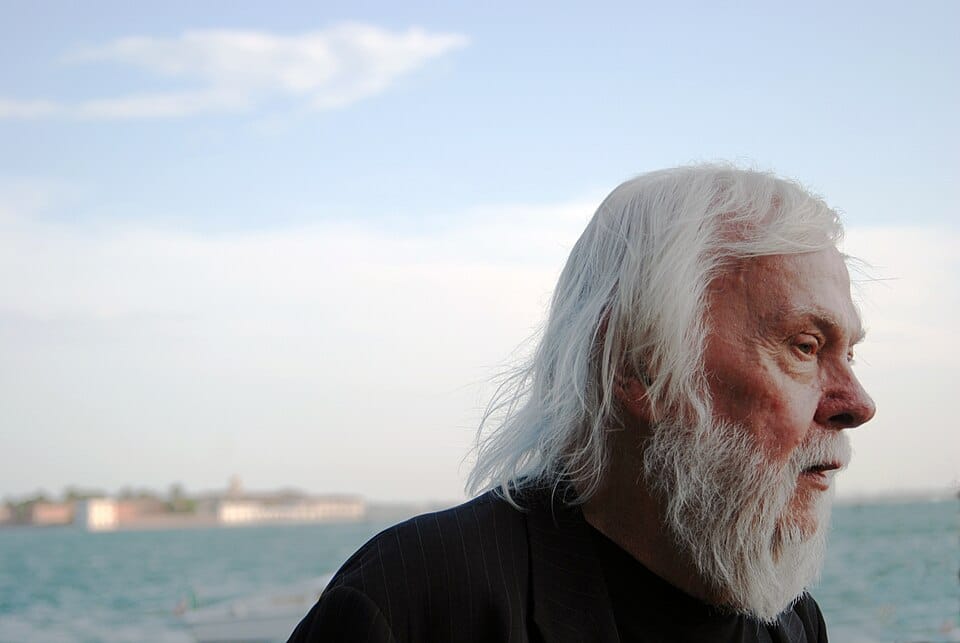
The New York art world circa 1966–1970 had a problem it couldn’t see from inside: it had already made peace with the gallery. Lawrence Weiner, Joseph Kosuth, and the Art & Language group were producing language-based work that was austere, dematerialized, and philosophically rigorous — and it was moving through exactly the same institutional channels as the painting it claimed to supersede. The market was the frame, even when the work pretended otherwise. You can read more about that broader international context in the ADI survey of conceptual art after minimalism.
California artists were structurally outside that infrastructure. Ed Ruscha had moved to Los Angeles from Oklahoma City in 1956 and studied at Chouinard Art Institute (now CalArts) from 1956 to 1960. John Baldessari, born in National City, California in 1931, held a BFA from San Diego State College and an MFA from Otis Art Institute. Neither of them built their practice inside the Manhattan gallery system because neither of them started there. That distance was not a liability. It was the condition that made a different kind of work possible.
What the West Coast artists were working inside was the built environment of Los Angeles: billboards, parking lots, the Sunset Strip. The logic of commercial graphics and vernacular photography was already their subject matter. They were concerned with how meaning gets constructed and distributed through visual culture long before they had a theoretical name for it. The commercial imagery and vernacular culture that New York conceptualism largely treated as beneath its attention was, in Los Angeles, the actual environment.
CalArts, which opened as a degree-granting institution in Valencia, California in 1970–71, gave this tendency an institutional home. Baldessari began teaching there in 1970 and immediately ran a class called “Post Studio” — explicitly designed to point students away from “daubing at canvases or chipping away at stone,” as he put it. This was not the same kind of rejection as the abstract expressionist tradition that had preceded them; it was a rejection of the object itself as the primary site of artistic meaning.
The critics called the resulting cohort the “CalArts Mafia,” which is accurate if reductive. Constance Lewallen and Karen Moss’s 2011 exhibition “State of Mind: New California Art circa 1970” at BAMPFA was the first major attempt to map this territory with scholarly precision.
What West Coast Conceptualism Changed About How Art Uses Images
The difference is not just geographic. It’s formal.
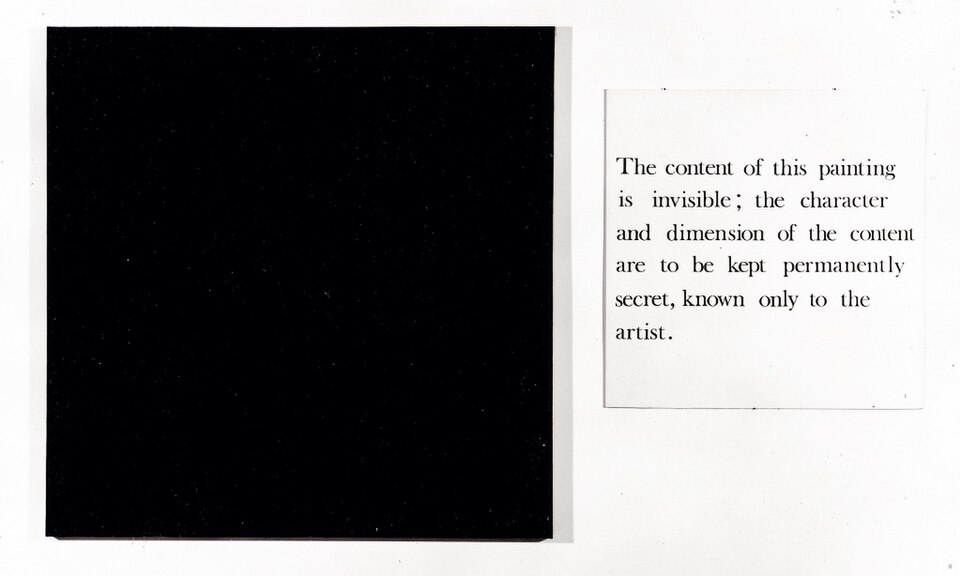
New York conceptualism treated the image as suspect — too aesthetic, too close to the painting tradition it was trying to escape. The West Coast approach used images, but turned the construction of meaning through images into the subject itself. Baldessari painted words onto photographs and rearranged found images to demonstrate, repeatedly and with deadpan wit, how easily meaning can be reassigned. The image was not the problem; the assumption that images carry fixed meanings was the problem.
Ruscha’s photo-books — Twentysix Gasoline Stations (1963), Every Building on the Sunset Strip (1966), Thirtyfour Parking Lots in Los Angeles (1967) — work through formal decisions that are worth describing precisely. Every Building on the Sunset Strip is an accordion-fold book, nearly 25 feet when fully extended. Ruscha mounted a motorized camera in the back of a pickup truck and drove the length of the Strip, documenting each building front-on without compositional judgment. The title is the entire content. The form of the book — a literal strip — is the argument: geography and commercial architecture as primary material, systematic and un-compositional.
Sol LeWitt cited it in Artforum, Summer 1969, as a defining work of Conceptual Art. The book is held in the collections of the Museum of Modern Art and the Metropolitan Museum, among others; Ruscha’s artist books are also held in the design study collection at Cooper Hewitt, Smithsonian Design Museum, where they are studied as objects that collapse the boundary between art and print design.
Baldessari’s position on the humor question is worth stating directly. He told Calvin Tomkins in The New Yorker: “The Conceptualists thought I was just doing joke art, and I thought theirs was boring.” This is not a casual complaint. The joke about boring art is a critique of conceptualism’s claim to seriousness — an argument that institutional authority had extended to the Conceptual art movement itself, and that the movement’s self-seriousness was its own form of institutional complicity. Joseph Kosuth later acknowledged Baldessari’s pioneering role in terms that suggest the critique landed.
Chris Burden’s performance work is institutional critique executed through extreme action rather than through language. Shoot (November 19, 1971) — in which a friend shot Burden with a .22 caliber rifle at F Space gallery, Santa Ana — weaponizes the experience of spectatorship. The audience watches; the body receives. The gallery is not a neutral container; it is content. Burden, who held a BFA from Pomona College and an MFA from UC Irvine and settled in Venice, California in 1972, was pursuing a related argument to Charles Gaines’s systems-based practice — that the institution that frames art is itself the subject worth analyzing. UC San Diego produced a parallel strand: Allan Sekula applied the same systematic, analytical impulse to documentary photography, using maritime labor and global capital as his primary material rather than the gallery and the body. The East Coast version of that impulse, from Haacke’s real-time systems to Burnham’s theory, is traced in Systems Art Explained.
Five Works That Define the West Coast Difference
Ed Ruscha, Twentysix Gasoline Stations (1963)
The first of Ruscha’s photo-books: 26 photographs of roadside gas stations between Los Angeles and Oklahoma City, offset-printed, published in an edition of 400. No captions. No compositional drama. The title names the book’s entire content. This was before anyone used the term “California conceptualism” — Ruscha was working from the logic of what the road actually looked like, and the book is what that logic produces when you don’t intervene.
Ed Ruscha, Every Building on the Sunset Strip (1966)
The accordion-fold book, nearly 25 feet when fully extended, produced with a motorized camera mounted in a pickup truck. Sol LeWitt cited it in Artforum, Summer 1969, as a definition of Conceptual Art. The Strip runs through West Hollywood; the book’s form — literally a strip — is not a metaphor, it is the method. Geography and commercial architecture are primary material. Held at the Museum of Modern Art, the Metropolitan Museum of Art, and Harvard Art Museums.
John Baldessari, The Cremation Project (1970)
Baldessari burned all paintings he had made between May 1953 and March 1966 on July 24, 1970, in San Diego. The ashes were baked into cookies placed in an urn. The work that remained was a bronze commemorative plaque listing the paintings’ birth and death dates, and the cookie recipe. A formal announcement began: “Notice is hereby given that all works of art done by the undersigned between May 1953 and March 1966 in his possession as of July 24, 1970 were cremated on July 24, 1970 in San Diego, California.” The work destroys the object to ask what the object was for.
John Baldessari, I Will Not Make Any More Boring Art (1971)
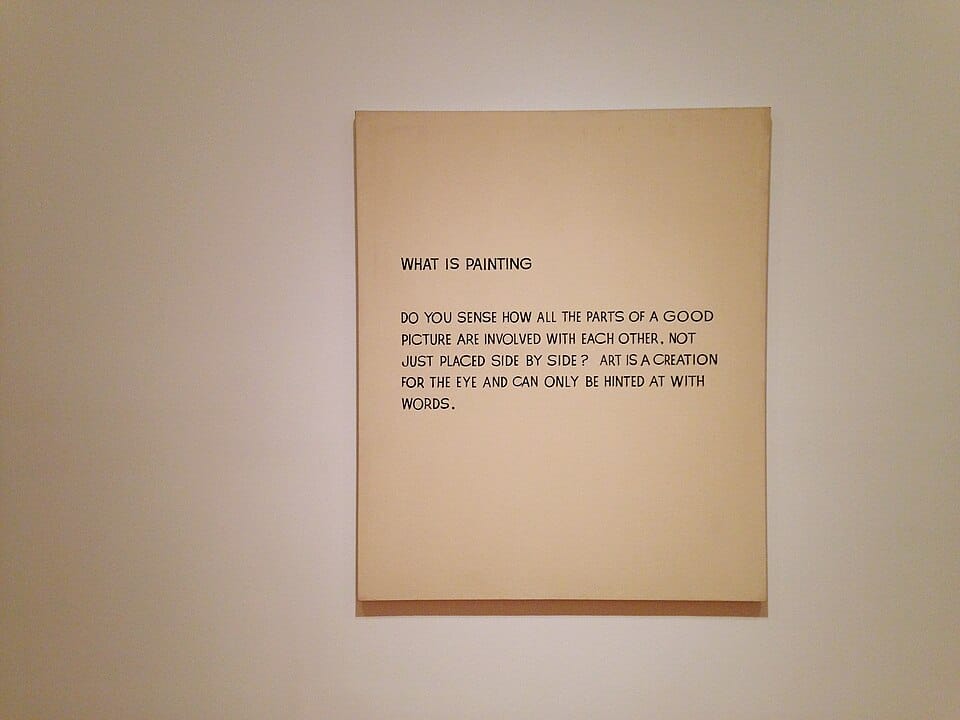
NSCAD in Halifax invited Baldessari to exhibit. He sent instructions instead: students were to write the phrase on the gallery walls from April 1 through April 10, 1971. Also produced as a lithograph. Held at MoMA, the Whitney, and the Metropolitan Museum. The work implicates everyone: the institution, the exhibition, the audience, and the artist — all parties in the production of boring art, all implicated by writing the phrase that says so.
Chris Burden, Shoot (November 19, 1971)
Burden was shot with a .22 caliber rifle at F Space gallery in Santa Ana. The work’s argument is simple and brutal: the gallery frame does not protect the body. Spectatorship at an institutional art event and spectatorship at an act of violence are the same thing, if the artist decides they are. West Coast performance work consistently tested that limit. New York conceptualism rarely did.
Shop the Collection
Two books are worth owning here: one primary source, one scholarly consensus document.
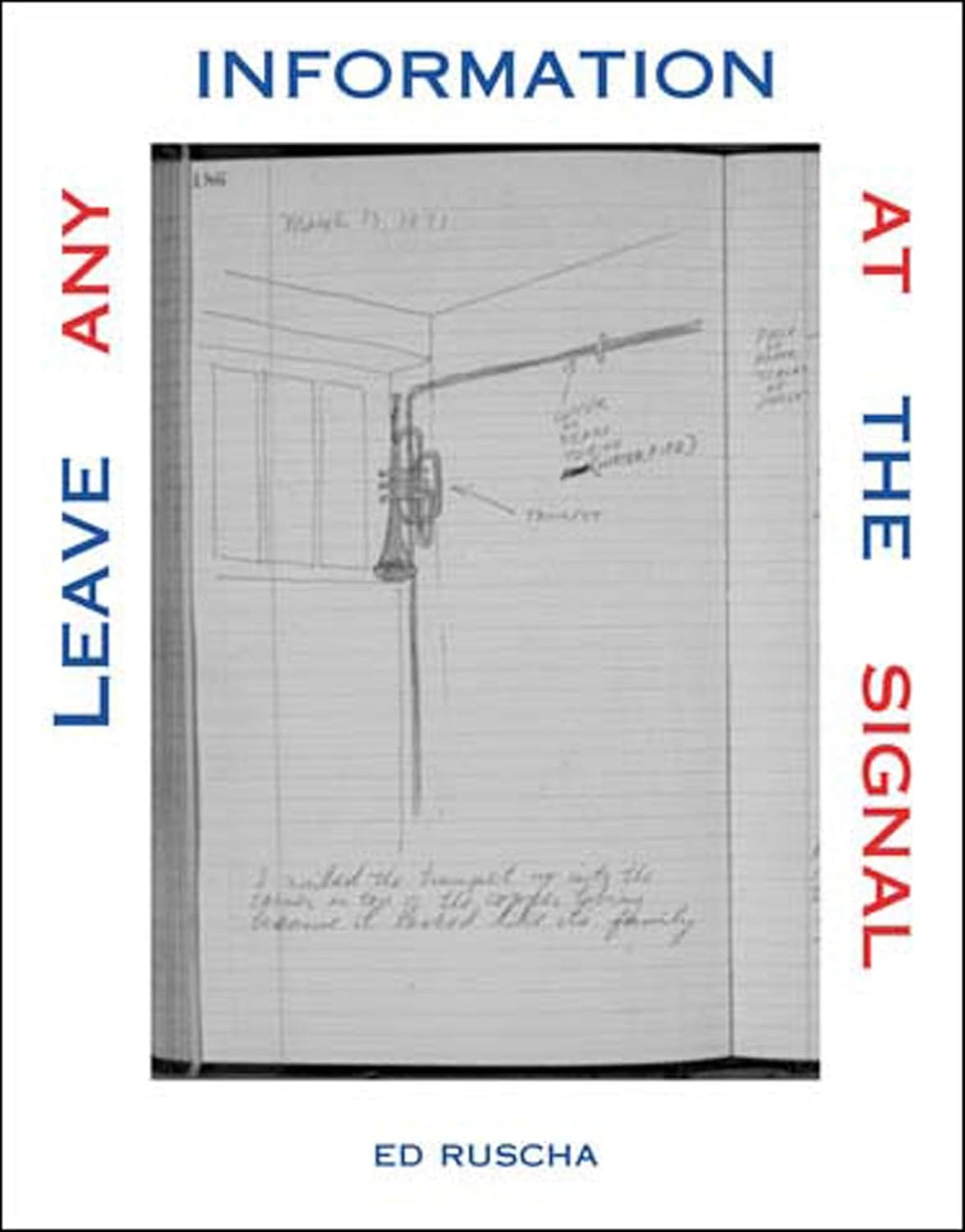
Ed Ruscha, Leave Any Information at the Signal: Writings, Interviews, Bits, Pages, ed. Alexandra Schwartz (MIT Press, 2002): Fifty-plus interviews and Ruscha’s own writings from the 1960s through the 1990s, including his direct accounts of making the photo-books and his complicated relationship to the New York scene — the primary source on Ruscha’s thinking, in his words.
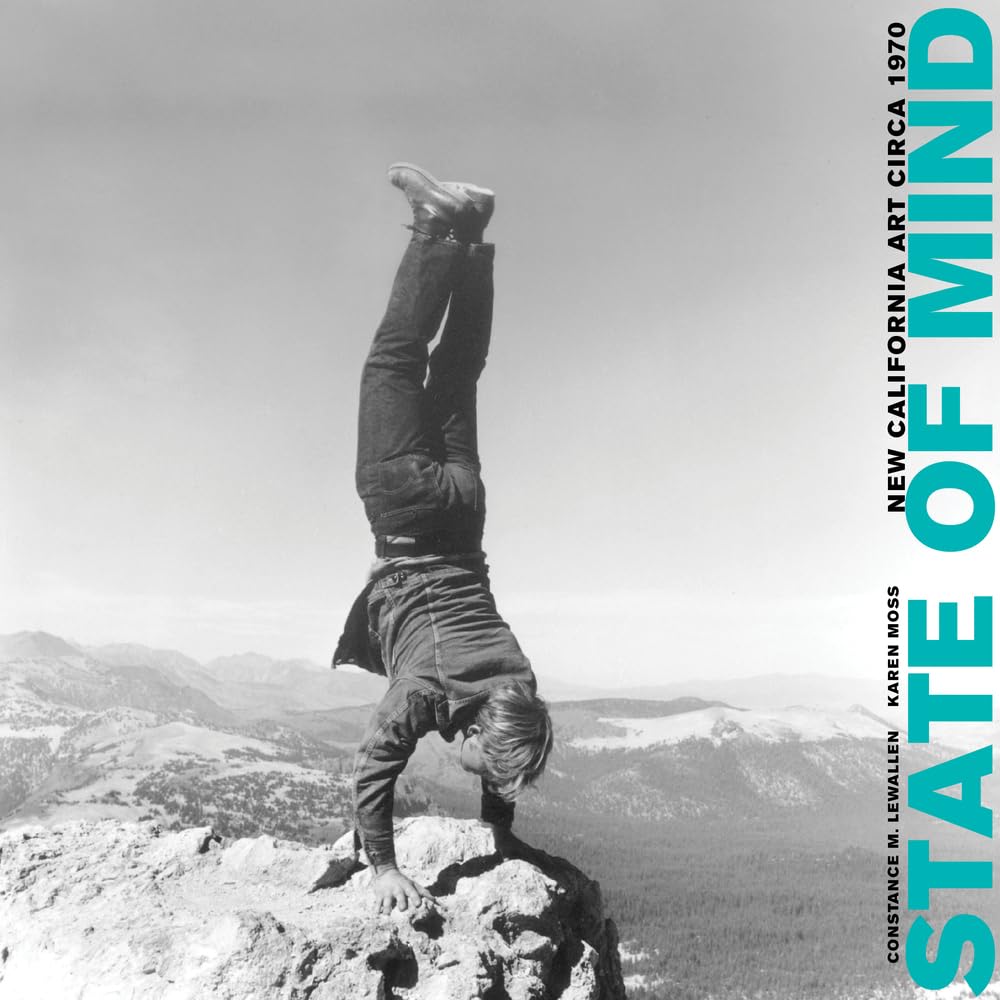
State of Mind: New California Art circa 1970, Constance M. Lewallen & Karen Moss (UC Press, 2011): The exhibition catalog that connected the Northern and Southern California conceptual scenes; 296 pages of essays and documentation that constitute the closest thing to a scholarly consensus on this movement. If you read one catalog from this period, this is the one.
Further Reading
Two books that explain what the West Coast was arguing against — and what it produced.
Alexander Alberro & Blake Stimson, eds., Conceptual Art: A Critical Anthology (MIT Press, 2000): The landmark primary document collection for the international movement — essential for understanding what the California artists were pushing against; includes Ruscha-era texts and critical histories that establish why the geographic difference mattered.
Jessica Morgan, ed., John Baldessari: Pure Beauty (Prestel, 2009): The LACMA/Tate Modern retrospective catalog — 400-plus full-color illustrations and eleven critical essays, including contributions from former Baldessari students. The most thorough account of the Post Studio period available in a single volume.
Frequently Asked Questions
What is West Coast conceptual art?
West Coast conceptual art is a branch of the international conceptual art movement centered in California, primarily Los Angeles, between roughly 1962 and 1980. It is distinguished from the New York school by its use of images, photographs, and commercial graphics as primary material — treating representation itself, rather than the art object or its market, as the site of critique. Key figures include Ed Ruscha, John Baldessari, and Chris Burden.
How is West Coast conceptual art different from New York conceptualism?
New York conceptualism (Lawrence Weiner, Joseph Kosuth, Art & Language) was largely language-based, austere, and moved through established gallery infrastructure. West Coast conceptualism used images and the vernacular built environment of Los Angeles — billboards, parking lots, commercial strips — as raw material, and treated the institutional frame of art itself, including the gallery and the broadcast, as subject rather than neutral container. The register was also different: West Coast work used humor and deadpan performance where New York work remained philosophically solemn.
Who are the most important West Coast conceptual artists?
Ed Ruscha, John Baldessari, and Chris Burden are the central figures. Douglas Huebler, Vija Celmins, and William Wegman are closely connected. Baldessari and Ruscha in particular shaped the CalArts-connected cohort that critics began calling the “CalArts Mafia” — artists who went on to dominant institutional influence in American contemporary art from the 1980s onward.
Why did conceptual art develop differently in California?
California artists were geographically outside the Manhattan gallery infrastructure that was already central to New York conceptualism. They worked inside a visual culture shaped by commercial graphics, vernacular photography, and the built environment of Los Angeles — billboards, the Sunset Strip, parking lots. Their subject matter was already about image construction and representation. CalArts, which opened its first degree-granting class in 1970–71 under the influence of Baldessari’s Post Studio approach, gave this tendency an institutional home and a pedagogical framework.
What is John Baldessari known for in conceptual art?
Baldessari is known for dismantling the art object’s authority through humor, institutional critique, and the rearrangement of found images and photographs. The Cremation Project (1970), in which he burned his own paintings and baked the ashes into cookies, and I Will Not Make Any More Boring Art (1971), in which he instructed students at NSCAD Halifax to write the phrase on gallery walls, are the two works that define his position: that the Conceptual art movement’s claim to seriousness was itself a form of institutional complicity, and that the joke is the argument.
How did Ed Ruscha’s artist books change conceptual art?
Ruscha’s photo-books — beginning with Twentysix Gasoline Stations (1963) — applied the logic of Minimalism and Conceptual art to photographic practice without acknowledging that photography was a fine art medium. The books were offset-printed, systematically structured, deadpan in framing, and titled to name their content without metaphor. Sol LeWitt cited Every Building on the Sunset Strip in Artforum, Summer 1969, as definitional Conceptual Art. The books demonstrated that the form of distribution — an edition of 400 copies, sold in bookshops — was as much the work as the photographs.
See also: The CalArts Mafia, Connie Hatch and the CalArts Lineage

About Joe Post
Joe Post holds an MFA in Art from California Institute of the Arts (CalArts) and has done additional graduate work at the School of the Art Institute of Chicago. He founded Art Design Ideas to write about design as cultural argument — the decisions, contradictions, and assumptions built into the objects we live with.